Student Academic Success in Linear Algebra in an Open Distance Learning Environment
Abstract
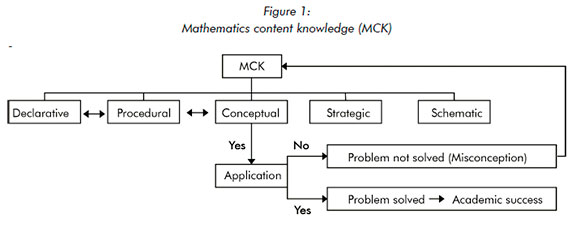
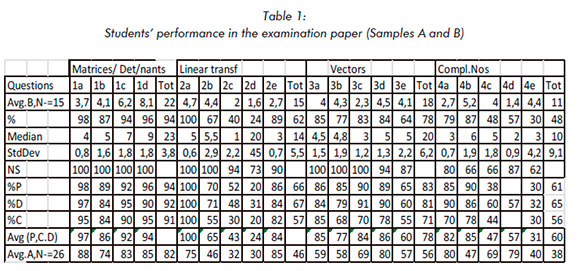
Academic success in first year university mathematics in been problematic for decades and mathematics educators keep looking for the causes. What has been universally agreed, is that the theoretical and abstract nature of mathematics plays a role. A module on Linear Algebra at an Open Distance eLearning (ODeL) institution, was identified for investigation due to very high dropout and failure rates. This article concentrates on identifying the types of knowledge (e.g., procedural, conceptual, strategic, schematic and declarative) necessary for academic success in the subject. Using the literature, a conceptual framework is developed to classify students' answers into the various types of knowledge. The research question asks what types of knowledge contributes to academic success in Linear Algebra. Script analysis is used to answer the research question. The results showed that lack of the necessary declarative knowledge which forms the basis for the other forms of knowledge as well as procedural knowledge were the main causes of the resulting misconceptions and errors. It was established that students were more engaged in surface learning rather than deep learning that results in conceptual understanding and acquisition of conceptual knowledge.
Linear Algebra; ODeL; types of knowledge; mathematics content knowledge; procedural knowledge; conceptual knowledge
 Thumbnail