Self-determination and undergraduate student success: A view from high-performing students in a South African university
Abstract
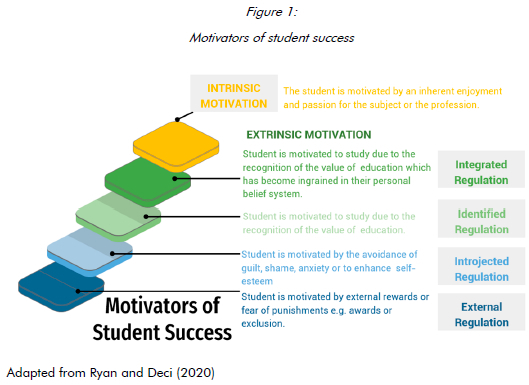
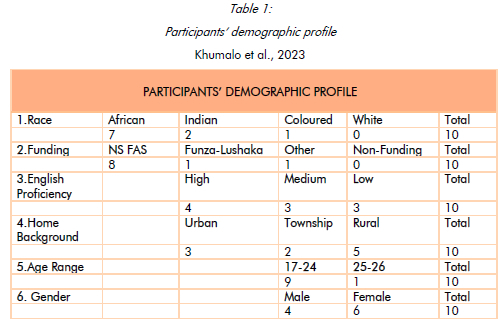
Using self-determination as a theoretical perspective, the study sought to understand the motivating factors behind high-performing students' success. High-performing students who are on track for cum laude and summa cum laude were identified as the cohort for the study. A sample of 10 of these identified students was purposively selected from the School of Education at a South African university. Data were generated using individual and focus group interviews. The findings suggest that these students were motivated by both intrinsic and extrinsic factors. The students were intrinsically motivated when their needs for competence, autonomy and relatedness were met. The findings further suggest that three levels of extrinsic motivation (introjected, identified and integrated regulation) influenced students' success. The study challenges a deficit discourse as it enabled us to understand the factors that enabled high-performing students to thrive despite social and economic hardships. These views from high-performing students' are useful to inform strategies and interventions for understanding and improving undergraduate student success.
self-determination theory; student success; extrinsic and intrinsic motivation
 Thumbnail