Emergency remote teaching during COVID-19: an examination of selected secondary school teachers' experiences on technology integration in Namibia
Abstract
This study examines the experiences of secondary school teachers in Namibia in integrating technology during emergency remote teaching (ERT) necessitated by the COVID-19 pandemic. Aided by the TPACK framework and an interpretive qualitative case study approach. The data were gathered through semi-structured interviews of 17 secondary school teachers selected using purposive sampling. Findings revealed teachers innovatively employed available technological resources to ensure continuity of education, sharing and customising instructional content to promote student interaction. The study also found a significant role for parental involvement in supporting ERT. However, the integration of technology in the transition to ERT was associated with challenges, including lack of access to digital technologies, technical glitches, and maintaining student engagement. Unexpectedly, feelings of professional isolation were also reported among teachers, potentially due to the abrupt shift to online teaching lacking conventional face-to- face professional collaboration. The research underscores the importance of adequate digital literacy skills, essential technological resources, and the role of policymakers and educators in creating effective tactics to overcome emerging challenges. The findings suggest technology can significantly enrich and support educational continuity in crisis situations.
integration of technology; emergency remote teaching; TPACK; continued education; pedagogical strategies
INTRODUCTION
The COVID-19 pandemic significantly impacted education, leading to a shift from traditional classrooms to online learning environments (Dhawan, 2020). Consequently, a report by UNESCO shows that over 1.7 billion learners worldwide experienced disruptions in their education (UNESCO, 2020). To ensure learning continuity, schools globally adopted online teaching methods and digital tools, resulting in a surge in technology adoption among educators. This immediate change required educators to quickly adapt to online platforms, often with limited time for preparation or development of suitable online course designs. This unexpected shift also caused significant anxiety and uncertainty among educators and other stakeholders regarding the effectiveness of teaching and learning in a remote environment (Valsaraj et al., 2021).
The COVID-19 pandemic forced most schools to find new ways to keep learners learning from home. Schools distributed learning materials, provided technology and online content, adopted new learning management systems, and adapted existing ones. Teachers also had to quickly learn how to teach remotely. According to Hodges et al. (2020), emergency remote teaching (ERT) refers to the use of distance or remote education during COVID-19 lockdowns. Rodés et al. (2021) describe ERT as a necessary shift in teaching that relies on digital technology. Shin and Hickey (2021) suggest ERT as a teaching style that is fully or partially online and used during crises. The shift to emergency remote teaching required educators to not only adapt existing courses for online delivery but also to develop new skills in digital content creation, technology integration, and online pedagogy. Additionally, educators had to find ways to engage parents, address learners' psychological needs (Shambare & Simuja, 2022) and implement diverse teaching methods to accommodate both synchronous and asynchronous learning (Hartshorne et al., 2020).
Similarly, to mitigate the threat of COVID-19, the Namibian government implemented a nationwide lockdown in April 2020, leading to the closure of schools and other educational facilities (MoE, 2020). As a result, teachers were required to quickly convert their teaching materials for remote delivery, and learners had to rapidly acclimate to a new, online learning environment. Despite these efforts, research by Mabolloane (2021) found that distance learning put many learners at a disadvantage due to inadequate learning environments and a lack of access to technology. This paper, which is part of a larger, ongoing longitudinal study, examines how selected case of rural secondary school teachers in Namibia approached the integra the integration of technology during this time of emergency remote education.
Thus, the objective in this study was to attempt to understand teachers' experiences in adapting curricula and pedagogy, the technological tools they were using, and the opportunities and challenges they encountered during the ERT. The following research questions guided the study:
(a) What digital tools and software applications did the rural secondary school teachers use during Emergency Remote Teaching in response to the COVID-19 pandemic in Namibia?
(b) What were the opportunities and challenges experienced by the selected Namibian rural secondary school teachers in integrating digital technologies during the period of emergency remote learning?
To respond to the two research questions, this paper commences with a concise overview of the study's background and reviews pertinent literature in the domain. Subsequently, the research methodology is detailed, followed by the methodology and findings. Finally, the paper offers several suggestions for educators and future research
THEORETICAL FRAMEWORKTechnological pedagogical and content knowledge (TPACK)
This paper explores secondary school teachers' experiences integrating technology during emergency remote teaching to ensure the continuity of teaching and learning during the COVID-19 pandemic and is underpinned by the Technological Pedagogical and Content Knowledge (TPACK). The TPACK framework, as proposed by Mishra and Koehler (2006), postulates that to integrate technology into their teaching, teachers need knowledge, which falls into three major domains: content knowledge, pedagogical knowledge, and technological knowledge. Additionally, TPACK is a framework (see Figure 1) that introduces the relationships and complexities between all three essential components of knowledge (technology, pedagogy and content).
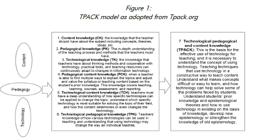
The TPACK theory was adopted in this study to comprehend intricate teachers' experiences in the phenomenon of integrating technologies during the COVID-19 pandemic in Namibia. Koehler and Mishra (2008) support this viewpoint in advocating for studying technology use in schools through the lens of the TPACK framework. As such, the TPACK framework offered this study an analysis of knowledge components, their entirety, and their interconnectedness since technology integration in schools and classrooms comprises a multifaceted system consisting of several components and relationships. The knowledge constructs in the TPACK framework interact, creating a dynamic, ever-changing, and open ecosystem. Koehler and Mishra (2008) assert that integrating technology involves multiple factors that interact in complex ways.
While some Namibian rural secondary school teachers may already be familiar with using digital technologies for instruction, the COVID-19 pandemic necessitated a more comprehensive application of ERT and remote teaching methods. In navigating through this change, crucial were the knowledge constructs of the TPACK framework, key to aiding instructors in facilitating student engagement and interaction within multiple cultural scenarios. Given the versatility of technology in communication and interpretation, this study underscores how its integration in education can facilitate learners' learning in culturally diverse contexts. Thus, by adopting the TPACK framework, the study was able to effectively draw upon the practices offered by technology, enhancing education during ERT.
Emergency remote teaching (ERT)
The COVID-19 pandemic compelled a departure from both traditional classroom teaching and remote instruction methods (Iglesias et al., 2021; Sharma et al., 2021). During the COVID-19 pandemic, educational institutions around the globe had to adapt to the new normal by transitioning to virtual learning (Nerantzi, 2020; Aliyyah et al., 2020). As a result, a wide-ranging conversation took place about how to label teaching and learning experiences during the pandemic, specifically amid a lockdown situation (Bhamani et al., 2020), and ERT was favoured (Rahiem, 2020; Liguori & Winkler, 2020).
The temporary shift to utilising electronic devices and entirely remote instruction as a result of crises is referred to as emergency remote teaching (Barbour et al., 2020; Rahiem, 2020). ERT represents the direct transition from in-person to distance learning without focusing on pedagogical aspects (Guerra et al., 2021; Seabra et al., 2021). This approach encompasses the use of technological tools, such as videoconferencing and learning management systems, but may also involve distributing physical resources, like books and paper packets in certain cases (Azlan et al., 2020). Rodés et al. (2021) define ERT as a teaching and learning mediation process marked by its emergency nature and the proposal to employ digital technologies. Shin and Hickey (2021) further explain that ERT is a teaching method implemented partially or fully online in response to crises. Hodges et al. (2020), highlighted that emergency remote teaching involves an abrupt shift from face-to-face instruction to remote because of the emergency education crisis. Basilaia and Kvavadze (2020) state that the emergency teaching period concerns maintaining contact between schools and learners mainly through technology. The shift to emergency remote teaching necessitates educators to take charge of the activities related to designing, creating, and delivering courses (Hodges et al., 2020).
Challenges experienced with ERT during COVID-19
During the COVID-19 pandemic, ERT presented various challenges for teachers and learners (Rapanta et al., 2020). This necessitated a rapid adjustment to the new teaching and learning environments while grappling with the social and psychological impacts of the crisis. One of the significant difficulties encountered was the absence of direct interaction and communication between learners and teachers (Varea & González-Calvo, 2021). Rahiem (2020) highlights that successful emergency remote instruction is largely dependent on the competence of teachers and learners, their prior experience with technology, and access to communication and information technology. The study additionally disclosed that factors such as teachers' and learners' access to technological resources like high-speed internet, preparedness for online learning, availability of instructional assistance, and policies enforced by institutions or governments all influenced the effectiveness of emergency remote teaching. However, not all schools have the necessary human and physical resources to transition to ERT (Watermeyer et al., 2021). In many developing countries, economically challenged children may not have the means to acquire and access technological devices and internet services. Consequently, online education excludes most learners and teachers from participating in teaching and learning in most developing countries (Pokhrel & Chhetri, 2021; Di Pietro et al., 2020).
Moreover, the lack of power to charge devices, such as laptops and cell phones, also makes it difficult for learners to stay connected in deep rural areas without electricity (Adarkwah, 2021). In addition, inadequate infrastructure and resources to facilitate technology-based teaching have made it difficult for teachers to work from home (Mseleku, 2020). The burden of ensuring children have access to computers and other necessary technologies for studying at home has also increased for parents (Abuhammad, 2020; Bhamani et al., 2020). For young learners, lack of parental guidance, particularly for those whose parents are still working, hindered the effective implementation of ERT (Schuck & Lambert, 2020). The major challenges and hindrances to high-quality ERT during the COVID-19 pandemic were classified into four categories by Lassoued et al. (2020). The first category of obstacles is self-imposed, which indicates learners' rejection and resistance. The second is pedagogical, focusing on tests and evaluations of online or remote assessments and feedback. The third is technical and includes weak internet connectivity and other technical issues. The fourth category is financial and institutional obstacles, including difficulties some learners face in accessing digital technological tools and a lack of remote communication capabilities. This affirms that providing instruction remotely during the pandemic has posed a challenge for both teachers and learners. These challenges underscore the need for ongoing research on integration of technologies in teaching and learning in rural schools to explore the unique circumstances of remote learning environments in developing countries such as Namibia.
RESEARCH METHODOLOGYThe study adopted an interpretive paradigm and phenomenology approach to better understand teachers' experiences integrating technology during ERT in Namibia. To explore areas that are not well understood and to gather information on phenomena that are hard to extract using traditional research methods. A qualitative method was used (Strauss & Corbin, 1998) while a case study (Brown & Danaher, 2019) focus was chosen, particularly on teachers working in secondary schools in the Ohangwena region in the Endola Education Circuit in northern Namibia. This circuit encompasses a vast network of schools scattered across the sparsely populated, arid landscapes of rural Namibia. Many of the schools within the circuit are situated in remote villages, some accessible only by rough dirt roads, making the prospect of regular in-person learning a challenge even in the best of time. Similar, phenomenology was considered the best approach as this study assumes that every teacher's technology usage is moulded by their distinctive lived or professional experiences, i.e. ERT. To understand these experiences, we, as researchers, disregarded our perspectives and instead focused on how the participants interpreted and perceived the situation. So, we used a phenomenological approach (Nepembe & Simuja, 2023) that explores awareness by examining how individual teachers integrated technology.
When using the phenomenological method, we became aware that certain assumptions might impact our results when gathering participant data. These assumptions include considering the selected teachers as active, intentional contributors to the research. They are conscious of their technology usage and can form experiences and attitudes regarding their use in their professional environment and ERT. Also, we considered the teachers' ability to reflect on their teaching methods and their decisions. Also, each participant's unique and group contexts, situations, and experiences were considered to gain a full understanding.
This research employed qualitative techniques to investigate and collect the data (Strauss & Corbin, 1998). Semi-structured interviews were employed as a part of the study. The research purposively selected 1 7 teachers from three secondary schools in the Endola education circuit. The semi-structured interview approach is a methodology for gathering qualitative data to gain insights on certain subjects from the participants' viewpoints (Brown & Danaher, 2019). This was achieved by posing open-ended questions. In ensuring the purposive selection of participants, a few steps were taken. To begin with, the first author collaborated with the Education Inspector of the Endola education circuit. This was to identify teachers who used technology efficiently during the COVID-19 pandemic. The inspector suggested 17 teachers from four schools and across various subjects. The first author then reached out to these teachers, explained the study, and asked for their views on using technology during ERT. Ultimately, all 17 teachers considered themselves adept in using technologies and confirmed their willingness to participate in the study. Before the interview sessions commenced, every participant was briefed about the objectives and methodology of the research. They then gave their consent verbally and in writing.
The audio-recorded interviews were transcribed on Microsoft Word and analysed using NVivo version 22, a software for managing and analysing different kinds of qualitative information. These transcripts were put into NVivo and later reviewed by grouping the participants' responses into distinct categories or themes using a thematic approach (Creswell et al., 2006). Each participant's response was linked and correlated with the pertinent theme through a coding procedure. This method involved associating each relevant quote with the fitting theme. Subsequent to this, the research adopted an inductive data analysis approach. The conclusions of the study were derived from the emerging theme patterns. Furthermore, the participants approved their case descriptions and analyses by performing a member check, which confirmed the accuracy of interpretations. This paper uses in-depth, descriptive quotes from the participants, enhancing the credibility of the findings. These quotes allow readers to interact directly with the participants' responses and experiences.
Ethical clearance was obtained from our affiliated university's Ethics Committee and the Director of the education office in Namibia. No coercion or deception was used to get people to participate in the study; participation was entirely voluntary. Moreover, individuals were free to exit the study whenever they wished. Key ethical principles such as informed consent, credibility, anonymity, confidentiality and trustworthiness were consistently maintained and ensured in this study.
FINDINGS OF THE STUDY
Digital tools and software applications commonly used during ERT
The results of this study predominantly address the technological resources employed in the selected schools, the specific technological devices, and the software that facilitated uninterrupted learning amidst ERT. Insights from semi-structured interviews revealed that some secondary schools successfully leveraged various technological tools to integrate technology into their educational practices during ERT. The participants revealed that schools possess diverse technological resources, and certain secondary school teachers had readily adopted these technologies in their pedagogical practices since they were easily accessible within the schools. Astonishingly, some teachers disclosed that their schools lacked a dedicated computer lab for accessing technologies. However, they mentioned that there were computers and laptops allocated for teacher use primarily for lesson preparations and access to electronic content shared by the Ministry of Education in Namibia.
The teachers reported that their respective schools were equipped with internet connectivity, with some of them using personal tablets and mobile phones as teaching aids. Mobile phones were identified as the most frequently used technological tool, closely followed by laptops, tablets, and desktops, as recounted by the participants. They also shed light on the versatility and flexibility that these devices provided, facilitating education under ERT. Numerous software applications and programs were employed to continuously share content and interact with learners, demonstrating adaptability in the face of ERT. It is noteworthy that, despite the absence of dedicated computer labs, some schools and teachers were innovative and resourceful enough to continue imparting education during ERT.
While the technological tools mentioned were often leveraged to enhance teaching practices, the teachers revealed that actual interactive teaching was less frequent. Instead, educators commonly used technologies to share learning content, including teaching notes, audio explanations, and video presentations, through technological platforms such as WhatsApp groups, Zoom meetings, and Facebook pages. The participants further revealed that the use of multimedia graphics in the teaching notes, such as PowerPoint presentations, indicated a comprehensive teaching approach that caters to various learning styles (visual and auditory). More so, by disseminating these resources within WhatsApp groups, educators were able to directly reach parents, bolstering parental engagement in the learning process. Miss Angula (Pseudonym) noted that the positive results and growing interest of parents served as a motivator to persist in the creation and distribution of lesson content through WhatsApp technology: She stated:
...Seeing parents actively engage with the lesson content we distribute on WhatsApp and Facebook motivates me to keep innovating. Even in rural Namibia, we ensure that learning never stops during the COVID-19 pandemic... (Ms Angula)
Opportunities encountered for technology integration during ERT
The study data indicated that participants started exploiting the learning content resources readily available on platforms such as Facebook and YouTube, integrating these into their lesson plans and sharing through WhatsApp technologies. Some participants mentioned that initially digital content resources were utilised directly, but over time they began to customise and create their own instructional content aimed at promoting student interaction. Using real-life examples and the assistance of WhatsApp to share visual materials located online became standard practice. For instance, Mr Solomon (Pseudonym) acknowledged that he could make his own video lessons using his mobile phone to suit curriculum requirements for English subjects. He said:
...I used to just share videos straight from YouTube for my students. But then, I found out I could make my own lessons. It was not easy at first, but with my phone, I started recording videos for my English lessons.... (Mr Solomon)
Ideal technology integration in ERT, as reported by the participants, was described as flawless and subtly improved the learners' learning experience. Furthermore, during the interviews, it transpired that such technological integration fostered increased student engagement. Another beneficial aspect was the ease of adjusting lesson pacing to match individual learners' abilities and preferences. Additionally, teachers reported achieving a better understanding of the learners' learning process through immediate feedback provided through the technology platforms. This also enhanced peer collaboration, as learners could directly interact digitally using these platforms. The easy accessibility to a plethora of online resources further expanded the variety and quality of instructional content. This transformation, made possible by technology, immensely impacted the effectiveness of ERT lessons. The teachers perceived this invisible enhancement to their teaching practices to be vital in the current digital age.
The participants expressed that technology integration in ERT also facilitated differentiated instruction by enabling personalised learning paths based on lesson content and student learning styles. Such tailored approaches heighten curiosity and attentiveness, fostering a positive attitude towards learning. Moreover, the steady interaction with technology also cultivated digital literacy among teachers and learners, arming them with vital skills for navigating the 21st-century digital world. All the participants in the study noted improvements in technological knowledge and competence not only among learners but also among themselves as teachers. Some teachers stated:
...When you have a pandemic like COVID-19, technology helps us teach our students in a way that fits their learning styles better. It gets them excited about learning and that was a wonderful thing to see... (Ms Nakali)
...Through continuous learning and adaptation, we have improved our technology knowledge, and I am super in using WhatsApp. (Ms Shilongo)
...Because we had to use technology so much, we all got better at using it. This did not just help our students, but it also helped us teachers... (Mr Bakali)
The integration reaffirmed the role of teachers not merely as knowledge transmitters but also as learning facilitators and digital mentors. The engagement of professionals in continuous learning, upskilling, and adaptation to changes was seen as instrumental in this process.
Challenges experienced encountered for technology integration during ERT
Similarly, the study also investigated the difficulties teachers experienced when they incorporated technology during the unexpected remote learning period. It was found that the integration of technology did not yield equal benefits for all learners. A major problem was the restricted access to some educational websites and online content owing to poor internet connectivity in Namibia. Additionally, even if some learners did manage to locate some online resources, significant financial constraints hindered them from accessing certain paid content. Two teachers, Ms Mlauzi and Ms Moyo offered insight into these difficulties:
... We try to find learning materials online, but many times they ask for money. It feels like our pockets limit our education. How can poor students download such content and learn, if we can't afford to buy it? (Ms Mlauzi)
...We wanted the best for our students, but the slow internet in Namibia made accessing learning sites tough. It was not the same for everyone... (Ms Moyo)
Further findings from the study revealed that some teachers' digital literacy levels posed a significant obstacle in the integration of technology during the ERT. Many teachers lacked the basic computer skills needed to utilise technologies and online learning tools effectively. Teachers noted the challenge of maintaining learner's engagement during ERT sessions. Without the ability to directly oversee learner's participation, it was difficult to ensure consistent involvement from all learners. Furthermore, technical issues such as software malfunctions or device incompatibility posed significant challenges. These issues disrupted the smooth delivery of instruction, creating an unreliable teaching and learning environment. A remarkable finding was the steep learning curve experienced by both teachers and learners because of the sudden shift from traditional classroom-based learning to ERT. Not previously relying on digital platforms necessitated quick adaptation, which presented a significant challenge.
Effective communication surfaced as a major issue throughout the study, with the lack of efficient channels complicating coordination between teachers, learners, and parents. This led to potential confusion, misunderstandings, and missed information. Teachers identified limitations in the use of remote assessment tools, making it challenging to adequately measure student progress and understanding. The teachers express the lack of training and preparedness among most educators for conducting assessments in a remote setting resulted to inconsistencies and difficulties in accurately measuring student learning. Ms Ndawana and Mr Petrus stated:
...It was so hard to know how my students were really doing. Many of them had limited access to the internet, so even if I gave them online quizzes, I could not be sure they were the ones completing them. Some did not even have textbooks at home to refer to... (Ms Ndawana)
... I tried to assess my learners learning through phone calls, but network coverage is unreliable here. Plus, it was impossible to assess their practical skills in subjects like agriculture or physical education remotely. I worried that without a way to assess these areas, students would fall behind... (Mr Petrus)
The teacher's comments revealed the exacerbation of existing inequalities, as learners without reliable internet access or appropriate technology faced significant disadvantages in accessing and completing assessments. The transition to online platforms also raised concerns about academic integrity, as noted by Ms Ndawana, with limited mechanisms to effectively prevent cheating and ensure fair evaluation. It is worthy to note that despite the difficulties, teachers found creative ways to adapt. Some resorted to using alternative assessments like having learners submit photos of completed projects or engaging them in learning reflections through voice notes over mobile phones. Others relied heavily on parental support to monitor student progress offline and provide feedback when internet access was limited.
A surprising finding, however, was teachers' feelings of professional isolation. The transition to ERT reduced in-person interaction with colleagues, leading to a sense of isolation for some teachers. To combat the feeling of isolation educators in this study found solace in connecting with each other virtually. They formed online communities of practice using platforms like WhatsApp to share resources, exchange strategies, and offer each other much-needed support and encouragement. These virtual spaces became invaluable lifelines, reminding teachers that they were not alone in navigating the challenges of emergency remote teaching.
DISCUSSION AND CONCLUSION OF FINDINGS
The findings of this study provide significant insights into the nature of experiences of the selected teachers encountered as they integrated technologies to offer ERT during the COVID-19 pandemic in Namibia. The findings indicated that teachers used technologies such as WhatsApp groups, Zoom meetings, and Facebook pages to share educational content with learners, echoing the observation by Dhawan (2020) about the role of online learning platforms during the pandemic. The findings align with Dhawan's research where educators globally were prompted to swiftly transition in their methodology and integrate technology within their teaching practices. The incorporation of technology, as discussed in the results did not just involve remote classroom teaching but extended to sharing resources, including presentations, audios, and videos via platforms such as WhatsApp technology. This multi-faceted approach corroborates the framework of Technological Pedagogical and Content Knowledge developed by Mishra and Koehler (2006), which suggested an effective technological integration requires skills in three knowledge domains. Interestingly, the participants found the use of multimedia graphics in PowerPoint presentations served diverse learning styles (visual and auditory), which offers further practical evidence for the TPACK framework.
Moreover, the findings from this study reveal that teachers used mobile phones, laptops, and other devices to maintain instructional continuity. This aligns with Rahiem's (2020) study which highlighted the role of technological resources in the success of remote teaching. Interestingly, despite the lack of dedicated computer labs in some schools, teachers manifested an innovative spirit by using available resources to ensure the progression of education, exhibiting a similar resilience noted by Watermeyer et al. (2021) during online migration caused by the pandemic. The study's findings also shed light on the significance of parental involvement, bolstered by technology use, particularly through direct access to learning materials via WhatsApp. This corresponds with the research of Abuhammad (2020) and Bhamani et al. (2020), which emphasised the crucial role parents played in supporting their children's learning during remote education. Further, participants' adaptations to customise and create instructional content, promoting student interaction echo the importance of teacher's technological content knowledge in TPACK framework where teachers adjust the content based on learners' knowledge.
The findings revealed the integration of technology not only offered immediate instructional benefits, but also fostered digital literacies among both teachers and learners, skills critical for the 21st-century digital world, as supported by numerous studies. Despite these encouraging findings, the incorporation of technology during ERT was not without associated challenges, echoing findings from prior research. Participants reported challenges with access to necessary digital technologies, highlighting the digital divide mentioned in other studies (Di Pietro et al., 2020; Pokhrel & Chhetri, 2021). Technical glitches, an obstacle familiar to even the most technology adept, cropped up as a persistent challenge, as was the difficulty of maintaining student engagement during ERT. Other researchers (Lassoued et al., 2020; Watermeyer et al., 2021) have also identified these impediments, making it clear that while ERT is a crucial response in crises, it is not without its own set of complex issues.
This study revealed feelings of professional isolation among teachers during the COVID-19 induced shift to emergency remote teaching. This could be attributed to the sudden and unplanned transition to online teaching, where educators had to navigate technological tools and digital content creation without the usual face-to-face professional collaboration and support. The sense of isolation might have been exacerbated by the challenges associated with managing a virtual classroom, unfamiliar technology, and reduced interaction with peers, highlighting the importance of communication and collaboration among educators in adapting to such drastic changes in teaching modalities. The study highlights the necessity for advanced planning and resource provision to ensure successful conversion to emergency remote teaching in times of crisis. The findings of this study also offer the pivotal role of technology in facilitating education during emergency situations like the COVID-19 pandemic. It underscores the need for teachers to develop adequate digital literacy skills and ensure learners have access to essential technological resources. Policymakers and educators can work together to create efficient strategies and support systems to overcome the challenges identified in the context of ERT. The study reveals that a well-integrated use of technology can effectively support educational continuity and enrich the learning experience during crisis situations. Therefore, there is a need for further research to examine how teachers effectively used technology to engage and actively meet learners' learning needs during the COVID-19 pandemic period.
REFERENCES
LITERATURE REVIEW
- Abuhammad, S. (2020). Barriers to distance learning during the COVID-19 outbreak: A qualitative review from parents' perspective. Heliyon, 6(11). https://doi.org/10.1016/j.heliyon.2020.e05482
- Adarkwah, M. A. (2021 ). "I'm not against online teaching, but what about us?": ICT in Ghana post COVID-19. Education and information technologies, 26(2), 1665-1685. https://doi.org/10.1007/s10639-020-10331-z
- Azlan, C. A., Wong, J. H. D., Tan, L. K., Huri, M. S. N. A., Ung, N. M., Pallath, V., Tan, C. P. L., Yeong, C. H. & Ng, K. H. (2020). Teaching and learning of postgraduate medical physics using Internet-based e-learning during the COVID-19 pandemic-A case study from Malaysia. Physica Medica, 80, 10-16. https://doi.org/10.1016/j.ejmp.2020.10.002
- Barbour, M. K., LaBonte, R., Hodges, C. B., Moore, S., Lockee, B. B., Trust, T., Bond, M. A., Hill, P. & Kelly, K. (2020). Understanding pandemic pedagogy: Differences between emergency remote, remote, and online teaching. State of the Nation: K-12 e-Learning in Canada. Retrieved July 16, 2023, from http://hdl.handle.net/10919/101905
- Bhamani, S., Makhdoom, A. Z., Bharuchi, V., Ali, N., Kaleem, S. & Ahmed, D. (2020). Home learning in times of COVID: Experiences of parents. Journal of education and educational deveoopment, 7(1), 9-26. http://dx.doi.org/10.22555/joeed.v7i1.3260
- Bozkurt, A., Jung, I., Xiao, J., Vladimirschi, V., Schuwer, R., Egorov, G., Lambert, S., Al-Freih, M., Pete, J., Olcott Jr, D. & Rodes, V. (2020). A global outlook to the interruption of education due to COVID-19 pandemic: Navigating in a time of uncertainty and crisis. Asian Journal of Distance Education, 15(1 ), 1-126. https://www.asianjde.com/ojs/index.php/AsianJDE/article/view/462
- Brown, A. & Danaher, P.A. (2019). CHE principles: Facilitating authentic and dialogical semi-structured interviews in educational research. International Journal of Research & Method in Education, 42(1), 76-90. https://doi.org/10.1080/1743727X.2017.1379987
- European Commission: Joint Research Centre, Di Pietro, G., Biagi, F., Costa, P., Karpinski, Z. et al., The likely impact of COVID-19 on education - Reflections based on the existing literature and recent international datasets, Publications Office, 2020, https://data.europa.eu/doi/10.2760/126686
- Hartshorne, R., Baumgartner, E., Kaplan-Rakowski, R., Mouza, C. & Ferdig, R. E. (2020). Special issue editorial: Preservice and inservice professional development during the COVID-19 pandemic. Journal of Technology and Teacher Education, 28(2), 137-147. https://www.learntechlib.org/p/216910
- Hodges, C. B., Moore, S., Lockee, B. B., Trust, T. & Bond, M. A. (2020). The difference between emergency remote teaching and online learning. Retrieved June 20,2023 from https://er.educause.edu/articles/2020/3/the-difference-between-emergency-remote-teaching-and-online-learning
- Liguori, E. & Winkler, C. (2020). From offline to online: Challenges and opportunities for entrepreneurship education following the COVID-19 pandemic. Entrepreneurship Education and Pedagogy, 3(4), 346-351. https://doi.org/10.1177/2515127420916738
- Mabolloane, P. (2021). 'Data costs and online access high on list of obstacles to online learning for South African students', The Daily Maverick, viewed November 30, 2021, from https://www.dailymaverick.co.za/opinionista/2021-08-03-data-costs-and-online-access-high-on-list-of-obstacles-to-online-learning-for-south-africanstudents/..
- Mishra, P. & Koehler, M. J. (2008). Introducing technological pedagogical content knowledge. In annual meeting of the American Educational Research Association 1, 16.
- Mseleku, Z. (2020). A literature review of E-learning and E-teaching in the era of COVID-19 pandemic. International Journal of Innovative Science and Research Technology, 5(10), 588-597
- Nepembe, V. & Simuja, C. (2023). Instructors' perspectives of TPACK in a vocational training classroom in Namibia. Journal of Vocational, Adult and Continuing Education and Training, 6(1), 90-107. http://doi.org/10.14426/jovacet.v6i1.315
- Pokhrel, S. & Chhetri, R. (2021). A literature review on impact of COVID-19 pandemic on teaching and learning. Higher education for the future, 8(1), 133-141. https://doi.org/10.1177/2347631120983481
- Rodés, V., Porta, M., Garófalo, L. & Enríquez, C. R. (2021). Teacher Education in the Emergency: a MOOC-Inspired Teacher Professional Development Strategy Grounded in Critical Digital Pedagogy and Pedagogy of Care. Journal of Interactive Media in Education, 2021(1). https://doi.org/10.5334/jime.657
- Schuck, R. K. & Lambert, R. (2020). "Am I doing enough?" Special educators' experiences with emergency remote teaching in Spring 2020. Education Sciences, 10(11), 320. https://doi.org/10.3390/educsci10110320
- Seabra, F., Teixeira, A., Abelha, M. & Aires, L. (2021). Emergency remote teaching and learning in Portugal: preschool to secondary school Teachers' perceptions. Education Sciences, 11(7), 349. https://doi.org/10.3390/educsci11070349
- Shambare, B. & Simuja, C. (2022). A Critical Review of Teaching with Virtual Lab: A Panacea to Challenges of Conducting Practical Experiments in Science Subjects beyond the COVID-19 Pandemic in Rural Schools in South Africa. Journal of Educational Technology Systems, 50(3), 393-408. https://doi.org/10.1177/00472395211058051
- Sharma, M., Onta, M., Shrestha, S., Sharma, M. R. & Bhattarai, T. (2021). The Pedagogical Shift during COVID-19 Pandemic: Emergency Remote Learning Practices in Nursing and Its Effectiveness. Asian Journal of Distance Education, 16(1), 98-110. https://asianjde.com/ojs/index.php/AsianJDE/article/view/537
- Strauss, A., & Corbin, J. (1998). Basics of qualitative research: Techniques and procedures for developing grounded theory (2nd ed.). Thousand Oaks, CA: Sage.
- Valsaraj, B. P., More, B., Biju, S., Payini, V. & Pallath, V. (2021). Faculty experiences on emergency remote teaching during COVID-19: a multicentre qualitative analysis. Interactive Technology and Smart Education, 18(3), 319-344. https://doi.org/10.1108/ITSE-09-2020-0198
- Varea, V. & González-Calvo, G. (2021 ). Touchless classes and absent bodies: teaching physical education in times of COVID-19. Sport, education and society, 26(8), 831-845. https://doi.org/10.1080/13573322.2020.1791814
- Watermeyer, R., Crick, T., Knight, C. & Goodall, J.(2021). COVID-19 and digital disruption in UK universities: Afflictions and affordances of emergency online migration. Higher education, 81, 623-641. https://doi.org/10.1007/s10734-020-00561-y
Date of Review Outcome: 30 May 2024
Date of Acceptance: 8 August 2024