Sharing the load: Exploring education postgraduate students' perceptions and experiences of working collaboratively for assessments in an online distance learning environment
Abstract
In Higher Education online and distance Postgraduate (PG) education programmes, working collaboratively is often used as a strategy to promote deeper learning, peer interaction, and critical thinking. However, students' perceptions and experiences of such collaboration, particularly within the context of formative assessment, remain relatively under-researched. This study explores how PG students in a Faculty of Education experience and perceive working collaboratively to complete and submit formative assessment tasks. The research is grounded in connectivism (Siemens, 2005), which emphasises learning as a networked process occurring through interaction between people and digital tools. Using a qualitative case study approach, data were collected through open-ended questionnaires distributed amongst two cohorts of distance PG students. Thematic analysis was used to interpret the data and reveal key themes related to group dynamics. The findings offer practical insights for lecturers and programme designers seeking to structure more effective and equitable collaborative assessments in online distance PG education.
group work; collaboration; online distance higher education; Education discipline
INTRODUCTION
Collaborative group work has long been recognised as a valuable pedagogical strategy, fostering higher-order thinking, peer learning, and academic engagement (Dron & Anderson, 2014). Its importance is particularly evident in Postgraduate (PG) education, where critical thinking, autonomy, and professional skills are core graduate attributes. This instructional strategy is especially significant in distance and online higher education, where physical separation can hinder interaction and engagement. Recent studies highlight that well-structured collaborative assessment activities enhance student motivation, a sense of belonging, and the achievement of learning outcomes in these environments (Mphahlele, 2024). In fully remote learning contexts, collaborative activities help to alleviate isolation, build academic communities, and support self-regulated learning (Lu & Smiles, 2022).
In PG education, where qualifications mandate collaborative capabilities, online group work serves both as a learning strategy and as a means to prepare students for their future roles as teachers, lecturers, and leaders. Recent research confirms that collaboration via computer-supported platforms promotes critical thinking, problem-solving, and professional skills essential for PG students (Lu & Smiles, 2022). Additionally, improved submission rates and academic performance may be promoted through group work (Koppenborg & Klingsieck, 2022).
Despite these benefits, challenges such as uneven participation ('free riding'), poor group cohesion, and technological barriers remain common, especially in online distance learning (Donelan & Kear, 2023). The COVID-19 pandemic further exposed inefficiencies in virtual group collaboration, with students reporting reduced satisfaction and motivation during remote group work (Gillis & Krull, 2020). In South African higher education, studies confirm that while students appreciate peer collaboration for enhancing interpersonal and leadership skills, issues such as conflict avoidance and unequal contribution continue to undermine group work's potential (Blignaut et al., 2022).
This study explores the experiences and perceptions of PG students in a Faculty of Education working collaboratively to complete and submit formative assessments. This research aims to contribute to the growing literature on group work pedagogy in online distance higher education and offers practical implications for designing equitable, engaging, and pedagogically sound group assessment environments for PG cohorts.
Recent literature highlights the growing importance of collaborative group work in distance and online higher education, where it serves as both an academic support mechanism and a social integration tool (Mphahlele, 2024). Collaborative learning in online environments has been shown to reduce isolation, enhance motivation, and foster a sense of community among learners, particularly in PG cohorts where students often balance multiple roles and responsibilities (Tseng, Wang, Ku & Sun, 2013). In a study conducted on distance education students in South Africa, Blignaut et al. (2022) found that PG learners valued collaboration for promoting knowledge sharing and problem-solving, but also expressed concerns about uneven participation, scheduling challenges, and a lack of clear accountability. Similar findings were reported by Driskell, Driskell, Burke and Salas (2017), who emphasised that while collaborative work contributes to students' cognitive development, its success largely depends on well-designed structures, effective communication tools, and facilitative teaching practices.
Formative assessment adds an additional dimension to collaborative learning. As a process-oriented assessment approach that emphasises feedback and development over summative grading, formative assessment is well suited to group-based activities that require reflection, peer engagement, and ongoing improvement (Black & Wiliam, 2018). Donelan and Kear (2023) caution that without explicit guidance and scaffolding, group-based formative assessments can exacerbate inequities and student dissatisfaction, particularly in remote contexts where informal peer learning opportunities may be limited.
Strategies for effective group work in higher education
Contemporary research emphasises the importance of clear instructional scaffolding and structured design in supporting effective online group work. Driskell et al. (2017) highlight that providing explicit role definitions, timelines, and facilitator involvement enhances group cohesion and task clarity. Structured collaborative approaches have also been adopted in higher education to promote problem-solving, accountability, and continuous feedback within groups (Ritchhart, 2021). These approaches support both academic development and the acquisition of transferable workplace skills, which are particularly relevant for in-service teachers and lecturers.
Benefits and learning outcomes
Well-designed collaborative activities in online distance education environments have been shown to enhance student engagement, a sense of belonging, and self-regulated learning. Research examining academic support services and course design indicates that structured support and embedded academic scaffolding can significantly improve student performance and retention (Osman, Yusoof, Ali & Aziz, 2024). In addition, synchronous and asynchronous collaborative formats support the development of digital literacies, critical thinking skills, and professional readiness (Demosthenous, Panaoura & Eteokleous, 2020). As collaboration is a key competency in professional environments, PG students benefit from opportunities to develop teamwork skills within structured academic contexts.
Barriers and challenges in online distance group work
Despite these benefits, PG students engaged in online distance learning often encounter significant barriers when working collaboratively. One of the most reported challenges is time and scheduling conflicts, as many PG distance students balance employment and family responsibilities alongside their studies. Studies have shown that these competing demands can make it difficult for students to coordinate synchronous meetings or contribute equally to group tasks (Vogel & Wood, 2023).
A lack of institutional support, including limited tutor engagement and insufficient scaffolding, may further exacerbate student stress and isolation (Picton & Baik, 2024). In the South African context, PG distance students have reported feelings of anxiety and disconnection linked to inadequate academic and emotional support (Blignaut et al., 2022). As a result, collaboration with peers often becomes an important mechanism for both academic and social support. Technological disparities, including limited internet access and varying levels of digital proficiency, may further hinder effective collaboration and communication in online learning environments (Samuel & Nurudeen, 2021).
Institutional and lecturer practices
The practices of institutions and lecturers play a significant role in shaping the effectiveness of collaborative group work. Embedding metacognitive prompts, role clarity, and formative checkpoints into group assessments can support students in planning, monitoring, and coordinating their work effectively (Ellis & Han, 2020). Additionally, institutional investment in peer support initiatives and collaborative learning tools has been shown to improve student well-being and academic performance (Balica, 2021). Strategies such as randomised group allocation or skill-based grouping may also help to mitigate group imbalances and promote equitable participation (Reddy, 2022).
While group work has been widely studied in undergraduate and blended learning contexts, relatively little research focuses specifically on PG education students in fully online or distance learning environments. The combined pressures of work, family responsibilities, and academic study, together with varying levels of access to digital resources and lecturer support, remain underexplored in the literature. There is also limited research examining how collaborative group work within formative assessment contexts influences PG learners' engagement, well-being, and academic development. This study addresses these gaps by exploring Faculty of Education PG students' experiences of collaborative formative assessment and identifying both the benefits and challenges associated with group work in online distance education programmes.
THEORETICAL FRAMEWORKThis study is grounded in Connectivism (Siemens, 2005), a contemporary learning theory designed for the digital era. Connectivism proposes that learning occurs within complex networks consisting of both human nodes (such as peers and lecturers) and non-human nodes (such as digital platforms and online resources), where knowledge is constructed through the formation and navigation of connections. This theoretical perspective is particularly relevant to collaborative group work in online distance education, where interaction is mediated through digital technologies and learning emerges through networked participation. The theory therefore aligns closely with the social and technological realities of PG collaborative assessments in distance education.
Recent empirical research demonstrates the relevance of Connectivism in understanding collaborative learning in higher education contexts. Fakir, Azman and Zahid (2024) explored online group work in Malaysian universities through a survey informed by connectivist principles. Their findings underscored the importance of diversity, learner autonomy, openness, and digital connectivity in shaping positive perceptions of group collaboration and enhancing networked cognition. These findings suggest that students learn not only from course content but also through their interactions within digital learning networks.
A case study examining collective blogging within connectivist networks demonstrated how students co-created knowledge, shared authority, and engaged in reflective dialogue using Web 2.0 platforms (Garcia, Brown & Elbeltagi, 2013). This form of distributed knowledge construction reflects a key principle of connectivism, namely that knowledge is not held by individuals alone but is distributed across networks of people and digital tools. Similarly, studies of technology-mediated learning environments indicate that digital platforms support students in accessing information, coordinating tasks, and constructing knowledge collaboratively (Wang, Chen & Khan, 2014).
Together, these studies demonstrate that PG students engaging in collaborative assessments via digital platforms rely on technological tools, peer interaction, and shared problem-solving to construct meaning. These processes reflect core connectivist principles, including networked learning, distributed cognition, and learner autonomy. Connectivism therefore provides a useful lens for examining how PG education students navigate group coordination, role allocation, expertise sharing, and collaborative knowledge construction in digital assessment contexts.
In the present study, Connectivism informs both the conceptualisation of collaborative learning and the interpretation of student experiences. In particular, the theory provides a framework for understanding how students form connections with peers, interact through digital platforms, and access distributed sources of knowledge while completing group-based formative assessments. This theoretical lens supports the analysis of how PG students experience collaboration as a networked learning process within online distance education.
RESEARCH DESIGN AND METHODOLOGYThis study followed a qualitative interpretivist approach, aiming to understand the lived experiences and meaning-making processes of postgraduate (PG) students engaged in collaborative formative assessment. A qualitative case study design was adopted to explore students' perceptions and experiences within a real-world educational context. The research design integrated thematic analysis (Braun and Clarke, 2006) and elements of discourse analysis (Gee, 2014) to provide a layered understanding of participants' responses and the meanings they constructed around collaborative group work.
Data collection
Data were collected through a written, open-ended questionnaire comprising ten carefully constructed questions. The questionnaire was distributed to two cohorts of PG distance education students enrolled in a Faculty of Education programme at a South African Higher Education Institution. The questions were designed to elicit rich, descriptive accounts of students' experiences with group work, particularly within the context of formative assessment tasks.
Focus areas included:
Communication dynamics (e.g., how students negotiated decisions)
Perceptions of fairness and contribution equity
Use and effectiveness of digital tools (e.g., WhatsApp, Google Docs, LMS platforms)
Emotional and motivational responses to collaboration
Institutional and academic support structures
Strategies for managing time and workload
The questionnaire format accommodated the asynchronous nature of distance learning and allowed participants time to reflect on their experiences before responding. This approach was particularly appropriate for PG distance students who balance academic work with professional and personal responsibilities.
Participants
A purposive sample of PG students enrolled in online distance learning Education programmes participated in the study. Participants were selected on the basis that they had recent experience working collaboratively in groups to complete formative assessments. All participants were engaged in education-related PG qualifications and were studying in a fully online or distance learning environment. This sample provided insight into the experiences of PG Education students who often balance academic demands with professional and family responsibilities.
Data analysis
Thematic Analysis (Braun and Clarke, 2006) has been used to code and categorise responses and identify key patterns across the dataset. An inductive approach to coding was adopted, allowing themes to emerge from the data rather than being imposed a priori. Each researcher conducted an independent analysis of the data, and the individual findings were compared and synthesised to ensure consistency and credibility in the interpretation of themes.
The analysis focused on identifying patterns related to group dynamics, communication practices, perceived benefits, and challenges associated with collaborative formative assessment. These themes were then interpreted through a connectivist lens to understand how students experienced collaborative learning within digital networks.
Ethical considerations
Ethical clearance was obtained from the relevant institutional research ethics committee prior to data collection. Key ethical principles were upheld throughout the study:
Informed consent: Participants received a detailed information sheet and consent form explaining the study's purpose, methods, and their rights.
Voluntary participation: Participation was voluntary, and students had the right to withdraw at any time.
Anonymity and confidentiality: All responses were anonymised using pseudonyms. Identifiable data were securely stored and used solely for academic and research purposes.
Data protection: Digital data were encrypted and stored on password-protected devices, in line with institutional data governance policies.
This study holds scholarly and practical significance. As the demand for PG qualifications continues to grow, particularly in flexible and distance learning formats, there is a pressing need to better understand students' experiences of collaboration under such conditions. Group assessments are often justified as opportunities for peer learning and professional preparation; however, for many students they are also associated with inequities, emotional stress, and unclear institutional support structures.
By focusing on the perceptions and experiences of PG Education students, this research provides insight into the affordances and constraints of collaborative group work within formative assessment in online distance learning environments. The study contributes to the growing body of knowledge on collaborative learning in PG education by highlighting how students experience group dynamics, communication processes, and shared responsibility within digital learning networks.
The findings may inform:
The design of more equitable and flexible collaborative assessments
Support mechanisms for working PG students
Institutional policies that promote meaningful and inclusive engagement in online group learning environments
In addition, the study contributes theoretically by applying a connectivist lens to understand how PG students form and sustain learning networks through digital collaboration. This perspective highlights the importance of both social interaction and technological platforms in shaping collaborative learning experiences.
By examining collaborative formative assessment within a Faculty of Education, this study also provides insight into how PG students experience a teaching strategy that they are expected to implement in their own professional practice.
Thus, the study contributes to ongoing conversations about assessment design, student agency, and the future of collaborative learning in online distance Higher Education.
FINDINGS
Roles, responsibilities, and group dynamics
With regard to assigning roles and responsibilities within their groups, participants described a flexible and collaborative approach. Many reported rotating or sharing tasks such as leader, editor, researcher, or technical support. One student explained,
We all took turns leading, depending on the task - sometimes I would compile the slides, sometimes another person would check references.
Another emphasised collective ownership, writing:
All responsibilities and roles were collectively shared, which made everyone feel included.
However, participants also reported that unclear role allocation could lead to imbalances in workload. One student noted,
A few of us did most of the work while others hardly contributed.
These responses suggest that while flexible role allocation can promote inclusivity, it may also create uncertainty regarding responsibility and accountability. Students were encouraged throughout the semester to notify the lecturer of these imbalances so that they could be supported and addressed.
Communication and overall experience
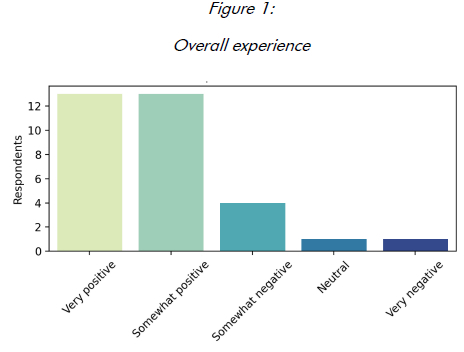
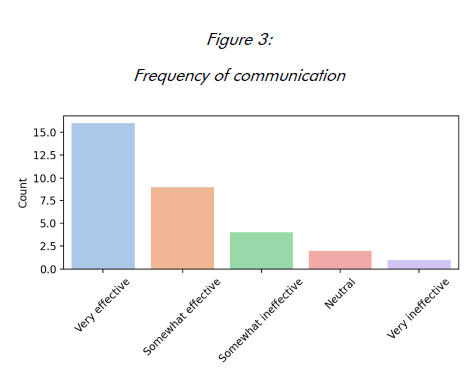
The majority of participants described their overall group work experience as positive, with over half selecting 'very positive' or 'somewhat positive'. Communication was generally perceived as effective, although experiences varied across groups.
One participant stated,
Our WhatsApp group was active every day - it made planning much easier.
Others emphasised the value of synchronous meetings:
We used Zoom once a week to check in. It worked well but not everyone could always attend.
However, scheduling challenges were frequently mentioned. One student explained,
Sometimes replies took days, which delayed things a lot.
These delays often affected task completion and group coordination.
Figures 1 and 2 illustrate the relationship between overall group work experience and perceived communication effectiveness. A clear pattern emerges in which more effective communication is associated with more positive group experiences.
Frequency and contribution to learning
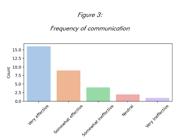
Most students indicated that they collaborated 'occasionally' or 'frequently' throughout their studies. Many participants reported that group work improved their understanding of course content.
One participant explained:
Hearing my peers explain ideas in their own words really helped me understand better.
Another noted:
Working in a group made me more confident because we supported each other with tricky parts of the assignment.
Students also described developing transferable skills through collaboration. One student stated:
I improved my writing and learned how to solve problems in a team.
Figure 3 illustrates the relationship between frequency of collaboration and overall group work experience. Students who collaborated more frequently tended to report more positive experiences, while less frequent collaboration was associated with more negative experiences.
Perceptions of fairness and future preferences
Students expressed mixed views regarding the fairness of group assessment. Some participants felt that assessment was fair when contributions were balanced.
One student explained:
It was fair because our lecturer asked us to submit peer evaluations.
Others felt that group marks did not accurately reflect individual effort. One participant stated:
It didn't feel fair when I did all the editing and someone else got the same mark.
Students' preferences for future group work were similarly divided. Some preferred fewer group tasks, while others valued collaborative learning.
One participant noted:
I'd like fewer group assignments, it's hard to rely on people you don't know.
Another explained:
I prefer more group tasks because I learn better from others.
These responses suggest that students' preferences for collaborative assessment are strongly influenced by their previous group work experiences.
Benefits and challenges
Participants identified several benefits associated with collaborative group work. Many students valued exposure to diverse viewpoints, noting that working with peers from different backgrounds broadened their understanding of course concepts and encouraged deeper critical thinking.
Students also highlighted peer learning opportunities, explaining that discussing ideas and sharing resources improved their understanding of complex topics. In addition, participants reported developing academic and digital collaboration skills through the use of communication platforms such as WhatsApp, email, and video conferencing tools.
Despite these benefits, several challenges were identified. Unequal participation was the most frequently reported concern, with some students contributing significantly more than others. This often resulted in frustration and perceptions of unfairness in assessment.
These findings align with previous research indicating that students may feel anxious about group work when assessment outcomes depend on the contributions of others (Demosthenous et al., 2020).
Scheduling difficulties also emerged as a significant challenge, particularly for PG distance students balancing work and family responsibilities. Students frequently reported delays in communication when coordinating across different schedules.
Finally, some groups experienced emotional strain due to conflict, misunderstandings, or unclear role allocation. These experiences sometimes undermined the intended collaborative learning benefits of group work.
DISCUSSION
This study confirms that collaborative formative assessments in distance PG programmes offer both significant pedagogical benefits and notable challenges that must be addressed through intentional instructional design.
From a connectivist perspective, learning occurs through networks of people and digital tools (Siemens, 2005). Participants in this study demonstrated networked learning through their use of communication platforms, shared responsibilities, and collaborative problem-solving strategies. These findings align with previous research showing that digital collaboration supports knowledge co-construction in online learning environments (Fakir et al., 2024; Wang et al., 2014).
Participants valued the opportunity to engage with diverse perspectives and learn from their peers. This suggests that collaborative learning supported both cognitive and social development within the digital learning environment. These findings are consistent with research indicating that peer interaction promotes deeper learning and engagement (Balica, 2021).
However, unequal participation emerged as a significant concern. Students reported frustration when group members contributed unevenly, which sometimes resulted in emotional stress. These findings align with previous research showing that unequal participation can negatively impact student experiences in online group work (Mkhize & Van Wyk, 2022).
Perceptions of fairness were closely linked to assessment design. Students reported more positive experiences when peer evaluation mechanisms were included. This supports research emphasising the importance of accountability structures in collaborative assessment (Reddy, 2022).
Communication emerged as a key factor influencing students' experiences. The frequent use of WhatsApp highlights the importance of informal communication tools in supporting collaboration. This suggests that students actively construct their own learning networks using accessible digital tools. However, scheduling remained a persistent challenge for PG distance students. Many participants balanced academic work with employment and family responsibilities, making synchronous meetings difficult to coordinate.
Finally, students reported developing transferable skills through collaborative work, including teamwork, academic writing, and digital communication. These skills are essential for PG students preparing for professional roles in education. These findings support previous research suggesting that collaborative learning enhances both academic and professional competencies (Ellis & Han, 2020).
RECOMMENDATIONSClarify roles and expectations
Lecturers should provide clear guidance on role allocation and task distribution to minimise unequal participation. Practical tools such as group contracts, role rotation guidelines, and peer accountability checklists can support equitable contribution.
Facilitate effective communication
Students should be encouraged to agree on communication tools and meeting times early in the semester. Training on collaborative platforms such as Teams, Zoom, and shared documents can help reduce delays and miscommunication. Lecturers could also facilitate initial group sessions to help students establish communication norms and identify potential challenges.
Lecturers may consider providing short feedback surveys after initial group meetings to support role allocation and identify communication challenges.
Embed peer evaluation mechanisms
Structured peer assessment and self-reflection tasks should be included alongside group submissions to improve perceptions of fairness. Allowing students to contribute to the design of peer evaluation criteria may further promote accountability and ownership.
Offer flexible scheduling support
Lecturers should provide realistic deadlines, clear timelines, and periodic check-ins to support PG students balancing multiple responsibilities. Providing guidance on scheduling tools such as Microsoft Teams scheduling or polling tools may assist students in coordinating meetings more effectively.
Balance collaborative and individual tasks
Formative assessment should include a balance of collaborative and individual tasks. This ensures that students benefit from peer learning while also developing individual competencies.
Encourage reflective practice
Students should be encouraged to reflect on group processes throughout collaborative tasks. Lecturers should also reflect on group outcomes and student feedback when designing future collaborative assessments. This feedback assists in redefining and redesigning future group assessments.
CONCLUSION
This study provides insight into how PG Education students experience collaborative group work within formative assessment in a distance learning context. The findings indicate that collaborative assessments offer meaningful learning opportunities, including exposure to diverse perspectives, improved understanding of course content, and the development of academic and digital collaboration skills.
However, these benefits are accompanied by recurring challenges, including unequal participation, scheduling difficulties, communication delays, and concerns regarding fair assessment. These challenges highlight the importance of intentional design and facilitation of collaborative assessment tasks.
From a connectivist perspective, collaborative learning environments function as networks in which students construct knowledge through interaction with both peers and digital tools. The findings suggest that effective collaboration depends on the strength and accessibility of these networks.
Overall, the findings indicate that collaborative group work can be an effective formative assessment strategy when appropriate structures and support mechanisms are in place.
REFERENCES
Balica, M. (2021.) Supporting student well-being in a digital learning environment: Evidence-based opportunities for innovation in learning and teaching during school closures related to the COVID-19 pandemic and beyond. International Baccalaureate Organization. https://www.ibo.org/research/supporting-student-wellbeing-in-a-digital-learning-environment-2021/
LITERATURE REVIEW
- Black, P., & Wiliam, D. (2018). Classroom assessment and pedagogy. Assessment in Education: Principles, Policy & Practice, 25(6), 551-575.
- Blignaut, S., Pheiffer, G., Visser, A., Le Grange, L., Maistry, S., Ramrathan, L., & Simmonds, S. (2022). Belonging, wellbeing and stress with online learning during COVID-19. South African Journal of Higher Education, 36(6), 169-191.
- Demosthenous, G., Panaoura, R., & Eteokleous, N. (2020). The use of collaborative assignment in online learning environments: The case of higher education. International Journal of Technology in Education and Science, 4(2), 108-117.
- Donelan, H., & Kear, K. (2023). Online group projects in higher education: Persistent challenges and implications for practice. Journal of Computing in Higher Education. https://doi.org/10.1007/s12528-023-09360-7
- Dron, J., & Anderson, T. (2014). Teaching crowds: Learning and social media. Edmonton: Athabasca University Press.
- Driskell, T., Driskell, J., Burke, S., & Salas, E. (2017). Team roles: A review and integration. Small Group Research, 48(5), 482-511.
- Ellis, R. A., & Han, F. (2020). Assessing university student collaboration in new ways. Assessment & Evaluation in Higher Education, 45(5), 647-661.
- Garcia, E., Brown, M., & Elbeltagi, I. (2013). Learning within a connectivist educational collective blog model: A case study of UK higher education. Electronic Journal of e-Learning, 11(3), 253-262.
- Gillis, A., & Krull, L. (2020). COVID-19 remote learning transition in spring 2020: Class structures, student perceptions, and inequality in college courses. Teaching Sociology, 48(4), pp.283-299.
- Koppenborg, M., & Klingsieck, K. B. (2022). Group work and student procrastination. Learning and Individual Differences, 94, Article 102117.
- Lu, H., & Smiles, R. (2022). The role of collaborative learning in online education. International Journal of Economics, Business and Management Research, 6, 125-137.
- Mphahlele, R. (2024). A review of research on collaborative assessments in the open distance and e-learning environment. Journal of Learning for Development, 11(2), 206-219.
- Osman, Z., Yusoof, F., Ali, A., & Aziz, R. (2024). Enhancing student retention through academic support and course design: Satisfaction as mediator. International Journal of Academic Research in Progressive Education and Development, 13(4), 1774-1787.
- Picton, C., & Baik, C. (2024). Conceptualising student engagement in higher education. Student Success, 15(1), 1-9.
- Reddy, P., (2022). Groupwork in undergraduate research: Turning bane into boon. African Journal of Inter/Multidisciplinary Studies, 4(1), 129-141.
- Ritchhart, R., (2021). The power of making thinking visible: Practices to engage and empower all learners. San Francisco: Jossey-Bass.
- Samuel, F.. & Nurudeen, A. (2021). Understanding the impact of the digital divide on South African students in higher educational institutions. African Journal of Science, Technology, Innovation and Development, 14(1), 1-11.
- Siemens, G., (2005). Connectivism: A learning theory for the digital age. International Journal of Instructional Technology and Distance Learning, 2(1), 3-10.
- Tseng, H., Wang, C. H., Ku, H. Y., & Sun, L. (2013). Key factors in online collaboration and their relationship to teamwork satisfaction. Quarterly Review of Distance Education, 14(4), 195-210.
- Vogel, N., & Wood, E. (2023). Collaborative group work: University students' perceptions and experiences before and during COVID-19. SN Social Sciences, 3(6), Article 86.
- Wang, M., Chen, Y., & Khan, M. J. (2014). Mobile cloud learning for higher education: A case study of Moodle in the cloud. International Review of Research in Open and Distributed Learning, 15(2), 254-267.
Reviewed: 14 November 2025
Accepted: 30 March 2026