The Septuagint translation as the key to the etymology and identification of precious stones in the Bible
Abstract
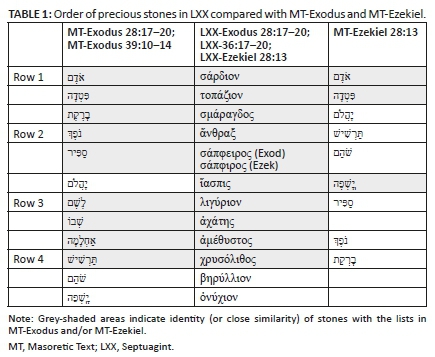
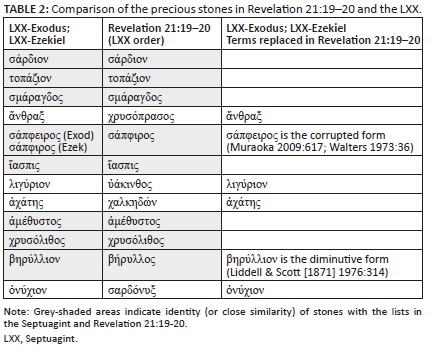
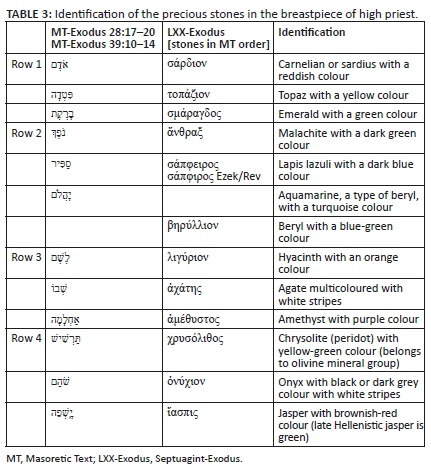
In the ancient world, precious stones (valuable stones and hard substances excluding gold, silver and copper) were distinguished in terms of appearance (beauty, colour), function (durability) and cost (rarity). As a result, there is considerable difficulty in determining how to correlate the inventory of lexical terms referring to precious stones in the ancient Near East with modern mineralogical identifications. In this article, the etymology and identification of precious stones in the Bible are revisited using editorial theory and complexity thinking. The starting point for lexicographical identification is the breastpiece of the high priest (Ex 28:17-20; 39:10-14) with its 12 precious stones and the translation of the Hebrew terms in the Septuagint. In the light of the considerable writings in the Hellenistic world on precious stones, especially Pliny's Naturalis Historia and Theophrastus' On Stones, the Septuagint provides the key for the etymology and identification of the precious stones in both the Old Testament and the New Testament. CONTRIBUTION: The Septuagint translation of the precious stones in the high priest's breastpiece is the Rosetta Stone for the identification all of the precious stones in the Hebrew Bible and New Testament. The subsequent translations of the terms indicate changes or substitutions of referents and their meanings
Septuagint; Breastpiece of high priest; Exodus 28:17-20; Exodus 39:10-14; Pliny Naturalis Historia; Theophrastus On Stones; Precious stones; Editorial theory; Complexity Thinking; Lexicography