Fir trees or chariots in Nahum 2:4? The study of ancient texts
Abstract
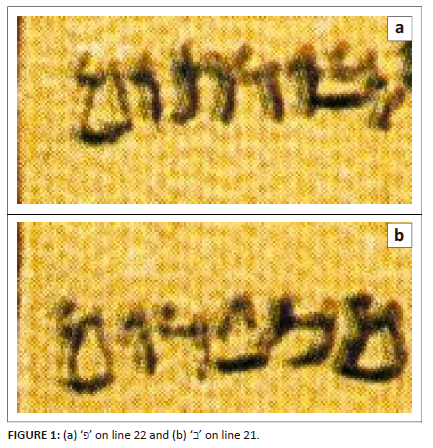
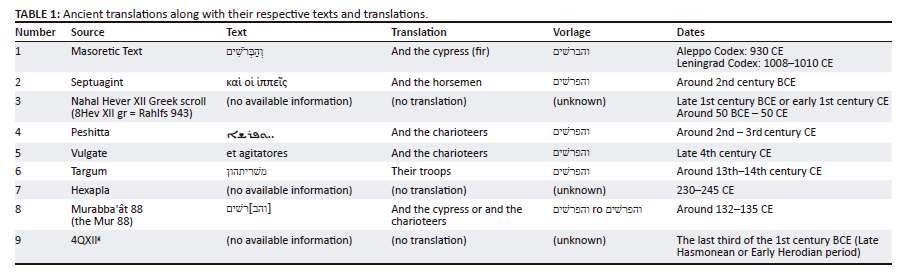
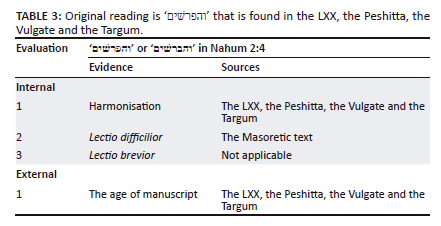
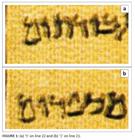
Is the phrase '••”——“•–' or '••–——“•–' found in Nahum 2:4? The textual tradition is divided. The Septuagint (LXX), the Vulgate, the Targum and the Peshitta support the reading '••–——“•–' in Nahum 1:12, while the Masoretic text preserves '••”——“•–'. In addition, this problematic term poses a significant challenge for Hebrew lexicons and English Bible translations. This disagreement prompts significant inquiries regarding the verse's initial phrasing, its interpretation and the origins of the differing readings that emerged during the transmission process. CONTRIBUTION: This article employs textual criticism as its primary approach, analysing manuscript evidence, assessing the likelihood of transcription and translation variations, and considering contextual and linguistic elements. This methodology aims to identify the most probable original text and to explore potential explanations for the discrepancies among these ancient sources.
Old Testament; textual criticism; English Bible translations; Nahum; ••”——“•–
 Thumbnail