The mutual corruption of volition and nature? A closer reading of Ad Thalassium 42
Abstract
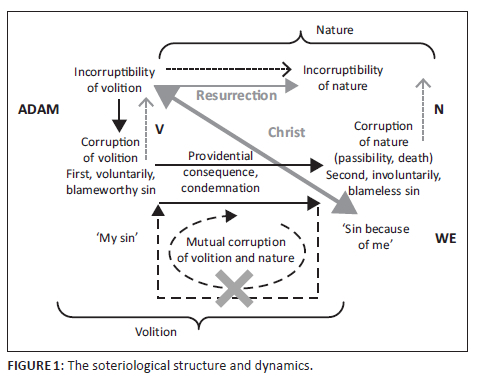
This article closely examines the content of an important passage in Maximos the Confessor's Ad Thalassium 42, in which we can identify a ternary soteriological structure (Adam-Christ-us) recurring in the work of the Byzantine theologian. The main focus of the article is to highlight and analyse the relationship that he evokes, but does not detail, between human nature and the exercise of will - in the case of Adam, as the protological and lapsarian exemplar of humanity; in the case of Christ, as its teleological and soteriological exemplar; and in the case of us, as natural descendants of the former and possible spiritual followers of the latter. CONTRIBUTION: This article highlights a general soteriological structure and the circular dynamics between nature and will as the central anthropological mechanism of this structure, both of which are relevant to Maximos the Confessor's entire work in general and to his moral psychology, including his concept of the passions, in particular.
nature; volition; soteriology; Ad Thalassium 42; Maximos the Confessor
 Thumbnail