Religious beliefs in public administration and behaviour surrounding abortion decriminalisation in COVID-19 era
Abstract
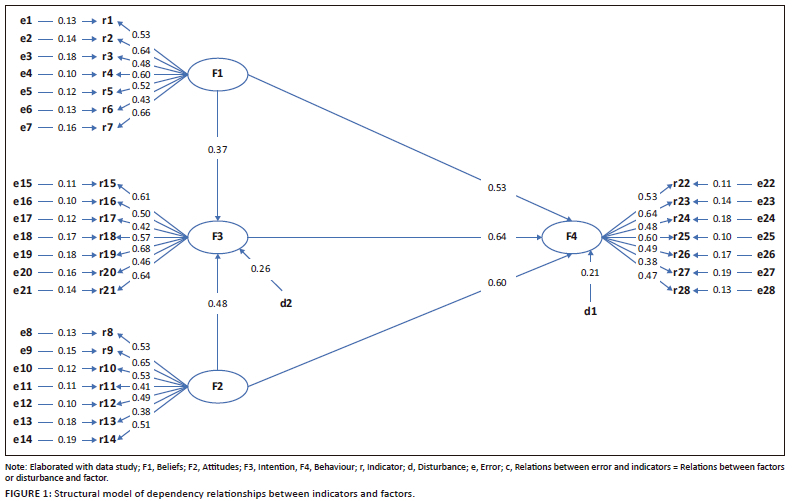
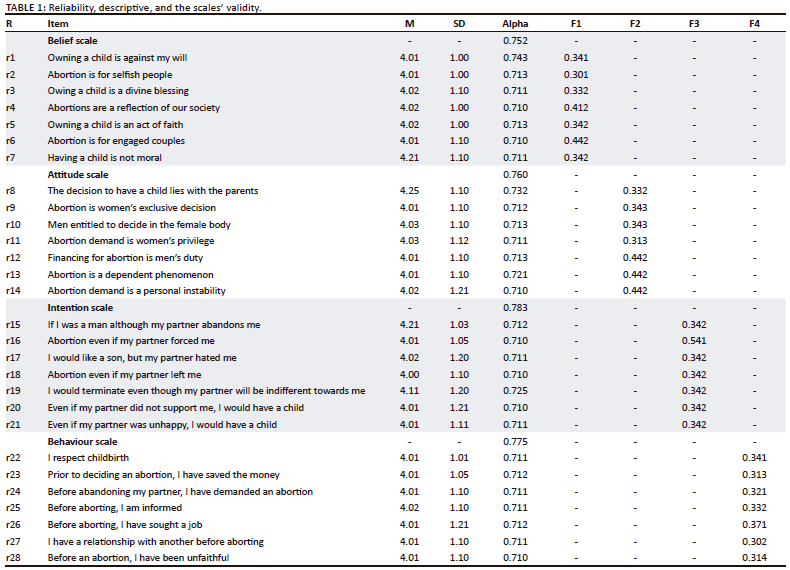
In the context of reproductive health, policies focused on decriminalising abortion that resulted in religious beliefs, attitudes and behaviours being affected. The main purpose of this article was to identify the religious beliefs of abortion in the emergency situations such as COVID-19. Although there is no general consensus regarding abortion, there is almost 'general opposition to causing harm to life' in most religions. In the current study, 28 indicators and four factors (seven for each factor) related to pregnancy termination were explored through an exploratory factor structure. The study was therefore non-experimental, cross-sectional and exploratory, with 100 students selected in a non-probabilistic way. CONTRIBUTION: The main contribution of this research is to find the variable effects on abortion in emergency conditions regarding religious beliefs. Given the results, behavioural intentions determine a structural model, but religious beliefs explain the solution. Furthermore, data generalisation is not possible due to the context, sample selection and type of analysis. In the local population, a confirmatory factor analysis should be performed with a probabilistic sample selection
intentions; abortion; religious beliefs; attitudes; COVID-19
 Thumbnail