Experiences of women enrolled in a prevention of mother to child transmission of human immunodeficiency virus infection programme in Zimbabwe
Abstract
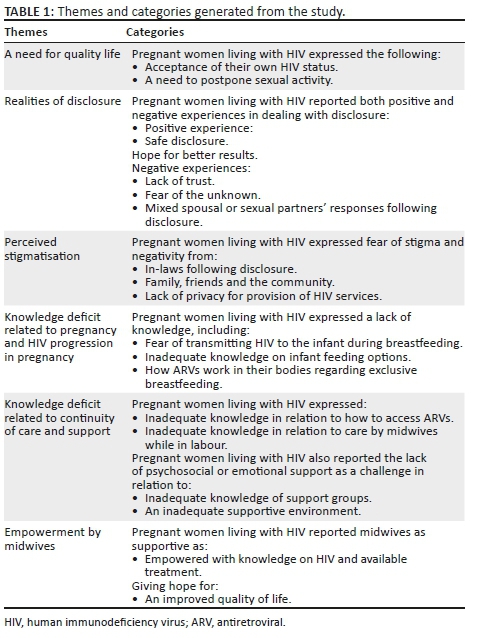
BACKGROUND: Prevention of mother-to-child transmission (PMTCT) programmes have been reported to reduce the rate of transmission of human immunodeficiency virus (HIV) infection by 30% - 40% during pregnancy and childbirth. The PMTCT transmission is achieved by offering HIV prophylaxis or initiating antiretrovirals to pregnant women who test HIV positive. Being aware of the experiences of these women will assist in planning and implementing the relevant care and support. The study was conducted in three phases. AIM: This article will address phase 1 which is to explore and describe the experiences of pregnant women living with HIV. SETTING: The study setting was a PMTCT site in a Provincial Hospital, in Zimbabwe. METHODS: The study design was qualitative, exploratory, descriptive and contextual. In-depth face-to-face interviews were conducted from a purposive sample of 20 pregnant women. Thematic data analysis was performed. RESULTS: Six themes emerged: realities of disclosure, a need for quality of life, perceived stigmatisation, inadequate knowledge on infant feeding, continuity of care, empowerment and support CONCLUSIONS: The study concluded that pregnant women living with HIV require empowerment and support to live positively with HIV.