Programme administrators' views on barriers in the Cuban-South African medical collaboration at UKZN
Abstract
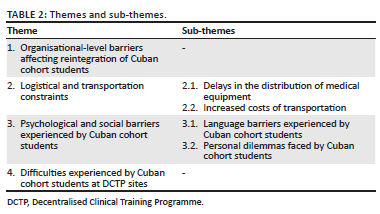
BACKGROUND: The Cuban-South African medical collaboration, initiated in the early 1990s, aims to address the shortage of medical doctors, particularly in remote and rural South Africa, thereby contributing to achieving health-related outcomes for universal health coverage AIM: This study focusses on the perceptions of programme administrators of the systemic barriers in coordinating the Cuban-South African medical collaboration programme SETTING: The main site for this study is the University of KwaZulu-Natal, Nelson Rohihlahla Mandela School of Medicine. It is the only medical university located in KwaZulu-Natal METHODS: A qualitative exploratory design was employed to understand the barriers to coordinating the programme. Purposive sampling was used to select participants. Data collection was conducted through semi-structured interviews with participants at the medical school. Data were analysed using thematic analysis RESULTS: The study revealed several barriers that hinder the smooth operation of the programme, such as incomplete documentation and delays in registration, delays in equipment distribution and transportation complications because of registration issues, language barriers, connectivity issues, and the need for provisions during load shedding and water shortages CONCLUSION: Addressing these barriers is crucial for improving the overall experience of the cohort students, who play a vital role in enhancing human resources for health, driving health reforms and supporting primary healthcare in South Africa CONTRIBUTION: The study provides recommendations to enhance the programme's effectiveness. These measures are essential for ensuring the sustainability and success of the Cuban-South African medical collaboration programme
human resources for health; Cuban-South African medical collaboration; medical professionals; UKZN; Department of Health
 Thumbnail