Short-term effects of simultaneous cardiovascular workout and personal music device use on the outer hair cell function of young adults
Abstract
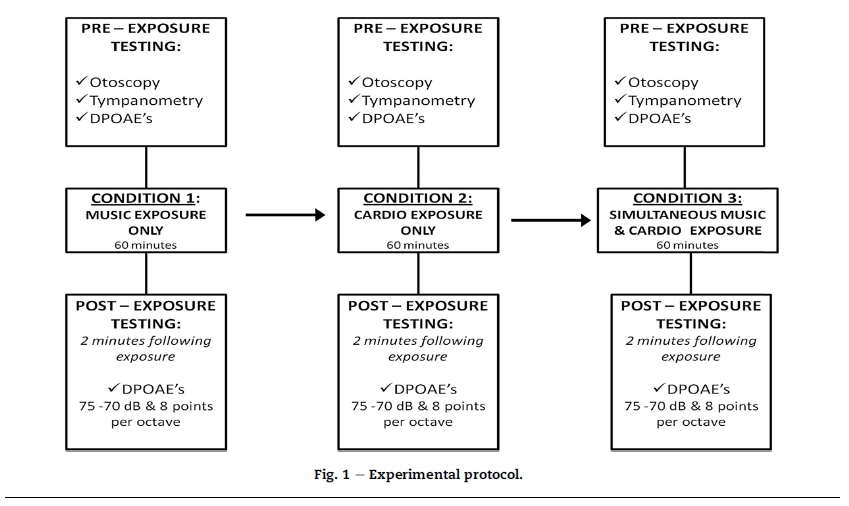
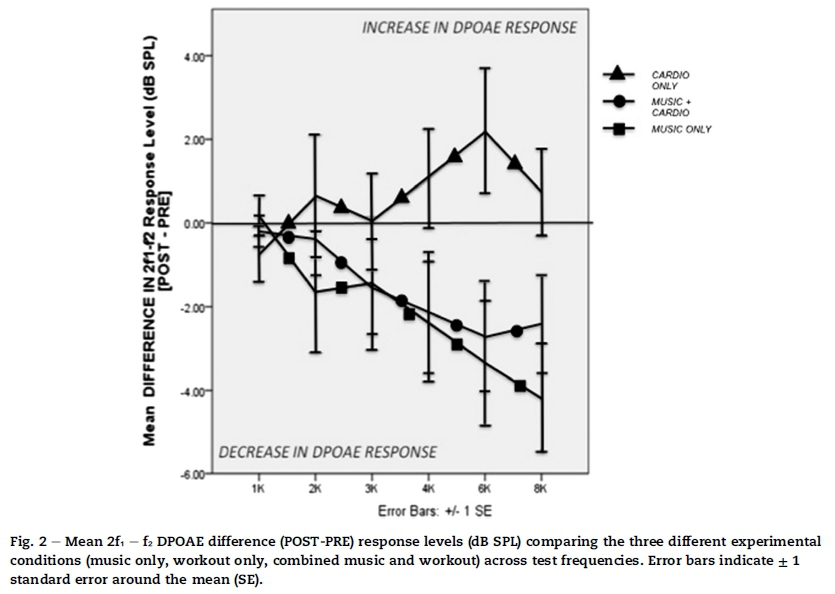
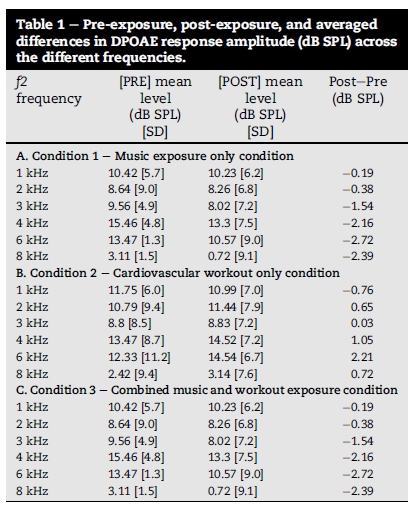
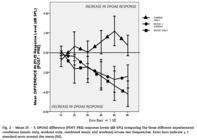
BACKGROUND: Recreational noise exposure, including personal music device use (PMD), has become a growing public health concern, as it may potentially result in the development of hearing difficulties. OBJECTIVES: The aim of the study was to determine the differential impact and short-term effects of simultaneous cardiovascular workout and PMD use on the outer hair cell (OHC) function of young adults. METHOD: A quantitative research approach was followed. In this study a pre-test post-test approach was used and twelve subjects participated in three 1 h testing conditions with altered variables including: (i) exposure to PMD use in isolation, (ii) exposure to cardiovascular workout in isolation, and (iii) simultaneous exposure to the latter mentioned. Distortion product otoacoustic emissions (DPOAEs) were conducted pre- and post-exposure for each testing condition as primary indicator of cochlear responses. The process consisted of a cycling procedure through the preset stimulus frequency sequence, measuring the 2f₁-f₂ (75-70 dBSPL) and constructing a plot of DPOAE levels as a function of frequency. RESULTS: Individual testing conditions did not result in statistically significant changes of the DPOAE response, however a significantly different profile in the DPOAE response level increase/decrease for the higher frequencies (6-8 kHz) was obtained when comparing the different sessions. Exposure to cardiovascular workout condition in isolation indicated a clear trend of an increased DPOAE response level between the pre-exposure and post-exposure testing from 2 kHz to 8 kHz with a maximum increase at 6 kHz. Both the music-only condition and the combined condition resulted in a clear trend of decreased DPOAE response amplitudes between the pre-exposure and post-exposure testing for the higher frequencies. CONCLUSION: Findings support the notion of a clear effect of cardiovascular workout with and without music exposure on the OHC function at higher test frequencies, as measured by DPOAEs. Decreased DPOAE amplitudes between 2 kHz and 8 kHz were observed with music exposure and the opposite effect was observed for cardiovascular workout in isolation.
Personal music device; Cardiovascular workout; Outer hair cell function; Otoacoustic emissions
 Thumbnail
 Thumbnail