Pain medication misuse in the South African spinal cord injury context
Abstract
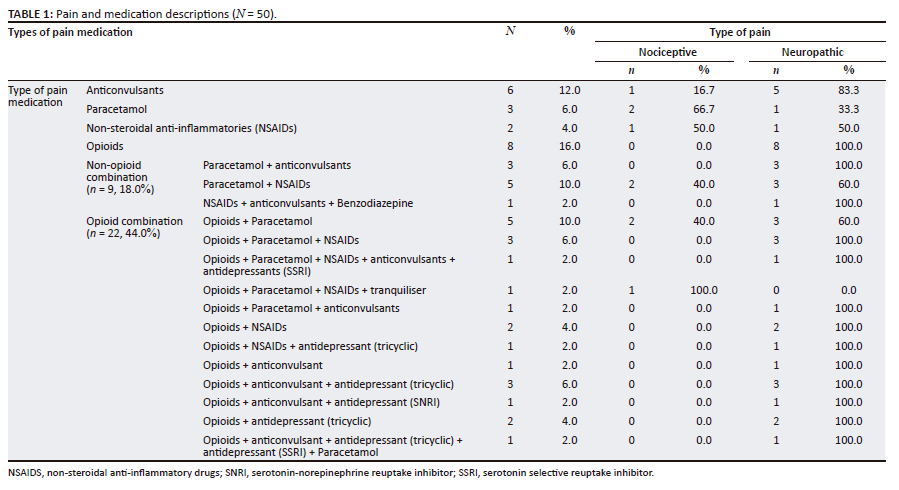
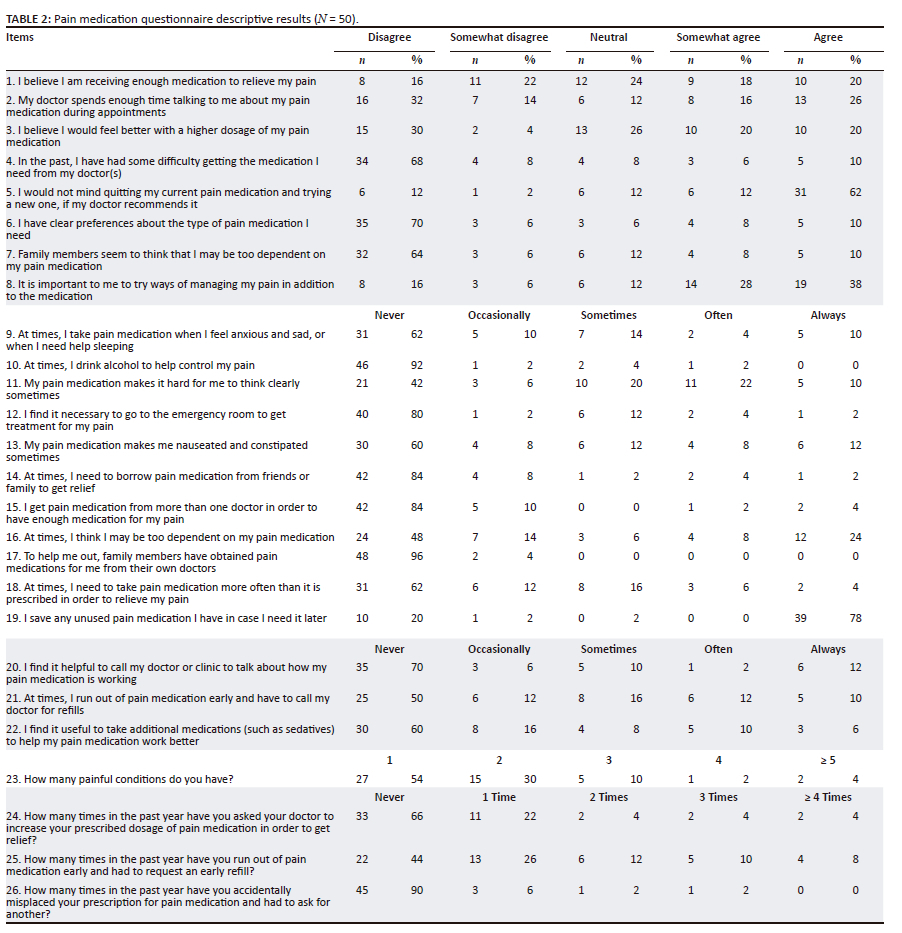
BACKGROUND: Pain after spinal cord injury (SCI) is debilitating and has been reported to be difficult to treat, despite pharmacological interventions. Pain medication misuse (PMM) and associated individual factors among people with spinal cord injury (PWSCI) are scarce. AIM: To determine PMM and the associated factors in PWSCI. SETTING: Homes of community-dwelling manual wheelchair users with SCI in South Africa. METHODS: Community-dwelling PWSCI (n = 122) were consecutively sampled and the Pain Medication Questionnaire (PMQ) was used to determine PMM. Descriptive statistics, Fisher's exact test, independent t-tests, and simple linear regression tests were performed using SPSS v27. Testing was conducted at the 0.05 level of significance. RESULTS: Eighty-five per cent of the participants reported the presence of pain and 48.1% of them used pain medication. Forty-four percent of people who used pain medication scored ≥ 30, indicative of serious aberrant drug-taking behaviours. Opioids were mainly used for neuropathic pain and in combination with other types of medications such as anticonvulsants and non-steroidal anti-inflammatories (44.0%). Pain severity and the type of pain medication were found to be predictors of PMM (p < 0.01 respectively. CONCLUSION: Pain relief after SCI remains difficult to achieve, with an evident high risk of PMM, which may lead to long-lasting side effects, dependency, or overdose. CONTRIBUTION: This study has shown the need for the assessment of the potential risk of dependency before prescribing pain medication, particularly opioids to PWSCI.
analgesics; opioid; pain; pain medication misuse; spinal cord injury