Water, sanitation and hygiene in rural Greater Letaba Municipality, South Africa
Abstract
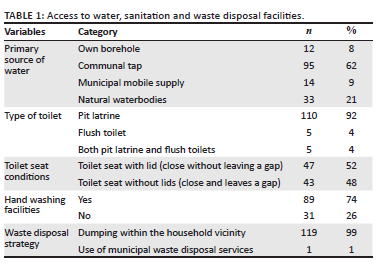
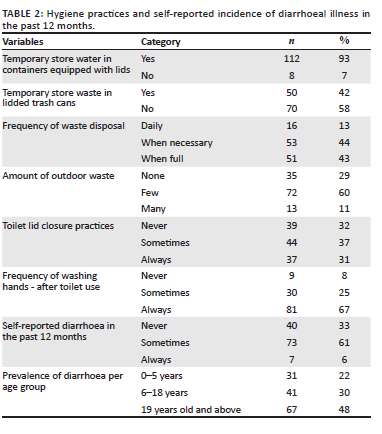
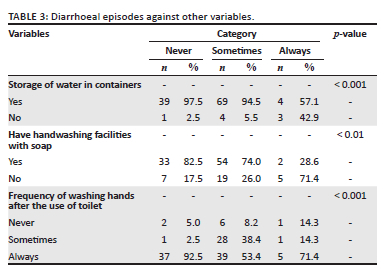
BACKGROUND: Limited access to improved water, sanitation and hygiene (WASH) facilities disproportionately affects low- and middle-income nations, impacting human well-being, health, education and income AIM: This study aimed to assess access to water, improved sanitation and hygiene practices as well as to describe the occurrence of diarrhoeal illnesses in the Greater Letaba Municipality (GLM) in Limpopo, South Africa SETTING: The study was conducted in the villages of Ward 2 of the Bolobedu region under GLM METHODS: A cross-sectional study sampled 120 households through a multistage probability sampling design. Data on WASH access and diarrhoeal episodes were collected through a pre-tested structured interview questionnaire and analysed with STATA 18.0 RESULTS: Although all households had toilets, primarily pit latrines (92%), access to improved water sources was limited, with 62% depending on communal taps. Seventy-four per cent of households had access to handwashing facilities with soap and water. Eighty-one households (68%) reported that family members consistently washed their hands with soap and water after using the toilet. Most households (67%) experienced occasional diarrhoea over the past year. Diarrhoea prevalence was significantly correlated (p ≤ 0.001) with water storage practices, availability of handwashing facilities and the frequency of post-toilet handwashing CONCLUSION: Despite universal toilet access, WASH infrastructure remained inadequate CONTRIBUTION: The study highlights the association between precarious water storage, handwashing practices and diarrhoeal illness, emphasising the importance of promoting hygiene alongside infrastructure development in rural areas
sanitation; water; hygiene; waste management; diarrhoea; rural areas