The use of the World Health Organization Surgical Safety Checklist in operating theatres
Abstract
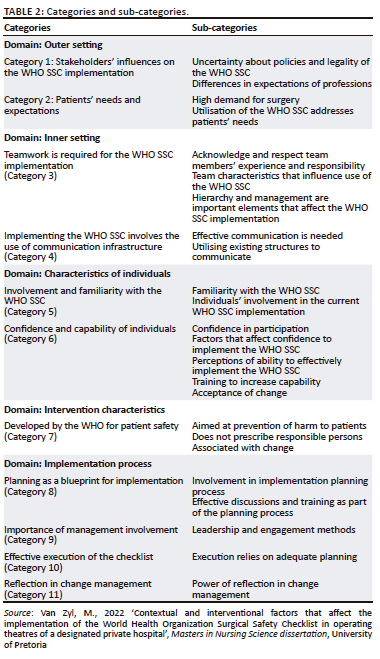
BACKGROUND: There is a global concern over intraoperative patient safety, as adverse events are on the rise. When the World Health Organization Surgical Safety Checklist (WHO SSC) is used correctly, it has the potential to prevent such events. Unfortunately, the intraoperative team in the designated hospital lacked the cooperation to successfully use the checklist AIM: This study, therefore, aimed to explore and describe the factors that affect the use of the checklist in the operating theatres in a designated hospital METHODS: A qualitative research approach together with an implementation science strategy structured according to the Consolidated Framework for Implementation Research was used. Individual interviews with nine surgeons and focus group interviews with six operating theatre professional nurses provided sufficient data for inductive and deductive analysis RESULTS: A deeper understanding of the contextual and interventional factors that affect the use of the WHO SSC is provided by the findings. A high demand for surgery, the hierarchy in the surgical team, their uncertainty about hospital policies and reluctance to adjust to change contributed to the poor use of the checklist CONCLUSION: A sustainable implementation process is crucial and should be embraced and promoted by the intraoperative team CONTRIBUTION: The article contributes a description of the factors that address the use of a checklist for intraoperative patient safety. It recommends that the factors that hinder the use of the checklist be timeously addressed
patient safety; World Health Organization (WHO); Surgical Safety Checklist (SSC); intraoperative teams; implementation science; qualitative research