Strategies to develop clinical reasoning in nursing students: A structured review
Abstract
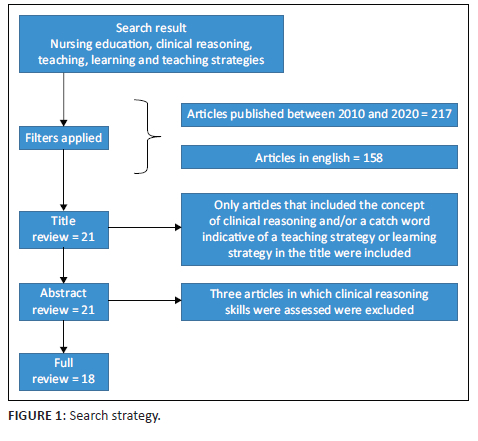
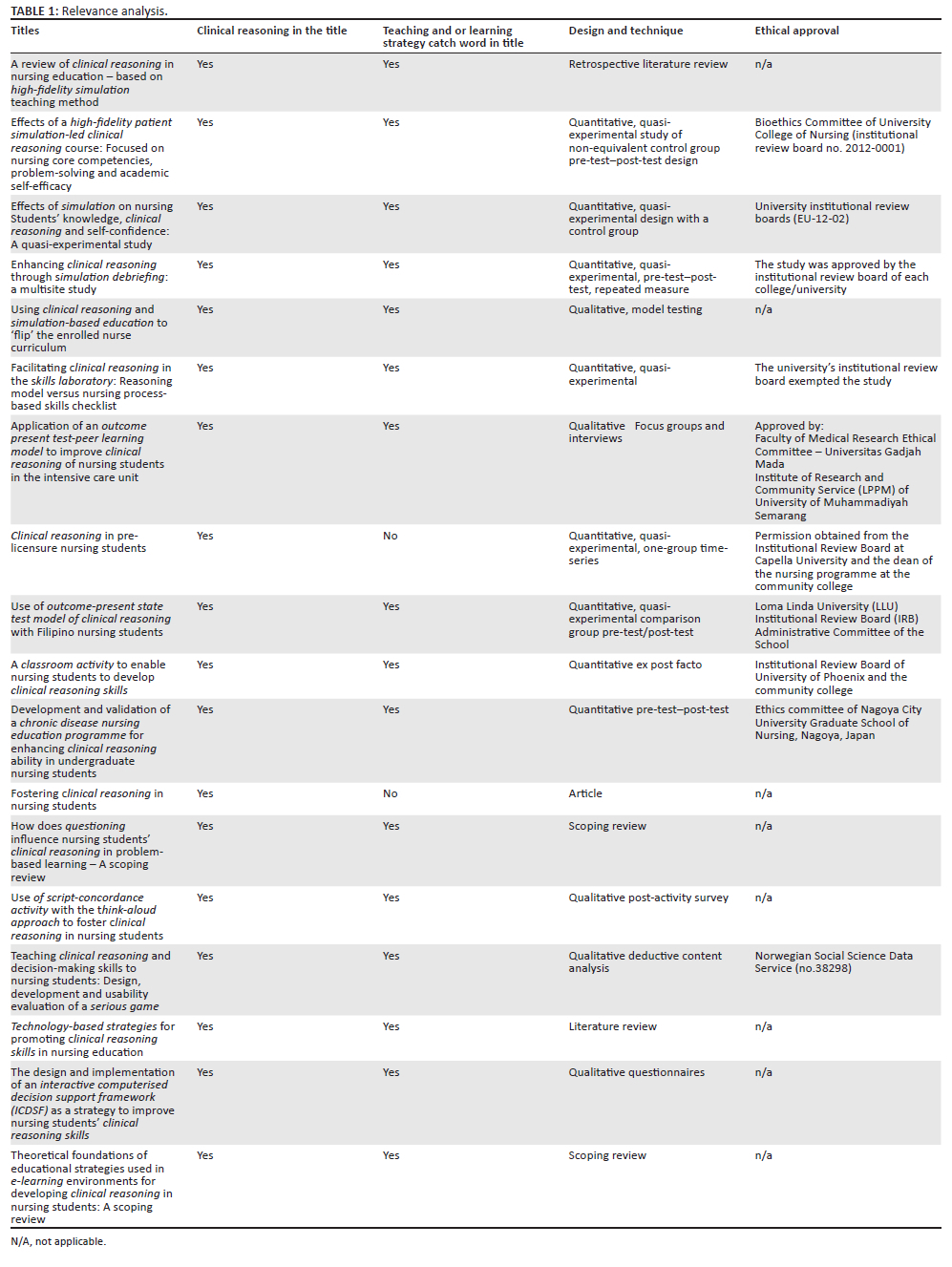
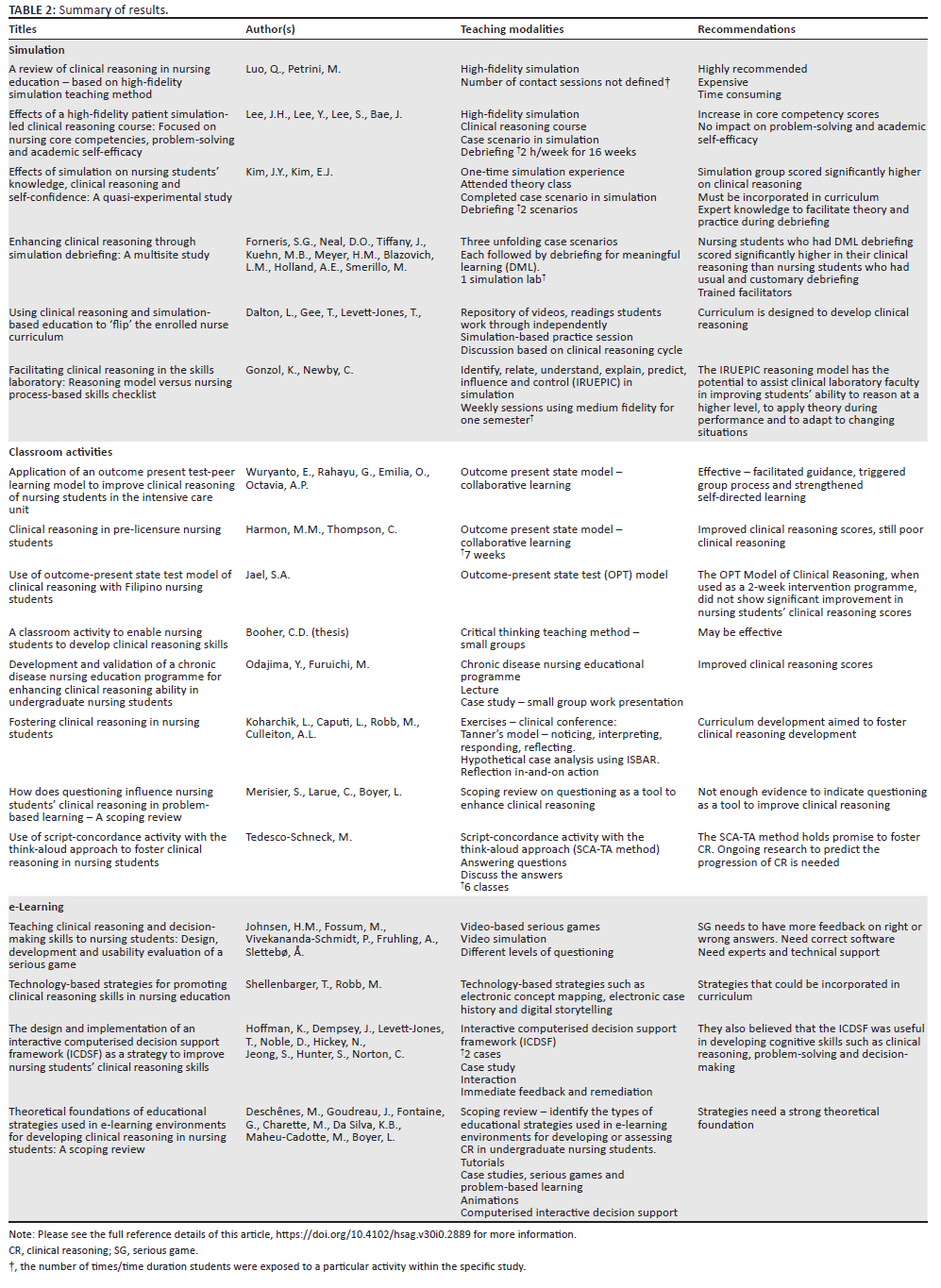
BACKGROUND: Clinical reasoning, a critical skill for nursing practitioners, has been linked to positive patient outcomes. While experienced nurses often demonstrate clinical reasoning abilities, evidence exist that it can be taught and mastered, making its development a key responsibility of nursing education institutions. AIM: To identify and describe teaching and learning strategies that can aid the development of clinical reasoning in nursing students. METHOD: A structured literature review was conducted using the following databases: EBSCO Host (Academic Search Ultimate, PsycINFO, MEDLINE, ERIC, and MasterFILE Premier), NEXUS (National Research Foundation), PubMed, and ProQuest Dissertations and Theses Full Text. Keywords included 'nursing education', 'clinical reasoning', 'teaching', 'learning', and 'teaching strategies' (N = 299). Filters reduced the number to 158, with a title review yielding 21 articles and the abstract review identified 18 articles for the final review. RESULTS: Three main strategies were identified: (1)simulation, (2) classroom activities, and (3) e-learning. Classroom strategies yielded the most results (eight), followed by simulation (six) and e-learning (four). Each strategy incorporated various teaching modalities CONCLUSION: All identified strategies and their modalities enhance clinical reasoning development. CONTRIBUTION: Nursing faculties should consider incorporating these strategies in line with their teaching philosophy and available resources.
clinical reasoning; learning; nursing education; teaching; teaching strategies
 Thumbnail