Snack consumption frequency of children and adults in the Vaal region of Gauteng, South Africa
Abstract
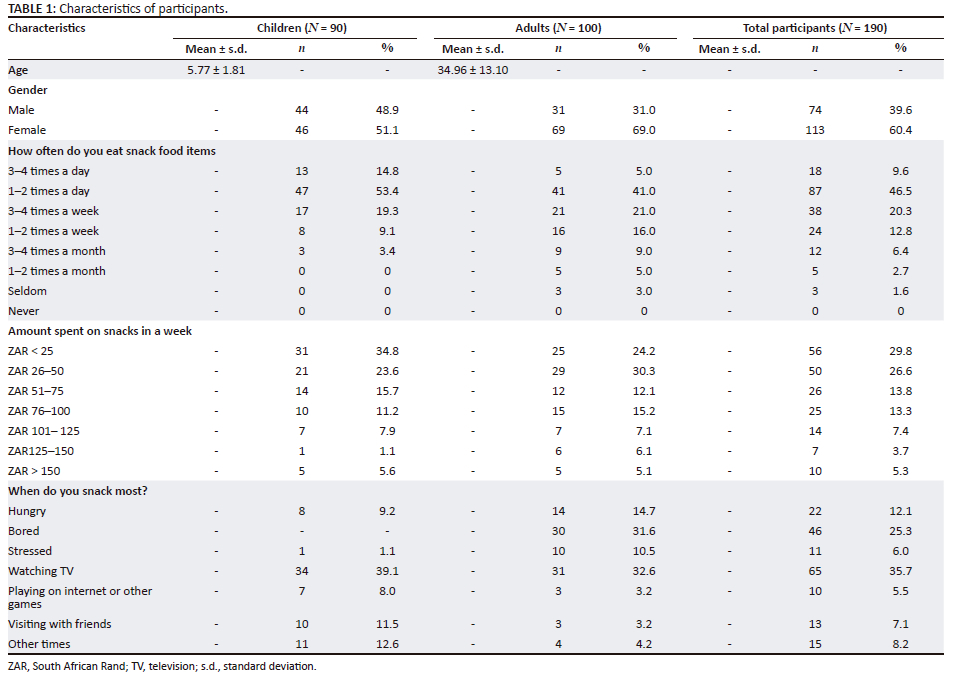
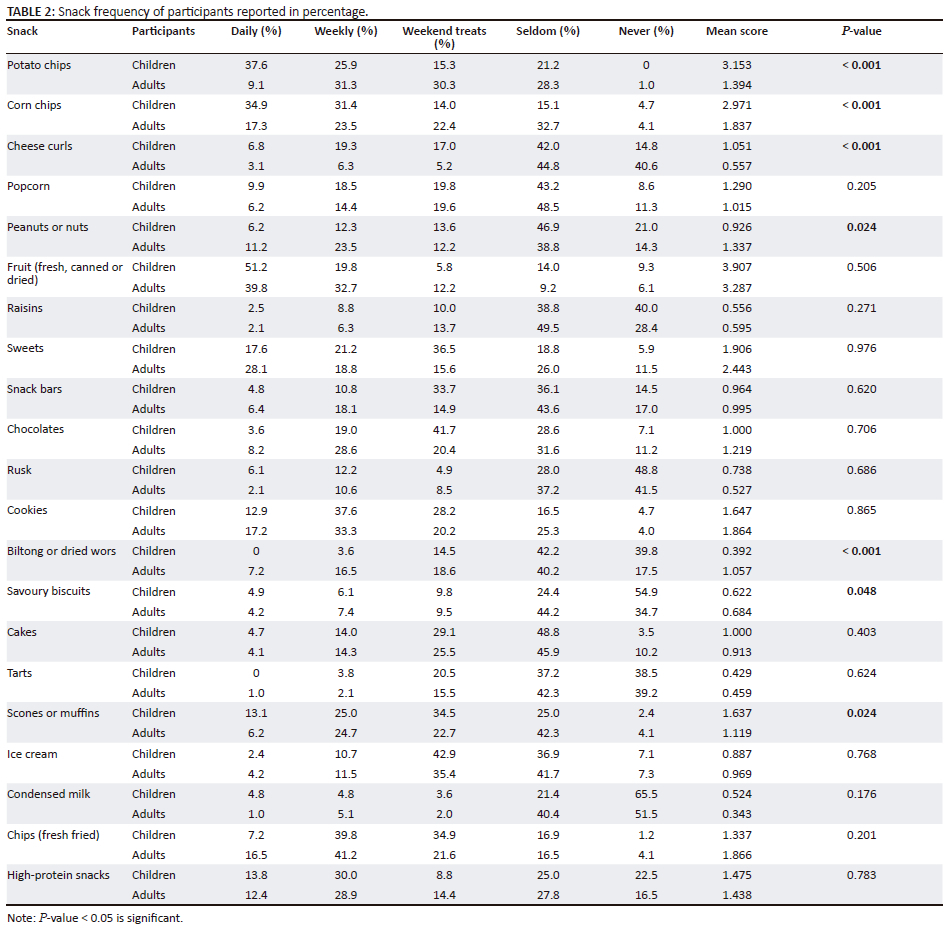
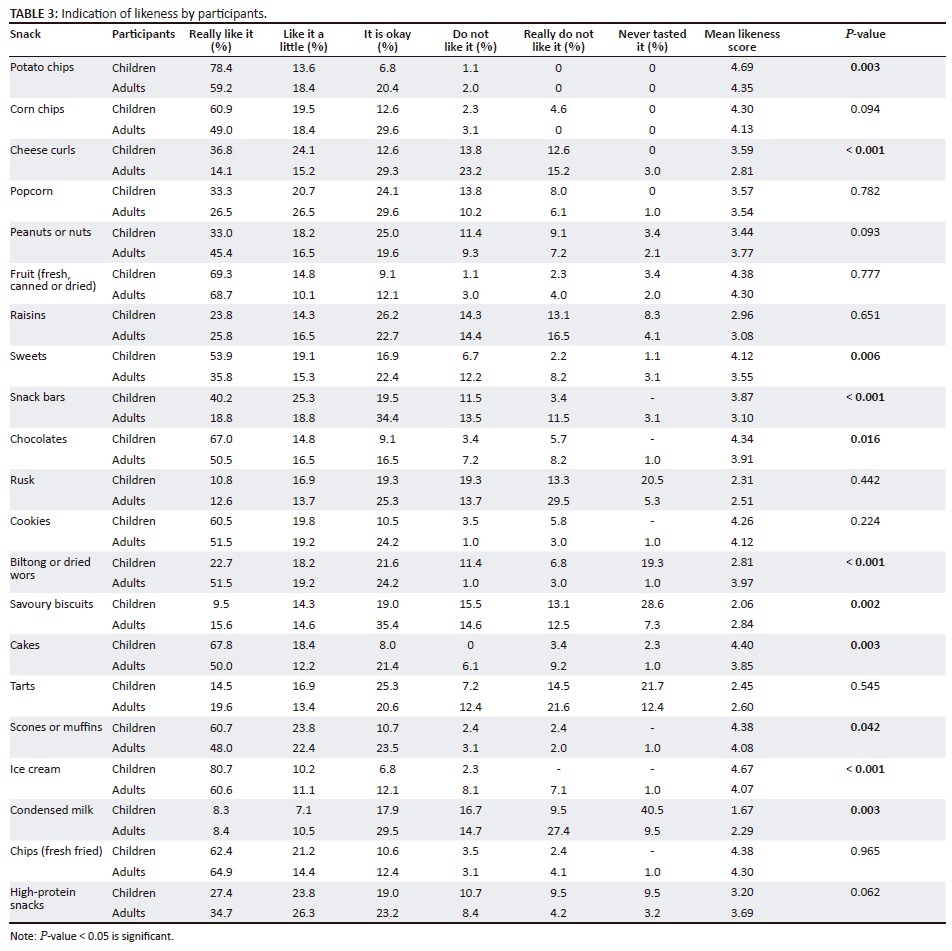
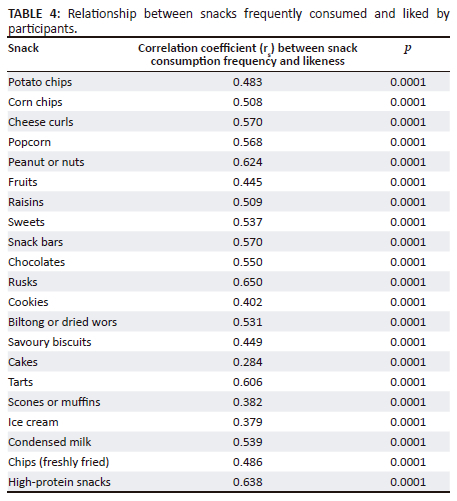
BACKGROUND: Energy-dense, nutrient-poor snacks are associated with an increased risk of non-communicable diseases (NCDs) and the double burden of malnutrition, especially among poor communities. AIM: To determine and compare the snacking preferences and consumption frequency of children and adults from a low SES community in South Africa. SETTING: A preschool, primary school, and an elderly centre in Gauteng. METHODS: A cross-sectional study with a convenience sample of 90 children (3-8 years) and 100 adults (≥ 18 years) to assess snack consumption frequency and preferences of children and adults by means of a snack survey. Mann-Whitney U test was used to determine the differences in preferences and snack consumption frequency of children and adults. RESULTS: The most preferred and consumed snacks included fruits, potato chips, corn chips, sweets, and cookies. Children frequently ate more potato chips (p < 0.001), corn chips (p < 0.001), cheese curls (p < 0.001), and muffins (p = 0.024) than adults. In contrast, adults frequently consumed more peanuts or nuts (p = 0.024), savoury biscuits (p = 0.048) and biltong (p < 0.001) than children. CONCLUSION: Apart from fruits, the most preferred and frequently consumed snacks by the sample were highly processed snacks, which are low in fibre and high in added sugars, saturated fat, and sodium. CONTRIBUTIONS: Findings from this study highlight current snack trends and can guide future nutrition education interventions on healthy snacking and in developing nutritious snacks for the South African community.
snacks; snacking preferences; snack consumption; children; adults; low socioeconomic status