Exploring panarchy and social-ecological resilience: Towards understanding water history in precolonial Southern Africa
Abstract
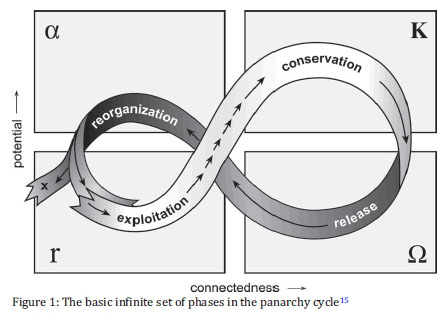
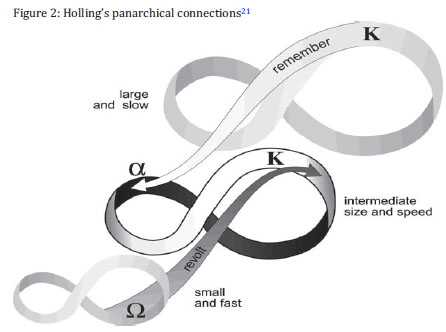
There is a growing corpus of social-ecological thinking in the field of resilience studies.One example is the pioneering work of Gunderson and Holling (2002) on panarchy. The work has had a significant impacton disciplinary collaboration between toenatoral and human sciences. It appears that the discipline of History can benefi tparticularly from these interactions - particularly witthin the framework of panarchy theory. In the front loop of panarchy, Gunderson and Holling have safely ensconced a "memory" feeder, a progressive trend leading towards the conservation and responsible exploitation of nattural resources. In toepanarchymodel toisphase is especially evidentbefore toeonsetof almost inevitable creativedestruction/collapse thatpaves toeway for renewal to theback loop. The understanding of "memory" to thepanarchy cycle focuses on instittutional memory, traditional knowledge and mem orialised experience of resource management. Special attention is given to "memory" to that it createsopportonities forhistorical thinking. By introducing a discourseon historical consciousness, the concept of memory moves more in line with formal historical thinking. The meaning of "creativedestruction"/collapse is therefore categorised to terns of Rüsen's (2013) conception of sense-making of toe crisis phenomenon. Interpretive historical toought can then find space inpanarchy theory. At toe same time toeuseofmemory, from an ecological Md socialperspective could create abetterunderstandingof indigenous and/or localknowledge systems related to thepast. to toe final sectfon there is a brief discussion on toe Iron Age to soutoernAfrica (from about 200 to 1850CE), focusing specificallyon theproto-urban development of Mapungubwe and Great Zimbabwe.The exposition is consciously opaque. The objective is to encourage the reader to think about the interpretation of water history in precolonial southern Africa.
Panarchy; creative destruction; social-ecological systems; historical consciousness; urban development; Iron Age; southern African precolonial history; Mapungubwe; Zimbabwe
 Thumbnail
 Thumbnail