Oral Versus Written Assessments: A Reflective Study on Promoting Equality in Evaluations in Higher Education
Abstract
The present study, through a reflective review, analysed oral tests as an assessment tool used for first-year students in the Management Sciences Faculty at Durban University of Technology. The purpose of this reflective review was to examine the practice of oral assessment in the context of translanguaging and to identify its impact. In this article, I describe my experiences facilitating oral exams in the module, and the lessons learnt along the way. The paper presents an overview of the oral assessment methods that were used. Student performance in, and attitudes towards, oral and written assessments were analysed. The key insights of this reflection were the challenges associated with administering oral assessments in an examination format. The study found that structured oral examinations were a fair assessment tool and encouraged inclusion and equity of students from disadvantaged backgrounds. It also highlighted that oral assessments were time consuming, invoked high stress levels in students, and needed infrastructural and human resource support. In conclusion, the paper highlighted that structured oral examinations can be a better assessment tool, and with some modifications in blueprinting, it is an acceptable translanguaging tool that can be used by various faculties. The article concludes by proposing recommendations under which oral assessments can be valid, reliable, and fair.
oral exams; translanguaging; first-year student; equality; reflection; general education; anxiety
Introduction
Oral assessments were a traditional tool for assessing student understanding before written assessments were adopted (Fenton, 2024). Currently, many institutions assess students through written examinations and tests such as multiple-choice or short-answer questions. It has been noted that the current heavy reliance on written assessment is because they are viewed as easier to administer and grade (Hazen, 2020; Kulasegaram & Rangachari, 2018), especially for larger class sizes. However, the disadvantage of many written exam formats at universities that service students from disadvantaged backgrounds is their inability to adequately capture the depth of the students' learning. This is especially so if they have students who are not proficient in English. In such cases, these students struggle to accurately interpret the given examination questions and express their understanding effectively (Afitska & Heaton, 2019).
This article draws from practitioner insights and experiences of an instructor of a law module in South African higher education. The stimulus for engaging in reflective practice was sparked during training workshops for a module, Cornerstone (Neerputh, 2016), which was offered by the General Education department at Durban University of Technology (DUT). This, coupled with prior observations of student challenges embedded in learning in a second language, prompted a desire to shift from the current mode of assessment. The alternative would be the use of translanguaging within an oral assessment setup. The rationale for this shift was grounded in the linguistic challenges South African students faced when they transitioned from high school to university, especially those who were in the Law for Life module. Particularly when it comes to English as a medium of instruction in higher education (Mheta et al., 2018; Nthabiseng et al., 2024), many students come from backgrounds where English is not the home language, and where subjects were taught in the local language, leading to difficulties in academic performance. Thus, students who are not proficient in English struggle with expressing their knowledge. A study by Rossouw (2018) found that Afrikaans-speaking students faced challenges when using English as a means of instruction, and this affected their performance in accounting courses. To address these issues, implementing oral assessment support systems would be ideal.
Several studies have provided evidence of the effectiveness of a multilingual approach, challenging the monolingual norm (Charamba & Zano, 2019; Hurst & Mona, 2017). However, a research gap remains in addressing the practical difficulties associated with implementing translanguaging within specific modules in oral assessment design. This article presents some findings from a personal reflective practice in relation to the opportunities for learning that their experience offers. It aims to highlight how the translanguaging used in the module might offer greater opportunities to learn specific modules in the future. Using Gibbs' reflective cycle (1988), it examines common practices and approaches that were used in implementing oral assessment as an alternative to traditional written examinations. In a later section, a reflection of experiences and lessons learnt by the instructors is discussed, offering reflective insights and practical recommendations. Seeking to investigate whether the outcome of this study is in line with previous studies, three research questions are addressed:
• How did the instructor perceive the oral assessments in evaluating the student's performance?
• How did the students engage with the oral assessment process?
• What were the challenges that were encountered in administering these oral assessments?
Benefits of Oral Exams: Evidence
Scholars have reported on the use of oral assessments in a variety of disciplines, including mathematics, religious studies, business, physics, medicine, and modern languages (Hazen, 2020; lannone et al., 2020; lannone & Vondrová, 2024; Shanmugam et al., 2025). Oral assessments have been defined as
Assessments in which a student's response to the assessment task is verbal, in the sense of being expressed or conveyed by speech instead of writing. Assessment can be rightly considered as oral as long as a component of the student's response is verbal, and that component is being examined. (Joughin, 1998, p. 368)
Oral assessments provide an equitable assessment environment that benefits students from historically marginalised backgrounds because they accommodate diverse learning needs and reduce systemic biases. Oral feedback is a useful technique when used to respond to and correct the students' errors. lt is beneficial for students because they can locate and understand their own errors, to analyse and correct in the future (Mahmudah & Anggunsari, 2023). Rani's (2019) study highlighted that oral tests are a fast mode of communication that allows for immediate interaction and response, enables face-to-face conversations, and is adaptable to various situations. Another advantage of oral assessment is that the instructor can provide immediate feedback on points of confusion and give clarity to the question being asked (Esmaeeli & Sadeghi, 2020, p.95). This is especially useful for improvement.
Krautloher (2024), in their article, explored how the use of interactive oral assessments can enhance equity in higher education. The study used the Match, Comprehensible, Challenge, Elicit, and Scaffold (MCCES) framework as an evaluation tool on the effectiveness of oral assessments in accommodating diverse student populations. The results highlighted evidence of improvement in academic outcomes in student retention, reduction of attrition rates, and higher completion rates among underrepresented student groups. In addition, both students and teaching staff had positive experiences because students were able to demonstrate their learning through the assessment method. Thus, the adoption and use of interactive oral assessments can assist educational institutions in closing performance gaps between mainstream and non-traditional students, promoting inclusivity (Krautloher, 2024). ln another study, Iannone and Vondrová (2024) investigated the impact of oral assessments in mathematics to determine if they offered any benefits. The study found that oral assessments helped students to gain a deeper conceptual understanding of mathematics, although the students reported that oral exams led to higher anxiety levels. Students also valued oral assessments as opposed to written assessments because the former helped them engage more deeply with the course material. Iannone et al. (2020) also examined how oral performance assessments influenced undergraduate mathematics students' learning. Through the use of oral performance assessments in two third-year mathematics modules, their study found that oral assessments enabled students to acquire a conceptual understanding of the module rather than memorising it for a written exam. This allowed them to get a deeper understanding of the course because they focused on knowing the underlying principles rather than cramming or guessing. That study further found that the interactive nature of oral assessments encouraged students to participate more, creating an environment conducive for deeper engagement.
Thus, oral assessments, despite the challenges, offer a viable alternative to traditional assessment methods, which can improve academic outcomes in higher education. Oral assessments can positively influence students' learning approaches and promote a deeper understanding of a module. However, caution should be given to the issue of stress and anxiety through providing adequate support to students. Another advantage of administering an oral exam is that it provides a more authentic experience. Unlike written assessments, the administration of oral exams lessens the marking workload of the instructor who is left with little to no grading after the exam (Theobold, 2021). Oral exams allow instructors to probe students' understanding, giving them a more complete picture of their understanding (Ndhlovu & Makalela, 2021).
Hazen (2020) investigated oral assessments and highlighted both their strengths and limitations. One of the advantages of oral examinations they noted is their capacity to promote deeper understanding and critical thinking among the students. They highlighted that oral assessments require students to articulate and defend their ideas in a present set up, which allows them to reveal the extent to which they have understood the theory and their ability to apply it in practice-in other words, to be more analytical and critical in thinking. That study also showed that oral assessments enable students to receive immediate feedback and clarification. In cases where a student misunderstands a question, the examiner can rephrase it, and vice versa for students who can clarify their responses. Oral assessment also has the potential to enhance communication skills and reduce opportunities for plagiarism.
Despite the clear benefits, Hazen (2020) acknowledged that there are several significant challenges to oral assessments. Firstly, they are time-consuming and have logistical issues in terms of scheduling when there are large numbers of students. Furthermore, research reports that students at times are not accustomed to facing their assessor during an assessment, which makes the process daunting and stressful. Additionally, administering oral assessments requires significant time and resources, which is a considerable limitation. Oral assessments also seem to favour articulate students over those with weaker communication skills. The nature of an oral assessment opens itself up to potential bias and subjectivity when grading the students because the marking happens simultaneously with the assessment process (Fenton, 2024). Lastly, studies have revealed that oral assessments provoke anxiety in students and affect those who are introverted or lack confidence in public speaking. This emotional factor hinders performance and compromises the fairness of the evaluation. This means that when implementing oral assessment, one needs to carefully plan its implementation and moderation to avoid the above disadvantages. This can be done through the use of clear rubrics and by training examiners against bias. There is thus a lot of time is required in administration by the instructor to deliver oral exams (Theobold, 2021).
Context
Around 40 per cent of the global population has no access to education in a language they understand, which affects their learning (UNESCO, 2025). This means about 250 million learners worldwide face systemic exclusion due to language barriers. UNESCO (2025) advocated multilingual education and inclusive pedagogies as a means of dealing with this problem and promoting equity. According to the national census (Statistics South Africa, 2023), isiZulu is the most spoken language in the country (24,4%), followed by isiXhosa (16,3%) and Afrikaans (10,6%); only 8,7 per cent of the population speaks English at home, yet it is used as the default language for learning at universities in South Africa. The DUT community is mixed, with students from various socioeconomic backgrounds (Molokwane & Zogli, 2021). DUT's student population is predominantly individuals from lower-income groups and disadvantaged communities with lower English proficiency (Sivanath, 2020). According to Mheta et al. (2018), about 80 per cent of the disadvantaged students at DUT are from deep rural and peri-urban communities of KwaZulu-Natal (comprising 81% African, 1% Coloured, 11% Indian, and 2% White students). Most of the students speak isiZulu, along with other languages, for example, English, isiXhosa, isiNdebele, Afrikaans, KiSwahili, ChiShona, and ChiBemba. DUT thus has a multilingual community, which was reflected in the module under study. Given the linguistic profile of DUT's student population, this study focused on the need to adopt a multilingual responsive methodology. This is because equity in assessment methods has been a major topic in research within the higher education sector given that current assessment designs ignore the needs of the diverse student population (Krautloher, 2024). Using the home language as a resource could address the language competence issues experienced during learning (Nsele et al., 2024), which could bridge the gap and make the playing field equal for all students, despite their backgrounds.
Methods
This qualitative study was designed to reflect on the administration of oral examinations concerning first-year students who were enrolled in the General Education module Law for Life in 2019 at DUT. Reflection is the recollection of events or an experience of a specific event, and helps one to evaluate the situation that occurred; with it comes self-awareness and critical analysis, which can improve insight and practice (Markkanen et al., 2020). Reflective writing is a critical analysis of an experience, recording its impact on the self, and planning the use of the newly gained knowledge (Ahmed, 2024). Professionally, reflective writing captures detailed learning experiences that thoughtfully enhance various perspectives and are important in building knowledge (Sudirman et al., 2024). Gibbs' reflective cycle is a model used as an approach in reflective writing (Sekarwinahyu et al., 2019). According to Ahmadpour et al. (2025, p. 2).
The Gibbs model consists of six stages:
1) Description: which involves straightforward narrative writing;
2) Feelings: during this stage, the student expresses their feelings and thoughts, essentially sharing their positive or negative emotions regarding the experience;
3) Evaluation: In this phase, individuals assess the good or bad aspects of their feelings, thoughts, and actions;
4) Analysis: This stage involves exploring the reasons behind the experience and what made it good or bad;
5) Conclusion: the individual reflects on what lesson they learned from the experience and what alternative actions they might have taken in that situation;
6) Action Plan: in this stage, the individual determines what they would do if they were to find themselves in the same situation again.
These six stages help in elaborating on what was implemented and the challenges thereof. Through using reflective writing as a methodological approach, this article critically engages with the process and impact of oral assessment in the General Education module. This entails descriptions of what happened, the feelings felt, and some conclusions. Reflective writing was chosen because it allowed for the exploration of personal experiences and insights, enabling the writer to examine what occurred, why it occurred, how it was experienced, and what lessons we can learn from it.
Reflective writing has been widely recognised in scholarly literature as a valid and enriching research method. For example, Boud et al. (2013) argued that reflection transforms experience into learning, particularly in professional development contexts. Similarly, Larrivee (2000) contended that reflective practice fosters critical consciousness among educators and brings commonly held beliefs into question. Furthermore, Stephen Brookfield (2017), in their work, argued that reflective writing is a vital tool in professional and educational development because it equips them to understand challenges and transform their teaching. Brookfield further highlighted that reflective writing helps develop critical consciousness, enhances teaching integrity and responsiveness to diverse student needs, builds trust, and justifies using diverse methods in teaching.
Data were collected from the practitioners' reflective journals, educator observations, and anonymised feedback shared voluntarily during and after the assessment process through document analysis. Document analysis is commonly used in qualitative research as a descriptor of the personal beliefs and perceptions of those being researched (Armstrong, 2021; Morgan, 2022), which makes it suitable for this study. Additional data were anonymised from the student evaluation questionnaires (SEQs) and anonymised final marks statistics. As per the norm of anonymity employed in administering SEQs, the identities of participants remain unknown. The research itself, as a reflective piece, was not dealing with sensitive issues that affect in any way. In accordance with the Protection of Personal Information Act, no personal identifiers have been disclosed. The data were used solely to inform reflective pedagogical analysis and were not quoted directly. In cases where encounters with individual students are described, the narrative is presented solely to illustrate pedagogical insight and is not intended as empirical data collection. To enhance credibility and scholarly rigour, triangulation was done through integrating three complementary sources of insight: the author's personal teaching experience, anonymised SEQ feedback and final marks, and relevant academic literature. The practitioners' experience provided a rich context of observations of the oral assessment process. The SEQ data offered application results of the effectiveness of the approach used. These were then critically situated within existing scholarship on translanguaging, oral assessment, and multilingual frameworks in South Africa.
Thematic data analysis was then used to identify patterns and themes emerging from the data. Key themes were extracted and recorded using tabulation and were analysed using a narrative approach. From there, key themes that broadly corresponded with the research aim and questions were sifted and presented. The translanguaging framework thus informed data analysis through the coding. Identified themes such as improved performance through oral assessments, anxiety and stress, and student feedback were identified through their alignment with the theory, ensuring that the analysis was anchored to highlight the multilingual challenges of the student population.
Theoretical Framework
African higher education has transformed its assessment practices by challenging traditional models of learning and adopting inclusive approaches. Central to this shift is the theory of translanguaging, which this study adopts. Translanguaging as a theoretical framework was first articulated by Williams (1994, cited in Jones, 2017) in the context of Welsh bilingual education. It was then reconceptualised by García (2009), Blackledge & Creese (2010), and García and Li (2014) as a critical theory of multilingual practice. It is a theory that goes beyond classroom language practices, shaping learning and teaching (García & Li, 2014; Lin, 2019). The theory helps to rethink how knowledge administration in a multilingual African higher education setting can be enhanced. By integrating that perspective, this study argues that higher education institutions ought to move towards a transformative framework that enables students to use the languages they know during assessments.
Translanguaging is "the ability of multilingual speakers to shuttle between languages, treating the diverse languages that form their repertoire as an integrated system" (Canagarajah, 2011a, p. 401). Here, the learner and instructor can use a concept in one language, isiZulu, to explain a concept presented in English. The benefits of translanguaging are that it maximises learning (Hornberger, 2005) and boosts learners' confidence and confidence (Creese & Blackledge, 2010). It also balances the power relations among languages in the classroom (Canagarajah, 2011b) and allows for intercultural negotiation by drawing on meanings of concepts in the multilingual classroom (Henricks, 2016). Translanguaging helps to leverage students' diverse language practices when it comes to teaching and learning. Translanguaging aims to "leverage the fluid language of learners in ways that deepen their engagement and comprehension of complex content and texts" (Vogel & García, 2017, p. 2). This means that translanguaging helps bring equality by incorporating assessments that allow students to demonstrate their learning in various ways, allowing them to actively participate in the assessment (Montenegro & Jankowski, 2017). This was what we aimed to do with the oral assessments.
Treffers-Daller (2024) offered a critical examination of translanguaging as a concept. They highlighted that translanguaging lacks accurate diagnostic criterion, which makes it a challenge in educational settings. There is a need to motivate the students to use this approach given that some students have also viewed the approach as experimental and thus are reluctant to use it (Wlosowicz, 2020). In addition, another challenge of translanguaging is that it requires teachers to understand how to use it. This means there is a need for formal training in using translanguaging, which aligns with existing language policies for both the teachers and students (Deniega & Neri, 2024). This presents itself as a challenge. Ngubane (2025) further noted that providing translations of difficult assessment instructions into students' languages would be time-consuming for the teachers. For students, translanguaging would mean that they could answer the questions using multiple languages, which would present a challenge in scoring (Ngubane, 2025). Several markers from diverse languages may be needed to score the assessments or translate responses into English. This might be costly for universities, and it could be an easy excuse to reject translanguaging in assessments. There is also a chance that translanguaging would be seen as replacing one dominant language with another language (Machimana & Genis, 2024). This must be guarded against.
Module Overview
The DUT Assessment Policy (2019) provides a regulatory framework for all assessments, which extends to practical, written, and oral assessments. Law for Life is an 8-credit module offered by DUT's General Education department. The module aims to make the law relevant to everyday life and to equip students with how the law affects them daily. It aims to develop the following DUT graduate attributes: Critical and creative thinkers who work independently and collaboratively; knowledgeable practitioners; effective communicators; culturally, environmentally, and socially aware within a local and global context and active and reflective learners. (DUT, 2015, p. 2)
The above graduate attributes emphasise the importance of students' conceptual understanding of module content and for this reason, oral assessments were chosen.
Currently, the module is offered as a continuous assessment using English, a notion that has been criticised in research (Ngubane, 2025). The diverse large classroom sizes also affect the design and administration of assessments, as highlighted in the course enrolment statistics above. This makes it difficult to craft individualised tasks, especially when there is a need to adapt to address linguistic injustices through translanguaging (Ngubane, 2025). Timely and constructive feedback in translanguaging is also labour-intensive (Vahed et al., 2023). The module's use of continuous assessment is perceived as a loophole. Most students disengage from regular attendance at lectures, which undermines their ability to engage with and understand assessments (Ontong et al., 2020). Additionally, there is a myth among the students that accommodating multilingual learning needs means they can abscond from attending lectures or actively participating therein. Students in the module rely on lecture PowerPoint slides rather than reading prescribed texts and attending lectures and tutorials (Ashikuzzaman, 2025). Participation in tutorials is an important aspect of the module because tutorials directly feed into assessments.
The module had 1,305 students from the faculty of management sciences, servicing students from Business Law, Business Administration, Human Resources Management, Marketing, Operations, Public Relations & Communications Management, Retail Management, Local Government Management, Public Disaster Management, and Supply Chain Management. Most of the students enrolled were Black isiZulu-speakers with very few (about 1%) White, Coloured, and Indian students. With the percentage of enrolments showing that most students are isiZulu speakers, translanguaging becomes a pedagogical imperative in this study (Ngubane, 2025). Using translanguaging would allow the students to learn and access complex academic content through their linguistic rights in education (Ntshangase & Bosch, 2020). This, though, does not disregard the other non-isiZulu-speaking students in the classrooms.
Implementation and Outcomes
The introduction of oral assessments in the module was fraught with both advantages and disadvantages. This section outlines its process of inception and implementation. Initially, the module used written assessments, and this was then modified to include oral assessments and oral presentations. One oral assessment and one written assessment were administered. The oral assessment was premised on the six dimensions of "content, interaction, authenticity, structure, examiners, and orality" (Joughin, 1998, p. 368). The "authenticity" (Ward et al., 2024, p. 932) of the exam looked at "the extent to which assessment replicates the context of professional practice or 'real life'" (Joughin, 1998, p. 372). The assessment would take the form of questions. For an oral exam, the instructor considers four additional tasks:
Provide students with practice before the exam; decide the time commitment you are willing to make; determine how students should prepare for the exam and resolve how the exams will be scored and what feedback students will be given. (Theobold, 2021, p. 157)
This section thus underscores the multifaceted planning required to implement oral assessments. Further details are discussed in the sections that follow.
Marking and Examination Procedure
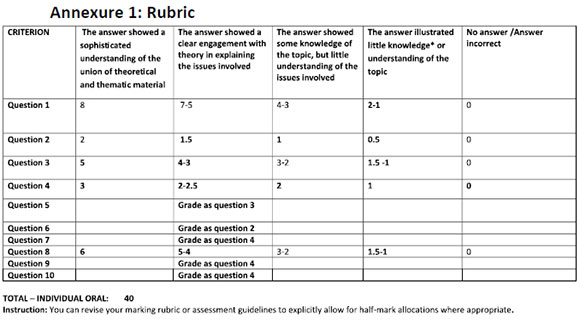
Marks were awarded for the oral exams according to the criteria mentioned in the marking rubric (see Annexure 1). The marks were to assess the level of knowledge and understanding of the learners via a language they preferred for the oral exam. The student would get marks based on this information. Where a student failed to give a correct answer, no mark would be allocated to them. Where the information given was not accurate, the student would fall within a certain margin. The instruction was that discretion would be used by the examiner in mark allocation such that, where possible, a student could be scored 0.5 as a mark. The exam consisted of 10 questions. We did not set strict rules on asking any particular question.
The process began with planning sessions where the students were grouped and allocated to a tutorial group. In the beginning, we had limitations on physical space because the department office lacked dedicated assessment space, and the boardroom could only accommodate a limited number of people. As a result, oral assessments had to be conducted in small-group sessions, which created scheduling constraints and increased administrative workload because of the number undergoing the tests. Students were notified of their allocated time slots and oral assessment schedule via institutional email. Although this system appeared orderly on paper, it assumed students had regular access to email, which was often not the case. We thus also had to adapt the time slots from rigid to flexible slots. This highlighted the fact that administering oral assessments needs flexibility if it is to be successful.
The tutors were a vital resource in this process. They communicated the scope of the oral assessments during tutorial sessions, encouraging students to engage with them before assessment day and to read in advance as they prepared. They also disseminated the scoring rubric before the exam week. Further, they facilitated tutorial sessions where the scoring rubric and oral exam expectations were discussed. This would prepare the students to articulate the central concepts of each question and to understand how they would be graded. Research supports the value of in-class preparatory discussions, detailed rubric, and an assessment brief that has guidelines (Ward et al., 2024, p. 935). Each session lasted approximately 30-40 minutes, and was conducted before a two-member panel because prolonged time could increase stress and negatively affect performance. The 10 minutes were extra minutes to cater for the feedback session and the overlap that occurred between ending one session to the next. These minutes were allocated considering the numbers we were dealing with.
A rubric was designed to guide scoring, which would be ticked off in real time as students answered the questions. This method helped to bring transparency, moderation, and allowed immediate feedback to be given to the student. There was a need to design a rubric that would be used to guide the marking process. A rubric is important because it identifies and outlines important features of a body of knowledge and provides a means to measure them (Furman, 2024). It helps in bringing students and instructors to a shared meaning. Our rubric was done in such a manner that it would not be binary in nature. To achieve this, we used Popham's (1997) scoring strategy that has three essential features:
1. Evaluative criteria: The essential attributes of the assessment to be measured.
2. Quality criteria: The evaluative criteria at different levels of achievement and quality.
3. Scoring criteria: The strategy to produce a grade/score.
For the assessment criteria, we were concerned with the students' ability to show their understanding of the content of the module. Each question thus carried varying marks depending on the extent of information that was required from the answer, as shown by the score range (see Annexure 2). The scoring criteria were liberal to help cater for those who might show partial understanding of the question, so that even when their response did not meet the full marks threshold, they would still earn marks (Furman, 2024). We also made use of isiZulu-speaking tutors who would translate the questions and responses from English to isiZulu for those students who needed clarity. This aligned with literature that agrees that there is value in using African languages to teach and learning (Nsele et al., 2024).
The students waited for the exam based on the time they were allocated. When their turn came, they were called in and welcomed by the panel members. Thereafter rules of engagement were shared, followed by asking the questions. The panel members privately noted down the respective marks for all the questions. After the exam, the student left the room to allow for moderation by the panel. The panel discussed their allocation, queries, and comments, and finalised the mark the student would receive. Open discussion and exchange of opinions formed the moderation process. This ensured that the assessment was done in a consistent, accurate, unbiased, and well-designed manner. The student was then invited back into the room and given their score.
Reflections
I can affirm that the oral exams were successful for a variety of reasons! Firstly, after the exam was finished, a large percentage of students revealed that the exams were not as difficult as they had imagined. I will narrate the story of one student whom I will call XY.
XY was a young undergraduate girl who had great difficulty speaking in English. In this case, it should be known that the description of the student referred to as XY is a narrative presented solely to illustrate the reflective practice framework, where the educator critically engages with the lived exam room experiences to inform translanguaging assessment design in the oral exam. When XY took her seat to have the oral assessment, we realised that she needed the help of an interpreter who would help break down the questions for her as well as translate her interpretation of the question. After we used this technique, we took an extra 15 minutes to complete the session with her. This further speaks to the need to be flexible when administering oral exams. After the assessment, she went out and waited. XY's feedback highlighted that she was grateful for being accommodated when she did the oral exam. Such comments were confirmations of the success of the assessment. There was a general appreciation of the process, especially the turnaround time for marks. This supports findings in another study by Kang et al. (2019), which highlighted that 91 per cent of the participants preferred the oral format, which allowed them to receive their marks from the teaching assistants immediately after the exam.
Secondly, the university has always administered end-of-year SEQs that asked students to answer in two questions: "What did you like most about this subject?" and "What would you like to see improved in this subject? The anonymous feedback is compiled and sent back with coding for the module: red symbolises unsatisfactory, whilst orange symbolises a need for improvement, and green symbolises satisfactory. Attached will be a list of comments on the assessments by the students. The data from these SEQs revealed a recurring theme that many students appreciated the oral examination. For some, they appreciated the fact that the oral assessments enabled them to be probed on their understanding and on what they meant by their response. A study by Erling et al. (2017) shared the same sentiments, finding that promoting the use of bilingual classroom strategies among students was favourable and elevated the quality of education. Such appreciation of oral assessments by the students suggests that translanguaging allows them deeper comprehension and more equitable participation in assessments. Consequently, there is a need to rethink assessment design in oral exams as a useful, transformative pedagogical tool.
Lessons Learnt
Improved Performance Through Oral Assessments
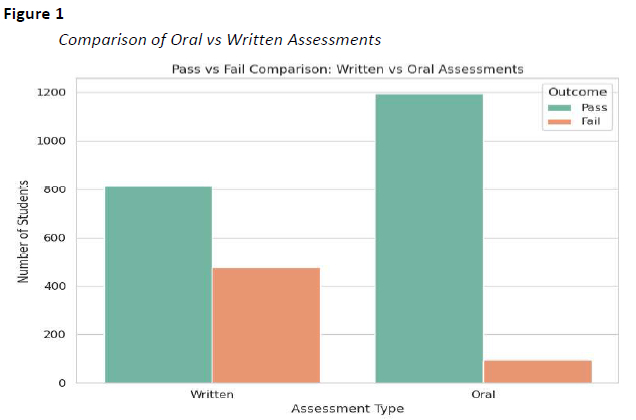
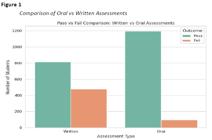
The final exam spreadsheet gave us the final marks for the module, and it showed a big contrast between the written and oral assessments. About 816 students passed the written assessment, and a significant number of students passed the oral assessment, as shown in Figure 1. This difference shows us that assessment format significantly impacts student success. Failure of the module was more pronounced in the written assessment as opposed to the oral test. Crucially, about 51 of the students who scored zero had not attended a single lecture and tutorial, which speaks to the challenge of attendance and participation as mentioned in the sections above.
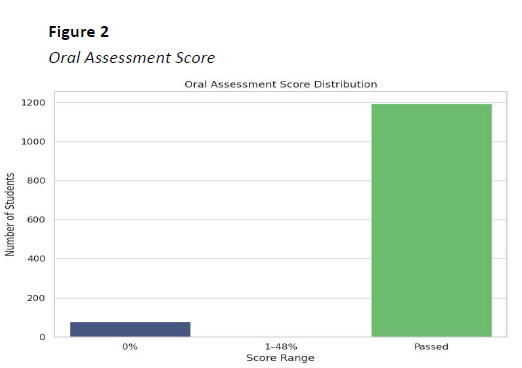
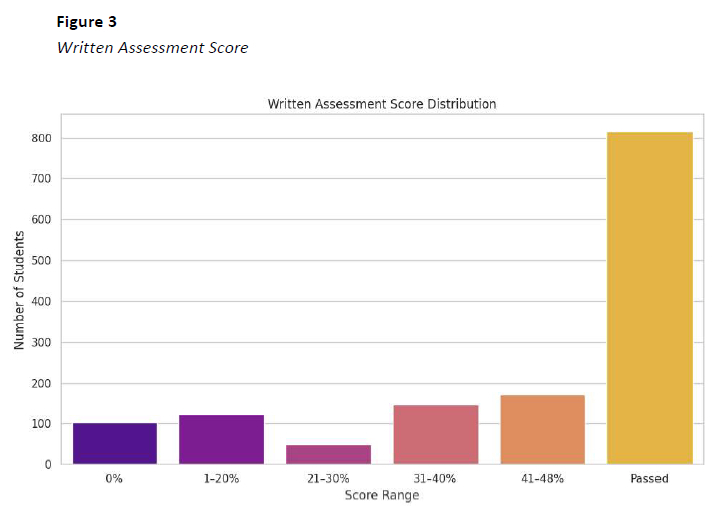
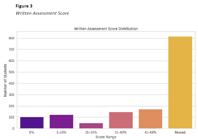
The oral assessment had a lower percentage of students who had a zero (see Figures 2 & 3), which might suggest that its interactive nature has the potential to encourage students to engage more meaningfully than they can in a written assessment. This difference is a significant indication of the impact of oral exams.
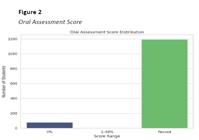
Additionally, the written assessments revealed significant clustering in the lower performance bands (Figure 3), suggesting that many of the students struggled to meet or narrowly missed the pass threshold. This pattern points to and reflects difficulties with interpreting questions, language proficiency issues, or challenges with structuring written responses, which are factors commonly cited in literature on the state of South Africa's multilingual educational landscape (Banda, 2017; Magaba, 2023). In contrast, the oral assessments (Figure 2) had more people who passed over the 50% threshold. One can conclude that this disparity in marks reflects a pedagogical and linguistic dynamic that can be interpreted through translanguaging theory. From this perspective, the high oral pass rate is suggestive of the fact that students can draw from their home languages when answering assessment questions. They do so without being constrained by the use of English as a mode of communication or in writing the assessments. The large cluster of written marks falling below 48% attests to this. The oral exam marks had a lower failure rate, which may indicate that when oral assessments are used, any language speaker becomes empowered to engage. This lends support to the argument that oral assessments may offer a more inclusive and authentic means of evaluating student understanding.
Resourcing Equity in Multilingual Education
The personnel and resources required for oral assessments are substantial. As I reflect, I remember that the times of oral assessments were busy and time-consuming. They required mental and emotional preparation as well as organisation. Preparing for the oral assessment was easy, but the process of completing this was time-consuming. My colleagues and I had to be emotionally prepared to assist all students within the stipulated time, which sometimes meant we had to work more hours than we would normally have. There is a need for budgets that can cater to the hiring, on a full or part-time basis of tutors to assist with administering oral assessments. As mentioned previously, tutors are an important resource in oral assessments, especially as interpreters. The process is time-consuming, and if not handled well, you can encounter difficulties in coordination and timing (Kang et al., 2019) and create a backlog.
I also observed that oral assessments offered a challenge when it came to the moderation of marks. Although the panel discussed and moderated, it did need more time. The 10 minutes allocated was, at times, too little. A study by Beutel et al. (2017, p. 10) also found that oral presentations posed a difficulty in safeguarding "consistent assessment standards" and moderation. These needed measures such as team observations of the presentation or a recording of it with a group rewatch of the recording after the presentation. Moderation of marks is an important element of quality assurance processes in institutions (Morris, 2020). The question is how to ensure that it takes place when you have done oral examinations. Should it be done after the exam, or some days afterwards? This was another huddle we had to deal with after the finalisation of the oral assessment marks. In our case, we had to ensure that we adopted a consensus-seeking approach (van Tonder, 2015). To do this, we had to record the sessions, we used clear and transparent rubrics, and we ensured that two or more assessors were present during the assessment session. The use of technological apps such as MS Teams helped because we were able to record and transcribe the content of the oral exam as it progressed (Siddique et al., 2022).
One resource we found useful was the use of WhatsApp as a medium of communication to circulate assessment dates lists and general information. Some students did not have laptops, and if they left campus to go to their off-campus residences, they did not have access to emails. Social media platforms were a faster source of information diffusion than university emails to keep them up to date. Recent research supports this, highlighting that a "institutions generally choose an 'informational' versus a 'conversational' communication approach, which means that they mostly prefer to share informative posts on social media" (Galioto et al., 2025, p. 4). WhatsApp platforms thus helped us to connect with all students. However, we still had a challenge, especially with those repeating the module because they thought the module would have written assessments as in previous years. Because they were on a different timetable rotation, they were not in the same social groups because they rarely attended tutorials and lectures. Many missed their allocated slots, and we had to reschedule their oral exams. Another effective resource was working hand-in-hand with the class representatives, who passed information on to students. This ensured that we were able to reach the majority of the students and they were, in some way, informed throughout the process leading up to the oral exam day. I acknowledge that research exists that is of the view that class representatives exploit other students and might thus not be an effective resource to use (Afitska & Heaton, 2019). However, I disagree with this notion and accept Nyoni & Sharma's (2024) finding. For them, involving class representatives was an opportunity that helped implement targeted interventions for the oral exam.
From a translanguaging perspective, the findings emphasise the need for resources as a structural and implementation necessity if it is to succeed in the sphere of oral assessments. To succeed, oral assessment requires personnel (people well-versed in multiple languages), strong moderation instruments, and the use of technological aids for them to be successful. With the rise of digital technology, we argue that it could be used as a potential platform that goes beyond being a transcription aid, but a platform to host oral exams. This would require devising an "efficient way of delivering and scoring tests," online to succeed (Nakatsuhara & Berry, 2021, p. 343).
Negotiating Boundaries in Oral Evaluation Contexts
Some of the students who came to the oral exams, despite our willingness to help them, still could not make the passing mark. They had not prepared, they had not read, and had not attended any tutorial; however, they hoped by some magic, they would come to the oral session and just pass because they had shown up. So, what I learnt through that process was that as an instructor, you need to be on guard so that you test the knowledge and not go beyond this threshold. With oral assessments, there appears to be a fine dividing line between assessing knowledge, hinting at the answer to the student, and how far you can go in helping them to answer the questions. Despite being a more advantageous option, oral assessments require that students still spend the same amount of time studying for the exam as they would for a written one (Kang et al., 2019). This is something I found that some students were not aware of: the need to read and prepare. Oral assessment takes a different format, but it still requires input in study. From a translanguaging view, to pass, one still requires cognitive preparation and engagement through reading and attendance. This aligns with Machimana & Genis (2024), who argued that translanguaging is a strategic tool for learning that requires student preparation. It is not a spontaneous act where one shows up unprepared.
Understanding Student Anxiety in Oral Assessment
For most of the students in our module, it was their first time encountering an oral exam during their education. Many of them lacked exposure to oral assessments, and this caused a great deal of anxiety when they realised that this was required of them. I remember one student who, when it was their turn to do the assessment, could not go straight into the questions. We had to do an icebreaker to help the students calm down. All sorts of anxiety and distress were seen. Some students I observed would sweat profusely, and others would stutter. We also had to learn the hard way that our countenances had to be favourable to give a welcoming and accommodating atmosphere to the students. This was not feasible at all times given that the panel also would be fatigued from sitting for long periods of time. Kang et al. (2019) also found when conducting their preliminary study of oral examinations, that although oral assessments had benefits for students, a key feature was the heightened anxiety the students experienced. This is further supported by those who stated that in their study during the oral exam, the levels of stress responses were greater (Ringeisen et al., 2019). When administered properly, translanguaging must be paired with safeguards that potentially reduce learner anxiety and fear, creating safe and free spaces. However, to get to this place, there must be an intentional design of support for the practice, such as what we see in Tebid (2019). They showed that it is possible to have a translanguaging context where students do not experience fear and anxiety in learning.
Conclusions, Limitations, and Future Directions
This article is a reflective piece that offers insight into administering oral assessments through translanguaging, highlighting its potential to support multilingual students. Translanguaging was used as a theoretical framework and motivation for revealing how monolingual assessment practices are unfair and biased. However, this study is grounded in a single researcher's reflective perspective. This limits generalisability of the findings. Expanding the study to include other instructors, academics, and students could be of benefit to bring more comprehensive contextual insights. Similarly, the study could further be expanded to other modules within DUT and South African higher education institutions at large, offering a national perspective.In essence, we find that translanguaging in oral assessments accommodates multilingual students who can use their existing linguistic resources to show the depth of their knowledge. Although oral exams are potentially more time-intensive than a written exam, they are effective and afford students from different backgrounds equal opportunities to showcase what they have learnt. Furthermore, we believe oral exams can increase student self-efficacy and assist those from non-English-speaking homes. To succeed, however, there is a need to invest in resources such as recorders, interpreters, and more staff to reduce the workload. Social media platforms are a useful resource for information dissemination as well as class representatives. The marked differences as highlighted above point to the fact that if oral assessments are used constantly, they can increase the pass rate of any particular module. With undeniable evidence of high stress and anxiety levels, those who wish to administer oral exams need to invest in having frequent, informal oral activities during tutorial sessions throughout the course, which will prepare the students. This could reduce fear and build confidence. Intense pre-assessment preparation tutorials are a necessity because they help equip the students with oral exam techniques and communication skills. From working with a large number of students, it is recommended that oral assessments are best suited for smaller groups, which significantly reduces the workload. Lastly, if one decides to embark on oral exams, it is possible and viable to address equality in higher education, but one must be ready to invest the time and planning as required.
References
- Afitska, O., & Heaton, T. J. (2019). Mitigating the effect of language in the assessment of science: A study of English-language learners in primary classrooms in the United Kingdom. Science Education, 103(6), 1396-1422. https://doi.org/10.1002/sce.21545
- Ahmadpour, N., Shariati, A., & Moghadam, M. P. (2025). Effect of narrative writing based on Gibbs' reflective model on the empathy and communication skills of nursing students. BMC Medical Education, 25(1), 10. https://doi.org/10.1186/s12909-024-06593-7
- Ahmed, M. A. (2024). Writing to learn: Reflective writing as an educational method for Saudi EFL students. Theory and Practice in Language Studies, 14(6), 1811-1817. https://doi.org/10.17507/tpls.1406.22
- Armstrong, C. (2021). Key methods used in qualitative document analysis. OSF Preprints, 1(9). https://doi.org/10.31219/osf.io/ztsc4
- Ashikuzzaman, M. (2025, July 24). Risks of over-reliance on multimedia for teaching and learning. Library & Information Science Education Network. https://www.lisedunetwork.com/risks-of-over-reliance-on-multimedia-for-teaching-and-learning/
- Banda, F. (2017). Challenges of teaching academic writing skills to students with limited exposure to English (South Africa). Language Teacher Research in Africa, 7-20. https://www.researchgate.net/publication/320196593_Challenges_of_Teaching_Academic_Writing_Skills_to_Students_With_Limited_Exposure_to_English_South_Africa
- Boud, D., Keogh, R., & Walker, D. (2013). Reflection: Turning experience into learning. Routledge.
- Blackledge, A., & Creese, A. (2010). Multilingualism: A critical perspective. Bloomsbury.
- Brookfield, S. D. (2017). Becoming a critically reflective teacher. John Wiley & Sons.
- Canagarajah, S. (2011b). Translanguaging in the classroom: Emerging issues for research and pedagogy. Applied Linguistics Review, 2(1), 1-28. https://doi.org/10.1515/9783110239331.1
- Durban University of Technology. (2015). Cornerstone module study guide [Unpublished internal document]. General Education Department.
- Durban University of Technology. (2019). Assessment policy. https://www.dut.ac.za/wp-content/uploads/2020/05/Assessment-Policy_DUT.pdf
- Erling, E. J., Adinolfi, L., & Hultgren, A. K. (2017). Multilingual classrooms: Opportunities and challenges for English medium instruction in low- and middle-income contexts. Education Development Trust. https://files.eric.ed.gov/fulltext/ED586989.pdf
- Esmaeeli, M., & Sadeghi, K. (2020). The effect of direct versus indirect focused written corrective feedback on developing EFL learners' written and oral skills. Language Related Research, 11(5) 89-124. https://doi.org/10.29252/LRR.11.5.124
- Fenton, A. (2024). Reconsidering the use of oral exams and assessments: An old way to move into a new future. Educational Researcher, 53(4), 233-240. https://doi.org/10.3102/0013189X251333638
- Furman, W. (2024). Rubric design: A designer's perspective. Journal of the Scholarship of Teaching and Learning, 24(4), 221-237. https://doi.org/10.14434/josotl.v24i4.35789
- Galioto, M., Pedone, F., Vantarakis, A., La Marca, A., & Bianco, A. (2025). University, social media, and student engagement: The challenge of "trust" in organizational communication. A voice from European university researchers to foster inclusion in higher education. Frontiers in Communication, 10, 1546333. https://doi.org/10.3389/fcomm.2025.1546333
- García, O. (2009). Education, multilingualism and translanguaging in the 21st century. In T. Skutnabb-Kangas, R. Phillipson, A. K. Mohanty, & M. Panda (Eds.), Social justice through multilingual education (pp. 140-158). Multilingual Matters.
- García, O., & Li, W. (2014). Translanguaging: Language, bilingualism and education. Palgrave Macmillan.
- Gibbs, G. (1988). Learning by doing: A guide to teaching and learning methods. Further Education Unit.
- Hazen, H. (2020). Use of oral examinations to assess student learning in the social sciences. Journal of Geography in Higher Education, 44(4), 592-607. https://doi.org/10.1080/03098265.2020.1773418
- Henricks, M. (2016). Intercultural negotiation in multilingual classrooms. In M. F. Omidire (Ed.), Multilingualism in the classroom: Teaching and learning in a challenging context (pp. 20-35). UCT Press.
- lannone, P., & Vondrová, N. (2024). The novelty effect on assessment interventions: A qualitative replication study of oral performance assessment in undergraduate mathematics. International Journal of Science and Mathematics Education, 22(2), 375397. https://doi.org/10.1007/s10763-023-10368-9
- Jones, B. (2017). Translanguaging in bilingual schools in Wales. Journal of Language, Identity & Education, 16(4), 199-215. https://doi.org/10.1080/15348458.2017.1328282
- Joughin, G. (1998). Dimensions of oral assessment. Assessment & Evaluation in Higher Education, 23(4), 367-378.
- Kang, D., Goico, S., Ghanbari, S., Bennallack, K., Pontes, T., O'Brien, D., & Hargis, J. (2019). Providing an oral examination as an authentic assessment in a large section, undergraduate diversity class. International Journal for the Scholarship of Teaching and Learning, 13(2) 10. https://doi.org/10.20429/ijsotl.2019.130210
- Lin, A. M. (2019). Theories of trans/languaging and trans-semiotizing: Implications for content-based education classrooms. International Journal of Bilingual Education and Bilingualism, 22(1), 5-16. https://doi.org/10.1080/13670050.2018.1515175
- Mahmudah, S., & Anggunsari, P. (2023). Oral corrective feedback as a formative assessment in teaching speaking skill. Journal of Research on English and Language Learning (J-REaLL), 4(1), 18-25. https://doi.org/10.33474/j-reall.v4i1.19432
- Magaba, V. (2023). English writing challenges of first-year students: A case study of a university in the Eastern Cape. Athens Journal of Philology, 10(1), 35-52. https://doi.org/10.30958/aip.10-1-2
- Markkanen, P., Valimaki, M., Anttila, M., & Kuuskorpi, M. (2020). A reflective cycle: Understanding challenging situations in a school setting. Educational Research, 62(1), 46-62. https://doi.org/10.1080/00131881.2020.1711790
- Mheta, G., Lungu, B. N., & Govender, T. (2018). Decolonisation of the curriculum: A case study of the Durban University of Technology in South Africa. South African Journal of Education, 38(4). https://doi.org/10.15700/saje.v38n4a1635
- Molokwane, R. M. S., & Zogli, L. K. J. (2021). Perceptions of first-year students from disadvantaged backgrounds of e-learning at the Durban University of Technology, South Africa. Progressio, 42. https://doi.org/10.25159/UnisaRxiv/000024.v1
- Montenegro, E., & Jankowski, N. A. (2017). Equity and assessment: Moving towards culturally responsive assessment (Occasional Paper No 29). National Institute for Learning Outcomes Assessment.
- Morgan, H. (2022). Conducting a qualitative document analysis. The Qualitative Report, 27(1), 64-77. https://doi.org/10.46743/2160-3715/2022.5044
- Morris, E. J. (2020). Behind the marks: Reviewing moderation and marking practices in higher education. In S. Gravett, M. Kinchin, & E. J. Morris (Eds.), On your marks: Learner-focused feedback practices and feedback literacy (pp. 169-178). Springer.
- Nakatsuhara, F., & Berry, V. (2021). Use of innovative technology in oral language assessment. Assessment in Education: Principles, Policy & Practice, 28(4), 343-349. https://doi.org/10.1080/0969594X.2021.2004530
- Ndhlovu, F., & Makalela, L. (2021). Decolonising multilingualism in Africa: Recentering silenced voices from the Global South (Vol. 26). Multilingual Matters.
- Neerputh, S. (2016). Integrating information literacy in the general education module at the Durban University of Technology, South Africa. Mousaion, 34(1), 43-55. https://doi.org/10.25159/0027-2639/700
- Ngubane, N. (2025). Translanguaging in assessments: Perspectives on the strategies and implications for multilingual classrooms. Southern African Linguistics and Applied Language Studies, 1-11. https://doi.org/10.2989/16073614.2025.2474113
- Nsele, S., Mthembu, B., & Mhiongo, B. (2024). Tutors' experiences of implementing a bilingual language policy at the University of KwaZulu-Natal. African Perspectives of Research in Teaching and Learning, 8(3), 209-220. https://doi.org/10.70875/v8i3article16
- Nthabiseng, S. P., Mphahlele, L. K., & Malatji, K. S. (2024). Transition from high school to university: Challenges faced by first-year B.Ed. Students at a university of technology in South Africa. E-Journal of Humanities, Arts and Social Sciences, 5(2), 112-122. https://doi.org/10.38159/ehass.2024524
- Ntshangase, S., & Bosch, S. (2020). Dual language education: Improving the academic learning experiences of isiZulu-speaking learners in KwaZulu-Natal. South African Journal of African Languages, 40, 317325. https://doi.org/10.1080/02572117.2020.1855725
- Nyoni, P., & Sharma, R. (2024). Theorising student class representatives' engagement in quality assurance to enhance academic performance: The case of private higher education institutions in South Africa. Future X Journal, 2(2), 59-68.
- Ontong, J. M., Bruwer, A., & Dreyer, J. A. (2020). An investigation of the interaction of class attendance, tutorials, mentor sessions, video presentations and external tutoring, and the effect thereof on student performance. South African Journal of Higher Education, 34(4), 269-285. https://doi.org/10.20853/34-4-3531
- Popham, W. J. (1997). What's wrong-and what's right-with rubrics. Educational Leadership, 55(2), 7275. https://eric.ed.gov/?id=EJ552014
- Rani, V. (2019). Advantages and disadvantages of oral and written communication. Research Review International Journal of Multidisciplinary, 4(3), 1338-1340. https://old.rrjournals.com/past-issue/advantages-and-disadvantages-of-oral-and-written-communication/
- Ringeisen, T., Lichtenfeld, S., Becker, S., & Minkley, N. (2019). Stress experience and performance during an oral exam: The role of self-efficacy, threat appraisals, anxiety, and cortisol. Anxiety, Stress, & Coping, 32(1), 50-66. https://doi.org/10.1080/10615806.2018.1528528
- Rossouw, M. (2018). Language of instruction and its effect on the performance of accounting students. South African Journal of Higher Education, 32(2), 258-272. https://doi.org/10.20853/32-2-2457
- Sekarwinahyu, M., Rustaman, N. Y., Widodo, A., & Riandi, R. (2019). Development of problem-based learning for online tutorial program in plant development using Gibbs' reflective cycle and e-portfolio to enhance reflective thinking skills. Journal of Physics: Conference Series 1157(2), 022099. https://doi.org/10.1088/1742-6596/1157/2/022099
- Shanmugam, S. K. S., Veloo, A., & Yusoff, Y. A. B. J. (2025). Examining utility of oral-administered test accommodation in assessing Aboriginal pupils' mathematics performance using score comparability. International Journal of Science and Mathematics Education, 23(1), 25-48. https://doi.org/10.1007/s10763-024-10451-9
- Siddique, M. N., Wahid, A., Sarker, S., and Polash, J. (2022). Documenting team meetings in Microsoft Teams. ResearchGate. https://www.researchgate.net/publication/362944578_Documenting_team_meetings_in_Microsoft_Teams
- Sivanath, A. (2020). Teaching and learning challenges of disadvantaged students in the context of access and equity in South African higher education: a case study of the Durban University of Technology [Doctoral dissertation, Durban University of Technology]. DUT Institutional Repository. https://ir.dut.ac.za/jspui/bitstream/10321/4346/3/Sivanath_A_2020.pdf
- Statistics South Africa. (2023). Census 2022: Statistical release P0301.4. https://census.statssa.gov.za/assets/documents/2022/P03014_Census_2022_Statistical_Release.pdf
- Tebid, A. C. (2019). Support strategies to assist foundation phase teachers with implementation of inclusive education: A case of selected Johannesburg West schools. The Independent Journal of Teaching and Learning, 14(2), 108-124.
- Treffers-Daller, J. (2024). Translanguaging: What is it besides smoke and mirrors? Linguistic Approaches to Bilingualism, 15(1), 1-26. https://doi.org/10.1075/lab.24015.tre
- UNESCO. (2025). Languages matter: Global guidance on multilingual education. https://www.unesco.org/en/articles/new-unesco-report-calls-multilingual-education-unlock-learning-and-inclusion
- van Tonder, S. P. (2015). Rethinking the moderation of student assessment in South African Universities. Journal for New Generation Sciences, 13(2), 127-146. https://doi.org/10.10520/EJC182363
- Vogel, S., & García, O. (2017). Translanguaging. Oxford Research Encyclopedia of Education, 1-21. https://doi.org/10.1093/acrefore/9780190264093.013.181