Improving Attention and Engagement in Special Needs Education Through Visual Prototypes
Abstract
Students with intellectual disabilities face persistent challenges in conventional educational systems due to difficulties in abstract reasoning, verbal comprehension, and motor coordination. While inclusive education has gained global momentum, there remains a critical gap in the availability of adaptive, engaging, and accessible instructional media tailored to this learner group. This study aims to address that gap by designing and evaluating a prototype of visual learning media rooted in interactive communication and cognitive design principles. Conducted at SLB Amal Mulia, a special education institution in South Jakarta, the research employs a qualitative, participatory approach informed by asset-based community development. Data were collected through classroom observations, semi-structured interviews, and visual activity documentation involving 30 students with mild intellectual disabilities. The prototype incorporated three interactive models: spot-dot drawing, object matching, and multi-sensory visual media. Results revealed significant improvements in student attention span, emotional engagement, and visual task completion. Students demonstrated increased motivation, social interaction, and verbal expression, particularly in response to high-contrast visuals and interactive stimuli. The study concludes that visual learning when grounded in user-responsive design and implemented with educator facilitation can meaningfully enhance learning experiences in inclusive settings. Its key contribution lies in merging pedagogical theory with visual communication practice to create replicable learning tools for inclusive classrooms. These insights contribute to the fields of special education, inclusive design, and multimodal learning, aligning with the journal's scope on education innovation and accessibility
visual learning; intellectual disabilities; inclusive education; visual communication; special needs education
Introduction
Inclusive education has emerged as a central tenet of modern educational systems that aim to promote equity and accessibility for all learners. The fundamental principle of inclusive education lies in providing learning opportunities that do not discriminate on the basis of physical, cognitive, emotional, or social differences (UNESCO, 2020). Among the groups most in need of adaptive and humanistic learning approaches are students with intellectual disabilities, or those classified as having mild intellectual impairments (Gajre et al., 2015; Puspitaloka et al., 2022). These students frequently encounter difficulties in processing abstract concepts, understanding spatial relations, and retaining verbal instructions. Consequently, visual-based learning has emerged as one of the most effective pedagogical methods for supporting their learning needs.
In the Indonesian context, recent data suggest that more than 6.6 million individuals live with intellectual disabilities, posing a significant challenge for the educational sector to implement not only accommodative but also innovative, technology-driven learning strategies (Antara News, 2020). Sekolah Luar Biasa (SLB) Amal Mulia [Special School Amal Mulia], a specialised educational institution located in South Jakarta, has demonstrated an active commitment to supporting students with cognitive limitations. While the school has adopted Indonesia's national Merdeka Curriculum and initiated teacher development through digital platforms (Kementerian Pendidikan, Kebudayaan, Riset, dan Teknologi, 2023), real-world classroom challenges persist. These include the lack of accessible learning media, insufficient interactive visual materials, and a digital divide that limits the integration of inclusive educational technology.
Within the framework of special education, the use of visualisation in learning plays a critical role. Visual components such as images, colours, forms, and symbols function not only as teaching aids but also as alternative communicative tools that are more accessible to students with cognitive impairments (Donovan et al., 2022). Visual perception is closely linked to key cognitive processes such as attention, pattern recognition, and decision-making (Galderisi et al., 2015; Pieters et al., 2012). Given the limited attention span and reduced short-term memory capacity often observed in children with intellectual disabilities, visual learning strategies that activate multiple sensory inputs, particularly vision, are essential to improving learning outcomes (Nazirzadeh et al., 2017).
This study is part of a longitudinal research effort that began in 2021 at SLB Amal Mulia South Jakarta, with earlier investigations mapping the visual perception patterns of students as they engaged in basic drawing tasks. The results of the initial phase revealed that students struggled to depict objects without clear visual guidance (Ruslan et al., 2021). Building upon those findings, this study utilises an asset-based community development approach combined with visual prototyping to design learning media that are contextual, participatory, and accessible to students classified as having mild intellectual disabilities (Qiaoyu et al., 2024; Ruth et al., 2023). This approach emphasises not only the creation of usable teaching tools, but also the exploration of students' cognitive and affective responses to visual stimuli.
The impetus for this research stems from the need to develop learning media that are not merely passive but interactive and engaging. Various studies have shown that students with special needs respond more effectively to interactive media compared to traditional instructional methods (Laila & Damri, 2023). At SLB Amal Mulia, visual activities such as spot-dot drawing, object-matching, and interactive visual games that involve the recognition of shapes and colours have demonstrated promising results. Experimental sessions revealed increased student enthusiasm, active participation, and enhanced visual recognition when these techniques were used (Puspitaloka et al., 2022).
Moreover, visual learning strategies have been shown to yield benefits beyond cognitive outcomes. Many students with intellectual disabilities have limited verbal expression abilities, making visual modes of communication an essential alternative for expressing understanding, emotion, and intent. Interviews with teachers and parents affirmed that visual learning not only reduced learning-related stress but also improved student motivation and facilitated greater social interaction (Author interview, 2024). Teachers emphasised the importance of simplicity, colour contrast, and uncluttered layout in supporting students' comprehension of visual materials.
The novelty of this research lies in the development of a visual learning system based on active interaction and communication design principles. While previous studies have focused on improving addition skills in natural numbers using bead-based learning media (Nurdesiana et al., 2024), or gesture-based technology for life skills training (Nazirzadeh et al., 2017), this study incorporates pedagogical insights with visual communication design to build a flexible visual learning prototype. Elements such as colour choice, object spacing, dot size, and visual placement were all tailored to align with the perceptual capacities of students with intellectual disabilities (Donovan et al., 2022; Wisnu et al., 2021).
A key recommendation emerging from this research is the need for interdisciplinary collaboration. The development of inclusive educational applications requires joint efforts among visual communication designers, educators, and educational psychologists. Teachers bring essential contextual knowledge of their students, while designers contribute expertise in crafting visually functional and communicative interfaces. Together, this collaboration can yield educational media that are not only aesthetically appealing but also pedagogically effective (Moller & Kettley, 2017).
Furthermore, this research underscores the importance of institutional and policy-level support for inclusive learning media. Government bodies, higher education institutions, and the creative industry must collectively invest in developing comprehensive inclusive education ecosystems. With appropriate incentives and cross-sector collaboration, education for students with intellectual disabilities can shift from being perceived as a burden to being recognised as a space for innovation and creative development (Aisha & Mulyana, 2019; UNESCO, 2020).
In sum, this study responds to the urgent need for visual learning media that are tested, context-sensitive, and aligned with the characteristics of students with intellectual disabilities. By focusing on observable responses ranging from simple to more complex behaviours, this research aims to offer practical solutions for educators working in inclusive learning environments. The visual learning prototype and accompanying experimental sessions developed at SLB Amal Mulia are expected to contribute meaningfully not only to academic scholarship but also to practical strategies for inclusive educational practices in Indonesia and beyond.
Visual Learning for Children with Intellectual Disabilities
Visual learning has emerged as a transformative strategy in the education of students with intellectual disabilities, particularly because it leverages visual perception to bypass verbal limitations. Research has consistently emphasised that visual cues enhance information retention and comprehension among learners with cognitive challenges (Westwood, 2020). Unlike text-heavy or auditory-based instruction, visual-based methods provide concrete representations that foster concept formation, especially among students who struggle with abstract reasoning (Tomlinson & Imbeau, 2023).
Children with intellectual disabilities often experience delays in language acquisition and symbolic processing, making alternative channels of learning essential. Studies by Hammond et al. (2010) have shown that the use of visual schedules and picture-based instruction significantly improves task completion and behavioural regulation. Similarly, Alnahdi et al. (2024) observed that integrating visual content into daily learning increased students' engagement and autonomy in classroom routines. A growing body of evidence also points to the neurodevelopmental basis for visual preference in children with intellectual impairments. According to Liss et al. (2006), students with developmental disabilities display heightened responsiveness to stimuli that offer colour contrast, spatial clarity, and motion, indicating the effectiveness of visuals as cognitive anchors. Additionally, research by Liang et al. (2024) demonstrated that learners exposed to picture exchange systems and interactive graphics made notable progress in vocabulary acquisition and expressive communication.
In inclusive classrooms, visual learning tools also serve to bridge attention gaps and reduce anxiety levels among students with intellectual disabilities. Visual timers, illustrated checklists, and pictorial social stories help students anticipate transitions and understand expectations, as shown in the study by Knight et al. (2015). These strategies promote both emotional security and instructional clarity. From a technological perspective, advancements in digital visual learning such as interactive whiteboards, touchscreen tablets, and animated learning apps have opened new possibilities for adapting content delivery (Alzrayer & Banda, 2017). These platforms enable multimodal input and feedback, essential for reinforcing learning in students who benefit from repeated, visually guided instruction.
While visual learning has shown robust benefits across cognitive and behavioural domains, its impact is significantly influenced by the intentional design of materials. According to Wong and Wong (2019), visuals that are cluttered, overly abstract, or low in contrast tend to confuse rather than aid learners. Therefore, structured visual design principles must be applied to optimise the effectiveness of visual learning for children with intellectual disabilities.
Visual Teaching Concepts for Children with Intellectual Disabilities
The pedagogical design of visual instruction for children with intellectual disabilities must align with both developmental psychology and principles of inclusive education. Effective visual teaching extends beyond the mere use of images; it involves structuring the learning experience around the learner's perceptual and cognitive profile (Hallahan et al., 2020). For these students, visuals are not supplementary but rather, primary modalities of comprehension and expression. One of the most widely researched models is the Picture Exchange Communication System (PECS), which enables nonverbal or minimally verbal students to initiate requests and communicate preferences. Frost (2003) found that PECS fosters autonomy and reduces behavioural outbursts caused by communication frustration. In similar pedagogical efforts, visual scaffolding techniques such as step-by-step picture sequences aid in task independence and memory retention (Dettmer et al., 2000).
Designing visual instruction for this population also requires consideration of cognitive load. Mayer's (2009) Cognitive Theory of Multimedia Learning emphasised that visuals must be intentionally paired with minimal text and logical sequencing to prevent overload. For children with intellectual disabilities, this principle is even more critical because working memory capacity is typically reduced (Swanson & Siegel, 2001). Moreover, the Universal Design for Learning (UDL) framework supports the idea that curriculum materials must offer multiple means of representation and expression, including visual formats (CAST, 2018). UDL-informed approaches have been applied in special education to adapt lessons through image-based storytelling, visual timetables, and symbolic representations that resonate with diverse learners.
Interdisciplinary collaboration is another core element in developing visual teaching tools. As identified by Guedes et al. (2024), the co-design of learning media involving educators, psychologists, and visual designers results in tools that are not only aesthetically engaging but also developmentally appropriate. This ensures that visual elements are purposeful and aligned with pedagogical objectives. Importantly, cultural and contextual relevance must be considered when creating visual materials. According to Alquraini and Gut (2012), visual symbols must reflect the students' lived experiences to avoid misinterpretation or detachment. In Southeast Asian contexts, this means that local imagery, familiar objects, and culturally appropriate narratives should be embedded into teaching visuals. Finally, teacher facilitation plays a decisive role in mediating visual learning experiences. Visual tools are only effective when educators know how to integrate them with instructional strategies, provide interpretive support, and observe student responses (Foster-Cohen & Mirfin-Veitch, 2017). Professional development focused on visual pedagogy, therefore, is a crucial investment in inclusive education.
Methods
This study adopted a qualitative descriptive approach with exploratory and participatory characteristics, aiming to deeply understand how visual-based instructional methods can support learning processes for students with mild intellectual disabilities, categorised as C-level in Indonesia's educational classification system. The research was grounded in an asset-based community development framework, which emphasises the identification and mobilisation of local strengths within inclusive school communities (Mathie & Cunningham, 2003). This approach was selected due to its ability to harness the existing capacities of schools, particularly the experience of educators, involvement of parents, and the specific needs of students as the foundation for developing responsive and contextualised visual learning prototypes.
The research site was SLB Amal Mulia, a special needs school located in South Jakarta that serves students with intellectual disabilities from diverse socioeconomic backgrounds. The school is recognised for its flexible curriculum structures and openness to innovations involving visual and digital learning. This setting enabled the researchers to design and test visual learning strategies that reflect the authentic classroom dynamics and lived experiences of both students and teachers.
Participants in the study included students diagnosed with mild intellectual disabilities, ranging from first to sixth grade. The sampling strategy employed was purposive sampling, which involved selecting individuals deemed capable of providing rich and relevant data to the study objectives (Palinkas et al., 2015). Inclusion criteria required participants to have the ability to respond to visual and interactive instructions. Students with dual impairments or severe communication challenges were excluded to ensure the interventions were appropriately targeted. A total of 30 students were selected, representing a cross-section of grade levels. This sample size was considered sufficient for qualitative analysis focused on thematic patterns across the three visual learning models implemented.
The central intervention in this research was the design and implementation of a visual learning prototype, informed by preliminary classroom observations and input from teachers. The prototype consisted of three core instructional activities: spot-dot drawing (connecting dots to form shapes or letters), visual object matching (identifying and pairing images based on form or colour), and interactive media engagement involving projected visuals accompanied by audio cues and soft background music. Each model was designed to activate students' visual memory, shape recognition, and attention focus, consistent with theories of visual information processing for students with special educational needs (Lerner & Johns, 2012).
Thematic analysis followed Braun and Clarke's (2006) 6-phase framework. Phase 1 involved familiarisation with the data through repeated reading of transcripts and observational notes. Phase 2 consisted of initial coding, where segments of student behaviours, teacher comments, and classroom interactions were labelled descriptively. In Phase 3, codes were grouped into candidate themes based on conceptual similarity (e.g. sustained attention, visual discrimination difficulty, emotional responsiveness). Phase 4 involved reviewing themes against raw data to ensure internal coherence. In Phase 5, themes were refined and defined, and finally in Phase 6, analytical narratives were constructed to connect themes with theoretical frameworks of visual cognition and inclusive pedagogy.
Identification and Validation of Core Instructional Models
The primary objective of this workshop was threefold. First, participants revisited findings from the 2021 baseline study (Ruslan et al., 2021), which documented recurring difficulties among students in interpreting abstract visual tasks without structured guidance. Second, teachers were invited to articulate current classroom challenges, particularly those related to attention span, task persistence, visual comparison ability, and response to verbal instructions. Third, the group collectively mapped existing classroom assets, including available digital infrastructure, teacher competencies, and student perceptual tendencies, in alignment with the asset-based community development framework guiding this research.
Through guided discussion, prototype sketching, and simulated classroom walkthroughs, several visual activity concepts were proposed and evaluated. Each proposed model was assessed using three validation criteria: (1) alignment with students demonstrated perceptual strengths particularly their responsiveness to high contrast visuals, structured sequencing, and repetitive patterns; (2) feasibility within the school's existing technological and material resources; and (3) teacher readiness and confidence in facilitating the activity with appropriate scaffolding.
As a result of this iterative selection process, three core instructional models were formally agreed upon: spot-dot drawing, visual object matching, and interactive projected visuals. These models were chosen because they represented progressively layered visual engagement-from structured motor-guided sequencing to comparative visual analysis and finally, to multi-sensory interactive stimulation. The validation process ensured that the selected models were not externally imposed interventions, but context-sensitive instructional strategies co-developed with practitioners, thereby strengthening ecological validity and practical sustainability within the school environment.
Roles of Researchers and Teachers
This study adopted a participatory collaborative model in which teachers functioned not merely as implementers of a pre-designed intervention but as active co-facilitators and contextual contributors throughout the research process. The collaboration was structured to ensure that the visual learning prototype reflected both theoretical design principles and the lived realities of classroom practice. The research team was primarily responsible for the conceptual development of the visual prototype, including the design of visual layouts, determination of colour contrast schemes, sequencing structures, and the preparation of research instruments such as observation sheets and interview guides. Researchers also coordinated the overall research design, ethical procedures, and documentation protocols.
Teachers, on the other hand, played a critical mediating role in contextual adaptation and classroom execution. They provided insight into student behavioural patterns, attention span limitations, and individual learning profiles, which informed adjustments to task complexity and instructional pacing. During implementation, teachers delivered verbal instructions, modelled task procedures, and provided scaffolding support such as repetition, simplified language, and hand-over-hand assistance when necessary.
Researchers conducted structured observations during each session, focusing on student engagement, visual response patterns, and emotional expression. Data collection was therefore distributed yet coordinated. Following each intervention session, reflective meetings were held between researchers and teachers to discuss observations, clarify interpretations, and identify emerging patterns. This joint analytical process ensured that findings were not interpreted solely from a design perspective but were grounded in pedagogical experience, thereby strengthening the study's credibility, reflexivity, and ecological validity.
Results
This research aimed to explore the effectiveness of a visual learning prototype comprising three interactive models: spot-dot drawing, visual object matching, and interactive visual media in enhancing engagement, shape recognition, attentional focus, and emotional responsiveness among students with mild intellectual disabilities at SLB Amal Mulia, South Jakarta. The results are presented thematically according to the original sub-sections of the study, supported by direct observations, teacher interviews, student responses, and documentation of classroom activities.
Enhancement of Visual Responsiveness
Over the course of a structured 3-day experimental learning process, a majority of the students demonstrated heightened levels of interest, active participation, and sustained engagement with the visual learning schemes implemented. The transition from conventional learning methods that often relied heavily on verbal instruction and written exercises to a visual-based, interactive approach led to significant improvements in attention span, emotional expression, and task orientation. This effect was especially notable in students who previously displayed short attention spans or passive classroom behaviour.
Based on participatory observations, approximately 85 per cent of the 30 students involved in the trial successfully completed at least one visual learning activity without disengaging or leaving the designated learning area. The presence of high-contrast visuals, combined with motion and supportive sound elements, played a critical role in capturing student attention and maintaining cognitive engagement throughout the sessions. A first-grade teacher explained, "The children were more focused when images were shown. Normally, they lose interest quickly, but this time, they stayed until the end."
Data also revealed that students were more responsive to projected visual stimuli compared to static media such as printed worksheets or chalkboard drawings. The use of a digital projector to display large, colourful images facilitated group focus and reduced distractions. Teachers noted that even students with minimal verbal communication skills used gestures such as pointing, nodding, and facial expressions to convey understanding, which underscores the communicative power of visual learning in bridging verbal limitations.
In addition to cognitive engagement, emotional responsiveness was also markedly improved. Students frequently smiled, laughed, clapped their hands, or expressed excitement when they recognised familiar objects or completed visual tasks. Some students asked to repeat activities, indicating intrinsic motivation and enjoyment, which are crucial components of affective learning domains in inclusive education.
Effectiveness of Spot-Dot Drawing Scheme
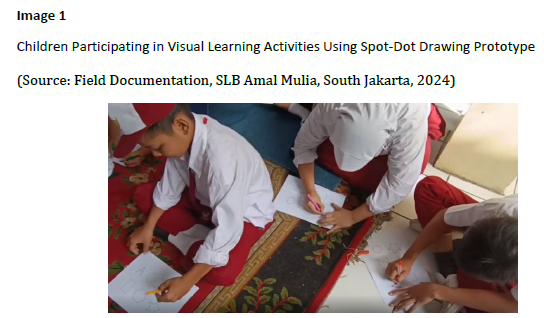
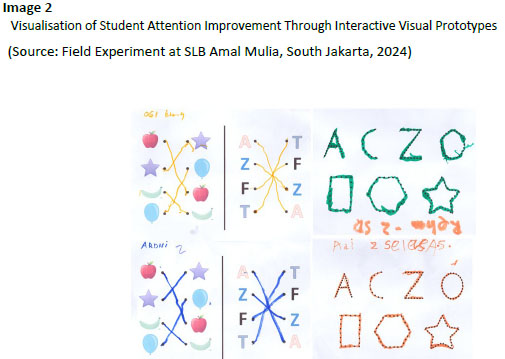
The first visual learning strategy employed in this research was spot-dot drawing, in which students were asked to connect a sequence of prearranged dots to form letters or geometric shapes. This model was divided into three levels of complexity: Level 1 (11-15 dots), Level 2 (16-23 dots), and Level 3 (more than 23 dots). Each level presented distinct challenges depending on the cognitive maturity and motor coordination of the student.
Students from Grades 1 to 3 generally completed Level 1 forms with moderate assistance from teachers. These basic shapes, such as boxes and the letter C, were comprehended relatively quickly. However, as the complexity increased in Levels 2 and 3 involving hexagonals, stars, and circles, the majority of younger students showed signs of confusion, hesitation, or withdrawal. Observers noted instances where students abandoned tasks or verbally expressed confusion. A teacher explained, "When the shapes are too complex, the students tend to give up. We often had to guide their hands."
In contrast, fourth-grade students demonstrated greater autonomy and accuracy. Most were able to complete Level 1 and Level 2 tasks without significant teacher intervention and engaged with Level 3 tasks with determination and minimal correction. Notably, several students voiced their desire to repeat tasks, suggesting a positive psychological effect and growing confidence. One student proudly declared, "I can draw a circle now!" These reactions demonstrate that dot-to-dot visual guidance supports both the development of fine motor skills and the enhancement of spatial cognition.
The structured nature of the spot-dot model, with numbered guides and progressive difficulty, offered a clear and attainable path for students. Teachers found it particularly useful as a diagnostic tool to assess individual visual motor coordination and as a means to promote task persistence. Additionally, the simplicity of the materials allowed for ease of replication and scalability in daily classroom practice.
Visual Object Matching Scheme.
The second visual learning model, object matching, focused on enhancing visual distinction ability, pattern recognition, and associative logic. Students were presented with tasks requiring them to match visual elements based on shape, colour, or symbolic identity. These included pairing geometric shapes, fruits, vehicles, and matching uppercase with lowercase letters. The tasks were presented in both printed and digital formats, allowing comparison of student responses across media.
Lower-grade students (Grades 1 to 3) performed more accurately when the objects had stark colour contrasts, such as red and blue, or yellow and black. In these cases, approximately 65 per cent of students successfully completed matching tasks within two minutes. However, performance declined when students were asked to distinguish between objects with similar hues or non-standard forms. Teachers highlighted this challenge: "When the colours are close, like green and cyan, it confuses them. But red and blue are much easier." Fourth-grade students exhibited higher levels of accuracy across all task types, with success rates exceeding 85 per cent in most cases. The use of digital media featuring animated instructions and audio reinforcement led to higher engagement and faster completion rates. Students appeared to respond more quickly to visuals that were dynamic and supported by auditory cues, compared to static worksheets.
Social interaction was also observed during this activity. Several students helped their peers identify correct object pairs, suggesting that visual learning facilitated peer-to-peer communication and collaboration. Emotional reactions such as smiling, excitement, and verbal affirmations (e.g. "I found it!" or "That's the same!") were commonly recorded, indicating that visual matching is both cognitively stimulating and emotionally satisfying. Moreover, symbolic recognition-an essential foundation for literacy-was improved through this model. The use of visual symbols and consistent repetition helped reinforce student understanding of letterforms and simple semantic categories.
Interactive Visual Scheme
The third and final component of the prototype was the interactive visual scheme, which combined projected images, verbal cues, background music, and student physical responses. In this session, students were encouraged to identify familiar objects (e.g. fruits, animals, school supplies) and respond by naming them, pointing, or mimicking their associated movements. This multi-sensory activity was highly effective in engaging multiple cognitive pathways simultaneously. Approximately 78 per cent of students responded spontaneously to prompts, even those who were usually silent or hesitant in conventional learning settings. A notable observation came from a teacher who shared, "A usually quiet student shouted 'apple!' when a red apple appeared on screen." This response illustrates how integrated audio-visual stimuli can trigger verbal output and cognitive recognition.
Students retained information well within the 15-20 minutes session span. During post-session evaluations, many students were able to recall three to five images and, in some cases, retell sequences of events or interactions from the session. The activity encouraged expressive behaviour, and some students shared their experiences with family members or teachers, further indicating the internalisation of learning.
Interactive visuals also supported classroom management. Teachers reported that students required fewer verbal instructions and were more willing to participate when the media prompted direct responses. Peer interaction was fostered organically, and the classroom environment became more vibrant, collaborative, and student-centred. Teachers expressed a strong desire to continue using such tools regularly.
Thematic Interpretation of Qualitative Findings
Thematic analysis followed Braun and Clarke's (2006) 6-phase framework. Phase 1 involved familiarisation with the data through repeated reading of transcripts and observational notes. Phase 2 consisted of initial coding, where segments of student behaviours, teacher comments, and classroom interactions were labelled descriptively. In Phase 3, codes were grouped into candidate themes based on conceptual similarity (e.g. sustained attention, visual discrimination difficulty, emotional responsiveness). Phase 4 involved reviewing themes against raw data to ensure internal coherence. In Phase 5, themes were refined and defined and finally, in Phase 6, analytical narratives were constructed to connect themes with theoretical frameworks of visual cognition and inclusive pedagogy. The analysis was conducted in two stages: first, within-case analysis for each instructional model; second, cross-model synthesis to identify overarching patterns across all interventions.
Summary and Contributions
The findings of this study collectively demonstrate that structured visual learning significantly enhances attentional engagement and cognitive responsiveness among students with mild intellectual disabilities. The three instructional models-spot-dot drawing, visual matching, and interactive projected media- each contributed uniquely to the development of fine motor coordination, symbolic recognition, and expressive communication. Importantly, the degree of effectiveness varied according to age and grade level, highlighting the necessity of differentiated visual scaffolding. Teacher facilitation emerged as a critical mediating factor, reinforcing that visual tools are most effective when accompanied by adaptive instructional guidance. Furthermore, the study confirms that simple, high-contrast, and uncluttered visual layouts are essential design principles for inclusive learning environments.
The scientific contribution of this study lies In Its validation of visual learning approaches as an effective strategy within inclusive education. These findings support existing literature on the effectiveness of multisensory learning and pave the way for further development of educational digital applications based on visual learning for children with special needs. Moreover, this research provides practical guidance for educators, instructional media developers, and educational policymakers. A curriculum design that promotes the use of adaptive visual media, along with teacher training in functional visual design, could serve as a concrete step toward strengthening educational inclusivity in Indonesia. Accordingly, the results of this study offer significant contributions to both academic discourse and educational practice. Visualisation is not merely a learning aid; it functions as a pedagogical bridge that opens up equitable learning opportunities for all students, including those with intellectual challenges.
Discussion
These findings extend existing scholarship on multisensory learning by demonstrating that visual structuring does not merely aid comprehension but actively reshapes classroom participation patterns. Unlike conventional teacher-centred instruction, visual prototyping redistributed communicative agency toward students, allowing nonverbal expression to become a legitimate mode of participation. This suggests that visual learning operates not only as a cognitive scaffold but also as a socio-emotional equaliser within inclusive classrooms.
The positive effects observed across all three learning schemes (spot-dot drawing, visual object matching, and interactive visual media) demonstrate the value of multimodal instruction in inclusive education. These findings support longstanding theories of multisensory learning, which emphasise the role of visual, auditory, and kinaesthetic inputs in reinforcing cognition among students with special educational needs (Lerner & Johns, 2012). In particular, the prototype aligns with the UDL framework, which advocates for multiple means of representation, expression, and engagement to accommodate diverse learner profiles. From a pedagogical standpoint, the spot-dot drawing activity proved especially effective in building fine motor coordination and visual sequencing. This supports the notion that visual structuring, when scaffolded in levels of difficulty, can aid cognitive development and task persistence. The success of the object-matching scheme illustrates how visual comparison tasks stimulate pattern recognition and logical reasoning critical foundations for early literacy and numeracy skills. The third scheme, involving interactive visual media, was particularly impactful in promoting spontaneous verbalisation and social interaction, reinforcing literature that highlights the importance of engaging sensory pathways to support language emergence in students with speech or developmental delays (Inayah & Prasetyo, 2025).
Moreover, this study emphasises the role of emotional affect in learning. Student responses such as smiling, laughter, clapping, and vocal excitement suggest that affective engagement is a critical indicator of learning readiness. These emotional cues reflect not only enjoyment but also a sense of accomplishment and growing confidence-factors that are vital to the learning motivation of students with intellectual challenges. One of the key strengths of this study lies in its methodological design. By combining an asset-based approach with participatory and exploratory qualitative methods, the research captured authentic responses within a naturalistic classroom setting. This ecological validity enhances the relevance and applicability of the findings for real-world educational practice. Furthermore, the research involved collaborative input from teachers, which enriched the design of the prototype and ensured its contextual appropriateness for students with varying cognitive and behavioural profiles.
Nonetheless, the study is not without limitations. Its scope was confined to a single urban special needs school, which may limit the generalisability of the findings to other institutional settings, particularly rural or under-resourced environments. While the study provides strong qualitative evidence of visual learning effectiveness, it did not quantitatively measure long-term outcomes such as academic performance, memory retention over time, or socio-emotional development across semesters. In addition, individual differences among students, such as variations in cognitive delay severity, home support, and motivation, were not systematically analysed but may have influenced outcomes.
The implications of this study are multifaceted. For educational practitioners, the findings highlight the necessity of integrating visual strategies into everyday teaching for students with intellectual disabilities. Training programmes should be developed to enhance teacher competence in designing and implementing visual media that are pedagogically sound and accessible. At the institutional level, school leadership should allocate resources for the acquisition of digital tools, projectors, and learning software that facilitate interactive visual learning.
From a policy perspective, this research advocates for the inclusion of visual-based methodologies in national curricula and instructional guidelines for special education. Government bodies and academic institutions should consider fostering cross-sector partnerships involving educators, designers, and technologists to co-create scalable visual learning solutions tailored to local educational needs. Such collaborative efforts can contribute to building an inclusive learning ecosystem grounded in evidence-based design. Future research could expand upon the current findings by incorporating longitudinal studies that assess the sustained impact of visual learning interventions. Quantitative metrics, such as pre-and post-tests in shape recognition, vocabulary acquisition, and attention span, could provide empirical support to complement the rich qualitative insights gathered here. Additionally, exploring the application of these visual learning models in different cultural and linguistic contexts would provide a broader understanding of their adaptability and impact.
Conclusions
This research set out to examine the role of visual learning as an effective pedagogical tool for students with intellectual disabilities in inclusive education contexts. Through a carefully designed prototype featuring three distinct learning models-spot-dot drawing, object matching, and interactive visual media-the study was able to demonstrate significant improvements in cognitive engagement, attentional focus, and social-emotional participation among students at SLB Amal Mulia in South Jakarta.
The results consistently showed that visual learning provided a stimulating, accessible, and emotionally supportive framework for students who traditionally struggle with abstract verbal instruction. The incorporation of visual structure, colour contrast, movement, and audio stimuli proved to be not only engaging but instrumental in enhancing memory, comprehension, and task persistence. Moreover, the presence of responsive and adaptive teacher facilitation further amplified the effectiveness of the interventions, enabling personalised support tailored to individual student needs.
Each component of the visual learning model addressed a specific area of developmental learning. Spot-dot drawing helped improve fine motor coordination and visual sequencing, object matching fostered logical reasoning and early literacy recognition, while interactive media sessions activated multi-sensory learning pathways and stimulated expressive language. Together, these strategies presented a cohesive, multisensory instructional design that aligned with UDL principles and emphasised inclusivity as an operational standard rather than an aspirational goal.
Additionally, the effective benefits of visual learning such as increased motivation, enthusiasm, and self-confidence provided a crucial foundation for sustainable academic growth. Observations of spontaneous verbalisation, emotional expression, and peer collaboration suggest that the visual learning environment not only enhanced academic engagement but also nurtured a sense of belonging and self-efficacy among students with cognitive challenges.
Importantly, this research also highlighted the critical need for collaboration among educational practitioners, designers, researchers, and policy-makers. Visual communication design, when applied with contextual sensitivity and pedagogical alignment, offers powerful solutions for expanding access to learning and bridging persistent gaps in inclusive education. The active involvement of teachers and the support of institutional leadership were central to the successful implementation of the prototype.
In conclusion, this study affirms that interactive visual learning, when developed through asset-based and participatory methods, can play a transformative role in inclusive education for students with intellectual disabilities. It not only supports their academic development but also enhances social interaction and emotional well-being. The findings offer a replicable and scalable model for educators seeking to cultivate adaptive, joyful, and equitable learning environments. As inclusive education continues to evolve, the insights from this study serve as both a practical guide and a conceptual framework for integrating visual design innovation into pedagogical practice.
References
Literature Review
- Aisha, S., & Mulyana, D. (2019). Indonesian postgraduate students' intercultural communication experiences in the United Kingdom. Jurnal Kajian Komunlkasl, 7(1), 1-14. https://doi.org/10.24198/jkk.v7i1.20901
- Alnahdi, G. H., Alwadei, A., & Schwab, S. (2024). Family quality of life of caregivers of individuals with autism, with other disabilities, and without disabilities: The case of Saudi Arabia. International Journal of Developmental Disabilities, 70(6), 1010-1021. https://doi.org/10.1080/20473869.2024.2362007
- Alquraini, T., & Gut, D. (2012). Critical components of successful inclusion of students with severe disabilities: Literature review. International Journal of Special Education, 27(1), 42-59. https://files.eric.ed.gov/fulltext/EJ979712.pdf
- Alzrayer, N. M., & Banda, D. R. (2017). iPad use for visual schedules to increase independent transitioning in students with autism. Research in Autism Spectrum Disorders, 39, 163-172. https://doi.org/10.1016/j.rasd.2017.04.003
- Antara News. (2020, April 27). Tunagrahita di Indonesia capai 6,6 juta orang [There are 6.6 million people with intellectual disabilities in Indonesia]. https://www.antaranews.com/berita/83721/tunagrahita-di-indonesia-capai-66-juta-orang
- CAST. (2018). Universal design for learning guidelines version 2.2 [Graphic organizer]. CAST. https://udlguidelines.cast.org/
- Dettmer, S., Simpson, R., Myles, B. S., & Ganz, J. B. (2000). The use of visual supports to facilitate transitions of students with autism. Focus on Autism and Other Developmental Disabilities, 15(3), 163-169. https://doi.org/10.1177/108835760001500307
- Foster-Cohen, S., & Mirfin-Veitch, B. (2017). Evidence for the effectiveness of visual supports in helping children with disabilities access the mainstream primary school curriculum. Journal of Research in Special Educational Needs, 17(2), 79-86. https://doi.org/10.1111/1471-3802.12105
- Frost, L. (2003). The picture exchange communication system. Perspectives on Augmentative and Alternative Communication, 12(2), 8-10. https://doi.org/10.1044/aac12.2.8
- Gajre, M. P., Dhadwad, V., Yeradkar, R., Adhikari, A., & Setia, M. S. (2015). Study of visual perceptual problems in children with learning disability. Indian Journal of Basic and Applied Medical Research, 4(3), 492-497. https://www.researchgate.net/publication/280006796_Study_of_visual_perception_problems_in_children_with_learning_disability
- Galderisi, S., Heinz, A., Kastrup, M., Beezhold, J., & Sartorius, N. (2015). Toward a new definition of mental health. World Psychiatry, 14(2), 231-233. https://doi.org/10.1002/wps.20231
- Guedes, L. S., Zanardi, I., Mastrogiuseppe, M., Span, S., & Landoni, M. (2024). Scaffolding for inclusive co-design: Supporting people with cognitive and learning disabilities. In M. Antona & C. Stephanidis (Eds.), Universal access in human-computer interaction: 18th International Conference, UAHCI 2024, held as part of the 26th HCI International Conference, Proceedings, Part II (pp. 151-170). Springer. https://doi.org/10.1007/978-3-031-60881-0_10
- Hallahan, D. P., Pullen, P. C., Kauffman, J. M., & Badar, J. (2020). Exceptional learners. In Oxford research encyclopedia of education. https://doi.org/10.1093/acrefore/9780190264093.013.926
- Hammond, D. L., Whatley, A. D., Ayres, K. M., & Gast, D. L. (2010). Effectiveness of video modeling to teach iPod use to students with moderate intellectual disabilities. Education and Training in Autism and Developmental Disabilities, 45(4), 525-538. https://doi.org/10.1177/215416471004500407
- Inayah, Y., & Prasetyo, T. (2025). Meningkatkan kualitas belajar melalui teknologi sebagai media pembelajaran untuk anak yang berkebutuhan khusus [Improving the quality of learning through technology as a learning medium for children with special needs]. Mudir: Jurnal Manajemen Pendidikan, 7(1), 67-75. https://doi.org/10.55352/mudir.v7i1.1512
- Kementerian Pendidikan, Kebudayaan, Riset, dan Teknologi. (2023). Panduan Kurikulum Merdeka untuk pendidikan khusus [Guide to the Merdeka Curriculum for special education]. https://kurikulum.gtk.kemdikbud.go.id
- Lerner, J., & Johns, B. (2012). Learning disabilities and related mild disabilities: Characteristics, teaching strategies, and new directions (12th ed.). Cengage Learning. https://books.google.com/books?id=zGyZ9DMXav0C
- Liang, Z., Lee, D., Zuo, J., & Liang, S. (2024). The use of visual schedules to increase academic-related on-task behaviors of individuals with autism: A literature review. International Journal of Developmental Disabilities, 1-14. https://doi.org/10.1080/20473869.2024.2402124
- Liss, M., Saulnier, C., Fein, D., & Kinsbourne, M. (2006). Sensory and attention abnormalities in autistic spectrum disorders. Autism, 10(2), 155-172. https://doi.org/10.1177/1362361306062021
- Mathie, A., & Cunningham, G. (2003). From clients to citizens: Asset-based community development as a strategy for community-driven development. Development in Practice, 13(5), 474-486. https://doi.org/10.1080/0961452032000125857
- Mayer, R. E. (2009). Multimedia learning (2nd ed.). Cambridge University Press. https://doi.org/10.1017/CBO9780511811678
- Nazirzadeh, M. J., Çagiltay, K., & Karasu, N. (2017). Developing a gesture-based game for mentally disabled people to teach basic life skills. In Proceedings of the International Association for Development of the Information Society (lADIS) International Conference on Educational Technologies (pp. 121-127). IADIS. https://eric.ed.gov/?id=ED579313
- Nurdesiana, N., Sukmawati, S., & Ramdani, R. (2024). Meningkatkan Keterampilan Berhitung Operasi Penjumlahan Bilangan Asli Menggunakan Media Manik-Manik Pada Siswa Kelas I SDN N0. 14 Inpres Cikowang Kabupaten Takalar [Improving addition skills with natural numbers using bead media for first-grade students at SDN No. 14 Inpres Cikowang, Takalar Regency]. Jurnal Bintang Pendidikan Indonesia, 2(2), 09-26. https://doi.org/10.55606/jubpi.v2i2.2862
- Palinkas, L. A., Horwitz, S. M., Green, C. A., Wisdom, J. P., Duan, N., & Hoagwood, K. (2015). Purposeful sampling for qualitative data collection and analysis in mixed method implementation research. Administration and Policy in Mental Health and Mental Health Services Research, 42(5), 533-544. https://doi.org/10.1007/s10488-013-0528-y
- Qiaoyu, M., Rosnon, M. R., Amin, S. M., & Burhan, N. A. S. (2024). Research on asset-based community development. International Journal of Academic Research in Economics and Management Sciences, 13(2), 195-209. https://doi.org/10.6007/IJAREMS/v13-i2/21330
- Ruslan, A., Hidayat, A. N., & Logiana, A. D. (2021). Persepsi visual penyandang tunagrahita: Studi deskriptif olah gambar pada Sekolah Luar Biasa Yayasan Amal Mulia [Visual perception of individuals with intellectual disabilities: A descriptive study of drawing activities at the Amal Mulia Special School]. Ultimart: Jurnal Komunikasi Visual, 14(1), 67-77. https://doi.org/10.31937/ultimart.v14i1.2022
- Ruth, A., Wutich, A., & Bernard, H. R. (2023). The handbook of teaching qualitative and mixed research methods: A step-by-step guide for instructors. Routledge. https://doi.org/10.4324/9781003213277
- Tomlinson, C. A., & Imbeau, M. B. (2023). Leading and managing a differentiated classroom (2nd ed.). ASCD.
- UNESCO. (2020). Inclusion and education: All means all. https://unesdoc.unesco.org/ark:/48223/pf0000373718
- Westwood, P. (2020). Commonsense methods for children with special needs and disabilities. Routledge.
- Wisnu, N. T., Tutik, H., & Handayani, T. E. (2021). Early detection instruments for children with special needs. Open Access Macedonian Journal of Medical Sciences, 9(E), 1261-1266. https://doi.org/10.3889/oamjms.2021.7206