Reimagining TVET Mathematics Education Through an Ayatutu-Based Theoretical Framework: Toward a Decolonised Model of Skills Development in Africa
Abstract
Technical and Vocational Education and Training (TVET) is widely recognised as a strategic mechanism for addressing skills shortages, unemployment, and sustainable development challenges in Africa. However, mathematics education within TVET often remains procedural, examination-driven, and disconnected from learners' vocational, cultural, and community realities. This article argues that the challenge is not merely pedagogical but epistemic because dominant approaches continue to privilege formal mathematical knowledge while marginalising the practical and culturally situated reasoning that learners bring to educational spaces. Using a conceptual-theoretical methodology, the article draws on decolonial theory, ethnomathematics, critical mathematics education, humanising pedagogy, and African relational philosophy to develop an Ayatutu-based theoretical framework for TVET mathematics education. The framework positions mathematics as a relational, culturally grounded, and socially accountable practice informed by collective responsibility, experiential learning, moral agency, and epistemic justice. The article argues that meaningful transformation requires the integration of formal mathematics with Indigenous knowledge systems, vocational practice, multilingual reasoning, and community-based problem-solving. It concludes that Ayatutu provides a coherent African-centred framework for reconstructing curriculum, pedagogy, assessment, and policy. Through this framework, TVET mathematics can move beyond procedural competence to support learner agency, technical expertise, ethical judgement, sustainable livelihoods, and decolonised skills development in Africa.
Ayatutu Framework; TVET Mathematics Education; Decolonisation; Epistemic Justice; African-Centred Skills Development
Introduction
Technical and Vocational Education and Training (TVET) is often presented as one of Africa's most practical responses to unemployment, poverty, skills shortages, and economic exclusion. Yet this promise remains incomplete if the mathematics taught within TVET continues to function as a decontextualised, procedural, and examination-driven subject (Makgato & Afeti, 2020). Mathematics is not a marginal support course in vocational education; it is central to measurement, estimation, costing, modelling, design, spatial reasoning, quality control, data interpretation, risk assessment, and technical problem-solving. If TVET is expected to prepare learners for real work, sustainable livelihoods, and community development, then mathematics must be taught as a language of vocational judgement rather than as a set of abstract procedures detached from learners' lived worlds (Vimbelo & Bayaga, 2023a, 2023b, 2024).
The central argument of this article is that the difficulty facing TVET mathematics education in Africa is not merely pedagogical but epistemic. Too often, the problem is framed as learner underpreparedness, poor performance, or ineffective teaching. Such explanations are partial because they leave the curriculum itself unexamined. They do not ask whether TVET mathematics recognises the knowledge systems, languages, vocational experiences, and community-based reasoning of African learners. This omission is serious. Learners in construction, agriculture, engineering, entrepreneurship, design, hospitality, and craft production require mathematics not only to pass examinations, but to calculate, interpret, compare, estimate, model, justify, and make decisions under real social and material constraints.
This article therefore contests the assumption that mathematical rigour depends on abstraction from culture, language, and context. Formal mathematics remains necessary, but it should not monopolise mathematical legitimacy. African learners often enter TVET institutions with mathematical reasoning already developed through household economies, local trades, informal work, Indigenous practices, multilingual communication, and community problem-solving (Madimabe, 2020). When these resources are ignored, mathematics becomes a gatekeeping subject rather than a means of empowerment. Ethnomathematics and critical mathematics education have long shown that mathematics is culturally situated and socially consequential, not neutral knowledge floating above history and power (Bishop, 1988; D'Ambrosio, 1985; Gutiérrez, 2013; Gutstein, 2003).
The article responds to this problem by proposing an Ayatutu-based theoretical framework for reimagining TVET mathematics education as a decolonial, relational, and socially accountable practice. Building on Age's work on Ayatutu and Ubuntulised mathematics education, the framework links formal mathematics with Indigenous knowledge systems, vocational practice, multilingual reasoning, collective responsibility, experiential learning, and moral agency (Age, 2024, 2025; Age et al., 2025). Its purpose is not to reject formal mathematics, but to reposition it within a broader ecology of African knowledge, technical competence, ethical judgement, and sustainable skills development.
The article contributes to debates on decolonisation, Africanisation, TVET transformation, and mathematics education by arguing that TVET mathematics must move beyond narrow employability and procedural compliance. It must become a resource through which learners develop technical competence, learner agency, cultural affirmation, ethical awareness, and capacity for community transformation. The article proceeds by presenting the problem statement, purpose, objectives, and guiding questions, followed by the conceptual and theoretical foundations, the African TVET mathematics context, the methodological positioning, the Ayatutu-based model, the discussion, the implications, the conclusion, and recommendations for future research.
Problem Statement
TVET mathematics education in Africa is often treated as a technical problem of low achievement, weak foundations, or ineffective teaching. This article contests that view. The deeper problem is epistemic; TVET mathematics is frequently organised as abstract, procedural, and examination-driven knowledge, while the vocational, cultural, linguistic, and community-based mathematical reasoning of African learners remains marginalised. This creates a contradiction at the heart of TVET. A sector designed to prepare learners for practical work, technical judgement, entrepreneurship, and sustainable livelihoods often teaches mathematics in ways that are detached from the contexts in which vocational competence is actually exercised (Vimbelo & Bayaga, 2023a, 2023b, 2024). For example, a construction student may learn measurement formulas in isolation yet receive little opportunity to apply them to estimating building materials or interpreting site plans. Similarly, entrepreneurship students may develop proficiency in percentage calculations in examinations but struggle to use these concepts in pricing, budgeting, or profit analysis. These examples illustrate how procedural competence does not automatically translate into vocational mathematical competence.
The problem is not that formal mathematics is unnecessary, but that it is often treated as the only legitimate form of mathematical knowledge. Such a view reproduces epistemic exclusion by ignoring the mathematical reasoning embedded in local trades, household economies, Indigenous practices, informal work, multilingual communication, and community problem-solving. This misrecognition limits learner agency and narrows the purpose of mathematics to procedural compliance rather than critical vocational action (Bishop, 1988; D'Ambrosio, 1985; Nieminen & Lahdenperä, 2024; Walker, 2019). Moreover, when TVET mathematics is framed mainly through employability and labour-market readiness, it risks producing technically compliant workers rather than socially responsible problem-solvers capable of addressing inequality, sustainability, and community needs (Gutiérrez, 2013; Gutstein, 2003; McGrath et al., 2022). The problem this article addresses is the absence of a coherent African-centred theoretical framework for reimagining TVET mathematics as epistemically inclusive, vocationally grounded, pedagogically participatory, and morally accountable. The article responds by developing an Ayatutu-based framework that positions mathematics as a decolonised resource for technical competence, learner agency, ethical judgement, and African-centred skills development.
Purpose, Objectives, and Guiding Questions of the Article
The purpose of this article is to develop an Ayatutu-based theoretical framework for reimagining TVET mathematics education in Africa as a decolonial, relational, and socially accountable practice. The article argues that TVET mathematics should not be reduced to procedural competence, examination performance, or labour-market preparation; rather, it should function as a resource for epistemic justice, vocational reasoning, learner agency, ethical judgement, and African-centred skills development.
The article is guided by three objectives.
• To critique dominant approaches to TVET mathematics education that remain decontextualised, procedural, epistemically narrow, and insufficiently connected to African learners' lived and vocational realities.
• To develop Ayatutu as a theoretical framework for integrating formal mathematics with Indigenous knowledge systems, vocational practice, multilingual reasoning, collective responsibility, and moral agency.
• To draw implications for curriculum, pedagogy, assessment, policy, practice, and future research.
The following questions guided the study:
• How do dominant approaches to TVET mathematics education in Africa reproduce epistemic, pedagogical, and vocational limitations?
• How can Ayatutu provide an African-centred theoretical basis for reimagining TVET mathematics education?
• What implications does an Ayatutu-based framework hold for decolonised curriculum design, pedagogy, assessment, policy, and practice?
Conceptual and Theoretical Foundations
Decoloniality and the Epistemic Critique of Mathematics Education
Any meaningful transformation of TVET mathematics education in Africa must begin with an epistemic critique of how mathematical knowledge is defined, legitimised, and transmitted. Decolonial theory provides the foundation for this critique by exposing how coloniality continues to shape contemporary education systems. Coloniality refers to the persistence of Eurocentric knowledge systems as universal, while other forms of knowing are marginalised or rendered invisible (Mignolo, 2002; Ndlovu-Gatsheni, 2015; Quijano, 2000). In mathematics education, this is evident in the privileging of formal, abstract, and symbolic knowledge as the primary indicator of competence. This article argues that such epistemic dominance is particularly problematic in TVET contexts. Vocational learners encounter mathematical reasoning through practice: measuring, estimating, designing, costing, and problem-solving long before engaging with formal symbolic notation. When curricula ignore these forms of knowledge, they do not strengthen rigour; they reproduce epistemic exclusion. Decoloniality therefore reframes the problem from access to mathematics toward epistemic justice, asking whose knowledge counts and how learners are recognised as knowers.
Ethnomathematics and the Cultural Situatedness of Mathematical Knowledge
Ethnomathematics strengthens the decolonial critique by demonstrating that mathematical knowledge is culturally and historically situated. D'Ambrosio (1985) argues that all societies develop mathematical practices to solve problems related to their environments, while Bishop (1988) identifies universal mathematical activities such as counting, measuring, designing, and explaining as embedded in cultural practices. These insights are crucial for TVET mathematics because vocational education is inherently practice-based. Learners in fields such as construction, agriculture, and entrepreneurship already engage in mathematical reasoning through estimation, spatial thinking, and financial calculation. However, when these practices are not recognised within formal education, learners are positioned as deficient rather than knowledgeable. This creates a false hierarchy in which formal mathematics is treated as superior and practical reasoning as inferior.
The argument advanced here is not that ethnomathematics should replace formal mathematics, but that it should inform how formal mathematics is taught and understood. Mathematical learning becomes more meaningful when formal concepts are connected to learners' lived experiences and vocational practices. In this sense, ethnomathematics provides a foundation for integrating cultural relevance with conceptual rigour rather than treating them as competing goals.
Critical and Humanising Mathematics Education in TVET Contexts
Critical mathematics education challenges the assumption that mathematics learning should be limited to the acquisition of technical skills and procedural competence. Instead, it argues that mathematics education should prepare learners to engage thoughtfully with the social, economic, and technological realities that shape their lives (Gutstein, 2003; Skovsmose, 2013). Within TVET, this perspective is particularly important because mathematical knowledge is routinely applied in contexts involving production, resource management, workplace decision-making, and problem-solving. Consequently, mathematical competence should include the ability to analyse situations, evaluate alternatives, and make informed judgements rather than merely execute procedures.
This position has important implications for how mathematics is taught in vocational settings. Traditional approaches often prioritise correct answers, algorithmic efficiency, and examination performance. While these remain important, they do not fully reflect the demands of contemporary vocational practice, where workers are increasingly required to adapt knowledge to unfamiliar situations, collaborate with others, and respond to changing workplace conditions. Mathematics education in TVET should therefore support the development of reasoning, interpretation, decision-making, and reflective problem-solving capacities that extend beyond routine calculation (Boaler, 2002; Skovsmose, 2013).
Humanising pedagogy complements this perspective by emphasising meaningful participation and learner engagement. Rather than viewing learners as passive recipients of mathematical knowledge, humanising approaches recognise them as active contributors to the learning process. Learning is strengthened when mathematical concepts are connected to authentic vocational tasks and when learners are encouraged to discuss, justify, and reflect on their mathematical thinking. Such approaches promote deeper understanding because learners engage with mathematics as a tool for inquiry and problem-solving rather than as a collection of isolated rules.
Evidence from TVET mathematics education suggests that participatory and contextually relevant pedagogies improve learner engagement and conceptual understanding. Vimbelo and Bayaga (2023a, 2023b, 2024) found that learners respond more positively when mathematics is connected to practical applications and vocational experiences. These findings reinforce the argument that effective TVET mathematics education requires pedagogical approaches that balance conceptual rigour with meaningful participation. From this perspective, mathematics education should not only prepare learners for assessment success but also for the complex reasoning and problem-solving demands of vocational practice.
Language, Epistemic Justice, and Mathematical Participation
Language is a central dimension of mathematics education in African TVET contexts, yet it is often treated as peripheral. Learners frequently navigate multiple linguistic systems, including Indigenous languages, institutional languages, vocational terminology, and mathematical symbolism. However, dominant pedagogical approaches often equate mathematical competence with proficiency in formal academic language.
Language-responsive mathematics education challenges this assumption by demonstrating that language shapes access, participation, and conceptual understanding (Barwell, 2020; Planas, 2021; Prediger et al., 2022). Learners may successfully reason through mathematical ideas using local languages or vocational forms of expression while experiencing difficulty communicating those ideas through formal academic discourse. As a result, linguistic limitations may be mistaken for conceptual limitations.
This concern is closely linked to epistemic justice, which emphasises the fair recognition of individuals as knowers (Nieminen & Lahdenperä, 2024; Walker, 2019). In TVET mathematics, recognising learners as knowers requires pedagogical approaches that build connections between everyday language, vocational discourse, and formal mathematical representations. Such approaches enable learners to move across different forms of communication while maintaining conceptual precision. Rather than diminishing rigour, language-responsive pedagogy can strengthen mathematical participation, understanding, and access.
African Relational Philosophy and the Ayatutu Framework
While the preceding perspectives provide critical insights, this article argues that a coherent African-centred synthesis is necessary for transforming TVET mathematics education. African relational philosophies, particularly Ubuntu, offer such a foundation by emphasising interconnectedness, dignity, reciprocity, and communal responsibility (Letseka, 2012; Venter, 2004; Waghid, 2015). These philosophies challenge individualistic and instrumental conceptions of education by foregrounding the ethical and social purposes of knowledge. Ayatutu builds on this philosophical foundation as an Indigenous mathematics-education framework grounded in cooperative learning, collective problem-solving, experiential engagement, moral agency, and epistemic justice (Age, 2025). Its significance lies in its capacity to move beyond critique toward reconstruction. Rather than treating African knowledge as an addition to existing curricula, Ayatutu reorganises how mathematical knowledge is conceptualised, taught, and applied. Within this framework, mathematics is understood as a relational practice embedded in vocational, cultural, and community contexts. Learning is co-constructed, competence is both technical and ethical, and learners are recognised as epistemic agents. This aligns with broader African-centred educational perspectives that emphasise socially responsive and community-oriented learning (Msila, 2014; Waghid, 2015). It also resonates with Age's (2024) argument for an Ubuntulised mathematics education that connects learning to dignity and communal well-being. Ayatutu therefore provides the theoretical bridge between critique and transformation. It integrates decoloniality, ethnomathematics, critical pedagogy, and humanising approaches into a coherent African-centred framework. Through this synthesis, TVET mathematics can be reimagined as epistemically inclusive, pedagogically participatory, vocationally grounded, and morally accountable. This section thus establishes the theoretical basis for the model developed in the subsequent section, where Ayatutu is operationalised for decolonised TVET mathematics education.
TVET Mathematics Education in Africa: Context, Contradictions, and Possibilities
TVET mathematics education in Africa must be understood within the broader contradiction of vocational education itself. Relatedly, TVET is positioned as a strategic response to unemployment, poverty, skills shortages, industrial development, entrepreneurship, and sustainable livelihoods. On the other hand, the mathematics that underpins many vocational programmes is often taught in ways that weaken rather than strengthen these developmental ambitions. Mathematics is central to technical and vocational competence because it supports measurement, costing, estimation, spatial reasoning, design, modelling, risk assessment, data interpretation, quality control, and problem-solving. Yet in many TVET classrooms, mathematics remains organised as an abstract, procedural, and examination-oriented subject, weakly connected to learners' occupational pathways and community realities. This contradiction is not incidental; it reveals a deeper mismatch between the developmental promise of TVET and the epistemic structure of mathematics education within it.
The first contradiction concerns relevance. TVET claims to prepare learners for practical work, but mathematics is frequently presented as if its value lies mainly in developing fluency with formulas, reproducing procedures, and passing written assessments. This approach may yield limited procedural competence, but it does not necessarily foster the situated reasoning required in vocational practice. A construction learner must understand measurement, scale, area, volume, estimation, tolerance, and cost in relation to actual materials and design constraints. An agriculture learner must work with yield, ratios, land measurement, rainfall data, input costs, and production planning. An entrepreneurship learner must reason with profit, loss, pricing, percentages, taxation, budgeting, and risk. If these mathematical ideas are taught as isolated textbook routines, the subject becomes disconnected from the very practices it is meant to support. Recent studies in South African TVET mathematics confirm that teaching often remains lecturer-centred, procedural, and insufficiently connected to learners' lived experiences, while humanising and contextualised pedagogies could improve engagement, participation, and relevance (Vimbelo & Bayaga, 2023a, 2023b, 2024).
The second contradiction concerns epistemic recognition. African TVET learners do not encounter mathematics for the first time in the classroom. They enter TVET institutions with mathematical reasoning already embedded in household economies, informal work, community practices, Indigenous technologies, local trades, craft production, agriculture, construction, and small-scale entrepreneurship. They estimate, measure, divide, compare, negotiate, design, budget, build, trade, and solve spatial problems in everyday life. However, dominant TVET mathematics often fails to recognise these practices as legitimate mathematical resources. Instead, it privileges formal symbolic procedures and standardised textbook representations while treating community-based reasoning as informal or irrelevant. This produces an epistemic contradiction-the curriculum claims to develop vocational competence but marginalises the very forms of practical mathematical intelligence through which vocational competence is often enacted. Decolonial and ethnomathematical scholarship has long challenged this hierarchy by showing that mathematical practices are culturally situated and socially produced rather than culturally neutral (Bishop, 1988; D'Ambrosio, 1985; Meeran, 2024; Nqabeni & Buka, 2023).
The third contradiction concerns language. Many African TVET learners operate across multiple linguistic registers: Indigenous languages, institutional languages, mathematical symbols, workshop terminology, workplace communication, and community discourse. Yet mathematics teaching often assumes that understanding is best demonstrated through formal academic language alone. This assumption is exclusionary because learners may understand mathematical relationships through practical action, local language, or vocational terminology but struggle to express them in the dominant language of instruction. The problem is not that formal mathematical language is unnecessary; it is essential for technical communication and further learning. The problem is that formal language is often introduced without adequate bridges from learners' existing linguistic and practical resources. Language-responsive mathematics education shows that language shapes access, participation, identity, and conceptual development in mathematics classrooms (Barwell, 2020; Planas, 2021; Prediger et al., 2022). For African TVET, this means multilingualism should not be treated as a barrier to mathematical rigour, but as a resource for building conceptual understanding and vocational transfer.
The fourth contradiction concerns assessment. TVET is supposed to be skills-oriented, but mathematics assessment frequently remains dominated by individual written tests, routine exercises, and decontextualised tasks. This creates a serious misalignment between what TVET claims to value and what it actually measures. A learner may demonstrate strong practical reasoning when estimating materials, interpreting a design, calculating a budget, or solving a workshop problem, yet be disadvantaged by assessment formats that recognise only symbolic fluency under examination conditions. Conversely, a learner may pass routine written tasks without being able to apply mathematics meaningfully in a workplace or community setting. Assessment therefore becomes a mechanism of narrowing mathematical competence rather than expanding it. Recent scholarship on assessment and epistemic justice argues that assessment practices can reproduce exclusion when they fail to recognise students as knowers and privilege narrow forms of performance over richer demonstrations of understanding (Nieminen, 2022; Nieminen & Ketonen, 2024; Nieminen & Lahdenperä, 2024). In TVET mathematics, this critique is especially urgent because assessment should capture practical application, explanation, collaboration, ethical judgement, and contextual problem-solving.
The fifth contradiction concerns the purpose of TVET mathematics. Policy discourse often frames TVET through employability, productivity, and labour-market responsiveness. These aims are important, but they are insufficient for African contexts marked by poverty, unemployment, inequality, ecological vulnerability, infrastructural deficits, and uneven access to resources. If TVET mathematics is reduced to a tool for labour-market entry, it risks preparing learners to adapt to existing economic conditions without equipping them to question or transform those conditions. A more expansive vision is required. Mathematics should enable learners to interpret wage structures, analyse community needs, evaluate resource use, calculate environmental costs, assess affordability, model local solutions, and make ethical technical decisions. Critical mathematics education supports this broader view by arguing that mathematics can help learners examine power, inequality, and social consequences (Gutiérrez, 2013; Gutstein, 2003; Skovsmose, 2013). Transformative vocational education scholarship similarly argues that VET should be connected to capabilities, human development, and social justice rather than narrow labour-market supply (McGrath et al., 2022).
Despite these contradictions, TVET mathematics education in Africa also contains important possibilities. Its practical orientation creates opportunities for mathematics to be taught through authentic vocational tasks, community projects, simulations, tools, materials, fieldwork, local industries, and workplace scenarios. Its learner population often brings rich experiential knowledge that can be used as a foundation for formal mathematical learning. Its connection to livelihoods makes it a powerful site for linking mathematics with sustainability, entrepreneurship, infrastructure, food systems, energy, water, housing, and community well-being. The challenge is that these possibilities cannot be realised through superficial contextualisation. They require a theoretical framework that can connect formal mathematics with Indigenous knowledge, vocational practice, multilingual reasoning, ethical responsibility, and social transformation.
This is where Ayatutu becomes significant. From an Ayatutu perspective, the limitations of TVET mathematics are not simply technical but relational. The problem is that dominant models separate knowledge from community, skill from responsibility, mathematics from culture, and competence from moral agency. Ayatutu challenges these separations by insisting that mathematics education should be grounded in interconnectedness, collective responsibility, experiential learning, epistemic justice, and moral agency (Age, 2025). It therefore offers a way of converting the contradictions of TVET mathematics into possibilities for reconstruction. Decontextualised mathematics can be transformed into vocationally situated inquiry. Epistemic exclusion can be transformed into recognition of learners as knowers. Linguistic alienation can be transformed into multilingual meaning-making. Assessment misalignment can be transformed into authentic demonstrations of mathematical competence. Labour-market instrumentalism can be transformed into socially responsible skills development.
The central argument of this section is therefore that TVET mathematics education in Africa stands at a decisive crossroads. It can continue to function as a gatekeeping subject that filters learners through abstract procedures and narrow assessments, or it can become a transformative resource for technical competence, cultural affirmation, learner agency, ethical judgement, and sustainable livelihoods. The difference depends on whether the field is willing to confront its epistemic contradictions. If mathematics remains detached from learners' vocational realities, languages, communities, and ethical responsibilities, TVET will fail to realise its transformative promise. If, however, mathematics is reconstructed through African-centred, relational, and decolonial principles, it can become one of the most powerful resources for decolonised skills development in Africa. This is the basis on which the article now turns to its methodological positioning and analytical approach.
Methodological Positioning and Analytical Approach
This article is positioned as a conceptual-theoretical study rather than an empirical investigation. It does not report classroom observations, learner test scores, interview data, or institutional case findings; instead, it develops a theoretically grounded argument for reimagining TVET mathematics education in Africa through an Ayatutu-based framework. This methodological choice is appropriate because conceptual articles are designed to clarify constructs, interrogate assumptions, synthesise bodies of scholarship, and generate new theoretical models rather than test variables empirically (Jaakkola, 2020; MacInnis, 2011). Jaakkola, for example, identifies theory synthesis and model development as legitimate forms of conceptual research, particularly where the aim is to integrate fragmented literatures and produce a new explanatory framework. In this article, the central problem is not simply a measurable classroom weakness, but an epistemic and theoretical limitation in how TVET mathematics education is currently conceptualised. A conceptual-theoretical approach is therefore suitable for questioning the assumptions that shape the field and for developing an African-centred model of decolonised skills development.
Methodologically, the article adopts critical conceptual analysis and theoretical synthesis. Critical conceptual analysis is used to interrogate assumptions that continue to shape TVET mathematics education, particularly the belief that mathematics is culturally neutral, that formal abstraction is the highest form of mathematical legitimacy, and that vocational mathematics should primarily serve employability and labour-market responsiveness. This aligns with Alvesson and Sandberg's (2011) argument that strong theoretical work should not merely identify gaps in existing literature, but should problematise the assumptions on which dominant knowledge traditions rest. Theoretical synthesis is then used to bring together decolonial theory, ethnomathematics, critical mathematics education, humanising pedagogy, epistemic justice, language-responsive mathematics education, African relational philosophy, and transformative TVET scholarship. This synthesis is consistent with MacInnis's (2011) view that conceptual contribution involves organising, relating, and reframing existing ideas in ways that produce new theoretical insight, and with Jaakkola's (2020) argument that conceptual articles should make explicit how theories are selected, combined, and used.
The analysis proceeds through four linked movements: diagnostic, critical, reconstructive, and generative. The diagnostic movement identifies the limitations of dominant TVET mathematics education, including decontextualisation, proceduralism, linguistic exclusion, assessment narrowness, and labour-market instrumentalism. The critical movement interprets these limitations through decolonial theory and epistemic justice, showing that the problem is not only pedagogical but also epistemic (Ndlovu-Gatsheni, 2015; Nieminen & Lahdenperä, 2024; Quijano, 2000; Walker, 2019). The reconstructive movement draws on ethnomathematics, critical mathematics education, humanising pedagogy, African relational philosophy, and Ayatutu scholarship to develop an alternative African-centred orientation (Age, 2024, 2025; Bishop, 1988; D'Ambrosio, 1985; Gutiérrez, 2013; Gutstein, 2003; Letseka, 2012). The generative movement then develops the Ayatutu-Based Decolonised TVET Mathematics Education Model as a conceptual contribution to curriculum, pedagogy, assessment, policy, and future research. This movement is informed by the view that theory-building research should not merely summarise existing knowledge, but should specify what is being theorised, how the constructs relate, why the proposed relationships matter, and under what conditions the framework becomes meaningful (Jaakkola, 2020; Whetten, 1989).
As a conceptual-theoretical article, the study does not claim empirical generalisability. Its contribution lies instead in theoretical transferability and conceptual generativity. The Ayatutu framework is presented not as a completed classroom intervention, but as a model that can guide curriculum design, pedagogical experimentation, lecturer professional development, assessment reform, and future empirical inquiry. This is consistent with conceptual research traditions in which the value of a study is judged by its capacity to clarify constructs, reframe problems, develop propositions, and open new lines of inquiry rather than by statistical representativeness (Gilson & Goldberg, 2015; Jaakkola, 2020; Whetten, 1989). In this sense, the methodological approach translates the article's theoretical commitments into a structured framework for repositioning TVET mathematics as epistemically inclusive, pedagogically dialogical, vocationally grounded, and morally accountable.
Reimagining TVET Mathematics Education Through an Ayatutu-Based Theoretical Framework
The preceding sections have established that the problem of TVET mathematics education in Africa is not simply that learners underperform, lecturers need better teaching strategies, or curricula require more practical examples. These explanations are insufficient because they leave intact the deeper epistemic structure through which TVET mathematics is organised. The central problem is that mathematics is still too often positioned as a decontextualised body of formal procedures rather than as a situated practice of reasoning, judgement, design, measurement, interpretation, and ethical decision-making. This section therefore develops the article's central contribution: an Ayatutu-based theoretical framework for reimagining TVET mathematics education as a decolonial, relational, experiential, and morally accountable practice. The argument is that Ayatutu provides a stronger basis for transformation than reform approaches that focus only on pass rates, generic learner-centredness, or employability because it confronts the epistemic foundations of the subject itself (Age, 2024, 2025; Age et al., 2025).
Ayatutu is advanced here as an African-centred theoretical framework grounded in interconnectedness, collective responsibility, experiential learning, moral agency, and epistemic justice. Building on Age's (2025) formulation of Ayatutu as an Indigenous mathematics education framework rooted in cooperative learning, collective problem-solving, relationality, and African communal philosophy, this article extends Ayatutu to the TVET context. This extension is necessary because TVET mathematics sits at the intersection of formal knowledge, occupational practice, social development, language, culture, and ethical action. A framework that treats mathematics only as abstract knowledge cannot adequately serve this complexity. Ayatutu does not reject formal mathematics; rather, it rejects the monopoly of formal abstraction as the only legitimate foundation of mathematical learning. In this sense, Ayatutu aligns with ethnomathematics, which shows that mathematical practices emerge within cultural and historical communities, and with critical mathematics education, which insists that mathematics is implicated in social decisions, power relations, and questions of justice (Bishop, 1988; D'Ambrosio, 1985; Gutiérrez, 2013; Gutstein, 2003; Skovsmose, 2013).
Introducing the Ayatutu-Based Decolonised TVET Mathematics Education Model
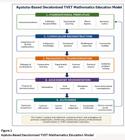
As illustrated in Figure 1, the Ayatutu-Based Decolonised TVET Mathematics Education Model is organised around five foundational principles: interconnectedness, collective responsibility, experiential learning, moral agency, and epistemic justice. These principles inform curriculum reconstruction, in which formal mathematics is integrated with Indigenous knowledge, vocational practice, multilingual reasoning, and community realities. Curriculum reconstruction then supports pedagogical transformation through dialogue, cooperative learning, experiential tasks, learner agency, practical inquiry, and collective problem-solving. This is followed by assessment reorientation, which shifts evaluation beyond decontextualised written tests toward projects and demonstrations, simulations, oral reasoning, workplace tasks, and community-based mathematical investigations. The intended outcomes are technical competence, cultural affirmation, learner agency, ethical judgement, sustainable livelihoods, and African-centred social transformation. The model is therefore not a decorative cultural addition to TVET mathematics; it is an attempt to reconstruct the relationships among knowledge, pedagogy, assessment, and purpose. Rather than presenting these elements as linear stages, the model conceptualises them as mutually reinforcing processes that continuously interact to produce meaningful mathematical learning.
The first principle, interconnectedness, contests the fragmentation that characterises much TVET mathematics education. In dominant approaches, mathematics is often separated from vocational subjects, learners' languages, community life, ecological realities, and ethical questions. Ayatutu rejects this separation by insisting that mathematical knowledge must be understood in relation to the social, material, vocational, and communal worlds in which it is used. This principle is important because vocational practice is never purely abstract. A learner calculating the volume of concrete, the cost of roofing materials, the gradient of a ramp, the yield of a crop, or the profitability of a small enterprise is not merely manipulating numbers; the learner is making decisions within networks of labour, safety, affordability, sustainability, and community need. This argument is consistent with Bishop's (1988) view that mathematics is embedded in cultural activity and with D'Ambrosio's (1985) claim that mathematical practices are generated through culturally situated problem-solving. It also resonates with McGrath et al.'s (2022) argument that vocational education should be connected to human development and social transformation rather than reduced to labour-market supply. Recent TVET theory similarly argues for moving beyond orthodox labour-market models toward wider sustainable human development goals.
The second principle, collective responsibility, challenges the individualised logic that dominates many mathematics classrooms and assessment systems. TVET mathematics is frequently treated as an individual performance subject: learners solve problems and are assessed alone, and are ranked based on individual outcomes. Yet vocational work is often collaborative and socially consequential. Building, repairing, farming, producing, trading, and managing resources require communication, negotiation, mutual responsibility, and shared judgement. Ayatutu therefore positions collective problem-solving as more than a teaching technique; it is an epistemic and ethical principle. Learners should reason together, test ideas together, justify decisions together, and consider the consequences of mathematical choices for others. This claim is supported by humanising pedagogy in TVET mathematics, which emphasises participation, engagement, relevance, and recognition of learners' lived experiences (Vimbelo & Bayaga, 2023a, 2023b, 2024). It is also consistent with critical mathematics education, where mathematical learning is understood not only as procedural fluency but as participation in social interpretation and democratic agency (Gutiérrez, 2013; Gutstein, 2003; Skovsmose, 2013).
The third principle, experiential learning, is central because TVET is concerned with doing, making, designing, repairing, producing, and solving practical problems. If vocational education is practical in purpose, then mathematics cannot be taught primarily as symbolic manipulation detached from materials, tools, designs, costs, risks, and workplace constraints. Ayatutu requires mathematics to be encountered through simulations, field-based tasks, tools, measurements, technical drawings, community projects, and workplace scenarios. This does not weaken formal mathematics. On the contrary, it strengthens conceptual understanding because learners encounter formal ideas through the situations that give them meaning. Ratio and proportion can be developed through mixing construction materials, scaling recipes, interpreting mechanical drawings, or calculating agricultural inputs. Geometry can be explored through carpentry, welding, building design, land use, and tailoring. Statistics can be connected to production outputs, household budgets, unemployment data, water usage, energy consumption, and small-business planning. This position aligns with the humanising TVET mathematics literature, which shows that real-life examples and learner experience improve engagement and relevance (Vimbelo & Bayaga, 2024). It also reflects Jaakkola's (2020) account of conceptual model-building as a legitimate scholarly approach when the aim is to organise existing theory into a generative framework.
The fourth principle, moral agency, addresses one of the most serious limitations of dominant TVET discourse: the tendency to equate success solely with employability. Employability is important, but it is too narrow to serve as the moral purpose of mathematics education. A learner may calculate accurately yet use mathematics in ways that reproduce exploitation, waste, unsafe practices, exclusion, or environmental damage. Ayatutu therefore argues that mathematical competence must include the capacity to reason about consequences. Learners should be encouraged to ask whether a calculation is fair, whether a design is safe, whether a budget is affordable, whether a production plan is sustainable, and whether a technical solution serves community well-being. This is where Ayatutu extends critical mathematics education; it does not merely argue that mathematics is political-it grounds mathematical responsibility in African relational ethics. Skovsmose (2013) and Valero (2004) argue that mathematics participates in social ordering and power, while Gutstein (2003) shows that learners can use mathematics to read and write the world. Ayatutu takes this insight into TVET by linking calculation to consequence, skill to responsibility, and competence to communal well-being.
The fifth principle, epistemic justice, provides the most explicitly decolonial dimension of the model. Ayatutu insists that African TVET learners should not be treated as epistemically empty subjects waiting to receive formal mathematics. They enter classrooms with knowledge from homes, trades, languages, informal economies, Indigenous practices, workplaces, and community problem-solving. These forms of knowledge should not be romanticised as complete substitutes for formal mathematics, but neither should they be dismissed as irrelevant. Epistemic justice requires that learners' practical, cultural, linguistic, and vocational resources become legitimate starting points for mathematical learning. This argument is supported by scholarship on epistemic injustice in education, which shows that assessment and pedagogy can misrecognise students as knowers when dominant forms of knowledge expression are privileged over marginalised epistemic resources (Nieminen, 2022; Nieminen & Lahdenperä, 2024; Walker, 2019). Nieminen and Lahdenperä's work is especially relevant because it argues that assessment can produce knowledge and knowers, rather than simply measure pre-existing competence.
The model's first operational dimension is curriculum reconstruction. An Ayatutu-informed curriculum would not organise TVET mathematics only around abstract disciplinary sequences or examination requirements. It would ask how mathematical concepts function within vocational pathways, local economies, community challenges, and sustainable development needs. Algebra would not be taught only as symbolic manipulation, but as a language for modelling production, pricing, technical relationships, resource use, and enterprise planning. Geometry would not be limited to properties of shapes, but connected to spatial reasoning in construction, design, fabrication, agriculture, and land use. Statistics would not be reduced to averages and graphs, but used to interpret workplace, environmental, economic, and community data. Curriculum reconstruction therefore means changing not simply the examples used in mathematics lessons, but the logic through which mathematical knowledge is selected, sequenced, justified, and applied. This is consistent with decolonial theory's insistence that transformation must challenge the hierarchy of knowledge itself rather than merely increase access to inherited structures (Mignolo, 2002; Ndlovu-Gatsheni, 2015; Quijano, 2000).
The second operational dimension is pedagogical transformation. Within an Ayatutu-based framework, the lecturer is not merely a transmitter of procedures but a mediator between formal mathematics, vocational practice, local knowledge, multilingual expression, and ethical reflection. Pedagogy must therefore become dialogical, participatory, experiential, and problem-centred. Learners should be invited to explain their reasoning, compare solution strategies, work collaboratively, use tools and materials, investigate practical problems, and connect mathematical ideas to workplace and community contexts. This is not a lowering of academic standards. It is a more demanding form of rigour because learners must justify their reasoning, translate across registers, test ideas in context, and consider the implications of their solutions. Language-responsive mathematics education supports this position by showing that language is central to mathematical participation, conceptual access, and learner identity (Barwell, 2020; Planas, 2021; Prediger et al., 2022). For African TVET mathematics, this means multilingual reasoning should be treated as a resource for understanding rather than as a barrier to be eliminated.
The third operational dimension is assessment reorientation. If assessment continues to privilege only individual written performance and decontextualised procedures, then claims about decolonised TVET mathematics will remain rhetorical. Assessment must reflect the forms of competence the model values. Learners should therefore be assessed through projects, demonstrations, workplace simulations, oral explanations, practical investigations, collaborative tasks, design challenges, budgeting activities, and community-based mathematical problem-solving. These forms should not replace all written assessment, but they should expand what counts as valid evidence of mathematical understanding. A learner's ability to justify a measurement decision, explain a cost estimate, interpret workplace data, evaluate a design option, or reason about sustainability is central to vocational mathematics. Recent assessment scholarship supports this argument by showing that assessment can reproduce exclusion when it recognises only narrow forms of performance and fails to acknowledge learners as knowers (Nieminen, 2022; Nieminen & Ketonen, 2024; Nieminen & Lahdenperä, 2024).
The model's outcome is a redefinition of TVET mathematical competence. In the Ayatutu framework, competence is not limited to accuracy, speed, and procedural fluency. It includes technical competence, cultural affirmation, learner agency, ethical judgement, sustainable livelihoods, and African-centred social transformation. Technical competence remains essential because learners must develop proficiency in mathematical tools needed for vocational practice. Cultural affirmation matters because learners should see their languages, identities, and knowledge systems reflected in curriculum and pedagogy. Learner agency matters because students should be able to use mathematics to interpret and act upon their worlds. Ethical judgement matters because technical decisions have consequences. Sustainable livelihoods matter because TVET should support human development, not only labour-market supply. African-centred social transformation matters because education should contribute to epistemic freedom, collective well-being, and decolonised development. In this sense, Ayatutu does not reduce mathematics to culture; it expands mathematics into a relational, vocational, and ethical practice.
The model therefore makes a distinct theoretical contribution. Against decontextualisation, it proposes vocational and community grounding. Against epistemic exclusion, it proposes recognition of learners as knowers. Against transmission pedagogy, it proposes dialogue and co-construction. Against assessment narrowness, it proposes authentic demonstrations of competence. Against labour-market instrumentalism, it proposes moral agency and collective well-being. This is why the model is not merely pedagogical but theoretical; it reorganises the aims, content, methods, assessment, and social purpose of TVET mathematics education in Africa. The argument is not that learners need less formal mathematics, easier mathematics, or purely local mathematics. The argument is that learners need mathematics that is rigorous because it is meaningful, formal because it is connected, vocational because it is situated, and decolonial because it recognises them as knowers. Through the Ayatutu-Based Decolonised TVET Mathematics Education Model, mathematics can be repositioned as a resource through which African TVET learners develop not only the capacity to calculate, but also the capacity to reason, judge, collaborate, create, and contribute to sustainable community life.
Consider a TVET construction programme in which learners are required to estimate materials for a community housing project. Within a conventional approach, students may simply apply formulas to calculate area, volume, and cost. Through an Ayatutu-informed approach, learners would additionally engage with local building practices, consult community stakeholders, justify material choices, evaluate environmental implications, and collaboratively interpret mathematical results. Mathematics therefore becomes a tool for technical reasoning, ethical decision-making, and community-responsive problem-solving. This example illustrates how Ayatutu connects formal mathematical concepts with vocational practice, Indigenous knowledge, and social responsibility.
Discussion
This article argues that the problem of TVET mathematics education in Africa is not simply a matter of weak performance, inadequate teaching techniques, or insufficient practice with mathematical procedures. The deeper problem is epistemic; TVET mathematics is often organised in ways that detach formal knowledge from learners' vocational realities, languages, cultural identities, community practices, and ethical responsibilities. This disconnection undermines the developmental promise of TVET because mathematics, as a core language of measurement, design, costing, modelling, risk assessment, and problem-solving, should enable learners to act intelligently within real social and occupational contexts. When taught mainly as abstract procedure, mathematics becomes a gatekeeping subject rather than a resource for skills development and social transformation.
The Ayatutu-Based Decolonised TVET Mathematics Education Model responds to this problem by reframing mathematics as relational, experiential, communal, and morally accountable. Its value lies in the way it brings together concerns that are often treated separately: epistemic justice, vocational relevance, participatory pedagogy, multilingual reasoning, assessment reform, and ethical skills development. Unlike reform approaches that merely add local examples to an unchanged curriculum, Ayatutu challenges the deeper assumption that formal abstraction is the only legitimate form of mathematical knowledge. It argues instead that formal mathematics becomes more powerful when connected to Indigenous knowledge systems, vocational practices, learners' languages, community realities, and collective problem-solving (Age, 2024, 2025; Age et al., 2025).
A key insight from the model is that rigour and contextual relevance should not be treated as opposites. In TVET mathematics, rigour should mean the capacity to reason accurately, justify procedures, apply concepts across contexts, evaluate consequences, and solve authentic problems. A learner who can calculate material quantities but cannot reason about waste, affordability, safety, or sustainability has developed only a partial form of mathematical competence. Similarly, a learner who can manipulate formulas but cannot interpret workplace data, compare design alternatives, or evaluate community needs has not yet developed the mathematical agency required for vocational practice. This confirms the relevance of critical mathematics education, which insists that mathematics is not socially neutral but participates in shaping decisions, opportunities, and inequalities (Gutiérrez, 2013; Gutstein, 2003; Skovsmose, 2013).
The discussion also shows that decolonising TVET mathematics requires rethinking the learner's position. Learners should not be treated as passive recipients of external mathematical knowledge, but as epistemic agents who bring practical, linguistic, cultural, and vocational resources into the classroom. This does not mean replacing formal mathematics with local knowledge. Rather, it means creating a dialogical relationship between formal mathematical concepts and the knowledge learners already use in households, trades, informal economies, workplaces, and communities. Such a position is consistent with ethnomathematics, humanising pedagogy, and language-responsive mathematics education, which collectively show that learners' identities, languages, and experiences can strengthen mathematical understanding rather than weaken it (Barwell, 2020; Bishop, 1988; D'Ambrosio, 1985; Vimbelo & Bayaga, 2023b, 2024).
Ultimately, the Ayatutu framework contributes to the field by shifting TVET mathematics from technical delivery to epistemic reconstruction. It provides a basis for redesigning curriculum, pedagogy, assessment, and policy around the principles of interconnectedness, collective responsibility, experiential learning, moral agency, and epistemic justice. The model therefore positions TVET mathematics not merely as preparation for employment, but as a decolonised practice through which learners can develop technical competence, cultural confidence, ethical judgement, sustainable livelihoods, and African-centred social transformation.
Implications for Curriculum, Pedagogy, Policy, and Practice
The implications of this article extend beyond improving TVET mathematics pass rates; they require a deeper reorganisation of curriculum, pedagogy, policy, and institutional practice. If the central problem is epistemic rather than merely instructional, reform cannot be limited to more exercises, longer contact time, or isolated local examples. The Ayatutu-based framework implies that TVET mathematics should be reconstructed as a relational, culturally grounded, vocationally relevant, and socially accountable practice. For curriculum and pedagogy, mathematical content should be organised around authentic vocational and community problems rather than abstract topic sequences alone. Algebra, geometry, measurement, statistics, costing, and modelling should be taught as tools for solving real problems in construction, agriculture, engineering, entrepreneurship, energy, water, housing, and local economies. Pedagogically, this requires a shift from lecturer-centred transmission to dialogue, cooperative inquiry, practical demonstrations, simulations, workplace tasks, learner explanations, and community-based problem-solving (Bishop, 1988; D'Ambrosio, 1985; Nasir et al., 2008; Vimbelo & Bayaga, 2023a, 2023b, 2024).
Assessment must also be reoriented. If TVET mathematics continues to assess only speed, individual accuracy, and symbolic reproduction, decolonised mathematics will remain rhetorical. Assessment should include projects, oral explanations, workplace simulations, practical demonstrations, collaborative investigations, design tasks, budgeting exercises, and community-based mathematical inquiries. Such assessment broadens evidence of competence by recognising reasoning, application, communication, collaboration, and ethical judgment (Nieminen, 2022; Nieminen & Ketonen, 2024; Nieminen & Lahdenperä, 2024).
At policy and practice levels, TVET mathematics should not be framed only through employability and labour-market responsiveness. Policy should recognise mathematics as a resource for epistemic justice, sustainable livelihoods, learner agency, cultural affirmation, and community development (McGrath et al., 2022). Practically, lecturers need professional development to design contextualised tasks, use multilingual resources, recognise learners' community-based knowledge, and connect mathematics to ethical vocational decision-making. Through Ayatutu, TVET mathematics can form not only employable graduates, but socially responsible mathematical thinkers capable of contributing to African-centred skills development.
Conclusion
This article has argued that the transformation of TVET mathematics education in Africa requires more than improved teaching techniques, additional practice, or superficial contextualisation. The deeper challenge is epistemic. TVET mathematics often remains organised around abstraction, procedural compliance, and examination performance, while giving insufficient attention to learners' languages, vocational practices, Indigenous knowledge systems, community realities, and ethical responsibilities. Such a model is inadequate for a sector expected to support skills development, sustainable livelihoods, and social transformation. Mathematics in TVET should not function as a gatekeeping subject; it should serve as a resource through which learners reason, design, estimate, model, calculate, interpret, evaluate, and solve problems in socially meaningful ways.
The Ayatutu-Based Decolonised TVET Mathematics Education Model developed in this article offers a theoretical response to this challenge. Grounded in interconnectedness, collective responsibility, experiential learning, moral agency, and epistemic justice, the model repositions mathematics as a relational and socially accountable practice. It does not reject formal mathematics; rather, it argues that formal mathematics becomes more powerful when connected to indigenous knowledge, vocational practice, multilingual reasoning, community-based problem-solving, and ethical judgement. Through this framework, mathematical rigour is redefined as the capacity to connect concepts to context, justify reasoning, apply knowledge responsibly, and contribute to collective well-being.
The article concludes that decolonising TVET mathematics requires reconstruction across curriculum, pedagogy, assessment, policy, and practice. Curriculum should connect mathematical concepts to authentic vocational and community problems. Pedagogy should be dialogical, participatory, experiential, and attentive to learners' cultural and linguistic resources. Assessment should recognise practical reasoning, oral explanation, collaboration, workplace simulation, and community-based mathematical inquiry. Policy should frame TVET mathematics not only as preparation for employment, but also as a foundation for epistemic justice, sustainable development, and African-centred social transformation.
Ultimately, Ayatutu shifts TVET mathematics from narrow skills training to decolonised skills development. It offers a way of forming graduates who are not only technically competent, but also culturally grounded, ethically aware, mathematically confident, and socially responsive. In African contexts marked by inequality, unemployment, ecological vulnerability, and uneven access to resources, such a reorientation is urgent. Through Ayatutu, TVET mathematics can become a language of empowerment, responsibility, and collective flourishing.
Recommendations for Future Research
Future research should empirically test the Ayatutu-Based Decolonised TVET Mathematics Education Model in diverse African TVET contexts. Classroom-based studies are needed to examine how Ayatutu-informed curriculum design, pedagogy, and assessment affect learner engagement, mathematical understanding, vocational transfer, identity formation, and ethical reasoning. Such studies should investigate how learners respond when mathematics is taught through Indigenous knowledge systems, vocational practices, multilingual reasoning, community-based tasks, and socially responsible problem-solving.
Further studies should also examine lecturers' professional development needs and the institutional conditions required for implementation. Because Ayatutu-informed teaching requires lecturers to connect formal mathematics with local knowledge, vocational practice, learners' languages, and moral reflection, research should explore the challenges lecturers face and the support systems they need. Comparative studies across African countries, vocational fields, languages, and institutional settings would also help clarify how the model can be adapted without losing its core principles of interconnectedness, collective responsibility, experiential learning, moral agency, and epistemic justice. Future work should also develop practical tools such as curriculum units, assessment rubrics, lecturer training modules, multilingual resources, and community-based mathematics projects to move the model from conceptual proposal to classroom and policy application.
References
- Age, T. J. (2024). Ubuntulisation of mathematics classroom for the enhancement of learner's interest and achievement. Journal of Advanced Sciences and Mathematics Education, 4(1), 41-50. https://doi.org/10.58524/jasme.v4i1.367
- Age, T. J. (2025). Integrating the concept of "Ayatutu" into mathematics education: Exploring collective problem-solving and cooperative learning. Knowledge: Special issue; Knowledge Management in Learning and Education, 5(2),11 https://doi.org/10.3390/knowledge5020011
- Age, T. J., Machaba, M. F., & Chaver, J. (2025). Effect of social justice mathematics on senior secondary school students' performance in algebraic expressions. Mathematics Education Journal, 9(1) 1-13. https://doi.org/10.22219/mej.v9i1.37244
- Alvesson, M., & Sandberg, J. (2011). Generating research questions through problematization. Academy of Management Review, 36(2), 247-271. https://doi.org/10.5465/amr.2009.0188
- Barwell, R. (2020). Learning mathematics in a second language: Language positive and language neutral classrooms. Journal for Research in Mathematics Education, 51(2), 150-178. https://doi.org/10.5951/jresematheduc-2020-0018
- Bishop, A. J. (1988). Mathematics education in its cultural context. Educational Studies in Mathematics, 19(2), 179-191. https://doi.org/10.1007/BF00751231
- Boaler, J. (2002). Learning from teaching: Exploring the relationship between reform curriculum and equity. Journal for Research in Mathematics Education, 33(4), 239-258. https://doi.org/10.2307/749740
- D'Ambrosio, U. (1985). Ethnomathematics and its place in the history and pedagogy of mathematics. For the Learning of Mathematics, 5(1), 44-48. https://doi.org/10.1007/978-3-319-59220-6_12
- Gilson, L. L., & Goldberg, C. B. (2015). Editors' comment: So, what is a conceptual paper? Group & Organization Management, 40(2), 127-130. https://doi.org/10.1177/1059601115576425
- Gutiérrez, R. (2013). The sociopolitical turn in mathematics education. Journal for Research in Mathematics Education, 44(1), 37-68. https://doi.org/10.5951/jresematheduc.44.1.0037
- Gutstein, E. (2003). Teaching and learning mathematics for social justice in an urban, Latino school. Journal for Research in Mathematics Education, 34(1), 37-73. https://doi.org/10.2307/30034699
- Jaakkola, E. (2020). Designing conceptual articles: Four approaches. AMS Review, 10, 18-26. https://doi.org/10.1007/s13162-020-00161-0
- Letseka, M. (2012). In defence of Ubuntu. Studies in Philosophy and Education, 31, 47-60. https://doi.org/10.1007/s11217-011-9267-2
- MacInnis, D. J. (2011). A framework for conceptual contributions in marketing. Journal of Marketing, 75(4), 136-154. https://doi.org/10.1509/jmkg.75.4.136
- Madimabe, M. P. (2020). Enhancing the teaching and learning of mathematical geometry at a TVET college using indigenous knowledge approach (Master's dissertation, University of the Free State). http://hdl.handle.net/11660/11327
- Makgato, M., & Afeti, G. (2020). New models for technical and vocational education and training. IGI Global.
- Meeran, S. (2024). Decolonising mathematics education: Teachers' initial experiences of using ethnomathematical games in the intermediate phase. Interdisciplinary Journal of Sociality Studies, 4(s1), 1-14. https://doi.org/10.38140/ijss-2024.vol4.s1.03
- Mignolo, W. D. (2002). The geopolitics of knowledge and the colonial difference. South Atlantic Quarterly, 101(1), 57-96. https://doi.org/10.1215/00382876-101-1-57
- Msila, V. (2014). Heutagogy, Africanisation and learning: Experiences from an open and distance learning (ODL) program at the University of South Africa. Mediterranean Journal of Social Sciences, 5(14), 214-220. https://doi.org/10.5901/mjss.2014.v5n14p214
- Nasir, N. S., Hand, V., & Taylor, E. V. (2008). Culture and mathematics in school: Boundaries between "cultural" and "domain" knowledge in the mathematics classroom and beyond. Review of Research in Education, 32(1), 187-240. https://doi.org/10.3102/0091732X07308962
- Ndlovu-Gatsheni, S. J. (2015). Decoloniality as the future of Africa. History Compass, 13(10), 485-496. https://doi.org/10.1111/hic3.12264
- Nieminen, J. H. (2024). Assessment for inclusion: Rethinking inclusive assessment in higher education. Teaching in Higher Education, 29(4), 841-859. https://doi.org/10.1080/13562517.2021.2021395
- Nieminen, J. H., & Ketonen, L. (2024). Epistemic agency: A link between assessment, knowledge and society. Higher Education, 88(2), 777-794. https://doi.org/10.1007/s10734-023-01142-5
- Nieminen, J. H., & Lahdenperä, J. (2024). Assessment and epistemic (in)justice: How assessment produces knowledge and knowers. Teaching in Higher Education, 29(1), 300-317. https://doi.org/10.1080/13562517.2021.1973413
- Nqabeni, N., & Buka, A. M. (2023). Post COVID-19: Exploring the decolonisation factor in a mathematics classroom in South African schools. E-Journal of Humanities, Arts and Social Sciences, 4(3), 287-299. https://doi.org/10.38159/ehass.2023439
- Planas, N. (2021). How specific can language as resource become for the teaching of algebraic concepts? ZDM: Mathematics Education, 53(2), 277-288. https://doi.org/10.1007/s11858-020-01190-6
- Prediger, S., Erath, K., Weinert, H., & Quabeck, K. (2022). Only for multilingual students at risk? Cluster-randomized trial on language-responsive mathematics instruction. Journal for Research in Mathematics Education, 53(4), 255-276. https://doi.org/10.5951/jresematheduc-2020-0193
- Quijano, A. (2000). Coloniality of power and Eurocentrism in Latin America. International Sociology, 15(2), 215-232. https://doi.org/10.1177/0268580900015002005
- Skovsmose, O. (2013). Towards a philosophy of critical mathematics education (Vol. 15). Springer.
- Valero, P. (2004). Socio-political perspectives on mathematics education. In P. Valero & R. Zevenbergen (Eds.), Researching the socio-political dimensions of mathematics education. Springer.
- Venter, E. (2004). The notion of Ubuntu and communalism in African educational discourse. Studies in Philosophy and Education, 23, 149-160. https://doi.org/10.1023/B:SPED.0000024428.29295.03
- Vimbelo, S., & Bayaga, A. (2024). Transforming mathematics education in TVET colleges through humanising pedagogy: An exploration of teaching approaches, student engagement, and real-life examples. IETE Journal of Education, 65(2), 139-154. https://doi.org/10.1080/09747338.2024.2324808
- Waghid, Y. (2015). African philosophy of education as a response to human rights violations: Cultivating Ubuntu as a virtue in religious education. Journal for the Study of Religion, 27(1), 267-282. https://doi.org/10.4314/jsr.v27i1.
- Walker, M. (2019). Why epistemic justice matters in and for education. Asia Pacific Education Review, 20(2), 161-170. https://doi.org/10.1007/s12564-019-09601-4
- Whetten, D. A. (1989). What constitutes a theoretical contribution? Academy of Management Review, 14(4), 490-495. https://doi.org/10.5465/amr.1989.4308371