Popular Music as Epistemic Justice: Toward Inclusive Poetry Pedagogy in South African Classrooms
Abstract
This study explores the role of popular music in promoting epistemic justice and inclusive poetry pedagogy in South African Grade 10 English classrooms. Traditional poetry instruction often marginalises learners' cultural knowledge by privileging canonical texts, limiting access to literary meaning-making and reinforcing hierarchical knowledge structures. Drawing on a decolonial and social justice framework, this action research study engaged learners in iterative cycles where carefully selected popular songs were paired with poems to create meaningful connections between learners' cultural worlds and literary texts. The study involved five action research cycles in which poems were paired with culturally familiar songs in order to scaffold learners' understanding of poetic devices, themes, and tone. Data were generated through multiple methods, including open-ended questionnaires and classroom activities, and were analysed using thematic analysis. Findings indicate that integrating popular music legitimised learners' cultural experiences, disrupted exclusionary pedagogical practices, and fostered equitable access to literary interpretation. Learners demonstrated enhanced cognitive engagement, critical reflection, and appreciation of poetic forms, language, and themes. Learner responses further indicated that music functioned as a cognitive and affective scaffold, enabling them to connect abstract literary concepts with familiar cultural texts. The study further highlights the transformative potential of culturally responsive teaching practices that foreground learners' epistemic contributions, challenge traditional hierarchies of knowledge, and enable inclusive literacy learning. By centring learners' voices and lived experiences, this research provides evidence that popular music can function both as a pedagogical tool and as a vehicle for epistemic justice, supporting social change and contributing to efforts to decolonise literature education in South African schools.
popular music; epistemic justice; inclusive literacy pedagogy; poetry; decolonial education; South Africa
Introduction
Teaching poetry in South African schools (and globally) remains deeply shaped by inherited colonial and Eurocentric curricular traditions that privilege canonical literary forms while marginalising learners' cultural knowledge, linguistic repertoires, and lived realities (Ahmed, 2025). Within such pedagogical contexts, poetry is often positioned as an elite or culturally distant genre, accessible primarily through dominant interpretive frameworks that reflect Western epistemologies (Mavhiza & Prozesky, 2020). As a result, many learners experience poetry as disengaging, alienating, and disconnected from their everyday worlds (Genis & Byrne, 2024). This exclusion is not merely pedagogical but epistemic because it reflects broader hierarchies of knowledge in which certain forms of meaning-making are treated as inherently superior, while learners' resources are rendered peripheral or illegitimate (Cooper, 2020; Genis & Byrne, 2024; Mavhiza & Prozesky, 2020).
Such dynamics reproduce epistemic injustice in the literature classroom by restricting who is recognised as a legitimate knower and whose interpretive voice matters. In multilingual and multicultural South African classrooms, where learners' identities are shaped by diverse cultural and linguistic backgrounds and popular cultural engagements, the continued privileging of Eurocentric literary norms reinforces inequities in access to literary meaning-making. Learners' musical tastes, home languages, and interpretive practices are often excluded from formal literature study, limiting their agency and participation and sustaining structural hierarchies embedded in schooling (Clement, 2024; Iweuno et al., 2024).
Within educational contexts, epistemic justice refers to the fair recognition of learners as legitimate knowers whose knowledge, experiences, and interpretive perspectives are valued within the learning process (Duchkova & Leventon, 2023). When classroom practices privilege only dominant literary traditions or authoritative interpretations, learners' resources are often marginalised, resulting in limited participation in knowledge construction. This article draws on a broader doctoral study investigating the potential of popular music to teach poetry in an English Home Language classroom in a culturally and linguistically diverse South African secondary school (Maniraj, 2025). By incorporating learners' knowledge and musical preferences, popular music disrupts exclusionary approaches, supports epistemic justice, and fosters more equitable access to interpretation. As a culturally resonant medium, music offers familiar entry points into poetic devices and themes, enabling learners to bridge canonical texts and lived experiences. Grounded in social constructivist and decolonial frameworks, this research explores how integrating popular music into poetry pedagogy supports engagement, collaboration, and critical reflection. Through participatory meaning-making practices, learners are positioned as active co-constructors of interpretation. Music thus becomes a mediating resource through which learners negotiate historical and contemporary realities, connect poetry to social issues, and develop interpretive confidence.
The findings presented in this article draw from five cycles of action research, in which learners engaged with selected poems alongside carefully chosen songs. Data were generated through questionnaires and classroom activities, allowing for triangulation and rich insight into learners' cognitive critical responses. The findings suggest that popular music not only enhances learners' comprehension and enjoyment of poetry but also fosters collaborative learning, reflective thinking, and critical engagement with social and historical themes. By centring learners' epistemic agency, this study demonstrates that popular music can function as a tool for social and educational transformation, challenging hierarchical and exclusionary practices in poetry teaching. It contributes to discourse on inclusive and decolonial pedagogy by offering practical strategies for teachers seeking to promote epistemic justice, culturally responsive literacy education, and socially transformative learning in South African classrooms.
While previous studies have explored culturally responsive pedagogy and the use of music in education, this study offers a distinct contribution by examining how popular music can function specifically as a tool for epistemic justice within the teaching of poetry in a South African Grade 10 English Home Language classroom. Rather than using music merely to increase engagement, the aim of the study is to demonstrate how music can operate as an interpretive bridge that legitimises learners' cultural knowledge as a valid resource for literary analysis. By integrating music into action research cycles, the study provides evidence of how learners' interpretive confidence and engagement are strengthened when their cultural practices are recognised in poetry instruction. In doing so, the research shows how popular music can disrupt hierarchical distinctions between canonical texts and learners' knowledge in the South African secondary school context.
Popular Music and Epistemic Justice in Education
Epistemic justice can be understood as the fair recognition and inclusion of diverse knowledges in educational spaces, and has become increasingly central to decolonial and socially just pedagogical discourse (Duchkova & Leventon, 2023). However, due to South Africa's history, the educational system has suffered from epistemic injustice. Epistemic injustice in education refers to situations where individuals' knowledge, experiences, or perspectives are unfairly dismissed or undervalued because of their social identities, including race, gender, or socioeconomic status (Omodan, 2023). In educational contexts, this injustice limits learners' access to knowledge and negatively shapes their learning experiences. It can appear through biased curricula, discriminatory teaching practices, and unequal access to educational resources and opportunities (Omodan, 2023). Mainstream curricula frequently prioritise dominant cultural narratives while overlooking the histories, contributions, and lived experiences of marginalised communities (Harvey & Russell-Mundine, 2019), resulting in learners from marginalised groups experiencing epistemic injustice when their ideas, questions, and contributions are dismissed or overlooked during classroom interactions (Omodan, 2023). In South African classrooms, literature teaching has historically privileged Eurocentric canonical traditions, marginalising learners' cultural and linguistic worlds and reinforcing exclusionary hierarchies of knowledge (Heleta, 2016). To resolve this challenge in the poetry classroom, integrating culturally relevant content, such as popular music, offers a means of redressing these imbalances by validating learners as epistemic agents whose interpretive frameworks are legitimate and valuable (Genis & Byrne, 2024; Iwuanyamwu, 2023).
Popular music has been widely recognised as a powerful medium through which cognitive, affective, and cultural engagement can be mediated in classroom contexts (Campbell, 2018). Music resonates with learners' sociocultural identities, providing familiar structures through which abstract literary concepts, such as metaphor, tone, rhythm, and theme, can be explored (Hargreaves et al., 2021). When learners engage with lyrics that reflect their cultural worlds, they are able to access literary analysis through interpretive pathways grounded in lived experience.
Studies suggest that learners demonstrate enhanced comprehension and higher-order thinking when canonical poetry is connected to music that is meaningful within their cultural repertoires (Campbell, 2018). Genis and Byrne (2024) and Iwuanyamwu (2023), for example, argued that linking content meaningful to learners, such as contemporary songs, with canonical poetry enables learners to bridge historical, linguistic, and cultural distance, thereby legitimising their knowledge and positioning them as active participants in meaning-making rather than passive recipients of authoritative interpretations.
Inclusive Literacy Pedagogy and Cultural Relevance
Inclusive literacy pedagogy foregrounds equitable participation in language and literature learning, particularly for learners from diverse cultural and linguistic backgrounds (Lim, 2024). Central to inclusive approaches is the recognition that learners' identities, experiences, and cultural resources are not supplementary but foundational to engagement and learning outcomes. In South Africa, inclusive literacy practices are especially urgent given the enduring effects of apartheid-era inequalities, where learners' home languages and cultural knowledges have historically been undervalued within formal schooling (Heleta, 2016).
Incorporating popular music into poetry instruction supports inclusive pedagogy by providing multimodal pathways for interpretation. Music offers learners cognitive and affective entry points into texts, allowing them to engage with poetry through listening, discussion, emotional resonance, and cultural familiarity (Mavhiza & Prozesky, 2020). Such multimodal engagement expands access to meaning-making, particularly for learners who may find traditional print-based approaches limiting.
Moreover, music-based pedagogies align with constructivist understandings of learning as socially mediated and collaboratively constructed. Analysing lyrics alongside poems encourages dialogue, negotiation of meaning, and interpretive exploration, fostering critical literacy skills and learner agency (Vygotsky, 1978). These strategies advance epistemic justice by ensuring that learners' cultural perspectives are integral to literary interpretation rather than marginal or tokenised.
Decolonial Perspectives on Poetry Teaching
Decolonial scholarship in education emphasises the disruption of Eurocentric knowledge hierarchies and the validation of marginalised cultural knowledge systems (Heleta, 2016). Within poetry education, this requires recognising learners' musical, linguistic, and cultural backgrounds as legitimate interpretive frameworks through which poetry can be understood. Campbell (2018) and Powell and Smith (2024) argued that popular music, as a culturally situated practice, challenges traditional literary hierarchies and contributes to socially just pedagogy by unsettling distinctions between "high" and everyday cultural texts.
Pairing protest poetry with contemporary songs about youth empowerment, for instance, allows learners to contextualise texts within lived realities and ongoing social struggles (Titi, 2025). Such pedagogical pairings foster critical engagement with historical and contemporary issues, enabling learners to view poetry not as detached from society but as deeply connected to questions of identity, agency, and social change.
Scholarship indicates that popular music offers significant cognitive, affective, and cultural affordances for enhancing poetry teaching. By integrating music into classroom practice, teachers can foster epistemic justice, inclusive literacy pedagogy, and decolonial transformation. However, Meiklejohn et al. (2021) indicated that systematic classroom-based research in South African contexts remains limited, particularly regarding learners' responses and literacy outcomes. This study addresses this gap by examining how popular music can function as a vehicle for epistemic justice and socially transformative poetry pedagogy.
Theoretical Framework
This study is grounded in a multi-layered theoretical and conceptual framework that situates popular music as a pedagogical resource for epistemic justice, inclusive literacy practice, and decolonial transformation. Together, these perspectives explain how integrating learners' cultural experiences into poetry instruction can challenge dominant knowledge hierarchies, support equitable access to meaning-making, and foster socially transformative learning.
Central to this framework is epistemic justice, which concerns whose knowledge counts and who is recognised as a legitimate knower in educational spaces. Epistemic injustice occurs when learners' voices and interpretive resources are undervalued, including testimonial injustice, where contributions are discredited, and hermeneutical injustice, where learners lack access to interpretive tools reflecting their experiences (Duchkova & Leventon, 2023). In South Africa, Eurocentric curricula often marginalise learners' cultural knowledge, limiting agency (Fataar, 2025). Addressing this requires pedagogical practices that recognise learners' cultural, linguistic, and musical resources as valid foundations for literary interpretation, creating spaces where their experiences and texts are treated as legitimate interpretive resources. This study understands epistemic justice as the recognition of learners as legitimate knowers whose cultural knowledge, linguistic repertoires, and interpretive perspectives contribute meaningfully to literary meaning-making in the classroom. In practical terms, this involves creating pedagogical spaces where learners' experiences and cultural texts are treated as valid interpretive resources rather than peripheral knowledge.
Inclusive literacy pedagogy intersects with epistemic justice by emphasising learning environments in which all learners can participate meaningfully. Such pedagogies affirm learners' identities and draw on their cultural and social repertoires, enabling deeper and more authentic engagement with texts (Wang, 2025). In this study, popular music serves as a culturally meaningful interpretive resource that connects learners' everyday worlds with poetry. Through music, learners explore figurative language, theme, tone, and structure in ways that resonate with lived realities, fostering both comprehension and engagement.
Decolonial theory further strengthens this approach by challenging colonial knowledge hierarchies embedded in curricula and pedagogical traditions. Decolonial scholarship advocates dismantling Western-dominated epistemologies and legitimising Indigenous, local, and popular cultural knowledges (Mignolo & Walsh, 2018). In South Africa, decolonial approaches emphasise curriculum transformation that is context-sensitive, dialogical, and shaped by learners' cultural worlds rather than treating them as peripheral.
Finally, a social constructivist lens underpins these frameworks by viewing learning as a socially mediated process in which meaning is co-constructed through interaction, dialogue, and cultural resources (Vygotsky, 1978). In this study, learners collaboratively interpret poems alongside musical texts, drawing on shared cultural repertoires to negotiate meaning. This validates learners' epistemic contributions, aligns with decolonial aims, and fosters inclusive, participatory literacy engagement.
Methodology
Research Design
This study employed an action research design to investigate how the integration of popular music can support inclusive poetry pedagogy in South African Grade 10 English Home Language classrooms. Action research was selected because it enables teacher-researchers to systematically examine challenges arising in their own classrooms, implement targeted pedagogical interventions, and evaluate their effects through iterative cycles of inquiry (Burns, 2015; Koshy et al., 2011).
Action research was particularly appropriate for this study because poetry teaching in many South African classrooms remains dominated by formal, teacher-centred approaches that may marginalise learners whose linguistic and cultural experiences differ from traditional literary norms. Following the cyclical action research model proposed by Kemmis et al. (2014), the study proceeded through five iterative cycles, each structured around the four core phases of:
• Planning
• Acting
• Observing
• Reflecting.
This cyclical design ensured that the intervention was continually refined based on learner engagement, classroom interaction, and evidence generated in each cycle. Baseline data were collected before Cycle 1 to determine learners' prior responses to and experiences with music and poetry.
Action Research Cycles
The intervention was structured as a sequence of five action research cycles, each designed to progressively build learners' understanding and analytical skills in poetry through the integration of music. The poems used in the study formed part of a prescribed list used by teachers in the district (immediate surroundings in which the school is located). Each cycle paired a specific poem with a contemporary song that shared thematic or stylistic elements, facilitating comparisons between the two texts to engage learners more deeply with poetic concepts.
The first cycle introduced learners to figures of speech using Katy Perry's (2010) song "Firework" as an accessible entry point. Learners listened to the song and identified examples of metaphor, simile, and imagery within the lyrics. These figurative devices were then connected to those found in short poetic extracts, fostering an understanding of how language conveys emotion and meaning. To consolidate learning, learners wrote descriptive paragraphs explaining how the song's figurative language contributed to its message. Assessment criteria focused on learners' ability to correctly identify figures of speech, explain their effects, and express ideas clearly in writing. Analysis of these responses revealed that while most learners could recognise figures of speech, many found it challenging to articulate their significance, indicating the need for more scaffolded analysis in subsequent cycles.
Learners' identification of figures of speech was evaluated using a simple analytic rubric developed for the study. Responses were assessed according to three criteria: (1) correct identification of the literary device, (2) explanation of its effect or meaning within the text, and (3) clarity of written expression. Each criterion was evaluated on a 3-point scale (accurate, partially accurate, or inaccurate). Because the tasks formed part of normal classroom learning activities, they were assessed by the teacher-researcher but were not included in learners' formal academic grades. To enhance credibility, samples of learner responses and marking criteria were reviewed by a colleague experienced in English language teaching who acted as a critical friend to ensure consistency and fairness in the interpretation of learners' answers.
Building on this insight, the second cycle employed Shakespeare's (1609/n.d.) "Sonnet 18" alongside Bruno Mars' (2010) "Just the Way You Are" to deepen learners' analytical skills through comparative work. Learners examined similarities and differences between the poem and the song with particular attention to themes of love, structure, and figurative language. They completed short written responses explaining how both texts expressed similar ideas in different forms. Assessment criteria evaluated thematic understanding, structural analysis, and the quality of interpretation. Findings showed increased engagement but also highlighted that some learners remained at a descriptive rather than interpretative level, suggesting further support was needed to connect texts to personal meaning.
The third cycle addressed this by focusing on the poem "a young man's thoughts before june 16th" by Fhazel Johennesse (n.d.) paired with, "We Are Young" by fun. (2011). Learners discussed the context and message of both texts and wrote personal responses relating the themes of youth, identity, and aspiration to their own experiences. Assessment emphasised learners' ability to interpret themes, use textual evidence, and express personal insight. This cycle demonstrated improved interpretative ability and greater learner confidence, although challenges remained in analysing tone and imagery, which became the focus of the next cycle.
In the fourth cycle, learners explored "Silver" by Walter de la Mare (1913/n.d.) in relation to Toploader's (2000) "Dancing in the Moonlight." Classroom discussions centred on imagery and tone, with learners subsequently writing narrative paragraphs inspired by the mood and imagery of the texts. Assessment criteria included identification and interpretation of imagery, recognition of tone, and creative use of descriptive language. Results indicated learners were developing more sophisticated analytical skills, connecting abstract poetic concepts with familiar sensory experiences through the musical pairing.
The final cycle paired Alice Walker's (1970/n.d.) "Women" with Alicia Keys' (2012) "Girl on Fire," concentrating on tone, theme, diction, and attitude, particularly representations of strength and resilience. Learners reflected on how music influenced their understanding of the poem by writing reflective paragraphs. Assessment focused on thematic interpretation, textual evidence, and depth of reflection. This cycle revealed that learners gained greater confidence and ability in poetic analysis, with many articulating the supportive role music played in their comprehension and engagement.
Throughout these cycles, assessment of learner work and classroom interactions generated ongoing evidence that guided the planning and refinement of subsequent lessons. Early challenges with analytical explanation led to scaffolding tasks that gradually encouraged deeper interpretation and personal connection. This iterative process embodies the reflective cycle fundamental to action research, wherein classroom practice is continually adapted in response to emerging data.
Aligned with transformative goals, the intervention sought to position learners as active meaning-makers by valuing their cultural experiences with music. By integrating music into poetry instruction, the study aimed to foster a more inclusive and participatory classroom where learners' voices and experiences informed the development of critical literacy skills. The cyclical approach ensured that pedagogical decisions were grounded in learners' demonstrated needs, contributing to a socially responsive and learner-centred practice.
The selection of predominantly American popular songs for this intervention was intentional and pedagogically grounded in the lived cultural realities of South African Grade 10 learners. Although the songs originate outside the local context, they form part of the global musical repertoire that many South African adolescents engage with through social media, streaming platforms, and peer cultures. In this way, the songs functioned as familiar interpretive resources that learners could draw on to access poetic concepts such as tone, metaphor, theme, and voice. Rather than positioning literary knowledge as belonging only to traditional or elite cultural forms, the integration of popular music recognised learners' existing cultural capital and legitimised their experiences as meaningful entry points into poetry interpretation. This approach aligns with the transformative aims of educational research for social change because it challenges exclusionary classroom practices and creates more participatory spaces. The selection of songs paired with each poem was guided by learners' expressed familiarity and engagement, as identified through preliminary class discussions and baseline questionnaires. Choosing songs that learners already valued aimed to create meaningful connections between their everyday cultural experiences and the study of poetry. In addition, each song was carefully screened to ensure it contained no vulgar language or biased content, making it appropriate for use in the classroom context. This approach was intended to challenge traditional hierarchical distinctions that often privilege canonical literary texts over learners' lived cultural knowledge, thereby promoting epistemic justice and more inclusive forms of literary engagement.
Baseline questionnaire responses indicated that the majority of learners engaged with these artists and were familiar with the selected songs. In this sense, the musical texts used in the intervention represent meaningful elements of learners' cultural worlds. Decolonial pedagogy does not require the exclusive use of locally produced texts but rather, the validation of learners' existing cultural knowledge as legitimate within the learning process (Titi, 2025). Recognising learners' engagement with global popular music therefore aligns with epistemic justice by acknowledging the cultural identities that shape contemporary youth experience in South Africa.
To ensure the pedagogical coherence and appropriateness of each pairing, the songs and poems were critically reviewed in consultation with colleagues experienced in English language teaching and action research methodologies. These critical friends provided feedback on thematic alignment, accessibility, and potential for analytical exploration, helping to refine the selections to better support learners' comprehension and participation. Their input reinforced the iterative and collaborative nature of the action research cycles, contributing to the credibility and rigor of the study by ensuring that each cycle was responsive to learners' needs while maintaining ethical and educational suitability.
Participants and Sampling
The participants consisted of 82 Grade 10 English Home Language learners from two classes at a South African public secondary school. The learners were taught by the researcher, who served simultaneously as the classroom teacher and action research practitioner. The school is a public secondary school located in an urban South African context, specifically KwaZulu-Natal, Pietermaritzburg, and serves learners from diverse linguistic and socio-economic backgrounds. The two Grade 10 English Home Language classes formed the research site because the researcher was the classroom teacher responsible for teaching the poetry component of the CAPS curriculum during the 2024 academic year.
Purposive sampling was used to select participants. Purposive sampling refers to the deliberate selection of participants who possess specific characteristics relevant to the research purpose (Oranga & Matere, 2023). In this study, Grade 10 English Home Language learners were selected because they were actively engaged in poetry instruction and could therefore provide meaningful insights into the use of popular music as a pedagogical tool for poetry interpretation.
The selection criteria were as follows:
• enrolled in Grade 10 English Home Language during the 2024 academic year
• engaged in poetry instruction as part of the CAPS curriculum
• willing to participate voluntarily
• able to provide assent, with parental consent obtained.
According to Oranga and Matere (2023) this sampling strategy ensured that participants provide information-rich insights into the issue being explore, in this case, the challenges and possibilities of inclusive poetry pedagogy within an authentic classroom context.
Although 82 learners participated at the outset, minor fluctuations occurred across cycles due to subject changes during the academic year. The participant group represented diverse linguistic, cultural, and racial backgrounds, reflecting the multicultural nature of South African schooling and reinforcing the need for inclusive pedagogical approaches.
Ethical Considerations
Ethical principles of autonomy, non-maleficence, and beneficence guided all stages of the study (Arifin, 2018). Participation was voluntary, and learners were informed that non-participation would not affect their academic assessment or classroom standing.
Because the researcher was also the classroom teacher, particular care was taken to ensure that participation was genuinely voluntary. Learners were explicitly informed that participation in the research component of the study was separate from their academic assessment and that choosing not to participate would not affect their grades or classroom relationships. Any learner who preferred not to contribute written reflections for research purposes was permitted to complete alternative classwork without penalty. In addition, written research responses were collected separately from formal classroom assessment tasks to ensure that research participation remained voluntary and non-evaluative.
Written parental consent and learner assent were obtained prior to data generation. Participants were informed of the purpose of the study, the nature of the intervention, the types of data to be collected, the confidentiality of their responses, and their right to withdraw at any stage without penalty. To protect anonymity, learners' names were not recorded in the reporting of findings, and pseudonyms were used where direct quotations were included. All data were securely stored in password-protected files and locked storage. In accordance with institutional requirements, data will be retained for a minimum of five years and then destroyed through shredding. Gatekeeper permission was obtained from the circuit manager, school principal, and head of department. Ethical clearance was granted by the supervising university prior to implementation.
Because the teacher-researcher occupied a position of authority, classroom interactions were intentionally structured to minimise power imbalances. This was done by creating opportunities for open dialogue where learners could express their views without fear of judgement. For example, learners were encouraged to share ideas in small-group discussions before contributing to whole-class discussions, which helped reduce the pressure associated with teacher-led interactions. The teacher-researcher also adopted a facilitative role by asking open-ended questions, allowing learners sufficient time to respond, and acknowledging all contributions respectfully. In addition, participation was voluntary, and learners were reminded that their responses would not influence their academic assessment. These strategies helped create a supportive environment in which learners felt more comfortable expressing their perspectives. Learners were encouraged to contribute interpretations freely, participate in shared meaning-making, and engage without fear of judgement. Opportunities for collaborative discussion and learner-led responses were prioritised to support autonomy and inclusion.
Researcher Positionality and Reflexivity
As both the classroom teacher and the researcher, I was aware that my beliefs about the value of culturally responsive pedagogy and music-based learning could influence both the design of the intervention and the interpretation of findings. My interest in integrating music into poetry instruction emerged from prior classroom experiences in which learners appeared disengaged when poetry was taught through traditional teacher-centred approaches. Recognising the potential for confirmation bias, several strategies were implemented to enhance reflexivity and analytical rigour. These included maintaining reflective field notes after each action research cycle, inviting a colleague to act as a critical friend in reviewing lesson plans and samples of learner work, and grounding interpretations in direct learner quotations rather than researcher assumptions. These strategies helped ensure that conclusions remained closely connected to learners' actual responses rather than to preconceived expectations about the intervention.
Data Generation Strategies
Open-Ended Questionnaires
Baseline and summative questionnaires were administered to capture learners' attitudes toward poetry and popular music. Open-ended questions enabled learners to express their perspectives in their own words, producing rich qualitative data (Kabir, 2016). Questionnaires were self-administered, with clarification available through a WhatsApp group to address misunderstandings.
A baseline questionnaire was administered to explore learners' prior experiences with music and poetry and to inform the design of the pedagogical intervention. The questionnaire comprised open-ended questions that invited learners to reflect on their engagement with music (e.g. how often they listened to music, how music made them feel, and the perceived benefits and disadvantages of listening to music), as well as their experiences of poetry in the English classroom. Learners were asked to describe their feelings about studying poetry, identify aspects they found exciting or challenging, and reflect on their perceived ability to analyse poetic elements such as tone, imagery, and figurative language. Additional questions explored learners' perceptions of the relationship between poetry and music, including whether they believed music could be used to support the learning of poetry.
Responses to the questionnaire revealed that while music formed a meaningful and emotionally engaging part of learners' everyday lives, their experiences of studying poetry were often characterised by uncertainty and limited confidence in analysing poetic devices. Many learners associated poetry with difficulty and expressed apprehension about interpreting meaning, tone, and figurative language. At the same time, learners recognised similarities between poetry and music, particularly in relation to rhythm, emotion, and storytelling. These responses suggested that music could serve as a familiar and accessible entry point for engaging learners with poetic analysis. In response to these insights, the teaching approach was adapted to incorporate music as a pedagogical tool for exploring poetic concepts. This approach sought to create a more participatory and relatable learning experience that responded directly to learners' expressed needs.
At the conclusion of the intervention, a summative questionnaire was administered to explore how learners experienced the use of music as a pedagogical tool in the study of poetry. The questionnaire included open-ended questions that invited learners to reflect on how the integration of music influenced their engagement with and understanding of poetry. Learners were asked to describe how the use of music affected their study of poetry, provide adjectives capturing their emotional responses to this approach, and reflect on what they enjoyed or found challenging about learning poetry through music. Additional questions explored whether their perceptions of poetry had changed following the intervention and whether they would like music to continue to be incorporated into poetry lessons.
Learners' responses indicated a positive shift in their perceptions of poetry, with 54 questionnaire responses reporting increased engagement, confidence, and emotional connection when music was incorporated. Most found the approach more enjoyable and relatable, linking poetry to their everyday experiences. Although three learners noted challenges in balancing analysis with listening, overall attitudes towards poetry improved. Learners also expressed a desire for the continued use of music, suggesting that it creates a more engaging and supportive environment and offers meaningful possibilities for reimagining poetry instruction. Questionnaires were completed by learners at home and typically required approximately 30 minutes to complete. Learners responded individually in written form. Because English Home Language learners are accustomed to completing written reflective tasks in English, they were able to respond comfortably in the language of instruction. The teacher-researcher was available via the WhatsApp group to clarify instructions but did not guide responses, ensuring that learners' reflections remained their own.
Documentary Research
Learners completed a range of classroom-based written activities, including descriptive and reflective paragraphs, narrative essays, personal poetry writing, and informal letters. These tasks assessed learners' comprehension, interpretation, and personal engagement with poems and songs. Activities were aligned with the Cognitive Levels for Assessment outlined in the Department of Basic Education's (2011) CAPS document. Documentary evidence, therefore, provided insight into how learners negotiated poetic meaning through music-supported pedagogy. The documentary evidence comprised learners' written responses to the baseline and summative questionnaires, and classroom tasks.
Data Analysis
Thematic analysis was applied to textual data to identify patterns and meanings. Open coding was used to generate codes inductively, which were then organised into themes corresponding to the research questions. For example, L33's "The song helped me understand what a metaphor means because I hear it in music all the time" was initially coded as music clarifies figurative language. This code was later grouped with similar codes such as lyrics make poetic devices clearer and songs help explain meaning under the broader theme Music as a Cognitive Scaffold for Literary Meaning. This analytic process allowed individual learner reflections to be systematically connected to broader interpretive themes emerging across the dataset. Member checking ensured that learners verified interpretations, enhancing confirmability, while triangulation across data sources strengthened credibility. Rich quotes were incorporated to support conclusions.
To enhance analytical rigour, learner responses were first coded inductively to identify recurring patterns in perceptions, interpretations, and emotional engagement with the poetry-music pairings. These codes were then grouped into broader thematic categories that corresponded to the study's research focus on cognitive engagement, emotional connection, social awareness, and expressive literacy. To ensure anonymity while maintaining analytical transparency, learner quotations are presented using numerical identifiers (e.g. L1=Learner 1, L2=Learner 2), which correspond to individual participants in the dataset.
Trustworthiness and Rigour
Credibility in research ensures that findings are trustworthy and was established in this study through prolonged engagement with learners and triangulation of multiple data sources, including questionnaires and various documentary analyses (Anim-Wright, 2024; Burns, 2015; Lincoln & Guba, 1986). Confirmability, which reflects the objectivity of the findings, was supported by transparent reporting of how conclusions were drawn, the inclusion of rich participant quotes, and member checking, where learners verified the accuracy of interpretations (Lim, 2024). Dependability, or the consistency of results across similar contexts, was enhanced through detailed audit trails (Lim, 2024). Finally, transferability, which refers to the extent to which findings can apply in other contexts, was promoted through thick descriptions, providing detailed accounts of the research setting and procedures so that others can assess applicability in different educational environments (Anim-Wright, 2024; Bertram & Christiansen, 2014).
To mitigate power imbalances in the classroom, I fostered a relationship with participants based on mutual respect and inclusivity. Collective pronouns such as "we" and "our" were used to create a sense of shared engagement, and learners were encouraged to exercise autonomy, including collaboratively deciding task deadlines. Opportunities for discussion allowed participants to read poems aloud and express their thoughts and feelings without judgement, with responses recorded and verified for accuracy. Rigour was further ensured through careful documentation of written tasks and the thematic analysis process, enabling transparency and the potential for review by independent observers.
Limitations
Potential limitations of the study included the possibility that learners might misinterpret tasks or questions, a reluctance to disclose honest opinions, and the inherent subjectivity of action research, given that the researcher is both facilitator and observer. To mitigate these concerns, scaffolding was provided during tasks to ensure comprehension, learners were supported through WhatsApp for clarifications, anonymity was assured to encourage openness, and detailed reflexive documentation was maintained to track researcher decisions and observations. While subjectivity is an inherent aspect of action research, it also enables a deeper understanding of learner experiences and the co-construction of knowledge. By documenting processes systematically and linking findings to specific learner responses, the study maintained transparency and credibility.
Findings
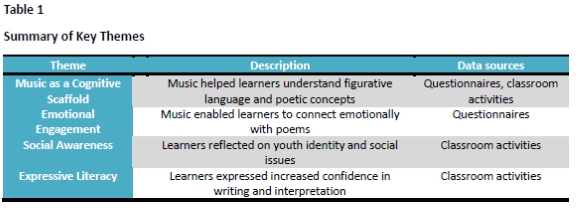
Table 1 summarises the key themes identified through thematic analysis and the data sources from which they emerged.
The findings presented in this study are directly drawn from learners' classroom activities and questionnaire responses, each systematically coded to ensure scientific rigour. Codes were applied consistently across all data sources, allowing patterns and themes to be traced back to specific evidence. This approach ensured that interpretations were grounded in actual learner contributions rather than general observations.
Music as a Cognitive Scaffold for Literary Meaning
The integration of popular music into poetry instruction significantly enhanced learners' cognitive engagement with literary devices and processes of meaning-making. Baseline questionnaire data indicated that poetry was initially experienced as inaccessible, with 52 learners describing it as "difficult to understand" (e.g. L16, L18, L21, L30, L42) or "boring." (e.g. L5, L16, L 22, L29, L35, L47, L50) Such responses reflect the broader concern that traditional poetry pedagogy often positions learners as passive recipients of canonical knowledge rather than active interpreters (Heleta, 2016).
Following the intervention, learners were given a classroom activity in which they were asked to identify and explain figures of speech in Cycles 1-5 and a summative questionnaire, including metaphor, simile, and imagery. This task was designed to directly assess their comprehension and ability to interpret poetic language after exposure to the music-integrated lessons. At baseline, responses to the initial questionnaire revealed that many learners were either unfamiliar with the terminology or unable to explain the effects of figurative language in poems; for example, more than half of the learners indicated through the baseline questionnaire (e.g. L1, Q3.4; L15, Q3.5) that they could recognise a metaphor but could not describe its function or effect. After the intervention, in Cycles 1-5, 58 learners completed their poetry analysis accurately, correctly identifying and explaining multiple figures of speech in the poems they analysed. This evidence demonstrates a measurable improvement in both comprehension and interpretive confidence, showing that learners were able to apply their understanding of figurative language in concrete written tasks rather than in abstract or general terms.
Learner reflections in the summative questionnaire emphasised the role of music as an interpretive scaffold. L17's written narrative explained, "When we listened to Firework, I could finally understand similes and metaphors because the words in the song made it clear. Poetry doesn't feel so scary anymore." This response demonstrates how familiar lyrical structures enabled learners to access abstract poetic concepts through culturally resonant texts. As Campbell (2018) argued, popular music mediates cognitive engagement by providing learners with accessible frameworks for interpreting metaphor, tone, and imagery.
Similarly, in the summative questionnaire, L6 explained, "The songs helped me hear alliteration and onomatopoeia. It was easier than just reading the poems." This highlights the multimodal affordances of music, where auditory engagement reinforces semantic understanding, supporting inclusive literacy practices through multiple entry points into meaning (Glaw et al., 2017).
In the summative questionnaire, L19 reflected, "Before, I would just memorise what a metaphor was. Now I see it in things I like, like songs I know." This shift from rote memorisation toward situated meaning-making illustrates the movement from procedural knowledge to interpretive agency (Fataar, 2025). In epistemic justice terms, learners are no longer positioned as outsiders to literary interpretation but as epistemic agents whose everyday cultural knowledge becomes integral to learning (Fataar, 2025).
L38 wrote that, "I never understood personification until I listened to the lyrics. It's like the objects in the song come alive, and I get the poem." Such reflections confirm Hargreaves et al.'s (2021) argument that music resonates with learners' sociocultural identities and enhances comprehension through affective and cognitive alignment.
When Shakespeare's (1609/n.d.) "Sonnet 18" was paired with Bruno Mars' (2010) "Just the Way You Are," 56 learners reported enhanced understanding of theme and structure. L50 wrote, "The song made me think about how I see my friends and family. Shakespeare's poem felt less old-fashioned because I could connect it to the song." This illustrates how popular music, content meaningful to learners, enabled learners to bridge temporal and cultural distance, legitimising their interpretive resources and disrupting the exclusivity often associated with canonical poetry (Heleta, 2016; Iwuanyamwu, 2023). L7's written narrative stated, "Comparing the poem to the song helped me understand the sonnet's rhythm and meaning." Through these connections, learners engaged in inclusive literacy pedagogy that affirms cultural relevance as central rather than supplementary (Wang, 2025).
Emotional and Personal Engagement Through Music
In addition to cognitive scaffolding, music mediated learners' affective engagement with poetry, enabling deeper emotional connections to literary texts. Learners' responses indicate that music functioned as an affective bridge, allowing abstract poetic themes to become personally meaningful. While studying "Sonnet 18" alongside "Just the Way You Are," L25 wrote, "I felt the poem when I listened to the song. It made me think about people I care about."
This illustrates how music supported emotional literacy, enabling learners to anchor interpretation in lived experience. Such affective meaning-making aligns with social constructivist perspectives that view learning as mediated through cultural tools and personal interaction (Vygotsky, 1978). L27 wrote "I actually liked Shakespeare for the first time. The song made me feel the emotions behind the words." This response demonstrates how content relevant to learners' lives (music) can disrupt alienation from canonical texts by fostering emotional accessibility (Iwuanyamwu, 2023).
Further written reflections reinforced this personal resonance. L18's written response said, "It was like the poem was telling my story. It felt personal," and L5's written response indicated, "The lyrics helped me understand the tone of the poem. I could feel what Shakespeare meant." These responses confirm that affect is not separate from comprehension but integral to interpretive depth, supporting Campbell's (2018) claim that music enhances both cognitive and emotional engagement.
Similarly, pairing Walter de la Mare's (1913/n.d.) "Silver" with "Dancing in the Moonlight" generated imaginative and affective immersion, with 53 learners reporting awe and engagement. L21 wrote that, "The song made the moon feel magical, like the poem was alive," while L43's written response stated, "I could imagine the night sky while reading. The song helped me picture it." These reflections highlight the multimodal potential of music to create immersive literacy experiences, validating learners' cultural worlds and emotional responses as legitimate interpretive pathways (Iwuanyamwu, 2023).
Social Awareness and Youth Agency
The pairing of Johennesse's (n.d.) "a young man's thoughts before june 16th" with fun.'s (2011) "We Are Young" fostered learners' critical engagement with social issues and youth agency by creating a dialogic contrast between historical struggle and contemporary youth identity. While the poem foregrounds apartheid-era oppression and the urgency of youth resistance, the song reflects a contemporary youth voice associated with freedom, celebration, vulnerability, and belonging. This juxtaposition enabled learners to reflect critically on how youth agency is expressed differently "then" and "now." This pairing aligns with Iwuanyamwu's (2023) argument that meaningful content, such as contemporary songs, can bridge historical and cultural gaps, allowing learners to contextualise poetry within their lived realities. It also reflects decolonial imperatives to disrupt inherited hierarchies that privilege Eurocentric literary authority over learners' cultural repertoires (Heleta, 2016; Mignolo & Walsh, 2018).
Learners' reflections demonstrate heightened social consciousness. L10's written narrative stated, "The song and poem made me think about what we can do as young people." L22 wrote, "I realised youth have always had a voice. The song showed it today too." These responses position learners as active participants in meaning-making and exemplify epistemic justice through the recognition of learner voice and interpretive legitimacy (Fataar, 2025).
Additional comments further illustrate this critical literacy shift. L8 indicated, "The protest in the poem made more sense after the song. It's about us now too," and L14's written response said, "I felt like I could be part of change. Reading the poem felt engaging, not boring." Such reflections confirm that music can transform poetry classrooms into spaces of social awareness and empowerment, consistent with the transformative aims of inclusive pedagogy (Wang, 2025).
Music Facilitating Reflective and Expressive Literacy
The intervention also strengthened learners' expressive literacy and reflective capacities. Narrative essays, reflective paragraphs, and personal poetry writing from the classroom activities revealed that music supported learners in articulating interpretations with greater confidence. Fifty-seven learners reported increased confidence in expressing their ideas following the intervention. L13 wrote, "Writing my own poem after listening to "Girl on Fire" helped me see that my ideas matter. I don't just read poetry. I can make it my own." This response reflects a shift from consumption of literary meaning toward production, reinforcing learner agency and epistemic participation (Fataar, 2025). L9 wrote, "The songs inspired my writing of poetry. I wrote about my feelings for the first time." Additional written narratives included, "I didn't know I could write like this. The music made me feel brave" (L23) and "I connected my life to the poems and songs, and it felt like my life story became valid" (L29). These responses illustrate how popular music functions as a culturally situated tool that affirms learner identity, aligning with inclusive literacy pedagogy that foregrounds voice, participation, and epistemic recognition (Wang, 2025).
Learners also highlighted interpretive freedom. For example, L46's written narrative indicated that, "I liked that I could express myself freely after listening to the songs and no one told me it was wrong." Such a response underscores how music disrupted hierarchical norms of correctness in poetry interpretation, promoting epistemic pluralism and socially just classroom practice.
Discussion
The findings of this study demonstrate that integrating popular music into Grade 10 English Home Language poetry instruction holds significant pedagogical and social value, particularly within the South African context, where literary teaching has historically been shaped by exclusionary knowledge hierarchies, rather than functioning merely as an engagement strategy, popular music operated as a transformative interpretive resource through which learners accessed, negotiated, and co-constructed poetic meaning. Importantly, the findings demonstrate that music functioned not only as an engagement strategy but also as an interpretive bridge that enabled learners to access canonical poetry through familiar cultural frameworks. The intervention, therefore, provides empirical support for the argument that culturally relevant pedagogies can advance epistemic justice, inclusive literacy practices, and decolonial transformation in secondary classrooms (Fataar, 2025; Heleta, 2016). A central contribution of the study lies in how music disrupted the traditional positioning of poetry as inaccessible, elitist, or irrelevant. Baseline questionnaire responses indicated that many learners initially experienced poetry as difficult to understand or boring, reflecting broader patterns in South African schooling where canonical literature is often taught through teacher-centred approaches that privilege Eurocentric norms of interpretation (Heleta, 2016). Such pedagogies frequently marginalise learners' cultural repertoires and limit their participation as meaning-makers (Omodan, 2023). The marked improvement in learners' identification of figures of speech following the intervention suggests that popular music served as a powerful cognitive scaffold, enabling learners to engage with literary concepts through familiar and culturally resonant texts.
This cognitive scaffolding aligns strongly with Campbell's (2018) assertion that popular music mediates learners' engagement with abstract literary devices by providing accessible structures for interpretation. Learners' reflections illustrate that metaphor, alliteration, personification, and tone became more comprehensible when encountered first through song lyrics. Hargreaves et al. (2021) similarly emphasised that music resonates with learners' sociocultural identities, allowing complex concepts to be understood through frameworks already embedded in learners' lived experiences. In this way, music did not dilute the academic rigour of poetry instruction, rather, it enhanced learners' capacity to access canonical forms of literacy by building on interpretive resources that learners already possessed.
These outcomes extend beyond comprehension gains to questions of epistemic justice. Fataar (2025) argued that epistemic injustice occurs when learners' voices and cultural knowledges are systematically undervalued in educational spaces. Traditional poetry pedagogy often reinforces such injustice by positioning learners as outsiders to legitimate literary interpretation, particularly when the curriculum privileges texts disconnected from learners' everyday cultural worlds. The integration of popular music challenged this dynamic by recognising learners' musical knowledge as epistemically valid. When learners wrote that they could "see" metaphors in "songs I know," they were asserting interpretive authority grounded in their own cultural experience. This reflects a shift from learners as passive recipients of authorised meanings to learners as epistemic agents actively participating in meaning-making.
This shift is also deeply aligned with inclusive literacy pedagogy. Wang (2025) emphasised that inclusive approaches require teaching practices that validate learners' identities, experiences, and cultural resources as central to literacy development. Wang further highlighted that authentic engagement occurs when learners' social repertoires are integrated into classroom knowledge construction. In this study, popular music functioned as such a repertoire, enabling learners to enter poetry interpretation through multimodal and culturally meaningful pathways. The multimodal dimension is particularly significant because learners engaged not only through reading but through listening, feeling, imagining, and relating. As Glaw et al. (2017) argued, multimodal engagement expands opportunities for learners to demonstrate understanding, particularly in diverse classrooms where linguistic and cultural differences shape access to meaning.
The findings from documentary research further suggest that popular music facilitated affective engagement as an essential component of comprehension. Learners repeatedly described how music enabled them to "feel" (e.g. L5, L9, L18, L21, L23, L27) poems, connect emotionally to tone, and interpret themes through personal relationships and imagination. These affective responses challenge the false separation between emotion and cognition in literary study. Instead, music enabled learners to experience poetry as personally resonant rather than abstract or alienating. Campbell's (2018) work supports this, noting that music enhances not only cognitive processing but also emotional connection, which in turn deepens interpretive understanding. When L50 wrote that Shakespeare "felt less old-fashioned," they were demonstrating how music can bridge temporal and cultural distance, making canonical poetry accessible without reducing its complexity.
This bridging function is consistent with Iwuanyamwu's (2023) argument that pairing contemporary cultural texts with canonical works allows learners to negotiate historical, cultural, and linguistic gaps. In the South African context, where poetry curricula often remain dominated by inherited colonial literary traditions, such bridging becomes a decolonial pedagogical act. Heleta (2016) critiqued the continued privileging of Eurocentric texts in ways that marginalise learners' cultural knowledge and reinforce structural inequalities. By integrating popular music, texts that learners already enjoy, as indicated in the baseline questionnaires, the intervention disrupted the exclusive authority of canonical interpretation and opened space for epistemic pluralism.
The decolonial significance of the intervention is further supported by Mignolo and Walsh (2018), Iwuanyamwu (2023), and Omodan (2023), who argued that decolonial education requires dismantling Western-dominated epistemologies and creating dialogical spaces where marginalised knowledges are not tokenistic but central. In this study, popular music was not added as entertainment or supplementary material, rather, it operated as a legitimate interpretive framework through which learners engaged poetry critically and socially. This repositioning reflects decolonial aims of challenging hierarchical distinctions between institutional literary traditions and everyday cultural knowledge.
The findings also highlight music's role in fostering critical literacy, social awareness, and youth agency. The pairing of Johennesse's (n.d.) poem with "We Are Young" created a dialogic contrast between apartheid-era youth resistance and contemporary youth identity. Learners' reflections indicate that this juxtaposition enabled them to recognise both continuity and transformation in youth agency across historical moments. Such outcomes demonstrate that poetry pedagogy, when culturally mediated, can become a site of social consciousness rather than mere textual analysis. L14's written statements about being "part of change" suggests that the classroom became a participatory space where historical texts were connected to present realities. This aligns with the transformative orientation of educational research as social change, where learners are empowered to engage critically with society through literacy practices.
From a social constructivist perspective, these outcomes are unsurprising. Vygotsky (1978) emphasised that learning occurs through socially mediated interaction and the use of cultural tools. Popular music, in this study, functioned as such a tool, enabling learners to collaboratively interpret poetry through dialogue, shared cultural reference points, and collective meaning-making. The classroom shifted from a site of transmission to a site of negotiation, where learners' interpretations were valued and knowledge was co-constructed.
Finally, the intervention's impact on reflective and expressive literacy further demonstrates its transformative potential. Learners' increased confidence in writing their own poems and expressing interpretations suggests that music not only supported comprehension but also fostered voice and agency in literary production. When L13 wrote that their "ideas matter" and that they "didn't know [they] could write like this" (L29), they were enacting epistemic justice through authorship and self-expression. Such outcomes reinforce the argument that inclusive pedagogy must extend beyond access to interpretation toward enabling learners to contribute their own meanings, narratives, and identities within literary spaces (Fataar, 2025; Lim, 2024; Wang, 2025).
Findings confirm that popular music can function as a culturally situated pedagogical resource that advances epistemic justice, inclusive literacy, and decolonial transformation in South African poetry classrooms. By validating learners' cultural knowledge, fostering emotional resonance, enabling critical engagement with social issues, and amplifying learner voice, music-infused poetry pedagogy disrupts inherited hierarchies of textual authority and creates more equitable access to literary meaning-making. Such an approach aligns with the broader aims of educational research for social change, demonstrating how classroom-based participatory interventions can contribute to socially just and transformative literacy education.
Conclusion and Implications for Teaching
This study demonstrates that integrating popular music into poetry instruction offers a means of advancing epistemic justice and inclusive literacy in South African Grade 10 classrooms. By pairing culturally relevant songs with canonical and locally authored poems, learners were able to connect their lived experiences, cultural knowledge, and emotional sensibilities to literary analysis. The findings show that popular music facilitated comprehension of poetic devices and themes and enhanced affective engagement, critical reflection, and expressive literacy. Learners reported that music provided scaffolding for understanding abstract literary concepts, legitimised their interpretations, and encouraged active co-construction of meaning. In particular, the juxtaposition of historical texts, such as Fhazel Johennesse's (n.d.) "a young man's thoughts before june 16th" with contemporary songs like fun.'s (2011) "We Are Young," fostered reflection on social change, youth agency, and the ongoing relevance of historical struggles, illustrating the potential of music to bridge temporal, cultural, and social gaps in the literature classroom.
The pedagogical implications of this study are significant. First, teachers are encouraged to incorporate culturally meaningful multimodal resources, such as popular music, to validate learners' epistemic contributions and disrupt hierarchical, exclusionary literary norms. Second, linking contemporary cultural texts with canonical poetry can enhance comprehension while promoting critical literacy, enabling learners to interrogate social issues, historical contexts, and personal experiences. Third, action research-informed cycles of teaching and reflection allow teachers to adapt instruction responsively, fostering dialogic and socially just learning environments.
Ultimately, this study highlights the transformative potential of culturally responsive pedagogy. These findings suggest that integrating culturally familiar multimodal texts can play an important role in creating more equitable and participatory literature classrooms. By foregrounding learners' voices, knowledge, and lived realities, teachers can create inclusive literature classrooms that advance social and educational equity, support critical engagement, and contribute to the broader decolonisation of the curriculum. Popular music, in this regard, is not merely a motivational tool but a vehicle for epistemic justice and socially transformative learning.
References
Ahmed, S. (2025). The Eurocentric curriculum. In S. Ahmed (Ed.), Colonial shadows: Education's global legacy (pp. 21-26). Amazon. https://www.researchgate.net/publication/389940849_Chapter_3_The_Eurocentric_Curriculum
Literature Review
- Anim-Wright, K. (2024). Trustworthiness and rigor in qualitative research in the marketing discipline. Journal of Humanities, Arts and Social Science, 8(1), 41-53. https://doi.org/10.26855/jhass.2024.01.007
- Arifin, S. R. M. (2018). Ethical considerations in qualitative study. International Journal of Care Scholars, 1(2), 30-33. https://doi.org/10.31436/ijcs.v1i2.82
- Bertram, C., & Christiansen, I. (2014). Understanding research: An Introduction to reading research. van Schaik.
- Burns, A. (2015). Action research. In J. D. Brown & C. Coombe (Eds.), The Cambridge guide to research in language teaching and learning (pp. 99-104). Cambridge University Press.
- Campbell, P. S. (2018). Music, education, and diversity. Teachers College Press.
- Clement, M. (2024). Cultural bias in curriculum design and its impact on global education standards. ResearchGate. https://www.researchgate.net/publication/388416793_Cultural_Bias_in_Curriculum_Design_and_Its_Impact_on_Global_Education_Standards
- de la Mare, W. (n.d.). Silver. In L. Holm & L. Very (Eds.), Hoërskool Richardsbaai Grade 10 Eng HL (pp. 29-31). Hoërskool Richardsbaai. (Original work published 1913)
- Department of Basic Education. (2011). Curriculum and assessment policy statement Grades 10-12: English home language. https://www.education.gov.za/Curriculum/CurriculumAssessmentPolicyStatements(CAPS)/CAPSFET/tabid/570/Default.aspx
- Duchkova, H., & Leventon, J. (2023). Epistemic justice: How can diverse forms of knowledge improve policy making? SSH Centre. https://doi.org/10.13140/RG.2.2.33249.93283
- fun. ft. Monáe, J. (2011). We are young [Song]. On Some nights [Album]. Atlantic Records.
- Hargreaves, D. J., North, A. C., & Tarrant, M. (2021). Music and social outcomes: Theory and evidence. Routledge.
- Harvey, A., & Russell-Mundine, G. (2019). Decolonising the curriculum: Using graduate qualities to embed Indigenous knowledges at the academic cultural interface. Teacher in Higher Education, 24(6), 789-808. https://doi.org/10.1080/13562517.2018.1508131
- Johennesse, F. (n.d.). a young man's thoughts before june 16th. In L. Holm & L. Very (Eds.), Hoërskool Richardsbaai Grade 10 Eng HL (pp. 26-28). Hoërskool Richardsbaai.
- Kabir, S. M. S. (2016). Methods of data collection. In Basic guidelines for research: An introductory approach for all disciplines (pp. 201-276). Book Zone.
- Kemmis, S., McTaggart, R., & Nixon, R. (2014). The action research planner (3rd ed.). Deakin University Press. https://doi.org/10.1007/978-981-4560-67-2
- Keys, A. (2012). Girl on fire [Song]. On Girl on fire [Album]. RCA.
- Koshy, E., Koshy, V., & Waterman, H. (2011). Action research in healthcare. SAGE.
- Lim, W. M. (2024). What is qualitative research? An overview and guidelines. Australasian Marketing Journal, 32(3), 1-31. https://doi.org/10.1177/14413582241264619
- Maniraj, D. (2025). Using selected popular music to teach and learn prescribed poetry in a Grade 10 English Home Language classroom [Unpublished doctoral dissertation, University of KwaZulu-Natal]. https://researchspace.ukzn.ac.za/items/1f399239-068a-4e47-9430-090595d650fb
- Mars, B. (2010). Just the way you are [Song]. On Doo-wops & hooligans [Album]. Atlantic Records.
- Mavhiza, G., & Prozesky, M. (2020). Mapping pathways for an Indigenous poetry pedagogy: Performance, emergence and decolonisation. Education as Change, 24(1), 1-25. https://doi.org/10.25159/1947-9417/8155
- Mignolo, W. D., & Walsh, C. E. (2018). On decoloniality: Concepts, analytics, praxis. Duke University Press.
- Omodan, B. I. (2023). Unveiling epistemic injustice in education: A critical analysis of alternative approaches. Social Sciences and Humanities Open, 8(1), 1-8. https://doi.org/10.1016/j.ssaho.2023.100699
- Oranga, J., & Matere, A. (2023). Qualitative research: Essence, types and advantages. Open Access Library Journal, 10(1), 1-9. https://doi.org/10.4236/oalib.1111001
- Perry, K. (2010). Firework [Song]. On Teenage dream [Album]. Capitol Records.
- Powell, B., & Smith, D. S. (2024). Places and purposed of popular music education: Perspectives from the field. Intellect Books.
- Shakespeare, W. (n.d.). Sonnet 18 (Shall I compare thee to a summer's day). In L. Holm & L. Very (Eds.), Hoërskool Richardsbaai Grade 10 Eng HL (pp. 12-16). Hoërskool Richardsbaai. (Original work published 1609)
- Titi, N. (2025). A pedagogy of authenticity: Inclusivity, belonging and care in decolonial undergraduate education. Transformation in Higher education, 10(1), 1-20. https://doi.org/10.4102/the.v10i0.580
- Toploader. (2000). Dancing in the moonlight [Song]. On Onka's big moka [Album]. Sony Soho Square.
- Vygotsky, L. S. (1978). Mind in society: The development of higher psychological processes. Harvard University Press.
- Walker, A. (n.d.). Women. In L. Holm & L. Very (Eds.), Hoërskool Richardsbaai Grade 10 Eng HL (pp. 36-37). Hoërskool Richardsbaai. (Original work published 1970)
- Wang, Y. (2025). Unlocking futures literacy: Essential skills for students in a world of complexity and change. Cogent Education, 12(1), 1-20. https://doi.org/10.1080/2331186X.2025.2588021