Reducing HIV Stigma by Transforming Children's Stereotypical Perceptions Through Arts-Based Methods
Abstract
High levels of HIV-related stigma in South Africa continue to hinder effective management of the pandemic. Although the Department of Basic Education incorporates HIV and stigma education into the life skills curriculum, classroom teaching remains largely theoretical and does not enable children to grasp the deeper social complexities and intersectional factors that drive and sustain stigma. An arts-based, experiential pedagogy offers a transformative paradigm for life skills teaching by allowing children to engage emotionally and critically with the realities of people affected by or infected with HIV. This study used an action research approach integrating interactive, arts based strategies in a Grade 5 Life Skills classroom to support children in exploring HIV stigma with the aim of reducing stereotypical thinking and fostering a more nuanced, intersectional understanding of the pandemic's social implications. In the first cycle, we examined children's initial perceptions of HIV and then applied arts based pedagogies to transform their thinking by identifying and challenging negative assumptions and promoting more informed and empathetic insights. Findings show that arts based methods surfaced children's existing interpretations of HIV, highlighted knowledge gaps, and encouraged greater empathy. These outcomes may help teachers bridge the gap between theoretical curriculum requirements and children's lived realities, making HIV education more relevant and engaging.
action research; arts-based pedagogies; critical thinking; HIV; life skills; stigma
Introduction
South Africa's HIV prevalence statistics have remained among the highest in the world for several years (Statistics South Africa [Stats SA], 2019, 2021, 2022, 2024). Stats SA (2025) reported the estimated overall HIV prevalence rate at approximately 12.9 % among the South African population estimated at 63.10 million. Even with the introduction of antiretroviral treatments lessening HIV- and AIDS-related deaths, there is still growing concern around the stigma related to people infected with HIV or associated with HIV (Majola et al., 2022). Stigmatised perceptions can hinder HIV prevention methods because they can lead to an increase in HIV infection due to people being afraid to seek medical treatment or to admitting to others that they are HIV positive (Hallonsten, 2017). The concept of stigma that informs this paper can be defined as a social process or personal experience in which people are characterised by rejection, blame, or exclusion due to their relationship with HIV or HIV-infected people (Kang, 2015).
Stigmatising views are oppressive and dehumanising because they can deprive individuals of their well-being, both on individual and societal levels (Obeagu & Obeagu, 2024). Stigma reduction is therefore a critical component in the management of HIV infections because stigma affects both those infected with the disease and those affected by it, either directly or indirectly (Gamarel et al., 2017). To reduce stigma and limit the impact of HIV, the Department of Basic Education (DBE, 2011) included HIV education in the life skills curriculum of South African primary schools. HIV is introduced in Grade 4, where learners are taught basic concepts such as what HIV and AIDS are, how HIV is transmitted through blood, how it is not transmitted, and how to protect themselves from infection. In Grade 5, the curriculum expands to include HIV-related stigma and how to change perceptions of people infected with or affected by HIV and AIDS (DBE, 2011). We focused on Grade 5 because this is the first point at which learners formally engage with the concept of HIV-related stigma at primary school level.
Although curriculum content addresses HIV-related stigma, our concern was that the methods teachers use to teach curriculum content may not engage the children for whom it was designed because teachers often avoid teaching about HIV, for both personal (cultural or religious taboos) and professional (lack of training) reasons (MacEntee, 2020). Even when teachers do teach HIV and stigma, they usually rely on textbook content rather than engaging with children's lived experiences (Francis & DePalma, 2015). This limits their ability to recognise what children already know or have encountered, even though many children are exposed to HIV and related stigma within their social environments and communities (Busza et al., 2018). It is therefore essential to connect HIV education to children's lived realities. When this connection is missing, schools lose a valuable opportunity to transform children's thinking about their own role in either reducing or perpetuating stigma (Gudyanga et al., 2019).
One of the aims of the South African curriculum (DBE, 2011) is developing children as critical and responsible citizens who can empathise with and support those who are infected with HIV. The pedagogical intent is to encourage children to question existing stereotypes and assumptions about the disease. Such critical, reflective thinking is needed to conscientise children about how their own responses to others could perpetuate harmful stigmatising attitudes (Kendrick et al., 2020). Thus, the first author of this paper, a life skills teacher of Grade 5 children, explored how she could reduce the negative perceptions related to HIV through a learner-centred teaching approach, namely, an arts-based method. She did this by focusing on the content taught and the pedagogical strategies used in the subject of life skills, to explore and change, where needed, any stigmatising views of HIV that children may portray. The co-authors assisted her with conceptualisation of the study and data analysis, as well as the writing of this paper. The next section first conceptualises HIV-related stigma from an intersectional perspective before motivating the use of arts-based teaching methods as critical pedagogy to transform children's thinking. We then explain the methodology underpinning the study, before discussing the findings and implications for HIV education.
Conceptualising HIV-Related Stigma
HIV-related stigma refers to both self-stigma and stigma by association, also known as social stigma. Self-stigma refers to the internalised devaluation of an individual infected with HIV (Gamarel et al., 2017). Negative attitudes about HIV, judgement by family or friends, attitudes of health care providers and negative perceptions at work, can all contribute towards self-stigma (Sullivan et al., 2020), potentially leading to depression and hesitancy to seek treatment or concealment of serostatus, which in turn, leads to increased transmission of HIV (Hallonsten, 2017; Latalova et al., 2014). Self-stigma has deprived HIV-infected people of the appropriate healthcare services and psychological help needed to cope with the disease (MacLean & Wetherall, 2021). For example, self-stigma affects the individual's self-esteem and causes social isolation (Ma et al., 2019). Therefore, it is important to transform views on HIV from an early age to discourage negative perceptions of the disease, which can leave individuals feeling that they are devalued members of society (Gamarel et al., 2017). Social stigma occurs when a person is devalued, rejected, or victimised based on their relationship with a stigmatised individual or due to their own status (Gamarel et al., 2017). Goffman's (1963) seminal work on stigma and social identity emphasised the role of societal processes in the face of stigma. He suggested that stigmatising views can be learnt through social interactions in multiple settings. For example, a review of HIV stigma by association across countries and cultures revealed that children between the ages of six and 19 years who were not HIV-positive but living with HIV-positive parents, experienced psychological or emotional problems, disrupted peer and adult relationships, and poor educational outcomes (Mason et al., 2014). This is vital to note because stigma can lead to discrimination, where people are treated differently and unfairly due to their status. Such experiences affect children's overall personal development, educational development, and additionally, their development as contributing members of society (DBE, 2011; Gamarel et al., 2017; McHenry et al., 2017).
Contributing to HIV self-stigma and stigma by association are the social public and cultural narratives expressed within society. Narratives are verbal or written communications expressed by individuals (Piispanen & Meriläinen, 2019). HIV narratives refer to negative and hegemonic understandings about HIV, increasing stigma and discrimination. Examples of HIV narratives are negative perceptions expressed from religious, moral, gender, cultural, and race perspectives (Buys, 2020). For example, a gendered narrative blames women for spreading HIV infection; a religious narrative explains infection as a punishment from God for immoral behaviour (Treves-Kagan et al., 2017). The concern is that children grow up in societies that perpetuate these stereotypical narratives and thus tend to believe what they hear without questioning them. If children grow up surrounded by stigmatising assumptions and attitudes, they are more likely to imitate or model the behaviour to which they have been exposed (Bandura, 1973; Becker-Zayas et al., 2018). This makes it essential to encourage children to think critically about this issue in their primary school years when their attitudes are still malleable (MacEntee, 2020).
Thus, for this research, we adopted an intersectional approach (Misra et al., 2021) to encourage children to think about the behaviours and attitudes to which they have been exposed, and to question binary views when faced with issues related to HIV and HIV-related stigma in their social contexts. An intersectional perspective takes the blame away from individual fault and positions it as a structural issue that takes into consideration how injustices such as racism, gender inequalities, and poverty fuel the pandemic and, when combined, could worsen HIV infection among specific social groups (Collins, 2019; Govender, 2020; MacBlain, 2018). Given that stigmatising perceptions start during childhood and are strengthened through experiences in communities and other social groupings (Busza et al., 2018), it is important for teachers to be aware of the narratives children hold in order to introduce new ideas that disrupt stigmatising views of HIV in the classroom. Understanding children's perspectives can shed light on the necessary strategies to improve HIV education prevention methods. The onus lies on education, specifically on life skills education, to address and debunk these perceptions from a young age because they can negatively affect the success of HIV prevention education (Glass et al., 2020). In our quest to decrease stigmatising perceptions and discriminating behaviour towards those affected by and infected with HIV, we decided to explore how arts-based methods as critical pedagogy could help to problematise hegemonic HIV narratives.
Arts-Based Teaching Methods as Critical Pedagogy
Critical pedagogy, famously conceptualised by Paulo Freire (1970), aims to expose the enduring historical influences in educational discourses, practices, and values, which result in the oppression of the marginalised-in this case, those infected with or affected by HIV. Freire critiqued the banking model of education in which teachers merely instruct children during the teaching and learning process, treating them as empty vessels that need to be filled with information. The concern with this method of teaching is that it can encourage the perpetuation of social oppression. It also dehumanises children because they are not given the opportunity to question or voice their opinions on curriculum content (Freire, 1970). It is important to give children the opportunity to develop critical thinking skills to decide how to respond to HIV-related stigma. Gilmanshina et al. (2020) defined critical thinking skills as the ability to analyse information from the perspectives of logic and a personal psychological approach in order to apply results to situations, questions, and problems. If children think for themselves how their behaviour can perpetuate negative views that are harmful to those infected with or affected by HIV (Sigelman, 2018), they will be more likely to respond in a positive way. For children to become critical thinkers, teachers should move away from teaching didactically towards a more inclusive pedagogy that encourages children to actively engage with learning materials, and to question and critique their own perceptions and beliefs (George et al., 2019; Rau et al., 2017; Sigelman, 2018; Wang et al., 2017). Transforming the way children view HIV can help them self-regulate their feelings and actions in light of the decision taken to counter prevailing stigmatising norms around HIV (Bandura, 1973; Boyd et al., 2020; Xiao et al., 2020). Arts-based methods are especially suited to help children develop alternative perspectives on social issues.
Arts-based teaching methods such as drawings, collages, photovoice, and drama, are methods and practices of teaching used to encourage the health and well-being of individual children and to provide new points of view to approach, and even challenge matters through arts (Piispanen & Meriläinen, 2019, p. 87). To expose negative narratives pertaining to HIV, the first author encouraged children to voice their perceptions of the disease using arts-based methods and then to use these methods to convey their learning to others. Arts-based methods are user-friendly and encourage younger children to express and communicate in ways that are more manageable than traditional banking education (Freire, 1970). We therefore propose that the provision of information to children, without obtaining their input concerning the content being taught or allowing critical discussion in the classroom, should be rejected; children's perceptions should be incorporated as imperative to their own learning (de Jager, 2017; Leavy, 2020). This method of teaching and learning was an important component in our quest to debunk HIV stigma given that arts-based methods can enable teachers to learn what children know, feel, and experience in relation to HIV while considering their lived realities (Nacken et al., 2018; Roberts, 2018). The first author employed practitioner self-enquiry to help improve her teaching to meet the stated curriculum outcomes and to go beyond them through using action research (McNiff, 2016).
Methodology
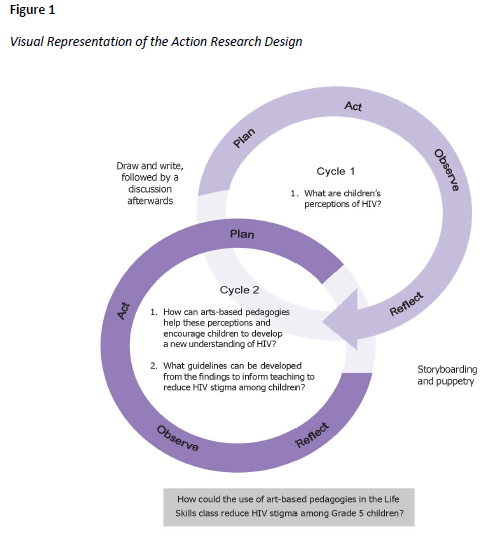
We worked within a transformative paradigm (Mertens, 2016) because our interest was in transforming the narratives of HIV and related stigma. This paradigm recognises multiple views of reality and the importance of creating knowledge through questioning and discussion in a safe space. Adopting a practitioner self-enquiry genre of action research (McNiff, 2016) enabled the first author to conduct iterative cycles of reflection and action (Wood, 2020) to answer the following research questions: In Cycle 1, "What are children's perceptions of HIV?" and in Cycle 2, "How can arts-based pedagogies help disrupt these perceptions and encourage children to develop a new understanding of HIV?" and "What guidelines can be developed from the findings to inform teaching to reduce HIV stigma among children?" (See Figure 1.) The main aim of this process was to improve her own teaching to make it more relevant to the lived reality of the children and so engage them more in their learning.
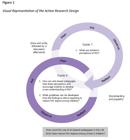
The study was conducted within the classroom of the first researcher because she was interested in improving her own practice; the participants were from different formal and informal settlements but attended an ex-model C school where she taught. Participants were selected through convenience sampling and ranged from 10 to 12 years of age and included seven boys and 14 girls in Grade 5 who volunteered to allow their classwork to form part of the data. All children in the class participated, but only some of them consented to participate in the study. Consent was obtained by providing parents or guardians with a detailed informed consent form, which was distributed in a sealed envelope to learners. To attain consent, the first researcher asked a colleague to explain to the children what the study entailed. This age group has often been neglected in HIV prevention programmes as acknowledged by Hartog et al. (2020) and Sigelman (2018). This was concerning for us because the most affected age group is girls between ages of 15-25 years (Stats SA, 2024), and the learners in Grade 5 are approaching that age.
Data were generated through arts-based pedagogical strategies, namely, draw-and-write (Fache et al., 2022) and puppetry (Leavy, 2018). The draw-and-write method allows researchers to tap into children's thinking to gain a better understanding of the knowledge children possess at the time of the study (de Jager, 2017), and puppetry can enable children to generate knowledge through working collaboratively and communicating because it assists them in projecting their views verbally while also creating some emotional distance given that they use puppets as characters rather than acting out the play themselves (Kröger & Nupponen, 2019).
In Cycle 1, the draw-and-write method (McWhirter, 2014) encouraged children to express their perceptions of HIV freely and anonymously, thus allowing us to gain understanding of how they viewed HIV and related stigma (Visser, 2018). The children were prompted to "Draw a picture to show what you know about HIV and how you feel about people associated with HIV." Different perceptions emerging from this activity were documented by the first author through thematic analysis (Castleberry & Nolen, 2018). The thematic steps in the coding procedures outlines by Castleberry and Nolen as well as by Creswell (2014) were employed. These steps included making sense of the textual and visual data, labelling and grouping similar data, examining codes for overlapping and redundancy, and collapsing these codes into themes. The themes were then linked to construct meaning related to the study. Perceptions were problematised in a class discussion where children were given the opportunity to voice their opinions on the perceptions portrayed. In problem-posing pedagogy, teachers problematise questions asked in class. In this case, where negative views were discussed, the first author introduced an alternative understanding of HIV as a social issue rather than an individual deficit to encourage children to think differently about the effects of HIV stigma. This discussion was audio-taped and transcribed verbatim.
Cycle 2 incorporated puppetry to encourage more empathy-oriented behaviours by giving children the opportunity to express themselves creatively. The children created a storyboard based on their changed perceptions and planned a short drama, which they acted out using puppetry. The children were prompted to show what they had learnt about how to treat those affected by and infected with HIV. These arts-based pedagogies were intended to create a platform where children could not only voice their perceptions of the disease but also to encourage better communication and to use their learning to influence their reactions when confronted with HIV stigma in their social contexts (Davies & Fisher, 2018; Freire, 1970). Storyboarding and puppetry imitating real-life in the life skills classroom, provided a good opportunity for the children to model and embody better and less discriminatory understandings of HIV. The data generated with the children were thematically analysed by the first author. We acknowledge that the involvement of the first author as teacher and researcher may have created bias; however, this was addressed by using independent re-coders in the thematic data analysis (Castleberry & Nolen, 2018) who then agreed on the final themes. The institution's ethics board granted ethical clearance, attesting to the ethical rigour of the study, including measures to address power relations inherent in the fact that the teacher was also the researcher.
Discussion of Findings
Analysis of the data set consisting of drawings, narratives, transcribed discussions, storyboards, and puppetry performances indicated that the children did experience knowledge gaps and that stigmatic perceptions were evident. However, through developing and performing the puppet shows, they were able to embody positive responses to HIV-related stigma. In this section, we critically discuss the main themes that emerged from the cycles of action research.
Cycle 1: Draw-and-Write Method to Explore Children's Perceptions of HIV and Related Stigma
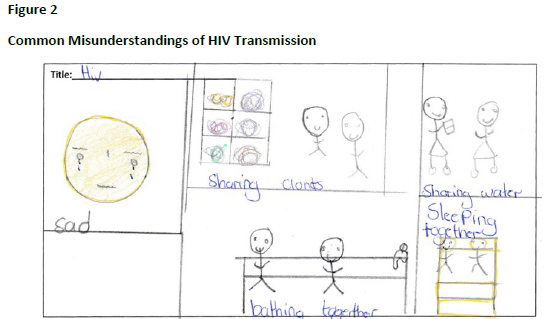
It was important to gather an understanding of the knowledge the children had at the time of this study in order to expose misconceptions and misinformation so that these could be rectified. It was found that the children viewed HIV mainly from a biomedical perspective and had both true and false knowledge of how HIV is transmitted. For instance, some children highlighted in their draw-and-write activity that people may contract the virus through general acts such as sharing items, sleeping together (without having intercourse), smoking, and kissing as shown in Figure 2 and the excerpt that follows-a finding that is not new (see Dzhugudzha et al., 2015).
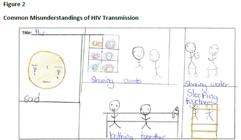
HIV is a disease that infects like a droplet. It infects you when you touch someone's blood that has HIV. HIV can stay for long in your body, you can get infected if you share your things. Even when you bath with the person who have HIV. HIV mean you must not touch anyone things that have HIV. I am sad because people can't share and be friends anymore. And I am sad because people are dying. When one of my friends has HIV, I will feel sad and angry. HIV can infect you when kissing someone or sharing things together and sleeping together, it can even affect a pregnant woman the baby can get infected. (Participant 15)
This narrative could be linked to the fact that in Grade 4 (the previous grade of the participants), teachers are expected to cover the basic facts about the HIV and AIDS, as stipulated by the Curriculum Assessment Policy Statements (DBE, 2011). Although the curriculum indicates that participants should have been taught these basic facts, the data generated by these Grade 5 participants confirmed that they still had knowledge gaps and misconceptions about biomedical facts. Madiba and Mokgatle (2015) as well as Mitzel et al. (2019) pointed out that these misunderstandings lead to stigmatised perceptions that harm those affected by or infected with HIV, or that individuals may be victims of HIV-related stigma themselves (Mitzel et al., 2019).
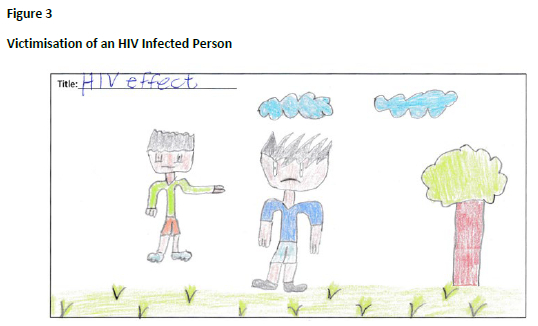
The children indicated their awareness of the dangers of self-stigma and stigma by association. For example, self-stigma was evident in the feelings they associated with the disease. They indicated that people with HIV devalue themselves through feeling shame and isolation, or experiencing sadness, a finding also reported by Hatzenbuehler et al. (2013). Figure 3 by Participant 11 depicts how stigma by association was prevalent by showing how people with HIV are often victimised, discriminated against, and isolated due to their HIV status.
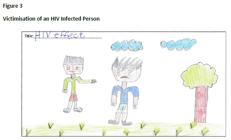
Ishikawa et al.'s (2011) study on Grades 3 to 6 children confirms this; they found that children assumed that children affected by HIV and AIDS were infected with HIV, and thus were afraid of them. As a result, these affected children were stigmatised in their school. Participant 3 confirmed this, indicating:
If someone with HIV walked in, I would feel uncomfortable even if I know that it is not contagious.
This rejection leads to feelings of sadness and depression. Participant 14 even referred to it as a "death sentence"; however, this is not the case given the advance in antiretroviral drugs as also noted by Burger et al. (2022).
The need to dispel negative perceptions that occur within children's social ecologies became evident given that these narratives can lead to devaluation or rejection and victimisation of those associated with HIV, as also pointed out by Gamarel et al. (2017). Fortunately, the findings also highlighted that, despite their negative views, children seemed capable of empathising with HIV positive people. For example, participants showed empathy when they indicated that they understood and acknowledged that people with HIV should be treated more positively because stigmatising views are harmful. Participant 7 wrote:
People treat HIV patients differently because they think they are dangerous. I would be very sad if someone I know gets HIV because it can get worse and turn into AIDS and it breaks your body down. With HIV or AIDS, you do have less time than other people. People treat HIV-positive patients differently because they think they are weird and that makes me sad. I don't think HIV patients should be treated differently just because of their disease. I also think that you should be nice because that person is going through something worse than you may be.
Interestingly, in terms of the causes of HIV, the participants showed no awareness of how social issues such as poverty and gender inequalities contribute to the spread of HIV, as also found by Choi (2018). However, they did have misconceptions about the groups of people that HIV mostly affects, as evident in the following contribution:
The disease is a disgrace; people are being lured and being killed. At least HIV doesn't spread through cough, thank God. Not a lot of people in my culture have HIV, it doesn't spread a lot to Blacks. (Participant 8)
This perception was contradictory to what the statistics on HIV infections in South Africa reflect, where most people infected with HIV in the country are indeed Black people (Stats SA, 2019, 2021, 2022, 2024). This further highlighted that the participants had misconceptions and gaps in their knowledge. Although children were quiet about the social issues that contribute to HIV infections, they need to be sensitised to these issues so that they can identify these issues within their social environments because the environments children are exposed to help shape their perceptions (Visser, 2018). These misconceptions and stigmatising attributions did not emerge in a vacuum; they reflected intersecting social positions, such as gender, race/ethnicity, and poverty, which shape how children read risk and blame. HIV knowledge and attitudes are structured by overlapping inequalities rather than individual ignorance alone (Crenshaw, 1991). Interpreting the data from an intersectional lens helps explain why biomedical messages alone fail to correct false social meanings attached to HIV.
To encourage more positive attitudes, the first author facilitated a class discussion in which the negative narratives children depicted, as well as the social issues related to HIV, were discussed. Creating such a platform for conversation among children helped rectify negative perceptions and encouraged them to be more conscious and think critically about their responses to HIV and related stigma when confronted with it in their social environments, as also indicated by Gamarel et al. (2017) and Gilmanshina et al. (2020). This can help safeguard children from perpetuating negative views that are harmful to those infected with or affected by HIV because they are more open to critiquing different perceptions of the disease (Sigelman, 2018).
Cycle 2: Puppetry to Encourage Empathic Responses
In Cycle 2, the children were asked to discuss and draw a storyboard in groups, indicating how they would change people's perceptions about HIV and related stigma when confronted with a stigmatising situation. The children then created their own solutions to the problem and communicated positive messages through the medium of short puppetry. It was evident that the children enjoyed communicating in groups because they were enthusiastic when asked to create their own scenarios and visualise their puppet characters, and what these characters wanted to voice during the short puppet show. The first author also reported the children's excitement in working with arts-based methods; they even arrived earlier to school to have more time to work on creating their puppet characters before school started. During the puppet show presentations the classroom became alive as children's sense of interest, happiness, and belonging echoed around the room. The whole class observed or participated in the puppet show performances.
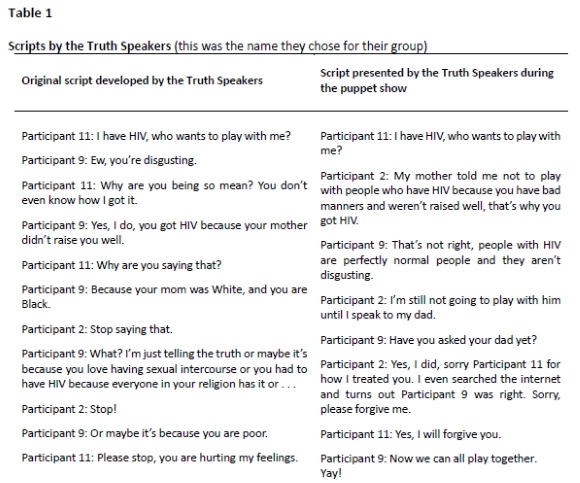
Although the children were given clear instructions about how to create the dialogue for the puppet shows, when it came to acting them out, some diverged from what they had discussed and agreed on when creating the dialogue in small groups. The original scripts presented more stigmatising views of HIV than those the children acted out (see Table 1). When the first author asked the children why the scripts differed from the dialogue in the storyboards, responses included, "I was scared to say this in front of the class," and "I was shy to say that sentence." This indicates that they were hesitant to present the hurtful messages surrounding HIV in front of the class and teacher. When they wrote the script, they did not really think about the effect of their words on those living with or affected by HIV but when practising their puppet shows, they realised that they could be hurtful. Embodying HIV related stigma through puppetry made them realise that the messages they intended to convey had to be different and that they needed to think more critically about them (Kosmas et al., 2019).
This shift from reproducing hurtful scripts to reframing them during performance is an illustration of problem-posing education in action, where learners interrogated assumptions and generated counter-narratives (Freire, 1970; McLaren, 2020). Puppetry functioned as a transformative, dialogic pedagogy (Skidmore & Murakami, 2016) that moved learners beyond recall towards critical consciousness, enabling them to recognise and resist deficit discourses that legitimise stigma.
Using puppetry encouraged the children to embody and think of better ways to address and communicate about HIV by creating the space for collaborative group discussion to confront stigma when exposed to it within their social ecologies. Swarts (2022) also emphasised that life orientation teachers need to help learners become creative and collaborative problem-solvers by providing embodied educational practices when addressing curriculum outcomes. This was done through actively engaging children with the curriculum content using an alternative method of teaching: an arts-based method. In the end, the puppet shows displayed the following characteristics: a character being labelled as having HIV, others being mean to the infected character, participating characters realising it is incorrect to treat people with HIV negatively, and participating characters showing a sense of understanding that stigmatising people with HIV is incorrect and apologising to the infected individual for treating them differently.
In line with practising more empathetic understandings, the participants mostly indicated that they would confront someone who expressed stigmatising views and educate them on the disease, as captured in the puppet show snippet displayed by Participants 3, 8, 16 and 21 in the Hands of Wisdom puppet show:
Participant 3: You have the disgusting disease, get away from me.
Participant 21: No, do not talk like that to another person. Just because he has HIV does not mean you treat him like an animal.
Participant 8: Let me explain what the Human Immunodeficiency Virus is. It is when someone has a virus that runs through their blood. It is passed through sexual intercourse, pregnancy, and breastfeeding so he got it from his mother.
The messages they conveyed also exemplify social learning processes: learners observed, modelled, and then reinforced prosocial, non-stigmatising responses (Bandura, 1973). The vicarious rehearsal when acting out the script likely strengthened self-efficacy for intervening in real-life situations, offering a plausible pathway from classroom performance to behaviour change. The fact that the participants were open to providing advice and educating others on how to deal with the stigmatising situations displayed indicated that they were willing to learn more about HIV and HIV-related stigma, and more importantly, about ways to treat people infected with or affected by HIV. They became more aware of their negative perceptions and expressed themselves creatively by giving voice to their changed perceptions. This is a step towards a more inclusive view for HIV prevention education because it showed that the participants were willing to bring about transformation in the ways that they thought about and treated those infected with or affected by HIV, which supports the theory of critical pedagogy (McLaren, 2020). Additionally, teachers can identify gaps in children's knowledge so that the curriculum can be developed and adapted to provide more supportive schooling environments that encourage critical thinking (Gilmanshina et al., 2020).
The arts-based pedagogies used in this study not only aided the first author in her teaching method but also assisted the children to embody positive responses when confronted with stigmatising attitudes given that they were able to practise voicing their perceptions and this helped embed the learning better than if they were just told about it (Nathan, 2021). Embodying more positive attitudes towards the disease is crucial in HIV prevention because children with more empathetic perceptions are less likely to spread stigmatising perceptions. The participants incorporated critical thinking skills (Freire, 1970) and modelled more positive behaviours and attitudes (Bandura, 1973) about how they would respond to misconceptions when confronted with them. Through embodying and voicing this type of positive narrative, the children are more likely to translate their actions into positive behaviour (Nathan, 2021). Through modelling these positive narratives, the children can become exemplary members of society (McLaren, 2020) who can encourage positive critical thinking and change by displaying more empathetic behaviours in relation to HIV and HIV-related stigma within their immediate environments as well as their extended social settings. It was clear that the children enjoyed learning in this manner because in discussion regarding how they experienced this way of learning, one participant exclaimed, "Can we please do this again?" Other participants were even willing to present their puppet shows to the other Grade 5 classes.
This experience taught the first author that it was important for children to voice their opinions on HIV, for the teacher to debunk any negative views children have of HIV, and also to encourage children to ask critical questions about stigma that is related to their lives-questions such as: "What does this mean?" "Who does this affect?" "What does this mean for my friends and family?" "How does this affect me?" and "What is the best way to react in this situation?" This is in line with problem-posing pedagogy where individuals are encouraged to think critically about their existence and experiences within the world towards social transformation (Freire, 1970). Reflecting more deeply on her teaching, she indicated that next time she would swap the cycles of action research around for children to first begin with storyboarding and puppetry and then conclude with the draw-and-write method. She believes this would have given a better indication of the stigma children have experienced by them enacting what they have experienced first, and then using the draw-and-write method for children to express their feelings on the stigmatising perceptions presented as well as how they would change perceptions taking into consideration the critical questions mentioned above. Nevertheless, the cycles of action research were successful.
To conclude, the findings suggest that arts-based activities do more than convey information; they create opportunity for learners to think more deeply about their learning in relation to their social beliefs and action. Read through an intersectional lens, learners' initial misperceptions indicate an overlap of gendered, racialised, and classed narratives that circulate in their communities (Crenshaw, 1991). Through critical pedagogy (Freire, 1970), learners used dialogue and reflection to construct alternative meanings. Via social learning (Bandura, 1973), they then rehearsed and normalised empathic responses, indicating a credible mechanism for sustained attitude and behaviour change beyond the classroom.
Conclusion
Our research question focused on the use of arts-based pedagogies in the life skills class to reduce HIV stigma among Grade 5 children. On reflection, we argue that the children demonstrated empathic understandings because they were able to discuss their different perceptions, question their existing stereotypes and stigmatising assumptions about HIV, and start to embody a more nuanced and intersectional understanding of the disease. The children's actions showed how their views can contribute to reducing the stigma associated with HIV infection and how they could educate others when stigmatising assumptions surface within their social environments. Thus, we posit that the use of arts-based pedagogies made the teaching and learning process more engaging to discuss HIV and related stigma because they provided an embodied platform for children to voice their opinions when engaging with curriculum content. Curriculum content should enable children to learn at their own development levels and within their contexts because they experience and relate to information differently (Silalahi, 2019). Teachers should therefore use creative methods of teaching in schools, specifically the use of arts-based methods, which allow them to take context, development levels, as well as their socially constructed views into consideration.
These findings are helpful because they may assist in bridging the gap between what the curriculum stipulates should be taught, and how teachers decide to teach curriculum content. To be more specific, arts-based methods can assist teachers to become aware of children's perceptions, acknowledge the curriculum content gaps, and help to develop pedagogical strategies using arts-based methods to aid in reducing HIV stigma among the children in the life skills class. We trust that you-the reader-agree that teachers then move closer to developing more informed and engaged classroom practices and embodied experiences that encourage critical thinking and enable children to dismantle stereotypical views to establish responsible citizenship from a young age in society.
Funding
This research was funded in part by NRF grant 113363. All findings, conclusions, and opinions are those of the authors and the NRF accepts no responsibility thereof.
Bandura, A. (1973). Social learning theory of aggression. In J. F. Knutson (Ed.), The control of aggression: Implications from basic research (pp. 201-252). Aldine.
References
- Becker-Zayas, A., Kendrick, M., & Namazzi, E. (2018). Children's images of HIV/AIDS in Uganda: What visual methodologies can tell us about their knowledge and life circumstances. Applied Linguistics Review, 9(2/3), 365-389. https://doi.org/10.1515/applirev-2016-1059
- Boyd, D. T., Waller, B., & Quinn, C. R. (2020). Understanding of personal agency among youth to curtail HIV rates. Children and Youth Services Review, 116, Article 105179. https://doi.org/10.1016/j.childyouth.2020.105179
- Burger, C., Burger, R., & Van Doorslaer, E. (2022). The health impact of free access to antiretroviral therapy in South Africa. Social Science and Medicine, 299, article 114832. https://doi.org/10.1016/j.socscimed.2022.114832
- Busza, J., Simms, V., Chikwari, C., Dauya, E., Bandason, T., Makamba, M., McHugh, G., & Ferrand, R. (2018). "It is not possible to go inside and have a discussion": How fear of stigma affects delivery of community-based support for children's HIV care. AIDS Care, 30(7), 903-909. https://doi.org/10.1080/09540121.2018.1445826
- Buys, P. J. (2020). Building resilient communities in the midst of shame, guilt, fear, witchcraft, and HIV/AIDS. KOERS: Bulletin for Christian Scholarship, 85(1), 1-16. https://doi.org/10.19108/koers.85.L2464
- Castleberry, A., & Nolen, A. (2018). Thematic analysis of qualitative research data: Is it as easy as it sounds? Currents in Pharmacy Teaching and Learning, 10(6),807-815. https://doi.org/10.1016/j.cptl.2018.03.019
- Choi, S. (2018). Exploring religiosity and spirituality on the meaning of HIV/AIDS and service provision in Malawi [Unpublished doctoral dissertation]. University of Albany.
- Collins, P. (2019). Intersectionality as critical social theory. Duke University Press.
- Crenshaw, K. (1991) Mapping the margins: Intersectionality, identity politics and violence against woman of Color. Stanford Law Review, 43(6),1241-1299. https://doi-org.nwulib.idm.oclc.org/10.2307/1229039
- Creswell, J. W. (2014). Research design: Qualitative, quantitative and mixed method approached. Pearson.
- de Jager, T. (2017). Introduction to creative arts teaching. In R. Odendaal & T. de Jager (Eds.), Creative arts education. van Schaik.
- Department of Basic Education. (2011). Curriculum and assessment policy statement (CAPS): Grades 4-6 life skills. https://www.education.gov.za/Portals/0/CD/National%20Curriculum%20Statements%20and%20Vocational/CAPS%20IP%20%20LIFE%20SKILLS%20GR%204-6%20%20WEB.pdf?ver=2015-01-27-161425-333
- Dzhugudzha, N. T., Mokgatle, M. M., & Madiba, S. (2015). Knowledge of HIV/AIDS and perceptions about HIV-positive people among primary school learners in Soshanguve, Pretoria, South Africa. African Journal for Physical, Health Education, Recreation and Dance, 2(1), 112-122. https://hdl.handle.net/10520/EJC183644
- Francis, D. A., & DePalma, R. (2015). "You need to have some guts to teach": Teacher preparation and characteristics for the teaching of sexuality and HIV/AIDS education in South African schools. SAHARA: Journal of Social Aspects of HIV/AIDS Research Alliance, 12(1), 30-38. https://doi.org/10.1080/17290376.2015.1085892
- Freire, P. (1970). Pedagogy of the oppressed (M. B. Ramos, Trans). Continuum (Original work published 1968).
- Gilmanshina, S., Smirnov, S. V., Ibatova, A., & Berechikidze, I. (2020). Critical thinking in primary school: The case of gifted children aged 10-11. Journal of Talent Development and Excellence, 12(1), 3916-3926.
- Glass, T., Myer, L., & Lesosky, M. (2020). The role of HIV viral load in mathematical models of HIV transmission and treatment: A review. BMJ Global Health, 5(1), Article e001800. https://doi.org/10.1136/bmjgh-2019-001800
- Goffman, E. (1963). Stigma: Notes on the management of spoiled identity. Simon & Schuster.
- Govender, N. K. (2020). Alienation, reification and the banking model of education: Paulo Freire's critical theory of education. Acta Academica, 52(2), 204-222. https://doi.org/10.18820/24150479/aa52i2/11
- Hallonsten, S. (2017). "No more buzz": A qualitative study of the current response to HIV in the Anglican Church in the Western Cape, South Africa. Journal of Religion and Health, 56(4), 1201-1211. https://doi.org/10.1007/s10943-017-0397-x
- Hartog, K., Hubbard, C. D., Krouwer, A. F., Thornicroft, G., Kohrt, B. A., & Jordans, M. J. D. (2020). Stigma reduction interventions for children and adolescents in low- and middle-income countries: Systematic review of intervention strategies. Social Science & Medicine, 246, 1-18. https://doi.org/10.1016/j.socscimed.2019.112749
- Hatzenbuehler, M. L., Phelan, J. C., & Link, B. G. (2013). Stigma as a fundamental cause of population health inequalities. American Journal of Public Health, 103(5), 813-821. https://doi.org/10.2105/AJPH.2012.301069
- Ishikawa, N., Pridmore, P., Carr-Hill, R., & Chaimuangdee, K. (2011). The attitudes of primary schoolchildren in Northern Thailand towards peers affected by HIV and AIDS. AIDS Care, 23(2), 237-244. https://doi.org/10.1080/09540121.2010.507737
- Kang, E. (2015). Human immunodeficiency virus (HIV) stigma: Spoiled social identity and Jürgen Moltmann's trinitarian model of the Imago Dei. International Journal of Public Theology, 9, 289-312. https://doi.org/10.1163/15697320-12341403
- Kosmas, P., Loannou, A., & Zaphiris, P. (2019). Implementing embodies learning in the classroom: effects on children's memory and language. Education Media International, 56, 59-74. https://doi.org/10.1080/09523987.2018.1547948
- Kröger, T., & Nupponen, A. M. (2019). Puppets as a pedagogical tool: A literature review. International Journal of Elementary Education, 11(4), 393-401. https://doi.org/10.26822/iejee.2019450797
- Latalova, K., Kamaradova, D., & Prasko, J. (2014). Perspectives on perceived stigma and self-stigma in adult male patients with depression. Neuropsychiatric Disease and Treatment, 10, 1399-1405. https://doi.org/10.2147/ndt.s54081
- Leavy, P. (2018). Introduction to arts-based research. In P. Leavy (Ed.), Handbook of arts-based research (pp. 3-22). Guilford.
- Leavy, P. (2020). Method meets art: Arts-based research practice. Guilford.
- Ma, P. H. X., Chan, Z. C. Y., & Loke, A. Y. (2019). Self-stigma reduction interventions for people living with HIV/AIDS and their families: A systematic review. AIDS and Behavior, 23(3), 707-741. https://doi.org/10.1007/s10461-018-2304-1
- MacBlain, S. (2018). Learning theories for early years practice. SAGE.
- MacEntee, K. (2020). Participatory visual methods and school-based responses to HIV in rural South Africa: Insights from youth, preservice and inservice teachers. Sex Education, 20(3), 316-333. https://doi.org/10.1080/14681811.2019.1661833
- MacLean, J., & Wetherall, K. (2021). The association between HIV-stigma and depressive symptoms among people living with HIV/AIDS: A systematic review of studies conducted in South Africa. Journal of Affective Disorders, 287, 125-. https://doi.org/10.1016/j.jad.2021.03.027
- Madiba, S., & Mokgatle, M. M. (2015). HIV/AIDS related knowledge and attitudes towards learners infected with HIV among high school learners in Gauteng and North West provinces in South Africa. African Journal for Physical, Health Education, Recreation and Dance, 2(1), 136-150. Retrieved September 15, 2023, from https://hdl.handle.net/10520/EJC183642
- Majola, S., Angotti, N., Denardo, D., & Olivé, F. (2022). The end of AIDS? HIV and the new landscape of illness in rural South Africa. Global Public Health, 17(1), 13-25. https://doi.org/10.1080/17441692.2020.1851743
- Mason, S., Sultzman, V., & Berger, B. (2014). "Like being in a cage": Stigma as experienced by adolescents whose mothers are living with HIV. Vulnerable Children and Youth Studies, 9(4), 323-311. https://doi.org/10.1080/17450128.2014.933941
- McHenry, M. S., Nyandiko, W. M., Scanlon, M. L., Fischer, L. J., McAteer, C. I., Aluoch, J., Naanyu, V., & Vreeman, R. C. (2017). HIV stigma: Perspectives from Kenyan child caregivers and adolescents living with HIV. Journal of the International Association of Providers of AIDS Care, 16(3), 215-225. https://doi.org/10.1177/2325957416668995
- McLaren, P. (2020). The future of critical pedagogy. Educational Philosophy and Theory, 52(12), 1243-1248. https://doi.org/10.1080/00131857.2019.1686963
- McNiff, J. (2016). Action research principles and practice (3rd ed.). Routledge.
- Misra, J., Curington, C., & Green. (2021). Methods of intersectional research. Sociological Spectrum, 41(1), 9-28. https://doi.org/10.1080/02732173.2020.1791772
- Nacken, A., Rehfuess, E. A., Paul, I., Lupapula, A., & Pfadenhauer, L. M. (2018). Teachers' competence, school policy and social context: HIV prevention needs of primary schools in Kagera, Tanzania. Health Education Research, 33(6), 505-. https://doi.org/10.1093/her/cyy036
- Nathan, M. J. (2021). Foundations of embodied learning: A paradigm for education. Routledge.
- Obeagu, E. I., & Obeagu, G. U. (2024). The power of unity: Collective efforts in confronting HIV stigma. Elite Journal of Public Health, 2(3), 22-36.
- Piispanen, M., & Meriläinen, M. (2019). The art-based methods in developing transversal competence. International Electronic Journal of Elementary Education, 12(1), 87-92. https://doi.org/10.26822/iejee.2019155340
- Rau, M., Kennedy, K., Oxtoby, L., Bollom, M., & Moore, J. W. (2017). Unpacking "active learning": A combination of flipped classroom and collaboration support is more effective but collaboration support alone is not. Journal of Chemical Education, 94(10), 1406-1414. https://doi.org/10.1021/acs.jchemed.7b00240
- Roberts, K. (2018). South Africa, HIV/AIDS, and education [Master's thesis, University of San Francisco]. Master's Projects and Capstones, 746. https://repository.usfca.edu/capstone/746
- Sigelman, C. K. (2018). Children's thinking about HIV/AIDS causality, prevention and social interaction. Journal of Child and Family Studies, 27, 3288-3299. https://doi.org/10.1007/s10826-018-1152-y
- Silalahi, R. M. (2019). Understanding Vygotsky's zone of proximal development for learning. Polyglot: Jurnal Ilmiah, 15(2), 169-186. https://doi.org/10.19166/pji.v15i2.1544
- Skidmore, D., & Murukami, K. (2016). Dialogical pedagogy: Importance of dialogue in teaching and learning. Multilingual Matters.
- Statistics South Africa. (2019}. Mid-year population estimates: July 2019 (Statistical release P0302). https://www.statssa.gov.za/publications/P0302/P03022019.pdf
- Statistics South Africa. (2021). Mid-year population estimates: July 2021 (Statistical release P0302). https://www.statssa.gov.za/publications/P0302/P03022021.pdf
- Statistics South Africa. (2022). Mid-year population estimates: July 2022. (Statistical release P0302). Pretoria, South Africa. Retrieved September 15, 2023, from https://www.statssa.gov.za/publications/P0302/P03022022.pdf
- Statistics South Africa. (2024). Mid-year population estimates: July 2021 (Statistical release P0302). https://www.statssa.gov.za/publications/P0302/P03022024.pdf
- Statistics South Africa. (2025). Mid-year population estimates: July 2025 (Statistical release P0302). https://www.statssa.gov.za/publications/P0302/P03022025.pdf
- Swarts, P. (2022). Connecting embodied learning to social and environmental responsibilities for the realisation of Life Skills outcomes. Perspectives in Education, 40(2), 84-96. https://doi.org/10.18820/2519593X/pie.v40.i2.7
- Treves-Kagan, S., El Ayadi, A., Pettifor, A., MacPhail, C., Twine, R., Maman, S., Peacock, D., Kahn, K., & Lippman, S. (2017). Gender, HIV testing and stigma: The association of HIV testing behaviors and community-level and individual-level stigma in rural South Africa differ for men and women. AIDS Behaviour, 21, 2579-2588. https://doi.org/10.1007/s10461-016-1671-8
- Visser, M. (2018). Change in HIV-related stigma in South Africa between 2004 and 2016: A cross-sectional community study. AIDS Care, 30(6), 734-738. https://doi.org/10.1080/09540121.2018.1425365
- Wang, Q., Coemans, S., Siegesmund, R., & Hannes, K. (2017). Arts-based methods in socially engaged research practise: A classification framework. Research International: A Transdisciplinary Journal, 2(2), 5-39. https://doi.org/10.18432/R26G8P
- Wood, L. (2020). Participatory action learning and action research: Theory, practice and process. Routledge.
- Xiao, X., Chen, C., Gao, C., Wang, H., & Reynolds, N. (2020). Ways of coping mediate the relationship between self-efficacy for managing HIV and acceptance of illness among people living with HIV. Journal of Advanced Nursing, 76(11), 2945-2954. https://doi.org/10.1111/jan.14488