A Teacher's Memories of Learning to Read at Home and School in Rural South Africa: Implications for Practice
Abstract
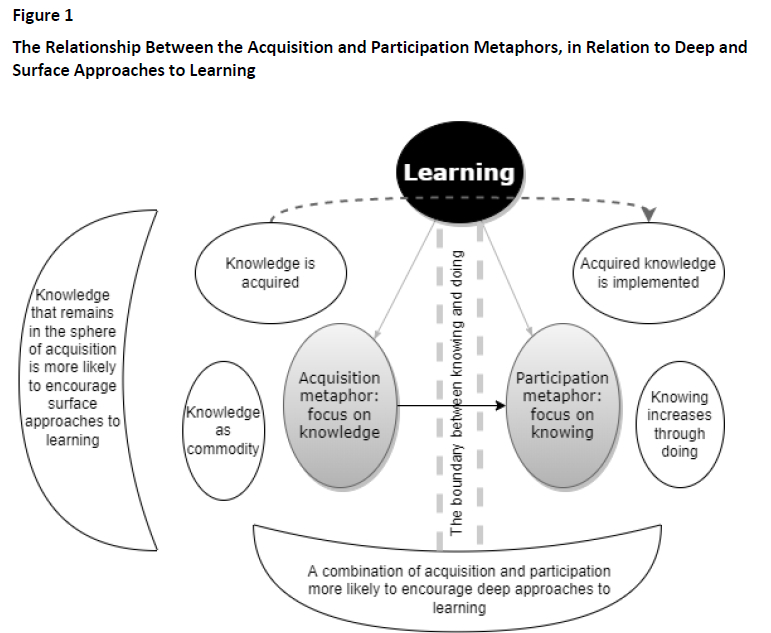
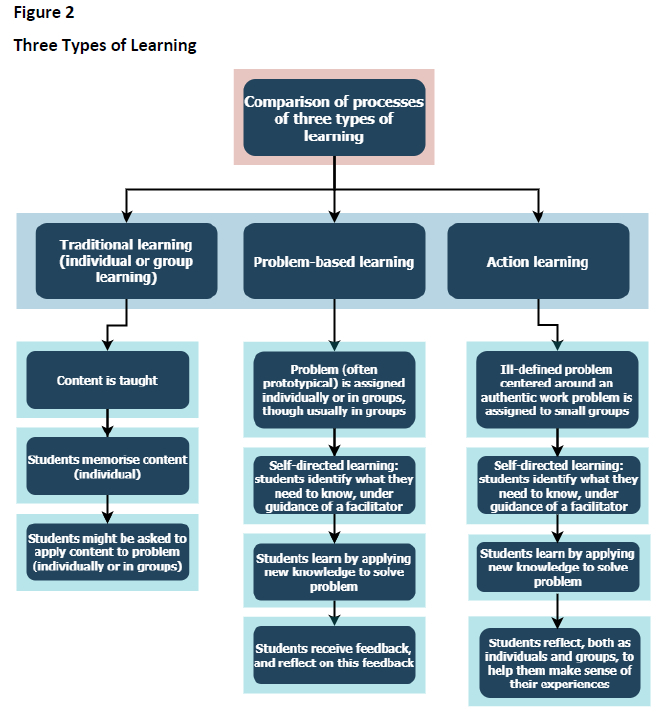
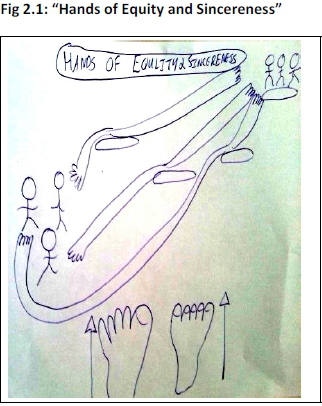
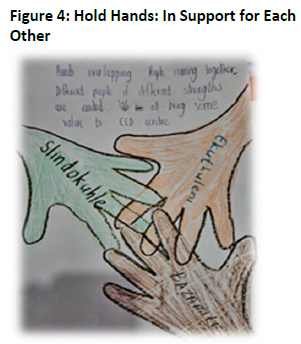
Teachers' experiences of their schooling can influence their own practice as teachers, This paper describes my memories of learning to read at home and at school as a child in rural KwaZulu-Natal, South Africa in the 1970s. I used the personal history method to narrate my childhood's joyous and painful experiences. I also used memory drawing to evoke the memories of my past experiences. The memory drawings accompanied by written recounts induced saddening stories of the past. They present the divergence between reading experiences at home as a child and learning experiences at the beginning of schooling. My memories suggest that in primary school, I was never exposed to reading books or writing. The classroom ethos induced fear rather than a love for learning. Engaging in self-study as a Foundation Phase teacher helped me to realise what I could do to better support my learners in the classroom, both by using a scaffolded methodology for teaching reading and by creating a more positive learning environment. This process has empowered me to own my professional development, continually reflect on my teaching practices, and seek ongoing improvement. I believe that teachers can cultivate a more responsive, adaptive practice by engaging in continual self-reflection and actively seeking improvement.
early literacy experiences; self-study; memory drawing; professional learning
Introduction
This self-study aimed to improve how I (Bongi Ntombela) teach my Grade 3 learners how to read in isiZulu. A lack of participation in my class, and low reading comprehension levels, drove the desire to improve my literacy teaching in the home language. This is not unique to my classroom because poor early-grade literacy levels reveal a crisis in the South African education system (Pretorius, 2015; Spaull et al., 2020). The recent Progress in Internal Reading Literacy Study (PIRLS) results indicate that despite learning in their home language for three years, most South African learners still cannot read with understanding and produce meaningful writing in their home language in Grade 4 (Department of Basic Education, 2023). Eighty-one per cent of Grade 4 learners were unable to attain the lowest reading benchmark, which means that they were unable to retrieve basic information from the text in their home language (Department of Basic Education, 2023, p. 6).
My doctoral study (Ntombela, 2023) focused on improving my practice, which I hoped would develop my learners' reading skills and allow them to cope with the curriculum demands and the change of text types that face them in the Intermediate Phase (Pretorius, 2014; Sibanda, 2017). I employed a wide range of methods including video recordings of my practice, reflecting systematically on my classroom practice of using the Reading to Learn methodology with my Grade 3 class, engagements with critical friends, reflective journals, and a collage (Ntombela, 2023). Reading to Learn is a genre-based reading and writing pedagogy devised in Australia by Rose (2005). It is based on the crucial premise that success in reading precedes success in writing. It follows a highly scaffolded approach that teachers at any level can use. The approach starts by enabling teachers and learners to read an entire text. The focus is on recognising sentences and then words in the text, rather than learning words out of context. Learners then analyse the words into syllables and practise spelling them. They then use the words to write their own text at an appropriate level (Rose, 2011). The pedagogy is underpinned by a practice of affirming learners when they answer questions correctly, which they are able to do because the answers are in the text. Thus, the classroom environment is supportive and positive. However, this pedagogy is not the focus of this paper but will have to be explored in a different paper.
Rather, the focus of this paper is on the personal history component of my study. The narrative adds to the scholarship that aims to "ensure that African girls are seen to be knowers and narrators of their own stories'' (Jaksch et al., 2023, p. x). I conducted this self-study to examine the questions that emerged from my classroom observations and to better understand myself, my teaching methodology, and the way my learners learn (Samaras & Freese, 2006). I also wanted to improve my practice of teaching reading in isiZulu, improve my attitude towards learners, and develop their reading habits because these are crucial in either constraining or accelerating learners' reading development (Pretorius & Klapwijk, 2016).
The paper does not follow a typical structure given that it describes my memories and narrative and what I have learned. The paper begins with an explanation of the self-study methodology and the method of memory drawing to write a personal history. Then, I narrate my memories of becoming literate at home and school and draw out the key themes and learnings from this narrative. References to the literature are woven into the narrative and reflection, so there is no Literature Review section.
Background
My study was conducted in the province of KwaZulu-Natal, the second most populous province in the country, where 78% of the population speak isiZulu as their home language. I teach in a primary school where all learners have isiZulu as their mother tongue and thus, they are taught in isiZulu for three years in the Foundation Phase (Grades 1-3). The national Language in Education Policy states that schools use the home language for three years as their language of learning and teaching (LoLT). In Grade 4, the LoLT switches to English or Afrikaans while the home language is retained as a subject (Republic of South Africa, 1996).
Public schooling in South Africa is unequal, with 80% of the learners who attend no-fee schools achieving poorer outcomes than the 20% who attend fee-paying schools (Spaull, 2019). In the past 30 years, policies have been implemented to attempt to change historical, race-based inequalities and to provide more funding to schools attended by children from low-income backgrounds. However, public schools in South Africa are still unequally resourced because some schools have the right to levy school fees (Dass & Rinquest, 2017). Schools that do so are typically schools that were attended by white learners during apartheid, and have resources such as computer centres, libraries, science laboratories, and sports facilities. These schools attract middle-class learners and use the fees to fund the appointment of additional teachers, which allows them to have smaller classes and offer a wider range of subjects. This has created a bi-furcated schooling system in South Africa, where learners attending no-fee schools consistently underachieve compared to learners in fee-paying schools (Spaull, 2019). Learners attending no-fee schools are almost exclusively Black African, who do not speak English as a home language but must learn through the medium of English from Grade 4. Thus, inequalities are compounded by a complex layering of class, race, and language.
The 2021 PIRLS results show that many learners complete Grade 3 without being able to read and write properly in their home language (Department of Basic Education, 2023). This trend prevails when they switch to English in Grade 4, where they demonstrate very little understanding of English as the LoLT (Spaull et al., 2016). Thus, the poor development of literacy in the home language in the early grades in South African schools reveals a crisis in the South African education system (Pretorius, 2015).
The study was conducted in my classroom with 45 Grade 3 learners. My school is a Quintile 3 primary school situated in the greater Edendale complex in Pietermaritzburg. Quintiles refer to the ranking of schools in categories from 1-5, based on the economic status of their surrounding communities. Quintile 1 schools are classified as the poorest, and Quintile 5 as the least poor. The ranking is regulated by the National Department of Basic Education for the annual allocation of financial resources. Because my school is ranked as Quintile 3, our learners do not pay school fees because they come from a low socio-economic status community. A large number of the children come from child-headed families, others live with unemployed parents and guardians in families who live on the government grants given to elderly people and young children. The government provides a feeding programme at the school. My school is a full-service school, which is a mainstream school or inclusive school that caters for children with special education needs at a moderate level. The school admits learners with minor to moderate learning difficulties, which may include vision, hearing, learning and cognition, behavioural problems, and weak motor skills due to health reasons.
Self-Study Methodology
I employed self-study as a methodological approach to improve my teaching practice and my learners' literacy skills. I realised that as a teacher, I play a crucial role in the teaching and learning process. I do not have the power to change the whole education system and government policies, but I do have control over my personal and professional growth (Pithouse et al., 2009). Hence, to engage in conscious and intentional professional development, I chose self-study research as a methodology that would allow me to examine myself, understand my beliefs and practice, and improve my teaching approach (Samaras & Freese, 2006; Samaras & Roberts, 2011).
Self-study involves reflecting on one's personal and professional stories emanating from past and present experiences, and preparing for the future (Samaras & Freese, 2006). It is used by individuals who have observed their behaviour and performance and compared that to their beliefs. According to LaBoskey (2004), they act on their feelings about what they have been observing for the purpose of transformation. Self-study is also an interactive process and allows for the voice of others as critical participants in jointly constructing knowledge. I worked with my two supervisors and other critical friends, who continually offered critical reflections and feedback during my research process.
The self-study teacher researcher values self-improvement, and intentionally considers the value of the research for other people, to improve learning (LaBoskey, 2004; Pithouse et al., 2009; Samaras, 2011). Thus, this study focused on my teaching and my personal behaviour while also transforming my classroom environment, improving my learners' performance, and benefiting other teachers in my school. Samaras (2011) stated that teacher learning involves understanding learners, employing better ways of teaching them, and planning strategies for future instruction.
In this paper, I present a narrative generated through personal inquiry. I used the personal history method as a starting point to explore my identity and the motivation behind my goals, and to become aware of my professional development needs (Pinnegar & Hamilton, 2009). The personal history method is used by researchers to reflect on personal experiences and investigate how personal and learning experiences, culture, and history influence one's current teaching (Russell, 2002; Samaras et al., 2004). Samaras (2011) asserted that teachers bring their personal experiences into their teaching practice. Thus, through the personal history method, I revisited my past experiences of literacy learning to reflect on how my learning experiences have informed my teaching of isiZulu in Grade 3.
I used memory drawings as a method to evoke my memories from childhood of how I was taught reading and writing. Using memory drawings prompted my memories of certain aspects of my literacy learning from Grade 1. Surprisingly, using memory drawings evoked experiences and events that I thought had disappeared from my mind. I started to relive those feelings and emotions and make meaning of them. When I started this study, I thought that memory drawings should be beautiful artistic creations but, as I engaged with the self-study literature, I realised that memory drawings do not have to be "fancy or highly artistic drawings" (Kortjass, 2020, p. 226). However, I had already engaged an artist to do the drawings for me. I explained to him the kind of pictures I needed to would portray the various situations.
In the next section, I narrate the exciting and frustrating experiences I encountered as a child in my family, and the way I was taught reading at school. Exploring these experiences helped me understand my current practice and initiate change.
Memories of Becoming Literate at Home and School Learning at Home
I grew up in Inadi village, a rural area that is 45 minutes' drive by bus to Pietermaritzburg, I was born into a large family of three boys and four girls. My sisters are all older, and I was the last girl at home. My mother was a domestic worker in town, and my father worked at a bakery. My parents had gone to school up to a higher primary level. They could both read and write isiZulu and had learnt to read, write, and speak English in their workplaces.
Initially, when I was thinking about my childhood literacy experiences, my mind just focused on my sub-Standard A (Grade 1) class, but when I explained this study to my elder sister-who is a retired teacher - she reminded me of the literacy activities we engaged in as a family and at church before I went to school. When we were growing up at home, we used to go together as sisters with our mother to prepare the field and grow different kinds of crops, fetch firewood (because there was no electricity and we used wood-burning stoves), and to fetch water from the river. During this time, we learnt the appropriate way of talking and approaching each other as we had all kinds of conversations. That is how we built our relationships and developed our communication skills.
After discussing this with my sister, I recalled the days when we used to sit together with my older siblings in the kitchen playing cards (Figure 1). Playing cards promoted collaborative work as we played in pairs supporting each other. And it stimulated our thinking and problem-solving skills. Playing cards was a foundation for learning mathematics because I acquired mathematical concepts such as counting before going to school.
We also played iziphicaphicwano [quizzes], where one of us would say isiphicaphicwano and others would promptly give an answer. For example: "It has four legs, stays outside, and barks at night to protect the family," and the answer is "the dog." The winner would be the one who said the answer first. This game enhanced my knowledge of isiZulu vocabulary and stimulated attentiveness and the ability to provide prompt responses.
When our mother was with us, sitting around the wood-burning stove, she would tell us stories. We loved my mother's stories, and this practice developed my listening skills. We made sure that we ate and washed the dishes before the storytelling began so that we could all sit quietly and listen, laugh, and ask her questions if we had any.
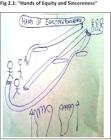
It was the family tradition that we prayed together at night before going to sleep (Figure 2). Before praying, we would sing, and one of my parents would read a scripture from The Bible and allow us to explain what the scripture meant and how it related to us. We took turns explaining the scripture and, by doing this practice, my father was transmitting religious traditions to us while we were also learning to read and talk and show understanding of the text. However, the literacy practices I engaged in at home were totally different from how we learnt at school.
We were also exposed to literacy activities in the church. It was compulsory for us all to go to church on Sundays. Our Sunday school teacher would narrate a Bible story first, then read it from The Bible and ask us questions about the story. We would find answers from what she had read, or provide answers from what we were thinking about the story. We memorised some of the verses from The Bible and sometimes she gave us opportunities to act out the story to the whole congregation. My home background and the church laid a foundation for learning my home language and reading (Figure 3).
Learning at Lower Primary School
I started my lower primary schooling in 1973 at the age of seven, which was the norm in those years. There was a significant difference between the way we did reading at home and the approach used by the teacher at school. There was no time for storytelling. There were no books in the classroom. We had to look and listen to the teacher. When I came to school, I could speak isiZulu fluently, and I knew many words from home, but the Grade 1 teacher did not build on that knowledge.
There were two primary schools in our village. One was very far from where we lived and the other one, which was a bit closer, was in a Roman Catholic mission and only accepted children from Roman Catholic families. As a result, the local church was used as a school during the week for children who could not attend the Roman Catholic school, especially for young children. Nothing motivated us to attend school; we attended because it was a norm that every child should go to school.
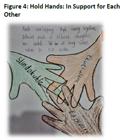
There was limited space in the church, which could not accommodate the whole group of children. Therefore, we were divided into groups to attend classes on a rotational basis according to our cognitive abilities. The learners who were perceived as slow learners came in the morning, and the "clever" ones came in the afternoon. The church wall was made of wattle tree posts with mud to cover the walls and the floor was made by mixing cow dung and mud to make it smooth and fine. On Thursday afternoon when we got home, we had to take plastic bags and go around the neighbourhood looking for cow dung. Every Friday, we had to carry the dung from home in plastic bags so that we could coat the floor in the afternoon (Figure 4). Only the girls mixed the cow dung with water in the buckets and then coated the floor. We were very good at this kind of cleaning because most of us did it at home or observed elders doing it. It was a normal practice for girls to do hard work, which was a sign of respect and responsibility.
There were no taps where we could get clean drinking water at the church. Thus, some of the girls had to fetch water with buckets from the nearby river every morning before classes began. We did that even on cold winter mornings, walking on grass covered with frost, some of us barefoot. Sometimes, I did not feel like going to the river, but it was a way to escape from learning in a frightening environment. The teacher continued teaching while we were away, and so we missed out on what our peers learnt. This impacted our learning negatively because a lot of time was wasted by the end of the week.
Having no access to clean water and healthy sanitation in schools was not considered important in rural areas at that time. However, nowadays, it is acknowledged as denying children their basic rights because it has a negative impact on learning and threatens children's health if they do not wash their hands properly (Khumalo & Mji, 2014). Our "classroom" did not have proper desks, but there were rows of long benches where we would sit and learn. The teachers used a small portable chalkboard that was placed on chairs. On one side, the chalkboard had squares permanently drawn for writing mathematics and, on the other side, it had lines to write words.
Classes always started with mathematics in the morning and, due to a lack of resources, we used stones to count and calculate answers to given sums. During the isiZulu period in Grade 1, the teacher would write the vowels on the chalkboard for us to read after her-a, e, i, o, u and thereafter, the syllables ma, me, mi, mo, mu, and others. We repeatedly chorused until the teacher told us that we all knew it. This was the traditional method of teaching reading, which represents the perspectives of the behaviourist theories (Pardede, 2008). The significant idea of behaviourist theories is that learning is a spontaneous behaviour acquired and demonstrated as a result of the repetition of stimulus and response interaction. Learning happens through imitating what is being modelled through drilling, repetition, and error correction. The teacher used to threaten to hit us if we did not memorise the work.
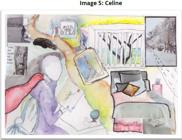
The teacher would then read from the small book, Masihambisane [Walking Together], requiring us to shout the words, echoing her without having the book or seeing the words (Figure 5). This was a teacher-centred and whole-group chorusing approach with little assessment of learner performance in oral activities, and minimal assessment of individual reading of text, commonly used in South Africa during the apartheid era (Hoadley, 2012; Macdonald, 1991). After all these years, I still remember the first page of that small yellow book: "mama ima, ima mama, umama umema omame . . ." The teacher wrote a list of words from the book on the chalkboard, and we repeatedly read them after her in group chorusing. We were never told to copy the words down to read at home.
Our teacher never gave us any homework. I think it was because we were using slates, and anything written on them would be easily wiped off even before we got home. Hence, we did not continue practising what we were taught on a particular day. In addition, the teacher could not leave the work on the board for long because the chalkboard needed to be used for other activities. Moreover, she never used charts or flashcards that could be hung on the wall for us to see and remember what we learnt. We only learnt the words by heart in class, on a Thursday, and then the teacher assessed that spelling on the following day. If we got some words wrong, the teacher gave us the number of strokes equal to the number of incorrect words.
Only the teacher had a reading book. Some families could afford to buy books for their children, but the teacher never asked if we had books. We did not experience the strategies that were used at church for understanding the story through acting it out. However, we developed the skill of memorising, which became helpful when I progressed to the higher primary where we had to memorise poems and some notes in content subjects.
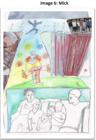
Because we used slates to write our schoolwork, we did not learn to hold a pencil or form letters properly. A slate was made of a fragile black stone-like material set in a wooden frame. We wrote on it like a chalkboard and carried a small water bottle and a cloth to wipe it and use it again for another activity (Figure 6). If we had no water and cloth, we licked our fingers and wiped the slate. The slate pencil was made from the same stone as the slate, and I often sharpened it on stones before I got into the classroom. I carried my slate in my hand because I did not have a school bag, and it was easy to handle it carefully because I did not have anything else to carry when I went to school except the cow dung on Fridays. It was very rare for me to break my slate because I was a very shy little girl. I did not play much at school, and I walked alone to and from school. In that way, I was able to keep my slate safe for a long time.
During English lessons, the same approach to teaching and learning was applied. We named classroom objects repeatedly by group chorusing after the teacher and then, the teacher would write the words on the chalkboard for us to read and learn by memory, and our memory would be tested on Friday. I learnt the syllables and words and the skills of listening, imitating the teacher, and memorising. The whole afternoon on Thursdays was terrible. I spent the time wondering if I could recall the spelling words for the test on Friday and thinking about the teacher's shouting and those hard strokes I would get. This was a very frightening experience of school and learning. I always thought of learning as a nightmare and the teacher as an enemy.
I performed at an average level in terms of achievement, and I was well cared for at home because I had older sisters and parents to take care of me. However, my first year of schooling was terrible because the teacher did not like me. I was not the only fat child in the class, but I was the only one called "the tortoise." The teacher, Mrs Gaba, would call us to the front after she had marked our mathematics or spelling tests. Then we would go back to our seats according to the marks we had received, starting from those who got full marks. Then she would start beating us according to what we had got wrong. Regardless of how I had done on the test, every day, she would tell me to stand in front of the class and tell my fellow students to laugh at me, saying: "Here is a tortoise; laugh at her." The whole class would laugh, pointing at me. I never told anyone about this as my teacher was an old woman from the neighbourhood. According to the culture at that time, children were not allowed to express their feelings and opinions, unlike nowadays, where women and children have become assertive and confidently fight for their voices to be heard (Ntombela & Mashiya, 2009). Moreover, it was disrespectful for children to talk badly about adults, particularly teachers, because they were the most trusted people in the community.
There were days when I wished there was a place to hide and not go to school because I did not like the nickname the teacher had given me. In addition to the fear of severe corporal punishment, the teacher's behaviour towards me deprived me of happiness by ostracising me from the other children and removed my motivation to learn. However, since the time when I was growing up, I knew that I wanted to be a teacher and, if I became one, I would be careful that no child would be marginalised due to their home background, their learning abilities, or how they looked. My teacher's behaviour towards us also taught me that corporal punishment does not mould a child but creates fear and hatred.
We continued with our learning as children in the neighbourhood by playing school in the afternoon and on weekends. One of us would act as a teacher-especially those who were socially confident-and the rest of us would act as children. Then we would remember what we did at school and repeatedly do or say it as it happened in class. We wrote on the ground, pretending to be writing on our slates. I remember one girl from a neighbourhood household acting as Mrs Gaba (our teacher) and she called me a tortoise. That was the first time I got into a fight. I was so furious and beat her; to me, it felt like I was beating my real teacher. As I recall my past experiences, I realise that I was a quiet child, but full of anger caused by the hateful attitude I received from my Grade 1 teacher.
By the time I got to Standard 2 (Grade 4), a proper lower primary school had been built close to my home. The new school had proper classroom furniture: desks, teachers' cupboards, and a huge chalkboard on the wall. That was the first time I used an exercise book and a pen to write. Parents had to buy stationery for their children and pay school fees. I then learnt how to organise work in an exercise book-like writing the date on top and skipping two lines when writing. In Standard 2, we had to use cursive handwriting, which was very difficult for me. It was a bit late for me to learn and develop good handwriting after three years of writing on a slate without any lines to give direction to my handwriting. I had a challenging experience because my handwriting was ugly. When I tried using the other hand, it became more terrible but eventually, I used my right hand.
Transition to Higher Primary School
The transition from lower primary to higher primary school refers to the learner crossing from the phase of "learning to read" to "reading to learn" (Pretorius, 2014, p. 53). Grades 1 to 3 are a critical phase for learners' reading and writing skills development that determines their continuing success in schooling because they need to engage with text, and read to learn more independently. When I proceeded to the higher primary, the switch to English as the LoLT happened in Standard 3 (Grade 5). I was challenged when mastering new concepts and understanding abstract ideas in English in the higher primary because I lacked a strong literacy foundation in my home language from the previous grades.
The higher primary school environment was much better because we had proper classrooms with furniture, a proper chalkboard, and textbooks. We memorised and recited poems in three languages: isiZulu, English, and Afrikaans. Teachers taught us grammar rules and let us write sentences to reinforce the grammar. I remember an explanation from my teacher that a verb is a "doing word" and she gave us examples of verbs. As I went on with learning in different levels of schooling, I learnt about parts of speech, but I never learned deeper knowledge about the structure of language. When we had to write a composition, the teacher would write a topic such as "Myself" or "My Family" on the board without discussing the topic with us. She would just write sentences about herself or her family, underline her personal information, and instruct us to change these and make it relevant to ourselves. For example:
1. I am a girl.
2. My name is Nomusa.
3. My surname is Zuma.
4. I am 10 years old.
5. I live at Gezubuso.
The teacher would mark each word that we had changed, and that would be our creative writing. In content subjects such as agriculture or general science, the teachers read the English textbooks to us and explained the content in our home language. They then wrote some summarised notes on the chalkboard for us to copy into our exercise books. The way we were taught was confusing because everything was explained in isiZulu, whereas we were expected to give answers in English during the examination. This code-switching practice is still used in many South African classrooms today (Desai, 2001).
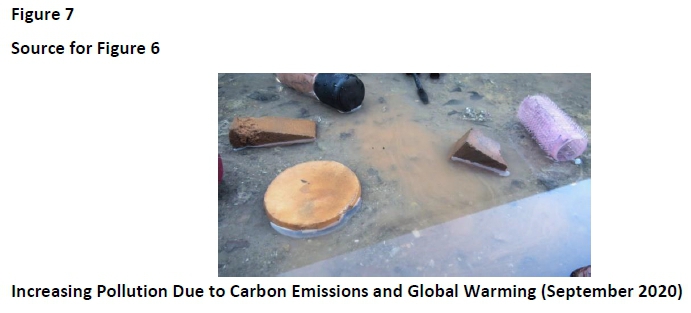
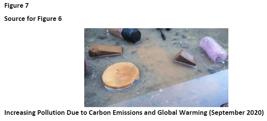
Our Afrikaans teacher would write a composition and poems on the chalkboard for us to copy and learn by heart at home. He used a long heavy stick made of leather, which was called a sjambok, to punish those who could not recite the poems the following day. After school, we used to go to the river in groups to fetch water. On our way to the river, we recited the poems we had learnt at school together, which helped us to remember. On the following day, I would carry a piece of leather that I had cut from an isidwaba [traditional women's skirt] in my plastic school bag to put under my uniform (Figure 7). I prepared this in case I forgot the Afrikaans composition or poem because then the teacher would make us bend over and hit us on our backs with a sjambok.
Examinations were written twice a year, in June and in December. The examination paper for the content subjects always consisted of questions that required one-word answers: multiple-choice questions, filling in the missing words, or labelling a plant or an animal. This was not very difficult because I had learnt to memorise the information from the notes we had copied from the chalkboard. Our memorisation skills helped us to remember concepts in content subjects during higher primary and high school grades.
Learning at High School
In high school, we no longer had spelling tests in any of the languages. I acquired knowledge of vocabulary through memorising during my primary school years. However, I could not use those words in verbal communication and writing. Our teachers in high school taught us the rules of grammar and writing sentences and stories. When teaching a novel in any language, the teacher would read it to us and explain each paragraph. When learning English and Afrikaans, most of us could not engage in any discussions because we had very little understanding of the languages. We knew that the test and exam questions about the novel would be, "Who did this? When and how?" or "Who said these words . . . ? To whom and what had happened?"
When I was in Standard 9 (Grade 11), the English teacher organised for us to go to the Kismet Cinema to watch the film of Julius Caesar. I did not understand the English that was spoken in the film; I only looked at the images and action. Hence, I could not tell or write anything about that play because I had not developed English communication and comprehension skills.
Literacy learning is embedded in the context and therefore, should be considered a cultural and social practice because literacy differs according to contexts and cultures (Street, 1996). Our learning would have been more enjoyable and productive if the topics for extended writing had been about things that we were familiar with such as fetching firewood or water and preparing the soil for planting in the field. But instead, it was about something I had never experienced such as "Mhla ngiya eGoli ngesitimela" or "'n reis per trein" [The day I travelled to Johannesburg by train]. I would sit at my desk with my hands over my head, feeling like crying because I did not know even how to begin. We were not given a framework to structure the story, and I had never been to Johannesburg or even on a train. I would write any words that I remembered from the vocabulary I had learnt from primary school and sometimes even used isiZulu words in the English or Afrikaans essay. Primary school learning did not prepare me for high school, especially with reading and writing skills.
Summary of Learnings From My Memories
I will first focus on the pedagogy of literacy that I experienced and secondly, on the learning environment. In terms of literacy, I realised that home literacy was a strong foundation in my home language, isiZulu, because I was engaged in reading The Bible and discussing it every night. My learning in the lower primary school was difficult because we had no books to read. Learning to read was characterised by memorising sounds and words, and we were not given homework to practise reading and writing. The teacher dominated the lessons, and learners chorused the answers and read words that had no meaning to us. Using slates meant that I never learned proper handwriting, and I did not have any workbooks to write in until Grade 4. By the end of Grade 4, I could decode words in isiZulu and some English words but could not make meaning of sentences or longer texts.
In Grade 5, the LoLT changed to English. I had to write compositions on unfamiliar topics. We had textbooks, but I could not read for meaning in either isiZulu home language or English, so memorisation continued. Even in high school, I still could not read for meaning. Many learners could not understand spoken English and therefore, teachers used code switching and gave explanations in the home language for us to understand concepts and stories. I had not acquired the literacy skills that a child should have acquired at this stage to support subject-based learning, which includes reading and understanding, oral and written communication, and viewing and critical thinking (Department of Employment, Education, Training and Youth Affairs, 1998; Louden et al., 2005).
This oral orientation to teaching undermines the significance of books, and supports the idea that knowledge and facts are only transmitted by the teacher and not from text. Learners rely on listening to the teacher and chorusing the responses. It gives learners limited exposure to books as a primary source of knowledge of content and language, resulting in a poor reading approach and low language and comprehension development (Pretorius, 2015; Sibanda, 2017).
Mophosho and Dada (2015) argued that the home environment is a significant factor that provides a foundation for children's learning and reading behaviour through parent-child interaction and with the community around language and reading-based activities in natural surroundings. Spaull et al., (2020) added that the formal school builds on that home foundation. However, this was never my experience at school.
The learning environment was not supportive of learning, so there was no motivation to learn. I was terrified of failing the spelling tests or not being able to recite a poem in high school, which resulted in corporal punishment. I was fearful during much of my primary schooling because the teacher and other children insulted me, and some teachers hit us if we did not remember words or poems. Children spend most of their time at school, and this environment should be free of fear, danger, and harassment for both teachers and learners (Segalo, 2013). However, corporal punishment was our everyday experience and was an abuse of power (Ntombela & Mashiya, 2009, p. 103).
Khumalo and Mji (2014) argued that the system of apartheid neglected the rural or previously disadvantaged communities, including schools. This portrays the situation in our community, where we did not have proper school infrastructure-one of the essential elements in education. The teaching and learning process in a classroom with adequate resources and a welcoming atmosphere directly influences teaching practice and learner achievement (Khumalo & Mji, 2014; Ntombela & Mashiya, 2009; Pretorius, 2015). However, in my early school years, we had no desks or books to write in. In addition, in primary school, girls had to fetch water from the river and also coat the classroom floor with cow dung every Friday afternoon. The cultural norms of the community were that girls should do these tasks to learn to work hard and be responsible.
My Learning From Doing This Self-Study
I learnt that a teacher's own schooling experiences have the power to influence their present and future teaching practice (Kortjass, 2019; Mkhize-Mthembu et al., 2022; Ruohotie-Lyhty & Kaikkonen, 2009). Reflecting on my teaching practice showed me that the environment in my classroom mirrored my experiences of learning in primary school. When I observed my interaction with learners in the video recordings of my lessons, I discovered that sometimes I snapped at my learners without understanding their challenges. I also realised that shouting did not help them to learn but created a fear of participation in class activities. Conducting the self-study helped me to realise that the context in which I grew up shaped my professional identity negatively. I realised that I grew up bottling up anger, which has influenced my relationship with other people-particularly the learners I teach.
My narrative assisted me in uncovering my behavioural and emotional traits that created a negative atmosphere for learning. Doing this self-study has helped me to discover that my teaching practice was influenced by my experiences of having frightening teachers. The personal history method revealed that the experiences I had as a learner influenced my teaching and created an unhealthy teaching and learning environment, which resulted in fear and demotivation. This realisation helped me to change my practice, and I learned to accept all my learners more positively.
I recognised that a negative classroom environment contributes to poor academic achievement. Reflecting on my learning experiences as a child made me realise that for many years of my teaching, I did not have the skills to motivate my learners to love reading, nor did I support them in developing reading and comprehension skills. Using the Reading to Learn methodology, I learned to skilfully involve learners in the lesson without creating fear but in a way that supports the development of their reading skills. The methodology strongly focuses on affirming learners when they respond to a question from the teacher. Learners can do this because the answers are in the text, and thus they do not have to guess what the teacher is thinking (Rose, 2005). By the end of this research, I had learnt that I was a significant role player in effectively teaching reading and in creating a classroom environment that was supportive and positive. Learners' ability or inability to perform tasks is determined by the level of support I provided and my behaviour during classroom events.
I am currently teaching Grade 1 in a different school, and I am adapting the Reading to Learn methodology to fit the Grade 1 level. My Grade 1 learners still need to learn the school routine and I am more patient and understanding than I would have been before doing the self-study. I'm trying to be patient while we develop the necessary classroom routines. One child in my class did not write or speak due to an earlier trauma. I realised that he needed my patient attention. I spent time with him, showing him how to write and copy from the chalkboard. Learning from the self-study process made me realise that this time and persistence is very important for the individual child.
Conclusion
Conducting this self-study emanated from my concerns about my learners' lack of participation in class and their poor reading development. The challenges in my classroom were caused by various factors such as a lack of proper planning of teaching resources, not considering the context when I had just started in a new school where children had never been exposed to the Reading to Learn methodology, and not communicating well with my learners. These factors prevented a smooth learning process, which I interpreted as the learners' fault. My interpretation of the situation led to the emergence of angry emotions that I could not control but expressed to learners. By engaging in continual self-reflection and actively seeking improvement, I could cultivate a more responsive, adaptive practice. Self-study encourages a cycle of learning, reflection, and growth that enriches individual practice and contributes valuable insights to the broader educational community.
Author Contribution Statement
Author 1 generated the data as part of her doctoral study and Authors 2 and 3 were co-supervisors of the study. The supervisors engaged in conceptualising and structuring the article from a dissertation chapter, and reviewed and edited the drafts.
Statements and Declarations
Ethical approval for the study was granted by the Human and Social Sciences Research and Ethics Committee of the University of KwaZulu-Natal, South Africa on 27 June 2023. The author(s) declared no potential conflicts of interest with respect to the research, authorship, and/or publication of this article. The author(s) received no financial support for the research, authorship, and/or publication of this article.
Dass, S., & Rinquest, A. (2017). Chapter 7: School fees. In A. Thom, F. Veriava, & T. F. Hodgson, (Eds.), Basic education rights handbook. Education rights in South Africa (pp. 187-207). Section 27.
Department of Employment, Education, Training and Youth Affairs. (1998). Literacy for all: The challenge for Australian schools.
Department of Basic Education. (2023). Progress in International Reading Literacy Study 2021: South African preliminary highlights report. https://tinyurl.com/bdd5s6av
References
- Desai, Z. (2001). Multilingualism in South Africa with particular reference to the role of African languages in education. International Review of Education, 47(3/4), 232-339. https://doi.org/10.1023/A:1017957927500
- Hoadley, U. (2012). What do we know about teaching and learning in South African primary schools? Education As Change, 16(2), 187-202. https://doi.org/10.1080/16823206.2012.745725
- Jaksch, M. L., Fourshey, C. C., & Moletsane, R. (2023). A turn to the African girl. Girlhood Studies, 16(1), vii-xv. https://doi.org/10.3167/ghs.2023.160102
- Khumalo, B., & Mji, A. (2014). Exploring educators' perceptions of the impact of poor infrastructure on learning and teaching in rural South African schools. Mediterranean Journal of Social Sciences, 5(20), 1521-1532. https://doi.org/10.5901/mjss.2014.v5n20p1521
- Kortjass, D. L. P. (2020). Cultivating an integrated learning approach to early childhood mathematics: A teacher educator's self-study [Doctoral dissertation, University of KwaZulu-Natal]. UKZN Research Space. https://researchspace.ukzn.ac.za/handle/10413/19948
- LaBoskey, V. (2004). The methodology of self-study and its theoretical underpinnings. In J. Loughran, M. Hamilton, V. LaBoskey, & T. Russell (Eds.), International handbook of self-study of teaching and teacher education practices (pp. 69-817). Kluwer.
- Louden, W., Rohl, M., Barratt Pugh, C., Brown, C., Cairney, T., Elderfield, J., House, H., Meiers, M., Rivalland, J., & Rowe, K. (2005). In teachers' hands: Effective literacy teaching practices in the early years of schooling. Edith Cowan University.
- Macdonald, C. (1991). Eager to talk and learn and think. Maskew Miller Longman.
- Mophosho, M., & Dada, S. (2015). The role of the speech-language therapist in implementing AAC in schools. In S. Moonsamy & H. Kathard (Eds.), Speech-language therapy in a school context: Practice and principles. van Schaik.
- Pardede, P. (2008). A review on reading theories and its implication to the teaching of reading. https://parlindunganpardede.wordpress.com/articles/language-teaching/a-review-on-reading-theories-and-its-implication-to-the-teaching-of-reading/
- Pinnegar, S., & Hamilton, M. (2009). Self-study of practice as a genre of qualitative research: Theory, methodology, and practice. Springer.
- Pithouse, K., Mitchell, C., & Webber, S. (2009). Self-study in teaching and teacher development: A call to action. Educational Action Research, 17(1), 43-62. https://doi.org/10.1080/09650790802667444
- Pretorius, E. (2015). Failure to launch : Matching language policy with literacy accomplishment in South African schools. International Journal of the Sociology of Language, 234, 47-76. https://doi.org/10.1515/ijsl-2015-0004
- Pretorius, E., & Klapwijk, N. (2016). Reading comprehension in South African schools: Are teachers getting it, and getting it right? Per Linguam: A Journal for Language Learning, 32(1), 1-20. https://hdl.handle.net/10520/EJC189604
- Republic of South Africa. (1996). National Education Policy Act 27 of 1996. https://www.gov.za/documents/national-education-policy-act
- Rose, D. (2011). Beating educational inequality with an integrated reading pedagogy. In F. Christie & A. Simpson (Eds.), Literacy and social responsibility: Multiple perspectives (pp. 101-115). Equinox.
- Russell, T. (2002). Can self-study improve teacher education? In J. Loughran & T. Russell (Eds.), Improving teacher education practices through self-study (pp. 3-9). Routledge Falmer.
- Samaras, A. (2011). Self-study teacher research: improving your practice through collaborative inquiry. SAGE.
- Samaras, A., & Freese, A. (2006). Self-study of teaching practices. Peter Lang.
- Samaras, A., Hicks, M. A., & Berger, J. G. (2004). Self-study through personal history. In J. Loughran, M. Hamilton, V. LaBoskey, & T. Russell (Eds.), International handbook of self-study of teaching and teacher education practices (pp. 905-942). Springer.
- Samaras, A., & Roberts, L. (2011). Flying solo: Teachers take charge of their learning through self-study research. Learning Forward, Journal of Staff Development, 32(5), 42-45. https://tinyurl.com/mpj2crj9
- Segalo, L. (2013). Exploring sarcasm as a replacement for corporal punishment in public schools in South Africa. Interim: Interdisciplinary Journal, 12(4), 55-66. https://hdl.handle.net/10520/EJC151575
-
Sibanda, J. (2017). Language at the Grade Three and Four interface: The theory-policy-practice nexus. South African Journal of Education, 37(2), 1-9. 10.15700/saje.v37n2a1287
» https://doi.org/10.15700/saje.v37n2a1287 - Spaull, N. (2019). Equity: a price too high to pay? In N. Spaull & J. D. Jansen, (Eds.), South African schooling: The enigma of inequality (pp. 1-24). Springer.
- Spaull, N., Pretorius, E., & Mohohlwana, N. (2020). Investigating the comprehension iceberg: Developing empirical benchmarks for early-grade reading in agglutinating African languages. South African Journal of Childhood Education, 10(1), 1-15. https://doi.org/10.4102/saice.v10i1.773
- Spaull, N., van der Berg, S., Wills, G., Gustafsson, M., & Kotze, J. (2016). Laying firm foundations: Getting reading right (Report to the PSPPD). University of Stellenbosch, https://ssrn.com/abstract=2973191
- Street, B. (1996). Literacy and power? Open Letter: Australian Journal for Adult Literacy Research and Practice, 6(2), 7-16. https://search.informit.org/doi/reader/10.3316/ielapa.970909190