A Systematic Review of English as a Medium of Instruction Policy in the Arab World
Abstract
Language of instruction policy plays a major role in the success of education, impacting stakeholders from different backgrounds, such as instructors, students, parents, and government officials. This article presents an analysis of English as a medium of instruction (EMI) research conducted in Arab world (AW) countries since the year 2000. A keyword search of the Scopus database returned 101 articles, 52 of which were removed using identified selection criteria. This left 49 articles analysed in terms of authorship, funding information, research instruments, contexts, publication year and place, citations, and key findings. The results were as follows: Although AW researchers have examined EMI policy in greater detail during the last five years, several AW contexts remain unexplored. Author affiliations were linked to the locations of funding organisations. Neither K-12 nor graduate EMI provision has been investigated fully. While EMI is a successful top-down policy well-suited to AW demographics, it is viewed negatively by most students, possibly because programmes are not designed well and instructors are insufficiently prepared to teach EMI programmes effectively. Although EMI's one-size-fits-all approach is common in many AW institutions, educational levels and academic disciplines impact the success of EMI policy. I argue that AW and international researchers must collaborate to gain a wider understanding of AW contexts, and that research must strive to include other stakeholders, such as employers and parents.
Arab world (AW); English as a medium of instruction (EMI); Arabic as a medium of instruction (AMI); language of instruction; higher education
Introduction
The Arab world (AW) comprises 22 members of the League of Arab States: Algeria, Bahrain, the Comoros Islands, Djibouti, Egypt, Iraq, Jordan, Kuwait, Lebanon, Libya, Morocco, Mauritania, Oman, Palestine, Qatar, Saudi Arabia, Somalia, Sudan, Syria, Tunisia, the United Arab Emirates, and Yemen.
The term "Arab" does not refer to a "race", but to those who speak Arabic as their native language. Arabs are united by their language, culture, and history. Their shared native language is the main factor uniting these countries (Britannica 2022). However, colonisation by countries such as Britain and France in the 18th and 19th centuries led to the replacement of Arabic as a medium of instruction (AMI) in many educational institutions across the AW. For example, French became widely used in Algeria, Morocco, and Tunisia, while English became dominant in Egypt, Iraq, Oman, and South Yemen (Alhamami 2015).
The founding of the Arab League in 1945 marked the rise of pan-Arabism or Arab nationalism, during which Arab intellectuals called for the AW to use AMI at all levels of education (Britannica 2022). Language policy was used to promote a particular language, to protect minority languages, or to facilitate communication between different groups of people. It is an important field of study because it has a significant impact on people's lives (Spolsky 2021). It can affect their access to education, employment, and other opportunities. Language policy can also shape their identity and sense of belonging (Spolsky 2021). Unfortunately, there is a lack of research on how applied linguistics can be used to inform language policy. In addition, applied linguists generally lack the knowledge and skills necessary to effectively communicate their research to policymakers (Deygers and Vanbuel 2022).
English as a medium of instruction (EMI) has been the dominant policy in AW higher education for many decades. Macaro (2018, 19) defines EMI as "the use of the English language to teach academic subjects other than English itself in countries or jurisdictions where the first language of the majority of the population is not English". This definition informs our discussion of the selection criteria below. Most universities in the AW use EMI to teach science, medicine, and technology, while AMI is used in humanities and social sciences colleges. The findings of EMI research in the AW are complex and contradictory. Several factors limit these findings and prevent their generalisation to other Arab countries, educational levels, and academic subjects. As we will see later in this article, the historical, political, social, and educational contexts of EMI implementation require researchers to conduct several studies in one context in order to understand the factors that influence the success of EMI policy in any programme. This is a heavy burden for scholars. It is currently difficult to claim that the findings of an EMI policy study in a private university apply to a public university in the same country, or that the results of an EMI study in a graduate programme apply to an undergraduate programme at the same university.
The impact of EMI policy is a topic of interest for researchers and policymakers in various academic fields. There have been studies on EMI in healthcare (Alhamami and Almelhi 2021a), science (Alhamami and Almelhi 2021b; Tai 2022), engineering (Hama, Ahmed, and Ahmed 2018; Manakul 2007), business (Oraif and Alrashed 2022; Thompson, Takezawa, and Rose 2022), and dentistry (Rodis et al. 2013), among others. Several researchers and international organisations have emphasised the need for more EMI research to determine patterns and trends (Orduna-Nocito and Sánchez-García 2022), as many developing countries face policy challenges in deciding on the language of instruction (UNESCO 2021). Systematic reviews of EMI policy and practice have been conducted in other contexts, such as South Korea (Williams 2015), business schools (Vélez, Giner, and Clemente 2020), and higher education (Macaro et al. 2018). Dang, Bonar, and Yao (2023) carried out a systematic review of EMI in professional learning at university, focusing on the Chinese context. However, to the best of the my knowledge, no systematic review of EMI in AW countries has been conducted.
The association of EMI with colonisation and the association of EMI with an elite social class and better job opportunities can have a significant impact on students' attitudes towards EMI policy. In some countries, English is perceived as the language of the elite social classes, and its use in education is seen as a way to gain social and economic advantage (see Al-Kahtany and Alhamami 2022 in the AW; Liu, Nam, and Yang 2023 in China). Kirkpatrick (2011) argues that the perceived value of English in Asia has become more prominent in recent years, due to the rapid changes in sociopolitical and socioeconomic environments. Kirkpatrick suggests that English is now seen as essential for both academic and professional success in the region. Other researchers have associated the spread of English with colonisation. Phillipson (2018) argues that EMI in non-anglophone countries is a form of linguistic imperialism. He claims that EMI policy has led to adverse outcomes in several aspects, such as low achievement of learning outcomes, challenges to students' identity, limited access to educational resources, unjust treatments, and unfair assessment in undergraduate programmes.
Macedo, Dendrinos, and Gounari (2015) support Phillipson's (2018) claims, arguing that the hegemony of English has led to the marginalisation and even extinction of minority languages. They point out that some national languages have ceased to exist as media for education and/or communication among their native speakers. This can have a devastating impact on the cultural heritage of those communities. In addition to the negative consequences of EMI, some scholars have also argued that it can lead to domain loss and inequities for students and instructors. Sah and Li (2018) argue that EMI can lead to students losing their knowledge and skills in their native language. This can make it difficult for them to succeed in school and in the workforce. EMI can also lead to educational inequality, as it disproportionately disadvantages students from lower socioeconomic backgrounds. Sah and Li (2018) argue that students are less likely to have access to high-quality English language education, and that they are more likely to experience challenges in learning in a foreign language.
The global hegemony of English is essential to contextualise this within the historical background of EMI policy in the AW. This hegemony, as a matter of fact, rather than conquest and violence, has significantly influenced language policy and education systems worldwide. Williams (1977) characterises hegemony as a pervasive set of practices and expectations that form a common understanding of the world, thus constituting an experienced reality for most members of society. This concept aligns with the widespread adoption of English as a lingua franca in various domains, including education, particularly in non-native English-speaking countries. The linguistic hegemony of English has often been perceived as neutral, leading societies to adopt it without question. However, this overlooks the historical processes that contributed to its dominance.
Colonial history played a pivotal role in establishing English as a dominant language in many parts of the world. The colonisation by European powers led to the imposition of their languages and cultures upon indigenous peoples, often at the expense of local languages and cultures (Bamgbose 2011). In the AW, this shift was marked by the replacement of Arabic with European languages in many educational institutions, a phenomenon that continued well into the postcolonial era. Phillipson (2011) and Macedo, Dendrinos, and Gounari (2015) argue that this form of linguistic imperialism has led to the marginalisation of minority languages and the erosion of cultural heritage.
In the context of EMI in the AW, this hegemony manifests in the preference for English in the teaching of scientific and technical subjects. While the spread of English is often linked to opportunities and modernisation, it also raises questions about linguistic colonialism and its impact on educational systems, students' identity, and access to resources. Phillipson (2018), and Sah and Li (2018) highlight the potential adverse outcomes of an EMI policy, such as educational inequalities and the loss of native language skills. This hegemonic influence extends to the realm of education, as described by Macaulay (1935), who aimed to create an elite class in India that would serve colonial interests. Such policies, while claiming modernisation and development, often led to the sidelining of native languages and traditions.
Poon (2013) argues that the dominance of EMI has raised a number of educational, linguistic, and socioeconomic issues. These include rote learning, low motivation, declining language standards, and restricted social mobility. In United Arab Emirates, Belhiah and Elhami (2015) found that being educated exclusively in English can exacerbate rote learning and memorisation, as students may be reluctant to read in a language they barely understand. Therefore, students' attitudes towards EMI policy can be influenced by their perception of English. Some students may see English as a language of colonisation and oppression, while others may see it as a language of elite social class and better job opportunities. These different perceptions can lead to different attitudes towards EMI, with some students being more positive and others being more negative.
Based on previous published research, this study expects to fill gaps in the literature and make several contributions. First, the study will provide an overview of EMI research in the AW, which has received little attention in the literature. In addition, international educationists will gain insights about AW language policy. Second, the study will identify key trends and themes in EMI research in the AW, such as the impact of EMI on students' academic achievement, the challenges of implementing EMI, and the factors that contribute to the success of EMI. Third, the study will provide directions for future research in EMI in general and in the AW in particular. I will identify areas for future research such as the impact of EMI on students' long-term language learning, the impact of EMI on students' cultural identity, and the impact of EMI on the teaching profession. This will fill a gap in the current literature by providing suggestions for future research on EMI in the AW. Fourth, the study will make recommendations for EMI policymakers in the AW, such as providing more support for EMI teachers, developing more effective EMI materials, and collecting more data on the impact of EMI. Fifth, the study will show the need for collaboration between AW and international researchers.
The study aims to present the main findings of EMI in the AW, illuminating the trends and key topics covered to date, providing directions for future research, and making recommendations for the region's EMI policymakers. EMI policy in AW countries is a complex and multifaceted issue with far-reaching implications for students, instructors, parents, and government officials. This study provides an overview of EMI research conducted in AW countries since the year 2000 using the Scopus database.
Methodology
Scopus is a widely used source of data for literature reviews (Hallinger and Kovacevic 2019). It is prestigious (Guz and Rushchitsky 2009): faculty members in Asia can be rewarded approximately three times more for publishing in a Scopus-indexed journal than in a locally indexed journal (Vitta and Al-Hoorie 2017). Scopus is widely recommended for literature reviews because it contains more high-quality articles than other databases (Mohsen 2021). The choice of Scopus as the sole database was intentional, prioritising the inclusion of high-quality articles pertinent to the AW. The Science Citation Index Expanded and the Social Sciences Citation Index, while reputable, offer limited coverage of journals that encompass research from the Arab context, a primary focus of this study. Furthermore, to maintain the integrity of this review, I sought to avoid databases such as Google Scholar and the Directory of Open Access Journals (DOAJ), where the consistency of peer-review standards is more variable. By selecting Scopus, known for its stringent indexation criteria, I ensured a comprehensive collection of high-quality scholarly articles, thus balancing the breadth and depth of research outputs within the parameters of rigorous academic scrutiny. Also, Scopus offers a powerful advanced search function that allows users to search for articles by keywords, publication date, journal impact factor, and other criteria. Scopus indexes over 27,950 active peer-reviewed journals from across the world. Content curation is an important part of Scopus's quality. Only the most reliable journals and their content are available in Scopus because they are carefully selected by an independent group of subject experts (Scopus 2023).
Inclusion and Exclusion Criteria
The criteria for inclusion were divided into two stages. The first stage involved searching the Scopus database. The second stage involved assessing the content of the articles to ensure that they met the six eligibility criteria suggested by other EMI researchers (e.g., Macaro et al. 2018; Macaro and Aizawa 2022).
In the first stage, I established a set of inclusion searching criteria following the protocols developed by Macaro et al. (2018). First, I included all articles available within the database that had been published or accepted for publication on or before 30 December 2022. I used the keywords from Macaro et al. (2018) and added more keywords related to Arabic language as follows: "medium of instruction" OR "language of instruction" OR "English medium of instruction" OR "English as a medium of instruction" OR "content and language integrated learning" OR "Arabic medium of instruction" OR "Arabic as a medium of instruction".
The search yielded 3,763 documents in total. I then applied several restricting searching strategies. Limiting the results to the 2000-2022 period identified 3,497 documents, a set that shrank radically to 132 articles when the results were restricted to AW countries, and then subsequently to 101 articles (conferences, books, graduate dissertations, and editorials were excluded), which meant that only peer-reviewed journal articles were included in the review. I then exported the data to an Excel spreadsheet containing the following information: the authors' full names, ID numbers, affiliations, and correspondence addresses; the full and abbreviated article title; the year of publication; the abstract; indexed keywords; references; funding details; ISSN; the language of the original article; its publication stage; its citing authors; whether it was published on an open access or subscription model.
In the second stage, I downloaded the complete manuscripts of these 101 articles and read their titles and abstracts. Some abstracts did not explicitly refer to the language of instruction. In such cases, I consulted the full articles to confirm their relevance to the study objectives. The rationale for the inclusion criteria was that they were based on the protocols developed by Macaro et al. (2018) in their systematic review of EMI studies. So, the following six criteria were adopted to meet the context of the study and to meet the definition of EMI studies suggested by Macaro et al. (2018): (1) The study was conducted in an Arabic-speaking country and in instructional settings where the majority of the population were Arabic speakers. (2) The study focused on an EMI setting. (3) The students were learning academic subjects in English (English language, English for academic purposes [EAP], English for specific purposes [ESP] or similar classes whose primary outcomes were language-related were excluded). (4) The research took place in secondary or higher educational contexts where acquisition of content knowledge was the predominant learning outcome. (5) The study used empirical data collection methods such as interviews, questionnaires, observations, and tests. The study was designed to investigate the effects of content and language integrated learning (CLIL) and EMI on language learning outcomes, but the actual instruction in the study did not focus on language learning. Instead, the focus was on scientific content learning. This is because I was interested in understanding how CLIL and EMI could be used to support the learning of academic content in English, rather than in improving students' English language skills.
The articles that met the inclusion criteria were then analysed. Some information was automatically downloaded from the database, while the remainder (consisting of the study location, educational level, description of the participants, the focus of the study, research methods and instruments, and the key findings) were added after I had carefully read the articles. After all the articles had been read, 52 were removed because they did not match the selection criteria, leaving 49 articles in the final list.
The following are examples of the 52 studies that were excluded from the review because they did not meet the inclusion criteria discussed above: Studies that did not meet the EMI definition by Macaro (2018) were excluded. For example, some of the studies were conducted in the English department and translation department (e.g., Masrai, El-Dakhs, and Yahya 2022) and English as a foreign language (EFL) centres (e.g., Al-Shboul 2022), or involved tutoring in writing centres (Eleftheriou 2019). In these studies, the participants were learning English as the main subject, not other academic content subjects such engineering, chemistry, and mathematics. Studies whose main focus was not EMI and language of instruction were excluded. For example, Hijji (2017) investigated the use of rubrics to assess students in nursing programmes, but the main focus of the article was not on EMI or language of instruction. Some studies were non-empirical. For example, the articles by Yushau (2009) and Ismail (2014) were both conceptual and did not report any empirical data. Studies that were not conducted in Arabic-speaking countries were excluded. Some studies that were included in the Scopus database were conducted in non-Arabic-speaking countries, but appeared in the search result because one of the authors had an affiliation in an Arabic-speaking country. For example, Demmans Epp, Park, and Plumb (2015), Widodo, Fang, and Elyas (2020), and Siddiquah et al. (2021) were all conducted in Canada, China, and Pakistan, respectively. Studies that focused on learning other content using AMI were excluded. For example, Barnawi (2022) investigated how Indonesian students who learn Arabic in AMI Saudi universities learn the other academic subjects. So, it was excluded since it does not focus on EMI.
Results and Discussion
Bibliometric Indicators
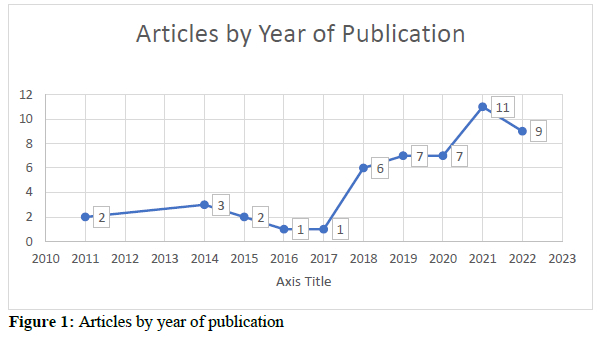
Figure 1 shows that research interest in EMI in the AW has grown markedly over the past five years. Unfortunately, no EMI studies from the region were indexed in Scopus between 2000 and 2010. One explanation for this could be that the year 2011 marks the surge of scholarly interest in EMI research (Macaro et al. 2018). These findings support other researchers' views that EMI research in higher education is currently trending (Macaro 2018; Wilkinson 2017), with EMI policy and practice garnering considerable attention from local and international educators and policymakers. However, research in this area is still in its infancy (Galloway and Rose 2021), and much of the EMI phenomenon remains unexplained.
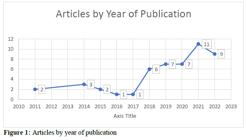
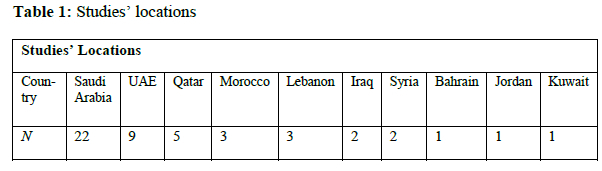
Table 1 shows that most EMI studies were conducted in Saudi Arabia (22 out of 49), followed by the United Arab Emirates (UAE) (9), and Qatar (5). Thus, 77% (38) of the published studies were conducted in the Arabian Gulf region, but none from other Arabic-speaking countries such as Egypt, Sudan, Yemen, Oman, Tunisia, and Libya. Increased funding can address the underlying factors contributing to the lack of research in these regions. These factors include limited research funding opportunities, lack of research infrastructure, research priorities not aligned with the broader EMI field, and limited availability of postgraduate programmes focused on EMI research. Addressing these factors through funding can help develop research capacity, incentivise EMI-focused research, and nurture future generations of EMI researchers, ultimately fostering a more balanced research landscape. The dearth of research from these locations points to the need for more collaboration among researchers in AW countries. Such research would produce more generalisable findings while revealing more of the particular characteristics of each country. Orduna-Nocito and Sánchez-García (2022) stress the need for more EMI research to determine global patterns and trends, echoing the call made by other researchers and international organisations, such as UNESCO (2021), which recommended that many developing countries should carefully explore their current language of instruction policy. Several AW countries face EMI policy challenges that remain unexamined by educational researchers and policymakers, as illustrated above.
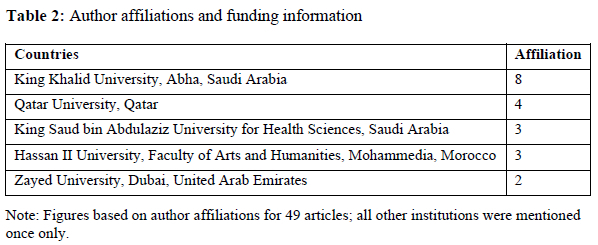
Table 2 shows that King Khalid University in Saudi Arabia had the highest percentage of author affiliations (8 articles), followed by Qatar University (4). Furthermore, 20 of the articles were funded by different universities and organisations. King Khalid University funded the most research (5 articles), followed by Qatar University (2), with the remaining organisations funding one article each. The fact that almost half of the published articles were funded by organisations demonstrates the interest of EMI policymakers in the AW. However, countries such as Egypt, Yemen, Libya, Sudan, and Tunisia require more extensive funding to support EMI research. This would generate better data and more informed policy decisions. Overall, Tables 1 and 2 show that Saudi Arabia had both the highest number of published articles and the highest number of funded projects. This suggests that EMI is a priority in Saudi Arabia, and that the government is investing in research to support this policy. It is important to note, however, that other AW countries also have EMI policies, but they may not have the same level of funding or support for research. This is a potential area for future collaboration between AW countries, as they can share resources and knowledge to improve EMI research and practice.
Journals and Authors
The articles were published in 44 journals. The Language Policy Journal had the highest number of articles (3), followed by The Asian EFL Journal, The Eastern Mediterranean Health Journal, and Health Professions Education with two each. The remaining journals contributed one article each and the overall list indicated that journals based in Asia and the Middle East were more interested in AW EMI policy research than journals from other regions. These results indicated an opportunity for international journals and researchers to support and collaborate on research into AW educational policy. In total, 19 of the articles (39%) were open access or hybrid gold open access, indicating the popularity of these publishing models.
The sample contained 94 authors in total: Alhamami was the most published author, with six articles, followed by Salah Ben Hammo and Abdelaziz Kesbi (two articles each). All other authors had only published one or two articles. This underlined the relationship between funding information and published authors: Alhamami and Ben Hammou are affiliated with the universities of King Khalid and Hassan II, respectively. In terms of the number of Scopus citations (citation counts vary by database: a Google Scholar search would produce different results), Belhiah and Elhami's (2015) article in Language Policy had the highest number of citations, followed by Suliman and Tadros's (2011) Nurse Education Today article, Palfreyman and Al-Bataineh's (2018) article published in Language Awareness, and Schoepp's (2018) article in Higher Education Quarterly. The remaining articles had fewer than 15 citations and approximately 10 articles had none at all. The most-cited articles were published in international journals whose impact and citation numbers were likely to be greater by virtue of their global readership.
Methodology, Participants, and Educational Level
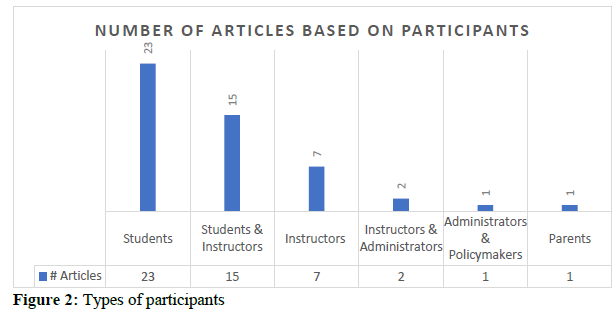
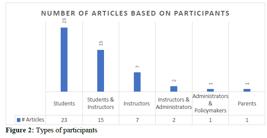
In total, 38 of the published studies (78%) were conducted in undergraduate settings. Just 10 articles (20%) were based on K-12 research and only one (2%) was conducted on a postgraduate programme. These findings demonstrate the need for additional research at graduate and K-12 levels. Most study subjects were students (23 articles), followed by students and instructors (15 articles), and instructors (7 articles), as shown in Figure 2. However, stakeholders such as administrators and parents were severely under-represented in the research. In addition, most articles did not incorporate the views of several types of stakeholders (students, instructors, administrators, and parents). One exception was Alhamami (2022), who reported on engineering students' and instructors' views of EMI policy on their university courses.
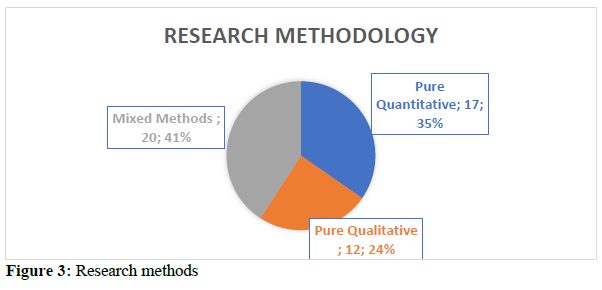
Turning to research methodology, most studies (20) used mixed-methods (quantitative and qualitative) analyses. These researchers tended to use questionnaires containing both closed- and open-ended items as well as interviews. A total of 17 studies were purely quantitative, using closed-ended survey questions and tests, while 12 used only qualitative methods (see Figure 3). However, quantitative research's inherent methodological limitation lies in the potential oversimplification of complex phenomena, which may not fully capture the depth and breadth of participant experiences, attitudes, and nuances. Closed-ended survey questions and tests, typical of these quantitative studies, preclude the richness of data that open-ended qualitative approaches might elicit.
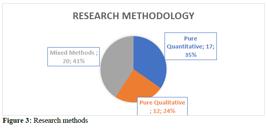
On the other hand, the 12 studies exclusively employing qualitative methodologies provide detailed, context-rich insights, enabling a deeper understanding of individual perceptions. Yet, this method's limitation surfaces in its constrained generalisability and potential researcher bias. The subjective nature of data collection and analysis in qualitative research can lead to results that are less easily applicable to broader populations. These methodological considerations highlight the need for a careful selection of research design, which ideally aligns with the research objectives and questions while acknowledging the potential trade-offs between the depth of understanding and breadth of applicability inherent in these differing methodological paradigms. Although most studies claimed to use mixed methods, the rigour of their methodological design and implementation was limited-to the extent that, as suggested by Creswell and Clark (2017), they could not be described as mixed-methods studies. Mixed-methods research is not simply the use of quantitative and qualitative methods in a single study. Rather, it is the integration of these methods at various stages of the research process, from research design to sampling to interpretation. This integration is essential for high-quality mixed-methods research, as it allows for a more comprehensive understanding of the research problem than would be possible with either method alone (Creswell and Clark 2017). While questionnaires and interviews were widely used, there was a relative paucity of experimental EMI research such as that of El-Dakhs, Salem, and Al-Haqbani (2020) whose research was carried out under controlled conditions using tools including tests and online applications.
Key Findings
Findings Related to Monolingual Language Policy
Most studies in the AW have emphasised that decisions to implement EMI in universities were often made without carefully considering the potential repercussions on native language and culture (Mustafawi et al. 2022). These decisions were often based on vaguely formulated, top-down policies (Alhasnawi 2021). For example, Ben Hammou and Kesbi (2023a) report that pre-service Moroccan teachers criticised the Ministry of Education for not involving them when developing the country's new policy for bilingual education, which left Moroccan schools unprepared for the use of EMI. This reflects the wider issue that EMI policy is frequently based on fallacies regarding the nature of language, the "fuzzy" assessment of educational priorities, or both (Al-Kahtany and Alhamami 2022).
Other researchers (e.g., Alshareef et al. 2018; Khan 2021) have asserted that the use of EMI in medical education is justifiable since English is now the default language in the health sciences. The availability of medical resources was the main factor influencing the choice of EMI. Wanphet and Tantawy (2018) demonstrate that EMI students' learning experiences differed due to their varied educational and linguistic backgrounds. Most students and half of the instructors advocated English-only science instruction. This research highlights that EMI policy issues will continue to haunt policymakers and educational reformers until the unique features of teaching/learning contexts and the availability of human and physical resources are accounted for (Mustafawi and Shaaban 2019). In the AW-as in other regions of the world-social and cultural factors must be considered when making educational policy decisions.
Findings Related to Bilingual Language Policy
The findings of other studies support both bilingual and plurilingual policies. For example, Arab students on health sciences courses preferred to learn bilingually due to the lack of educational resources to support monolingual instruction and their low English proficiency (Yousif et al. 2014). In the UAE, schools have been advised to adopt bilingual education programmes because students with low English proficiency struggle to learn the subject matter (Belhiah and Elhami 2015). Coelho, Khalil, and Shankar (2024) report on the widespread use of plurilingual pedagogies in higher education in the UAE, where students have diverse national backgrounds and speak different mother tongues.
Pre-service teachers in Moroccan schools regarded current bilingual education programmes favourably because they enable students and STEM teachers to improve their language proficiency; these instructors also believed their schools were ready for more EMI classes (Ben Hammou and Kesbi 2023a). In Saudi universities, Alasmari et al. (2022) indicate that content instructors generally viewed translanguaging positively because it helped students understand complex terms and communicate better in their EMI classes. Bilingual Arabic and English teachers prefer translanguaging and appeared less reliant on the traditional monolingual approach to undergraduate teaching. Hopkyns, Zoghbor, and Hassall (2021) stress the importance of creative translanguaging practices, arguing that such grassroots hybridity could act as a counter-discourse to rigid "English-only" expectations in EMI programmes based on the separateness and "purity" of national languages.
In the UAE, Alshamsi and Alsheikh (2020) discovered that fifth-grade students' English and Arabic biliteracy was not at the expected grade level. The reasons included a lack of continuous bilingual/biliteracy interactions, lack of parental involvement, and the absence of a rich school context. In Dubai private schools, Azzam (2019) suggests a model based on four core principles: (1) explicit mention of bilingualism as a stated goal; (2) the use of both Arabic and English as media of instruction, with subjects delivered in one or other language in roughly equal proportions; (3) the deployment of first-language Arabic and English teachers in equal measure or, alternatively, the utilisation of bilingual teachers; and (4) the promotion and use of Arabic in everyday tasks, both at home and in school. The findings also indicate that the model can assume multiple variants of language.
Findings Related to Stakeholders' Beliefs
Most studies have analysed students' and/or instructors' attitudes towards EMI. Broadly speaking, the language of instruction preferred by students can be predicted by wider social attitudes. It is therefore unsurprising that most students-except for those on non-healthcare programmes-view EMI negatively and AMI more positively (Alhamami 2019; Graham, Eslami, and Hillman 2021). There are a few exceptions, such as the study by Alhamami and Almelhi (2021a), which indicates that Saudi students prefer AMI in Saudi undergraduate healthcare education programmes. In the same context, Alhamami (2022) has surveyed engineering instructors in undergraduate engineering programmes in a Saudi public university and find that they do not believe that EMI policy impacted students' ability to participate in classroom activities and examinations. However, students in the same study reported that EMI negatively impacted their grades and comprehension. This suggests a contradiction between students' and instructors' perspectives on the impact of EMI.
Healthcare education research shows that students view EMI in consistently positive terms, preferring it to AMI alternatives, such as the study by Alfakhry, Dashash, and Jamous (2020) in Syrian public universities. Students and teachers suffer from the insufficiency and poor quality of Arabic medical translations and a shortage of up-to-date study materials in the language. In Morocco, graduate students view the future implementation of EMI at universities in a favourable light. They also recommend the gradual implementation of EMI at lower levels and the introduction of English as a foreign language to replace French in elementary schools (Ben Hammou and Kesbi 2023b).
The sole study to investigate parental attitudes to EMI in the AW was conducted by Al-Qahtani and Al Zumor (2016), who suggest that Saudi parents had positive attitudes towards using EMI in international private primary schools. Many Saudi parents prefer to send their children to such private schools because they realise the importance of English as an international language. The use of EMI policy in the AW is a complex and multifaceted issue with a variety of potential effects on students' identities. Some studies have demonstrated that EMI can lead to a sense of alienation from students' own culture and language, while others have shown that it can help students to develop a more globalised identity. For example, Mustafawi et al. (2022) highlight that Qatari university students have a strong preference for AMI. They believe that Arabic is more valuable as a symbol of their individual, social, and cultural identity. However, they also recognise the importance of English for professional and academic success.
Belhiah and Elhami (2015) have realised that students and teachers in the UAE have mixed feelings about EMI. Students struggle to learn in English due to their low proficiency, but they also see the benefits of being able to communicate in English with the global community. Teachers are concerned about the impact of EMI on students' academic performance and their ability to develop their own Arabic language skills. Palfreyman and Al-Bataineh (2018) stress that students view English as a lingua franca neutrally but value its contribution to educational and employment opportunities. Moreover, they report that English is associated with modern social prestige but is not embraced explicitly as a language of identity-unlike Arabic, which is sometimes seen as a key element of local identity and a sign of backwardness in UAE schools.
In Kuwait, Hasanen, Al-Kandari, and Al-Sharoufi (2014) report that students who study at universities that use EMI are more likely to embrace a global identity. However, they also find that viewing local television programmes and using the internet can help to strengthen national identity. In Saudi Arabia, Al-Kahtany and Alhamami (2022) argue that EMI is a form of linguistic imperialism that can have a negative impact on students' identities. They stress that participants in EMI programmes do not engage in authentic, rigorous, and fun learning. They observe that decisions to use EMI are often based on fallacies regarding the nature of language. These studies suggest that EMI can have a complex and multifaceted impact on identity in the AW. It can lead to both positive and negative outcomes, depending on the specific context. More research is needed to better understand the impact of EMI on identity and to develop policies that promote educational justice for all students.
Findings Related to Programme Learning Outcomes
Overall, these studies indicate that EMI policy has a serious impact on learning outcomes across the AW. Al Zumor (2019) and Alhamami and Almelhi (2021b) highlight that teaching scientific disciplines in EMI has a seriously negative impact on students' comprehension and assessment of scientific content, causing anxiety, frustration, tension, fear, embarrassment, and ultimately, poor educational outcomes. Masri (2020) indicates that students face psychological, academic, social, and cultural difficulties when transitioning from Arabic schools to EMI universities, where their English proficiency directly influences their performance in mathematical problemsolving tests (Abuqutaish and Al-Zayed 2020), confirming earlier research by Yushau and Hafidz (2015). Recognising the meanings of unfamiliar terms tends to be students' greatest difficulty and impacts their academic performance, perhaps explaining why students in one study expressed great appreciation for their ESP course (Gaffas 2019). English is not the only hub around which the theory and practice of mathematics revolves. In fact, mathematics discourses tend to be translanguaged and multi-semioticised as part of individuals' local meaning-making and knowledge-construction practices (Alhasnawi 2021).
Alhamami (2022) has discovered that first-year students' English proficiency correlates significantly with their overall grade point average (GPA) upon completing their five-year programmes. Similarly, Osmani et al. (2017) find that the language of instruction used in Qatari business schools is a statistically significant predictor of academic level in interpersonal and analytical skills as well as in planning and organisation, communication, and self-management. Most students believe that learning in English did not affect their academic learning and performance in medical education. However, a good proportion support the teaching of medicine in both Arabic and English (Tayem et al. 2020), whereas most of the students and faculty members surveyed by Alrajhi et al. (2019) agree that studying in English enabled better access to medical information and more job opportunities. Less than 15% of the students in their sample prefer to be taught in Arabic in most aspects of the curriculum, except for communication skills (28%) and the Objective Structured Clinical Examination.
EMI increases students' linguistic skills and, more particularly, their receptive skills (Alfehaid 2018), improving the intentionality of their academic communication. Hasanen, Al-Kandari, and Al-Sharoufi (2014) have examined the influence of EMI and international media on national/global identity in Kuwait. They find that students at EMI universities tend to embrace a global identity whereas viewing local (Kuwaiti) TV programmes and internet usage predict national identity.
It is possible to argue that EMI is part of a system that lacks educational justice and is strongly connected to linguistic hegemony and the colonisation of consciousness. Some of the findings above show that participants on EMI programmes do not enjoy learning opportunities that are authentic, rigorous, or fun. Decisions to use EMI are often based on fallacies regarding the nature of language, the fuzzy assessment of educational priorities, or both (Al-Kahtany and Alhamami 2022). The studies reported above suggest that a large proportion of students feel negatively affected by EMI, excluded from the decision to use it, and support switching to AMI. Thus, there are contradictions between the objectives of the current policy and its actual outcomes, with student outcomes on science programmes particularly impacted (Alhamami 2019).
Recommendations Based on the Reviewed Studies
Although Arabic is the official language of the AW, differences between countries make it difficult to implement a single-language policy. For example, the linguistic diversity of UAE students contrasts sharply with the single native language spoken by learners in Saudi Arabia. Morocco' s colonial past established French as the first-choice foreign language and medium of instruction. While many researchers support the switch to EMI by replacing French as the first foreign language in Morocco's primary and middle schools with English (Ben Hammou and Kesbi 2023a), the country's historical and demographical complexities must be carefully considered by language policymakers.
Moreover, specific university subjects may require particular policies. EMI appears best suited to teach medicine, where positive attitudes toward EMI are shared by students and teachers. Policymakers should focus on improving the English proficiency of students and providing ongoing English language learning opportunities for the entire duration of healthcare programmes (Alhamami and Almelhi 2021a). However, subjects such as mathematics, physics, and engineering might benefit from the use of the mother tongue (Hama, Ahmed, and Ahmed 2018). Educators also need to consider the availability of educational and human resources when deciding the medium of instruction for each university major. EMI policy appears better suited to graduate programmes where students require access to the latest research in their fields. This is generally less of a concern for undergraduates, whose instructors can translate materials into Arabic to help students update them.
Overall, having one policy for all university majors might not be an effective strategy. Some researchers have suggested implementing a bilingual curriculum in which instruction is delivered in English and Arabic, arguing that this will help establish biliteracy skills where students currently struggle to learn course content due to their low English proficiency (Belhiah and Elhami 2015). In any case, as Coelho, Khalil, and Shankar (2024) report, most teachers implement plurilingual teaching practices, a stance that explicitly acknowledges the value of other languages and challenges institutional preferences for monolingual classrooms.
One crucial component of a successful EMI programme is the application of rigorous admissions criteria. For example, Schoepp (2018) has found that International English Language Testing System (IELTS) scores are a meaningful predictor of academic success, especially in the EMI environment in the UAE, and could therefore be used to gauge students' English level prior to their courses. Other researchers recommend embedding language learning courses into university programmes since ongoing language learning support will improve students' proficiency as they take their content courses. Currently, many AW students are dissatisfied with their language courses (Sinno and El Takach 2020), while their instructors are frustrated by their lack of English proficiency (Abouzeid 2021).
Alhamami (2021) recommends that instructors differentiate between students' English proficiency and their subject knowledge (in this case, computer science) in assessments and that learners' preferred language of instruction should be considered when designing computer science curricula. Another recommendation is to design learning materials that utilise students' mother tongues to help them succeed in their EMI programmes. For instance, Alsuliman et al. (2019) propose that simplified Arabic combined with English terminology could be used in health sciences course books. The participants in their experiment score higher and prefer hybrid texts (Arabic and English) over monolingual ones. Masrai, El-Dakhs, and Al Khawar (2022) demonstrate that general and specialist vocabulary knowledge is positively correlated with students' learning outcomes on EMI courses. It appears possible that a suitable English curriculum, a blend of appropriate content, technology integration, and digital pedagogy may yield far better results in a given situation. There is an urgent need to include ESP in the curriculum.
The final suggestion from reviewed studies concerns teacher training. Ellili-Cherif (2014) stresses that the challenges faced by many EMI teachers stem from ineffective organisational planning for EMI policy changes and a lack of teacher preparedness for their implementation. Similarly, the instructors interviewed by Bahous, Bacha, and Nabhani (2011) emphasise the need for teacher-training programmes and resources to enable national EMI policy to be implemented effectively.
Concluding Remarks
I now recap the findings from this review. First, EMI policy has gained increasing attention from AW researchers and policymakers over the last five years, as shown in Figure 1. However, this trend has not applied to all Arabic-speaking countries, with little research output from Egypt, Sudan, Yemen, Oman, Tunisia, or Libya. I therefore recommend closer collaboration among AW researchers to investigate these hitherto neglected national contexts.
Second, as Table 2 shows, funding was linked to more extensive EMI research output. Among AW nations, Saudi Arabia had more (funded) articles published over the period, with King Khalid University achieving the highest number of funded articles and the most first-author affiliations. Journals based in Asia and the Middle East published more EMI studies focusing on the AW, pointing to the need for AW and international researchers to collaborate and represent the large EMI student populations of these countries more extensively. Clearly, the impact of EMI research from the AW is linked to the global reach of different publications: International journals such as Language Policy and Language Awareness will have more citations, allowing them to publish more research and reach a wider readership.
Most EMI research undertaken in AW settings has focused on undergraduate programmes, with few studies conducted on K-12 or postgraduate settings-an oversight that should be remedied by future research. In addition, most of these research participants were students and/or instructors. The study therefore recommends that future studies include other stakeholders such as educational administrators, employers, and students' family members: doing so will lead to better EMI decision-making.
While many studies of EMI in the AW claim to use mixed-methods designs, these were rarely rigorous, indicating the need to make more comprehensive research training programmes available to scholars, who will then reach more valid and reliable conclusions. Whereas data collection tended to focus on surveys and interviews, there was a lack of experimental research into EMI. The current study therefore recommends that the need for better research training be met by governments and university administrators. AW universities and research centres could conduct online training sessions and face-to-face workshops by research methodology experts on the three main types of research methods: qualitative, quantitative, and mixed methods. This would improve the quality of research methodology in the region.
EMI policy is a top-down reflection of similar approaches to decision-making in the spheres of education, politics, and economics in AW countries. It is influenced by several factors, such as the demographic characteristics of each country, the particular academic discipline involved, and educational levels. Unfortunately, one-size-fits-all decisions are common in most educational institutions across the AW.
Most studies have shown that students view EMI negatively, exceptionally healthcare majors. Arabic is cherished as a high-status language by most students, who value it greatly as a symbol of their individual, social, and cultural identities. However, most instructors support the introduction of EMI although subject specialists require additional training to teach EMI courses effectively. Future research might compare the effectiveness of different forms of EMI training for instructors using classroom observational methods.
Overall, switching to an English-only approach to teaching subject matter at university is a complex proposition, which may explain why so many research respondents strongly favoured AMI. While EMI works best for students from English-medium private schools, the use of bilingual and plurilingual policies at university will help all students transition from AMI in K-12 to EMI in undergraduate programmes.
Funding
This work was supported by the Deanship of Scientific Research at King Khalid University (grant number RA.KKU/48/44).
Data
Additional data will be made available to readers on request.
Acknowledgements
The author extends his appreciation to the Deanship of Scientific Research at King Khalid University for funding this work through Review Article Project under grant number RA.KKU/48/44.
References
- Abouzeid, R. 2021. "Aligning Perceptions with Reality: Lebanese EMI Instructor Perceptions of Students' Writing Proficiency". English for Specific Purposes 63: 45-58. https://doi.org/10.1016/j.esp.2021.03.001.
- Abuqutaish, R. H. M., and N. Al-Zayed. 2020. "The English Language Level of Proficiency on Mathematical Problem Solving Skills". Opción: Revista de Ciencias Humanas y Sociales 36 (27): 435-453. https://dialnet.unirioja.es/servlet/articulo?codigo=7667375.
- Alasmari, M., F. Qasem, R. Ahmed, and M. Alrayes. 2022. "Bilingual Teachers' Translanguaging Practices and Ideologies in Online Classrooms in Saudi Arabia". Heliyon 8 (9): E10537. https://doi.org/10.1016/j.heliyon.2022.e10537.
- Alfakhry, G. M., M. Dashash, and I. Jamous. 2020. "Native Arabic Language Use Acceptability and Adequacy in Health Professional Instruction: Students and Faculty's Perspectives". Health Professions Education 6 (4): 454-464. https://doi.org/10.1016/j.hpe.2020.06.004.
- Alfehaid, A. 2018. "Using English as a Medium of Instruction in a Saudi University: Experiences and Implications". Asian EFL Journal 20 (12): 60-101.
- Alhamami, M. 2015. "Teaching Science Subjects in Arabic: Arab University Scientists' Perspectives". Language Learning in Higher Education 5 (1): 105-123. https://doi.org/10.1515/cercles-2015-0006.
- Alhamami, M. 2019. "Language of Instruction Policy in Science Programs: Science Students' Voices". Jurnal Pendidikan IPA Indonesia 8 (1): 110-118. https://doi.org/10.15294/jpii.v8i1.17086.
- Alhamami, M. 2021. "English as a Medium of Instruction (EMI) in Computing Undergraduate Programs". Education and Information Technologies 26 (5): 6549-6562. https://doi.org/10.1007/s10639-021-10637-6.
- Alhamami, M. 2022. "English as the Medium of Instruction (EMI) in Undergraduate Engineering Programs". IEEE Transactions on Education 65 (1): 93-100. https://doi.org/10.1109/TE.2021.3094210.
- Alhamami, M., and A. Almelhi. 2021a. "English or Arabic in Healthcare Education: Perspectives of Healthcare Alumni, Students, and Instructors". Journal of Multidisciplinary Healthcare 14: 2537-2547. https://doi.org/10.2147/JMDH.S330579.
- Alhamami, M., and A. Almelhi. 2021b. "The Dilemma of English as a Medium of Instruction Policy in Science College Programs". SiElE: Studies in English Language and Education 8 (3): 1045-1060. https://doi.org/10.24815/siele.v8i3.21218.
- Alhasnawi, S. 2021. "Teachers' Beliefs and Practices with Respect to Translanguaging in University Mathematics in Iraq". Linguistics and Education 63: 100930. https://doi.org/10.1016/j.linged.2021.100930.
- Al-Kahtany, A., and M. Alhamami. 2022. "Linguistic Hegemony and English in Higher Education". SustainableMultilingualism 20 (1): 18-45. https://doi.org/10.2478/sm-2022-0002.
- Al-Qahtani, Z., and A. W. Al Zumor. 2016. "Saudi Parents' Attitudes Towards Using English as a Medium of Instruction in Private Primary Schools". IJALEL: International Journal of Applied Linguistics and English Literature 5 (1): 18-32. https://journals.aiac.org.au/index.php/IJALEL/article/view/1957.
- Alrajhi, Z., A. Alhamdan, M. Alshareef, O. Almubaireek, M. S. Mohmoud, A. Omair, E. Masuadi, and B. Hamad. 2019. "Perspectives of Medical Students and Teaching Faculty on Teaching Medicine in Their Native Language". EMHJ: Eastern Mediterranean Health Journal 25 (8): 562-566. https://doi.org/10.26719/emhj.18.073.
- Alshamsi, A. S., and N. O. Alsheikh. 2020. "Sociocultural Integration of Bilingualism and Biliteracy of Emiratis: Exploratory Study in a Group of Fifth-Grade Students". 3L: Language, Linguistics, Literature; The Southeast Asian Journal of English Language Studies 26 (3): 66-80. https://doi.org/10.17576/3L-2020-2603-06.
- Alshareef, M., O. Mobaireek, M. Mohamud, Z. Alrajhi, A. Alhamdan, and B. Hamad. 2018. "Decision Makers' Perspectives on the Language of Instruction in Medicine in Saudi Arabia: A Qualitative Study". Health Professions Education 4 (4): 308-316. https://doi.org/10.1016/j.hpe.2018.03.006.
- Al-Shboul, O. K. 2022. "The Students' Perceptions of Arabic and English as a Medium of Instruction in Jordan". Theory and Practice in Language Studies 12 (7): 1441 -1446. https://doi.org/10.17507/tpls.1207.26.
- Alsuliman, T., L. Alasadi, A. Mouki, and B. Alsaid. 2019. "Language of Written Medical Educational Materials for Non-English Speaking Populations: An Evaluation of a Simplified Bi-lingual Approach". BMC Medical Education 19 (1): 418. https://doi.org/10.1186/s12909-019-1846-x.
- Al Zumor, A. Q. 2019. "Challenges of Using EMI in Teaching and Learning of University Scientific Disciplines: Student Voice". IJoLE: International Journal of Language Education 3 (1): 74-90. https://ojs.unm.ac.id/ijole/article/view/7510/pdf.
- Azzam, Z. 2019. "Dubai's Private K-12 Education Sector: In Search of Bilingual Education". Journal of Research in International Education 18 (3): 227-256. https://doi.org/10.1177/1475240919892424.
- Bahous, R., N. N. Bacha, and M. Nabhani. 2011. "Multilingual Educational Trends and Practices in Lebanon: A Case Study". International Review of Education 57 (5-6): 737749. https://doi.org/10.1007/s11159-011-9250-8.
- Bamgbose, A. 2011. "African Languages Today: The Challenge of and Prospects for Empowerment under Globalization". In Selected Proceedings of the 40th Annual Conference on African Linguistics, edited by E. G. Bokamba, R. K. Shosted and B. T. Ayalew, 1 -14. Somerville: Cascadilla Proceedings Project. https://www.lingref.com/cpp/acal/40/paper2561.pdf.
- Barnawi, O. Z. 2022. "Islam, Language and Intra-Asian Student Mobility: A Case Study of Three Indonesian Male Students in Saudi Arabia". Journal of Asian Pacific Communication 32 (2): 214-235. https://doi.org/10.1075/japc.00074.bar.
- Belhiah, H., and M. Elhami. 2015. "English as a Medium of Instruction in the Gulf: When Students and Teachers Speak". Language Policy 14 (1): 3-23. https://doi.org/10.1007/s10993-014-9336-9.
- Ben Hammou, S., and A. Kesbi. 2023a. "The Teaching of Science Subjects through Foreign Languages in Moroccan Secondary Schools: Teachers' Perceptions and Experiences". RELC Journal 54 (3): 757-772. https://doi.org/10.1177/00336882211035832.
- Ben Hammou, S., and A. Kesbi. 2023b. "English-Medium Instruction (EMI) in Moroccan Higher Education: Students' Attitudes". Journal for Multicultural Education 17 (1): 4355. https://doi.org/10.1108/JME-01-2022-0011.
- Britannica. 2022. "Arab". Encyclopedia Britannica, last updated June 13, 2024. Accessed March 6, 2024. https://www.britannica.com/topic/Arab.
- Coelho, D., N. Khalil, and D. D. Shankar. 2024. "Teachers' Perceptions and 'Invisible' Uses of Plurilingual Pedagogy in UAE K-12 Schools". International Journal of Multilingualism 21 (2): 670-688. https://doi.org/10.1080/14790718.2022.2099400.
- Creswell, J. W., and V. L. P. Clark. 2017. Designing and Conducting Mixed Methods Research. Thousand Oaks: Sage Publications.
- Dang, T. K. A., G. Bonar, and J. Yao. 2023. "Professional Learning for Educators Teaching in English-Medium-Instruction in Higher Education: A Systematic Review". Teaching in Higher Education: Critical Perspectives 28 (4): 840-858. https://doi.org/10.1080/13562517.2020.1863350.
- Demmans Epp, C., G. Park, and C. Plumb. 2015. "Developing an Adaptive Tool to Select, Plan, and Scaffold Oral Assessment Tasks for Undergraduate Courses". Educational Technology Research and Development 63 (3): 475-498. https://doi.org/10.1007/s11423-015-9375-8.
- Deygers, B., and M. Vanbuel. 2022. "Advocating an Empirically-Founded University Admission Policy". Language Policy 21 (4): 575-596. https://doi.org/10.1007/s10993-022-09615-6.
- El-Dakhs, D. A. S., M. Salem, and J. N. Al-Haqbani. 2020. "The Influence of L1 Congruency, L2 Exposure, and Word Class on Collocation Learning: The Case of Arab Learners of English". Asian EFL Journal 27 (21): 62-88.
- Eleftheriou, M. 2019. "Multilingual, Middle-Eastern Students' Varied Responses to Directive and Non-Directive Strategies in Peer Tutoring". TESOL International Journal 14 (1): 6278. https://files.eric.ed.gov/fulltext/EJ1244101.pdf.
- Ellili-Cherif, M. 2014. "Integrated Language and Content Instruction in Qatar Independent Schools: Teachers' Perspectives". Teacher Development: An International Journal of Teachers' Professional Development 18 (2): 211-228. https://doi.org/10.1080/13664530.2014.900819.
- Gaffas, Z. M. 2019. "Students' Perceptions of the Impact of EGP and ESP Courses on Their English Language Development: Voices from Saudi Arabia". Journal of English for Academic Purposes 42: 100797. https://doi.org/10.1016/jjeap.2019.100797.
- Galloway, N., and H. Rose. 2021. "English Medium Instruction and the English Language Practitioner". ELT Journal 75 (1): 33-41. https://doi.org/10.1093/elt/ccaa063.
- Graham, K. M., Z. R. Eslami, and S. Hillman. 2021. "From English as the Medium to English as a Medium: Perspectives of EMI Students in Qatar". System 99: 102508. https://doi.org/10.1016/j.system.2021.102508.
- Guz, A. N., and J. J. Rushchitsky. 2009. "Scopus: A System for the Evaluation of Scientific Journals". International Applied Mechanics 45 (4): 351-362. https://doi.org/10.1007/s10778-009-0189-4.
- Hallinger, P., and J. Kovacevic. 2019. "A Bibliometric Review of Research on Educational Administration: Science Mapping the Literature, 1960 to 2018". Review of Educational Research 89 (3): 335-369. https://doi.org/10.3102/0034654319830380.
- Hama, F. M., O. H. Ahmed, and A. M. Ahmed. 2018. "The Impact of English Language as a Medium of Instruction Amongst Non-English Major Students in the College of Science and Technology in the University of Human Development". Journal of Engineering and Applied Sciences 13 (10): 3624-3632. https://doi.org/10.3923/jeasci.2018.3624.3632.
- Hasanen, M. M., A. A. Al-Kandari, and H. Al-Sharoufi. 2014. "The Role of English Language and International Media as Agents of Cultural Globalisation and Their Impact on Identity Formation in Kuwait". Globalisation, Societies and Education 12 (4): 542-563. https://doi.org/10.1080/14767724.2013.861972.
- Hijji, B. M. 2017. "Flaws of Multiple Choice Questions in Teacher-Constructed Nursing Examinations: A Pilot Descriptive Study". Journal of Nursing Education 56 (8): 490-496. https://doi.org/10.3928/01484834-20170712-08.
- Hopkyns, S., W. Zoghbor, and P. J. Hassall. 2021. "The Use of English and Linguistic Hybridity among Emirati Millennials". In "World Englishes in the Middle East and North Africa", edited by T. Elyas and A. Mahboob, special issue, World Englishes 40 (2): 176190. https://doi.org/10.1111/weng.12506.
- Ismail, A. 2014. "Philosophy, Language Policy and the Knowledge Society". In Education for a Knowledge Society in Arabian Gulf Countries, edited by A. Wiseman, N. H. Alromi and S. Alshumrani, 37-57. International Perspectives on Education and Society, Vol. 24. Leeds: Emerald Group Publishing. https://doi.org/10.1108/S1479-367920140000024005.
- Khan, I. A. 2021. "Teaching of Pharmacy in Saudi Arabia: Relevance of English and Digital Pedagogy". Bahrain Medical Bulletin 43 (3): 618-620. https://www.bahrainmedicalbulletin.com/SEPT_2021/BMB-21-80.pdf.
- Kirkpatrick, A. 2011. "English as a Medium of Instruction in Asian Education (from Primary to Tertiary): Implications for Local Languages and Local Scholarship". Applied Linguistics Review 2: 99-120. https://doi.org/10.1515/9783110239331.99.
- Liu, Y., B. H. Nam, and Y. Yang. 2023. "Revisiting Symbolic Power and Elite Language Education in China: A Critical Narrative Ethnography of the English Education Major at a Top Language University in Shanghai". Educational Review. https://doi.org/10.1080/00131911.2023.2184774.
- Macaro, E., and I. Aizawa. 2022. "Who Owns English Medium Instruction?" Journal of Multilingual and Multicultural Development. https://doi.org/10.1080/01434632.2022.2136187.
- Macaro, E., S. Curle, J. Pun, J. An, and J. Dearden. 2018. "A Systematic Review of English Medium Instruction in Higher Education". Language Teaching 51 (1): 36-76. https://doi.org/10.1017/S0261444817000350.
- Macaulay, T. B. M. 1935. Speeches by Lord Macaulay with His Minute on Indian Education. Oxford: Oxford University Press, H. Milford.
- Macedo, D., B. Dendrinos, and P. Gounari. 2015. Hegemony of English. London: Routledge. https://doi.org/10.4324/9781315634159.
- Manakul, W. 2007. "English in Engineering Education for Japanese Graduate Students". Australasian Journal of Engineering Education 13 (2): 53-63. https://doi.org/10.1080/22054952.2007.11464006.
- Masrai, A., D. A. S. El-Dakhs, and N. Yahya. 2022. "What Predicts Academic Achievement in EMI Courses? Focus on Vocabulary Knowledge and Self-Perceptions of L2 Skills". SAGE Open 12 (2). https://doi.org/10.1177/21582440221101044.
- Masrai, A., D. A. S. El-Dakhs, and H. Al Khawar. 2022. "General and Specialist Vocabulary Knowledge as Predictors of Academic Success in EMI University Programs". Language Learning in Higher Education 12 (1): 273-289. https://doi.org/10.1515/cercles-2022-2038.
- Masri, T. 2020. "English Medium Instruction and Human Linguistic Rights: Academic, Psychological and Cultural Suffering". International Journal on Minority and Group Rights 28 (3): 514-543. https://doi.org/10.1163/15718115-28030003.
- Mohsen, M. A. 2021. "A Bibliometric Study of the Applied Linguistics Research Output of Saudi Institutions in the Web of Science for the Decade 2011-2020". The Electronic Library 39 (6): 865-884. https://doi.org/10.1108/EL-06-2021-0121.
- Mustafawi, E., K. Shaaban, T. Khwaileh, and K. Ata. 2022. "Perceptions and Attitudes of Qatar University Students Regarding the Utility of Arabic and English in Communication and Education in Qatar". Language Policy 21 (1): 75-119. https://doi.org/10.1007/s10993-021-09590-4.
- Oraif, I., and M. Alrashed. 2022. "Using English Medium Instruction to Teach a General Course in a College of Business and Management". Frontiers in Psychology 13: 984869. https://doi.org/10.3389/fpsyg.2022.984869.
- Orduna-Nocito, E., and D. Sánchez-García. 2022. "Aligning Higher Education Language Policies with Lecturers' Views on EMI Practices: A Comparative Study of Ten European Universities". System 104: 102692. https://doi.org/10.1016/j.system.2021.102692.
- Osmani, M. W., N. Hindi, R. Al-Esmail, and V. Weerakkody. 2017. "Examining Graduate Skills in Accounting and Finance: The Perception of Middle Eastern Students". Industry and Higher Education 31 (5): 318-327. https://doi.org/10.1177/0950422217721759.
- Palfreyman, D. M., and A. Al-Bataineh. 2018. "'This is My Life Style, Arabic and English': Students' Attitudes to (Trans)languaging in a Bilingual University Context". In "Languages for Life-Educational, Professional and Social Contexts: Selected Papers from the 13th International Conference of the Association for Language Awareness, WU Vienna, July 2016", edited by T. Rankin and M. Stegu, special issue, Language Awareness 27 (1-2): 79-95. https://doi.org/10.1080/09658416.2018.1431244.
- Phillipson, R. 2011. "English: From British Empire to Corporate Empire". In "Language Beyond the Nation: A Comparative Approach to Policies and Discourses", edited by J. Del Valle, special issue, Sociolinguistic Studies 5 (3): 441-464. https://doi.org/10.1558/sols.v5i3.441.
- Phillipson, R. 2018. "Linguistic Imperialism". In The Encyclopaedia of Applied Linguistics, edited by C.A. Chapelle. https://doi.org/10.1002/9781405198431.wbeal0718.pub2.
- Poon, A. Y. K. 2013. "Will the New Fine-Tuning Medium-of-Instruction Policy Alleviate the Threats of Dominance of English-Medium Instruction in Hong Kong?" Current Issues in Language Planning 14 (1): 34-51. https://doi.org/10.1080/14664208.2013.791223.
- Rodis, O. M., S. Matsumura, N. Kariya, M. Nishimura, and T. Yoshida. 2013. "Undergraduate Dental English Education in Japanese Dental Schools". Journal of Dental Education 77 (5): 656-663. https://doi.org/10.1002/j.0022-0337.2013.77.5.tb05516.x.
- Sah, P. K., and G. Li. 2018. "English Medium Instruction (EMI) as Linguistic Capital in Nepal: Promises and Realities". International Multilingual Research Journal 12 (2): 109-123. https://doi.org/10.1080/19313152.2017.1401448.
- Schoepp, K. 2018. "Predictive Validity of the IELTS in an English as a Medium of Instruction Environment". Higher Education Quarterly 72 (4): 271 -285. https://doi.org/10.1111/hequ.12163.
- Scopus. 2023. "Scopus Now Includes 90 Million + Content Records". Scopus (blog), February 15, 2023. Accessed June 14, 2024. https://blog.scopus.com/posts/scopus-now-includes-90-million-content-records.
- Siddiquah, A., K. U. Din, S. Moghal, M. A. Saeed, and F. Altaf. 2021. "English as Medium of Instruction (MOI): Voices Addressing Proficiency Issues in Pakistani Tertiary Education". Asian EFL Journal 28 (2.3): 156-180.
- Sinno, S., and S. El Takach. 2020. "The Efficacy and Relevancy of the Language Courses in the Preparation of Elementary Science and Mathematics Prospective Teachers". IJRES: International Journal of Research in Education and Science 6 (1): 179-201. https://doi.org/10.46328/ijres.v6i1.802.
- Spolsky, B. 2021. Rethinking Language Policy. Edinburgh: Edinburgh University Press. https://doi.org/10.1515/9781474485487.
- Suliman, W. A., and A. Tadros. 2011. "Nursing Students Coping with English as a Foreign Language Medium of Instruction". Nurse Education Today 31 (4): 402-407. https://doi.org/10.1016/j.nedt.2010.07.014.
- Tai, K. W. H. 2022. "Translanguaging as Inclusive Pedagogical Practices in English-Medium Instruction Science and Mathematics Classrooms for Linguistically and Culturally Diverse Students". Research in Science Education 52: 975-1012. https://doi.org/10.1007/s11165-021-10018-6.
- Tayem, Y. I., A. Alshammari, N. Albalawi, and M. Shareef. 2020. "Language Barriers to Studying Medicine in English: Perceptions of Final-Year Medical Students at the Arabian Gulf University". Eastern Mediterranean Health Journal 26 (2): 233-238. https://doi.org/10.26719/2020.26.2.233.
- Thompson, G., N. Takezawa, and H. Rose. 2022. "Investigating Self-Beliefs and Success for English Medium Instruction Learners Studying Finance". Journal of Education for Business 97 (4): 220-227. https://doi.org/10.1080/08832323.2021.1924108.
- UNESCO (United Nations Educational, Scientific and Cultural Organization). 2021. "Language of Instruction". Updated July 29, 2022. Accessed December 10, 2023. https://policytoolbox.iiep.unesco.org/policy-option/language-of-instruction/.
- Vélez, G. S., G. R. Giner, and I. M. Clemente. 2020. "A Systematic Review of English as a Medium of Instruction in Higher Education Institutions: The Case of a Business School". In Internationalising Learning in Higher Education, edited by M. Carrió-Pastor, 35-61. Cham: Palgrave Macmillan. https://doi.org/10.1007/978-3-030-21587-3_3.
- Vitta, J. P., and A. H. Al-Hoorie. 2017. "Scopus-and SSCI-Indexed L2 Journals: A List for the Asia TEFL Community". Journal of Asia TEFL 14 (4): 784-792. http://dx.doi.org/10.18823/asiatefl.2017.14.4.14.784.
- Wanphet, P., and N. Tantawy. 2018. "Effectiveness of the Policy of English as a Medium of Instruction: Perspectives and Outcomes from the Instructors and Students of University Science Courses at a University in the UAE". Educational Research for Policy and Practice 17 (2): 145-172. https://doi.org/10.1007/s10671-017-9223-1.
- Widodo, H. P., F. Fang, and T. Elyas. 2020. "The Construction of Language Teacher Professional Identity in the Global Englishes Territory: 'We Are Legitimate Language Teachers'". Asian Englishes 22 (3): 309-316. https://doi.org/10.1080/13488678.2020.1732683.
- Wilkinson, R. 2017. "Trends and Issues in English-Medium Instruction in Europe". In Sharing Perspectives on English-Medium Instruction, edited by K. Akerley, M. Guarda, and F. Helm, 35-76. Frankfurt: Peter Lang.
- Williams, D. G. 2015. "A Systematic Review of English Medium Instruction (EMI) and Implications for the South Korean Higher Education Context". ELT-WorldOnline.com, Special Issue on CLIL, 1-23. https://cpb-us-w2.wpmucdn.com/blog.nus.edu.sg/dist/7/112/files/2015/04/EMI-in-South-Korea_editforpdf-1gmsyy5.pdf.
- Williams, R. 1977. Marxism and Literature. New York: Oxford University Press.
- Yousif, M. A., A. S. Eldalo, M. A. Abd Allah, M. A. Al-Sawat, H. M. Al-Wahaibi, A. A. S. Al-Osaimi, and S. H. Al-Gethami. 2014. "Pharmacy Education Instruction: Preference and Practices, Saudi Students' Perception". Saudi Pharmaceutical Journal 22 (4): 309-314. https://doi.org/10.1016/jjsps.2013.06.005.
- Yushau, B. 2009. "Mathematics and Language: Issues among Bilingual Arabs in English Medium Universities". International Journal of Mathematical Education in Science and Technology 40 (7): 915-926. https://doi.org/10.1080/00207390903223846.
- Yushau, B., and M. Hafidz Omar. 2015. "Mathematics Performance and Its Relation to English Language Proficiency Level of Bilingual Arab University Students". Indian Journal of Science and Technology 8 (13): 1-15. https://doi.org/10.17485/ijst/2015/v8i13/73226.