Towards a Decolonial Approach to Academic Writing in South African Multilingual Universities
Abstract
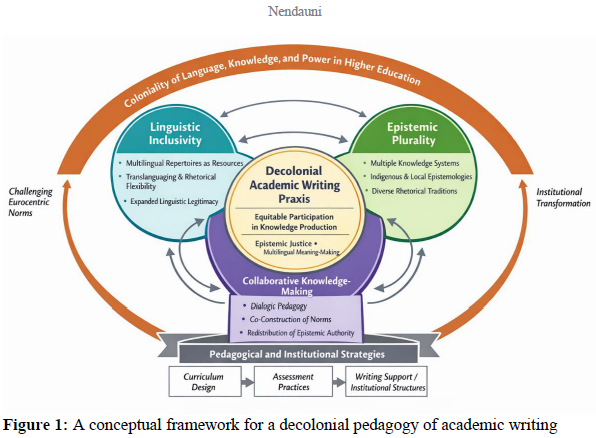
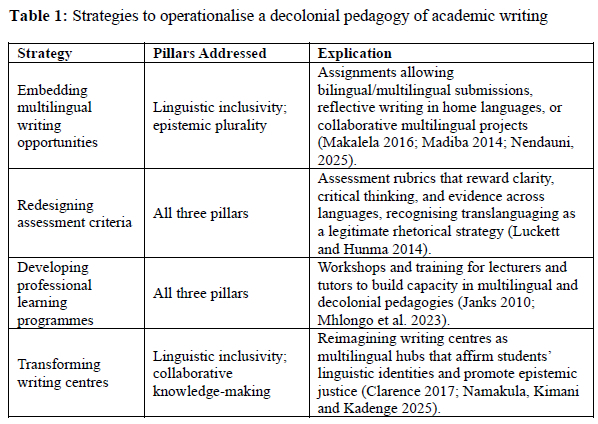
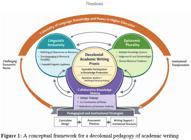
Academic writing in South African higher education continues to be shaped by Eurocentric and monolingual English conventions that function as gatekeeping mechanisms, often privileging students who are already familiar with dominant linguistic and rhetorical norms while constraining the participation of those who draw on diverse linguistic repertoires. While pedagogical models such as the study skills, academic socialisation, and academic literacies approaches have advanced writing support, they seldom challenge the coloniality embedded in academic norms. Drawing on decolonial theory, critical pedagogy, and academic literacies scholarship, this conceptual article uses reflective practice from my work as a writing centre practitioner at a multilingual university to propose a decolonial framework for academic writing grounded in three principles: linguistic inclusivity, epistemic plurality, and collaborative knowledge-making. I outline strategies for embedding these principles in curriculum design, assessment reform, and writing centre practice, reconceptualising academic writing as a socially and politically situated practice. Grounded in the South African context but with broader global relevance, the framework seeks to dismantle linguistic hegemony, affirm diverse epistemologies, and foster equitable academic cultures.
academic writing; decoloniality; epistemic justice; multilingualism; South Africa
 Thumbnail