Ethics of care and reflective practice in South African higher education: Lessons from COVID-19 and beyond
Abstract
The COVID-19 pandemic created an unexpected window of opportunity in higher education. Five years on, we analysed a responsive online teaching innovation: a 'Reflection and Support Group' for students in Environmental Science at Rhodes University, South Africa. We employed a collective autoethnographic approach to explore the value of the intervention and elicit key lessons. Benefits included improved mental health, enhanced academic performance, and development of reflective capacities. Recommendations included the need for clearer reflection guidelines for students, training and support for facilitators, and addressing digital inequality. We conclude with a discussion of the enduring nature of the benefits and consider what this means for ethics of care and reflective practice in higher education teaching and learning. Our analysis reveals that care and reflection in higher education are moral, political and collective practices. Institutionalising such practices in hierarchical, neoliberal universities requires systemic transformation which pays attention to diversity, inequality and power.
caring universities; collective autoethnography; digital inequality; online learning; pedagogical disruption; support groups
Introduction
The COVID-19 (coronavirus disease) global pandemic of 2020 and 2021 caused significant social, political, and economic disruptions (Motala & Menon, 2020). Worldwide, government regulations were put in place to limit the spread of the virus, at times confining everyone but healthcare personnel and those in need of emergency medical care to their residence (Githaiga, et al., 2023; Stiegler & Bouchard, 2020). This affected higher education institutions, where individual and organizational capacities were put to the test while all were forced to adopt a 'new normal' (Ahmed & Opoku, 2022; Bryson & Andres, 2020; Tang, et al. 2024). Online learning became the default alternative to face-to-face educational instruction across all levels of formal education (Olowoyo, et al., 2022; Tang, et al., 2024). Despite the challenges that emerged with this shift (Baker & Burke, 2023), new opportunities were birthed to create an inclusive, caring online environment (Dasgupta, et al., 2024; Hungwe & Ndofirepi, 2021; Maritz, 2024).
In this paper we present an analysis of a university teaching intervention which we designed, facilitated, and participated in during the strictest months of the coronavirus lockdown in South Africa in 2020. Its aim was to enact an ethic of care and cultivate reflective practice during the early, most difficult months of the pandemic. All over the world, the coronavirus pandemic and the rapid pivot to emergency remote teaching and learning online exacerbated many existing educational inequalities (França, et al., 2023; Maritz, 2024; Van der Walt, et al., 2024). While higher education in South Africa has been undergoing significant post-apartheid reform, disparities in student access, experience, and success remain a significant concern, and these were brought sharply into focus during this period (Motala & Menon, 2020).
In response to the challenges of the pandemic, we put in place a reflection and support process for Honours students in the Department of Environmental Science (DES) at Rhodes University. The purpose of this paper is to share, reflect on, and critically analyse our collective experiences of the Reflection and Support Group (RSG), with special attention to the enduring benefits five years on. Our research was guided by the following questions:
1. What was the experience of the RSG for participants?
2. How can challenges within the RSG be improved upon in future?
3. Five years on, what are the enduring benefits of the RSG, and what opportunities exist for institutionalising ethics of care and reflection in higher education?
To contextualise our study, we begin with a literature review on online learning in higher education, ethics of care, and reflective practice. Then we outline the RSG teaching intervention, its guiding methodological principles, and the research methods. Next, we present the findings and discuss them in relation to the literature. We conclude by highlighting key lessons that aid our own practice and may inform others engaged in enacting care and teaching reflection in higher education.
Online learning in higher education: Curriculum innovation and challenges
Online learning refers to a teaching style whereby instruction is mediated by the internet (Rapanta, et al., 2020). Although this method comes with certain conveniences (Nkwanyana & Fagbadebo, 2024), the drawbacks include ambiguous interpretations in different home contexts, and the blurring of boundaries between education and other home activities (Ahmed & Opoku, 2022; Rapanta, et al., 2020). Not only does online learning require more self-discipline on the part of the student, but it also requires additional roles and skills from academics (Bryson & Andres, 2020).
While some educational organisations have long been engaged in online learning, almost all institutions of higher education were forced to suddenly pivot to this method during the pandemic (Kee, 2021; Tang, et al., 2024). This required rapid curriculum innovations and adjustments by university staff, and students were tasked with learning from home (Blokland & Kirkcaldy, 2022; Hungwe & Ndofirepi, 2021). Challenges for staff and students included access to technology, balancing household and family responsibilities, inconducive working environments, and increased workload (Bryson & Andres, 2020; Gelles, et al., 2020). Moreover, existing inequalities of access to healthcare, learning opportunities, and suitable facilities were exacerbated (Van der Walt, et al., 2024; Yellow Horse & Nakagawa, 2020). Existing mental health concerns in higher education (Evans, et al., 2018) were also exacerbated by the unprecedented psychological impacts of the pandemic (Cullen, et al., 2020; Kee, 2021; Van der Walt, et al., 2024). Staff and students had to deal with health fears, care demands, death, and grief, all while maintaining academic performance and grappling with uncertainty (Kee, 2021; Yellow Horse & Nakagawa, 2020). In response, calls to practice an ethic of care in higher education in the pandemic context became ubiquitous and urgent, and institutions responded in various ways (Ahmed & Opoku 2022; Capello, 2023; Corbera, et al., 2020; Mortari, et al., 2022; Yellow Horse & Nakagawa, 2020).
Ethics of care during online learning in higher education
While employing ethics of care to guide university activities is not new (Bozalek, et al., 2014; Bozalek & Winburg, 2018), the multi-faceted challenges of the coronavirus pandemic brought care within higher education sharply into focus (Maritz, 2024; Tang, et al., 2024). The difficult experiences of the pandemic required a compassionate and flexible response from university staff and administrators and offered new ways to support students through their academic year (Ahmed & Opoku, 2022; Yellow Horse & Nakagawa, 2020). Maintaining interactions and being understanding, patient, and responsive within the virtual learning space were important to foster connection during distance learning (Tang, et al., 2024).
We have found ethics of care to be a useful concept to guide this work as it aligns with the motivations that drive a more caring approach to teaching and learning expressed elsewhere in the higher education literature (Bozalek & Winberg, 2018). These motivations include the need to attend to staff and students' unequal experiences of the pandemic, the power dimensions of the relationships between staff and students, and holistic student development (Gravett, et al., 2021; Mortari, et al., 2022). In higher education studies literature, the need to attend to students' "self" (i.e., to holistic well-being and growth and not just academic performance) as part of teaching and learning has long been recognised (Barnett, et al., 2001). However, the multi-faceted impacts of the pandemic on well-being brought such approaches to the fore (Capello, 2023; Tang, et al., 2024). In online learning where disconnection can so easily become the norm, the effort to remain engaged was critical for both staff and student emotional well-being and academic performance (Capello, 2023; Van der Walt, et al., 2024). Furthermore, supporting one another in group settings where there is a cocoon-like space, or an 'island of sanity' as Margaret Wheatley (2017) explains can add a dimension of safety and belonging that is hard to achieve alone.
In this paper we draw specifically on Joan Tronto's (1998; 2013) five moral qualities of care, which we briefly introduce here. 1) Caring about (attentiveness): recognising and empathising with the needs of others and being alert to situations requiring care. 2) Caring for (responsibility): Taking on the moral obligation to respond to those needs and ensuring they are addressed. 3) Care giving (competence): doing care work effectively, with the requisite skills and knowledge. 4) Care receiving and response (responsiveness): engaging with those receiving care; those cared for receive care and respond. Carers then respond in an on-going, sensitive manner to the needs of those cared for. 5) Caring with (solidarity in care) is a more recent addition by Tronto (2013), emphasizing the importance of mutual, democratic, and collective care. This includes citizens caring for each other and democracy itself and highlights the social and political dimensions of care.
The strength of Tronto's (1998, 2013) framework in our context is that it highlights the multifaceted, moral and political dimensions of care. This is of particular importance in a university context which is marked by institutional hierarchies and working relationships imbued with power (e.g. between students and academics, and among academics). Tronto's (2013) framework also aligns well with the work presented here in which care was enacted as an active, relational, and transformative practice requiring ongoing attention, skills development, and responsiveness to context and power dynamics (see Table 1 further below).
One of the ways in which academics in higher education enable a focus on care for students' personal well-being, and on their sense of "self" in academia, is through facilitating reflective practice (Burkitt, 2018; Chang, 2019). Importantly, reflection not only supports learning and encourages engagement with the personal and interpersonal aspects of education (Bharuthram, 2018; Maritz, 2024), but it is also a key process in responding to change (for example a global pandemic) through new ways of thinking and doing (Ryan & Ryan, 2013).
Facilitating reflective practice in higher education
There is growing literature exploring the links between ethics of care and reflection in higher education teaching pedagogy (Bozalek & Winberg, 2018; Maritz, 2024; Okeke-Uzodike, 2021). One of the most common expected learning outcomes of reflective practice in universities is to reflect critically on taught content (Bharuthram, 2018; Naicker & Van Rensburg, 2018), which enables students to make connections between the curriculum and their own personal experiences, beliefs, attitudes, and emotions (Maritz, 2024; Pather, 2023). This helps create more contextualised understanding, cultivating a life-long, enriching learning experience (Kayapinar & Alkhaldi, 2023).
By engaging in reflection with others, learners can generate new ideas relating to problem-solving for academic tasks and personal life experiences (Chang, 2019), while engaging critically with changing contexts and social challenges (Brennan, et al., 2022; White, et al. 2023). Importantly, this can provide students with a sense of connection and friendship, which is imperative, particularly in navigating societal challenges (e.g., the pandemic) (Kayapinar & Alkhaldi, 2023; Maritz, 2024).
Despite the advantages of practising reflection in higher education, lack of skill to facilitate it can lead to confusion and ethical protocols being breached (McAuliffe, et al., 2019). Facilitators need to ensure that students understand the process of reflection in academia, particularly in relation to group reflective sessions, and guide them accordingly (Chang, 2019; Martiz, 2024).
Research methods
The methods for this paper are based on a qualitative case study, which we analysed following a collective autoethnographic approach (Santiago, et al., 2017). First, we introduce the case (the RSG) and its guiding principles, then we describe the reflective research process, and outline the specific methods for data collection and analysis.
The Reflection and Support Group process in 2020
The academic and personal support process for the Department of Environmental Science (DES) Honours class during the COVID-19 pandemic in 2020 consisted of two parts: (1) written reflection reports, and (2) an online Reflection and Support Group (RSG). In this paper we focus on the RSG, which was more strongly designed as a care intervention, and appears to have been the more meaningful, transformative, and long-lasting aspect. Both activities were guided using the D-I-E-P framework (Describe, Interpret, Evaluate, Plan), which offered a structured approach to reflect on experiences (Boud, et al., 2013; RMIT University, 2010), while encouraging personal and creative responses.
The specific purpose of the RSG was to:
1. create a space for peer support, encouragement, and connection, and to share and address challenges;
2. provide a collective space for students to explore and expand their reflective research practice, and to support their academic and personal learning and growth; and
3. allow students to connect socially with classmates and lecturers in a friendly, informal, and socially supportive setting outside of formal academic activities.
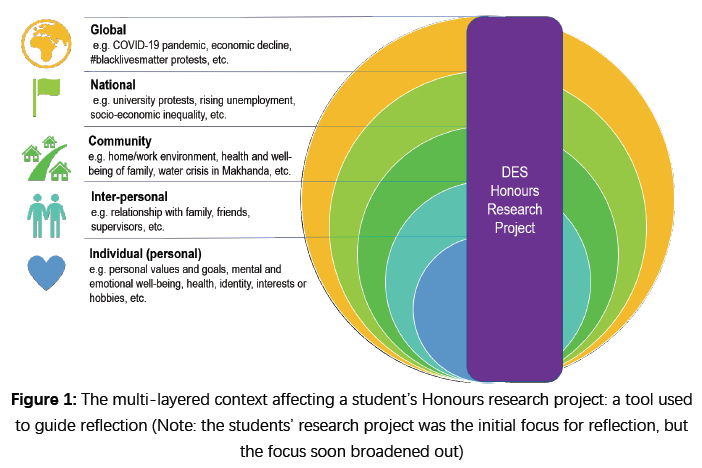
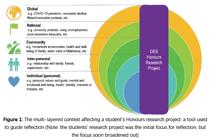
The support group was conceptualised and championed by three DES lecturers (academic staff) in a voluntary capacity. The whole class was invited to participate voluntarily and twelve out of twenty students joined. Students were divided into three groups and each group was allocated a facilitator. The group met every two weeks using Zoom (online audio/video communication platform) and communicated in-between meetings via WhatsApp (online messaging platform) groups. For the fortnightly online meetings, reflection prompts following the D-I-E-P framework were sent out in advance. Students were encouraged to consider their experience through a multi-layered, systemic understanding of context (see Figure 1), which allowed them to grapple with the full scope of experiences dealt with during the pandemic, from a personal to global level. Online meetings were held in a combination of whole-group and break-out sessions.
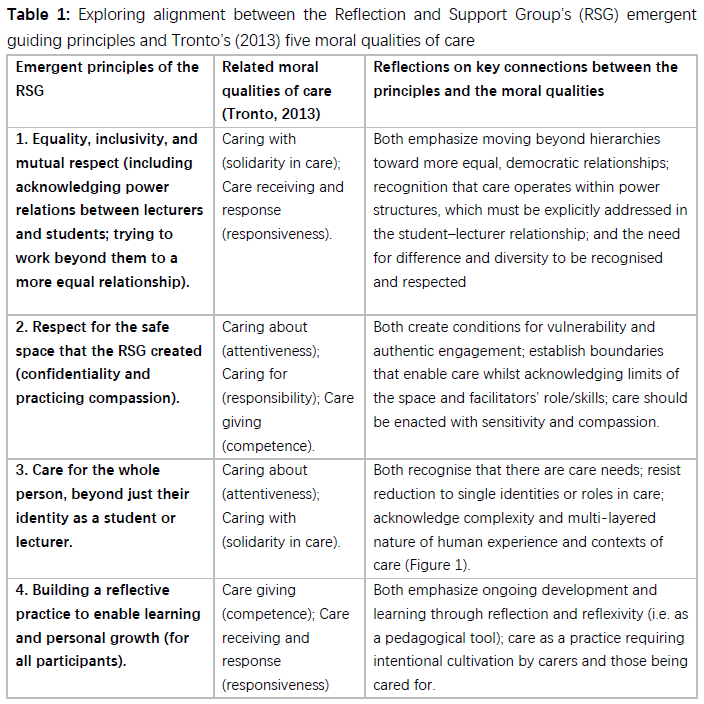
As we progressed through the process of meeting in the RSG, the following important guiding principles emerged and were later articulated (Table 1). We include them here as part of the methodology to make explicit our workings and what guided the pedagogical and research practice.
As the development of this paper progressed it became apparent that the emergent practice and principles of the RSG had unknowingly aligned with Tronto's five moral qualities of ethics of care, particularly in relation to care as a moral, political and collective practice (Table 1).
Collective reflection and analysis to interrogate the RSG process
To reflect on and research our experiences in the RSG we followed a collective autoethnographic approach (Santiago, et al., 2017) employing a qualitative data collection approach (Creswell & Creswell, 2018). We designed an inclusive, iterative process to generate and analyse the data. The process was initiated by the lead author, and co-lead by all three facilitators (academic staff, all three are female (womxn)) (JC, JCB, KS). All students who participated in the RSG in 2020 were invited to participate as co-researchers and co-authors, and seven out of twelve original participants joined (KB, AC, OD, RF, MM, KS, PY). The initial research process took place over ten months during 2021 and was structured around a series of online workshops where we generated reflective texts of our experiences in the RSG, and students conducted an interview with facilitators to better understand their experiences. In subsequent workshops we analysed our reflective texts and the interview data through an iterative, mixed methods approach (Creswell & Creswell, 2018). The paper was written collectively by the authors and may at times come across as multi-voiced.
Data collection
As the first data collection step, all co-researchers were tasked with writing a personal reflection of their experiences of the RSG in 2020. These texts served as primary data for this paper and were discussed and analysed during the workshops. The D-I-E-P method was again used to guide reflection, and the prompts were as follows:
1. Reflect: Look back on your participation in the RSG in 2020 using these questions as a guide: How did your participation in the group influence your experience of the year, and how did it impact on your overall well-being? What did you enjoy about the groups, and what did you not enjoy? What do you think made the RSG space work well, and what could have been done better?
2. Analyse: Employ the D-I-E-P framework to describe and analyse your experience of the RSG and make suggestions for future planning of the initiative.
As the process evolved after the initial workshops, it became clear that the students' experiences were coming out more strongly in the data than that of the facilitators'. Thus, the students designed and held an online semi-structured interview with each facilitator to better understand and represent their experiences.
Data analysis
We adopted a mixed methods approach to analyse the qualitative data (Creswell & Creswell, 2018), which enabled us to engage with the data from different perspectives and gain a richer understanding. We employed data analysis triangulation which is considered a useful means of building rigour in research using qualitative data as it can improve representation and legitimation of data (Leech & Onwuegbuzie, 2007). Thematic coding was used for qualitative analysis (Braun & Clark, 2006) to highlight the experiences of different research subjects (Nowell, et al., 2017), and text mining and sentiment analysis were employed for a quantitative approach which allowed for generalisation and pattern identification. The two analyses were conducted in parallel, and then synthesised in the final interpretation and presentation of findings following Bazeley's (2024) guidance on 'connecting' and 'combining' different data analysis outputs.
For the thematic analysis, data from the written reflection texts and the interview transcripts were analysed collectively by the research team in an iterative process of coding and creating themes. Each author read over all the reflection texts and identified codes, which were then discussed within the team and narrowed down into fewer overarching themes. This process was repeated in two iterations (Braun & Clarke, 2006). The overarching themes and sub-themes are presented below as descriptive text and direct quotes from reflection texts. Additionally, the written reflection texts were explored using text mining (Wickham et al., 2019) and sentiment analysis (a form of content analysis) (Jockers, 2015; Mohammad & Turney, 2013) in RStudio (RStudio Team, 2020) to reveal insights and patterns in the reflection data.
Revisiting the research five years later
Between 2021 and 2025, three of the key authors of this paper became mothers for the first time, offering an opportunity for us to engage in a somewhat "compulsory" form of compassionate, slow academia or slow scholarship (Nørgård, et al., 2024). During this period, our paper was on hold while these new mothers stumbled through the exhausting early stages of motherhood, while trying to keep their academic careers on track. Additionally, many of the other co-authors entered the workplace and transitioned from being students to young professionals, compounding the challenge of collaborating effectively on the paper.
Finally, we found some time and headspace to re-engage with this work and gathered for an online reunion to revive the paper in late 2024. These delays, although unintended, offered us an unexpected opportunity to approach the process with fresh eyes and renewed energy after almost five years since the implementation of the RSG. This perspective allowed us to identify and consider some of the more enduring impacts and benefits of the process, which now form an important and unique contribution of this paper.
To generate the data for this final part of the process, we convened for an online Zoom meeting in September 2024, where we captured written reflection notes on a shared Google Document, and then discussed them verbally, reflecting on the following questions:
1. Memories: When you cast your mind back to the RSG, what memories come up, what stands out for you?
2. Lasting impacts: In what ways do you think the RSG influenced or impacted your personal and/or professional life? What are some of the more long-term ways in which the process 'stayed with you' or influenced the way you do things now?
We analysed and synthesised the data using thematic analysis (Braun & Clarke, 2006), as described above. The results are presented through descriptive text and a table below.
Research ethics
Ethical clearance for this study was obtained from Rhodes University Human Ethics Committee (RUHEC) in 2021 (Reference: 2021-2794-5897). Principles of ethical research as laid out by RUHEC were adhered to throughout the co-research process. We have used pseudonyms in reporting direct quotes from participants to protect identity.
Findings
This section is structured according to the three overarching themes drawn from the data, which are: 1. The benefits of the RSG; 2. Challenges and suggestions for improvement; and 3. The development of reflective capacity. Following this, the long-lasting benefits are presented and discussed.
Benefits of the reflection and support group
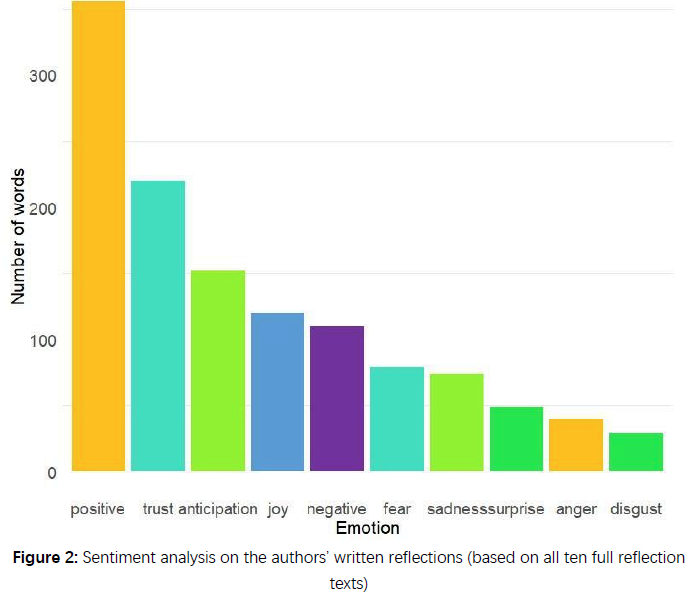
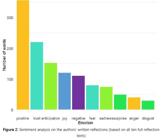
Four sub-themes relating to the benefits of the RSG were emphasised in the reflections, which were: 1. A positive effect on overall daily structure; 2. Improved mental health and decreased anxiety; 3. Connectedness and group support; and 4. Benefits to academic work. The sentiment analysis on participants' overall experiences of the RSG highlighted that the initiative was overwhelmingly positive. The highest ranked emotions associated with the sessions were trust and anticipation (Figure 2).
Positive effect on daily structure
Many students felt similarly that the RSG provided structure in their calendar and supplemented a good work routine by providing frequent meetings, which kept them grounded and accountable to their academic progress and personal development. For example, one student, Unathi wrote:
The support group had a positive effect on me as it created structure in my academic life during remote learning'.
Improved mental health and decreased anxiety
Mental health and the importance associated with it was mentioned frequently by students and facilitators, and all participants noted the benefits the group had on their mental health. For example, a student participant, Rachel reflected:
Through participation I felt less isolated and lonely, which helped me reduce distress, depression and anxiety.
Connectedness and group support
The online sessions enabled connection between participants, which uplifted their moods and improved overall well-being. It is notable that this benefit was shared by all participants, students and facilitators alike. For example, one of the facilitators, Melissa noted that:
This group helped me to manage my personal well-being better… I felt more cared for in this space than in many others.
Benefits to academic work
The RSG had a positive effect on students' academic progress and output. Through peer support and learning about other students' projects and experiences, learners were able to foster a sense of discipline, create a healthy work ethic, and increase their motivation. For example, Francis, a student participant, reflected:
Specifically, I enjoyed the fact that the RSG gave me the opportunity to acquire coping strategies for both my varsity work and my mental health.
Challenges and suggestions for improvement
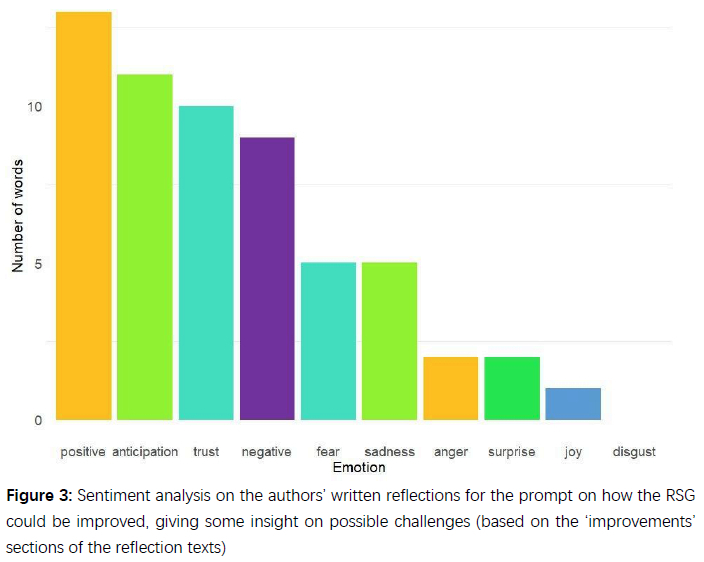
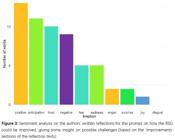
The challenges experienced by participants of the RSG were: 1. Limitations of online platforms; 2. Uncomfortable emotional experiences; 3. Unclear guidelines and instructions; and 4. Inconsistent and irregular engagements. The sentiment analysis conducted on the reflective texts relating to 'suggestions for improvements' supports the above results that participants had an overall positive experience of the RSG, with emotions like anticipation and trust occurring frequently (Figure 3). However, participants also mentioned negative responses such as fear and sadness (Figure 3).
Limitations of online platforms
Limited access to mobile data and the internet often resulted in participants not attending the full duration of the meeting or disabling the 'video' option, which affected the level of engagement between members of the group. For example, one student, Sarah stated that:
Because of data limitations and because it would often affect the call quality, the RSGs were primarily held with no video option and just a microphone. Thus, a feature that would have helped make them slightly more personal was not possible in the infrastructures we had available.
Additionally, Unathi, another student participant, found that:
The challenge I faced at several points was "Zoom fatigue".
This highlights many participants' experiences of battling with the demands of multiple Zoom sessions within their schedules. Thus, technological and resource constraints influenced the quality of participants' experiences and highlighted digital inequalities.
Uncomfortable emotional experiences
Creating a safe space in which students could share and reflect on their personal difficulties was one of the intentions of the RSG, and participants felt comfortable enough to engage in this way. However, this sometimes left participants feeling down, indicating a trade-off in terms of engaging with difficult emotions openly versus the emotional burden that created for others. For example, Kate, a student participant shared that:
I found that a negative focus in the group left me feeling more drained than uplifted, but I do understand that discussing problems helped to clear the air and move past them.
Unclear guidelines and instructions
There was some confusion between the general expectations of the written reflection reports and the RSG, which was heightened by conflicting instructions from different lecturers. For example, Unathi, a student member of the group shared that:
An additional challenge I faced was learning how to be reflective but being "taught" in different ways was confusing.
Inconsistent and irregular engagements
As the RSG sessions were not compulsory, the turnout and engagement within the groups was determined by the students who wished to fully participate in the process. Moreover, the schedule of the sessions was semi-flexible, and sometimes sessions were cancelled and postponed due to clashes with other academic activities. This was experienced by some as inconsistency, which detracted from the process. For example, Maria, one of the facilitators noted:
One particular time of the year we missed a few sessions in a row and that was something that I didn't like. It made me feel a little bit disconnected from the group.
Development of reflective capacities
Four sub-themes related to building reflective capacity emerged from the reflective texts, namely: 1. Pausing to think critically and make sense of experiences; 2. Connecting the personal and academic spheres of life; 3. Improving time management and planning; and 4. Enhancing self-awareness and well-being.
Pausing to think critically and make sense of experiences
Numerous participants realised how the reflective practice in the RSG helped them to stop and think about what they were experiencing, analyse their assumptions, and see the bigger picture. For example, Sarah, a student, reflected that:
The structured questions that were supplied really made the RSG work well. They encouraged the mental stop and pause that was very important with the stress of last year.
Connecting the personal and academic spheres of life
Many participants found that the reflection and sharing process helped them to make links between their personal lives and academic work. For example, Kate, a student participant, wrote that:
The RSG space allowed me to process my work and life, and move forward in my Honours year, while getting the social and moral support needed.
Improved time management and planning
The RSG sessions helped participants manage and plan their daily routines and reflect on problems and difficulties in a practical, yet caring way. For example, one of the facilitators, Maria added:
One very important thing for me was the sharing of strategies on how to use the time in a more efficient way or to focus or even just to take some time and relax.
Enhancing self-awareness and well-being
Many participants noted how the reflection process in the RSG helped them to better understand themselves and their feelings, behaviours, and actions. Out of this growing self-awareness, they were able to better manage their mental health and improve their well-being. For example, Rachel, a student participant, reflected that:
I learnt more effective ways to cope and handle difficult situations, I gained a better understanding of myself, my needs and my own unique personality.
Five years later: Enduring impacts, benefits, and learning
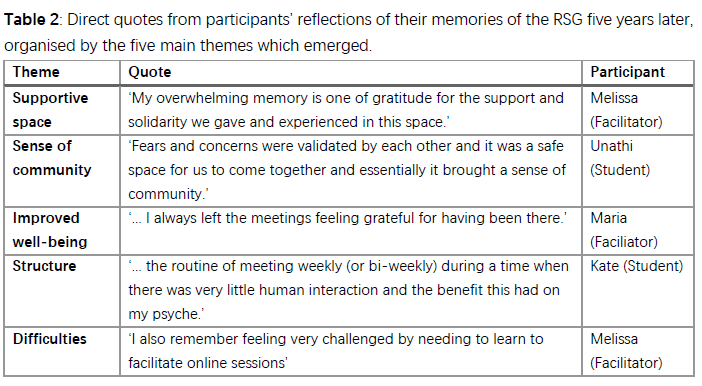
In response to the first reflective prompt on asking participants what they remember about the RSG five years on, five themes emerged, which were, 1. Supportive space; 2. Sense of community; 3. Improved well-being; 4. Structured approach; and 5. Difficulties (see participant quotes in Table 2). All but the last of these themes link strongly to the findings that emerged soon after the group culminated in 2020, solidifying the benefits of the RSG years after the sessions concluded. The theme of 'Difficulties' encompassed the challenges of running the groups during the pandemic. Three themes were discovered from the reflective texts on the lasting impacts of the RSG on participants' personal and professional lives, which were: 1. Skills development; 2. Connecting with people; and 3. Resilience.
The predominant positive effect was Skills development and referred to learning new ways to cope with stressors and difficult emotions, as well as improving communication, leadership, and facilitation. Siseko, a student participant, wrote that:
The group also taught me a lot about facilitation. We took turns leading discussions, which helped me learn how to do it with empathy, making sure everyone felt heard and valued.
Connecting with people includes finding it easier to be vulnerable and more understanding in a work environment, within families, and with peers; and Resilience refers to coping mechanisms like being adaptable, confident, and optimistic, and the positive effect that this has on well-being. Unathi, another student in the group, reflected that,
... you really can persevere and cope through the hardest times. The RSG mainly helped me be a better friend but also a better student.
Across the findings presented here, from the benefits, challenges, and developmental outcomes of the original RSG process, to the mostly positive memories and enduring benefits expressed many years later, an appreciation emerges from participants for the long-term benefits of the collective practice of caring and sharing during a difficult time.
Discussion
We have presented our findings on the RSG, a teaching and learning intervention responding to the pedagogical disruption of the pandemic. We have shared and analysed our experiences and articulated the immediate and enduring benefits of a collective practice of caring and sharing during a turbulent time. In this initiative, care emerged as a moral, political and collective practice. We now discuss our findings considering the literature on online learning, ethics of care, and teaching reflective practice in higher education.
Reflective and supportive spaces enable ethics of care with multiple, enduring benefits
The RSG enhanced students' ability to focus on and successfully complete their academic work, positively influenced their mental health, and enhanced reflective competencies. The transition to online learning erased the formal structured timetable and in-person attendance of lectures, pushing students to develop stronger self-discipline (Gelles, et al., 2020; Maritz, 2024). Students who participated in the RSG noted that the regular meetings and reflective prompts helped them create structure and accountability in their daily lives and academic work and left them more in tune with their internal dialogue and emotions. In addition, the mutual compassion and relatedness experienced by participants helped them to feel more motivated and able to apply themselves to their daily activities. Similarly, Trenshaw, et al. (2016) found that relatedness was the most salient need for students in supporting their motivation and that it provided space to build competence. This echoes other teaching and learning literature that recognises the importance of interpersonal interactions (Maritz, 2024; Nunez, et al., 2024), a human touch and relatedness over autonomy as a source of motivation (Gravett, et al., 2021; Trenshaw, et al., 2016).
Key features of our particular response, which resonate with previous published work have been an emphasis on ethics of care and compassion (Corbera, et al., 2020; Dasgupta, et al. 2024), flexibility and responsiveness (Ahmed & Opoku, 2022; Gelles, et al., 2020; Tang, et al. 2024), and recognition of the multifaceted challenges students faced (Aristovnik, et al., 2020; Blokland & Kirkaldy, 2022; Van der Walt, et al., 2024). The RSG provided a space to reflect on, share, and make sense of the difficulties of the pandemic.
The focus on facilitating and enabling the development of reflective practice in the RSG further supported students' well-being and academic outcomes. Students noted that reflection enabled sense-making and helped with managing anxiety and stress, which can negatively affect academic performance and personal development (Kee, 2021). The RSG created a space to recognise, acknowledge, respond to, and learn to cope with mental health challenges, and allowed participants to think critically about their experiences.
While reflection is widely taught in higher education (Blokland & Kirkcaldy, 2022; Tight, 2024; Viene, et al., 2020), this is less common in scientific disciplines (Gelles, et al., 2020), and our intervention shows the value of this even for science students. Indeed, in the sustainability sciences (a field that aligns strongly with our discipline of Environmental Science), there is growing recognition of the importance of reflective practice and reflexivity as a key competence (Lazurko, et al., 2025). Our findings echo the literature on teaching reflection, which argues that a key outcome of reflection is improved self-understanding and awareness (Kayapinar & Alkhaldi, 2023; White, et al., 2023). This improved knowledge of self, and of one's situation in relation to others, is what underlies a more nuanced understanding of academic curricula and work ability (Maritz, 2024).
Our reflections five years on indicate that most of the benefits experienced immediately after the process stand out as long-lasting impacts of the process today (i.e., a supportive space, a sense of community, improved well-being, and a structured approach). Not only have the benefits endured as memories, but they have morphed into actionable attributes providing multiple long-lasting benefits. Participants are enjoying the benefits of the skills and competencies which they developed during participation in the group, and these have been useful in new workplace and personal contexts. Participants highlighted the ability to connect with others across personal and professional levels, alongside the development of resilience in response to change and challenging life circumstances. Literature on the long-term benefits of care ethics and reflection in higher education is fairly sparse, and mostly located in the medical sciences (e.g. Branch & George, 2017). This highlights the importance of our contribution and indicates a need for more longitudinal studies or follow-up evaluations to better understand the long-term outcomes of such initiatives in different contexts. Both the immediate and longer-term benefits of the RSG underline the importance of institutionalising an ethic of care in higher education, and of including not only female (womxn) staff members (as was the case here) but others too (Ahmed & Opoku, 2022; França, et al., 2023). The co-created safe space, where all participants showed up honestly and respectfully (Table 1), allowed both staff and students to focus on self-care and well-being to manage the well-known demands of higher education.
Refining care work in higher education
The limitations and weaknesses of the RSG relate primarily to the realities of online learning in the pandemic context, including rushed implementation and unclear guidelines (Bryson & Andres, 2020), the potential discomfort of online communication platforms (Gravett, et al., 2021), and unequal access to internet and other resources (Baker & Burke, 2023). Additionally, the voluntary and flexible format of the RSG was experienced by some as inconsistent, although we also see the voluntary aspects as a powerful feature which created a strong sense of shared ownership and belonging, with many participants re-connecting back into the space after many years. Institutionalisation of the initiative could help address some of these shortcomings; as long as the process remains compassionate, flexible, responsive, and learner-centred, which are key features also highlighted in the literature (Gelles, et al., 2020; Gravett, et al., 2021; Tronto, 2013). Facilitators need to provide clear guidelines for reflection to students, and institutions should provide training and support for facilitators embarking on reflective care work in higher education (Boling, et al., 2012; Regan, et al., 2012). In response to the feedback on guidelines, clearer instructions were developed for the 2021 iteration of the RSG, and we have learned a great deal about how to improve communication around reflection with students in the process since the pilot in 2020.
The three facilitators who implemented the RSG did not have formal training in supporting student well-being and reflection and drew on previous experiences and intuition to run the programme. This came with risks as creating a safe space for sharing personal challenges can result in uncomfortable emotional experiences and psychological distress for participants and can take an emotional toll on those holding the space (Maritz, 2024; McAuliffe, et al., 2019;). With ever-increasing concerns about mental health challenges in higher education (Evans, et al., 2018), especially since the pandemic (Ejoke & Khumalo, 2020; Kee, 2021; Maritz, 2024), preparing and training staff to deal with such issues is imperative.
Training academic staff in pastoral care can be seen as an additional burden on staff's own well-being due to the multiple demands on their time and personal resources. However, as Brewster, et al. (2022: 1) notes, it is important to, "proactively and cohesively embed cultural and structural change across the whole institution to support positive wellbeing outcomes for the whole university community". Our findings show that the RSG initiative enhanced well-being and reflective practice for both students and staff, and we therefore agree with Brewster et al.'s (2022) call for institutions to foster a sustainable, caring and effective academic environment through a 'whole university approach' to well-being. Recent work by Chen and Shih (2025), applying Noddings (2002) ethic of care, also advocates for rethinking the teacher-student relationship, going beyond a transactional exchange of knowledge, to building a relational practice rooted in ethical care and personal values. This can enable a more 'holistic development of students, equipping them with the empathy and social consciousness needed to become responsible global citizens' (Chen & Shih, 2025: 1). However, implementing this kind of relational ethic of care approach in the hierarchically-structured context of universities will require paying careful attention to issues of power, gender, and other dimensions of difference.
Our findings and the interpersonal dynamics of our group are unique to the individuals involved and our context at the time. There are risks and contestations that need to be carefully navigated when seeking to address staff and student well-being through group-based support sessions and reflection processes. The lead facilitators sought to address some of these risks by being open and explicit with the group about their positionality, and about power dynamics that might influence the interactions in the space, by sharing the facilitation role (which is one of power) with students where appropriate (Table 1), and by bringing our own struggles, worries and vulnerabilities into the conversations. One of the students, Siseko, commented on this during our online reunion in 2024, saying that 'by revealing our own vulnerabilities we showed how we are all people, and we all have our struggles'. While these strategies may have helped mitigate some of the challenges of enacting care and enabling meaningful personal reflection in a hierarchical-power-imbued context, we are well aware that they did not completely negate the more powerful position we as academic facilitators held.
Care and reflection in higher education are moral, political and collective practices
Our findings demonstrate that practicing a relational ethic of care and deep and meaningful reflection within the context of higher education requires paying attention to matters of inequality, diversity and hierarchies of power. We agree with Yellow Horse and Nakagawa (2020) that the coronavirus provided a pedagogical disruption and a window of opportunity for radically new practices, but also echo Czerniewicz, et al.'s (2020) perspective of the pandemic as a wake-up call to address the crisis of deep inequalities in our educational systems.
As is common throughout South Africa, access to resources was disparate between participants of the RSG, which affected how members joined the group and the overall quality of the initiative. Even though the university provided students with a certain amount of mobile data to complete their academic curriculum during online learning in the coronavirus pandemic, it was not enough for the multiple Zoom sessions students engaged in. Thus, we implore institutions of higher education to continue to provide necessary resources to ensure that online learning and the benefits that come with it can be accessible to all (Czerniewicz, et al., 2020; Dube, 2020; Hungwe & Ndofirepi, 2021). If not addressed, online learning platforms stand the chance to create more disconnection and distress in some students' experiences than is already present.
To sustain the generosity of spirit and caring communities which emerged in pockets across universities during the pandemic, staff need to be given the opportunity and the time to integrate a caring practice into their own lives to enable them to practice care with and for students and others (Baker & Burke, 2023; Mortari, et al., 2022; Yellow Horse & Nakagawa, 2020). This includes being understanding of those staff members who are new mothers and who may be experiencing additional stressors outside of their professional lives. It is widely known that the early years of motherhood are particularly demanding, especially in conjunction with upkeeping an academic career (Bosanquet, 2017; Dickson, 2018; Fulweiler, et al., 2021). Therefore, we advocate for an understanding, compassionate and caring approach from not only staff to students, but within the staff itself. This points to the need to address diversity and inequality among students and staff in the University when implementing care and reflection programmes. Mountz, et al. (2015) argue that this then becomes a process of political resistance to dominant practices and cultures.
The emergent ethic of care which we have described and analysed here embodies Tronto's (2013) five moral elements of care (Table 1). Further reflection on our findings, in conversation with Tronto (2013) reveals that the care we practiced was collective i.e. a form of 'caring with' (solidarity in care). It was not only about facilitators caring for students (which was the initial 'caring about' (attentiveness) impulse and motivation of the facilitators), but about the collective caring for one another, in an on-going, relationship of 'responsiveness' ('care receiving and response') and mutual sharing of the space and responsibilities. Tronto (2015) argues that care is complex and carers should avoid seeing themselves as the 'heroic caregiver', but rather that care is about negotiating care needs, responsibilities and the giving and receiving of care in multiple directions. This helps to break down assumptions about the hierarchical nature of care. This echoes our experiences, where improved well-being and other benefits were experienced by both students and facilitators, and skills in facilitating and creating a shared and enabling space were developed across both participant groups (i.e. competence in terms of 'care-giving' was developed in both participant groups). By acknowledging issues of power dynamics and gender during implementation and in the analysis, the political nature of care, which is one of Tronto's (2013) central theses, has also been highlighted through this work. Moreover, institutionalising care will also require paying attention to matters of power, politics and the need for systemic transformation, as will be discussed in the next section. Applying Tronto's (2013) framework also emphasises the moral nature of care (Bozalek, et al., 2014). According to Tronto (2013), as our findings also illustrate, moral care is a practice that involves relational attentiveness, responsibility, skill, and respect, and it is deeply situated in social-political context. This understanding of care moves beyond individual ethics toward communal and democratic dimensions of care (Bozalek, et al. 2014). In the context of the university, this means creating an enabling institutional and cultural context for care practices and reflection, which we discuss in the next section.
Embedding an ethic of care in higher education
Our evidence should not be ignored: caring, reflective group processes can support both academics and students, with multiple benefits, from personal to professional, and in the short and longer term. Institutionalising such practices will require a change in the structures, incentive systems and neoliberal work cultures of universities, which are not designed with care as a central concern (Corbera, et al., 2020; Van Schaik, et al., 2024). We return to Tronto (2013), who advocates for a societal-level shift to 'caring with'. This will require a political change in the way care is viewed in society. She says, to highlight the ways in which neoliberal politics impinge on care ethics and practices:
Humans are not only or mainly creatures of the market, they are creatures of care. Democratic societies need to reorient their values away from support for the "market" to support for the means for people to live human lives. (Tronto, 2013: 15)
Similarly, we call on universities to reorient their values away from support for the "market" to support for all people, no matter their identity or position, to flourish through and within the university - and we are by no means alone in doing so (Mountz, et al., 2015; Puāwai Collective, 2019; Yellow Horse & Nakagawa, 2020).
Spaces for collective care and reflection are central to creating a 'university of flourishing'. Practically speaking, a key challenge will be to allocate sufficient staff resources in the university to implement such programmes. This means identifying, resourcing and upskilling willing staff members who may volunteer for this kind of process (França, et al., 2023), whilst also promoting the capacity development of others (Maritz, 2024). In locating suitable staff there needs to be an awareness of the natural inclination of women to partake in such work, and a willingness to acknowledge their extra time, energy, and input (França, et al., 2023; Gravett, et al., 2021). Linking back to our experiences, when we reflect on the impact of motherhood on our work as academics post-pandemic, we realise that it may not have been as easy (or possible) for us to facilitate and engage in the RSG if we had been mothers during the pandemic (although one of us was a mother, already). The disproportionate impact of the pandemic on mothers is now widely documented (Bosanquet, 2017; Dickson, 2018; Fulweiler, et al., 2021), as are the disproportionate impacts of neoliberal university structures on women and other marginalised academics (Puāwai Collective, 2019). Hence, the gendered politics of care work within the university need to be addressed when seeking to institutionalise programmes such as the RSG (França, et al., 2023; Puāwai Collective, 2019). Tronto (2013; 2015) reminds us that care relationships will always be intertwined with the dynamics of institutional power, and universities are particularly affected by this. When implementing care initiatives such as the RSG, the multifaceted, moral and political dimensions of care must be thoughtfully navigated. A reflexive approach, on-going adaptation of methods and pedagogies, and attention to positionality, relationships and well-being of all participants will be critical. Moreover, we need to go beyond (western) societal norms of care being about taking 'individual responsibility'. We need to ensure that care and reflection become radical democratic acts of solidarity wherein justice, equality and freedom for all are sought (Bozalek, et al., 2014; Hungwe & Ndofirepi, 2021; Tronto, 2013).
Conclusion
In this paper we have presented and reflected on a pedagogical innovation which responded to the changing context of higher education during the coronavirus pandemic. Our findings indicate that students responded well to efforts to enact an ethic of care and create a space for reflection and sharing among students and staff. Participants of the Reflection and Support Group (RSG) experienced several benefits, notably improved mental health and academic outcomes, the development of reflective capacity, and the ability to meaningfully connect with others during the pandemic. Benefits were experienced by students and facilitators alike and endured for many years after. The process did however face challenges due to the rapid nature of implementation, constraints of online learning platforms, and digital inequality.
We have experienced and documented immediate and enduring benefits of a collective practice of sharing and caring during a turbulent time. This care has emerged as a moral, political and collective practice. The enduring nature of the benefits from participating in the RSG are what stand out most. Not only did participants enjoy connection and support during the difficult months of the coronavirus pandemic but they are to this day continuing to practice reflection and an ethic of care within their families, workplaces, and personal lives. This we understand as the real healing tincture of a relational group support where participants feel safe and cared for in a way that improves not only self-esteem and well-being, but professional relationships and work output too.
While pedagogical innovations guided by an ethic of care are emerging in higher education institutions across the globe, their efficacy and sustainability are called into question due to social inequalities and constraints of neoliberal university structures and cultures. We call on university leaders and academic staff to reflect critically on how best to support and care for the diversity of students and staff which their universities serve. Creating a university of flourishing will require confronting social inequalities and addressing deep-seated political and economic barriers to create an enabling environment in which members of the university community are able to reflect critically together, and care for themselves and one another in relational, reflexive ways.
Declaration of generative AI and AI-assisted technologies in the writing process
We used generative AI technologies in the production of this article. We used Perplexity AI to assist with finding literature, and for searching for ideas and content within identified literature. We did not incorporate any AI-generated text directly into the manuscript. We applied the AI technology with human oversight and control, and carefully reviewed the outcomes. We take full responsibility for the contents of the work presented in this article.
Funding: Jessica Cockburn acknowledges funding from Rhodes University Research Committee (2021) and the CHERTL/UNCAPDEV Funding (2024).
References
Acknowledgements
A note from the academic facilitators: Although the extra work created by the RSG was demanding, the three academic facilitators benefited significantly from this initiative, and echo Mehrotra (2021) who noted how a pedagogical praxis of care and reflection is an instructive and anchoring experience for educators, and positively shapes teaching practice going forward. Maintaining connection with our students and with one another during this time of crisis and beyond has been deeply enriching and affirming. We (the facilitators) thank the students for bringing their whole selves into the process and making it work, especially those who joined us in this collective research process to reflect and write about the experiences we shared together.
Literature review
- Ahmed, V. & Opoku, A. 2022. Technology supported learning and pedagogy in times of crisis: the case of COVID-19 pandemic. Education and Information Technologies, 27(1): 365-405.
- Aristovnik, A., Keržič, D., Ravšelj, D., Tomaževič, N. & Umek, L. 2020. Impacts of the COVID-19 pandemic on life of higher education students: A global perspective. Sustainability, 12(20): 8438.
- Baker, S. & Burke, R. 2023. Questioning Care in Higher Education: Resisting Definitions as Radical. Switzerland: Springer Nature.
- Barnett, R., Parry, G. & Coate, K. 2001. Conceptualising curriculum change. Teaching in Higher Education, 6(4): 435-449.
- Bazeley, P. 2024. Conceptualizing integration in mixed methods research. Journal of Mixed Methods Research, 18(3): 225-234.
- Blokland, L.E., & Kirkcaldy, H. 2022. Campus Mental Health Revisited. Journal of Student Affairs in Africa, 10(2): 195-207.
- Boling, E.C., Hough, M., Krinsky, H., Saleem, H. & Stevens, M. 2012. Cutting the distance in distance education: Perspectives on what promotes positive, online learning experiences. The Internet and Higher Education, 15(2): 118-126.
- Bosanquet, A. 2017. Academic, woman, mother: Negotiating multiple subjectivities during early career. In Thwaites, R. & Pressland, A. (Eds.). Being an Early Career Feminist Academic: Global Perspectives, Experiences and Challenges. London: Palgrave Macmillan, 73-91.
- Boud, D., Keogh, R. & Walker, D. 2013. Reflection: Turning Experience into Learning. London: Routledge.
- Boyatzis, R.E. 1998. Transforming Qualitative Information: Thematic Analysis and Code Development. London: Sage Publications.
- Bozalek, V.G., McMillan, W., Marshall, D.E., November, M., Daniels, A. & Sylvester, T. 2014. Analysing the professional development of teaching and learning from a political ethics of care perspective. Teaching in Higher Education, 19(5): 447-458.
- Bozalek, V. & Winberg, C. 2018. The ethics of care and academic development. South African Journal of Higher Education, 32(6): 1-5.
- Branch Jr, W.T. & George, M. 2017. Reflection-based learning for professional ethical formation. AMA Journal of Ethics, 19(4).
- Braun, V. & Clarke, V. 2006. Using thematic analysis in psychology. Qualitative Research in Psychology, 3(2): 77-101.
- Brennan, C., Packard, M. & Newman, J. 2022. Building a critically transformative community of inquiry in an online undergraduate program. The Internet and Higher Education, 52.
- Brewster, L., Jones, E., Priestley, M., Wilbraham, S. J., Spanner, L. & Hughes, G. 2022. 'Look after the staff and they would look after the students' cultures of wellbeing and mental health in the university setting. Journal of Further and Higher Education, 46(4): 548-560.
- Bryson, J.R. & Andres, L. 2020. Covid-19 and rapid adoption and improvisation of online teaching: Curating resources for extensive versus intensive online learning experiences. Journal of Geography in Higher Education, 44(4): 608-623.
- Burkitt, I. 2018. The emotional self: Embodiment, reflexivity, and emotion regulation. Social and Personality Psychology Compass, 12(5), e12389
- Capello, S. 2023. Supporting EdD scholar-practitioners through the COVID-19 pandemic using an ethic of care. Impacting Education: Journal on Transforming Professional Practice, 8(1): 37-40.
- Chang, B. 2019. Reflection in learning. Online Learning, 23(1): 95-110.
- Chen, M.K. & Shih, Y.H. 2025. The implications of Nel Noddings' ethics of care for fostering teacher-student relationships in higher education. Frontiers in Education, 10: 1602786.
- Corbera, E., Anguelovski, I., Honey-Rosés, J. & Ruiz-Mallén, I. 2020. Academia in the time of COVID-19: Towards an ethics of care. Planning Theory & Practice, 21(2): 191-199.
- Creswell, J.W. & Creswell, J.D. 2018. Research Design: Qualitative, Quantitative, and Mixed Methods Approaches. 5th Ed. Los Angeles: Sage.
- Cullen, W., Gulati, G. & Kelly, B.D. 2020. Mental health in the COVID-19 pandemic. QJM: An International Journal of Medicine, 113(5): 311-312.
- Czerniewicz, L., Agherdien, N., Badenhorst, J., Belluigi, D., Chambers, T., Chili, M., de Villiers, M., Felix, A., Gachago, D., Gokhale, C., Ivala, E., Kramm, N., Madiba, M., Mistri, G., Mgqwashu, E., Pallitt, N., Prinsloo, P., Solomon, K., Strydom, S., Swanepoel, M., Waghid, F. & Wissing, G. 2020. A Wake-up call: Equity, inequality and Covid-19 emergency remote teaching and learning. Postdigital Science and Education, 2(3): 946-967.
- Dasgupta, P., Peat, A. & Vogelaar, A.E. 2024. Care in the Time of COVID-19: Accounting for academic care labor. Journal of Economic Issues, 58(1): 170-195.
- Dickson, M. 2018. The joys and challenges of academic motherhood. Women's Studies International Forum, 71: 76-84.
- Dube, B. 2020. Rural online learning in the context of COVID 19 in South Africa: Evoking an inclusive education approach. Multidisciplinary Journal of Educational Research, 10(2): 135-157.
- Ejoke, U.P. & Khumalo, I.P. 2020. Psychological perspective of experienced happiness during COVID-19 pandemic in South Africa. Gender and Behaviour, 18(4): 16839-16856.
- Evans, T.M., Bira, L., Gastelum, J.B., Weiss, L.T. & Vanderford, N.L. 2018. Evidence for a mental health crisis in graduate education. Nature Biotechnology, 36(3): 282-284.
- França, T., Vicente, M., Godinho, F., Padilla, B., Amâncio, L. & Alexandre, A.F. 2023. The cost of 'care' in neoliberal academia during the COVID-19 pandemic: Women academics, teaching and emotional labour. European Journal of Women's Studies, 30(4): 470-485.
- Fulweiler R.W., Davies, S.W., Biddle, J.F., Burgin, A.J., Cooperdock, E.H.G., Hanley, T.C., Kenkel, C.D., Mararelli, A.M., Matassa, C.M., Mayo, T.L., Santiago-Vasquez, L.Z., Traylor-Knowles, N & Zieger, M. 2021. Rebuild the Academy: Supporting academic mothers during COVID-19 and beyond. PLOS Biology, 19(3): e3001100.
- Gelles, L.A., Lord, S.M., Hoople, G.D., Chen, D.A. & Mejia, J.A. 2020. Compassionate flexibility and self-discipline: Student adaptation to emergency remote teaching in an Integrated Engineering Energy course during COVID-19. Education Sciences, 10(11): 304.
- Githaiga, J.N., Späth, C., Sicwebu, N., Perera, S., Tolla, T. & Leon, N. 2023. Critical reflections on conducting qualitative health research during COVID-19: The lived experiences of a cohort of Postgraduate students in a South African University. International Journal of Qualitative Methods, 22: 1-12.
- Gravett, K., Taylor, C.A. & Fairchild, N. 2021. Pedagogies of mattering: Re-conceptualising relational pedagogies in higher education. Teaching in Higher Education, 29(2): 388-403.
- Hungwe, J.P. & Ndofirepi, A. 2021. Centering "Ukama" ethic (relatedness) in the COVID-19 pandemic 'new normal' in African higher education. International Journal of Higher Education, 10(5): 112-120.
- Jockers, M. L. 2015. Syuzhet: Extract Sentiment and Plot Arcs from Text. R package version 1.0.6.
- Kayapinar, U. & Alkhaldi, A. 2023. Reflective thinking in higher education: Examining practices of higher education faculty. Reflective Practice, 24(1): 1-16.
- Kee, C.E. 2021. The impact of COVID-19: Graduate students' emotional and psychological experiences. Journal of Human Behavior in the Social Environment, 31(1-4): 476-488.
- Lazurko, A., Moore, M.L., Haider, L.J., West, S. & McCarthy, D.D. 2025. Reflexivity as a transformative capacity for sustainability science: Introducing a critical systems approach. Global Sustainability, 8 (e1): 1-15.
- Leech, N.L. & Onwuegbuzie, A.J. 2007. An array of qualitative data analysis tools: A call for data analysis triangulation. School Psychology Quarterly, 22(4): 557.
- Maritz, J.E. 2024. A reflexive autoethnography of supervisory psychosocial-educational support in online academic family meetings for postgraduate nursing students during the pandemic. Cogent Education, 11(1): 2398831.
- Mountz, A., Bonds, A., Mansfield, B., Loyd, J., Hyndman, J., Walton-Roberts, M., Basu, R., Whitson, R., Hawkins, R., Hamilton, T. & Curran W. 2015. For slow scholarship: A feminist politics of resistance through collective action in the neoliberal university. ACME: An International Journal for Critical Geographies, 14(4): 1235-1259.
- McAuliffe, C., Upshur, R., Sellen, D.W. & Di Ruggiero, E. 2019. Critical reflections on mental well-being for post-secondary students participating in the field of global health. International Journal of Mental Health and Addiction, 17(3): 542-554.
- Mehrotra, G.R. 2021. Centering a pedagogy of care in the pandemic. Qualitative Social Work, 20(1-2): 537-543.
- Mohammad, S.M. & Turney, P.D. 2013. Crowdsourcing a word-emotion association lexicon. Computational Intelligence, 29(3): 436-465.
- Morgan, A.C., Way, S.F., Hoefer, M.J., Larremore, D.B., Galesic, M. & Clauset, A. 2021. The unequal impact of parenthood in academia. Science Advances, 7(9).
- Mortari, L., Bevilacqua, A. & Silva, R. 2022. Promoting Flourishing in hard times: Theoretical reflections on ethics of care in distance learning. In Guralnick, D., Auer, M.E. & Poce, A. (Eds.). Innovative Approaches to Technology - Enhanced Learning for the Workplace and Higher Education. Proceedings of 'The Learning Ideas Conference' 2022. Switzerland: Springer Nature, 248-257.
- Motala, S. & Menon, K. 2020. In search of the 'new normal': Reflections on teaching and learning during Covid-19 in a South African university. Southern African Review of Education with Education with Production, 26(1): 80-99.
- Naicker, K. & Van Rensburg, G. 2018. Facilitation of reflective learning in nursing: Reflective teaching practices of educators. Africa Journal of Nursing and Midwifery, 20(2): 1-14.
- Nkwanyana, N.N. & Fagbadebo, O. 2024. The benefits of the use of online learning during the COVID-19 pandemic. Journal of Infrastructure Policy and Development, 8(14): 9448.
- Noddings, N. 2002. Educating Moral People: A Caring Alternative to Moral Education. New York: Teachers College Press.
- Nørgård, R.T., Bosanquet, A. & Grant, B.M. 2024. The slow scholar in the accelerated university: Slowness as solidarity. In Gibbs, P., de Rijke, V. & Paterson, A. (Eds.). The Contemporary Scholar in Higher Education: Forms, Ethos and World View. Cham: Palgrave Macmillan, 133-153.
- Nowell, L.S., Norris, J.M., White, D.E. & Moules, N.J. 2017. Thematic analysis: Striving to meet the trustworthiness criteria. International Journal of Qualitative Methods, 16(1): 1-13.
- Nunez, J. R., Cisneros, J. & Pena, I. 2024. Faculty's role in creating a (remote) sense of community among faculty and facilitating contexts of care for students. Higher Learning Research Communications, 14(2), 13-28.
- Okeke-Uzodike, O.E. 2021. Postgraduate supervision in a South African transforming academic environment: a reflexivity approach. Issues in Educational Research, 31(4): 1175-1194.
- Olowoyo, M.M., Ramaila, S., Mavuru, L. & Mugivhisa, L. 2022. The impact of the COVID-19 pandemic on students' learning at universities in the Gauteng Province, South Africa. Africa Education Review, 19(1): 143-159.
- Pather, S. 2023. A reflection on post-graduate supervision practice: Towards a deeper understanding of effective student engagement. Proceedings of The International Conference on Future of Teaching and Education, 1(1): 46-58.
- Puāwai Collective.2019. Assembling disruptive practice in the neoliberal university: An ethics of care. Geografiska Annaler: Series B, Human Geography, 101(1): 33-43.
- Rapanta, C., Botturi, L., Goodyear, P., Guàrdia, L. & Koole, M. 2020. Online university teaching during and after the Covid-19 crisis: Refocusing teacher presence and learning activity. Postdigital Science and Education, 2(3): 923-945.
- Regan, K., Evmenova, A., Baker, P., Jerome, M.K., Spencer, V., Lawson, H. & Werner, T. 2012. Experiences of instructors in online learning environments: Identifying and regulating emotions. The Internet and Higher Education, 15(3): 204-212.
- RMIT University. 2010. Reflective writing: DIEP. RMIT University, Royal Melbourne Institute of Technology and Melbourne Technical College. Available at: https://learninglab.rmit.edu.au/keyword/reflective-writing/ (Accessed: 12 March 2026).
- RStudio Team. 2020. RStudio: Integrated Development for R. Boston: RStudio. Available at: https://posit.co/download/rstudio-desktop/ (Accessed: 2 April 2021).
- Ryan, M. & Ryan, M. 2013. Theorising a model for teaching and assessing reflective learning in higher education. Higher Education Research & Development, 32(2): 244-257.
- Santiago, I.C., Karimi, N. & Alicea, Z.R. A. 2017. Neoliberalism and higher education: A collective autoethnography of brown women teaching assistants. Gender and Education, 29(1): 48-65.
- Stiegler N. & Bouchard J.P. 2020. South Africa: Challenges and successes of the COVID-19 lockdown. Psychological Medicine, 178(7): 695-698.
- Tang, A.L.L., Walker-Gleaves, C. & Rattray, J. 2024. University students' conceptions and experiences of teacher care amidst online learning. Teaching in Higher Education, 29(2): 366-387.
- Tight, M. 2024. Reflection: an assessment and critique of a pervasive trend in higher education. European Journal of Higher Education, 14(2): 324-342.
- Trenshaw, K.F., Revelo, R.A., Earl, K.A. & Herman, G.L. 2016. Using self-determination theory principles to promote engineering students' intrinsic motivation to learn. International Journal of Engineering Education, 32(3): 1194-1207.
- Tronto, J.C. 1998. An ethic of care. Generations: Journal of the American Society on Aging, 22(3): 15-20.
- Tronto, J.C. 2013. Caring Democracy: Markets, Equality, and Justice. In Caring Democracy. New York: New York University Press.
- Tronto, J.C. 2015. Who Cares? How to Reshape a Democratic Politics. New York: Cornell University Press.
- van der Walt, F., Nkoyi, A. & Thithi, M. 2024. The influence of selected factors on perceived enjoyment of the online learning experience: Lessons for post-COVID-19 classrooms. Frontiers in Education, 9: 1274126
- van Schaik, S.D., Bransen, J., Neuvonen, A., Müller, B., Riuttanen, L., Kubli, M., Millar, R.J., Rajala, A., Zsóka, Á. & Ache, P. 2025. University for the future, the future for universities: Learning communities that prioritize care. Higher Education for the Future, 23476311251379604.
- Veine, S., Anderson, M.K., Andersen, N.H., Espenes, T.C., Søyland, T.B., Wallin, P. & Reams, J. 2020. Reflection as a core student learning activity in higher education - Insights from nearly two decades of academic development. International Journal for Academic Development, 25(2): 147-161.
- Wheatley, M.J. 2017. Who Do We Choose to Be? Facing Reality, Claiming Leadership, Restoring Sanity. California: Berrett-Koehler Publishers.
- Wickham, H., Averick, M., Bryan, J., Chang, W., McGowan, L.D.A., François, R., Grolemund, G., Hayes, A., Henry, L., Hester, J. & Kuhn, M. 2019. Welcome to the tidyverse. Journal of Open Source Software, 4(43): 1686.
- Yellow Horse, A.J. & Nakagawa, K. 2020. Pedagogy of care in Asian American Studies during the COVID-19 pandemic. Journal of Asian American Studies, 23(3): 353-365.

Accepted: 11 May 2026