(Bio)medicine meets Art: A physiologist's reflections on inter-disciplinary liaisons, curriculum renewal and pursuing social justice
This self-reflective article focuses on interdisciplinary intersections between Science, Medicine, and the Arts. It traces the journey of the author, a physiologist, starting with a visual redress project initiated with the late Professor Elmarie Costandius (Visual Arts, Stellenbosch University). The nature of such interactions is considered, revealing the remarkable personality of Professor Costandius, and the unique methodologies she employed to ensure the project's completion. This project resulted in the author identifying a knowledge gap in the training of science and medical students and thereafter pursuing curriculum renewal for postgraduate students (Features of Science module, Faculty of Medicine and Health Sciences, Stellenbosch University). There is some reflection on the nature and outcomes of the module, and an exercise that involved Arts and Biomedical students discussing artworks relating to the heart. It is proposed that such interdisciplinary liaisons can elicit serendipitous outcomes in terms of teaching and learning, and biomedical research pursuits.
Arts and Humanities; Biomedical Sciences; curriculum renewal; inter-disciplinary collaborations; physiology; social justice
(Bio)medicine meets Art: A physiologist's reflections on inter-disciplinary liaisons, curriculum renewal and pursuing social justice
M. Faadiel Essop
Centre for Cardio-Metabolic Research in Africa, Division of Medical Physiology, Faculty of Medicine and Health Sciences, Stellenbosch University
ABSTRACTThis self-reflective article focuses on interdisciplinary intersections between Science, Medicine, and the Arts. It traces the journey of the author, a physiologist, starting with a visual redress project initiated with the late Professor Elmarie Costandius (Visual Arts, Stellenbosch University). The nature of such interactions is considered, revealing the remarkable personality of Professor Costandius, and the unique methodologies she employed to ensure the project's completion. This project resulted in the author identifying a knowledge gap in the training of science and medical students and thereafter pursuing curriculum renewal for postgraduate students (Features of Science module, Faculty of Medicine and Health Sciences, Stellenbosch University). There is some reflection on the nature and outcomes of the module, and an exercise that involved Arts and Biomedical students discussing artworks relating to the heart. It is proposed that such interdisciplinary liaisons can elicit serendipitous outcomes in terms of teaching and learning, and biomedical research pursuits.
Keywords: Arts and Humanities, Biomedical Sciences, curriculum renewal, inter-disciplinary collaborations, physiology, social justice
The trigger question
The self-reflection in this paper was initiated through attending the CIRCoRe international conference arranged by Stellenbosch University (between 12 and 13 June 2024) in the picturesque oak-lined town where this institution is situated (https://www.sun.ac.za/english/CIRCoRe/Pages/Conference.aspx). This was indeed a seminal event, being the first conference in South Africa focusing on controversies in terms of the use of race and other human categorisations in the South African higher education sector. The air was filled with anticipation and excitement at the start of the conference with a relatively large contingent from the Social Sciences, Humanities, and others being present, together with a sprinkling of delegates from the medical and Science, Technology, Engineering, and Mathematics (STEM) disciplines. After successfully delivering my talk on curriculum renewal and including reference to the lack of any substantial proof for humans to be classed into different "races" from a physiological and biological point of view, I had an interesting discussion with one of the delegates (based in the Humanities) during the coffee break. Here, she posed an intriguing question to me: 'How did you - as someone based in the medical faculty - become interested in such broader societal aspects relating to your discipline, as this is a most unusual occurrence?' This teasing question formed the basis of the current reflection, and in this article, I consider aspects of my personal transformation from a more traditional-type physiologist into one actively pursuing inter-disciplinary interactions and collaborations in terms of biomedical research projects and pedagogical approaches. The drive for pursuing such goals is to produce a new generation of biomedical scientists with a more holistic and dynamic outlook and approach in terms of their critical thinking, worldviews and praxis. I reflect on my interactions with the late Professor Elmarie Costandius in terms of a conjoint visual redress project and how such interdisciplinary interactions influenced my research project as an aspiring Teaching Advancement at University (TAU) fellow (https://taufellowships.org.za/tau-three/), and beyond, for example as a leader in the Physiology discipline.
The blank wall and first encounters
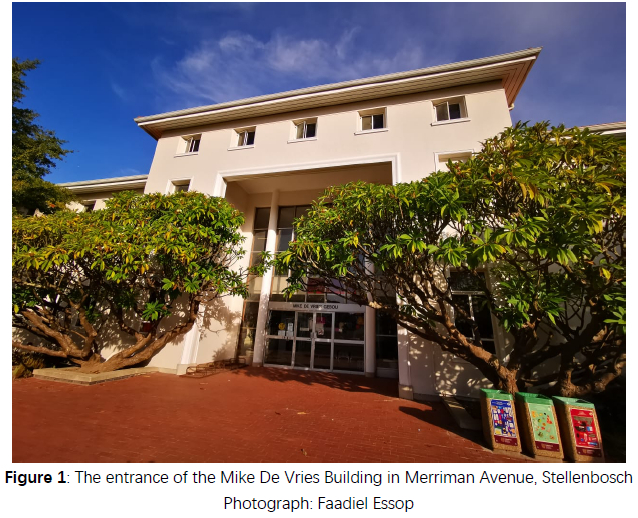
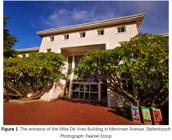
It all started around five years ago with a blank wall in the Mike De Vries Building (in Stellenbosch) that houses the Department of Physiological Sciences where my office was located at the time (Figure 1).
I was the incumbent departmental chairperson and would each day - upon entering the building's foyer - view the blank wall before continuing up the flight of stairs to the first floor. As a reflective person, the wall preoccupied my thoughts regarding how to best fill this strategically located space with artworks that would promote messages of equity, inclusivity, and social justice, such that students, faculty, and visitors could engage with it in regular and meaningful ways. This impetus was derived from my observations made of the Stellenbosch campus where there was a dire lack of symbology that was inclusive enough to accommodate all students and staff. It was not unusual when walking around this scenic campus to notice that many of the building names were in Afrikaans, while numerous sculptures, statues and artworks still largely reflected the history and contributions of only one particular grouping.
I subsequently attended a Faculty of Science board meeting where a senior staff member from the Transformation Office delivered a thought-provoking presentation on visual redress efforts within the university. I was intrigued by the idea and thereafter contacted him to share some of my thoughts regarding the blank wall in our building. He acknowledged these concerns and referred me to Professor Elmarie Costandius who was based at the Department of Visual Arts and who had successfully spearheaded several visual redress projects on the campus (Fataar & Costandius, 2021). I subsequently contacted her to enquire about the possibilities for the wall and although I indicated that I was willing to take a walk to her office for our first meeting, she felt that it was best we met in the Mike De Vries Building. This early interaction already revealed a lot about Professor Costandius' personality and character, such as her gentle and kind demeanour, humility, and willingness to walk (in a literal sense in this instance!) the extra mile for others.
Around fifteen minutes before our first encounter, I began to refine and consolidate my ideas regarding the wall and imagined it being filled with artworks linked to indigenous populations such as the San and Khoi. I was also keen on including some of the interesting geometric shapes generated by the Ndebele tribes of South Africa. Moreover, I conceived a potential timeline for the project and aimed for her to complete the artwork within a few weeks. Upon meeting her for the first time, I was immediately struck by Professor Costandius' modest and humble behaviour and how attentively she listened to my ideas and the proposed timeline. She thereafter systematically dismantled my proposals but in such a kind manner that I marvelled at the gentle way that she went about it. I often used to joke with her regarding our first meeting and that there was a sense of beauty in the way she gently shifted me away from my preconceived ideas. Professor Costandius' response to such type of joking was always the same, namely a hint of a smile and a naughty chuckle.
She proposed that we adopt a bottom-up and inclusive process for the visual redress project. This led to us having an in-depth discussion about the building and its spaces, the different departments present, the nature of research work being pursued, and an idea of the people who worked in the building and those that passed through. After learning that the site was shared by the Departments of Physiological Sciences, Chemistry, and Animal Sciences, she suggested we form a core group that included representatives from every department housed in the building. This group also had to be constituted by co-opting staff and students from across the spectrum and would need to be as diverse as possible. Moreover, the plan was for the group to work together for several months to produce a suitable artwork that would eventually be mounted onto the blank wall. I felt reinvigorated after our first meeting and this interaction left me with a strong impression regarding the possibilities of stepping outside of one's discipline to work with others, and how such liaisons offered significant potential to unlock inclusivity, creativity and innovation. It also reminded me of the science historian and philosopher Arthur Miller's (2014) perspective on the convergence of science and art and how this can expand human experience.
Constructing the collage: A healing process
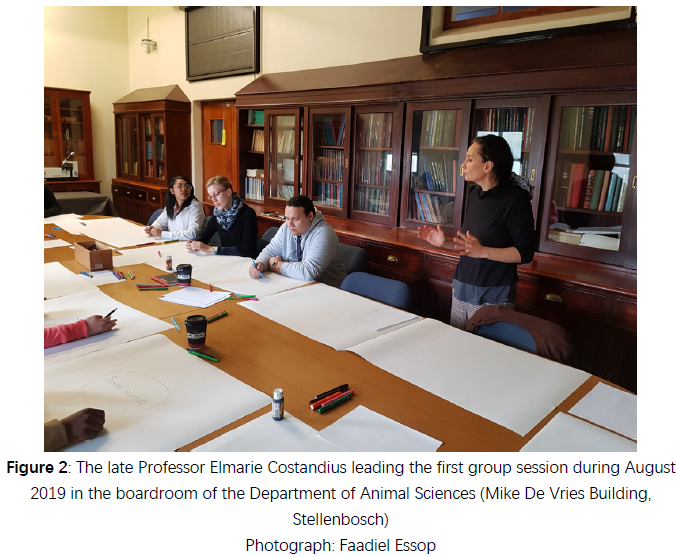
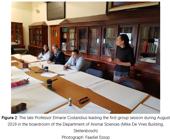
The core group's first meeting occurred on the ground floor of the Mike De Vries Building, in the board room of the Department of Animal Sciences. I realised that the mere act of venturing outside of our offices to physically go to this boardroom (for the first time for several of us) symbolised the silo-type mentality and the relative lack of inter-disciplinary engagement and conjoint work typically found within the higher education sector. The boardroom was old-worldlike and contained dark wooden cabinets with glass doors and filled with various volumes, while some older scientific equipment was stored in the other cabinets. As the group rather nervously assembled around the long wooden table, Professor Costandius laid out large white sheets of paper together with numerous types of crayons, brushes and paint (Figure 2).
This followed a group discussion (led by Professor Costandius) on various themes such as diversity, inclusivity, equity, visual redress, and social justice. The brief was then for each group member to capture and express the concepts discussed but through the medium of art; so, a real case of the scientists meeting the artists. The core group was somewhat intimidated at the start and posed several technical questions regarding the painting task and initially worked with some caution and restraint. At the end of the session, she requested each participant to share the meaning of their specific artistic expressions. She attentively listened and positively acknowledged all efforts and then captured the essence of the different inputs. She also adopted a robust inclusive approach and allowed enough time and opportunities for others to contribute to the discussion and/or to elaborate if so required. Thus, Professor Costandius successfully managed to create a warm yet challenging space where everyone felt complete freedom to express their thoughts and ideas. Such sessions were repeated several times over for a period of more than four months. Here, it was interesting to witness how - with time - group members became more relaxed and fully embraced the idea of expressing their feelings, emotions and thoughts through art. It was also heartening to observe how the swishes of paint across the pages became larger, bolder and more expressive with time. Upon reflection, such interactions are well captured by Dr. Mae Jemison (2002) (a physicist and astronaut) who stated that 'the arts and sciences are avatars of human creativity'.
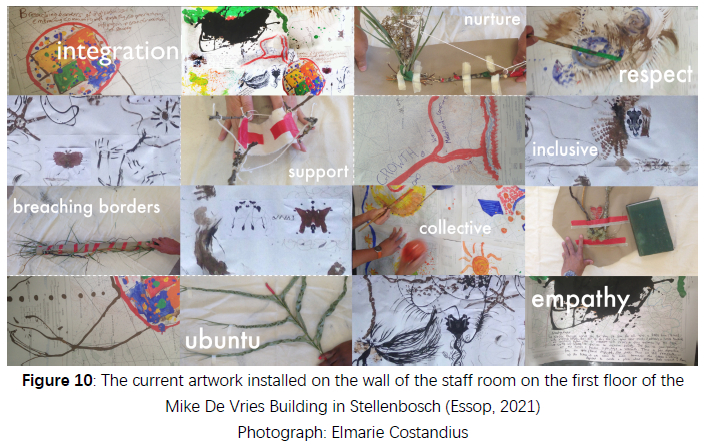
For each of these sessions, Professor Costandius would arrive with different types of materials such as intact, old books that had to be repurposed by the group in terms of the discussions and to then represent such concepts through artworks. Other materials included branch twigs and bird nest-like materials. She also brought along a colleague from the Drama Department to some of the sessions, and this meant the group now had to perform certain movements, body postures and interactions to best capture concepts discussed, for example transformation, inclusivity, and equity. The process that Professor Costandius adopted meant that the group met regularly and spent several months working together. Moreover, through the process of art making group members learnt more about each other in terms of their respective life stories, worldviews, philosophical outlooks, opinions on equity and transformation, and so on. Thus, the process itself became important by providing a unique vehicle for sharing, healing and providing closure within a diverse group of people. Furthermore, most of the group members indicated that they looked forward to such sessions as it became therapeutic in nature and promoted well-being. As the word spread about such sessions, other colleagues and students clamoured to also become part of the group, even though this was not possible. This approach is well documented in Professor Costandius' work, for example she writes that a focus on artistic practice 'allows space to think of art education not as mere education about art, in other words art education restricted to students enrolled in formal art courses, but as education through art' (Perold & Costandius, 2015). In agreement, I also previously commented on this: 'The process adopted allowed for difficult issues regarding identity, redress and transformation to be dealt with in a sensitive and harmonious way' (Essop, 2021). After more than four months, the group finally produced a striking collage that consisted of sixteen artworks with different phrases for e.g. 'integration', 'support', 'Ubuntu', 'nurture', and so on. This collage was subsequently shared with the various departmental heads in the building and their respective environments. It received their resounding support. The collage was previously published in my book chapter and can be viewed here (Essop, 2021).
Encountering roadblocks and uncovering the notion of scientific elitism
After obtaining a cost estimate to produce and install the artwork, the Transformation Office kindly offered to provide half of the estimated budget. I subsequently approached the Dean of Science's office and confidently expected them to match this amount. However, I was surprised by the response of one of the senior administrative officers who objected to the visual redress project on several fronts. Some of the objections included that: a) the appropriate procedures were not followed in terms of the project, b) the artwork was not 'scientific' enough, and c) such an installation presented several logistical challenges such as the blank wall's surface being too rough and that the sunrays in the foyer would cause the artwork to fade. After communicating such bureaucratic manoeuvres to Professor Costandius, (for the first time) I observed this gentle soul being frustrated together with a tinge of anger. I vividly recall her sarcastic quip: 'do they then want us to stick a picture of a microscope onto this beautiful art piece?' After some discussion, the two of us agreed not to back down as the correct procedural channels were indeed followed in terms of the project, while the collage was produced because of an inclusive approach and hence a true expression of those working in the building.
However, as the Covid-19 pandemic was now in full swing this meant that the project stalled for a few years. During August 2021, I also took up a new position at Stellenbosch University's medical school which is located more than thirty-five kilometres from Stellenbosch. At this time, I was approached by Professors Costandius and Aslam Fataar who were working (as editors) on a book volume focusing on visual redress and transformation at Stellenbosch University (Fataar & Costandius, 2021). Here, they invited me to contribute a chapter on the visual redress project attempted for the Mike de Vries Building. I initially tried to opt out as this was not my discipline and was simply too far beyond my comfort zone as a physiology researcher. It was indeed a fearsome prospect for a physiologist to write several thousand words about an art project. However, I then witnessed more of Professor Costandius' personality traits as she continuously reassured me that I was indeed capable of tackling the project and that she had full confidence that the chapter would be successfully completed.
I was eventually persuaded and committed to writing the book chapter even though it felt uncomfortable and seemed a daunting task. However, I drew some strength from the writings of motivational authors such as Robin Sharma (n.d.) who indicated that 'as you move outside of your comfort zone, what was once the unknown and frightening becomes your new normal'. Upon reflection, I am delighted that she convinced me to write and successfully complete the chapter as this process required significant introspection regarding the transformation of medicine and STEM curricula and praxis, together with other factors such as the influence of neoliberalism on higher education, the corporatisation of tertiary institutions, increased bureaucracy and the idea of scientific elitism. I especially homed in on scientific elitism that refers to the notion that STEM training and its applications are devoid of socio-political, economic, and historic contexts, as revealed by the science administrator's comment that the artwork was not scientific enough. In support, in my book chapter it is stated:
Moreover, efforts to complete the project also revealed the power plays of Institutional bureaucrats. I propose a push-back against this to ensure that academic freedom and institutional autonomy are not further eroded, and also that 'scientific elitism' should be tackled such that the training of scientists be more closely linked to socio-political and historical contexts. Together, such holistic transformation efforts should enhance the social legitimacy of the Faculty and SU (Stellenbosch University). ( Essop, 2021: 142).
Importantly, this writing process also allowed the identification of a gap in terms of curriculum development for the medical and STEM disciplines. Thus, it became clear that there is a strong need to transform these curricula beyond the mere development of practical and technical skills and competencies but to also include facets such as socio-political and historical contexts, while also focusing on values such as humanity and empathy, in this context.
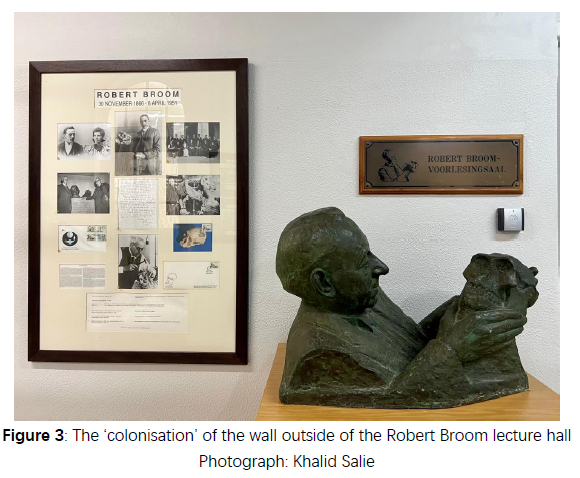
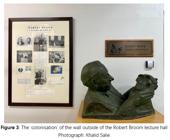
This reflective process during the chapter writing also brought into focus the role of medicine and STEM as active partners of the colonial project and its remaining structural effects in terms of contemporary curricula as well as scientific and medical practices and applications (Boiselle, 2016; Wolf, et al., 2020). For example, as I explored other spaces within different Faculty of Science buildings, I discovered a lecture hall named in honour of Dr. Robert Broome, despite some of his research work aimed at demonstrating the racial superiority of fair-skinned individuals over darker-shaded ones (Figure 3). For example, Broom writes '(t)hat he (the Bushman) is degraded, none will deny. But was he always degraded, or is he the remnant of a race as intelligent as ourselves?' (Štrkalj, 2000).
Teaching Advancement at Universities (TAU) years and addressing the knowledge gap by curriculum remodelling
Such encounters provided me with a renewed motivation to pursue the decolonisation of medicine and STEM curricula to thereby advance social justice. Thus, venturing beyond the confines of my scholarly discipline unlocked several new research fronts to pursue. During this time, I was selected to join the TAU programme and designed my research project to address the knowledge gap in biomedical sciences training by developing a unique postgraduate module (named the Features of Science) that included for e.g. a focus on socio-political and historical contexts, science philosophers, medicine and racism, decolonisation, and a cultivation of humanity.
For the TAU project I closely worked with an enquiry group that included colleagues from various universities and different disciplines, which certainly stimulated creativity and innovation. The group was ably led by Professor Vivienne Bozalek whose ideas resonated strongly with mine such as the influence of neoliberalism on higher education and the publish and perish culture (Baltodano, 2012). Bozalek could identify the neoliberal-type thrust for increased research outputs as 'fast' science and exposed me to an emerging alternative called 'Slow science' (see for instance, McGarry, et al., 2025). Here, there is less emphasis on the relentless production of large numbers of research outputs while attempting to address issues such as quality versus quantity, and collaborative projects compared to lone ranger-type ones (Stengers, 2018). As a physiologist, the TAU programme led to deep reflection regarding the tau protein that is found in nerve cells and that provides intracellular support to ensure the proper functioning of neurons.
I refer to this phenomenon as 'micro-tau'. In parallel, there is what I term as 'macro-TAU' i.e. the TAU fellowship programme managed by the Department of Higher Education and Training that provides similar support to aspiring fellows through its various enquiry groups. Regarding micro-tau, such proteins also allow for communication within nerve cells as well as intra- and inter-organ communication. Likewise, macro-TAU aims to foster intra- and inter-disciplinary communication and collaborations to thereby ensure enhanced creativity, innovation and problem solving of major problems facing South African higher education. Of note, malfunctioning tau proteins can lead to dysregulation, disrupted communication in the brain and eventually to cognitive decline. In contrast, I experience that the healthy support structures of macro-TAU usually function optimally to ensure that excellent support, communication and engagement sessions can lead to cognitive enhancement.
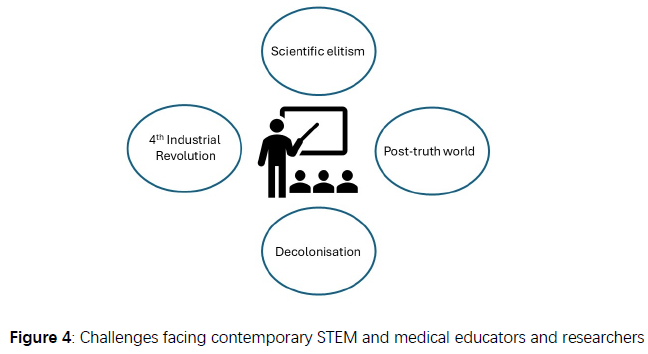
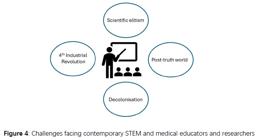
When considering major contemporary contexts for the Features of Science module, four key ones were identified to be a focus of the new curriculum (Figure 4). Firstly, and as discussed before, scientific elitism is a problematic issue as medical and STEM researchers view their disciplines as neutral and devoid of any context and is therefore not generally included in such curricula. Secondly, there is the challenge of the fourth industrial revolution with increased specialisation of knowledge and a significant focus on technical skills and competencies to supply the job market. The rise of technologies such as artificial intelligence raises further questions regarding the future role of humans in society and concerning the nature of medical and STEM research endeavours and applications. Thirdly, scientists and medical experts are now operating in the post-truth world where objective facts are less influential in determining public opinion compared to increasing appeals to personal beliefs and emotions (Sparks, 2017). For example, during the Covid-19 pandemic many decided against vaccination because of their personal beliefs and emotions, diametrically opposing clinical guidelines derived from evidence-based medicine (Larson, et al., 2022). Finally, although there are increased attempts to decolonise higher education this is lagging far behind in the STEM and medical fields (Boiselle, 2016; Naidu, 2023).
The new Features of Science module also aimed to enhance public engagement skills, while cultivating values such as humanity and empathy in the medical and STEM domains. Here, the contemporary philosopher Martha Nussbaum (2006) proposes that the education of world citizens is rooted to cultivating humanity and that three capacities should be pursued in this regard: a) a critical examination of the self and traditions, b) the connection of an individual to others, and c) to imagine what others are experiencing through empathy. This notion of a cultivation of humanity is further strengthened by others, for e.g. Wendell Berry (1987: 154) states that the 'thing being made in the university is humanity, and that universities are mandated to make or to help to make is human beings in the fullest sense of those words - not just trained workers or knowledgeable citizens, but responsible heirs and members of human culture.' He further states (1987: 155) that the 'underlying the idea of a university, the bringing together, the combining into one of all the disciplines - is the idea that good work and good citizenship are the inevitable byproducts of the making of a good - that is a fully developed human being.'
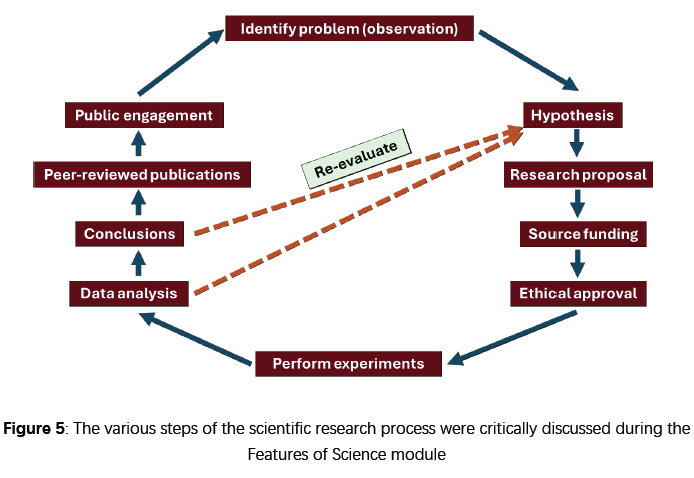
The Features of Science module consisted of eight two-hour long sessions for BSc (Hons) biomedical students (n=thirty-three; Faculty of Medicine and Health Sciences, Stellenbosch University). In line with the overall philosophy of the module, students were required to complete various readings before class. The students were assigned to relatively small groups (n=five) that then discussed (in a Socratic manner) several open-ended questions regarding the listed topics. For example, the social contract between science and society was critically reviewed as well as an exploration of the demarcation between science and pseudoscience (Álvarez & Zamora-Bonilla, 2013; Gordin, 2017). Moreover, students were exposed to the works of renowned philosophers of science (Karl Popper and Thomas Kuhn) and how such concepts are still influencing contemporary STEM and medical practices (Rowbottom, 2011). There was also a critical review of the major steps in the scientific process, i.e. considering the nature of hypothesis generation, ethical approval, grant writing, sourcing research funding, completing experiments and data analyses with integrity, the generation of peer-reviewed publications, and the nature of science and public engagements (Figure 5).
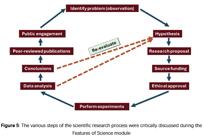
Some challenges relating to this process of knowledge generation were also considered, for e.g. the impact of neoliberalism and the publish and perish culture, and how such pressure is increasingly threatening the integrity of the scientific research enterprise (Macleod, 2021). We also included some sessions on public engagement to train students how to better engage with traditional media outlets and various ways to best interact with the broader public using social media platforms.
There were also discussions regarding the post-truth world and its influence on STEM and medicine, together with its impact on broader society. In addition, we focused on what constitutes true 'expertise' versus the proliferation of pseudo experts on various social media platforms, and the psychology of conspiracy theorists and how to potentially debunk them. Two sessions focused on how the idea of 'race' was firmly embedded within the colonial project, and the misuse of science and medicine to justify the superiority and subjugation of fair-skinned peoples over darker-skinned ones (Braun, 2015; Looi, 2023). Here, there was an emphasis on historical contexts as well as a focus on the structural implications of race classifications together with ongoing practices in clinical medicine. For example, such discussions traced the historical origins of racial classification from the time of the Swedish taxonomist Carl Linnaeus (1707-1778) to Johann Blumenbach (1752-1840) and his work to classify humans based on skull anatomy and skin colour, to social Darwinism and the spawning of the eugenics movement (Wolf, et al., 2020). In addition, there was also a focus on how such practices were embedded in terms of clinical practice for e.g. dark-skinned patients with chronic kidney diseases receiving lesser treatment than fair-skinned individuals because of (incorrect) race-based clinical algorithms (Wright, et al., 2022).
Of note, the groups were carefully constructed by combining students from different disciplines such as Medical Physiology, Clinical Anatomy, and Molecular Biology and Human Genetics. This was a deliberate attempt to break disciplinary barriers and to promote inter-disciplinarity. The discussions were facilitated by a faculty member that kept in mind our broad philosophical outlook to acknowledge human complexity in learning, and to encourage critical thinking and self-reflection. Safe and brave spaces were created for students to freely share their opinions, and this exercise again highlighted how the training of biomedical sciences students sometimes fall short in terms of critical thinking and freely expressing alternative ideas. Here, some students initially felt uncomfortable when their opinions were requested, bashfully indicating that such type of interactions did not form part of their previous training. At the end of such discussions, each group would share their opinions with the entire class, and key themes identified. The assessments employed were also matched to the philosophical outlook of the module. For example, students were required to complete self-reflective journals, and again this was an exercise that they have not previously encountered. Some students indicated that they initially found it an uncomfortable task but that they thereafter grew into it as the module went along. In addition, several open-ended research questions were posed to the students to investigate and then share their findings (as group and video presentations) with the class and staff members. The students were also required to write an essay about an open-ended contentious issue that would require their own opinions on the matter to be put forward.
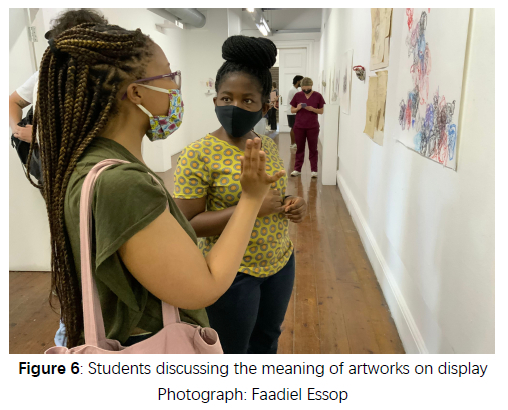
Curriculum renewal: The tango between medicine and artTo further ensure the dynamism of the module, I also reached out to the Department of Visual Arts to do a conjoint project together with Professors Elizabeth Gunter and Costandius. We launched a project called Art@Heart@Art, attempting to bridge the gap between the medical and arts disciplines. I initially delivered an informal talk to second year Art students about the physiology of the heart and how prolonged exposure to various risk factors such as chronic psychosocial stress, smoking, and poor dietary choices can eventually lead to the onset of cardiovascular diseases. This was followed by a lively engagement with the students, whereafter they were required to capture their interpretation of such concepts through the medium of art within a stipulated time-period. Here, I also learnt that the Art students felt a sense of inferiority when comparing themselves to medical and STEM students, further supporting the idea of elitism linked to such disciplines. A few weeks later a public exhibition of their artworks were arranged, and we subsequently organised a special viewing where the biomedical students were instructed to engage with the Arts students about their respective artworks (Figures 6 and 7).
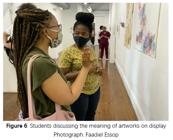
It was heartwarming to observe such dynamic inter-disciplinary interactions, and several core themes emerged based on written feedback received from the biomedical students. Firstly, some noted that while medicine and science often focused on the detail, their engagement with the artists pushed them to also consider broader societal contexts. Moreover, they noted that such approaches should be kept in mind when pursuing the design of novel clinical therapies and diagnostic techniques. Secondly, some students commented that although the disciplines of medicine and art appear to be different, there is some overlap and that it is just a matter of viewing a problem from different perspectives. Thirdly, others felt that scientists should consider taking a step back from the detail (i.e. current reductionist approach) and instead consider the whole (a more holistic approach) as this would likely enhance innovation and discoveries.
The student feedback also revealed a highly positive experience for the Features of Science module, while they agreed that it was important to possess insights regarding the different topics discussed in classes. The module also made them realise that scientists can often be removed from society, that it was essential to connect with their own humanity, and the need to better engage with society to relay key messages and to gain their trust. They also felt that the module increased their critical thinking and that they should consider multiple perspectives and viewpoints when dealing with challenging health problems. Although several students experienced some discomfort during the race-related discussions, some appreciated the safe spaces that allowed for the open discussion of such awkward topics. Others commented that uncomfortable conversations are sometimes necessary to ensure personal growth. Of note, the module is still successfully running, and the vision is to now expand its footprint beyond the medical school and Stellenbosch University.
Last self-reflections and the next steps...
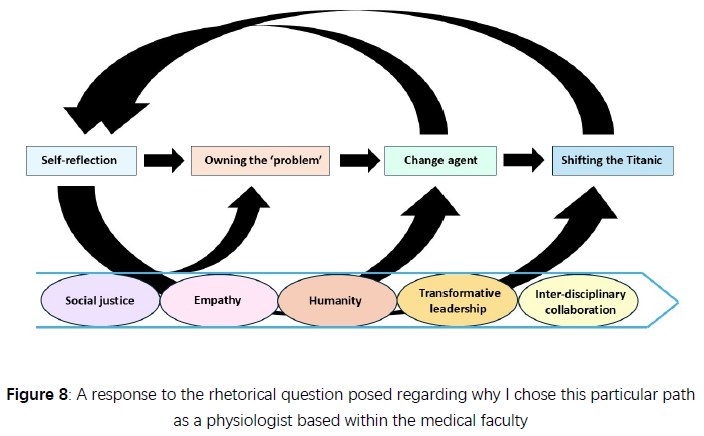
This reflective journey now comes full circle and returns to the original question posed to me at the Stellenbosch University conference on race. How did I get here? It is my opinion that it starts with being a reflective person or otherwise creating adequate time to do so if this is not the case (Figure 8).
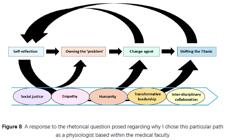
My observations over many years are that many of those working in the STEM and medicine disciplines do not always critically reflect on what they are doing and how all it all fits together, i.e. the how, the why and the what in terms of the research process (refer to Figure 5) and how this relates to for example the university and broader society. Many researchers in these disciplines almost automatically 'buy' into the prevailing paradigm - such as to publish or perish, the corporate university - without any critical insights how this is pursued and how it is applied and practiced.
The next step is the important aspect of taking ownership of a particular problem(s) or challenge(s) within such contexts (Figure 8). In my case, I looked at the blank wall, but I sawand then decided to act upon it by making it 'my problem'. Too often, we look but we do not see and/or there is inaction or indifference due to being too busy chasing research outputs and career progression, and that such issues are not the concern of the STEM and medical disciplines. It is my belief that taking ownership of such problems/challenges will create the necessary thrust to become a successful change agent. Of note, this will require time and effort together with facing various obstacles as demonstrated in this current reflection. Such time and efforts will also not necessarily lead to a promotion in terms of climbing the various rungs of career progression. However, this imperative is tightly coupled to the true function of a university as a space where existing paradigms must be challenged, where academic freedom is preserved and enhanced, and to cultivate a sense of humanity in especially our graduates. The current transactional way whereby tertiary institutions have been constructed has unfortunately resulted in especially STEM academics becoming blinkered to major, societal issues. This has attitude has filtered down into STEM and medical curricula where this an increased obsession with numbers and producing technically and competency type graduates compared to genuine intellectual disrupters and dissenters. Although change in higher education is relatively slow and much like trying to shift the Titanic, this should not deter our efforts to challenge existing dogmas of the corporate university to shift its course (Figure 8). Such actions can then be reflected upon again to ascertain strengths, weaknesses, opportunities and to then refine strategies to lead to further change in the right direction. I am also of the opinion that this path should be pursued together with ideals to advance and promote social justice, empathy, and humanity and to achieve inter- and transdisciplinary collaboration by transformative leadership (Figure 8).
My current focus is to target more blank walls, and this meant I recently worked with the late Professor Costandius on a Shared Roots module for first year students at Stellenbosch University. She requested me to do a podcast that linked characteristics from the physiological functioning of the heart to the emotional heart, and to ultimately to show how one can enhance the health and well-being of our students. I also acted as the editor of a prestigious book volume that was commissioned by the International Union of Physiological Sciences about a year ago. Here, this unique volume focuses on several aspects covered in the Features of Science module, aiming for it to serve as a useful resource to better train STEM and medical students, but now at a more global level. It is entitled 'Truth unveiled: navigating science and society in an era of doubt' and was recently published (Essop, 2025). My inter-disciplinary ventures also recently triggered a new focus area to pursue i.e. on the decolonisation of science and medical curricula, and especially dealing with the notion of scientific racism.
Collectively, such inter-disciplinary liaisons undoubtedly triggered unexpected outcomes, and I am grateful for having had the wonderful opportunity to work together with outstanding individuals such as the late Professor Costandius. I have certainly become a more rounded scholar, and my work is now far more in line with Ernest Boyer's (1990) approach to scholarship and the work of the professoriate with excellent integration between the scholarship of discovery, teaching, integration and applications. I am also firmly of the opinion that this approach can be achieved by others and that it is not only restricted to persons like myself or the late Professor Costandius. There is an African proverb that captures this well, i.e. 'if you think you are too small to make a difference you haven't spent a night with a mosquito.' (African proverb, n.d.). To shift the proverbial Titanic requires greater self-reflection by medical and STEM researchers and academics and to then begin to tackle smaller parts of the big challenges we are facing.
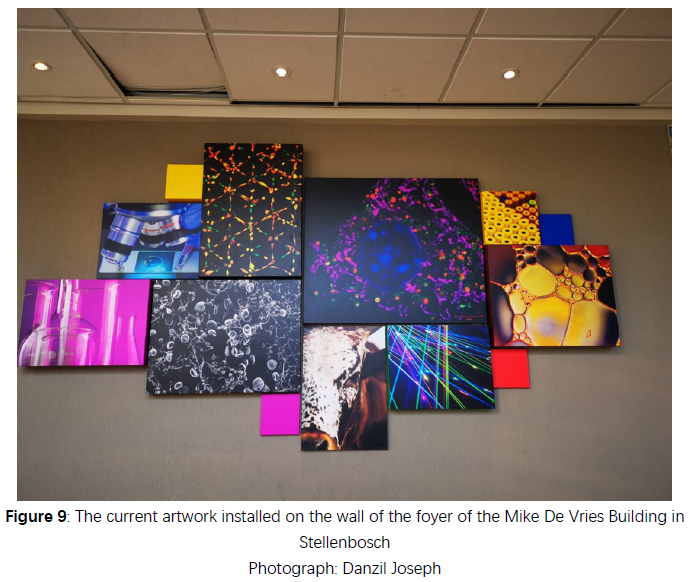
The final part of this reflective piece will complete the story of the collage that was produced for the blank wall of the Mike De Vries Building. Following the sad passing of Professor Costandius, a colleague recently informed me that the Faculty of Science has now installed some artworks on the wall, although it was - sadly - not the original collage that was created by the core group (Figure 9).
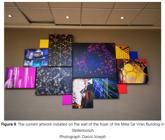
Here, the images mounted appear more 'scientific' in nature and raises an interesting and more light-hearted question: did Science trump the Arts? I also learnt that the original collage found a resting place where it is now mounted in the staff room of the Department of Physiological Sciences, on the first floor of the Mike De Vries Building (Figure 10). A small plaque acknowledging the efforts of Professor Costandius is mounted next to it and states:
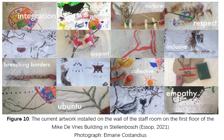
This single collective art representation was created by a working group comprising postgraduate students, and academic and non-academic staff members of diverse ages, ethnicities and genders, who worked in the Mike De Vries Building during the latter half of 2019. It is made up of 16 smaller art panels overlaid with some English words. The chosen words were recurring motifs that emerged from a number of interactive art sessions facilitated by Professor El marie Costandius. Themes such as inclusivity , identity, transformation and redress were explored through a variety of materials and methods. Encouraging discovery, self-reflection, and dialogue among participants. The final collage was assembled by Prof. Costandius, who photographed all artworks produced during this time, and selected the 16 representative images for the final design.
Both sets of artworks were installed during June 2024, soon after Professor Costandius' sad passing. I often wonder whether she would be happy with the location of the final installation. You be the judge...
African proverb. n.d. If you think you are too small to make a difference, you haven't spent a night with a mosquito. [Quote]. Retrieved from https://quotefancy.com/quote/2005599/Mzilikazi-wa-Afrika-If-you-think-you-are-too-small-to-make-a-difference-you-haven-t-spent/ (Accessed: 24 January 2025).
Álvarez, J.F. & Zamora-Bonilla, J. 2013. The social contract of science. In Luetge, C. (Ed.). Handbook of the Philosophical Foundations of Business Ethics. Springer, Dordrecht.
References
- Baltodano, M. 2012. Neoliberalism and the demise of public education: The corporatization of schools of education. International Journal of Qualitative Studies in Education, 25(4): 487507.
- Berry, W. 1987. Home Economics. San Francisco, CA: North Point Press.
- Boisselle, L.N. 2016. Decolonizing science and science education in a postcolonial space (Trinidad, a Developing Caribbean Nation, Illustrates). Sage Open, 6(1), https://doi.org/10.1177/2158244016635257
- Boyer, E.L. 1990. Scholarship Reconsidered: Priorities of the Professoriate. Princeton, NJ: Carnegie Foundation for the Advancement of Teaching.
- Braun, L. 2015. Race, ethnicity and lung function: A brief history. Canadian Journal of Respiratory Therapy, 51(4): 99-101.
- Essop, M.F. Reflections on transformation in a science context and future implications. In Fataar, A. & Costandius, E. (Eds.). 2021. Evoking Transformation: Visual Redress at Stellenbosch University. Stellenbosch: African Sun Media, 141-167.
- Essop, F (Ed.). 2024. Truth Unveiled: Navigating Science and Society in an Era of Doubt (Fundamentals of Physiology). Amsterdam: Academic Press.
- Fataar, A. & Costandius, E. (Eds.). 2021. Evoking Transformation: Visual Redress at Stellenbosch University (1st ed.). Stellenbosch: African Sun Media.
- Gordin, M.D. 2017. The problem with pseudoscience: Pseudoscience is not the antithesis of professional science but thrives in science's shadow. EMBO Reports, 18(9): 1482-1485.
- Jemison, M. 2002. Teach arts and sciences together. TED Conferences. Available at: https://www.ted.com/talks/mae_jemison_teach_arts_and_sciences_together/ (Accessed: 14 January 2025).
- Larson, H.J, Gakidou, E. & Murray, C.J.L. 2022. The vaccine-hesitant moment. New England Journal of Medicine, 387(1): 58-65.
- Macleod, M. 2021. Want research integrity? Stop the blame game. Nature, 599(7886): 533.
- McCoy, D., Kapilashrami, A., Kumar, R., Rhule, E. & Khosla, R. 2024. Developing an agenda for the decolonization of global health. Bulletin of the World Health Organization, 102(2): 130136.
- McGarry, D., Bozalek, V. & Martin, A. 2025. Growing a lateral line for slow science. In Essop, F. (ed.). Truth Unveiled: Navigating Science and Society in an Era of Doubt. Cambridge: Academic Press, Elsevier, 111-139.
- Miller, A.I. 2014. Colliding Worlds: How Cutting-edge Science Is Redefining Contemporary Art. New York: W.W. Norton & Company.
- Naidu, T. 2023. Coloniality lives on through medical education. The British Medical Journal, 383: 2294-2295.
- Nussbaum, M. 2006. Education for democratic citizenship. Public Lecture Series 2006, No. 1. The Hague: Institute of Social Studies.
- Rowbottom, D.P. 2011. Kuhn vs. Popper on criticism and dogmatism in science: a resolution at the group level. Studies in History and Philosophy of Science Part A, 42(1): 117-124.
- Sharma, R.S. n.d. As you move outside of your comfort zone, what was once the unknown and frightening becomes your new normal. [Quote]. Retrieved from https://www.brainyquote.com/quotes/robin_s_sharma_628740/ (Accessed: 24 January 2025).
- Sparks, M. 2017. Promoting health in a post-truth world. Health Promotion International, 32(4): 599-602.
- Stellenbosch University. n.d. Committee for the Institutional Response to the Commission's Recommendations. Available at: https://www.sun.ac.za/english/CIRCoRe/Pages/Conference.aspx. (Accessed: 16 August 2024)
- Stengers, I. 2018. Another Science is Possible. A Manifesto for Slow Science. Cambridge: Polity Press.
- Štrkalj, G. 2000. Inventing races: Robert Broom's research on the Khoisan. Annals of the Transvaal Museum, 37: 113-24.
- Teaching Advancements at Universities. n.d. TAU 3 Fellows. Available at: https://taufellowships.org.za/tau-three/ (Accessed: 16 August 2024)
- Wolf, S.T., Jablonski, N.G. & Kenney, W.L. 2020. Examining "race" in physiology. American Journal of Physiology Heart & Circulatory Physiology, 319(6): H1409-H1413.
- Wright, J.L., Davis, W.S., Joseph, M.M., Ellison, A.M., Heard-Garris, N.J. & Johnson, T.L. 2022. AAP board committee on equity. Eliminating race-based medicine'. Pediatrics, 150(1): e2022057998.

Accepted: 24 February 2025
Author biography
Faadiel Essop is a professor and director of the Centre for Cardio-metabolic Research in Africa (CARMA) at Stellenbosch University. His research focuses on the effects of chronic stress and also HIV on cardiovascular diseases onset. He is a recipient of the prestigious TAU Fellows Award for outstanding contributions to transformative education and for challenging scientific elitism.