Reimagining uses and gratifications: integrating media adoption theories for the digital age
Abstract
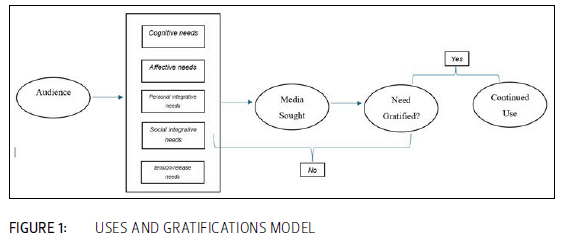
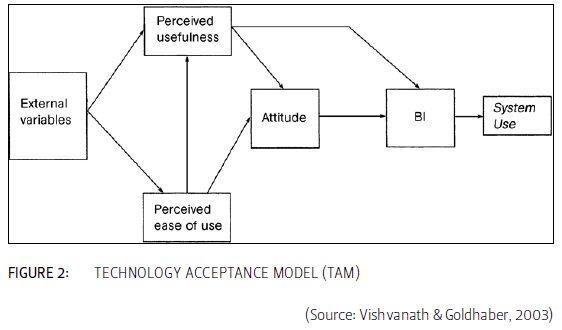
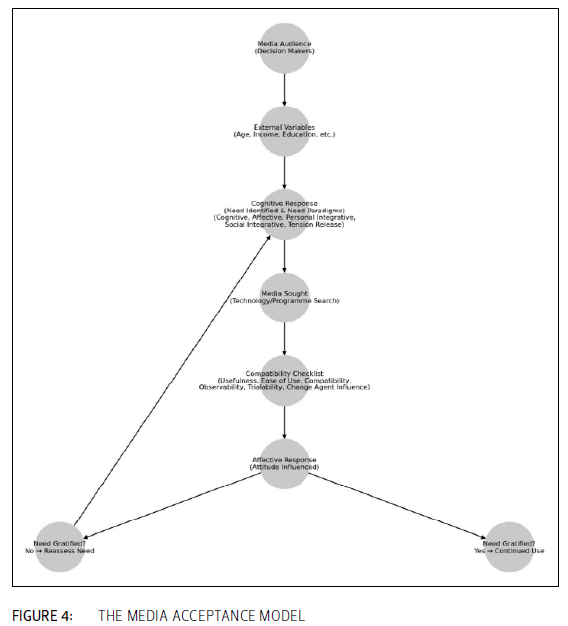
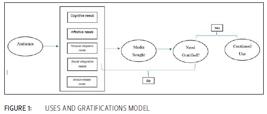
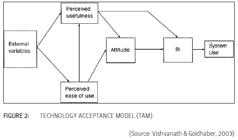
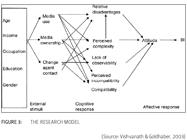
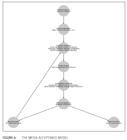
This article reimagines the uses and gratifications theory (U) by integrating it with the Technology Acceptance Model (TAM) and the diffusion of innovations theory (DOI) to better understand media adoption in the digital age. While U has been a foundational framework for explaining audience motivations for media consumption, its individualistic focus and lack of predictive power limit its applicability in today's rapidly evolving media landscape. The Media Acceptance Model (MAM) offers a comprehensive framework that combines the strengths of U, TAM, and DOI to address these limitations. MAM incorporates individual needs (from U), technological perceptions (from TAM), and social diffusion processes (from DOI) to provide a more holistic understanding of media adoption. The model emphasizes external variables such as socioeconomic status, cultural context and demographic differences, making it particularly relevant for diverse societies like South Africa. By integrating concepts such as perceived usefulness, ease of use, relative advantage and compatibility, MAM enhances predictive capabilities and offers a dynamic tool for analysing contemporary media consumption patterns. This article explores the theoretical foundations, limitations, and synergies of U, TAM and DOI, ultimately presenting MAM as a robust framework for understanding and predicting audience behaviour in the digital era.
Media Acceptance Model (MAM); audience behaviour; digital media consumption; needs paradigms; Technology Acceptance Model (TAM); diffusion of innovations theory; uses and gratifications theory; predictive frameworks; SDG 9
 Thumbnail
 Thumbnail
 Thumbnail
 Thumbnail