Factors affecting particulate matter concentrations in Gauteng province, South Africa: A systematic review
Abstract
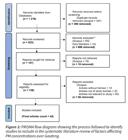
Gauteng is South Africa's largest urban and manufacturing hub and most populous province. There is widespread non-compliance with national ambient particulate matter (PM) standards in the province. This review aims to comprehensively assess strengths and weaknesses in the existing body of knowledge on the factors that affect PM concentrations in Gauteng. A systematic literature review of relevant studies is performed based on the PRISMA (Preferred Reporting Items for Systematic Reviews and Meta-analysis) method, to synthesise our understanding of local and regional sources of PM (PM2.5 andPM10) and its precursors, the transport mechanisms, and the spatial and temporal variations. While it is known that the major sources of PM in Gauteng are industrial and mining emissions, domestic fuel use, vehicular emissions, aeolian dust, and biomass burning, their relative contributions to ambient PM concentrations have not been satisfactorily quantified. Long-range transport of pollutants is governed by the position of the continental anticyclone, but it is not known how this will change in association with climate change, or how urban heat islands over built-up areas affect pollution transport. The lack of availability of consistent PM measurements at ambient air quality monitoring stations hampers the understanding of long-term trends in PM concentrations. Satellite observations, atmospheric dispersion models and chemical transport models offer great promise in assessing temporal and spatial variations in PM concentrations. It is recommended that data availability at a core subset of Gauteng's ambient air quality monitoring network be improved; source apportionment studies be conducted in densely populated areas where exposure levels are high; PM and precursor emissions from vehicles be quantified; and the environmental justice implications of the high spatial variability in PM concentrations be investigated. Prioritisation of these areas of research will aid the design of evidence-based interventions to reduce population exposure to harmful pollution levels in southern Africa's most densely populated region.
particulate matter; nitrogen oxides; sulphur dioxide; Gauteng province; source apportionment
 Thumbnail
 Thumbnail
 Thumbnail
 Thumbnail
 Thumbnail
 Thumbnail