Assessing anthropogenic contribution to PM2.5 from an urban residential area of Lagos, Nigeria using aliphatic hydrocarbon compounds as indicators
Abstract
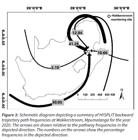
Aliphatic hydrocarbons in PM2.5 samples from a residential area of Lagos, Nigeria, were quantified using a Curie-point pyrolysis-gas chromatography-mass spectroscopy (CPPGC/MS). The total concentrations of Ʃn-alkanes (C20-C34), hopanes (Ʃ4Hopanes), and steranes (Ʃ3 Steranes) ranged from 1.8 to 146.6 ng m-3 (avg. 43.6 ± 35.1 ng m-3), 0.0 to 89.9 ng m-3 (avg. 18.7 ± 25.9 ng m-3), and 0.0 to 26.0 ng m-3 (avg. 3.3 ± 6.7 ng m-3), accounting for 0.2%, 0.1%, and 0.01% of the total PM2.5 mass concentrations, respectively. They also accounted for, 1%, 0.4% and 0.1% of the organic matter content, respectively, making them non-negligible component of the organic matter in this region. An evaluation of the n-alkanes source diagnostic indices revealed that engines powered by gasoline and diesel were the main sources of particulate matter aliphatic hydrocarbons in this area of Lagos, consistent with the results obtained from steranes and hopanes profiles. Based on the air mass trajectories, both local and regional air mass transports showed a significant influence on the amounts of carbonaceous materials and aliphatic hydrocarbon compounds arriving at the study site. The results from this study established the occurrence of anthropogenic air pollution in Lagos residential area with a major contribution from petrogenic sources.
ambient air quality; anthropogenic contaminants; n-alkanes; hopanes; and steranes
 Thumbnail
 Thumbnail
 Thumbnail
 Thumbnail