Linking air quality and quality of life for a just transition
Abstract
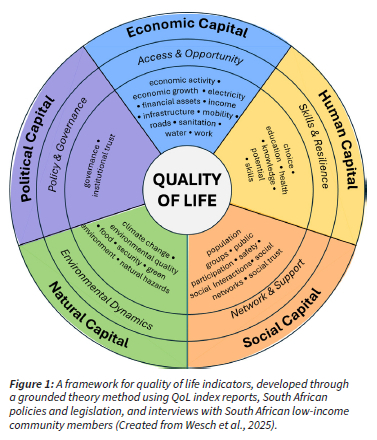
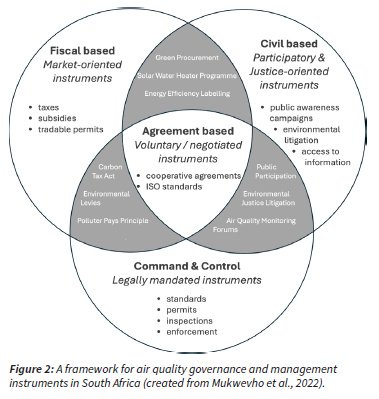
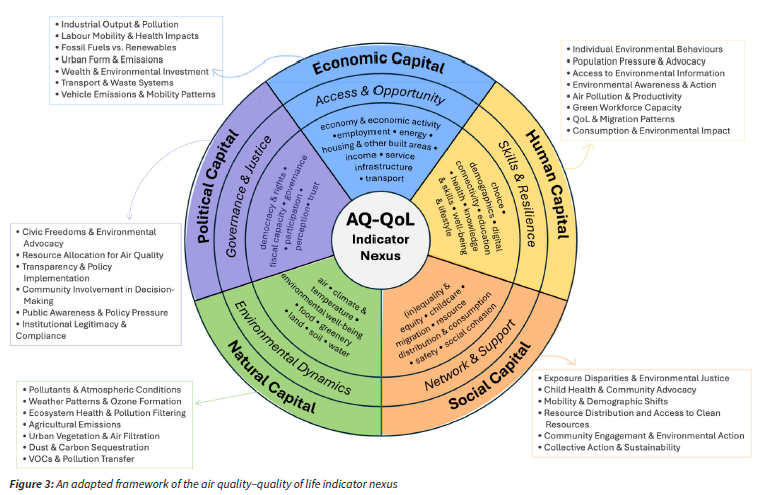
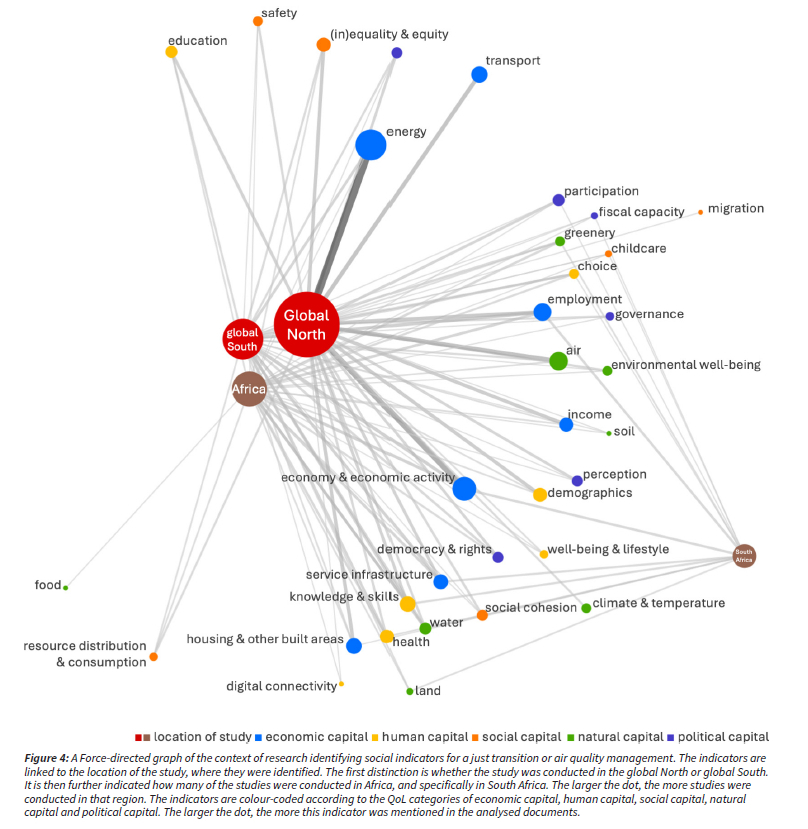
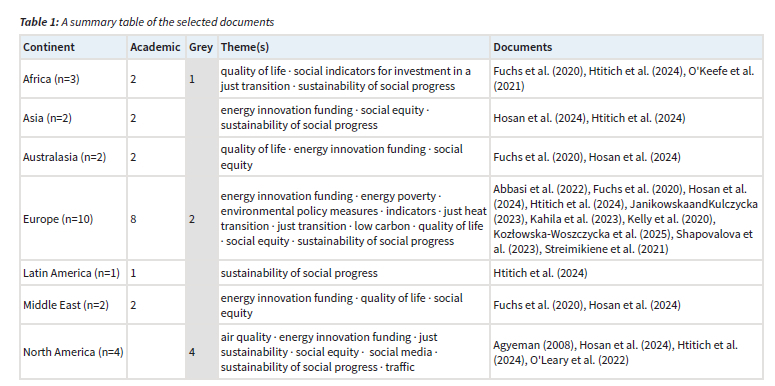
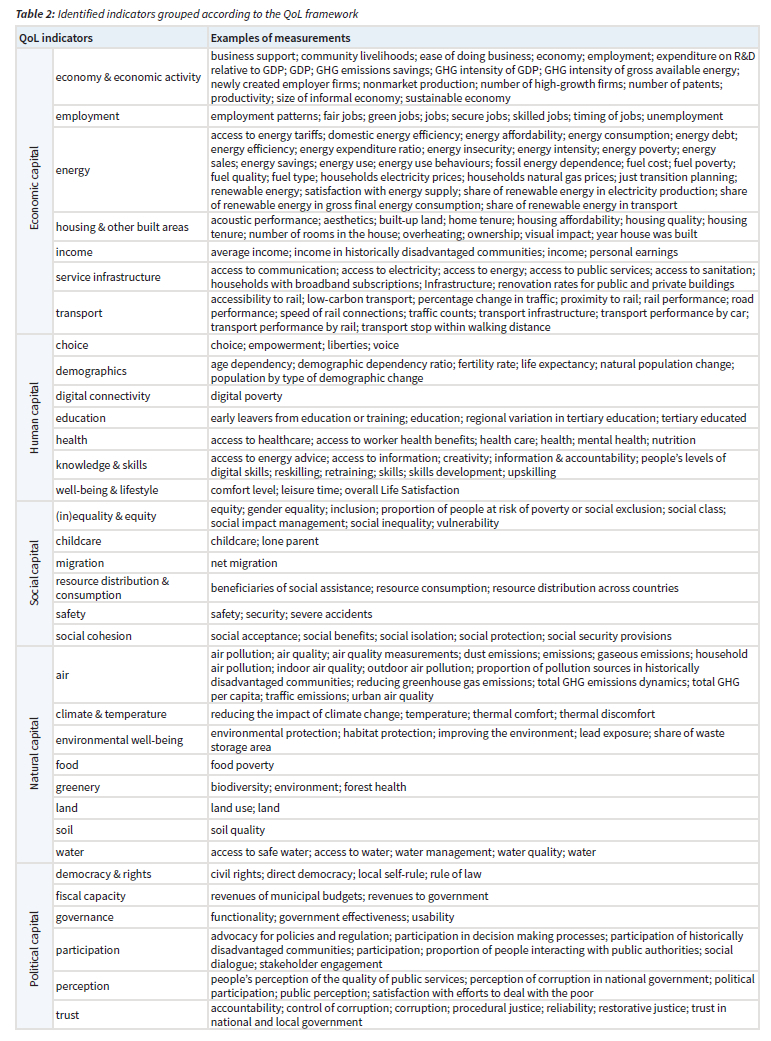
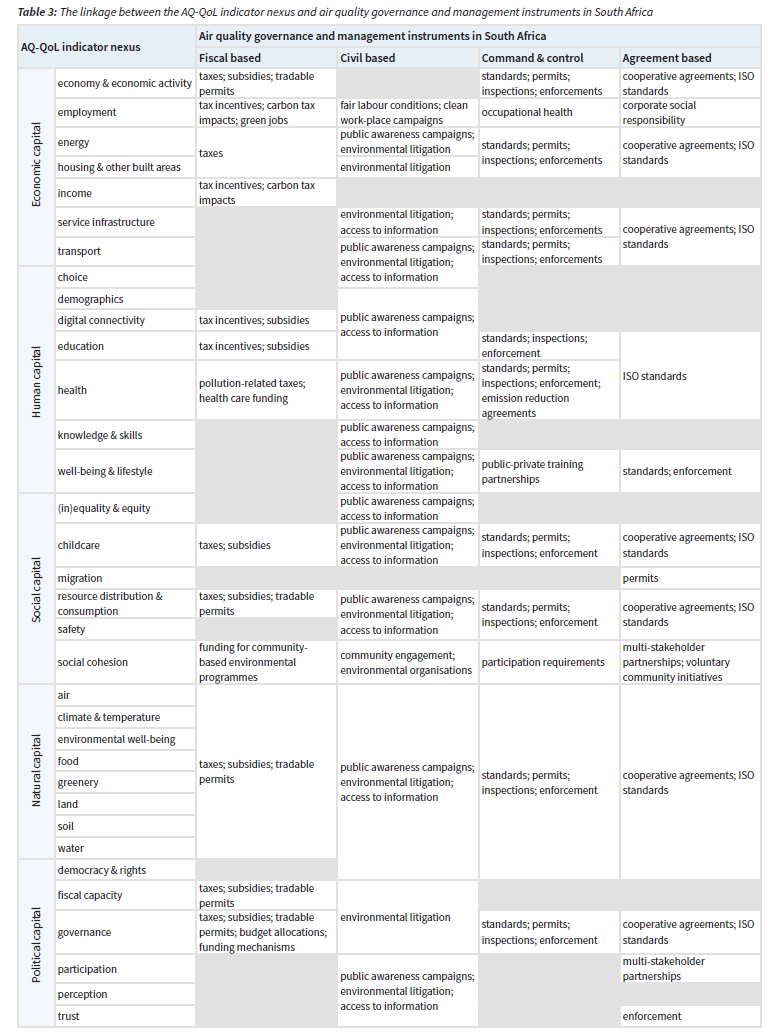
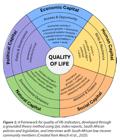
This study investigates how quality of life (QoL) indicators can be integrated into South Africa's air quality management system to support a just transition. To do this, framework application, literature synthesis and inductive coding is combined. Drawing on a grounded, context-specific QoL framework developed through South African policy analysis and community-based research, the study maps social indicators across five capital domains: economic, human, social, natural and political. A qualitative synthesis of global literature reveals a geographic bias toward global North contexts, underscoring the need for locally relevant approaches. By aligning QoL indicators with existing governance instruments, the research identifies gaps in participatory and equity-focused mechanisms. It proposes a multidimensional framework for more inclusive, measurable, and socially responsive air quality governance. The findings position this study as a critical contribution to context-sensitive environmental planning and just transition discourse in the global South.
Air Quality; Quality of Life; Just Transition; South Africa
 Thumbnail
 Thumbnail
 Thumbnail
 Thumbnail