Linking air quality and quality of life for a just transition
Abstract
This study investigates how quality of life (QoL) indicators can be integrated into South Africa's air quality management system to support a just transition. To do this, framework application, literature synthesis and inductive coding is combined. Drawing on a grounded, context-specific QoL framework developed through South African policy analysis and community-based research, the study maps social indicators across five capital domains: economic, human, social, natural and political. A qualitative synthesis of global literature reveals a geographic bias toward global North contexts, underscoring the need for locally relevant approaches. By aligning QoL indicators with existing governance instruments, the research identifies gaps in participatory and equity-focused mechanisms. It proposes a multidimensional framework for more inclusive, measurable, and socially responsive air quality governance. The findings position this study as a critical contribution to context-sensitive environmental planning and just transition discourse in the global South.
Air Quality; Quality of Life; Just Transition; South Africa
Abstract
Hierdie studie ondersoek hoe lewenskwaliteit-aanwysers (LK) geïntegreer kan word met die Suid-Afrikaanse lugkwaliteit bestuurstelsel om 'n regverdige oorgang te ondersteun. Hiervoor word raamwerktoepassing, literatuursintese en induktiewe kodering gekombineer. Deur gebruik te maak van 'n begronde, konteks-spesifieke LK-raamwerk wat ontwikkel is deur Suid-Afrikaanse beleidsontleding en gemeenskapsgebaseerde navorsing, karteer die studie sosiale aanwysers oor vyf kapitaaldomeine: ekonomies, menslik, sosiaal, natuurlik en polities. 'n Kwalitatiewe sintese van die globale literatuur toon 'n geografiese vooroordeel ten gunste van die konteks in die globale Noorde, wat die behoefte aan plaaslik relevante benaderings uitlig. Deur LK-aanwysers met bestaande regeringsinstrumente te belyn, identifiseer die navorsing leemtes in deelnemende en geregtigheidsgerigte meganismes. Die studie stel 'n multidimensionele raamwerk voor vir meer inklusiewe, meetbare en sosiaal- sensitiewe lugkwaliteit bestuur. Die bevindinge posisioneer hierdie studie as 'n kritiese bydrae tot kontekssensitiewe omgewingsbeplanning en die regverdige oorgang debat in die globale Suide.
Lugkwaliteit; Lewenskwaliteit; Regverdige Oorgang; Suid-Afrika
Introduction
Air quality, just transition, quality of life - terms we frequently hear in policy and futures debates. The need to improve air quality, especially through a just transition from fossil fuels to clean energy, is well established in academic literature and policy discourse (Feig et al., 2025). Just transition frameworks tend to emphasise distributive and procedural justice, focusing on the inclusion of various stakeholders in decision-making processes (Wang and Lo, 2021). However, there is an increasing recognition of the importance of local contextual nuances to ensure that transitions are genuinely just and equitable for all affected communities (Leal Filho and Pons-Giralt, 2024). Xaba (2025) indicates that while there are plans for incorporating local contextual nuances in the just transition, the actual implementation in South Africa has faced significant challenges. This includes broad and undefined frameworks without measurable outcomes, conventional market-oriented solutions and resistance from stakeholders (including local communities) in carbon-intensive industries (Neuhuber, 2025). These challenges highlight the need for more grounded and measurable approaches in evaluating the impact of air quality interventions and just transition policies, particularly those that reflect the quality of life and lived experiences of affected communities.
To measure social impact and societal status quo, social indicators have been used in diverse forms across varying lenses and focal points since the 1960's (Papageorgiou, 1976, Eras et al., 2014). Social indicators convey the values and interests of individuals or communities, capturing measurable quality of life attributes (Nakanishi, 2015, Johnston and Carley, 1981). Many scholars advocate for its use in directing policies by measuring, simplifying and communicating challenges, values and local context (Moller, 2001, Nakanishi et al., 2013, Beukes and Van Der Colff, 1997, Darkey and Visagie, 2013). Recent literature shows a growing interest in integrating social indicators into the just transition and air quality governance discussions (Kelly et al., 2020, Htitich et al., 2024, O'Leary et al., 2022). The question now emerges: how can indicators of quality of life be incorporated into the South African air quality management system to promote a just transition? This paper uses a context-specific set of quality of life indicators for South Africa, maps them onto emerging just transition indicators, and proposes their integration into the national air quality management system. In doing so, it explores how quality of life indicators can be meaningfully embedded within South Africa's air quality governance system to support a more measurable, just and context-sensitive transition.
Methods
The study employs an exploratory, qualitative research design. Given the emerging nature of research on social indicators for just transition and air quality governance, the approach combines targeted literature mapping and framework integration rather than a systematic review. The methodological intent is to critically explore how quality of life (QoL) indicators can be meaningfully embedded within South Africa's air quality management system to support a measurable and context-sensitive just transition.
Creating a framework for the air quality -quality of life nexus
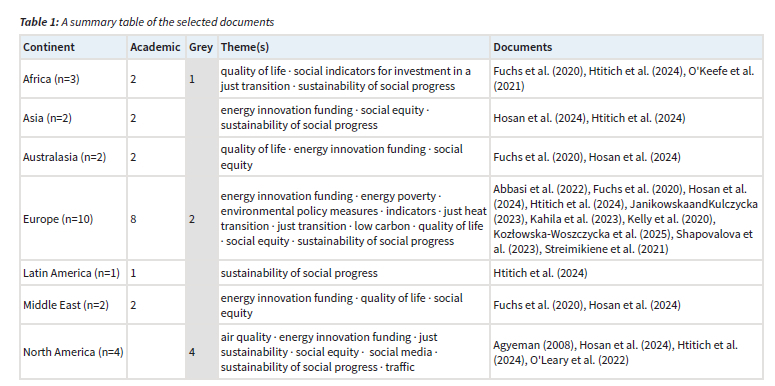
Firstly, a targeted search of academic and grey literature was conducted to identify measurable indicators for the air quality - quality of life nexus. The literature search employed Google, Google Scholar, Scopus and WorldCat Discovery in 2025 using search terms: "social indicators" AND ("just transition" OR "quality of life" OR "air quality"). The search was not restricted by publication year but focused on documents available up to 2025. Titles and abstracts were screened by the author to identify relevance. Inclusion criteria were: (i) explicit discussion of social indicators and (ii) linkage to just transition or air quality management. Exclusion criteria were: (i) documents focusing solely on technical air quality measures without social dimensions and (ii) non-English sources. This process yielded 15 relevant documents, which were selected for their focus on social indicators measuring the just transition and air quality progress. The small sample size reflects the emerging nature of research on social indicators for just transition and air quality, which is noted as a limitation. Table 1 presents an outline of the collected documents.
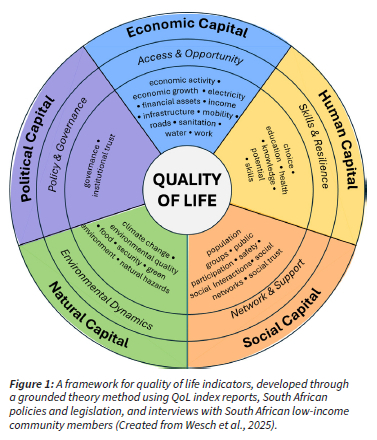
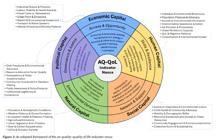
The selected documents were inductively coded, allowing for identification of emerging just transition indicators. The analysis revealed 219 codes (social indicators). The selected documents were imported into ATLAS.ti for qualitative analysis. Each document was scanned for explicit mention of measurable social indicators related to just transition and air quality governance. Indicators were identified in two forms (i) as structured lists and (ii) embedded within narrative text. Only indicators were coded - other arguments or conceptual discussions were not included in the coding process. Each indicator was assigned a code, resulting in 219 unique codes across the dataset. The codes were grouped according to Wesch et al. (2025)'s QoL framework (Figure 1). The framework was originally developed through a grounded theory study situated in South Africa (Wesch et al., 2025). In addition, the geographic location of each study was recorded to enable regional pattern analysis.
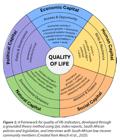
The QoL framework was originally developed through a grounded theory study in South Africa, following rigorous qualitative procedures including iterative coding, constant comparison and theoretical saturation. It involved a multi-stage process: (i) a review of international QoL index reports, (ii) analysis of South African policy and legislation, and (iii) qualitative research in low-income communities. Credibility was strengthened through triangulation across these data sources and stakeholder validation during the original study. This ensures that the framework reflects both institutional priorities and lived experiences, offering a holistic and locally grounded understanding of QoL. Its contextual validity lies in its alignment with South Africa's development and environmental governance objectives, making it suitable for exploring integration into air quality management. However, the framework is not exhaustive and may require adaptation for application beyond the South African context, which is acknowledged as a limitation.
Embedding the air quality - quality of life nexus framework onto the South African air quality governance framework
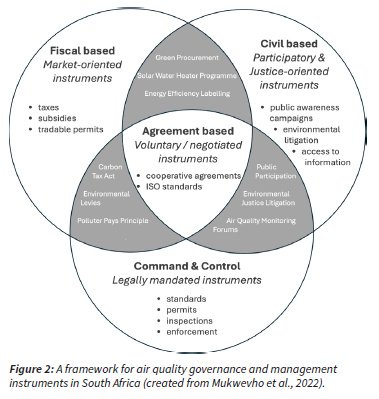
To explore how QoL indicators can be embedded in South Africa's air quality management system, the study incorporates a policy and legislative mapping layer using the conceptualisation from Mukwevho et al. (2022) (Figure 2). By overlaying the QoL framework onto the governance instruments, the study identifies 1) where QoL indicators are already embedded in policy, 2) where integration is lacking and 3) how a just transition may be supported through more balanced, context-sensitive governance. This design allows for the synthesis of diverse academic and grey literature, identification of social indicators and their interpretation through a South African QoL lens.
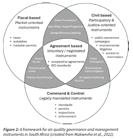
The Mukwevho et al. (2022) framework emphasises the hybridisation of the air quality governance approaches in South Africa, recognising that most instruments in practice combine elements from multiple categories. This hybrid model reflects the complexity of South Africa's air quality governance landscape. South Africa's environmental governance is grounded in the constitutional right to an environment that is not harmful to health and well-being (Section 24 of the Constitution). The National Environmental Management Act (NEMA) of 1998, provides the overarching framework for environmental governance, including principles of sustainable development and cooperative governance. The National Environmental Management: Air Quality Act (NEM:AQA) of 2004, establishes the legal basis for air quality management, replacing the outdated Atmospheric Pollution Prevention Act. NEM:AQA mandates a multi-sphere governance approach, with responsibilities distributed across national, provincial and municipal authorities, operationalised through instruments such as Air Quality Management Plans, licensing systems and monitoring networks. Despite this framework, capacity constraints and uneven implementation remain key challenges, as highlighted by Mukwevho et al. (2022).
Results and discussion
This research aims to support a just transition by exploring how quality of life (QoL) indicators can be meaningfully integrated into South Africa's air quality management system. This section presents a qualitative synthesis by drawing on a targeted review of grey and academic literature and a grounded QoL framework, developed in a South African context.
Social indicators in grey and academic literature
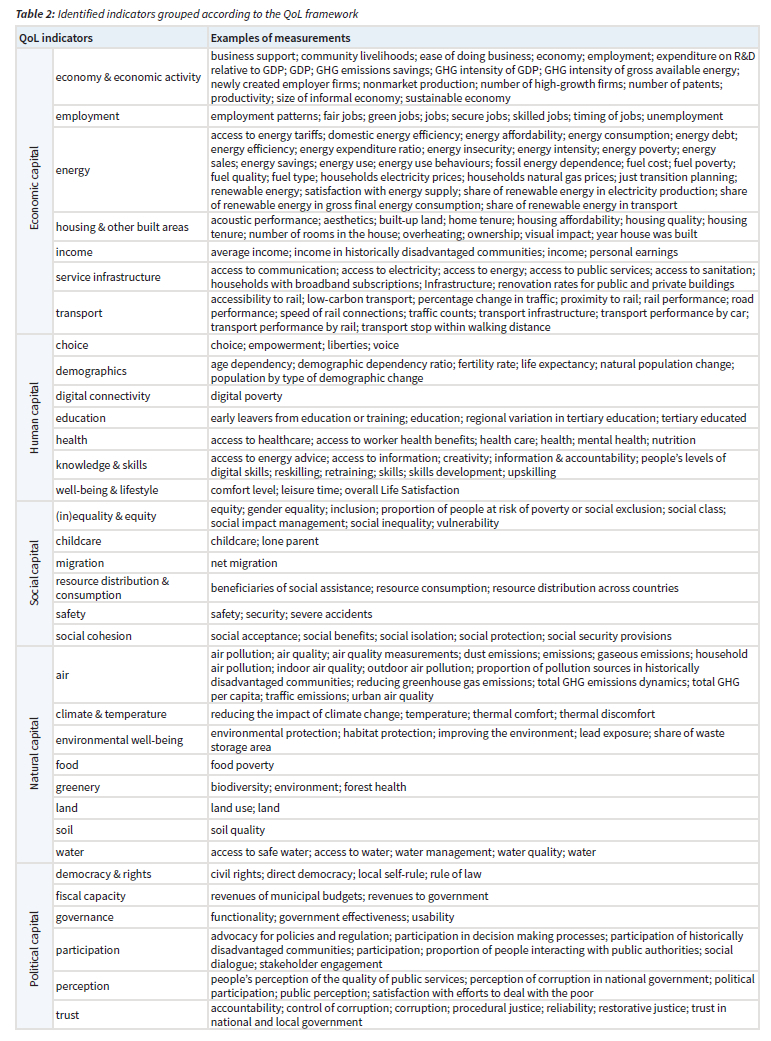
Table 2 presents the indicators extracted from the analysed documents, grouped according to the QoL framework presented in Figure 1. The framework organises indicators under 5 capital domains - economic, human, social, natural and political capital - each representing a distinct dimension of urban well-being. Indicators were assigned based on their primary thematic focus and mechanisms through which they influence or are influenced by air quality.
For example, indicators such as infrastructure, employment, and energy consumption were grouped under economic capital, reflecting their role in production and resource use. Education, health and lifestyle were categorised under human capital, emphasising individual capacity and resilience. Social capital included indicators related to equity, cohesion and community engagement, while natural capital included ecological and biophysical factors such as climate, greenery and soil. Finally, political capital captured governance-related dimensions, including democracy, fiscal capacity and public participation.
Some indicators presented categorisation challenges, particularly those with cross-cutting relevance. For instance, migration could be interpreted as a demographic (human capital) or social mobility (social capital) issue, while resource distribution intersects both social and political domains. These ambiguities were addressed by considering the dominant context in which the indicator was discussed in the literature. Table 2 presents a structured yet flexible lens for interpreting the multidimensional impacts of air quality on urban life.
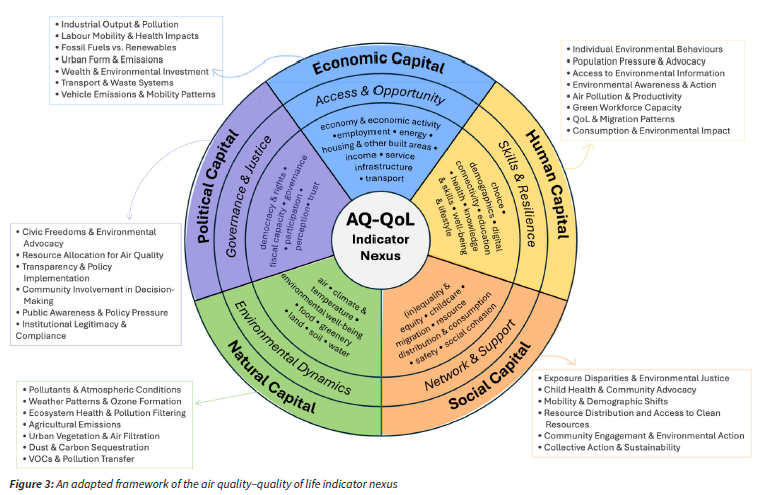
Table 2 provides a multidimensional lens for assessing air quality management in relation to its quality of life impacts. The indicators span across various domains of the human experience (access and opportunity; skills and resilience, networks and support; environmental dynamics and policy and governance). This diversity reflects the complexity of QoL in relation to air quality governance (Figure 3).
Economic capital influences air quality through various channels. Energy consumption patterns are the most obvious link to air quality, since they determine the emissions (Xiang et al., 2023). Increased economic activity often leads to higher levels of pollution due to greater industrial output and energy consumption (Chen and Xu, 2017). Areas with high pollution may, however, experience a decline in labour mobility (employment), as educated individuals are more likely to relocate to regions with better air quality, and those who stay may experience health issues that may affect their productivity (Li et al., 2024). Furthermore, wealthier societies (income) tend to invest more in pollution control technologies and sustainable practices, leading to cleaner air, but initial economic growth may also lead to increased pollution (Li et al., 2024). Urbanisation and the development of housing can lead to increased emissions from construction activities and higher energy demands for heating and cooling (Xiang et al., 2023). Poor urban planning can exacerbate air quality issues by increasing traffic congestion and associated pollution (Xiang et al., 2023). The quality and efficiency of service infrastructure, such as waste management and public transport, can also influence air quality (Xiang et al., 2023).
In terms of human capital, the demographic composition, for example, influences air quality through population density, which may increase pollution intensity (Guo and Xu, 2024). Individual choices regarding transportation, energy consumption and lifestyle can directly affect air quality (Guo and Xu, 2024). For instance, opting for public transport or non-motorised transport can reduce emissions, while choices related to energy consumption can also lead to improved air quality (Guo and Xu, 2024). Education, along with knowledge and skills, shapes awareness and understanding of environmental issues (Guo and Xu, 2024). Furthermore, access to digital tools and information can empower individuals to make informed choices about their ecological impact (Guo and Xu, 2024). Health has a well-documented linkage to air quality, since it has direct health implications, e.g. respiratory illnesses (Xiang et al., 2023).
The influence of social capital on air quality is complex and multifaceted, including disparities in exposure due to inequality, the indirect effects of childcare access on time and resources for advocacy, and migration patterns driven by environmental conditions driving shifts in local economies and social structures (Véron, 2006). Equitable resource distribution and perceptions of safety shape community engagement, while strong social cohesion enhances collective action for cleaner air (Véron, 2006). Natural capital influences air quality through ecological systems and biophysical processes. Key factors include the presence of pollutants in the air, climate and temperature patterns that affect pollutant dispersion, and the health of ecosystems (environmental well-being) that can filter or exacerbate pollution (Ekins, 2003). Agricultural practices (food), urban greenery, soil quality and water bodies also play critical roles in either mitigating or contributing to air pollution, highlighting the interconnectedness of environmental well-being and air quality outcomes (Ekins, 2003).
Political capital shapes air quality outcomes through democratic structures, fiscal capacity and governance quality. Democratic regimes and civil rights tend to support stronger environmental protections, while effective governance and public participation enhance policy implementation (Bernauer and Koubi, 2009). Trust in institutions and public perception of air quality issues further influence compliance and advocacy, making political legitimacy and responsiveness key to environmental outcomes (Bernauer and Koubi, 2009).
Geographic distribution of identified studies
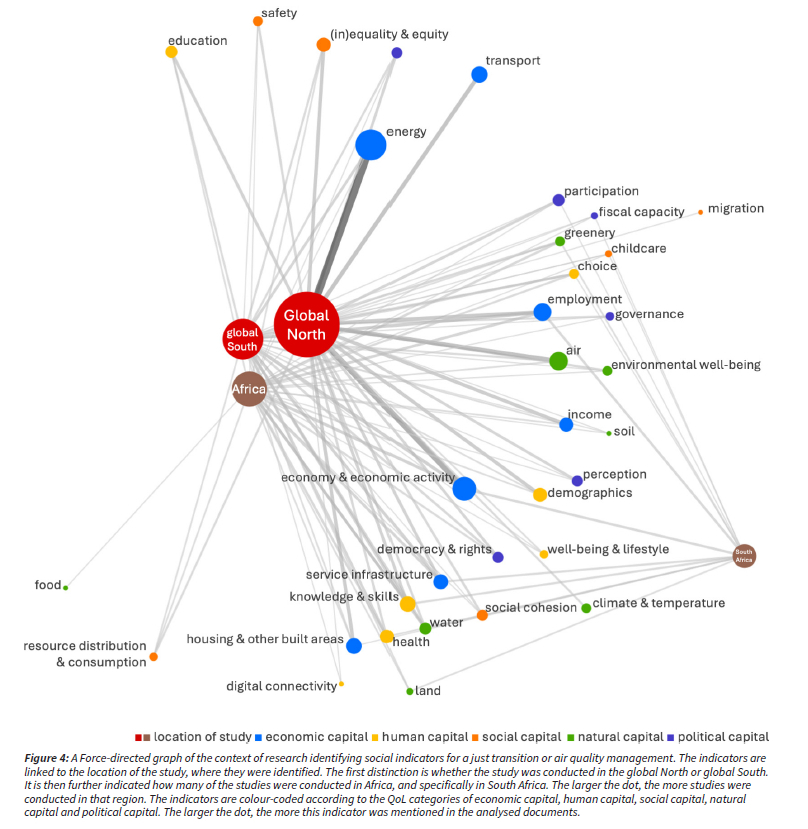
Figure 4 presents the geographic distribution of the analysed studies. Most of the research was conducted in global North contexts, including Europe, Australasia and North America (12 of 15 documents). Significantly fewer studies originated from global South contexts - Africa, the Middle East, Latin America and Asia (4 of 15 documents). Three documents included both global North and global South contexts. Three documents included African contexts - (North Africa) Egypt, Libya, Mauritania, Sudan, (West Africa) Chad, Gambia, Sierra Leone, (Central Africa) Central African Republic, Equatorial Guinea, Gabon, (East Africa) Ethiopia, Somalia, (Southern Africa) Angola, Mozambique, South Africa and Zimbabwe. Only one focused on the South African context.
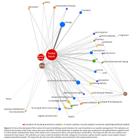
This skewness reflects the current distribution of research activity in this emerging field. It highlights a critical gap in global South contributions, particularly in African contexts, which limits the contextual relevance of available indicators. This finding reinforces the need for locally grounded frameworks, such as the South African QoL framework applied in this study, to support more socially responsive and quality-oriented air quality governance.
Mapping indicators to governance instruments
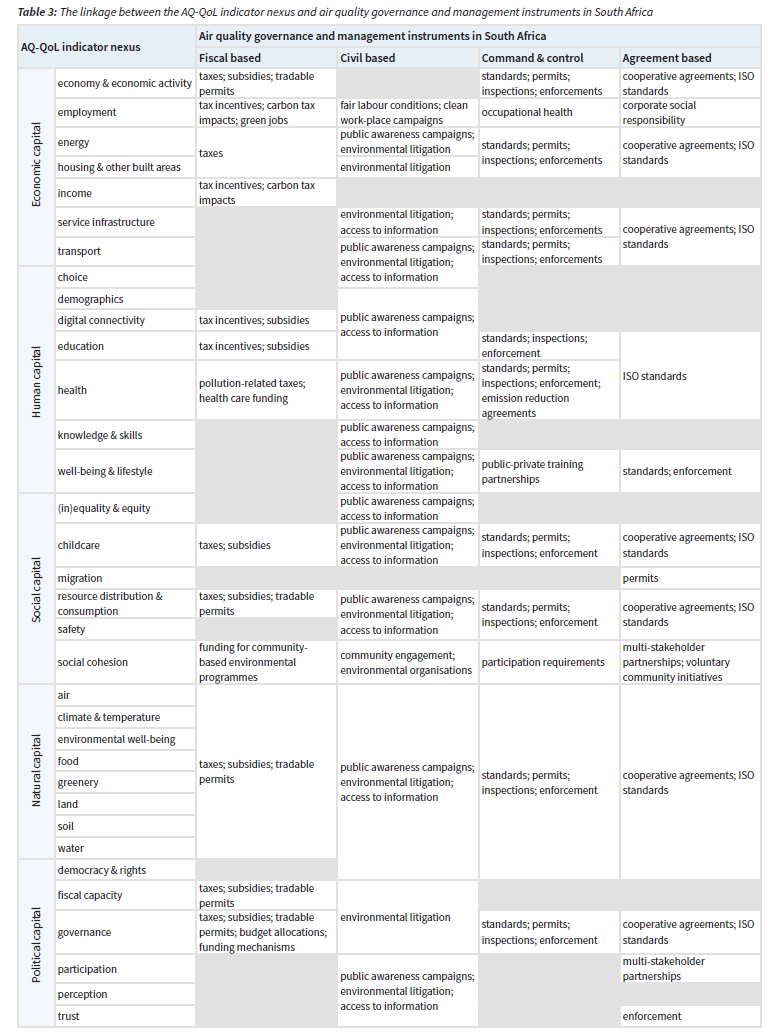
Table 3 presents the mapping of the AQ-QoL indicator nexus to South African air quality governance and management based on Mukwevho et al. (2022)'s framework presented in Figure 2. Each cell in the table identifies specific governance tools that influence a particular AQ-QoL indicator. The table illustrates how AQ-QoL dimensions are addressed through a combination of regulatory, participatory and cooperative mechanisms, highlighting both the hybrid nature of South Africa's air quality governance and areas where certain instruments may be underutilised.
Table 3 illustrates the hybrid nature of South Africa's air quality governance, combining fiscal, civil, command-and-control and agreement-based instruments. However, several imbalances are evident. Civil-based instruments dominate human and social capital domains, indicating reliance on awareness and litigation rather than structural reforms. Political capital is particularly underrepresented in agreement-based mechanisms, revealing weak participatory governance - a critical gap for advancing a just transition. Similarly, natural capital indicators such as climate, greenery, soil and water show minimal linkage to governance instruments, limiting the integration of ecological dimensions into air quality management.
These gaps constrain the ability of air quality governance to deliver socially responsive and equity-oriented outcomes. For example, weak participatory mechanisms undermine democratic accountability and community engagement, while limited fiscal tools for human capital restrict investment in education, health and skills development needed for green transitions. Addressing these gaps requires strengthening fiscal instruments to incentivise green jobs and equitable service delivery, and embedding QoL indicators into cooperative agreements to enhance multi-stakeholder participation. Such reforms would support a more balanced governance architecture and advance South Africa's commitment to a just transition.
Conclusion
This study explored the integration of quality of life (QoL) indicators into South Africa's air quality management system to support a just transition. By adopting a context-specific QoL framework grounded in South African lived experiences and institutional priorities, the research offers a novel, multidimensional lens for evaluating the social dimensions of air quality governance. The findings highlight the presence of a hybrid governance model that combines fiscal, civil, command-and-control and agreement-based instruments, reflecting the complexity of South Africa's air quality governance landscape.
The analysis revealed a geographic bias in the analysed documents, which mostly reflect global North contexts. Gaps were identified within existing air quality governance, particularly in participatory and equity-focused mechanisms. To support a just transition, decision-makers should adopt a more balanced and inclusive governance approach, one that expands the use of participatory instruments and better reflects the lived experiences of affected communities. Overall, the findings suggest that air quality management in South Africa would benefit from a more measurable, context-sensitive and socially responsive approach that aligns environmental goals with broader developmental and justice-oriented outcomes.
References
- Agyeman, J. 2008. Toward a 'just'sustainability? Continuum, 22, 751-756.
-
Bernauer, T. & Koubi, V. 2009. Effects of political institutions on air quality. Ecological Economics, 68, 1355-1365, DOI:10.1016/j. ecolecon.2008.09.003.
» https://doi.org/10.1016/j. ecolecon.2008.09.003 -
Beukes, E. & Van Der Colff, A. 1997. Aspects of the quality of life in black townships in a South African city: implications for human development. Quality of Life in South Africa, 41, 229-250, DOI:10.1023/A:1006812905477.
» https://doi.org/10.1023/A:1006812905477 -
Chen, N. & Xu, L. 2017. Relationship between air quality and economic development in the provincial capital cities of China. Environmental Science and Pollution Research, 24, 2928-2935, DOI:10.1007/s11356-016-8065-3.
» https://doi.org/10.1007/s11356-016-8065-3 -
Darkey, D. & Visagie, J. 2013. The more things change the more they remain the same: A study on the quality of life in an informal township in Tshwane. Habitat International, 39, 302-309, DOI:10.1016/j.habitatint.2012.10.016.
» https://doi.org/10.1016/j.habitatint.2012.10.016 -
Ekins, P. 2003. Identifying critical natural capital: Conclusions about critical natural capital. Ecological Economics, 44, 277-292, DOI:10.1016/S0921-8009(02)00278-1.
» https://doi.org/10.1016/S0921-8009(02)00278-1 -
Eras, J. J. C., Varela, D. C., Perez, G. D. H., Gutierrez, A. S., Lorenzo, D. G., Vandecasteele, C. & Hens, L. 2014. Comparative study of the urban quality of life in Cuban first-level cities from an objective dimension. Environment, Development and Sustainability, 16, 195-215, DOI:10.1007/s10668-013-9470-0.
» https://doi.org/10.1007/s10668-013-9470-0 -
Feig, G., Garland, R., Langerman, K. & Perumal, S. 2025. Integrating air quality and climate change: A policy imperative for human well-being and equity for the G20. Clean Air Journal, 35, DOI:10.17159/caj/2025/35/1.22370
» https://doi.org/10.17159/caj/2025/35/1.22370 - Fuchs, D., Schlipphak, B., Treib, O., Long, L. A. N. & Lederer, M. 2020. Which way forward in measuring the quality of life? A critical analysis of sustainability and well-being indicator sets. Global Environmental Politics, 20, 12-36.
-
Guo, X. & Xu, J. 2024. New ambient air quality standards, human capital flow, and economic growth: Evidence from an environmental information disclosure policy in China. Journal of Cleaner Production, 434, 140168, DOI:10.1016/j. jclepro.2023.140168.
» https://doi.org/10.1016/j. jclepro.2023.140168 - Hosan, S., Sen, K. K., Rahman, M. M., Chapman, A. J., Karmaker, S. C., Alam, M. J. & Saha, B. B. 2024. Energy innovation funding and social equity: Mediating role of just energy transition. Renewable and Sustainable Energy Reviews, 197, 114405.
-
Htitich, M., Krylová, P. & Harmácek, J. 2024. Just Transition Score: Measuring the relative sustainability of social progress. Environmental and Sustainability Indicators, 23, 100440, DOI:10.1016/j.indic.2024.100440.
» https://doi.org/10.1016/j.indic.2024.100440 -
Johnston, D. F. & Carley, M. J. 1981. Chapter 11: Social Measurement and Social Indicators. The Annals of the American Academy of Political and Social Science, 453, 237-253, DOI:10.1177/00027162814530.
» https://doi.org/10.1177/00027162814530 -
Kelly, J. A., Clinch, J. P., Kelleher, L. & Shahab, S. 2020. Enabling a just transition: A composite indicator for assessing home-heating energy-poverty risk and the impact of environmental policy measures. Energy Policy, 146, 111791, DOI:10.1016/j.enpol.2020.111791.
» https://doi.org/10.1016/j.enpol.2020.111791 -
Leal Filho, W. & Pons-Giralt, M. 2024. Beyond the Just Transition: a critical inquiries from the pluriverse. Environmental Sciences Europe, 36, 201, DOI:10.1186/s12302-024-01032-2.
» https://doi.org/10.1186/s12302-024-01032-2 -
Li, Y., Hu, W. & Jiang, Y. 2024. How does air pollution affect capital allocation efficiency? Ecological Indicators, 158, 111617, DOI:10.1016/j.ecolind.2024.111617.
» https://doi.org/10.1016/j.ecolind.2024.111617 -
Moller, V. 2001. Monitoring quality of life in cities: The Durban case. Development Southern Africa, 18, 217-238, DOI:10.1080/037/68350120041910.
» https://doi.org/10.1080/037/68350120041910 -
Mukwevho, P., Retief, F. & Burger, R. 2022. Conceptualising air quality management instruments in South Africa. Clean Air Journal, 32, 1-15, DOI:10.17159/caj/2022/32/2.13228
» https://doi.org/10.17159/caj/2022/32/2.13228 -
Nakanishi, H. 2015. How does urban policy influence quality of life? The case of Canberra, Australia. Policy Studies, 36, 72-91, DOI:10.1080/01442872.2014.981059.
» https://doi.org/10.1080/01442872.2014.981059 - Nakanishi, H., Sinclair, H. & Lintern, J. Measuring quality of life: An integrated evaluation of built environment. The International Conference on Computers in Urban Planning and Urban Management (CUPUM), Utrecht University, Netherlands, 2013. 2-5.
-
Neuhuber, T. 2025. One and the Same or Worlds Apart? Linking Transformative Regional Resilience and Just Transitions Through Welfare State Policies. Sustainability, 17, 637, DOI:10.3390/su17020637.
» https://doi.org/10.3390/su17020637 -
O'Keefe, E., Wlokas, H., Pang, S. A., Khumalo, X., Simpson, J., Buso, L., Spitz, A. & Dubazana, Y. 2021. Initial framework of social indicators for investments in a just transition [Online]. Available: https://www.tips.org.za/images/Initial_framework_of_social_indicators_for_investments_in_a_Just_Transition_Synergy.pdf [Accessed 27 November 2025].
» https://www.tips.org.za/images/Initial_framework_of_social_indicators_for_investments_in_a_Just_Transition_Synergy.pdf -
O'Leary, H., Parr, S. & El-Sayed, M. M. 2022. The breathing human infrastructure: Integrating air quality, traffic, and social media indicators. Science of the Total Environment, 827, 154209, DOI:10.1016/j.scitotenv.2022.154209.
» https://doi.org/10.1016/j.scitotenv.2022.154209 -
Papageorgiou, J. C. 1976. Quality of life indicators. International Journal of Environmental Studies, 9, 177-186, DOI:10.1080/00207237608737626.
» https://doi.org/10.1080/00207237608737626 -
Véron, R. 2006. Remaking urban environments: the political ecology of air pollution in Delhi. Environment and Planning A, 38, 2093-2109, DOI:10.1068/a3744.
» https://doi.org/10.1068/a3744 -
Wang, X. & Lo, K. 2021. Just transition: A conceptual review. Energy Research & Social Science, 82, 102291, DOI:10.1016/j. erss.2021.102291.
» https://doi.org/10.1016/j. erss.2021.102291 - Wesch, N. S., De Beer, S., Claassen, C., Burger, R. P., Cornelius, S., Cilliers, E. J. & Piketh, S. J. 2025. Policy visions and lived realities diverge in pursuit of urban quality of life in Africa. Nature Cities, 2, 1060-1070.
-
Xaba, N. 2025. Evaluating the Implementation of South Africa's Just Energy Transition in Coal Regions. Wiley Interdisciplinary Reviews: Energy and Environment, 14, e70009, DOI:10.1002/ wene.70009.
» https://doi.org/10.1002/ wene.70009 -
Xiang, X., Fahad, S., Han, M. S., Naeem, M. R. & Room, S. 2023. Air quality index prediction via multi-task machine learning technique: spatial analysis for human capital and intensive air quality monitoring stations. Air Quality, Atmosphere & Health, 16, 85-97, DOI:10.1007/s11869-022-01255-3.
» https://doi.org/10.1007/s11869-022-01255-3
Reviewed: 24 November 2025
Accepted: 19 April 2026