Wet season chemical composition of atmospheric wet deposition at Cape Point
Abstract
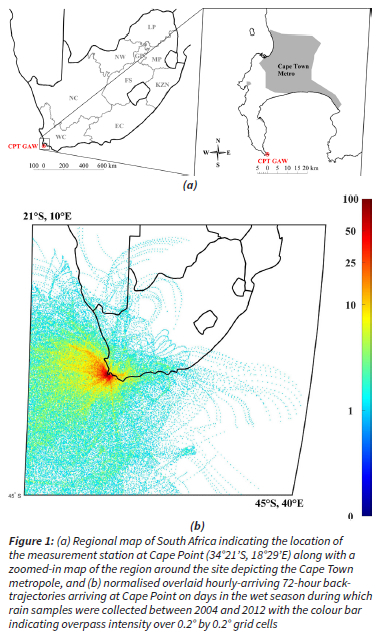
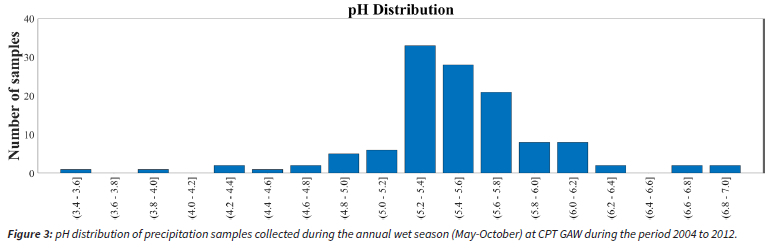
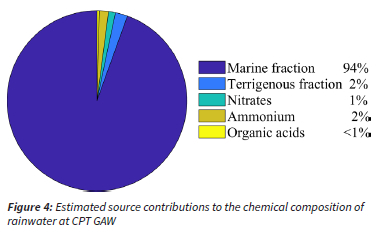
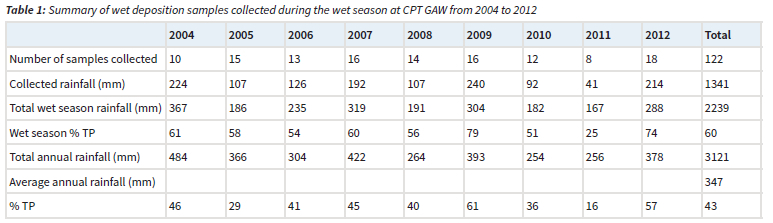
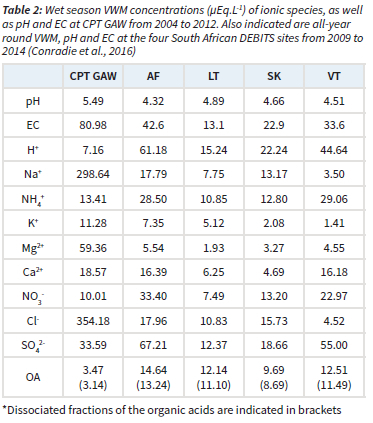
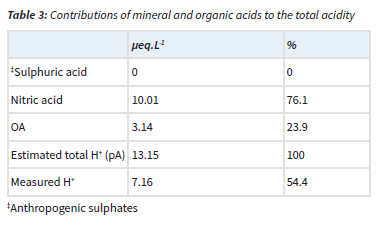
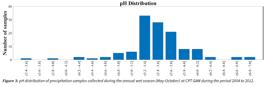
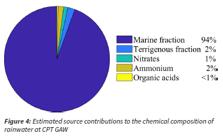
The measurement of precipitation chemistry enables the assessment of the temporal and spatial evolution of the chemical composition of the atmosphere associated with atmospheric physical and chemical mechanisms. The aims of this study were to report the chemical composition of rainwater collected at a marine environment, i.e. the Cape Point Global Atmosphere Watch (CPT GAW) station from 2004 to 2012. As expected, the volu me weighted mean (VWM) concentrations of Na+ (298.64 μEq.L-1) and Cl- (354.18 μEq.L-1) were significantly higher compared to the VWM concentrations of other ionic species, as well as compared to the VWM concentrations thereof at the sites in the South African interior. The average pH of rainwater was slightly lower than the pH of unpolluted rainwater, mainly due to NO3- associated with the occasional influence of the Cape Town metropole. In contrast to the sites situated in the north-eastern South African interior, where anthropogenic SO42- was the major constituent in rainwater, SO42- at CPT GAW was entirely associated with marine air with no anthropogenic contribution. It was also indicated that 94% of the chemical content at CPT GAW can be attributed to the marine source.
precipitation chemistry; atmospheric fluxes; inorganic ions; Global Atmosphere Watch (GAW); South Africa
 Thumbnail
 Thumbnail
 Thumbnail
 Thumbnail