Western Barn Owl (Tyto alba) diet analysis to assess small mammal populations in two regions of Kenya
Abstract
BACKGROUND: Avian predators are known to take prey in proportion to their availability in different ecological settings, but additional causes of variation in species representation remain unclear. Species recorded in predator diets may reflect both novel predator adaptive strategies as well as the composition of prey communities. Assemblages of regurgitated owl pellets typically contain diverse species of small vertebrates, and analysis of their contents provides a way to document changes in both prey populations and predator strategies over time. Furthermore, pellet assemblages can provide valuable information on species (including cryptic species) not captured using conventional trapping methods OBJECTIVES: The study aimed to compare historical and current small mammal prey diversity in Western Barn Owl pellets and trapping surveys in Nairobi Urban Environment (NUE) and Tsavo East National Park (TENP) to assess patterns of prey selection in relation to two different habitats and evaluate the potential for using owl diets to monitor changes in ecosystem health over time METHODS: This study conducted dietary analysis of the Western Barn Owl [Tyto alba (Scopoli, 1769)] in the NUE and TENP We compared prey composition in Western Barn Owl pellets residing in these two localities and assessed small mammal populations through trapping in the same areas. A total of 795 complete and previously disintegrated Western Barn Owl pellets retrieved from both localities were analysed. The NUE dataset consisted of two nest sites, which included 371 complete pellets collected in 2020-2021 and disintegrated pellets collected in 2005, as records of recent and past diversity to compare with trap results. For TENP we analysed 424 Western Barn Owl pellets from four nests collected in 2020-2021. Trapping surveys for small mammals were conducted for two seasons between December 2020 and August 2021 across suspected owl foraging habitats and around the nest sites in both locations RESULTS: Small mammals formed the principal prey for all owls across the sites, with other taxa such as birds, reptiles, invertebrates and amphibians present in lower abundance. Variation in diet was significant between the two sites, which we infer was primarily determined by prey availability. Comparison of pellet and trapping data showed significant differences in recorded species diversity across habitats CONCLUSIONS: Our study involved understanding how different environmental conditions affect Western Barn Owl diet. The results demonstrate dietary variation across biogeographical regions with both urban and natural habitats, suggesting that small mammal communities co-existing in a given ecological region can adapt to local environmental conditions. Species richness in the owl diet was greater in the urban habitat, likely because of increased prey diversity as well as the adaptability of Western Barn Owls as predators in this environment
Western Barn Owl; small mammals; pellets; trapping; habitat; species; prey; diet
Introduction
Understanding dietary niche is a fundamental part of developing a conservation scheme, which in turn depends on understanding the role of a species in biological communities (Beever et al. 2016). Raptors are apex predators in their relevant food chains; they occur in small numbers and have low reproductive rates relative to their prey (Donázar et al. 2016). Their feeding behaviour makes them useful for sampling small vertebrate biodiversity because they generally track the abundance of their prey populations in the ecosystem (Natsukawa & Sergio 2022). Western Barn Owl [Tyto alba (Scopoli, 1769)] diets are widely studied because of the species' cosmopolitan distribution, usefulness as a biocontrol agent for rodent populations worldwide, vulnerability to rodenticides, as well as the ease of identifying prey remains recovered from regurgitated pellets (Abd Rabou 2020). Western Barn Owls exhibit dietary plasticity that is greater than many other species of raptors (Donázar et al. 2016). Their flexible hunting strategy allows them to adapt to various environments, contributing to their success as predators and also explaining their varied diet and wide geographic distribution (Moysi et al. 2018).
Western Barn Owls generally require large territories, and their home range varies significantly depending on the landscape structure and prey availability (Thomsen et al. 2014). During the breeding season they hunt in a 1 km radius around the nest and up to an average distance of 28.5 km at other times (Hindmarch et al. 2017). Their conservation becomes more difficult when wild populations must cope with anthropogenic expansions that limit habitat areas (Renuka Balakrishna 2023). Urbanisation leads to restructuring of faunal communities that live in close proximity to humans (Xu et al. 2018). Tolerance of Western Barn Owls and other avian species to urban environments is connected to plasticity in diet and nest site availability (Latorre et al. 2022).
Owls living in urban environments adapt by using wider home ranges compared to those in natural habitats (Dykstra 2018). This allows them to better exploit more fragmented habitats and less-developed areas (Lövy & Riegert 2013). However, urban areas also act as an ecological trap in which animals occupy habitats where their fitness may be lower, especially when confronted by rapid habitat change, subjecting them to the possibility of local extinction (Hale & Swearer 2016).
Western Barn Owls are primarily predators of nocturnal small mammals (7-24 g), but also feed on other small animals such as invertebrates, amphibians, birds and reptiles (Hindmarch & Elliot 2015). They swallow whole prey, and pellets contain undigested prey remains such as bones, fur, feathers, teeth, claws and exoskeleton (Saufi et al. 2020). Prey remains in pellets can be identified to genus or species level, allowing accurate assessments of diet breadth or prey diversity. Pellet analysis provides evidence of prey species and quantitative data on local populations of small vertebrates (Marsh 2012; Wright 2019). Owl pellets can be an efficient and cost-effective biodiversity sampling method across broad spatiotemporal scales, but owls may also bias their diet towards mammal species that are more available as prey (Paniccia 2019).
Quantifying small mammal presence and abundance with Western Barn Owl pellets can be used to investigate the influence of climate factors and humans on community structure and abundance in different landscapes (Horváth et al. 2018). Western Barn Owl diets vary considerably among habitats and regions, and between seasons and years, and all such factors interact with prey population dynamics. A change in habitat can lead to changes in the small vertebrate fauna of any given area (Baroni et al. 2021). Habitat preferences also affect the composition and abundances of prey taxa, which may co-vary with the habitat exploited by the predators (Kenchington et al. 2013). Changes in Western Barn Owl prey selection in relation to habitat indicate that they can be either opportunist or selective hunters (Castaneda 2018). Changing of feeding behaviour is a strategy for adapting to changing environmental conditions (Cavalli et al. 2014).
Documenting small mammals in the wild is customarily conducted using various trapping methods. Conventional trapping is expensive and time-consuming and constrains small mammal monitoring to limited spatio-temporal scales as well as introducing biases associated with baits and trap types (Mwebi et al. 2019). The simultaneous use of live trapping and pellet collection provides complementary data sets for analysis, leading to more comprehensive information on small vertebrate species diversity (Guimarães et al. 2016).
Data on owl prey dynamics through dietary analysis and field trapping of potential prey are limited in tropical Africa, and Kenya in particular (Grande et al. 2018). The goal of this study was to compare historical and current small mammal prey diversity in Western Barn Owl pellets and trapping surveys in Nairobi Urban Environment (NUE) and Tsavo East National Park (TENP) to assess patterns of prey selection in relation to two different habitats and evaluate the potential for using owl diet to monitor changes in ecosystem health over time. Comparisons of data obtained from Western Barn Owl regurgitates and trapping are important for understanding predator-prey relationships. This also provides a framework for evaluating Western Barn Owl prey selection, factors affecting their distribution and accessibility of the prey, and how their diet reflects prey species in foraging habitats. Comparisons of Western Barn Owl diets between the NUE and TENP allowed us to examine the influence of habitat on prey selection as a potential adaptive strategy under changing environmental conditions. We used additional data from pellets collected in 2005 from NUE - Muthangari Estate to increase the understanding of any changes in species or community trends in the urban landscape, thus providing a longer-term perspective on the direction and magnitude of ecological changes affecting owl diet.
Materials and methods
Study site
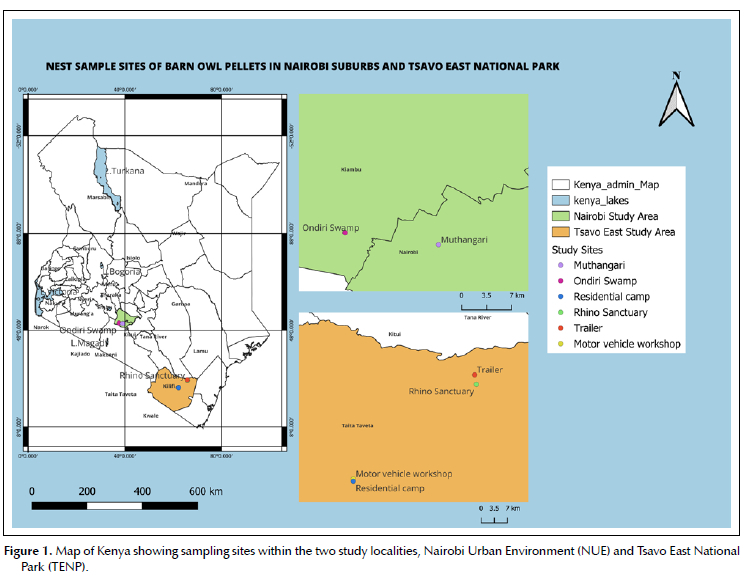
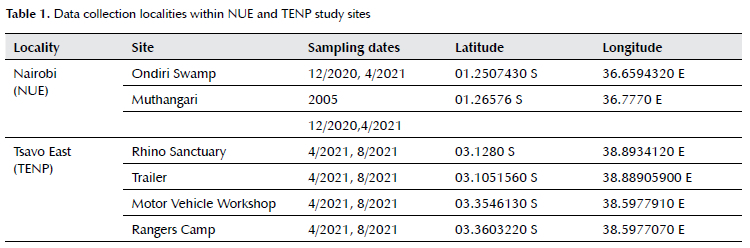
This research took place in two locations, Nairobi Urban Environment (NUE) and Tsavo East National Park (TENP), which are approximately 340 km apart. Dry and wet season data were collected from the months of December 2020 to August 2021, and their geographical locations are described in (Table 1). The Nairobi region has a subtropical highland climate with a bimodal rainfall regime, an annual rainfall of between 300 mm to 900 mm, and an average daily temperature between 15 °C (night) and 29 °C (day). Samples of owl pellets from NUE were collected from two different sites, Ondiri Swamp and Muthangari Estate. Ondiri Swamp, approximately 10 km from Nairobi Central Business District (CBD), is a highland bog with major vegetation consisting of reeds (Phragmites sp.), cattails (Typha latifolia) and water grass (Vossia sp.). The swamp is surrounded by farmlands with pasture and crops as well as scattered bushes and agro-forestry trees, and by development from Kikuyu town. Additional data were collected from Muthangari Estate, located 5 km from Nairobi CBD. Muthangari was previously covered by indigenous trees, which provided favourable roosting and nesting habitat for Western Barn Owls. The pellet assemblage used in this study (here termed Muthangari) was collected in 2005. This area is currently dominated by residential buildings, infrastructure networks, public and private offices, with limited natural owl nesting or roosting sites. The remaining vegetation includes a few undeveloped areas of bushland dominated by Lantana camara, numerous farmlands consisting of perennial and annual crops, fields (grasslands) and scattered woodlands of eucalyptus trees along riverbanks and in residential compounds.
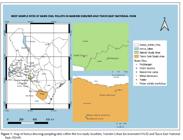
The second study location was TENP, Kenya's largest and oldest protected area, covering 13 747 km2 in Taita Taveta County, southeastern Kenya. Tsavo has a warm and dry climate, rainfall is often low and erratic; the annual average rainfall ranges between 200 mm and 700 mm (Spinage 2012), and average daily temperatures fluctuate between 20 °C (night) and 31 °C (day). The Rhino Sanctuary and Trailer nest sites were located in grassland habitats towards the southern part of the park, and two other nest sites were located in woodland habitats (named Motor Vehicle Workshop) and a residential building (here referred to as Rangers Camp), in the administration offices near Voi Gate (Figure 1).
Pellet collection
Sampling of pellets was limited to identified Western Barn Owl roost/nest sites, which therefore determined the choice of our sampling sites. These were located through inquiries and information given by locals, rangers and scientists, as well as follow-ups from previous collections preserved at the National Museums of Kenya.
At Ondiri Swamp, complete and compact pellets were collected where a pair of Western Barn Owls were nesting inside a ceiling of a two-story residential building close to the swamp. For Muthangari, disintegrated pellets were obtained in 2005 by FKM and curated at the National Museums of Kenya (NMK). No owl roosting or nesting sites were detected during the 2020-2021 surveys in Muthangari, therefore trapping in this area provides the only recent data for comparative purposes.
At TENP, Western Barn Owl pellets were collected from inside four watch towers at the Rhino Sanctuary; these consisted of intact and disintegrated pellets accumulated over multiple years. We observed a Western Barn Owl flying off (thereby assuring the identity of the owl). Complete and compact pellets were also recovered from inside a tree cavity at the area referred to as 'Trailer' (Table 1).
Inside the motor vehicle building/workshop, we collected pellets dropped on the floor by a pair of Western Barn Owls nesting inside hidden ledges, and from another nest inside a chimney in a residential building (Table 1). Pellets were collected in two seasons determined by the prevailing weather patterns of the two study locations, packed in zip lock bags, transported to the NMK Osteology laboratory, and stored at room temperature before undergoing processing and analysis.
Pellet analysis
In the laboratory, complete pellets were given unique numbers, photographed and morphometric data recorded using sliding callipers. A total of 795 pellets were collected from the two study sites; 371 from NUE and 424 from TENP, ranging in size from 5.8 X12.8 mm to 82 x 41.7 mm in NUE and from 21.3 X12.3 mm to 119.2 x 46.4 mm in TENP. Pellets were soaked individually in a jar containing water mixed with alcohol for a day to kill pathogens and disintegrate the pellets. Disintegrated pellets were passed over a 2 mm sieve and spread on a tray to dry. Prey remains compacted in hair were isolated manually using forceps. Identification of prey remains was based on comparative material available in the Osteology laboratory, NMK, aided by skeletal element (cranial and post cranial) morphology.
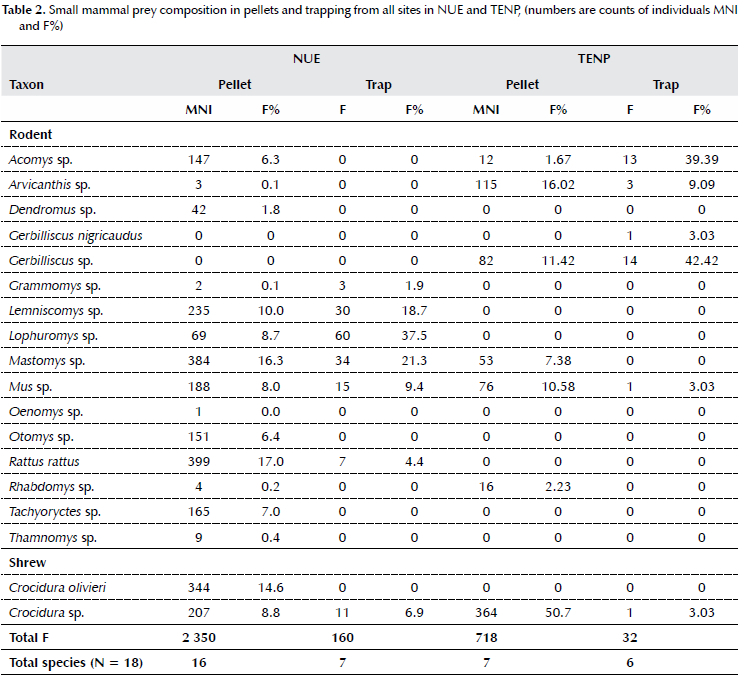
Determination of Minimum Number of Individuals (MNI) was based on paired elements and similarities observed in skeletal size to determine taxonomic abundances. Where one of the paired elements was missing (which may be due to complete digestion or errors during sorting), the highest number right or available left elements was used to calculate the MNI. Most vertebrate prey remains were identified to genus. Small mammal (rodent and shrew) identification to species based on skeletal material is challenging because of morphological similarity and lack of diagnostic features. Identification beyond the genus level was not possible for most specimens, with the exception of vertebrate prey species with conspicuous and unique features (Tables 2 & 3, Appendices 1 & 2). Invertebrates were identified to order level based on exoskeleton morphology, the only remains recovered from the pellets.
Trapping and species identification
Trapping was conducted across all habitats within a 2-5 km radius surrounding the Western Barn Owl nest sites. In NUE, we obtained specimens from the habitats along the edge of Ondiri Swamp, i.e., bushland, grassland and woodland, and from habitats in Muthangari surrounding the building where pellets were collected in 2005, including edges of farmlands, bushlands and grazing fields. In TENF, two habitats were trapped, the southern grassland and woodland.
Trapping at both NUE and TENP occurred during two different seasons of the year. In each sampling period, a 100 m transect line consisting of 20 trap stations was laid in the selected habitats at two study localities. A combination of Sherman traps and snap traps were set in each trap station (one Sherman and one snap trap), positioned 5 m apart, a total of 40 traps per transect line. Traps were baited with a mixture of oats, cyprinid fish (Rastrineobola argéntea) and peanuts; inspected once a day early in the morning; left open for three consecutive days; and moved to the next habitat until all areas were sampled (Halliday et al. 2015) - a total trapping effort of 120 trap nights for each habitat and locality. Animals trapped were sedated using intravenous (IV) Ketamine followed by cervical dislocation (Linsenmeier et al. 2020). Morphological data were recorded, i.e., head-body length, hind foot length, tail length, ear length and body mass, for purposes of data accuracy, consistency and uniform comparisons with owl pellets. Seven small mammal species represented by 100 individual skins and skeletal remains were prepared as scientific voucher specimens, accessioned and preserved in the NMK's reference collection.
Statistical analyses
The frequency (F%) of each prey species in the Western Barn Owl diet was determined by calculating the percentage contribution of each species to the total MNI (Minimum Number of Individuals) for all species in a set of pellets. Data are recorded as MNI for pellets, F for trapping and F% for all methods of surveys.
The Levin's Food Niche Breadth (FNB) of Western Barn Owls at all the sites was calculated to determine the dietary diversity in each habitat according to Levin's (1968) formula: 1/Σρi2, where pi denotes contribution of a given prey group to the diet.
Differences in prey diversity recorded in pellets at different habitats and sites were calculated using the Shannon-Wiener diversity index: H' = - Σρi ln(pi); where H' represents the index of species diversity, pi is the proportion of species i in the owl diet, and ln is the natural logarithm. This index reflects both the species richness in the diet and the number of individuals (MNI) in each taxon.
Comparisons of prey items from pellets versus trapping were computed using the chi-squared test for independence. Overall variation in prey taxa in different habitats and sites was tested using one-way ANOVA and a chi-square test. Levels of significance for all tests conducted were set at p =0.05, and test results were considered statistically different if α <0.05. All statistical analyses were carried out using the PAST statistical program for Windows.
Ethical considerations
Permissions and procedures dealing with animal subjects adhered to the wildlife research laws of Kenya and guidelines for use of wild mammal species in research and education (Sikes & The Animal Care Use Committee of the American Society of Mammologists 2016). Permit application was reviewed and approved by the Research and Ethics Committee of the Kenya Wildlife Service (permit number: KWS-0001-01-21).
Results
Western Barn Owl dietary composition
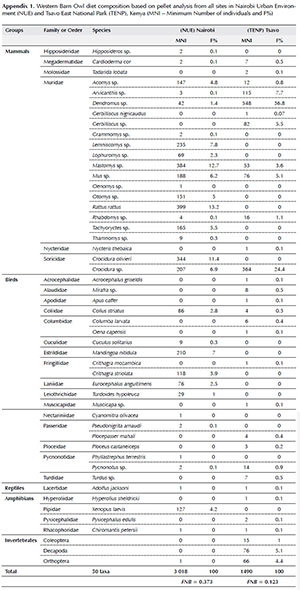
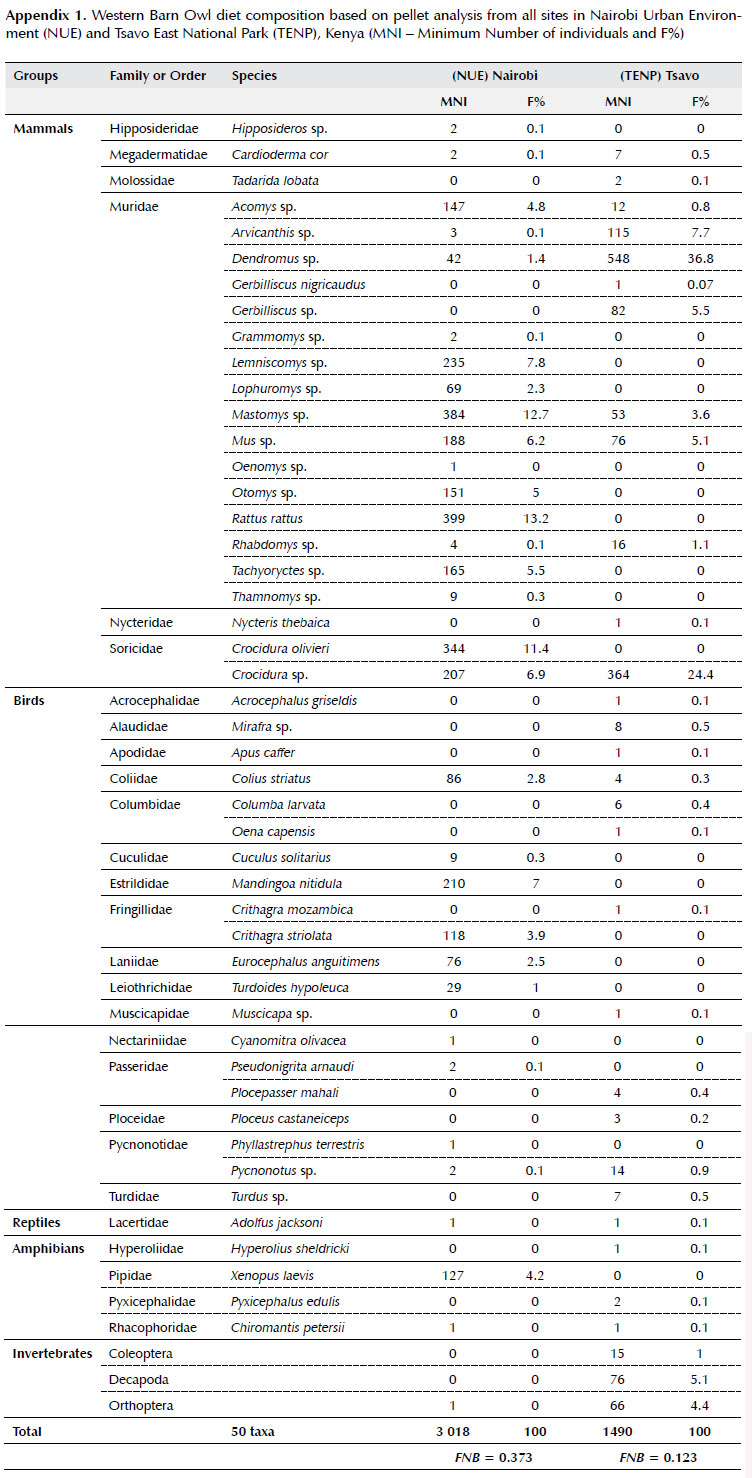
A total of 4 508 individuals representing 50 species were identified from all sites in NUE and TENP localities. These were derived from a total of 795 pellets and disintegrated pellets. The 371 pellets collected from Ondiri Swamp and disintegrated pellets from Muthangari-2005 yielded 3 018 individuals of 32 species, while 424 pellets from TENP yielded 1 490 individuals representing 31 species (Appendix 1).
Prey items were classified into five broad taxonomic units: small mammals, birds, reptiles, amphibians and invertebrates. Based on F%, small mammals, particularly rodents, were the principal food source in Western Barn Owl diets at both study localities, constituting 78% (17 species) in NUE and 85.8% (12 species) in TENP. In NUE, birds comprised 17.7% (8 species) while 4.2% (2 species) of amphibians were detected. Invertebrates and reptiles each recorded negligible proportions (1 species) of prey items consumed in NUE. Invertebrates were the second most important major taxonomic group in the Western Barn Owl diet of TENP, with F% = 10.5% (3 species) followed by birds 3.7% (12 species) and amphibians 0.3% (3 species) while reptiles recorded 0.1% (1 species) (Appendix 1).
The range of variability in prey taxa consumed by Barn Owl in NUE and TENP was significantly different (ANOVA F = 2.357, df (1, 48), P = 0.02). Consequently, the actual diets differed significantly (χ2= 3161.3, df = 1, P = 0). Levin's food niche breadth of the resource categories consumed by owls revealed a broader niche breadth (FNB = 0.373) in the NUE than in TENP (FNB = 0.123) (Appendix 1)
Comparisons of owl pellets and trapping surveys
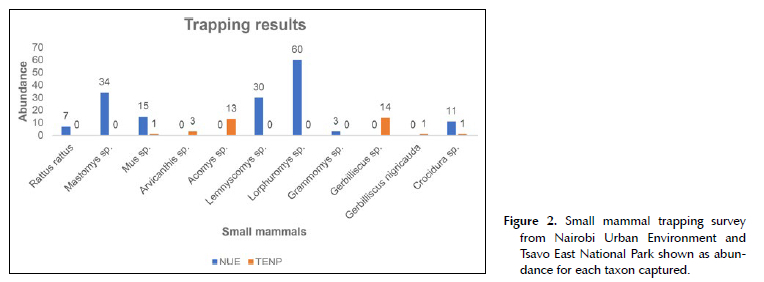
A total of 193 individuals consisting of 11 small mammal taxa (rodents and shrews) were recorded using traps in the two study localities; 160 individuals representing 7 taxa from two sites in NUE and 33 individuals representing six taxa from two habitats in TENP (Figure 2). Based on the traps employed and the need for accurate comparisons of taxa across sites and localities, we excluded chiropterans (bats), which were present in pellets. When the two sampling methods were combined (pellets and trapping), this yielded a total of 18 small mammal taxa at both localities for the 2020-2021 samples, with the 2005 Muthangari pellets included. The diversity of small mammals in owl pellets was significantly higher than in traps. All mammal species captured in traps were also identified in the pellet samples. More small mammal species (16 species) were recorded at NUE than at TENP (7 species) based on the two combined sampling methods (Table 2).
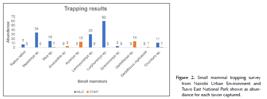
In the NUE, Lophuromys sp. occurred more frequently in trapping samples (37.5% Table 2), but Rattus rattus was more frequently consumed by Western Barn Owl (17.0%, Table 2). Crocidura sp. was the dominant prey for TENP Western Barn Owl diet (50.7%) contrasting with a higher frequency of Gerbilliscus sp. in trapping samples (42.4%). Diversity indices show higher diversity of small mammals in pellets (H' = 2.29, 1.47) than trapping (H' = 1.63, 1.27) in NUE and TENP, respectively. A chi-square test confirmed significant difference between prey species in pellets versus taxa recorded in trapping surveys at different habitats in NUE (χ2 = 460, df = 1, P = 0) and TENP (χ2 = 200.9 df = 1, P = 0).
Small mammal dynamics-change through time
Analysis of the 2005 disintegrated pellet sample from Muthangari revealed 2 220 individuals representing 19 species. Small mammals (10 species) were the principal prey, comprising 70.6% of MNI (1565 individuals). The remaining specimens were birds (527 individuals of 7 species) and amphibians (128 individuals of 2 species) (Appendix 2). Note that traps used in 2020-2021 were only suitable for capturing rodents and shrews, thus limiting taxonomic comparisons.
The relative frequency of each small mammal species differed significantly between pellets collected in 2005 and trapping in 2020-2021, although the 15 years separating the collection of Muthangari owl pellets from the time of trapping results likely affects species representation and abundance in these two samples.
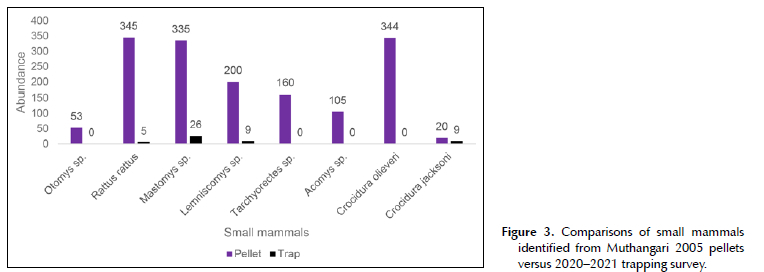
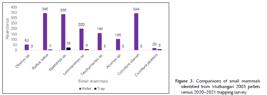
Trapping of small mammals at Muthangari yielded 5 small mammal species - 4 species of rodent (21 individuals) and 1 species of shrew. Three (3) small mammal taxa identified in the pellets (Otomys sp., Tachyoryctes sp. and Crocidura olivieri), were not captured by trapping (Figure 3). However, we recorded Tachyoryctes sp. through direct observation of a living specimen, suggesting that our traps were not appropriate to capture this species and maybe many others.
Small mammal species richness and relative abundance
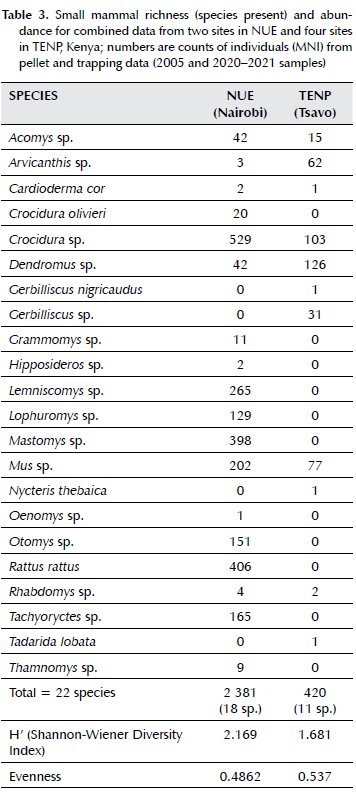
We combined data for the pellet and trapping samples from 2005 and 2020-2021 to obtain an overview of small mammal biodiversity represented in the two regions (Table 3). For all pellet samples combined, a total of 2 801 individuals representing 22 small mammal species were recorded in NUE (Ondiri plus Muthangari) and four sites in TENP. With the two sampling methods (trapping and pellets) combined for 2020-2021, the total is 2 381 individuals representing 18 small mammal species in NUE and 420 individuals representing 11 small mammal species in TENP (Table 3). The Shannon-Wiener biodiversity index shows a higher diversity of small mammals in NUE (H' = 2.169 evenness = 0.4862) compared with TENP (H' = 1.681, evenness = 0.537).
Discussion
Western Barn Owl diet composition
Barn Owl diet has been extensively studied worldwide. However, it is still unclear if these owls normally consume prey in relation to abundance or preference (Fernández-Jalvo et al. 2016). Based on pellets from NUE and TENP, it is apparent that owls consumed a wide variety of small taxa in four vertebrate classes (mammals, birds, reptiles and amphibians) and also invertebrates. Small mammals were the principal vertebrate prey across the two study localities (Appendix 1). Our findings are comparable with others that have reported small mammals as the dominant prey group in Western Barn Owl diets (Milchev 2015; Horváth et al. 2018). Other prey items such as birds, invertebrates and amphibians are taken opportunistically in low numbers (Nadeem et al. 2012). Few bats were eaten at either location, which suggests greater difficulties in capturing bats compared to other mammalian prey, or low preference for them as prey. A similar study reported no bats in Western Barn Owl diet (Moysi et al. 2018). Consumption of bats by Western Barn Owls in both of our study areas suggests opportunistic feeding. Obuch et al. (2016) reported that Western Barn Owls' prey on chiropterans when they are abundant or easy to catch.
Birds were the second most preferred prey group in NUE. In contrast, TENP Western Barn Owls consumed more invertebrates as their second prey group. Greater consumption of birds suggests that Western Barn Owls may resort to eating birds to complement their food preference when small mammal populations are relatively low. Another study also concluded that Western Barn Owls may take a smaller share of birds when populations of small mammals increase (Ali & Santhanakrishnan 2012). Likewise, consumption of greater proportion of invertebrates for TENP Western Barn Owls explains their abundance as food resource when rodent populations fluctuate (Dickman et al. 2011).
A smaller proportion of invertebrates was recorded in the diet of NUE Western Barn Owls in contrast to TENP, similar to findings in Uganda urban landscapes (Kityo 2001). Research conducted in relatively humid areas as well recorded a small proportion of invertebrates in Western Barn Owl diet (Moysi et al. 2018). Our results differ from a previous study in the Nairobi suburbs near our study area, which reported a significantly higher consumption of amphibians by Western Barn Owls and lower numbers of shrews (Gichuki 1987). A broader food niche breadth was detected in NUE than in TENP; associated with high species richness. This is consistent with another study in urban landscapes (Milana et al. 2016), which reported high small mammals species richness.
The ability to utilise a broad prey base, via an opportunistic feeding strategy, enables the Western Barn Owl to be a successful predator across a wide distribution range, and this also allows them to occupy a variety of habitats/territories despite declining populations of their main prey species (Tores et al. 2005). The behavioural plasticity of Western Barn Owls enables them to maintain their fitness via a strategy that balances energy gained over energy disbursed during foraging (Elder 2022).
Western Barn Owl feeding habits are strongly affected by the abundance and distributions of prey in any given region (Fernández-Jalvo 2016). Western Barn Owls thus are bio-indicators of habitat stability and ecosystem health and can provide evidence for changing environmental conditions. However, it is important to keep in mind that other variables may affect the prey evidence in pellets, such as owl preference for foraging habitat and prey size, and possibly competition with sympatric owl species (Wiens et al. 2014). If Western Barn Owls take prey in terms of preference, this may lead to underestimating overall taxonomic composition of an ecosystem based on data from pellets (Hindmarch & Elliott 2015). Furthermore, Western Barn Owl diets vary considerably among regions, seasons and time of year. In our 2020-2021 surveys, seasonal data were not adequately captured due to unpredictable weather conditions. Future research should focus on seasonal and long-term monitoring of prey dynamics to clarify the seasonal and spatial foraging traits of the Western Barn Owls and other sympatric owl species within the two study locations.
Comparisons of owl pellets and trapping surveys
The comparison between trapping and pellet sampling methods revealed significant differences in small mammal species composition. Owl pellets are confirmed as an informative method for sampling small mammals, recording a higher diversity of prey than trapping surveys. This concurs with other studies that have reported owl pellets to be a more efficient and informative sampling tool than traditional live-trapping, due to lower effort and fewer species-specific sampling biases (Torre et al. 2015), although expertise in bone identification is also required. Relying solely on traditional live-trapping would have led to a misrepresentation of the small mammal composition and taxonomic diversity at each of our localities. Conversely, Western Barn Owls may preferentially target certain prey species, resulting in biases in documenting small mammal composition in a given ecological region (Janžekovič & Klenovšek 2020). Therefore, combined sampling strategies along with long-term monitoring with owl pellets are needed to improve the accuracy of biodiversity monitoring of small vertebrate communities.
We confirmed that species predominantly documented by trapping in the NUE were not frequently preyed upon by the Western Barn Owls in the same area. For instance, Lophuromys sp. was the most abundant prey in trapping samples, but Western Barn Owls preyed more on Rattus rattus. Though infrequently recorded in pellets, the consumption of Lophuromys sp. and other diurnal prey species suggests that Western Barn Owls may sometimes hunt during the day. Changing activity patterns and diurnal hunting may indicate that the Western Barn Owls are struggling to get enough food. Western Barn Owls are mostly nocturnal, but in some cases, they adapt to daytime activity to improve fitness (Palmstrøm 2024). Factors such as human proximity, changing climate (e.g., precipitation patterns) and brooding behaviour can influence Western Barn Owl diurnal feeding (Elder 2022; Glåmseter 2021).
Prey selection for TENP Barn owl appeared to have been influenced by abundance and/or ease of capture. For instance, Gerbilliscus sp. was frequent prey and likewise predominated in the trap captures. Gerbilliscus sp. is a dry land and nocturnal species, and its high frequency in the TENP Western Barn Owl diet was expected. Western Barn Owl food selection in both study localities appears to be highly correlated with habitat structure (Séchaud et al. 2021). These inferences for TENP and NUE are also supported by a similar study (Horváth et al. 2018), which documented that diet composition and food-niche breadth of the Western Barn Owl may differ depending on habitat structure.
Low frequency of some species in traps might result from biases in the bait, or because some small mammals may be trap shy, avoiding traps altogether (Byers et al. 2019). The traps we used might be the cause of low shrew captures. Furthermore, trapping in the Nairobi and Tsavo localities occurred only for a few days, whereas the owl pellets accumulated over many seasons and covered a larger area sampled for small mammals and other taxa by the owls. Prey remains logically should reflect wider spatial and temporal patterns of species abundance than seasonal trapping efforts from a relatively small area of the owl's hunting range. Our study demonstrates that owl pellets and trapping survey can be complementary methods for inventorying small mammals and are most informative if used together. Future research should involve long-term seasonal trapping with additional types of traps, changing of bait and a larger sampling area, all of which likely would expand the small mammal species list.
Evidence of change over time in small mammals
The study of Western Barn Owl diet in NUE reported here (Appendix 1) provides interesting comparisons with a previous study of Western Barn Owls conducted in Nairobi's Karen suburb (Cichuki 1987). The genera Mus sp., Acomys sp., Lophuromys sp. and Thamnomys sp. identified in NUE in the present survey were not reported by Cichuki (1987). Further, the genera Pelomys sp., Dasymys sp. and Gerbilliscus sp. (formally Tatera sp.) previously identified in Western Barn Owl diet in Nairobi (Cichuki 1987) were not identified in our study. Also of note are the larger numbers of amphibians documented in Cichuki's pellet samples. Since diet composition for Western Barn Owls is shaped by prey availability, habitat type and hunting techniques (Ali & Santhanakrishnan 2012), diet variation between 1987 and 2021 are likely due to differences in foraging habitats and environmental change over 33 years and could also be affected by microhabitat variation in the two sites, which are 10 km apart.
Comparisons of the 2005 Western Barn Owl pellets collected from Muthangari Estate and the 2020-2021 trapping, revealed discrepancies in small mammals in the older pellet sample compared with the trapping survey (Figure 3). These comparisons tested whether small mammal species preyed upon by Western Barn Owls in 2005 still occur after 15 years in the same habitat. This period should be long enough to detect significant change or stasis in small mammal communities with respect to environmental or habitat shifts (BalCiauskas & BalCiauskiene 2021). Species such as Otomys sp., Tachyoryctes sp. and Crocidura olivieri were not detected in the trapping survey. However, we detected Tachyoryctes sp. through physical observation, evidence that the traps were unable to sample some species. The absence of Otomys sp. and Crocidura olivieri in the traps could be due to trapping biases, or as a result of their actual disappearance from the sampled areas. If this indicates disappearance, our results are consistent with a long-term study that concluded some species termed 'urban avoiders' disappear along with urbanisation (Patankar et al. 2021). The 2005 Muthangari pellets revealed Rattus rattus to be the most frequent species preyed upon by the Western Barn Owl, while the 2021 trapping survey revealed Mastomys sp. as the most common taxon (Figure 3). These taxa are closely associated with human habitation because of their adaptability to different environments provided by man.
Land-use changes in urban landscapes are considered the key drivers of biodiversity change through impacts on species distribution, especially at local scales (Simkin et al. 2022). Previous studies have documented a decline in community biodiversity (number of taxa) with increased abundance of common synanthropic species in human disturbed habitats (Torre et al. 2015). Anthropogenic activities favour certain species to increase in abundance, while at the same time species richness is expected to decrease, with urbanisation also making way for non-native species (Storch et al. 2022).
The collection of pellets at Muthangari pre-dated the trapping survey by 15 years and biases associated with the two different sampling methods deter precise inferences regarding changes of small mammal species richness and relative abundance over time. Lack of owl nests during the 2021 survey and low numbers of small mammals in traps suggests human impact and a need for long-term monitoring to be conducted in the same area, including landscape modelling, more intensive search for Western Barn Owl nests, and comprehensive seasonal trapping surveys using different kinds of traps and baits.
Small mammal species richness and relative abundance
Our results documented a higher species richness and diversity of small mammals in the NUE than in the TENP using two sampling methods and including the 2005 Muthangari sample (Table 3). We infer that Western Barn Owls in Tsavo consumed more from non-mammal prey categories due to low availability of small mammal prey. Carmona and Rivadeneira (2006) reported a study in one of the arid regions with low small mammal diversity as being connected with the extreme dry spells and low primary productivity in the ecosystem, limiting the abundance and species richness of Western Barn Owls' preferred prey. A similar study documented that those owls occurring in unproductive, hot and dry parts of the globe tend to rely less on small mammals, while those from moist temperate zones tend to specialise on them (Taylor 2003) . However, the TENP Western Barn Owl diet did include over 85.8% small mammals, suggesting greater dependence on these taxa at local scales.
The Western Barn Owl is normally considered to be an opportunistic predator (Moysi et al. 2018), therefore, we infer that most if not all of the variation of prey species in the diet between the NUE and TENP pellet samples likely reveals environmental conditions rather than hunting preferences.
Conclusion
Our study indicates that the opportunistic predation method of Western Barn Owls enables them to survive in highly anthropogenic urban centres and adapt to changing climatic conditions in the tropical regions of Africa. Their diet of small mammals differed significantly with differing habitat structure at the two study localities. Owl pellets, therefore, provided a representative measure of local small mammal communities and can be used to track changes in ecosystem health along with simultaneous trapping surveys. Relying solely on traditional trapping survey could have led to a misrepresentation of the small mammal composition and taxonomic diversity at local scales. The 2005 Muthangaripellet data suggests species change over 15 years, but this could not be confirmed at the same site because only trapping data are available for 2020-2021 (no pellets).
Future research will focus on regular collection of pellets to assess the seasonal and inter-annual dietary shifts and conduct landscape mapping to investigate the extent of owl foraging areas and factors leading to owl survival in relation to environmental changes.
Competing interests
The authors declare that they have no financial or personal relationship(s) that may have inappropriately influenced them in writing this article.
Authors' contributions
NG and EM (Department of Biology, University of Nairobi) were responsible for experimental and project design.
AKB (Department of Paleo-biology, Smithsonian National Museum of Natural History) provided research funds and assisted with research design, FM (Department of Sites and Monuments, National Museums of Kenya) provided 2005 pellets for the study, OM and VO (Department of Zoology National Museums of Kenya) collected the 2020-2021 data, and all the authors contributed to developing and refining the manuscript.
Funding
This research was funded through the Smithsonian Institution with assistance courtesy of Dr Anna K. Behrensmeyer.
Acknowledgements
We appreciate the National Museum of Kenya (NMK) for providing reference material for sample identification, Kenya Wildlife Services for permit issue and staff team, Dr Fred Lala, David Kimtai, Stephen Nyagah and Denis Mugambi and the rangers, who provided valuable information concerning owl nest sites and the much-needed security while working in the park. We acknowledge with gratitude the Friends of Ondiri Wetland; David Wakogy and residents of Muthangari Estate for an opportunity to conduct field work. We owe a debt of appreciation to Brenda Nyaboke for sharing information of Western Barn Owl nest site at Ondiri Swamp, and we are very grateful to Risky Agwanda, Simon Musila, Dr Titus Adhola, and Immaculate Muthoni for material support and taxonomic identification of small mammal specimens. Finally, but not least we recognise the valuable support granted by Ignatius Bukachi, Justus Ochong, Hezekiah Ogeto, Carol Nyongesa and Joseph Lesantanguny for data collection and pellet analysis in the laboratory.
References
-
Abd Rabou, A.F.N., 2020, 'On the owls (Order Strigiformes) inhabiting the Gaza Strip - Palestine', JOJ Wildlife & Biodiversity 3(1), 555603 https://juniperpublishers.com/jojwb/JOJWB.MS.ID.555603.php.
» https://juniperpublishers.com/jojwb/JOJWB.MS.ID.555603.php - Ali, A.M.S. & Santhanakrishnan, R., 2012, 'Diet composition of the Barn Owl, Tyto alba (Aves: Tytonidae) and Spotted Owlet, Athene brama (Aves: Strigidae) coexisting in an urban environment', Podoces 7(1/2), 21-32.
-
Balčiauskas, L. & Balčiauskiene, L., 2021, Long-term changes in a small mammal community in a temperate zone meadow subject to seasonal floods and habitat transformation', Integrative Zoology http://dx.doi.org/10.1111/1749-4877.12571.
» http://dx.doi.org/10.1111/1749-4877.12571 -
Baroni, D., Masoero, G., Korpimäki, E., Morosinotto, C. & Laaksonen, T., 2021, 'Habitat choice of a secondary cavity user indicates higher avoidance of disturbed habitat during breeding than during food-hoarding', Forest Ecology and Management 483, 118925, https://doi.org/10.1016/j.fore.co.2021.118925.
» https://doi.org/10.1016/j.fore.co.2021.118925 -
Beever, E.A., O'leary, J., Mengelt, C., West, J.M., Julius, S., Green, N., Magness, D., Petes, L., Stein, B., Nicotra, A.B. & Hellmann, J.J. 2016. 'Improving conservation outcomes with a new paradigm for understanding species' fundamental and realized adaptive capacity', Conservation Letters 9(2),131-137, http://dx.doi.org/10.1111/conl.12190.
» http://dx.doi.org/10.1111/conl.12190 -
Byers, K.A., Lee, M.J., Bidulka, J.J., Patrick, D.M. & Himsworth, C.G., 2019, 'Rat in a cage: Trappability of urban Norway rats (Rattus norvegicus)', Frontiers in Ecology and Evolution 7, 68, http://dx.doi.org/10.3389/fevo.2019.00068.
» http://dx.doi.org/10.3389/fevo.2019.00068 -
Carmona, E.R. & Rivadeneira, M.M., 2006, 'Food habits of the barn owl Tyto alba in the National Reserve Pampa del Tamarugal, Atacama Desert, north Chile', journal of Natural History, 40(7-8), 473-483, http://dx.doi.org/10.1080/00222930600699904.
» http://dx.doi.org/10.1080/00222930600699904 -
Castaneda, X.A., 2018, Hunting habitat use and selection patterns of barn owl (Tyto alba) in the urban-agricultural setting of a prominent wine grape growing region of California, Cal Poly Humboldt theses and projects 177, https://digitalcommons.humboldt.edu/etd/177.
» https://digitalcommons.humboldt.edu/etd/177 -
Cavalli, M., Baladrón, A.V., Isacch, J.P., Martínez, G. & Bó, M.S., 2014, Prey selection and food habits of breeding Burrowing Owls (Athene cunicularia) in natural and modified habitats of Argentine pampas. Emu-Austral Ornithology 114(2), 184-188, https://www.tandfonline.com/doi/epdf/10.1071/MU13040?needAccess=true.
» https://www.tandfonline.com/doi/epdf/10.1071/MU13040?needAccess=true -
Dickman, C.R., Greenville, A.C., Tamayo, B. & Wardle, G.M., 2011, 'Spatial dynamics of small mammals in central Australian desert habitats: the role of drought refugia', Journal of Mammalogy, 92(6), 1193-1209, https://doi.org/10.1644/10-MAMM-S-329.1.
» https://doi.org/10.1644/10-MAMM-S-329.1 -
Donázar, J.A., Cortés-Avizanda, A., Fargallo, J.A., Margalida, A., Moleón, M., Morales-Reyes, Z., Moreno-Opo, R., Pérez-García, J.M., Sánchez-Zapata, J.A., Zuberogoitia, I. & Serrano, D., 2016, 'Roles of raptors in a changing world: from flagships to providers of key ecosystem services', Ardeola 63(1), 181-234, http://dx.doi.org/10.13157/arla.63.1.2016.rp8.
» http://dx.doi.org/10.13157/arla.63.1.2016.rp8 -
Dykstra, C.R., 2018, City lifestyles: behavioral ecology of urban raptors. In: C.W. Boal & C.R. Dykstra (eds), Urban Raptors. Island Press, Washington, DC, https://doi.org/10.5822/978-1-61091-841-1_2.
» https://doi.org/10.5822/978-1-61091-841-1_2 - Elder, R.A., 2022, Food provisioning in the barn owls (Tyto alba): daily activity, prey handling and effect of rain, Master's thesis, Norwegian University of Life Sciences, As.
-
Fernández-Jalvo, Y., Andrews, P, Denys, C., Sesé, C., Stoetzel, E., Marin-Monfort, D. & Pesquero, D., 2016, 'Taphonomy for taxonomists: implications of predation in small mammal studies', Quaternary Science Reviews 139, 138-157, http://dx.doi.org/10.1016/j.quascirev.2016.03.016.
» http://dx.doi.org/10.1016/j.quascirev.2016.03.016 -
Gichuki, M.C., 1987, 'The diet of the barn owl, Tyto alba (Scopoli), in Nairobi, Kenya', Journal of East Africa Natural History Society and National Museums 75(187), 1-7, https://doi.org/10.5962/p.201566.
» https://doi.org/10.5962/p.201566 - Glâmseter, A.T., 2021, The effects of precipitation on parental food provisioning in the barn owls (Tyto alba) breeding in Norfolk, UK, Master's thesis, Norwegian University of Life Sciences, As.
- Grande, J.M., Orozco-Valor, P.M., Liébana, M.S. & Sarasola, J.H., 2018, 'Birds of prey in agricultural landscapes: The role of agriculture expansion and intensification', Birds of Prey: Biology and conservation in the XXI century, 197-228.
-
Guimarães, S., Fernandez-Jalvo, Y., Stoetzel, E., Gorgé, O., Bennett, E.A., Denys, C., Grange, T. and Geigl, E.M., 2016, 'Owl pellets: a wise DNA source for small mammal genetics', Journal of Zoology 298(1), 64-74, http://dx.doi.org/10.1111/jzo.12285.
» http://dx.doi.org/10.1111/jzo.12285 -
Hale, R. & Swearer, S.E., 2016, 'Ecological traps: current evidence and future directions', Proceedings of the Royal Society B: Biological Sciences 283(1824), 2015.2647, http://dx.doi.org/10.1098/rspb.2015.2647.
» http://dx.doi.org/10.1098/rspb.2015.2647 -
Halliday, J.E., Knobel, D.L., Agwanda, B., Bai, Y., Breiman, R.F., Cleaveland, S., Njenga, M.K. & Kosoy, M., 2015, 'Prevalence and diversity of small mammal-associated Bartonella species in rural and urban Kenya', PLoS Neglected Tropical Diseases 9(3), p.e0003608, https://doi.org/10.1371/journal.pntd.0003608.
» https://doi.org/10.1371/journal.pntd.0003608 -
Hindmarch, S. & Elliott, J.E., 2015, 'A specialist in the city: the diet of barn owls along a rural to urban gradient', Urban Ecosystems 18, 477-488, https://doi.org/10.1007/s11252-014-0411-y.
» https://doi.org/10.1007/s11252-014-0411-y -
Hindmarch, S., Elliott, J.E., McCann, S. & Levesque, P, 2017, 'Habitat use by barn owls across a rural to urban gradient and an assessment of stressors including, habitat loss, rodenticide exposure and road mortality', Landscape and Urban Planning 164, 132-143, https://doi.org/10.1016/j.landurbplan.2017.04.003.
» https://doi.org/10.1016/j.landurbplan.2017.04.003 -
Horváth, A., Morvai, A. & Horváth, G.F., 2018, 'Food-niche pattern of the Barn Owl (Tyto alba) in intensively cultivated agricultural landscape', Ornis Hungarica 26(1), 27-40, https://doi.org/10.1515/orhu-2018-0002.
» https://doi.org/10.1515/orhu-2018-0002 -
Janžekovič F. & Klenovšek T., 2020, 'The biogeography of diet diversity of barn owls on Mediterranean islands', Journal of Biogeography, https://doi.org/10.1111/jbi.13955.
» https://doi.org/10.1111/jbi.13955 - Kenchington, E., Rice, J.C., Duplisea Daniel, E. & Curtis, J.M.R., 2013, Identification of species and habitats that support commercial, recreational or aboriginal fisheries in Canada. Canadian Science Advisory Secretariat/Secrétariat Canadien De Consultation Scientifique, Canada.
-
Kityo, R.M., 2001, 'Vertebrate prey of the barn owl (Tyto alba scopoli) from Tororo, Eastern Uganda', Uganda Journal 47: 67-73, http://dx.doi.org/10.4314/uj.v47i1.23053.
» http://dx.doi.org/10.4314/uj.v47i1.23053 - Latorre, D., Merino-Aguirre, R., Fletcher, D.H., Cruz, A. & Almeida, D., 2022, 'Effects of habitat structure and feeding habits on productivity and nestling quality of barn owl Tyto alba (Scopoli, 1769)(Strigiformes: Tytonidae) in the Iberian Peninsula', Acta Zoologica Bulgarica 74, 203-214.
-
Levin, R., 1968, 'Evolution in changing environments', Monographs in Population Biology, https://doi.org/10.1515/9780691209418-toc.
» https://doi.org/10.1515/9780691209418-toc -
Linsenmeier, R.A., Beckmann, L. & Dmitriev, A.V., 2020, 'Intravenous ketamine for long term anesthesia in rats', Heliyon 6(12), https://doi.org/10.1016/j.heliyon.2020.e05686.
» https://doi.org/10.1016/j.heliyon.2020.e05686 -
Lövy, M. & Riegert, J., 2013, 'Home range and land use of urban long-eared owls', The Condor: Ornithological Applications 115(3), 551-557, https://doi.org/10.1525/cond.2013.120017.
» https://doi.org/10.1525/cond.2013.120017 -
Marsh, A.J., 2012, 'The influence of land-cover type and vegetation on nocturnal foraging activities and vertebrate prey acquisition by burrowing owls (Athene cunicularia)', http://dx.doi.org/10.5751/ace-00640-090102.
» http://dx.doi.org/10.5751/ace-00640-090102 -
Milana, G., Lai, M., Maiorano, L., Luiselli, L. & Amori, G., 2016, 'Geographic patterns of predator niche breadth and prey species richness', Ecological Research 31, 111-115, https://doi.org/10.1007/s11284-015-1319-6.
» https://doi.org/10.1007/s11284-015-1319-6 -
Milchev, B., 2015, 'Diet of Barn Owl Tyto alba in central South Bulgaria as influenced by landscape structure', Turkish Journal of Zoology, 39(5), 933-940, http://dx.doi.org/10.3906/zoo-1409-24.
» http://dx.doi.org/10.3906/zoo-1409-24 -
Moysi, M., Christou, M., Goutner, V., Kassinis, N. & Iezekiel, S., 2018, 'Spatial and temporal patterns in the diet of barn owl (Tyto alba) in Cyprus', Journal of Biological Research-Thessaloniki 25, 1-8, http://dx.doi.org/10.1186/s40709-018-00-8.
» http://dx.doi.org/10.1186/s40709-018-00-8 -
Mwebi, O., Nguta, E., Onduso, V., Nyakundi, B., Jiang, X.L. & Kioko, E.N., 2019, 'Small mammal diversity of Mt Kenya based on carnivore fecal and surface bone remains', Zoological Research 40(1), 61, http://dx.doi.org/10.24272/j.issn.2095-8137.2018.055.
» http://dx.doi.org/10.24272/j.issn.2095-8137.2018.055 -
Nadeem M.S., Imran S.M.K., Mahmood T., Kayani A.R. & Shah S.I., 2012, 'A comparative study of the diets of Barn Owl (Tyto alba) and Spotted Owlet (Athene brama) inhabiting Ahmadpur East, Southern Punjab, Pakistan, Animal Biology, 62(1),13-28, http://dx.doi.org/10.1163/157075511x597593.
» http://dx.doi.org/10.1163/157075511x597593 - Natsukawa, H. & Sergio, F., 2022, 'Top predators as biodiversity indicators: A meta-analysis', Ecology Letters 25(9), 2062-2075.
-
Obuch, J., Danko, S. & Noga, M., 2016, 'Recent and subrecent diet of the Barn Owl (Tyto alba) in Slovakia', Slovak Raptor Journal 10(1),1,http://dx.doi.org/10.1515/srj-2016-0003.
» http://dx.doi.org/10.1515/srj-2016-0003 - Palmstrøm, S.A., 2024, Diet, diel activity and prey handling during food provisioning in the common barn owl (Tyto alba): a comparative study using continuous camera monitoring data from three European countries, Master's thesis, Norwegian University of Life Sciences.
-
Paniccia, C., 2019, Small mammals in a changing landscape: monitoring communities from local to large scale, PhD Thesis, School of the University of Molise, Department of Biosciences and Territory, Download: https://iris.unimol.it/retrieve/dfbd111e-b199-d2a0-e053-3705fe0a5a7e/Te-si_C_Paniccia.pdf.
» https://iris.unimol.it/retrieve/dfbd111e-b199-d2a0-e053-3705fe0a5a7e/Te-si_C_Paniccia.pdf -
Patankar, S., Jambhekar, R., Suryawanshi, K.R. & Nagendra, H., 2021, 'Which traits influence bird survival in the city? A review', Land 10(2), 92, http://dx.doi.org/10.3390/land10020092.
» http://dx.doi.org/10.3390/land10020092 - Renuka Balakrishna, S., 2023, Barn owl breeding in agricultural landscapes of Great Britain Doctoral dissertation, Nottingham Trent University.
-
Saufi, S., Ravindran, S., Hamid, N.H., Zainal Abidin, C.M.R., Ahmad, H., Ahmad, A.H. & Salim, H., 2020, 'Diet composition of introduced Barn Owls (Tyto alba javanica) in urban area in comparison with agriculture settings', Journal of Urban Ecology 6(1), juz025, http://dx.doi.org/10.1101/574277.
» http://dx.doi.org/10.1101/574277 -
Séchaud, R., Schalcher, K., Machado, A.P., Almasi, B., Massa, C., Safi, K. & Roulin, A., 2021, 'Behaviour-specific habitat selection patterns of breeding barn owls', Movement Ecology 9, 1-11, https://doi.org/10.1186/s40462-021-00258-6.
» https://doi.org/10.1186/s40462-021-00258-6 -
Sikes, R. S. &The Animal Care Use Committee of the American Society of Mammalogists, 2016, 'Guidelines of the American Society of Mammalogists for the use of wild mammals in research and education', Journal of Mammalogy 97, 663-688, http://dx.doi.org/10.1093/jmammal/gyw078.
» http://dx.doi.org/10.1093/jmammal/gyw078 -
Simkin, R.D., Seto, K.C., McDonald, R.I. & Jetz, W., 2022, 'Biodiversity impacts and conservation implications of urban land expansion projected to 2050' Proceedings of the National Academy of Sciences 119(12), p.e2117297119, https://doi.org/10.1073/pnas.2117297119.
» https://doi.org/10.1073/pnas.2117297119 -
Spinage, C.A., 2012, The Changing Climate of Africa Part II: West Africa and the Sahel. In: African Ecology, Springer Geography, Springer, Berlin, Heidelberg, https://doi.org/10.1007/978-3-642-22872-8_3.
» https://doi.org/10.1007/978-3-642-22872-8_3 -
Storch, D., Šímová, I., Smyčka, J., Bohdalková, E., Toszogy-ova, A. & Okie, J.G., 2022, 'Biodiversity dynamics in the Anthropocene: how human activities change equilibria of species richness', Ecography 2022(4), http://dx.doi.org/10.1111/ecog.05778.
» http://dx.doi.org/10.1111/ecog.05778 - Taylor, I., 2003, Barn owls: predator-prey relationships and conservation, Cambridge University Press.
-
Thomsen, S.K., Kroeger, C.E., Bloom, P.H. & Harvey, A.L., 2014, Space use and home-range size of barn owls on Santa Barbara Island.', Monographs of the Western North American Naturalist, 339-347, https://doi.org/10.3398/042.007.0125.
» https://doi.org/10.3398/042.007.0125 - Tores, M., Motro, Y., Motro, U. & Yom-Tov, Y., 2005, 'The Barn Owl - a selective opportunist predator', Israel Journal of Ecology and Evolution 51(4), 349-360.
-
Torre, I., Gracia-Quintas, L., Arrizabalaga, A., Baucells, J. & Díaz, M., 2015, 'Are recent changes in the terrestrial small mammal communities related to land use change? A test using pellet analyses', Ecological Research 30(5), 813-819, http://dx.doi.org/10.1007/s11284-015-1279-x.
» http://dx.doi.org/10.1007/s11284-015-1279-x -
Wiens, J.D., Anthony, R.G. & Forsman, E.D., 2014, 'Competitive interactions and resource partitioning between northern spotted owls and barred owls in western Oregon', Wildlife Monographs 185(1), 1-50, https://doi.org/10.1002/wmon.1009.
» https://doi.org/10.1002/wmon.1009 - Wright, R.K., 2019, Factors influencing diet, reproductive success and road mortality in the Barn Owl (Tyto Albaj, Lancaster University, United Kingdom.
-
Xu, X., Xie, Y., Qi, K., Luo, Z. & Wang, X., 2018, 'Detecting the response of bird communities and biodiversity to habitat loss and fragmentation due to urbanisation', Science of the Total Environment 624, 1561-1576, https://doi.org/10.1016/j.scitotenv.2017.12.143.
» https://doi.org/10.1016/j.scitotenv.2017.12.143

Accepted: 16 July 2025
Published: 6 November 2025