An assessment of invasive alien plant control by a volunteer group in Kloofendal Nature Reserve, Johannesburg, South Africa
Abstract
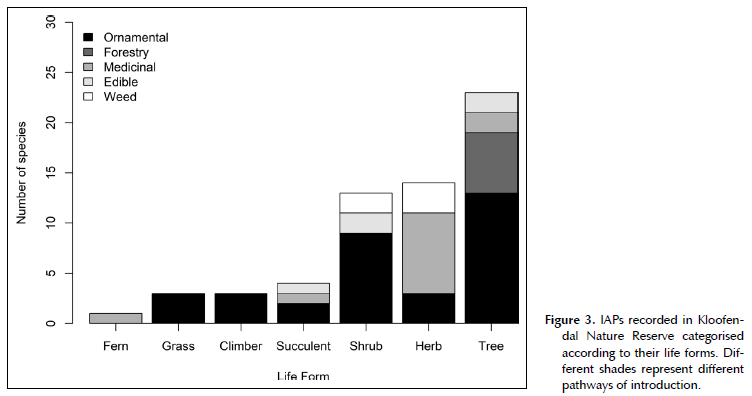
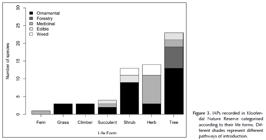
BACKGROUND: In South Africa, the management of invasive alien plants (lAPs) is typically undertaken in large, protected areas at a national level. However, most urban protected areas managed by municipalities lack the capacity and funds to record and manage IAPs OBJECTIVES: This study assesses the control of IAPs undertaken by volunteer citizen scientists and estimates the associated monetary value using the standards of the Working for Water (WfW) programme in Kloofendal Nature Reserve (KNR), Johannesburg METHODS: Alien plants were first identified through surveys by volunteer citizen scientists, with the species names, dates, abundance and locations recorded using the GPS Essentials application (app). IAPs were then controlled using mechanical and chemical methods in collaboration with the Johannesburg City Parks and Zoo RESULTS: A total of 58 alien plant species from 28 plant families were recorded in KNR. The most controlled life forms were shrubs, herbs and trees. Approximately 150 798 individual plants belonging to 57 alien plants were removed, with many species removed in the year 2024 (n = 58 318) and 2023 (n = 41 205), at a total cost of R257 110.40, following the WfW Programme. The most removed life forms were shrubs (n = 77 452), herbaceous plants (n = 11 769) and trees (n = 10 883). Most alien plant species (68%) were listed as Category 1b in the South African National Environmental Management: Biodiversity Act 2004 (Act No. 10 of 2004): Alien and Invasive Species Regulations, with the most removed individual alien plants (n = 90 806) belonging to this category CONCLUSION: This study highlights the importance of stakeholder engagement in managing IAPs in urban protected areas, as shown in the KNR. This research offers a scalable model for African countries to enhance biodiversity conservation through citizen-municipality partnerships
citizens; environmental regulations; non-native species; mechanical and chemical control; stakeholder engagement
 Thumbnail
 Thumbnail
 Thumbnail