Public trust doctrine, research and responsible wildlife management in South Africa
Abstract
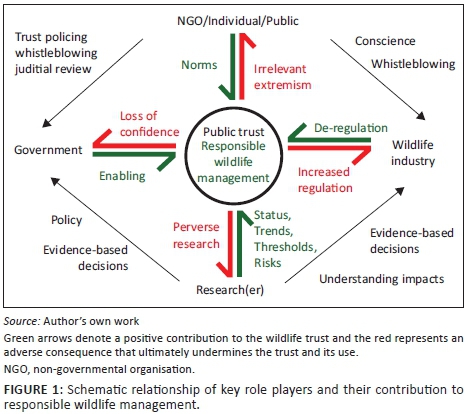
A significant proportion of South African biodiversity occurs in extensive private wildlife areas. As such, the continuance of these private reserves is paramount to conservation of the country's biodiversity. The areas are, however, vulnerable to being divided into smaller camps as landowners enter into the new and rapidly growing industry of selective breeding and intensive management of antelope and predators. Concerns are being raised as to the long-term consequences of the products and impacts of this industry on, inter alia, integrity and conservation of the country's wildlife, and the landscapes these facilities are located in, as well as the country's reputation as a free ranging and fair chase hunting destination. Using the public trust doctrine as a foundation, this article characterises the relationship between the country's environmental law and the roles played by government as the regulator, the wildlife industry, research and the public in achieving responsible wildlife management and the long-term conservation of this resource. These relationships are seen to be finely balanced between the provision of robust science, and evidence-based and cautious or risk-averse decision-making. It is concluded that the public trust doctrine is a powerful tool to limit the impacts of unsustainable and parochial use of wildlife on the conservation of biodiversity. It is also concluded that an improved understanding of the doctrine by researchers, public and the wildlife industry would lead to a greater relevance of research, and in turn sound evidence-based decision-making and ultimately sustainable use of wildlife.
 Thumbnail
 Thumbnail