Site selection for release of captive-bred Pickersgill's reed frogs Hyperolius pickersgilli
Abstract
The successful release of captive-bred frogs to the wild can be hampered by uncertainty regarding the selection and state of proposed release sites. The Endangered Pickersgill's reed frog (Hyperolius pickersgilli) has been captive-bred since 2013, to improve the understanding of its husbandry and ultimately for release to the wild at secure rehabilitated wetlands within the species' native range in central coastal KwaZulu-Natal, South Africa. To facilitate selection of release sites, a bioblitz was conducted at four wetlands at which H. pickersgilli is present and at one potential release site. Wetlands occupied by H. pickersgilli have a dense and variable vegetation structure, comprising an overstory of tall, relatively broad-leaved emergent plants and an understorey of herbaceous plants. These wetlands have a variety of arthropods from various orders and families that are potential predators or prey. Predatory arthropods were present at all sites. Predatory fish and hetero-cannibalistic amphibians were captured at two sites each. The results of the bioblitz allowed us to ascertain what vegetation structure is suitable for H. pickersgilli, and which potential predatory fish and arthropods may be present at proposed release sites. Analysis of environmental DNA from water and soil samples might assist with the identification of fish, amphibian and some arthropod predators at potential release sites because phenotypic and genetic identifications matched in most cases. However, this was the case for relatively few potential prey species. Release sites for captive-bred H. pickersgilli should have a suitable vegetation structure as determined in this study, relatively few predators, and an abundance of small arthropods as prey, amongst other factors. The presence of certain insect species that are easily identifiable may be useful additional indicators of the suitability of potential release sites.
Endangered amphibian; breeding wetland characterisation; co-occurring species; genetic barcoding; conservation translocation
Introduction
Many amphibian species have limited distributions and more than 40% are either threatened or are experiencing population declines (Sodhi et al. 2008; González-del-Pliego et al. 2019; Grant et al. 2020; Luedtke et al. 2023). One such species is the Endangered Pickersgill's reed frog, Hyperolius pickersgilli Raw, 1982, a small (body length < 3 cm) hyperoliid reed frog endemic to a narrow coastal strip in KwaZulu-Natal, South Africa (IUCN SSC Amphibian Specialist Group & SA-FRoG 2016). This species is the subject of a Biodiversity Management Plan to assist with the species' conservation management (Tarrant & Armstrong 2017). One of the 22 proposed outcomes of South Africa's National Biodiversity Strategy and Action Plan is that species of special concern are sustainably managed (Government of South Africa 2015). Target 4 of The Biodiversity Plan for Life of the Earth Kunming-Montreal Global Biodiversity Framework of the Convention on Biological Diversity includes preventing species extinctions and ensuring the recovery and conservation of species (Convention on Biological Diversity 2024). Ex-situ breeding and maintenance of insurance populations are some of the tools to safeguard populations (IUCN/SSC 2014). To this end, the breeding of H. pickersgilli in captivity for release to the wild to rehabilitated and secure wetlands was considered a useful method to increase the area of occupancy and size of the overall wild population, and ex-situ breeding to F2 generation has been accomplished at the Johannesburg Zoo (IUCN SSC Amphibian Specialist Group & SA-FRoG 2016; Du Plessis et al. 2022a, 2022b).
When selecting a release site, various features crucial for the year-round survival of the frogs, such as the presence of breeding habitat and appropriate micro-habitats, the amount of habitat available, food resources and appropriate water variable parameters for all life stages should be present, and the presence of predators, competitors and parasites assessed (Lin-hoff et al. 2021). The causes of failure of amphibian releases elsewhere in the world include poor quality release habitat, lack of baseline knowledge, homing and movement away from the release site, monitoring difficulties, diseases and parasites, predation, invasive species and the release of too few individuals (fewer than 1 000) (Germano & Bishop 2009; Berger-Tal et al. 2019). For breeding, H. pickersgilli requires perennial wetlands with thick, relatively broad-leaved emergent vegetation and thick herbaceous understorey and where the depth of the water is between 20 and 80 cm (Raw 1982; Tarrant & Armstrong 2013; IUCN SSC Amphibian Specialist Group & SA-FRoG 2016). As funding became available, and to ensure that sites proposed for releases of captive-bred H. pickersgilli are suitable for the species, we wanted to identify more comprehensively the indigenous plant and animal species that occur at sites inhabited by H. pickersgilli.
A database of plant and animal species commonly found in the known habitat of H. pickersgilli would be useful as a reference against which to test the suitability of potential release sites for captive-bred H. pickersgilli. Co-occurring animal species may be, inter alia, predators, prey or competitors of H. pickersgilli. The first aim of this study was to characterise the wetland breeding habitat of H. pickersgilli in terms of plant and animal species present by means of a bioblitz to assist with the assessment of the suitability of rehabilitated wetlands as release sites for captive-bred H. pickersgilli. A potential release site was included in the study as a test case. The second aim was to determine whether environmental DNA (eDNA) sampling could be used for the same purpose, which has not been done previously. Metabar-coding of water and soil samples from proposed release sites might be more efficient (in terms of cost and time) in characterising the animal diversity present, including predators 'hidden' from sight, than sampling specimens and conducting morphological identification.
Materials and methods
Sampling of plants, invertebrates, fish and amphibians at five wetlands
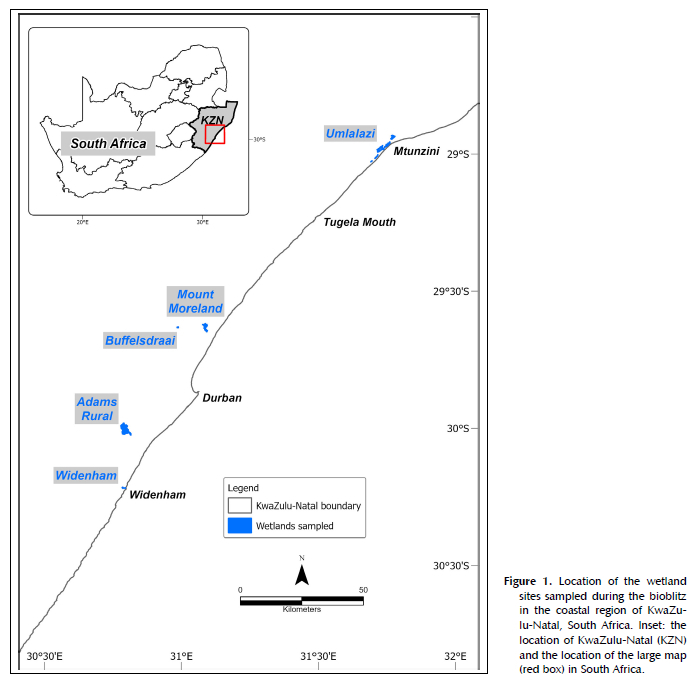
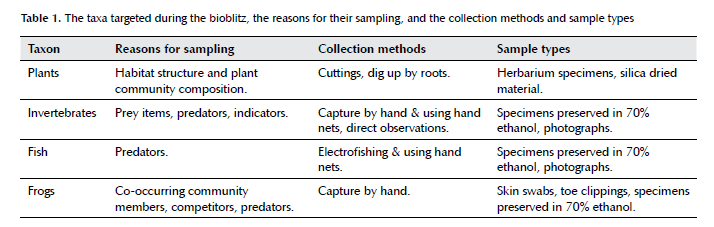
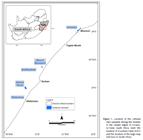
Five wetland sites were sampled over the period 21 to 25 February 2022 (Figure 1), during the austral summer and at the end of the breeding season of H. pickersgilli. This species is known to be present at four of these sites, namely Adams Rural (-30.0141°, 30.8097°), Widenham (-30.21765°, 30.79387°), Mount Moreland (-29.63706, 31.07565) and Umlalazi Nature Reserve (-29.002°, 31.722°). The fifth site, Buffelsdraai (-29.63225, 30.98903), was a potential release site for captive-bred H. pickersgilli. The aim was to collect several specimens per species across the selected taxa at the five sites for barcoding and to serve as voucher specimens. The taxa targeted, the reasons for sampling these taxa, the collection methods, and the sample types are presented in Table 1. The purpose of the bioblitz was not to conduct a thorough survey at each site but rather to obtain a snapshot of these taxa, mainly species that were common and/or conspicuous at the time of sampling and that were able to be sampled by the methods, during the half-day available for sampling at each site. Certain taxa were collected or photographed only at three or four sites, in accordance with the availability of the dedicated sampling team for each taxon to conduct the sampling during the period that a particular site was visited. For example, certain teams were made up of members from other provinces who had time constraints, and an attack by a swarm of bees prevented the sampling of aquatic insects at the Widenham site. Photographs of butterflies and dragonflies were taken at all sites except Umlalazi Nature Reserve. Aquatic invertebrates were sampled at Adams Rural, Mount Moreland and Buffelsdraai. Fish were sampled at Adams Rural (in a tributary of the aManzimtoti River), Mount Moreland, Widenham (in a coastal stream entering the known breeding site north of the Mahlongwana River) and Umlalazi Nature Reserve.
Depositories of specimens
The plant voucher specimens are deposited in the SANBI National Herbarium (PRE) and the SANBI KwaZulu-Natal Herbarium (NH). The invertebrates (except spiders) and frogs (except the live H. pickersgilli) are preserved in the South African National Biodiversity Institute (SANBI) biobank in Pretoria. The spider specimens are deposited in the National Collection of Arachnida, Agricultural Research Council, Roodeplaat. The live H. pickersgilli were transported to the Johannesburg Zoo's Amphibian Research Project's biosecure building for captive-breeding purposes. Fish tissue and fin clips are stored at the National Research Foundation's South African Institute for Aquatic Biodiversity (NRF-SAIAB) Biobank at Makhan-da, Eastern Cape. Fish voucher specimens are incorporated into the NRF-SAIAB fish collection. Reference to curated specimens and genetic sequences such as accession numbers and catalogue numbers are provided in the Supplementary material, Table S1.
Identification of specimens
The phenotypic identification of observed, photographed and collected specimens was conducted with reference to taxonomic keys, identification guides and determined museum specimens. Habitat types for plants were determined mainly from Gordon-Grey (1995), Pooley (1998), Boon (2010), Crouch et al. (2011), and the Red List of South African Plants (http://redlist.sanbi.org/index.php, viewed on 8 October 2024). For invertebrates and vertebrates, the habitat types and other information were obtained mainly from the following sources: 1. Odonata (dragonflies and damselflies), Sam-ways & Wilmot (2003) and Samways & Simaika (2016); 2. Lepidoptera (butterflies and moths), Woodhall (2020) and Staude et al. (2023); 3. Orthoptera (crickets and grasshoppers), the habitat field of records in Ezemvelo KZN Wildlife's Biodiversity Database; 4. Ephemeroptera (mayflies), Barber-James & Lugo-Ortiz (2003); 5. Trichoptera (caddisflies), De Moor & Scott (2003); 6. Other Insecta (other insects), Picker et al. (2019) and AntWeb (AntWeb. Version 8.112. California Academy of Science, online at https://www.antweb.org); 7. Stylommatophora (slugs and snails), Appleton (1996, 2002) and Herbert & Kilburn (2004); 8. Araneae (spiders), Dippenaar-Schoeman (2014); 9. Teleostei (fish), Skelton (2001); Anura (frogs), Du Preez & Carruthers (2017).
Genetic analyses
The genetic analyses served three purposes, to: 1. confirm the morphological identifications where necessary; 2. determine if metabarcoding of water and soil samples could be used to determine what species were present at proposed release sites for captive-bred H. pickersgil-li, thereby obviating the need for time-consuming and expensive manual surveys of the suitability of the sites for this purpose, and; 3. add new and more barcode sequences to the Barcode of Life Database (BOLD). Invertebrates and frogs were collected and preserved in 70% ethanol prior to DNA barcoding for species identification to supplement the taxonomic identification. DNA isolation was completed using the PrepFiler Forensic DNA Extraction Kit (Applied Biosystems, Life Technologies Corporation, Carlsbad, CA, USA) following the manufacturers protocol. PCR amplification was done using the Taq DNA Polymerase RED (Ampliqon A/S, Denmark) and the appropriate primer set, LCO-1490 (5'- GGTCAACAAATCATAAAGATATTGG-3') and HCO-2198 (5'- TAAACTTCAGGGTGACCAAAAAAT-CA-3') (Folmer et al. 1994) for COI and the 16SA-L (5'- CGCCTGTTTATCAAAAACAT -3') and 16SB-H (5'- CCGGTCTGAACTCAGATCACGT -3') (Palumbi et al. 2002) for 16S. Sanger sequencing was completed using the BigDye™ Terminator v3.1 Cycle Sequencing Kit (Applied Biosystems, Life Technologies Corporation, Carlsbad, CA, USA) following the manufacturer's protocol and visualised on the ABI 3500 DNA Analyzer (Applied Biosystems, Life Technologies Corporation, Carlsbad, CA, USA). Sequence quality control and analysis was completed using the software Geneious 10.2.6 (https://www.geneious.com). Species identification for each barcode was done by querying sequences against the BOLD ID Engine's species-level database (Ratnasingham & Hebert 2013) and the NCBI BLAST search function on GenBank (Altschul et al. 1990). Sequences were also submitted to NCBI GenBank (Table S1).
Water samples and soil samples were also collected, and DNA extracted for metabarcoding at a later stage, because the analysis equipment that was to be used is in long-term disrepair. Fish mitochondrial DNA was extracted using the salt extraction protocol from tissues (entire fish or fins or cuts from the caudal peduncle or trunk) stored in 70% ethanol and in the -80 °C freezer at the NRF-SAIAB Biobank. The target gene was CO1. This gene was amplified using the standard PCR protocol. The amplification of the PCR was carried out using primers FishF1 and FishR1 respectively. All 48 samples that were extracted showed clean bands in the gel electrophoresis. Following the purification through Exosap (Applied Biosystems), cycle-sequencing was carried out using the BigDye Cycle Sequencing Kit (Applied Biosystems, Foster City, CA, US), and the samples were sequenced at NRF-SAIAB using a Sanger sequencer (ABI 3730xl DNA Analyzer) for both the forward and reverse sequences. The final sequences were edited in Mega 10 and are curated in the NRF-SAIAB molecular laboratory database. The tissues are in -80 °C freezers in the NRF-SAIAB Biobank.
When both phenotypic and genetic determinations were available for a specimen, these were compared. On the few occasions when these differed, the morphological identification was accepted when the genetic determination was below a 98% match for the species identified from the BOLD ID Engine's species-level database. If the genetic result was a match of 98-100% to a species in the database, the genetic identification was accepted except when the morphological determination clearly indicated that the genetic result was incorrect or if the genetically determined species or subspecies is not native to South Africa when the morphologically determined species or subspecies is.
Hierarchical cluster analysis
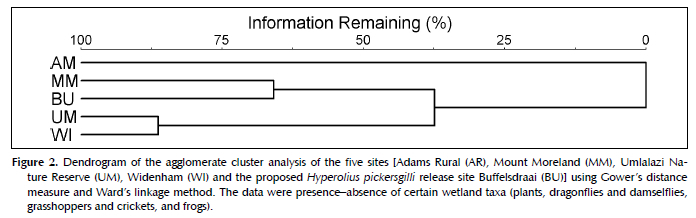
The purpose of this analysis was to determine whether the proposed Buffelsdraai release site was suitable for H. pickersgilli in terms of the plant and animal com-munitty present. The five sampled sites were compared for similarity in plant and animal species composition (where the animal species comprised a subset of the potential predator and prey species and the co-occurring amphibians) by agglomerative cluster analysis in
PC-Ord version 7.11 (McCune & Grace 2002; McCune & Mefford 2018). The data were presence or absence of wetland species of plants, insects (Odonata, Orthoptera) and amphibians, to exclude taxa that were not sampled at all sites. Gower's distance measure and Ward's linkage method were used for the cluster analysis.
Results
Bioblitz sampling
Plants
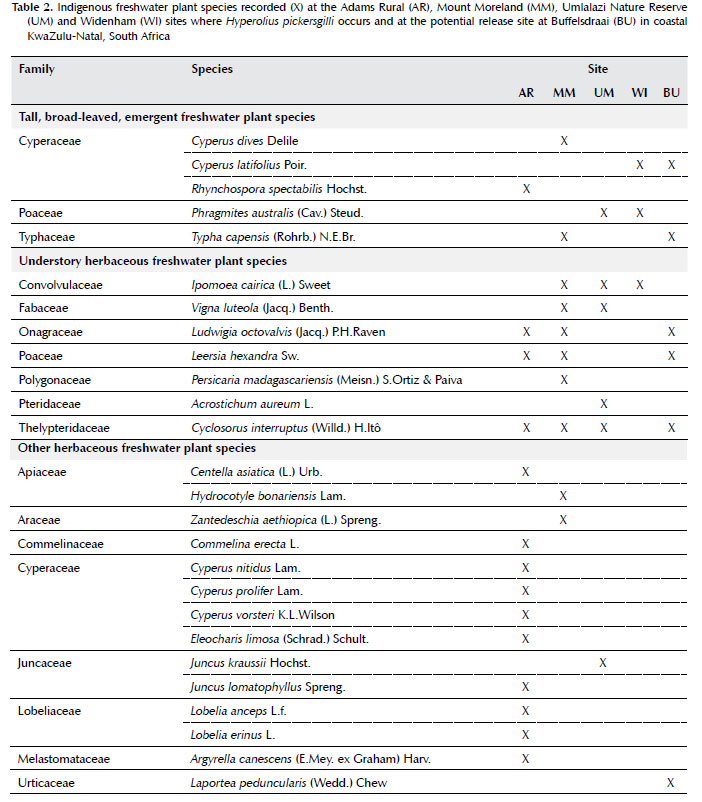
Table 2 and Supplementary material, Table S2 indicate the indigenous plant species sampled during the bioblitz. The main groups of plants in the breeding habitat of H. pickersgilli were (Table 2): 1. tall broad-leaved emergent plants [the sedges Cyperus dives Delile, C. latifolius Poir. and Rhynchospora spectabilis Hochst. ex C.Krauss, the reed Phragmites australis (Cav.) Trin. ex Steud., and the bulrush Typha capensis (Rohrb.) N.E.Br.]; 2. understorey plants [particularly the fern Cyclosorus interruptus (Willd.) H.Itô, the grass Leersia hexandra Sw., and the robust forb Ludwigia octovalvis (Jacq.) P.H.Raven] and; 3. other herbaceous species. The Buffelsdraai potential release site habitat had a similar vegetation structure (Table 2).
Invertebrates
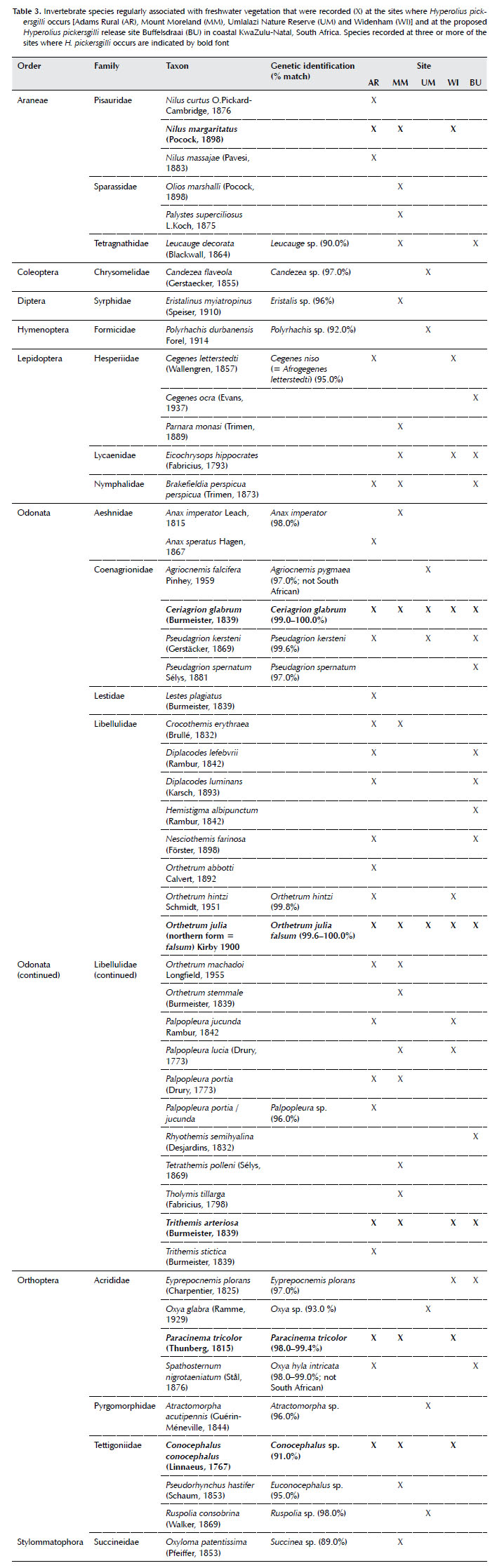
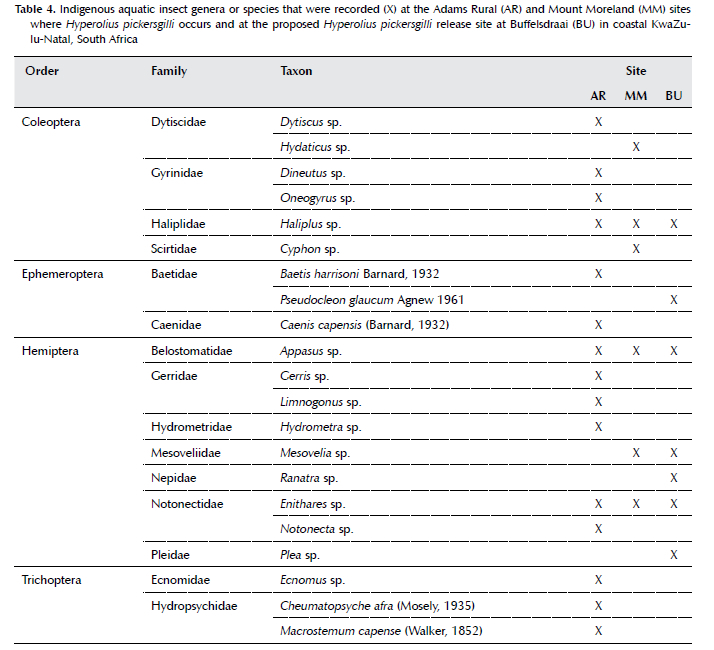
The invertebrate species sampled during the bioblitz are presented in Tables 3, 4 and Supplementary material Table S3. Table 3 lists the invertebrate taxa associated with aquatic plants that were identified at the five sites. Fourteen of the species were recorded at two or more of the four H. pickersgilli breeding wetlands, and, of these species, six were also recorded at the Buffelsdraai potential release site. Only 22 invertebrate species could be identified using both genetic and phe-notypic methods (Table 3 & Table S3). Table 4 presents the aquatic insects at three sites and identified morphologically to genus or species level.
Fish
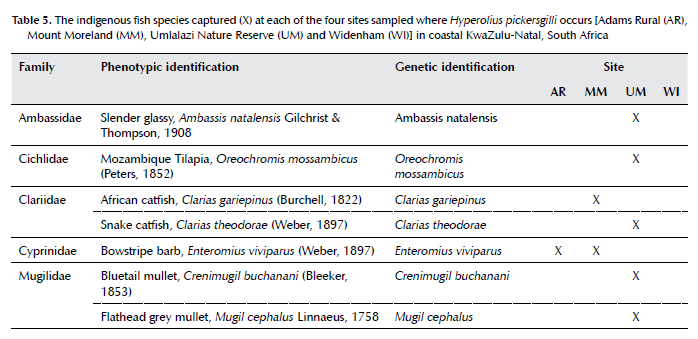
Seven indigenous fish species were identified (Table 5). Only one species was captured at more than one site. The phenotypic and genetic identifications were consistent, except for the bluetail mullet Crenimugil buchanani (Bleeker, 1853), which could only be identified to species level genetically.
Amphibians
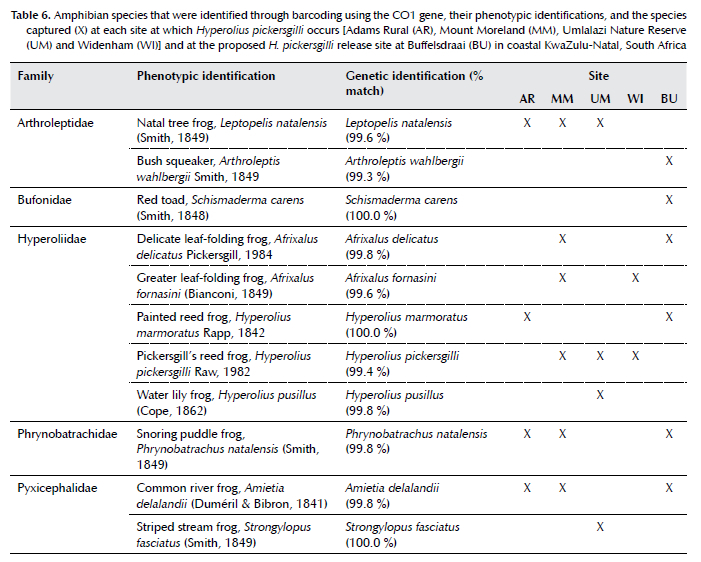
For all amphibian specimens, the genetic identifications were consistent with the phenotypic identifications (Table 6).
Cluster analysis
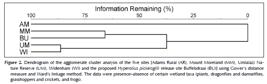
The agglomerative cluster analysis grouped Umlalazi Nature Reserve and Widenham together first, indicating that these were the most similar pair of sites in terms of the plant, Odonata, Orthoptera and amphibian species recorded. The next sites to cluster together were Mount Moreland and Buffelsdraai, these sites being more similar to each other than to the Umlalazi Nature Reserve and Widenham sites in terms of the plant, Odonata, Orthoptera and amphibian species recorded. Next, all four these sites clustered together, indicating that these four sites were more similar to each other in terms of the species recorded than to the Adams Rural site (Figure 2).
Discussion
The bioblitz study was conducted to help guide the identification of potential release sites for captive-bred H. pickersgilli and avoid impediments to successful releases that could be caused by unsuitable habitat and high levels of predation. Improved knowledge was required about what constitutes suitable H. pickersgilli habitat and which potential predators may co-occur with H. pickersgilli. Information on vegetation structure and type is also important for informing the design and maintenance of breeding facilities for this species. The wetland habitat of H. pickersgilli has a basic vegetation structure of dense tall, broad-leaved emergent plants (sedges, reeds and/ or rushes) with an understory of herbaceous freshwater plant species such as Cyclosorus interruptus, Leersia hexandra, Ludwigia octovalvis, Ipomoea cairica and Vigna luteola. The identities of the species may vary from wetland to wetland (e.g., H. pickersgilli also inhabits dense Cyperus papyrus swamps in the north of its range), but the basic vegetation structure remains similar (Table 2; Figure 2; pers. obs.; Tarrant & Armstrong 2013).
Natal habitat preference induction is known in a few amphibians (Davis & Stamps 2004). If this generally applies to amphibians, captive-bred released amphibians may search for habitat with similar cues to their natal habitat (Stamps & Swaisgood 2007). This means that enrichment of the H. pickersgilli captive breeding environment should include conspicuous cues to be found in the natural habitat of H. pickersgilli. In the case of H. pickersgilli, such cues might be vegetation structure (e.g., reeds, broad-leaved sedges planted in the cages) and auditory cues (such as recordings from the release site) that could be played during the evening in the biosecure facility to mimic the natural soundscape of the species in the wild. The composition and structure of the vegetation adjacent to the wetlands is likely to be important for facilitating dispersal of subadult H. pickersgilli to suitable habitat elsewhere (Tarrant & Armstrong 2013). Table S2 lists plant species recorded adjacent to the breeding habitat that would likely be components of suitable vegetation through which dispersal can occur from release sites. However, this aspect needs further study.
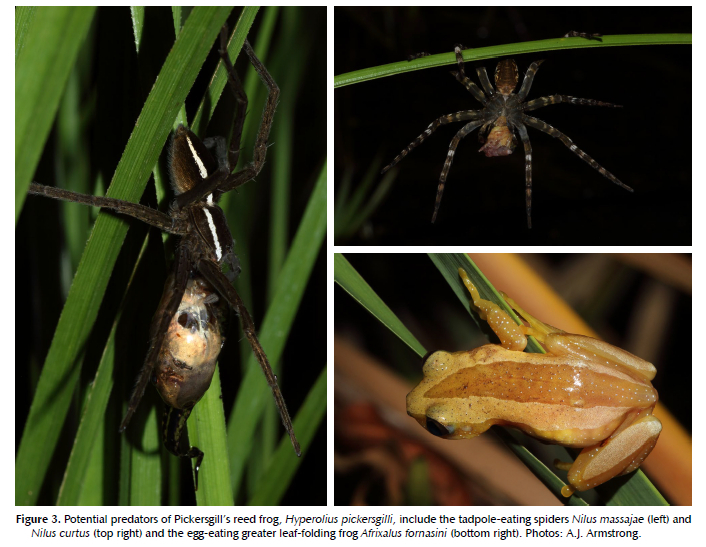
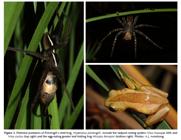
Predators of eggs, tadpoles and/or adult frogs that were sampled (Tables 2, 3, 4 & 5; Figure 3) include species of Araneae (Pisauridae: Nilus species), Coleoptera (Dytiscidae), Hemiptera (Belostomatidae, Nepidae, Notonectidae), Odonata (e.g., Aeshnidae, Libellulidae), Amphibia (Hyperoliidae: Afrixalus fornasini) and Siluriformes (Clariidae: Clarias gariepinus) (Abraham 1923; Wager 1986; Drewes & Altig 1996; Reavell 2003; Vonesh 2005; Biström 2007; Willis & Samways 2011; Dippenaar-Schoeman 2014; Tekle-Giorgis et al. 2016; Babangenge et al. 2019). Although predatory arthropods were present at all the sites, choosing release sites for H. pickersgilli where predator abundance is relatively low would likely assist with the establishment of a long-term breeding population (Sutherland et al. 2019; Linhoff et al. 2021). Some of the predators can be identified genetically (Tables 2, 4 & 5). Therefore, eDNA sampling might be an effective way of detecting predators, especially fish and other taxa not easily observed, at proposed release sites for captive-bred H. pickersgilli, allowing the evaluation of potential predation pressure at these sites.
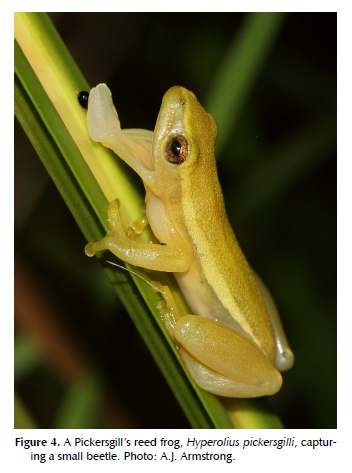
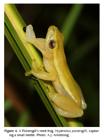
Hyperolius species prey on a wide range of arthropods, including species of Araneae, Coleoptera, Dip-tera, Isoptera, Hemiptera, Hymenoptera, Lepidoptera, Odonata and Orthoptera (Figure 4; Cott 1932; Wager 1986; Onadeko 2011; Sinsch et al. 2021; Du Plessis et al. 2022a). Therefore H. pickersgilli may eat a variety of arthropod taxa small enough for it, including certain taxa listed in Tables 2 & 3 and Table S3, e.g., species of Baetidae, Chrysomelidae, Formicidae, Acrididae; Tettigoniidae and Trigonidiidae. A study of the diet of H. pickersgilli is warranted, so that the availability of prey at potential release sites can be assessed properly.
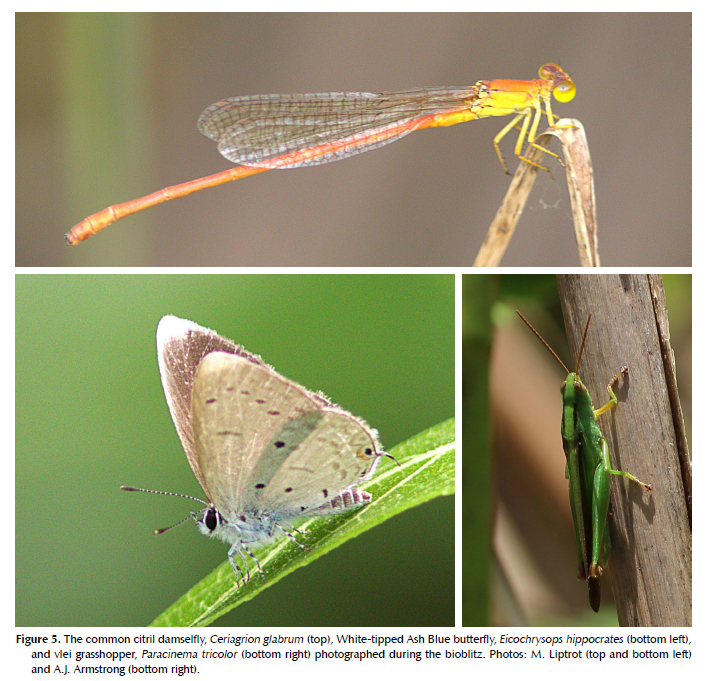
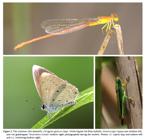
Apart from species of Odonata, few invertebrate species could be identified to species level using general barcoding genes, thereby limiting use of eDNA at present to assess co-occurring invertebrate species, both predators and prey, at potential release sites for captive-bred H. pickersgilli. However, new barcodes were obtained for invertebrate species not previously barcoded. Co-occurring insect species occupying the same type of habitat as H. pickersgilli, such as the White-tipped Ash Blue butterfly Eicochrysops hippocrates, the common citril damselfly Ceriagrion glabrum, and the vlei grasshopper Paracinema tricolor, may be useful additional indicators of potentially suitable habitat for releases (Table 3; Figure 5). These and some of the other co-occurring insect species are easily identifiable using field guides (e.g., Samways & Simaika 2016; Picker et al. 2019; Woodhall 2020).
The proposed release site for captive-bred H. pickers-gilli at Buffelsdraai appears suitable in terms of wetland vegetation and certain animal species associated with wetland plants (damselflies and dragonflies, crickets and grasshoppers, and frogs) because it was grouped with Mount Moreland, the closest site to it, in the cluster analysis. However, its area (0.1 ha) is less than the median size (0.3 ha) of the seventy-nine wetlands with H. pickersgilli known to be extant in October 2023. Further rehabilitation of the site to increase its area to at least 0.3 ha is required before it can be considered suitable as a release site. Water quality and water depth measurements should also be taken at different times of the year to ensure that the water parameters are and remain within acceptable ranges for the release of captive-bred H. pickersgilli through the year.
Conclusion
One of the interventions to reverse the decline in the populations of the Endangered Pickersgill's reed frog, H. pickersgilli, is to increase its area of occupancy and overall population size in the wild. To do this, wetland sites potentially suitable for H. pickersgilli within its native range need to be rehabilitated. Captive breeding of H. pickersgilli and release of the offspring to these rehabilitated wetlands is one method to achieve the goal of the intervention. This study has shown that potential sites for the release of captive-bred H. pickersgilli to the wild should have a vegetation structure of an overstory of relatively tall, broad-leaved emergent plants (sedges, reeds and/or rushes) and an understory of herbaceous freshwater plant species such as Cyclosorus interruptus, Leersia hexandra, Ludwigia octovalvis, Ipomoea cairica and Vigna luteola. Potential predators, such as those invertebrates, fish and amphibians identified during the bioblitz that prey on frogs, should not be abundant to improve the chances of success of the translocations. Those predatory species that could be genetically identified during this study (Odonata, catfish, cannibalistic amphibians) may be identifiable efficiently at release sites through the collection of eDNA samples to obviate the need for field sampling and phenotypic identification. The lack of barcodes for potential prey species may hamper the use of eDNA to assess the variety of prey species at release sites, but the present study has added barcodes of some possible prey species to GenBank.
Ethical considerations
Ethical clearance was obtained from the South African National Biodiversity Institute (SANBI) for the BioBlitz project in 2022 (ethics clearance number: P2022/05).
Authors' contributions
AJA: conceptualisation, coordination, sampling of frogs and invertebrates, identification of invertebrates, write-up lead, manuscript review; IdP: sampling, manuscript review; PLM: funding, manuscript review; JT: coordination, frog sampling, identifications, manuscript review; PB: sampling and phenotypic and genetic identification of fish, write-up, manuscript review; DK: sampling and phenotypic and genetic identification of fish, write-up, manuscript review; MM: sampling and identification of freshwater invertebrates, manuscript review; ML: photography and identification of butterflies, damselflies and dragon-flies and manuscript review; ASK: barcoding and blast process; WW: sampling and identification of plants, write-up and manuscript review; AK: conceptualisation, project lead, coordination, sampling, funding, write-up and manuscript review.
Acknowledgements
The BioBlitz was a SANBI initiative and was partly funded through the Presidential Economic Stimulus Initiative. This is an intervention that was launched in February 2020 by the South African government to champion the cause of youth unemployment and place it at the centre of economic policy, economic stimulus and the Economic Reconstruction and Recovery Programme. The following people participated in the bioblitz and are thanked for their contributions: Cherise Acker, Nonkululeko Nzama, Arlene Mkhize, Ntombikayise Ndwandwe, Hloniphile Mabaso, Sandile Sibiya, Sandile Mthethwa, Bongi Ngwenya, Lufuno Makwarela, Jessica da Silva, Rangani Nemando, Katlego Matlou, Calvin Smith, Ayrelia Randera, Esther Tazhilewa Sithole, Khomotso Rebotile Madimetja, Magda Swart, Pietie van Niekerk, Ross Stewart, Johandre van Rooyen, Nelly Mvuni, Sabelo Nkosi and Bulelwa Doyisa. We thank the following people for assisting with identifications: Rangani Nemando, M.S. Mothogoane, K.W. Sepheka, A.C. Mashau (plants collected during the bioblitz) and Robin Lyle (large spider species that are known or potential predators of frogs). We acknowledge the technical and administrative assistance of Bonginkosi Ngwenya and Mmamudi Anna Makhafola and thank two anonymous reviewers for constructive comments on the manuscript.
References
- Abraham, N., 1923, 'Observations on fish and frog-eating spiders of Natal', Annals of the Natal Museum 5(1), 89-94.
-
Altschul, S.F., Gish, W., Miller, W., Myers, E.W. & Lipman, D.J., 1990, 'Basic local alignment search tool', Journal of Molecular Biology 215(3), 403-410, https://doi.org/10.1016/S0022-2836(05)80360-2.
» https://doi.org/10.1016/S0022-2836(05)80360-2 - Appleton, C.C., 1996, Freshwater molluscs of southern Africa, University of Natal Press, Pietermaritzburg.
- Appleton, C.C., 2002, 'Chapter 3: Mollusca', in I.J. de Moor, & J.A. Day (eds), Guides to the Freshwater Invertebrates of Southern Africa Volume 6: Arachnida & Mollusca - Araneae, Water Mites & Mollusca, pp. 42-125, Water Research Commission, Pretoria.
- Babangenge, G.B., Jocqué, R., Masudi, F.M., Rödel, M-O., Burger, M., Gvozdík, V. & Pauwels, O.S.G., 2019, 'Frog-eating spiders in the Afrotropics: an analysis of published and new cases', Bulletin of the Chicago Herpetological Society 54(3), 57-63.
- Barber-James, H.M. & Lugo-Ortiz, C.R., 2003, 'Chapter 2: Ephemeroptera', in I.J. de Moor, J.A. Day & F. de Moor (eds), Guides to the Freshwater Invertebrates of Southern Africa Volume 7: Insecta I, Ephemeroptera, Odonata & Plecoptera, pp. 16-159, Water Research Commission, Pretoria.
-
Berger-Tal, O., Blumstein, D.T. & Swaisgood, R.R., 2019, 'Conservation translocations: a review of common difficulties and promising directions', Animal Conservation 23(2), 121-131, https://doi.org/10.1111/acv.12534.
» https://doi.org/10.1111/acv.12534 - Biström, O., 2007, 'Chapter 6: Dytiscidae', in R. Stals & F. de Moor (eds), Guides to the Freshwater Invertebrates of Southern Africa Volume 10: Coleoptera, pp. 69-84, Water Research Commission, Pretoria.
- Boon, R., 2010, Pooley's trees of eastern South Africa: a complete guide, Flora and Fauna Publications Trust, Durban.
-
Convention on Biological Diversity, 2024, 'The biodiversity plan for life on earth: 2030 targets (with guidance notes)', viewed 15 April 2024, from https://www.cbd.int/gbf/targets/4.
» https://www.cbd.int/gbf/targets/4 -
Cott, H.B., 1932, 'The Zoological Society's expedition to the Zambesi, 1927: No. 4, On the ecology of tree-frogs in the lower Zambesi Valley, with special reference to predatory habits considered in relation to the theory of warning colours and mimicry', Proceedings of the Zoological Society of London 102(2), 471-541, https://doi.org/10.1111/j.1096-3642.1932.tb01084.x.
» https://doi.org/10.1111/j.1096-3642.1932.tb01084.x - Crouch, N.R., Klopper, R.R., Burrows, J.E. & Burrows, S.M., 2011, Ferns of southern Africa: A comprehensive guide, Struik Nature, Cape Town.
-
Davis, J.M. & Stamps, J.A., 2004, 'The effect of natal experience on habitat preferences', Trends in Ecology & Evolution 19(8), 411-416, https://doi.org/10.1016/j.tree.2004.04.006.
» https://doi.org/10.1016/j.tree.2004.04.006 - De Moor, F.C. & Scott, K.M.F., 2003, 'Chapter 5: Trichoptera' in I.J. de Moor, J.H. Day & F.C. de Moor (eds), Guides to the Freshwater Invertebrates of Southern Africa Volume 8: Insecta II, Hemiptera, Megaloptera, Neuroptera, Trichoptera & Lepidoptera, pp. 84-181, Water Research Commission, Pretoria.
- Dippenaar-Schoeman, A., 2014, Field guide to the spiders of South Africa, LAPA Publishers, Pretoria.
-
Drewes, R.C. & Altig, R., 1996, 'Anuran egg predation and heterocannibalism in a breeding community of East African frogs', Tropical Zoology, 9(2), 333-347, https://doi.org/10.1080/03946975.1996.10539316.
» https://doi.org/10.1080/03946975.1996.10539316 -
Du Plessis, I., Armstrong, A., Becker, C., Malepa, P.L., Grobben, D., Kanengoni, A.T. & Grey, C., 2022a, 'Husbandry guidelines: Pickersgill's reed frog (Hyperolius pickersgilli)', viewed 22 April 2024, https://www.amphibianark.org/fileadmin/uploads/aark/Husbandry_Library/2017_Hyperolius-pickergilli-Husbandry-manual-2022.pdf.
» https://www.amphibianark.org/fileadmin/uploads/aark/Husbandry_Library/2017_Hyperolius-pickergilli-Husbandry-manual-2022.pdf -
Du Plessis, I., Armstrong, A., Malepa, P.L., Kanengoni, A.T., Price, C. & Downs, C.T., 2022b, 'Developmental life stages of the Pickersgill's reed frog (Hyperolius pickersgilli) in an ex-situ environment at Johannesburg Zoo's captive breeding facility, South Africa', Zoo Biology 41, 533-543, https://doi.org/10.1002/zoo.21688.
» https://doi.org/10.1002/zoo.21688 - Du Preez, L. & Carruthers, V., 2017, A complete guide to the frogs of southern Africa, Struik Nature, Cape Town.
-
Folmer, O., Black, M., Hoeh, W., Lutz, R. & Vrijenhoek, A.R., 1994, 'DNA primers for amplification of mitochondrial cytochrome c oxidase subunit I from diverse metazoan invertebrates', Molecular Marine Biology and Biotechnology 3(5), 294-299, https://www.mbari.org/wp-content/uploads/2016/01/Folmer_94MMBB.pdf.
» https://www.mbari.org/wp-content/uploads/2016/01/Folmer_94MMBB.pdf -
Germano, J.M. & Bishop, P.J., 2009, 'Suitability of amphibians and reptiles for translocation', Conservation Biology 23(1), 7-15, https://doi.org/10.1111/j.1523-1739.2008.01123.x.
» https://doi.org/10.1111/j.1523-1739.2008.01123.x -
González-del-Pliego, P, Freckleton, R.P, Edwards, D.P, Koo, M.S., Scheffers, B.R., Pyron, R.A. & Jetz, W., 2019, 'Phylogenetic and trait-based prediction of extinction risk for data-deficient amphibians', Current Biology 29, 1557-1563, https://doi.org/10.1016/j.cub.2019.04.005.
» https://doi.org/10.1016/j.cub.2019.04.005 - Gordon-Grey, K.D., 1995, Cyperaceae in Natal, Strelitzia 2, National Botanical Institute, Pretoria.
-
Government of South Africa, 2015, National Biodiversity Strategy and Action Plan, Department of Environmental Affairs, Pretoria, https://www.dffe.gov.za/sites/default/files/docs/publications/SAsnationalbiodiversity_strategyandactionplan2015_2025.pdf.
» https://www.dffe.gov.za/sites/default/files/docs/publications/SAsnationalbiodiversity_strategyandactionplan2015_2025.pdf -
Grant, E.H.C., Miller, D.A.W. & Muths, E., 2020, 'A synthesis of evidence of drivers of amphibian declines', Herpetologica 76(2), 101-107, https://doi.org/10.1655/0018-0831-76.2.101.
» https://doi.org/10.1655/0018-0831-76.2.101 - Herbert, D. & Kilburn, D., 2004, Field guide to the land snails and slugs of eastern South Africa, Natal Museum, Pietermaritzburg.
-
IUCN SSC Amphibian Specialist Group & South African Frog Re-assessment Group (SA-FRoG), 2016, 'Hyperolius pickersgilli', The IUCN Red List of Threatened Species 2016: e.T10644A77165927, viewed 8 June 2023, https://dx.doi.org/10.2305/IUCN.UK.201 6-3.RLTS.T10644A77165927.en.
» https://dx.doi.org/10.2305/IUCN.UK.201 6-3.RLTS.T10644A77165927.en - IUCN/SSC, 2014, Guidelines on the use of ex situ management for species conservation, Version 2.0, IUCN Species Survival Commission, Gland.
- Linhoff, L.J., Soorae, P.S., Harding, G., Donnelly, M.A., Germano, J.M., Hunter, D.A., McFadden, M., Mendelson, J.R., Pessier, A.P., Sredl, M.J. & Eckstut, M.E. (eds), 2021, IUCN Guidelines for amphibian reintroductions and other conservation translocations, first edition, IUCN, Gland.
-
Luedtke, J.A., Chanson, J., Neam, K., Hobin, L., ...& Stuart, S.N., 2023, 'Ongoing declines for the world's amphibians in the face of emerging threats', Nature 622, 308-314, https://doi.org/10.1038/s41586-023-06578-4.
» https://doi.org/10.1038/s41586-023-06578-4 - McCune, B. & Grace, J.B., 2002, Analysis of ecological communities, MjM Software Design, Gleneden Beach, Oregon.
- McCune, B. & Mefford, M.J., 2018, PC-ORD: Multivariate Analysis of Ecological Data, Version 7.11, Wild Blueberry Media, Corvallis, Oregon.
-
Onadeko, A.B., 2011, 'Food and feeding habits of some anuran species in south-western Nigeria', The Zoologist 9, 57-69, https://www.ajol.info/index.php/tzool/article/view/73129.
» https://www.ajol.info/index.php/tzool/article/view/73129 -
Palumbi, S.R., Martin, A., Romano, S., McMillan, W.O., Stice, L. & Grabowski, G., 2002, The simple fool's guide to PCR, version 2.0, University of Hawaii, Honolulu, Hawaii, https://www.yumpu.com/en/document/read/11706303/the-simple-fools-guide-to-pcr-palumbi-lab.
» https://www.yumpu.com/en/document/read/11706303/the-simple-fools-guide-to-pcr-palumbi-lab - Picker, M., Griffiths, C. & Weaving, A., 2019, Field guide to insects of South Africa, ed. 3, Struik Nature, Cape Town.
- Pooley, E., 1998, A field guide to wild flowers of KwaZulu-Na-tal and the eastern region, Natal Flora Publications Trust, Durban.
-
Ratnasingham, S. & Hebert, PD.N., 2013, 'A DNA-based registry for all animal species: the barcode index number (BIN) system', PLoS One 8(7), e66213, https://doi.org/10.1371/journal.pone.0066213.
» https://doi.org/10.1371/journal.pone.0066213 - Raw, L.R.G., 1982, 'A new species of reed frog (Amphibia: Hyperoliidae) from the coastal lowlands of Natal, South Africa', Durban Museum Novitates 13(9), 117-126.
- Reavell, P.E., 2003, 'Chapter 2: Hemiptera', in I.J. de Moor, J.A. Day & F.C. de Moor (eds), Guides to the Freshwater Invertebrates of Southern Africa Volume 8, Insecta I, Hemiptera, Megaloptera, Neuroptera, Trichoptera & Lepidoptera, pp. 16-71, Water Research Commission, Pretoria.
- Samways, M.J. & Simaika, J.P, 2016, Manual of freshwater assessment for South Africa: Dragonfly Biotic Index, Suricata 2, South African National Biodiversity Institute, Pretoria.
- Samways, M.J. & Wilmot, B.C., 2003, 'Chapter 3: Odonata', in I.J. de Moor, J.A. Day, & F. de Moor (eds), Guides to the Freshwater Invertebrates of Southern Africa 7, Insecta I, Ephemeroptera, Odonata and Plecoptera, pp. 160-212, Water Research Commission, Pretoria.
-
Sinsch, U., Balczun, C., Scheid, P. & Dehling, J.M., 2021, 'Component endoparasite communities mirror life-history specialization in syntopic reed frogs (Hyperolius spp.)', Diversity 13, 669, https://doi.org/10.3390/d13120669.
» https://doi.org/10.3390/d13120669 - Skelton, PH., 2001, A complete guide to the freshwater fishes of southern Africa, ed. 2, Struik, Cape Town.
-
Sodhi, N.S., Bickford, D., Diesmos, A.C., Lee, T.M., Koh, L.P., Brook, B.W., Sekercioglu, C.H. & Bradshaw, C.J.A., 2008, 'Measuring the meltdown: Drivers of global amphibian extinction and decline', PLoS ONE 3(2), e1636, https://doi.org/10.1371/journal.pone.0001636.
» https://doi.org/10.1371/journal.pone.0001636 -
Stamps, J.A. & Swaisgood, R.R., 2007, 'Someplace like home: Experience, habitat selection and conservation biology', Applied Animal Behaviour Science 102(3-4), 392-409, https://doi.org/10.1016/j.applanim.2006.05.038.
» https://doi.org/10.1016/j.applanim.2006.05.038 - Staude, H., Picker, M. & Griffiths, C., 2023, Southern African moths & their caterpillars, Struik Nature, Cape Town.
-
Sutherland, W.J., Dicks, L.V., Ockendon, N., Petrovan, S.O. & Smith, R.K., 2019, What works in conservation, Open Book Publishers, Cambridge, UK, https://doi.org/10.11647/OBP0179.
» https://doi.org/10.11647/OBP0179 -
Tarrant, J. & Armstrong, A.J., 2013, 'Using predictive modelling to guide the conservation of a Critically Endangered coastal wetland amphibian', Journal for Nature Conservation, 21, 369-381, https://doi.org/10.1016/j.jnc.2013.03.006.
» https://doi.org/10.1016/j.jnc.2013.03.006 -
Tarrant, J. & Armstrong, A.J., 2017, Biodiversity management plan for Pickersgill's reed frog (Hyperolius pickersgilli), Government Gazette, 624 (No. 40883), 184-222, viewed 22 April 2024, https://www.gov.za/sites/default/files/gcis_doc-ument/201706/40883gen423.pdf.
» https://www.gov.za/sites/default/files/gcis_doc-ument/201706/40883gen423.pdf - Tekle-Giorgis, Y., Wagaw, S. & Dadebo, E., 2016, 'The food and feeding habits of the African catfish, Clarias gariepinus (Burchell, 1822) (Pisces: Clariidae) in Lake Hawassa and Shallo Swamp, Ethiopia', Ethiopian Journal of Biological Sciences 15(1), 1-18.
-
Vonesh, J.R., 2005, 'Sequential predator effects across three life stages of the African tree frog, Hyperolius spinigularis', Oecologia 143, 280-290, https://doi.org/10.1007/s00442-004-1806-x.
» https://doi.org/10.1007/s00442-004-1806-x - Wager, V.A., 1986, Frogs of South Africa: their fascinating life stories, Delta Books, Craighall.
- Willis, C.K. & Samways, M.J., 2011, Water dancers of South Africa's national botanical gardens: An illustrated dragon-fly and damselfly checklist, SANBI Biodiversity Series 21 , South African National Biodiversity Institute, Pretoria.
- Woodhall, S., 2020, Field guide to the butterflies of South Africa, Struik Nature, Cape Town.

Accepted: 29 October 2025
Published: 31 July 2026
Supplementary material
Available online: http://dx.doi.org/10.38201/abc.v56.1.a6
Supplementary 1Table S1. Accession numbers for specimens collected during the bioblitz.
Table S2. Other indigenous plant species recorded (X) at the Adams Rural (AR), Mount Moreland (MM), Widenham (WI) and Umlalazi Nature Reserve (UM) sites where Hyperolius pickersgilli occurs and at the release site at Buffelsdraai (BU).
Table S3. Other indigenous invertebrate species recorded (X) at the Adams Rural (AR), Mount Moreland (MM), Widenham (WI) and Umlalazi Nature Reserve (UM) sites where Hyperolius pickersgilli occurs and at the release site at Buffelsdraai (BU).
DISCLAIMER: Please note that supplementary materials are not edited, proofread or designed by SANBI Graphics and Editing and is the sole work and responsibility of the author(s).