Validating teachers for Visual Acuity Screening in rural South African schools
Abstract
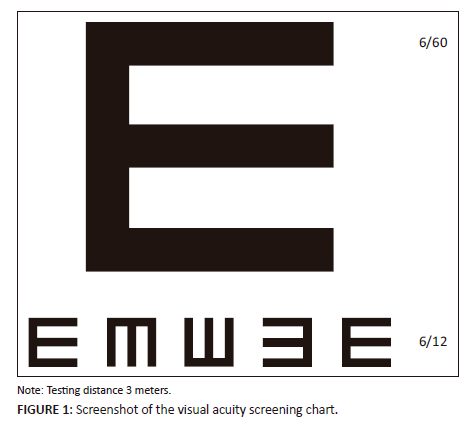
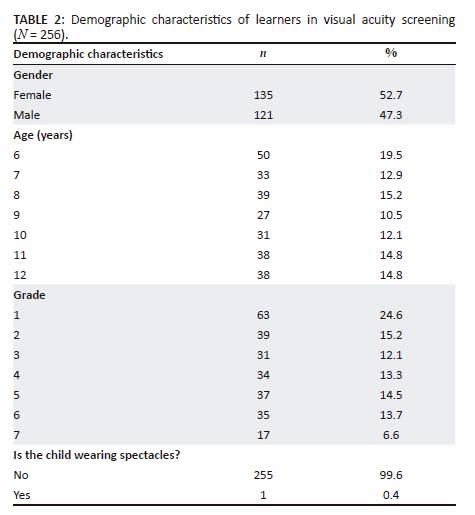
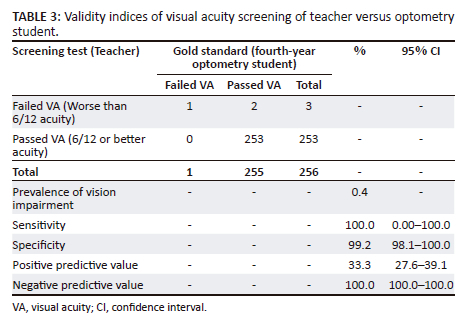
BACKGROUND: Early detection of a reduction in visual acuity (VA) in children is crucial for their education, job prospects, and overall well-being. In many regions, this is deficient because of limited access to eye-care services, adversely affecting the well-being of visually impaired children. There is, therefore, a need for alternative vision screening methods. AIM: This study assessed teachers' efficacy in VA screenings for rural primary school students. SETTING: The study was conducted in a rural primary school in the Pinetown Education District, KwaZulu-Natal, South Africa METHODS: The same group of children was tested by both teachers and final-year optometry students for comparison. The methodology adhered to the Standard School Eye Health Guidelines for low- to middle-income countries. Screening tools involved a 6/60 tumbling E optotype and a line of five 6/12 optotypes. RESULTS: Teachers screened 256 children between ages 6 and 12 years. Their results showed a sensitivity of 100%, a specificity of 99.2%, a positive predictive value of 33%, and a negative predictive value of 100%. All teachers acknowledged the importance of vision screening and committed to integrating it into their skill set. CONCLUSION: The findings reveal that teachers can match eye-care professionals' efficacy in visual screenings. Training them can facilitate early detection and referrals, mitigating vision impairment's negative impacts on a child's education and overall well-being. CONTRIBUTION: This original research study highlights the success of task shifting as a strategy to address human resource challenges for eye care in South Africa.
validation; sensitivity; specificity; vision screening; teachers; negative predictive value; positive predictive value
 Thumbnail