Optometrists' experience of healthcare fraud, waste and abuse (FWA) and strategies to combat it
Abstract
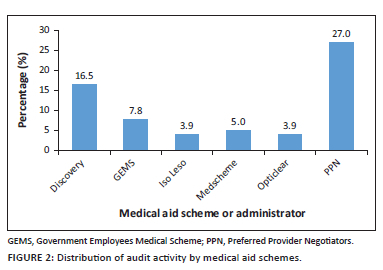
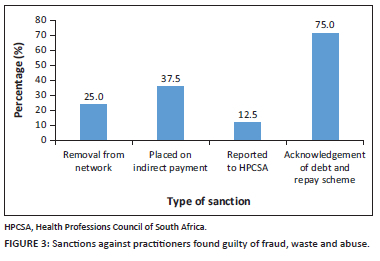
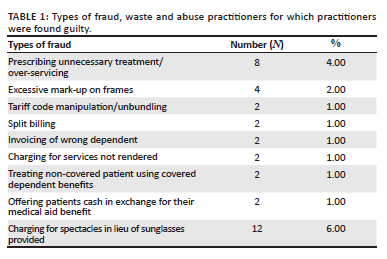
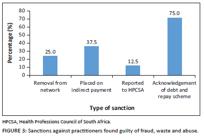
BACKGROUND: South African private healthcare is funded through medical aids and out-of-pocket payments. Annually, R22 billion is lost to medical fraud, waste and abuse (FWA) threatening the sustainability of healthcare delivery. Healthcare providers are often accused of unethical practices and various forms of FWA AIM: To assess the optometrists' experience of FWA and the strategies to combat FWA METHODS: A quantitative study was conducted amongst optometrists using a structured questionnaire and data was analysed using descriptive statistics RESULTS: Most (75%) respondents were aware of FWA. About 41% of respondents were audited for FWA, of whom two-thirds were Black males. The Preferred provider Negotiators conducted 27% audits, followed by Discovery (16.5%), Government Employees Medical Scheme (7.8%) and Medscheme (5%). Iso Leso and Opticlear networks conducted 3.9% each. About 7.8% were found guilty of FWA, of whom 87.5% were Black practitioners and 12.5% Indian practitioners. Claiming for spectacles but dispensing sunglasses (5.9%) and over-servicing (4%) were highest ranked offences. Common sanctions were claw-back (75%) and indirect payment (37.5%). Practitioners implement identity checks (94%-96%), coding training (89%) and accurate record keeping (93%) as anti-FWA strategies. Excessive codes and lack of standardised tariffs were challenges to fighting FWA CONCLUSION: Optometrists use identity checks, coding and billing training as anti-FWA strategies. Coding and billing complexities are the main sources of FWA cases. Black and Indian practitioners were more likely to be identified for FWA and found guilty than White practitioners CONTRIBUTION: The study highlights the forms of FWA and suggest integration of controls to effectively curb FWA
audits; fraud triangle; fraud; waste and abuse; optometry and ethics
Introduction
Globally, healthcare systems are characterised by a diverse mix of publicly and privately funded services with varying levels of access, affordability and differing cost implications for both patients and third-party payers as well as different levels of care and health outcomes.12345
In South Africa, private healthcare is largely pre-funded by medical aid schemes, insurance and OPP.6,7,8696,7,10,11,12,13,1415916
In the US, inadvertent or intentional fraud, waste and abuse (FWA) siphon off large sums of taxpayer monies intended for healthcare services for those truly in need, aged or disadvantaged individuals.171718219209,16
The terms FWA are often used interchangeably even though there is a very clear distinction among them. Fraud is defined as a false representation of a material fact, whether by words or conduct, false or misleading allegations or concealment of that which should have been disclosed, which deceives another so that he acts, or fails to act, to his detriment,2122192321192321,2423
Cressey's fraud theory, also known as the fraud triangle, describes the three factors that increase the risk of fraud, namely pressure, opportunity and rationalisation by the offender.21,25,26,27,28,2921,29,30,31,32,333426,2735
The most common forms of FWA committed by healthcare practitioners are misrepresentation of services with incorrect tariffs or Current Procedural Terminology (CPT) codes; billing for services not rendered (phantom billing); altering claim forms and costs upwards for higher payments (upcoding and unbundling); altering of treatment dates; falsifying information on medical record documents, such as diagnostic codes (ICD10 codes) and treatment histories; billing for services that were not performed or misrepresenting the types of services that were provided; billing for supplies or products not provided and providing medical services that are unnecessary based on the patient's condition (bill padding), self-referral and kickbacks and services rendered by unqualified personnel.18,19,23,36,37,38
The fee-for-service (FFS) payment system is the leading motivation for FWA because of the temptation to perform or bill for unnecessary services by providers, while the lack of uniform standardised fraud prevention laws was the second reason, and the complexity of the medical aid claim systems was the third highest reason for fraud.2223
Although non-healthcare expenditure such as administration and managed care drive up healthcare costs, increased prevalence of fraud in recent times has been added to the list of factors that drive up cost of healthcare102323394041
Healthcare systems are usually heterogeneous in nature. There is the caring for patients by multiple stakeholders or healthcare practitioners of all levels, who generate, store and make use of (clinical) data for a variety of reasons, including insurance claims.1919bona fide in order to prevent FWA from happening; hence all medical aid claims submitted by providers in respect of services rendered to patients are paid by schemes in good faith, in most cases without verification within 30 days.4243
Fraud detection in healthcare includes identifying fraud as soon as it is perpetrated, auditing strategies as well as data mining methods.23442443945,46
Not much academic attention is given to FWA in healthcare because of the dynamic nature of fraud and changes in legislation over time as well as confidentiality and privacy issues.19
Methods
This quantitative cross-sectional research study used a random sampling method where 206 valid responses were received from the determined sample size of 317 participants out of a database of approximately 1800 optometric professionals in private practice in South Africa. An online application (platform), accessible at http://www.randomizer.org/form.htm, was utilised to randomise participants. The online questionnaire hosted on a Google Forms platform enabled participation in a convenient setting using smartphones, tablets, laptops and personal computers. The questionnaire was divided into four sections. Section 1 mainly focused on the demographic information of respondents, section 2 examined the respondents' knowledge, awareness and experience of FWA, while section 3 focused on strategies in practice to detect and prevent FWA and section 4 focused on challenges of fighting FWA.
A Likert scale was used to rate declaratory statements regarding the practices, attitudes and experience of optometric practitioners about FWA, which consisted of five rating scales ranging from strongly agree to strongly disagree.47,48,4949
Data were exported and organised for processing and analysis with Statistics Package for Social Sciences (SPSS) version 26 analysis software. Descriptive statistics and percentages for each variable of interest were used for interpretation.5047,48,50
Ethical considerations
Ethical clearance was obtained from the University of KwaZulu-Natal Humanities Ethics Committee (HSS/0228/018M) and informed consent was obtained from the participants where they were assured of confidentiality and anonymity of their participation.51
Results
Demographic characteristics
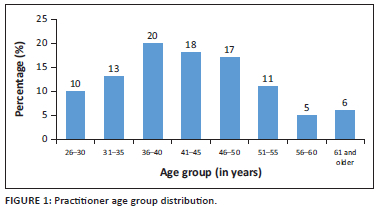
The median age was 38 years with the interquartile range of 5 years (i.e. from 38 to 33 years). The distribution of the respondents' age groups is shown in Figure 1.
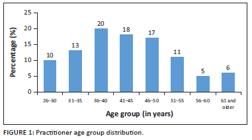
Most respondents (62.1%) were female. Black practitioners constituted 47.5%, followed by 28.2% of Indian practitioners and 24.3% White practitioners, likely consistent with the demographics of the country. Among the male respondents, most were Black practitioners at 70.3%, whereas for females 82.1% and 76% were Indian practitioners and White practitioners, respectively. There was a significant association between the gender and the race of the respondents (P = 0.000) and the large effect size (Cramer's V = 0.349) suggested a strong association.
About 60.2% of the respondents were members of the South African Optometric Association (SAOA). Most respondents (84.5%) were in solo or independent practice, while 10.7% were in the franchise business model and 4.9% were in group practice. Only 1% of the optometric practices outsourced their medical aid claims and submission to a claims bureau and 99% of practices were responsible for their medical aid claims and submissions in-house, performed by their either frontline staff or the optometrist(s) or dispensing optician(s) in practice.
Gauteng province had the most participants (46.6%), followed by KwaZulu-Natal (25.2%), Limpopo (11.7%), Mpumalanga and Eastern Cape (4.9% each), Free State (2.9%) and North West and Western Cape provinces (1.9% each).
Practitioner knowledge and experience of fraud, waste and abuse
Three quarters (75%) of the respondents were aware of FWA in healthcare, 50% of whom were SAOA members and 25% were non-members. The remaining 25% comprised of 11% SAOA members and 14% non SAOA members. Of the 11% SAOA members, 5% were not aware of FWA, while 6% were unsure if they knew of FWA, whereas, of the 14% non SAOA members, only 3% did not know about FWA, while 11% were unsure if they knew about FWA.
Medical schemes or their appointed administrators had audited 41% of the respondents for FWA. Of these audits, 59.5% of the audits were random audits, 38% were practice profile audits while 2.5% were classified as peer review audits. About 43.5% SAOA members and 36.6% non-SAOA members were audited for FWA, of which both are close to the percentage of the audited respondents at 41% (P = 0.320), with a small effect size of 0.069. Approximately 31% of practitioners were audited by more than one medical aid scheme or administrator. Of the 41% respondents who were audited for FWA, 63.4% were Black practitioners. There is a statistically significant association between race and being audited (P = 0.000) with a moderate effect size (Cramer's V = 0.274).
Figure 2 shows the schemes that conducted FWA audits on practitioners.
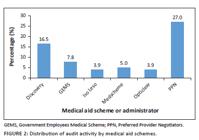
Less than a tenth, 7.8%, of respondents were found guilty of one or more forms of FWA. There was a significant association between being audited and being found guilty of FWA (P = 0.000), with a strong association and moderate effect size of 0.276. A high percentage (62.5%) of males who were audited were found guilty of one or more forms of FWA. There was a significant association between gender and being found guilty of FWA (P = 0.030) with a moderate effect size (Cramer's V = 0.152). About 87.5% of Black practitioners were found guilty of FWA, while 12.5% of Indian practitioners were guilty and no White practitioners were found guilty. There was a significant association between race and being found guilty (P = 0.003) and a moderate relationship (Cramer's V = 0.241). Table 1 lists the forms of FWA for which practitioners were found guilty.
Figure 3 shows the sanctions against practitioners who were found guilty of one or other forms of FWA.
Practitioner practices on fraud, waste and abuse
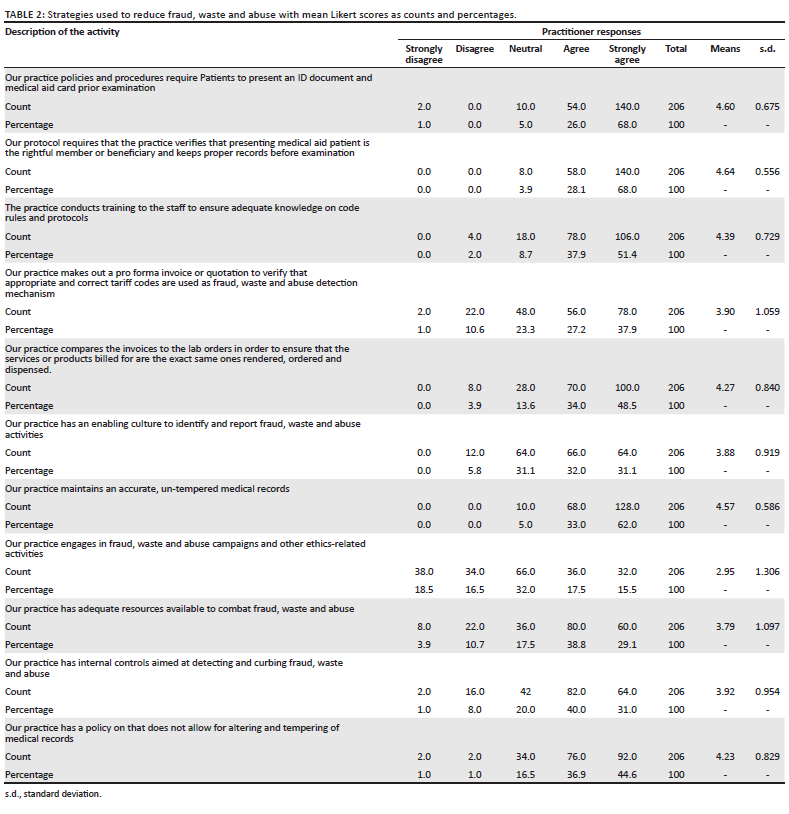
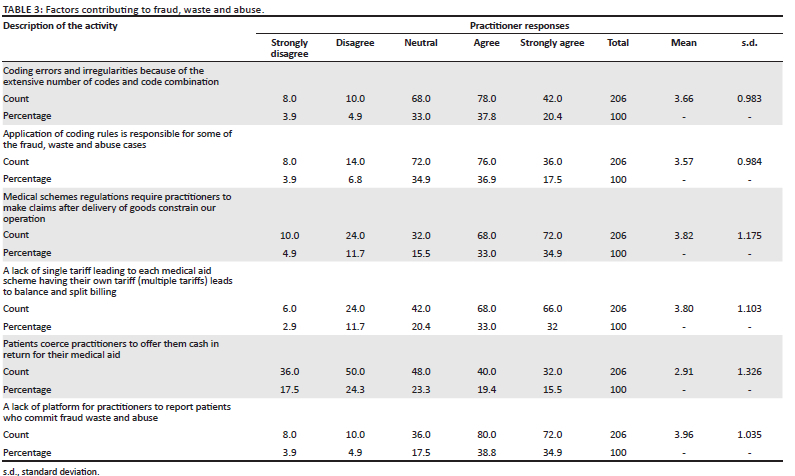
Practices that optometric professionals have put in place to detect and prevent FWA in their daily routine are depicted in Table 2, whilst Table 3 lists factors contributing to and challenges faced by practitioners in dealing with FWA.
Sensitivity and specificity of the tests and variables were performed using a logistic regression model that assessed the adequacy of the model, and the goodness of fit test using the Omnibus test of model coefficients showed high significance with P = 0.001. The Hosmer-Lemeshow test also supported this model as the reliable model fit with a high significance value of p = 0132. The model found that the observed No responses and predicted No responses scored a 78% while the observed Yes and predicted Yes responses were 52%. The overall correctly classified percentage is 64%. The odds ratio for both the White and Indian respondents to be selected for audit are less than 1.00, whereby the odds of a White of being audited are lower than of an Indian practitioner and even lower for Black practitioner. The White practitioner is 0.268 times likely to be audited compared to the Black practitioner and 0.340 times for an Indian practitioner to the Black practitioner.
Discussion
The distribution of optometric professionals in this study is consistent with the results of other studies that show that Gauteng province has the highest number of optometric professionals.52,53
The results of this study suggest that FWA is a well-known phenomenon in healthcare and optometry in particular with most respondents (75%) reporting that they were aware of it and 41% of them having been audited by one or more medical scheme or administrator. Fraud, waste and abuse in healthcare is a growing phenomenon worldwide just like other forms of white-collar crimes, such as money laundering, e-commerce and insurance fraud,44
Although being a member of the SAOA had no association to selection for FWA audit, race and gender had significant association with being audited and being found guilty of one or more forms of FWA. The study found that Indian practitioners are 0.340 times likely to be audited and 0.268 times for White practitioners compared to Black practitioners. This means that the odds of Black practitioners are 2.94 times and 3.73 times higher to be audited for FWA compared to Indian and White practitioners, respectively. Although no evidence of racial bias was found on the algorithms used to identify FWA by medical schemes during the Section 59 investigation into allegation by Black practitioner groups, the commission of inquiry found that Black practitioners are 1.5 times to 2.5 times (across different disciplines) more likely to be identified for FWA audit and 1.4 times more to be found guilty of FWA.54
Practitioners were mainly found guilty of charging or billing for services not rendered, claiming for spectacles when sunglasses were provided, over-servicing and split billing, these being consistent with early studies.13,23,555656
Over half (56%) of respondents believed that many of the coding errors and irregularities are a result of the extensive number of codes and code combinations. Coding is a complicated system and submission of claims to medical schemes is very important.57,585957
In this study, 90% of the practices maintain accurate and unaltered medical records. This is a very important aspect as practitioners are required, by HPCSA regulations, to keep a medical record safe for a period of 6 years, up to 21 years of age in the case of minor children and for lifetime in the case of mentally handicapped individuals.6061,62
Medical schemes regulations provide that a patient is only billed or charged for goods and services after they have been delivered.42220
Sound internal controls in a consolidated business model, resources together with processes, procedures, employee initiatives and data processing are critical in preventing FWA, in particular, the use of information technology.31,6364,6561
There are three general strategies used to deter providers from committing FWA that fall under general category of crime prevention, namely punitive, defence and interventionist methods.2929
Fraud prevention requires some controls and accurately processing claims often takes time and slows down claims processing and hinders system productivity.44bona fide claims within 30 days,42
Only about a third (34%) of practices engage in FWA campaigns as well as ethics-related activities aimed at preventing FWA. The practitioners attitude rating on conducting FWA campaigns and ethics activities (at 2.95) fell just below the average rating of 3. Fraud, waste and abuse is an ethical issue that has gained prominence in the recent past, and ethical practice needs to be infused in the minds of practitioners if the sector is serious and intentional about a fight against FWA. However, 61% of the respondents work in organisations that have a good culture that allows for the organisation to report and deal with FWA. Controls must be people centred rather than systems of policy manuals and forms, and therefore organisations must consider implementing a written code of ethics that all employees, managers and members sign.636667
The fight against FWA can be hindered by personnel who may resist the adoption and implementation of FWA reduction efforts within an organisation, because of their desire to protect income streams arising from fraudulent activity,6829,66bona fide member or beneficiary of the medical scheme by insisting on patients presenting an identity document (ID document) and a medical aid card. This is in view of the fact that medical identity theft is a growing form of fraud that occurs in healthcare facilities where an imposter is able to or enabled to obtain medical treatment that they are not entitled, thereby defrauding the healthcare provider, defraud patients of their benefits, insurers and government programmes.6919,36,37
Insufficient fraud control education and training for healthcare providers are contributing factors to healthcare FWA to the extent that a coordinated training with emphasis on ethical practice is recommended.6619
A comprehensive study performed by the ACFE found that confidential reporting mechanisms usually reduce fraud losses dramatically.4329,70,71
Conclusions
This study underscores the critical need for comprehensive strategies to combat FWA within the healthcare and optometry sectors. The findings reveal that while practitioners are aware of FWA and have implemented various controls and safeguards, significant challenges remain in effectively mitigating these issues. Additionally, practitioners have an appreciation of the existence of FWA and to a degree have controls, safeguards, resources, policies and procedures as strategies in place to detect and prevent it. However, to strengthen these efforts, organisations must adopt deliberate and comprehensive strategies. These should include written policies and procedures, sound internal controls and a healthy and enabling organisational culture. The integration of information technology, such as biometric technology and EHR systems, as well as ongoing training and reskilling of staff, particularly in coding and ethical practices, are an essential component of a robust anti-FWA strategy.
Coding and billing complexities are at the centre of many FWA cases, driven by pervasive unethical behaviour. The lack of a standardised medical aid tariff exacerbates these issues, contributing to a high proportion of coding and billing-related FWA cases. The FFS reimbursement model also contributes to these problems, indicating a need for the sector to explore alternative reimbursement models that can sustain practice operations while combating FWA. Effective FWA prevention requires stakeholders, including practitioners, to be intentional about their strategies. This involves not only detecting and preventing FWA but also creating an enabling environment for reporting it. Allocating adequate resources towards these efforts is vital. The study highlights that the lack of disincentives for medical scheme members who commit fraud undermines the fight against FWA, as these individuals are not held accountable and can easily move on to other practitioners. Encouragingly, practitioners in this study utilised various methods to detect and prevent FWA, such as maintaining accurate medical records and conducting staff training on coding protocols. However, the study also points to the need for greater emphasis on ethics-related activities and campaigns. Only about a third of practices engage in such initiatives, which suggests that more effort is needed to foster a culture of ethical practice.
A multi-faceted approach is thus required to effectively combat FWA in the healthcare and optometry sectors. This approach should involve punitive, defensive and interventionist strategies, addressing the root causes of fraud and fostering a transparent and accountable healthcare system. By adopting comprehensive anti-FWA strategies and creating an enabling environment for ethical practice, the sector can make significant strides in reducing the incidence of FWA, ultimately leading to more equitable and effective healthcare delivery. This study serves as a call to action for healthcare providers, policymakers and administrators to work collaboratively towards achieving this goal. It is concerning that the audits have revealed higher incidence of findings against Black and Indian compared to White practitioners. A further qualitative study on the these reported cases may unearth the motivation and characteristics of FWA perpetrators with the view to develop anti-FWA profile.
Competing interests
The author declares that he has no financial or personal relationships that may have inappropriately influenced him in writing this article.
Author's contributions
S.A.M. is the sole author of this research article.
Funding information
This research received no specific grant from any funding agency in the public, commercial or not-for-profit sectors.
Data availability
Data collected has been stored and kept safely protected, accessible by the authors.
Disclaimer
The views and opinions expressed in this article are those of the author and are the product of professional research. It does not necessarily reflect the official policy or position of any affiliated institution, funder, agency or that of the publisher. The author is responsible for this article's results, findings and content.
Acknowledgements
The author is grateful to the optometric professionals who participated in the study and all those who assisted in the data management. Special thanks to Dr Richard Devey for the statistical analysis and Prof Percy Mashige for all the encouragement.
References
-
1. Benatar S, Sullivan T, Brown A. Why equity in health and in access to health care are elusive: Insights from Canada and South Africa. Glob Public Health. 2018;13(11):1533-1557. https://doi.org/10.1080/17441692.2017.1407813
» https://doi.org/10.1080/17441692.2017.1407813 - 2. Ahadiat N. Public attitudes toward healthcare fraud: Reasons to commit fraud and common schemes. J Ethics Legal Issues. 2017;11:1-18.
-
3. OECD. "Financing of healthcare", in Health at a glance 2017: OECD Indicators [homepage on the Internet]. Paris: OECD Publishing; 2017. [cited 2020 Nov 23]. Available from: https://www.oecd-ilibrary.org/social-issues-migration-health/a-system-of-health-accounts-2011_9789264270985-en
» https://www.oecd-ilibrary.org/social-issues-migration-health/a-system-of-health-accounts-2011_9789264270985-en -
4. Ramke J, Zwi AB, Silva JC, et al. Evidence for national universal eye health plans. Bull World Health Organ. 2018;96(10):695-704. https://doi.org/10.2471/BLT.18.213686
» https://doi.org/10.2471/BLT.18.213686 -
5. Health Financing Profile: Botswana [homepage on the Internet]. 2016 [cited 2024 Jun 12]. Available from: https://www.hfgproject.org/where-we-work/africa/botswana/.
» https://www.hfgproject.org/where-we-work/africa/botswana/ - 6. Department of Health. National Health Insurance, Pretoria: Green paper. Government Gazette 31859; 2011.
-
7. Van den Heever AM. South Africa's universal health coverage reforms in the post-apartheid period. Health Policy (New York). 2016;120(12):1420-1428. https://doi.org/10.1016/j.healthpol.2016.05.012
» https://doi.org/10.1016/j.healthpol.2016.05.012 -
8. Burger R, Christian C. Access to health care in post-apartheid South Africa: Availability, affordability, acceptability. Health Econ Policy Law. 2020;15(1):43-55. https://doi.org/10.1017/S1744133118000300
» https://doi.org/10.1017/S1744133118000300 - 9. Council for Medical Schemes. Annual Report 2022/23. Pretoria: Council for Medical Schemes; 2023.
- 10. Erasmus D, Ranchod S, Abraham M, Carvounes A, Dreyer K. Challenges and opportunities for health finance in South Africa. Johannesburg: Finmark Trust; 2016.
- 11. Ataguba JE, McIntyre D. Paying for and receiving benefits from health services in South Africa: Is the health system equitable? Health Policy Plan. 2012;27:35-45.
-
12. Maphumulo WT, Bhengu BR. Challenges of quality improvement in the healthcare of South Africa post-apartheid: A critical review. Curationis. 2019;42(1):1901. https://doi.org/10.4102/curationis.v42i1.1901
» https://doi.org/10.4102/curationis.v42i1.1901 - 13. Blecher M, Kollipara A, DeJager P, Zulu N. Health Financing. In: Padarath A, English R, editors. South African Health Review. Durban: Health Systems Trust, 2011; p. 29-48.
-
14. Rispel LC, De Jager P, Fonn S. Exploring corruption in the South African health sector. Health Policy Plan. 2016;31(2):239-249. https://doi.org/10.1093/heapol/czv047
» https://doi.org/10.1093/heapol/czv047 -
15. Mcintyre D, Ataguba JE. Modelling the affordability and distributional implications of future health care financing options in South Africa. Health Policy Plan. 2012;27(Suppl.1):i101-i112. https://doi.org/10.1093/heapol/czs003
» https://doi.org/10.1093/heapol/czs003 - 16. Council for Medical Schemes. Annual Report 2018/19. Pretoria: Council for Medical Schemes; 2019.
- 17. Wheatley LM. Medicaid and Medicare fraud, waste and abuse. In: Johnson CH, Howell A, Leaf S, Shlala S, editors. Stevenson University Forensic Journal. Stevensomn, Maryland: Carolyn Hess Johnson, Esq. 2015; p. 65-73.
- 18. Rudman WJ, Eberhardt JS, Pierce W, Hart-Hester S. Healthcare fraud and abuse. Perspect Health Inf Manag. 2009;6:1-7.
-
19. Ikono R, Iroju O, Olaleke J, Oyegoke T. Meta-analysis of fraud, waste and abuse detection methods in healthcare. Nigerian J Technol. 2019;38(2):490. https://doi.org/10.4314/njt.v38i2.28
» https://doi.org/10.4314/njt.v38i2.28 - 20. Travaille P, Thornton D, Müller RM, Van Hillegersberg J. Electronic fraud detection in the U.S. Medicaid Healthcare Program: Lessons learned from other industries. Proceedings of the Seventeenth Americas Conference on Information Systems; 2011 August 4-7; Detroit, Michigan. p. 1-10.
- 21. Burton B, McLean L. The Black and White of fraud, waste and abuse. Defence AT& L. 2009;28:35-41.
-
22. DiSantostefano J. Medicare fraud and abuse issues. J Nur Practition. 2013;9:61-63. https://doi.org/10.1016/j.nurpra.2012.11.014
» https://doi.org/10.1016/j.nurpra.2012.11.014 -
23. Medical Academic. R22 billion lost to fraud waste and abuse.pdf [homepage on the Internet]. 2019 [cited 2020 Apr 13]. Available from: https://www.medicalacademic.co.za/
» https://www.medicalacademic.co.za/ -
24. Jeppesen KK. The role of auditing in the fight against corruption. Br Account Rev. 2019;51(5):100798. https://doi.org/10.1016/j.bar.2018.06.001
» https://doi.org/10.1016/j.bar.2018.06.001 -
25. Machado MRR, Gartner IR. The Cressey hypothesis (1953) and an investigation into the occurrence of corporate fraud: An empirical analysis conducted in Brazilian banking institutions. Rev Contab Financ. 2017;29(76). https://doi.org/10.1590/1808-057x201803270
» https://doi.org/10.1590/1808-057x201803270 -
26. Puspasari N. Fraud theory evolution and its relevance to fraud prevention in the Village Government in Indonesia*. Asia Pacific Fraud J. 2016;1(2):177-188. https://doi.org/10.21532/apfj.001.16.01.02.15
» https://doi.org/10.21532/apfj.001.16.01.02.15 - 27. Kassem R, Higson A. The new fraud triangle model. J Emerg Trends Econom Manage Sci. 2012;3(3):191-195.
- 28. Lewellyn PG, Rodriguez LC. Does academic dishonesty relate to fraud theory? A comparative analysis. Am Int J Contemp Res. 2015;5(3):1-6.
- 29. Aris NA, Othman R, Arif, Mohd SM, Omar N, Malek MAA. Fraud, ethics and psychology: Understanding ways of mitigating fraud in organisations. In: 5th International Conference on Finance Criminology; 2013, p. 303-315.
-
30. Reinstein A, Taylor E. Fences as controls to reduce accountants' rationalization. J Busin Ethics. 2017;141:477-488. https://doi.org/10.1007/s10551-015-2701-6
» https://doi.org/10.1007/s10551-015-2701-6 - 31. Verschoor C. Overcoming the fraud triangle. Strategic Finance. 2015;97:17-18.
-
32. Rodgers W, Soderbom A, Guiral A. Corporate social responsibility enhanced control systems reducing the likelihood of fraud. J Busin Ethics. 2015;131: 871-882. https://doi.org/10.1007/s10551-014-2152-5
» https://doi.org/10.1007/s10551-014-2152-5 -
33. Schuchter A, Levi M. The fraud triangle revisited. Security J. 2016;29:107-121. https://doi.org/10.1057/sj.2013.1
» https://doi.org/10.1057/sj.2013.1 -
34. Lenz PJ, Graycar A. Stealing from the boss: Who is looking? J Finance Crime. 2016;23:613-623. https://doi.org/10.1108/JFC-09-2015-0053
» https://doi.org/10.1108/JFC-09-2015-0053 - 35. Wolfe DT, Hermanson DR. The fraud diamond: Considering the four elements of fraud. CPA J. 2004;74(12):38-42.
-
36. Miller A. White coats and white-collar crime. Can Med Assoc J. 2013;185:19-20. https://doi.org/10.1503/cmaj.109-4346
» https://doi.org/10.1503/cmaj.109-4346 -
37. Legotlo TG, Mutezo A. Understanding the types of fraud in claims to South African medical schemes. S Afr Med J. 2018;108(4):299-303. https://doi.org/10.7196/SAMJ.2018.v108i4.12758
» https://doi.org/10.7196/SAMJ.2018.v108i4.12758 - 38. Kumaraswamy N, Markey MK, Ekin T, Barner JC, Rascati K. Healthcare Fraud Data Mining Methods: A Look Back and Look Ahead. Perspect Health Inf Manag. 2022;19(1):1-18.
- 39. Tell EJ, Smyth K, Eaton R. Long-Term care insurance fraud, waste and abuse risk management: A survey of industry perspectives. Illinois: Society of Actuaries; 2019; p. 1-30.
-
40. Pande V, Maas W. Physician Medicare fraud: Characteristics and consequences. Int J Pharm Healthc Market. 2013;7(1):8-33. https://doi.org/10.1108/17506121311315391
» https://doi.org/10.1108/17506121311315391 - 41. Davis D, Davis S, Schmelzle G. The impact of various accounting approaches on U.S. Healthcare Reimbursement systems: Ethical and managerial implications. J Manag Policy Pract. 2013;14(4):123-136.
- 42. Republic of South Africa. Medical Schemes Act, No. 131 of 1998. Pretoria: Gazette; 1998.
-
43. Hill C, Hunter A, Johnson L, Coustasse A. Medicare fraud in the United States: Can it ever be stopped? Health Care Manager. 2014;33(3):254-260. https://doi.org/10.1097/HCM.0000000000000019
» https://doi.org/10.1097/HCM.0000000000000019 -
44. Ekin T, Ieva F, Ruggeri F, Soyer R. Statistical medical fraud assessment: Exposition to an emerging field. Int Stat Rev. 2018;86(3):379-402. https://doi.org/10.1111/insr.12269
» https://doi.org/10.1111/insr.12269 -
45. Persad G. Priority setting, cost-effectiveness, and the Affordable Care Act. Am J Law Med. 2015;41:119-166. https://doi.org/10.1177/0098858815591511
» https://doi.org/10.1177/0098858815591511 -
46. Tharp JS. Law and the Affordable Care Act: Bridging the disconnect. J Legal Med. 2014;35(3):433-444. https://doi.org/10.1080/01947648.2014.936266
» https://doi.org/10.1080/01947648.2014.936266 - 47. Saunders M, Lewis P, Thornhill A. Research methods for business students. Harlow, London: Pearson; 2012.
- 48. Brink H, Van der Walt C, Van Rensburg G. Fundamentals of research methodology for healthcare professionals. Cape Town: Juta; 2016.
- 49. Menold N, Bogner K. Design of rating scales in questionnaires. GESIS Surv Guide. 2016;2(December):1-7.
- 50. Patra S. Questionnaire Design. In: Subudhi RN, Mishra S, editors. Methodological Issues in Management Research: Advances, Challenges, and the Way Ahead. Leeds: Emerald Publishing Limited, 2019; p. 53-78.
- 51. Vanderstoep SW, Johnston DD. Research methods for everyday life: Blending qualitative and quantitative approaches. San Francisco: Jossey-Bass; 2009.
-
52. Maluleke SA, Moodley VR. The perceived role and relevance of South African optometric professional and regulatory bodies. Afr Vis Eye Health. 2022;81(1):1-8. https://doi.org/10.4102/aveh.v81i1.730
» https://doi.org/10.4102/aveh.v81i1.730 -
53. Maluleke SA, Moodley VR. Practitioner perceptions about optometric networks in South Africa. Afr Visi Eye Health. 2023;82(1):1-7. https://doi.org/10.4102/aveh.v82i1.810
» https://doi.org/10.4102/aveh.v82i1.810 -
54. Ngcukaitobi T, Williams K, Hassim A. Section 59 Investigation: Interim Report [homepage on the Internet]. 2021 [cited n.d.]. Available from: https://cmsinvestigation.org.za/wp-content/uploads/2021/01/Section-59-Interim-Report-19-Jan-2021.pdf
» https://cmsinvestigation.org.za/wp-content/uploads/2021/01/Section-59-Interim-Report-19-Jan-2021.pdf -
55. Putter R, Naidoo S. Dental fraud in South Africa 2007-2015. S Afr Dent J. 2018;73(9):546-453. https://doi.org/10.17159/2519-0105/2018/v73no9a1
» https://doi.org/10.17159/2519-0105/2018/v73no9a1 -
56. Nortjé N, Hoffmann W. Seven year overview (2007-2013) of ethical transgressions by registered healthcare professionals in South Africa. Health SA Gesondheid. 2016;21:46-53. https://doi.org/10.1016/j.hsag.2015.11.004
» https://doi.org/10.1016/j.hsag.2015.11.004 -
57. Hoffman S, Podgurski A. The use and misuse of biomedical data: Is bigger really better? Am J Law Med. 2013;39:497-538. https://doi.org/10.1177/009885881303900401
» https://doi.org/10.1177/009885881303900401 -
58. Rahmathulla G, Deen HG, Dokken JA, et al. Implementation and impact of ICD-10 (Part II). Surg Neurol Int. 2014;5:S192-S198. https://doi.org/10.4103/2152-7806.137182
» https://doi.org/10.4103/2152-7806.137182 - 59. Houser SH, Morgan D, Clements K, Hart-Hester S. Assessing the planning and implementation strategies for the ICD-10-CM/PCS coding transition in Alabama hospitals. Perspect Health Inf Manag. 2013;Spring:1a.
- 60. Health Professions Council of South Africa. Booklet 14: Guidelines on keeping records for patients. Pretoria: Health Professions Council of South Africa; 2008.
- 61. Herbst JL. How Medicare Part D, Medicaid, electronic prescribing, and ICD-10 could improve public health (but only if CMS lets them). Health Matrix Clevel. 2014;24:209-246.
- 62. Grant TM. Abstract leadership strategies for combating medicare fraud. Minneapolis: Walden University; 2017.
- 63. Rodgers W. Biometric and auditing issues addressed in a throughput model. Charlotte, NC: Information Age Publishing; 2021.
-
64. Kovács L, David S. Fraud risk in electronic payment transactions. J Money Laund Contr. 2016;19(2):148-157. https://doi.org/10.1108/JMLC-09-2015-0039
» https://doi.org/10.1108/JMLC-09-2015-0039 -
65. Newman L. You are your heartbeat [News]. IEEE Spectr. 2013;50:13. https://doi.org/10.1109/MSPEC.2013.6676983
» https://doi.org/10.1109/MSPEC.2013.6676983 - 66. Johnson GF, Hartong R, Kidd B. Fraud town, USA: Three essential internal controls for public sector entities. J Govern Finan Manag. 2014;63:46-51.
-
67. Bateman C. Medical aids often their own worst enemies with fraud. S Afr Med J. 2015;105(11):887-888. https://doi.org/10.7196/SAMJ.2015.v105i11.10197
» https://doi.org/10.7196/SAMJ.2015.v105i11.10197 -
68. Miller A. Exposing medical fraud: "One of the last taboos in society." Can Med Assoc J. 2013;185:16-17. https://doi.org/10.1503/cmaj.109-4359
» https://doi.org/10.1503/cmaj.109-4359 -
69. Mancini M. Medical identity theft in the emergency department: Awareness is crucial. West J Emerg Med Integr Emerg Care Population Health. 2014;15:899-901. https://doi.org/10.5811/westjem.2014.8.22438
» https://doi.org/10.5811/westjem.2014.8.22438 - 70. Gupta G. Shortcomings of a typical whistle-blower program. J Insurance Instit India. 2016;3:20-23.
- 71. Andrews C, Leblanc B. Fraud hotlines: Don't miss that call. J Account. 2013;216:32-35.

Accepted: 03 July 2024
Published: 30 Sept. 2024