Macular hole surgical outcomes at a retinal centre in Johannesburg, South Africa
Abstract
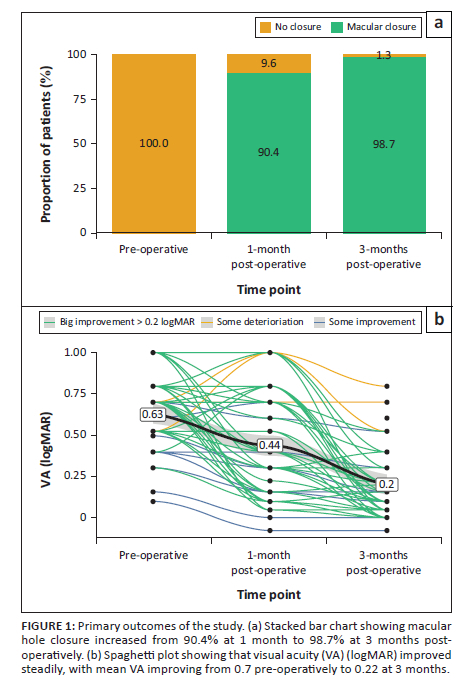
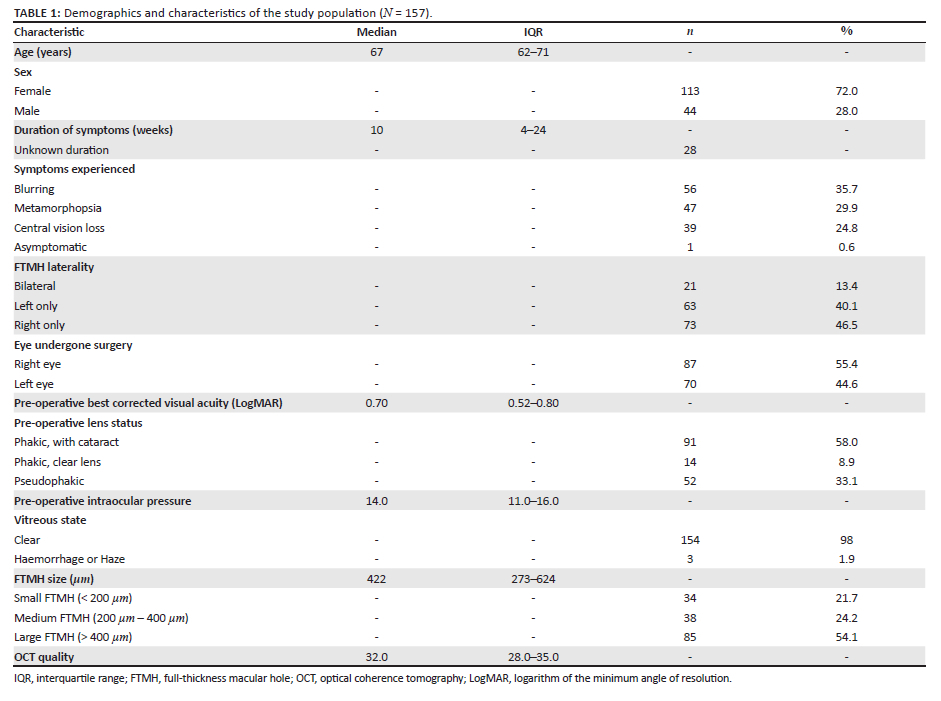
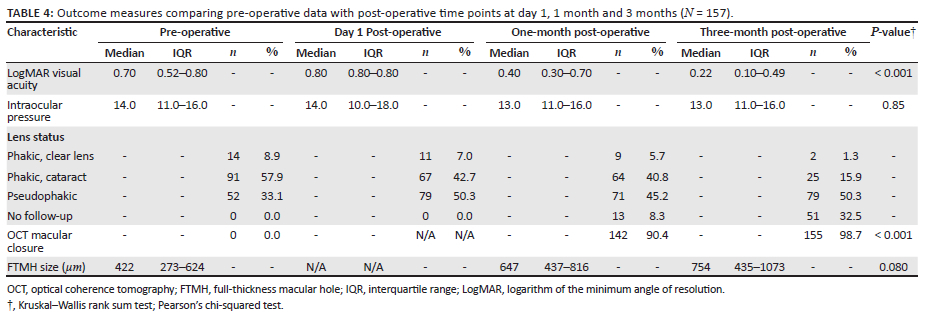
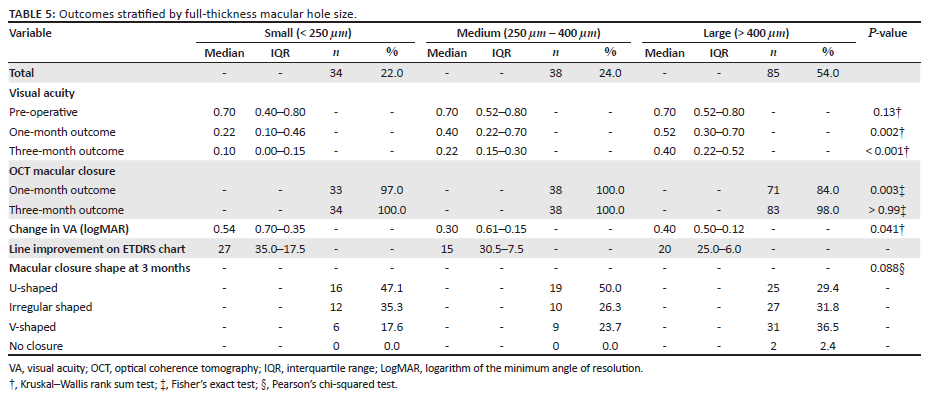
BACKGROUND: A full-thickness macular hole (FTMH) causes central vision loss. Although modern vitrectomy techniques achieve high closure rates, functional recovery remained variable. AIM: This study aimed to describe the surgical outcomes of FTMH repair in patients treated at a retinal centre in South Africa. SETTING: The study was conducted at a predominantly retinal private-sector centre in Johannesburg, South Africa. METHODS: This retrospective case series evaluated anatomical and visual outcomes of patients who underwent FTMH repair at Northcliff Eye Centre over 10 years RESULTS: The study included 157 eyes. The median patient age was 67 years, and 72% were female. The median FTMH size was 422 µm, with 54% classified as large according to the International Vitreomacular Traction Study (IVTS) classification. Anatomical closure was achieved in 90% at 1 month and 98.7% at 3 months. The median visual acuity improved from 0.7 Logarithm of the Minimum Angle of Resolution (logMAR) to 0.22 logMAR at 3 months, a gain of 24 letters (P < 0.001). Smaller holes and U-shaped closure morphology were associated with superior outcomes. Complications were minimal, with no retinal detachments reported. CONCLUSION: Vitrectomy with internal limiting membrane (ILM) peeling achieved high closure rates, with smaller holes and U-shaped closures predicting superior visual outcomes, underscoring the value of early intervention and optical coherence tomography-based prognostication. CONTRIBUTION: This study provided region-specific outcome data to support surgical decision-making and patient counselling in sub-Saharan Africa.
full-thickness macular hole; ILM peel; vitrectomy; visual acuity outcomes; anatomical closure; retinal surgery; surgical outcomes; South Africa
 Thumbnail