Effect of cycloplegia on the refractive status of children
Abstract
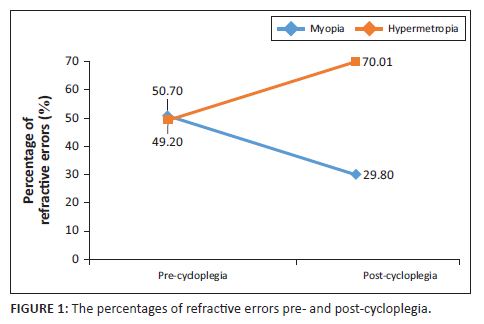
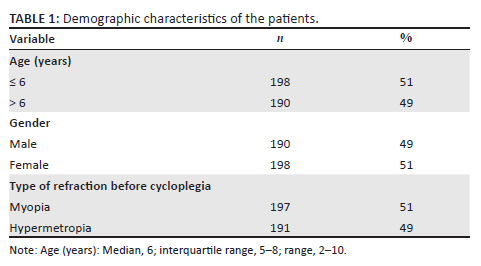
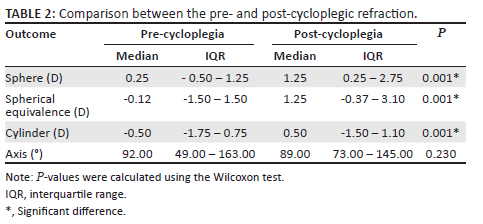
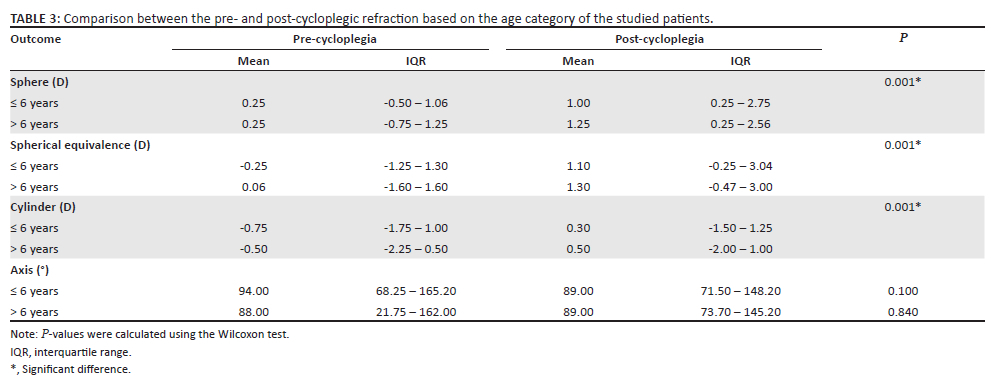
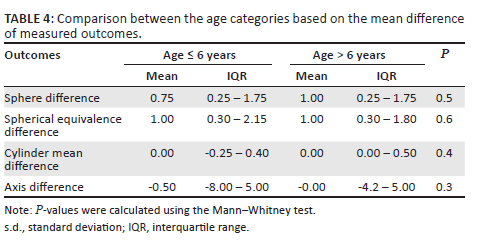
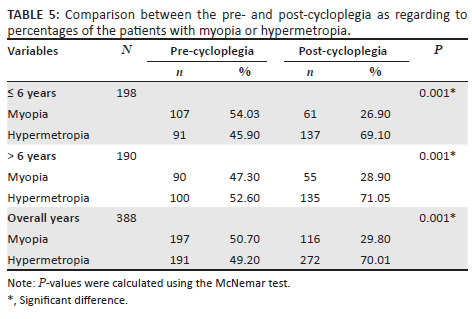
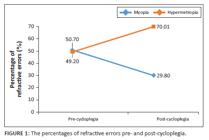
BACKGROUND: The American Optometric Association (AOA), in its 2017 Recommendation for Clinical Practice, proposed cycloplegic testing when initially screening preschool children to detect potential vision-impairing diseases such as strabismus, amblyopia and anisometropia. AIM: This study aims to detect the effect of cycloplegia on the measurement of refractive errors in children. SETTING: Ophthalmology department, Al-Azhar University, Egypt. METHODS: This retrospective interventional study included 388 children with refractive error attending our outpatient clinic in the ophthalmology department, at Al-Azhar University between January 2020 and April 2022. Cycloplegia was induced in each child with topical eye drops of 1% cyclopentolate instilled two times at 5-min intervals. The same optometrist repeated an auto-refraction 30 min after the last eye drop was applied. RESULTS: We compared the pre- and post-cycloplegic refractions and found that the sphere, spherical equivalence and cylinder had significant hypermetropic shift after cycloplegia (P = 0.001). CONCLUSION: Cycloplegic refractions are more accurate and eliminate the risk of inaccurate refractive error findings, which is essential when managing children. CONTRIBUTION: This article provides valuable insight, which may inform public health policy.
ophthalmology; refractive errors; sphere; cycloplegia; myopia; hypermetropia; cyclopentolate
 Thumbnail