The effect of water consumption on the aqueous layer of the tear film
Abstract
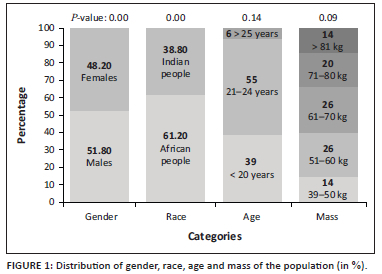
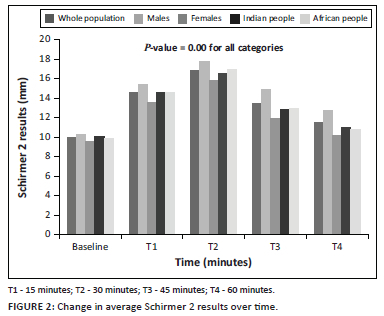
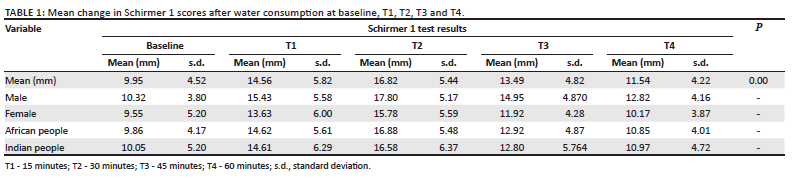
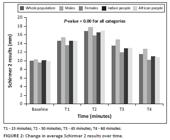
BACKGROUND: Tear deficient dry eye is a condition of insufficient tear production and may cause discomfort and visual disturbances, and if untreated, may cause ocular surface damage. While various treatment options have been explored and are available, these are usually costly and invasive AIM: This study aimed to investigate the effect of water consumption on the aqueous layer of the tear film SETTING: University of KwaZulu-Natal Eye Clinic METHODS: A quantitative experimental design was implemented on 85 healthy participants of both genders aged between 18 and 34 years old. Pre-screening procedures, followed by baseline Schirmer 1 readings were obtained on all participants. The participants thereafter consumed water in relation to their body mass. Schirmer 1 test was re-administered at time intervals of 15, 30, 45 and 60 min after water consumption RESULTS: The mean baseline Schirmer 1 result prior to water consumption was 9.95 mm ± 4.52 mm. The mean Schirmer 1 results, at 15, 30, 45 and 60 min, following water consumption were 14.56 ± 5.82, 16.82 ± 5.44, 13.49 ± 4.82 and 11.54 mm ± 4.22 mm, respectively with a P-value of 0.000 CONCLUSION: This study showed that water consumption has a statistically significant increase on the aqueous tear volume CONTRIBUTION: Water consumption has been shown to increase aqueous tear production and may serve as a more affordable option to reduce dry eye symptoms
water consumption; tear film; dry eye; aqueous deficient dry eye; Schirmer test
 Thumbnail
 Thumbnail