Optical coherence tomography in the management of diabetic macular oedema in sub-Saharan Africa
Abstract
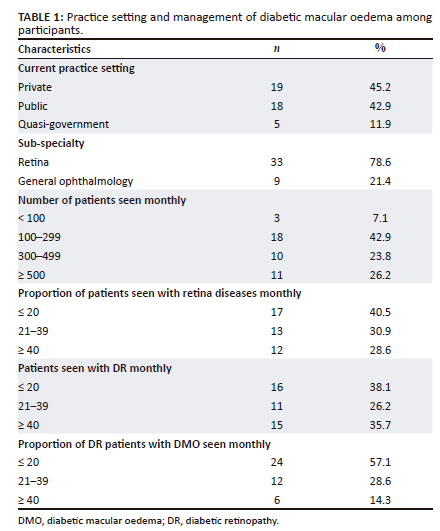
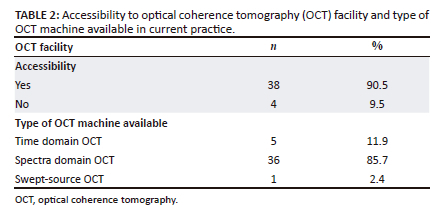
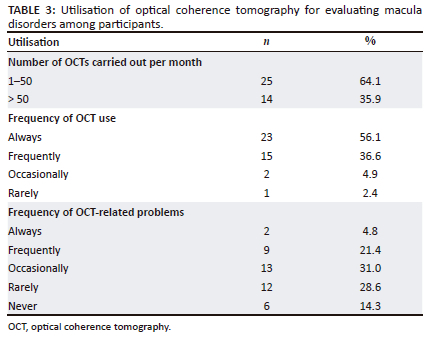
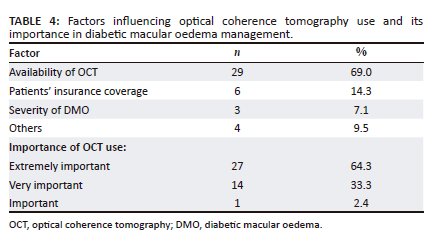
BACKGROUND: Accurate and objective diagnosis of centre-involving diabetic macular oedema (ci-DMO) requires the use of optical coherence tomography (OCT). There is limited data on the availability and rate of utilisation of OCT for the management of DMO in sub-Saharan Africa (SSA). AIM: To assess the availability and rate of utilisation of OCT for the management of DMO in SSA. SETTING: Retina-practising ophthalmologists in 18 countries across SSA. METHODS: In this cross-sectional survey, a structured questionnaire was distributed among ophthalmologists treating patients with retina diseases in SSA. Data were collected using Google Forms by sharing a link to the Google data sheet with participants via email. The responses were analysed, summarised and presented using proportions and frequency tables. RESULTS: A total of 42 ophthalmologists participated in this study. The proportion of diabetic retinopathy patients with DMO seen on a monthly basis was ≤ 20% among 24 (57.1%) participants and ≥ 40% among 14.3% participants. Thirty-eight (90.5%) participants had access to an OCT facility in their area of practice and 85.7% of them had Spectra Domain OCT. Twenty-five (64%) participants performed 1 to 50 OCT scans monthly and 34% performed > 50 OCT scans monthly. Important factors influencing OCT use in DMO patients were: the availability of OCT in the facility, patients' insurance coverage and the severity of DMO. CONCLUSION: Optical coherence tomography is readily available although there is wide variability in its use in SSA. CONTRIBUTION: This survey uncovers the need for standardising practice patterns and usage of OCT in the treatment of DMO in SSA.
optical coherence tomography; diabetic macular oedema; diabetic retinopathy; improving access to care; retina survey; anti-vascular endothelial growth factors; sub-Saharan Africa