Short- and long-term effectiveness of interventions for improving adherence to glaucoma medications
Abstract
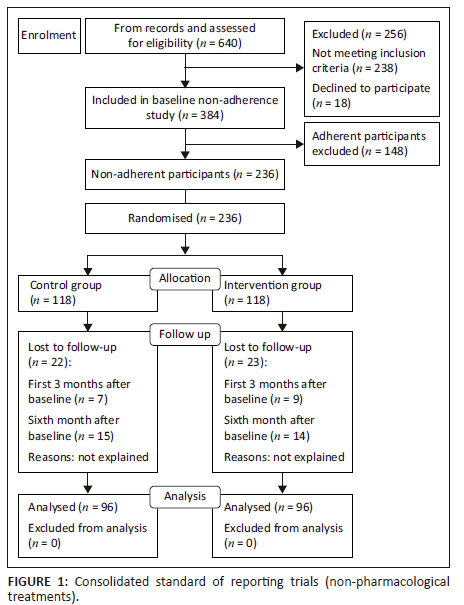
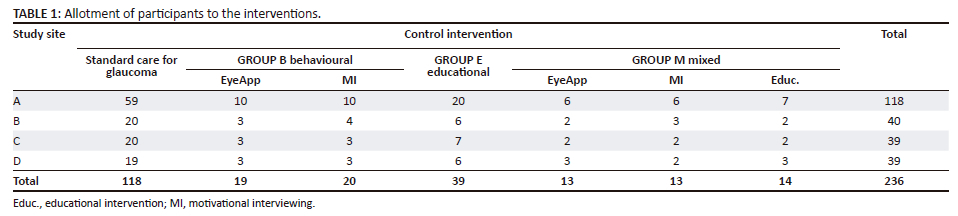
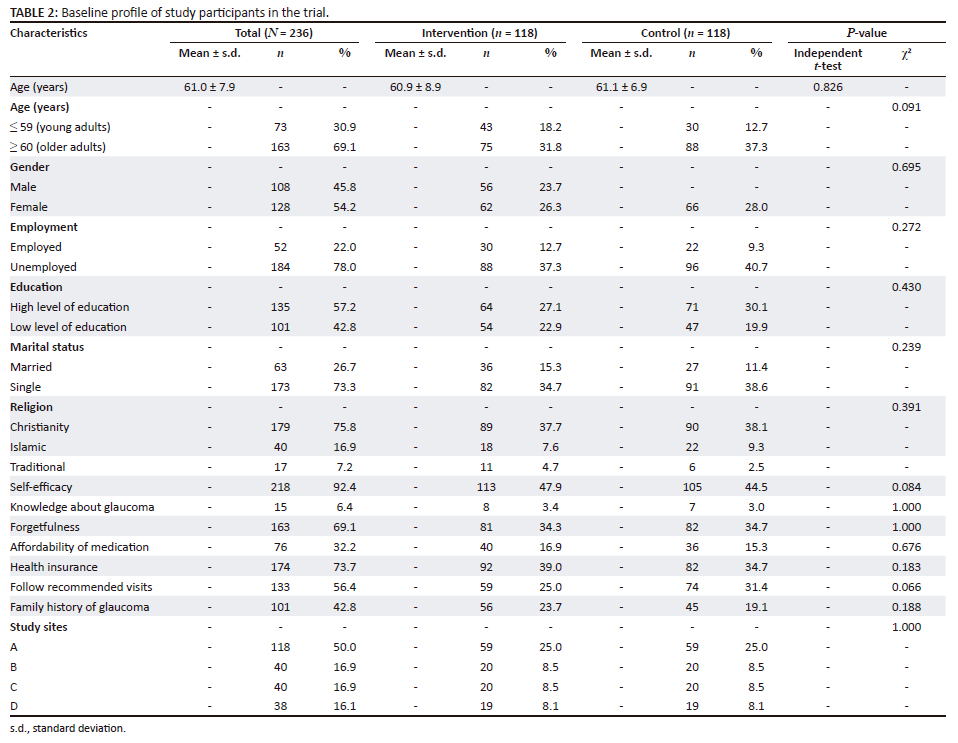
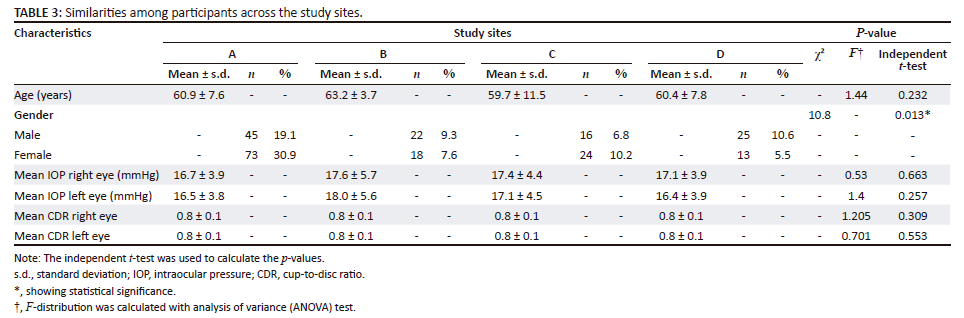
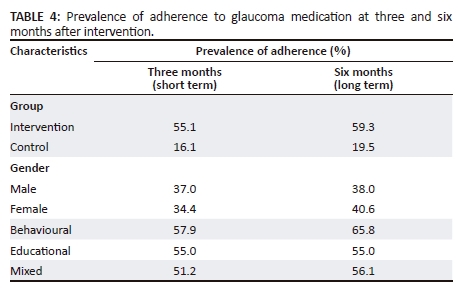
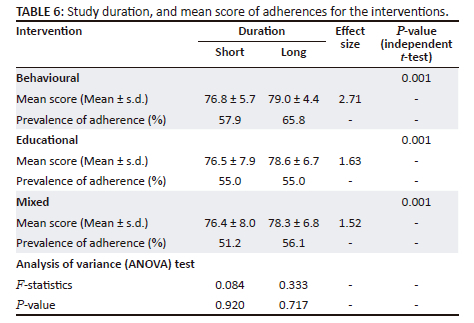
BACKGROUND: The need for effective interventions for addressing non-adherence to glaucoma medications is fundamental in improving visual outcomes among persons with glaucoma. AIM: The study aims to assess the effectiveness of short- and long-term behavioural, educational and mixed interventions for improving adherence to glaucoma medications. SETTING: Four eye hospitals in Accra were used for this study. METHODS: This was a prospective multi-centre randomised controlled trial involving 236 non-adherent patients with glaucoma. Participants were assigned to intervention and control groups. The intervention group received behavioural, educational and mixed interventions. Data were analysed with the IBM SPSS software version 25. Mean differences in adherence between the groups were determined at baseline, at 3 months and 6 months intervals, using the Independent-Sample-t-test and repeated measures for analysis of variance. P-values less than 0.05 were considered statistically significant. RESULTS: The mean age was 61.0 ± 7.9 years. Participants were similar in terms of age, intraocular pressure and cup-to-disc ratio, across the study centres (P > 0.05). At 3- and 6-months following intervention, the intervention group experienced an increase in adherence from 55.1% to 59.3% respectively. There was a significant difference in mean score for adherence between the intervention and control groups after 3 and 6 months with an effect size ≥ 0.80 (P < 0.05). CONCLUSION: The interventions resulted in a significant improvement in adherence. CONTRIBUTION: Our findings support the use of multi-faceted interventions in reducing non-adherence to glaucoma medications.
adherence; glaucoma; medication; intervention; behavioural; educational
 Thumbnail