Strengthening keratoconus management systems in South African public sector facilities
Abstract
BACKGROUND: Provision of comprehensive eye care remains a challenge in low to medium income countries including South Africa. The recent surge of keratoconus (KC) is exacerbating this challenge especially in terms of the need for specialised equipment, optical devices, and quality knowledgeable eyecare workforce necessary for KC management. AIM: This study aimed to analyse the capacity of the public sector facilities in the provision of eyecare service to KC patients in view of developing strategies for strengthening systems for efficiency and effectiveness of KC patient care. SETTING: Public sector hospitals of Capricorn District, Limpopo Province, South Africa. METHODS: Concurrent mixed methods triangulation which included document review of clinical reports on patient headcount, cross-sectional survey of available equipment, working space and eyecare workforce, and key stakeholder and focus group interviews for exploring the perspectives of optometrists on eyecare service provision was conducted. RESULTS: A significant patient headcount of consulting patients and well-established outreach programmes were reported. Limited knowledge of KC and severe shortages of basic equipment, consumables, and optical devices associated with financial constraints were commonly reported barriers to service provision to KC patients. CONCLUSION: The district has made progress in setting up systems for eyecare provision though gaps were identified in the service offered to KC patients. More efforts are required to strengthen the systems in this district for improvement of this service. CONTRIBUTION: This article seeks to highlight the capacity of the public sector as the main contributor to eyecare and to strengthen systems for KC patient care.
Capricorn District of Limpopo Province; capacity; eyecare service provision; management of keratoconus; optometrist
Introduction
An estimated 400 million people, globally, have visual impairment (VI), and an additional 36 million live with blindness.1123
The comprehensive eye care (CEC) strategy of the World Health Organization (WHO) was adopted worldwide to address burden with healthcare service provision. It does not only focus on treatment of the eye conditions but also encompass prevention, promotion, and rehabilitation of incurable blindness.333
An analysis of the South African National Health and Nutrition Examination Survey (SANHANES-1) suggests a 9.2% prevalence of vision loss in South Africa, where the rural provinces are mostly affected.456,7
Keratoconus presents as ectasia of the cornea characterised by thinning and protrusion resulting in high myopia and irregular astigmatism.8779,10671112
With the presumed increase in KC prevalence globally,6,7131314
This current study, therefore, aimed to analyse the capacity of the public sector facilities in Capricorn District of Limpopo Province in providing services to KC patients, and to further develop strategies for strengthening systems for efficiency and effectiveness in caring for KC patients. The focus of the study was on optometry service as optometrists are regarded the primary providers of eyecare in South Africa. Optometry service is offered consistently across all selected hospitals, and optometrists play a critical role in screening, examination, diagnosis, treatment and management of KC in these facilities as compared to other forms of service like ophthalmic nursing and ophthalmology services.
Methods
Concurrent triangulation mixed method was applied in the study to combine the strengths of the quantitative and the qualitative research methods. The quantitative methods enabled the measurements of constructs and their operationalisation, the comparison of data from various groups of participants, and highlighting how the variables are associated with one another.15151617
Study setting
Capricorn District has a population of 1 372 355 and is sparsely populated with a density of 63.23 people/km218141818
Sampling
The study was conducted across seven public hospitals in the Capricorn District of the Limpopo Province of South Africa. Polokwane hospital did not grant gatekeeper permission to allow inclusion in the study and was therefore excluded. Monthly and yearly clinic reports for patient headcount in all seven hospitals for a 3-year period, between 01 May 2017 and 31 April 2020, were sampled for the document review part of the study.
Purposive expert sampling technique was used to select participants regarded to have superior knowledge on the items under investigation.19
Data collection
An excel database was developed to capture data on the number of patients who consulted, those examined, those refracted, and those who received spectacles at respective hospitals. Data on the outreach activities at catchment areas including the community-based clinics and schools were also captured.
A self-administered online questionnaire which surveyed the availability of eyecare workforce, equipment and working space was completed by the EUMs in each hospital. The questionnaires were developed using Google Forms and were distributed via email and WhatsApp.
One-on-one stakeholder interviews with the PCE, DCE and EUMs were conducted. These structured interviews were conducted in the offices of the key stakeholders at their respective workplaces lasting for a period of between 42 and 95 min. Additionally, three FGIs were conducted with optometrists who shared their insights and experiences of eyecare service in the district. These structured interviews were conducted online using Zoom Meetings platform, and they lasted between 65 and 73 min. All interviews were recorded and transcribed for analysis.
All coronavirus disease 2019 (COVID-19) protocols were observed in the process to reduce the surge of the pandemic.
Ethical considerations
Ethical clearance to conduct this study was obtained from the University of KwaZulu-Natal (UKZN) Biomedical Research Ethics Committee (BREC) (No. BREC/00001223/2020) and the gatekeeper permission (LP-202005-002) from the Limpopo Department of Health (LDoH). The study observed the Declaration of Helsinki.
Data analysis
Quantitative and qualitative data were analysed, and the findings were presented separately using descriptive and inductive approaches of analysis. Descriptive analysis was performed on patient headcount data collected from document review and data on eyecare workforce, equipment and workspace. These findings were presented in the form of means and percentages. For analysis of the capacity of the workforce, the WHO matrix for Human Resources for Eye Health (HReH)20,21
For qualitative data analysis, data-driven inductive thematic analysis was used to analyse the qualitative data. This is a widely used and heavily touted method of qualitative data analysis222222
The qualitative and quantitative methods were concurrently used to gather information and triangulation performed at the discussion stage to enrich the meaning of the findings.
Validity and reliability of the study
Validity of the study
The data collection instruments were developed by the primary author and reviewed by the secondary authors. The tools were developed from extensive literature review process. They were thereafter validated by a panel of six experts in the field of optometry who were drawn from the academic sector, public hospital and private practice sector.
Reliability of the study
A clearly defined study protocol was developed to guide the study. The investigators further selected time frames that were more applicable for the cross-sectional and the retrospective chart reviews to ensure the reliability of the study. A 3-year period was considered appropriate for chart reviews, while a 3-month time was used for the cross-sectional surveys. Additionally, a purposive total population sampling technique was also employed to ensure increase in the reproducibility of the study.
Trustworthiness and rigour of the qualitative research process
To ensure the rigour and trustworthiness of the study, several measures were taken. Multi-methods including focus groups and key stakeholder interviews were conducted to ensure dependability.23confirmability.23,24transferability.23,24,25
In the context of the participants, repeat interviews could not be performed but triangulation was conducted from the narrations of the participants in one-on-one and FGIs to reduce investigator bias.23,24,25,2623
Results
Service provision within the district
Headcount for patients consulting at the hospitals
A total of 63 157 patients consulted the eyecare department in the hospitals within the data collection period. Of the total patients that consulted, 31 366 (49.7%), an average of 9022 per hospital, were examined by optometrists. Refraction was performed in 13 470 (43%), an average of 1924 patients per hospital of those examined. There were 2239 (17% of those refracted) pairs of spectacles, average of 320 per hospital, and 92 (0.7% of those refracted) pairs of contact lenses ordered, all at Mankweng hospital.
Outreach to community clinics
There were 100 community clinics within the district and each hospital provided outreach services to an average of 12.5 clinics (100 clinics and 8 hospitals). Across all clinics, a total of 542 clinic visits were made from which 4046 persons were examined with 1636 referred (40.4%) to the hospital for further assistance during the study period.
Outreach to schools
Each hospital provides outreach services to the surrounding schools around the hospital. A total of 285 school visits were conducted, during which 12 750 children were screened and 1391 were referred for further assistance at the hospitals during the period of study. There was a referral rate of 10.9% with the number of referrals at 198.7 patients per hospital.
Contact lenses fitting and management of keratoconus patients
Keratoconus patients consulting peripheral hospitals were managed with spectacles. All KC patients requiring management by contact lenses and surgical interventions were referred to optometrists and ophthalmologists, respectively, at the tertiary hospital. Contact lenses were only fitted and dispensed at the tertiary hospital because of a lack of equipment and consumables at the peripheral hospitals. Additionally, aftercare of contact lenses wear was conducted at the tertiary hospital. There was therefore a backlog of patients requiring the contact lenses fitting, dispensing or aftercare resulting in increased waiting times to receive a service.
Patient education
The optometrists reported that the patients showed poor or lack of knowledge regarding the use of medication which affected patient care. The medication which was expected to be discarded in 30 days were often kept until the condition recurred in the following year:
'Patients say they have eye drops at home and when the next season comes in September they go back and use the same medication of the previous year. Severe VKC develops because the medication is no longer effective.' (Optometrist at a tertiary hospital)
Eyecare workforce
Availability of eyecare workforce in the hospitals
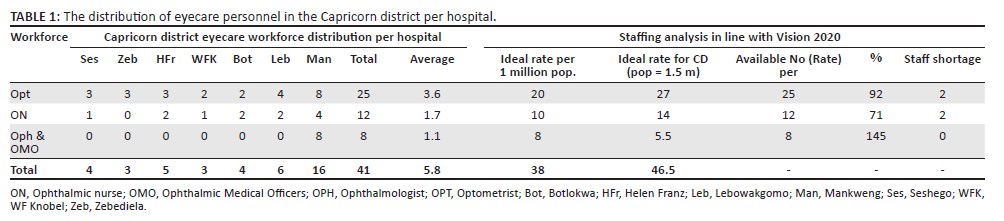
Table 1 presents the eyecare workforce component in the public eyecare facilities. A total of 41 eye-care practitioners were employed across the seven hospitals. There were 25 (61%) optometrists, 12 (29%) ophthalmic nurses and 4 (10%) ophthalmologists. A total of 5 (62.5%) ophthalmologists were females. All 8 (100%) ophthalmologists and ophthalmic medical officers, 8 (32%) optometrists, and 4 ophthalmic nurses (33%) were employed at the tertiary hospital. Zebediela hospital did not have an ophthalmic nurse. There was an average of 3.6 optometrists, 1.7 ophthalmic nurses, and 1.1 ophthalmologists per hospital. There were no other professions servicing eyecare. As presented in Table 1, the CEC guidelines suggested the appointment of 27 optometrists, 14 ophthalmic nurses, and 5.5 ophthalmologists and ophthalmic medical officers in line with a population estimated at 1.5 m. The district, therefore, had 92% compliance on the rate of optometrists, 71% compliance for ophthalmic nurses, and 145% compliance for ophthalmologists.
Generally, a minimum of three vacancies are allocated per hospital though some had only two filled and cannot fill the existing vacancy.
Cooperation between professionals
At the community clinics, the optometrists often experienced a lack of cooperation from some nurses who could not provide adequate information, proper working space and resources to optometrists to efficiently and effectively examine and manage patients. During outreach programmes at schools, some teachers were less cooperative and intolerant of optometrists who required time and working space to assist school children. Some would complain that the examinations took their time for teaching.
There was no protocol for cooperation and patient-centred care; hence, there were inconsistent approaches across various hospitals.
Knowledge of staff about keratoconus and other eye ailments
Most optometrists self-reported to have limited knowledge concerning screening, examination and management of KC patient. They also suggested that nurses at clinic also lacked basic knowledge and literacy in eye and vision care. In their view, they require upskilling programmes to help them develop their knowledge and skills.
Infrastructure and equipment
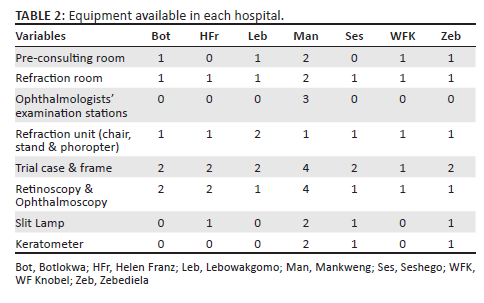
Table 2 shows the infrastructure and equipment that was available at each of the hospitals.
Equipment
The basic consulting rooms had an examination chair and stand, a phoropter, a trial case and frame, a chart projector, and diagnostic sets. Only six (86%) hospitals had a tonometer, four (57%) of the seven hospitals had slit lamp biomicroscopes and three (44%) of the seven hospitals had keratometers.
Available working space
The Lebowakgomo and Mankweng hospitals had two patient examination (refraction) rooms each, and all other hospitals had one each. None of the hospitals had consulting rooms dedicated for either contact lenses or specialised clinical service such as paediatrics or binocular vision. The Mankweng hospitals had two pre-consulting rooms for ophthalmic nurses and three ophthalmologist consulting rooms.
According to the informants, most hospitals had limited working spaces dedicated for patient examination. They were also used as offices and staff rooms which then compromised privacy and the confidentiality for consulting patients:
'We have only 1 consulting room which is also an office. the problem is that if you have many patients, you still have to help one at a time … previously we would compromise and take more than one patient at a time, but due to COVID-19 we have to take only one at a time.' (Eye unit manager at a district hospital)
The optometrists further suggested that the working space should be proportionate to the number of staff members per hospital:
'We don't have space, but we have the equipment and staff … ideally, we would need "one clinician" - one consulting room setup.' (Optometrist at the tertiary hospital)
Mankweng hospital had acquired a Pentacam and was awaiting its delivery. A KC patient clinic has been established at Mankweng hospital and more equipment was awaited such that this clinic could be set up.
Information and technology
Patients' records
Hospitals used online patient record filing system which mainly generated file numbers for new patients, served as a reference when locating patient files from the physical storage and was also used to generate invoices for patients' consultations. The key challenges noted were that patient files were stored as physical copies, was unable to generate electronic backup files, was not centralised and interactive across hospitals. Hence, the system was not interactive and therefore, did not allow tracking and tracing of patients as they consult or to book appointments because files were not backed up, and only summaries of each consultation were recorded manually in the daily patient register book:
'We don't do tracking, we only emphasize on treatment when they consult … if they decide to return.' (Eye unit manager at a district hospital)
One of the weaknesses of this was that it could not trace allocation of resources and hence the public healthcare system was vulnerable to abuse because some patients were able to acquire treatment resources such as optical devices from multiple sites:
'We have a patient that goes to hospital 1 to get spectacles and move to hospital 2 to get another pair … and unfortunately you cannot pick them up …' (District coordinator for eyecare)
Considering these key challenges, the system could not therefore generate sufficient or reliable data for research and planning.
Funding
There was no specific budget dedicated to eyecare, but rather allocations were made to a fund pool for all professional units. Most of the budgets were then prioritised and channelled towards managing conditions regarded as 'life-threatening'. In addition, each year, there were budget cuts and they worsened with each coming year. Hospitals were therefore unable to acquire equipment, consumables, optical devices and/or fill the vacant posts:
'No, it does not help at all because the money is getting reduced … like last year we were allocated R250 000 [for equipment] for the whole hospital …'
'Main challenge is budgets … budget for appointment of staff … budget for procurement of resources …' (Eye unit manager at a district hospital)
Patient care was therefore affected:
'… patients keep on going to the local hospital and continuously not getting medication where VKC gets worse.' (Optometrist at a tertiary hospital)
'A lot of people lose their vision waiting to come to Mankweng … because intraocular pressure was not done … you find a patient who is referred for cataract surgery but still has glaucoma … it's November and the patient is booked for May the following year …' (Optometrist at a tertiary hospital)
The district hospitals were reported to lack some critical resources such as consumables for patient examination and isolated incidences of medications for patients:
'I couldn't get fluorescein strips, the last time [I got them] was in 2005.' (Eye unit manager at a district hospital)
Initiatives to obtain donations
The key informants reported that they recently received assistance from NGOs and international donors to purchase equipment and devices for the patients:
' … there is inconsistency with the provision of spectacles …currently spectacles provided are donated …' (Eye unit manager at a district hospital)
Governance
The eyecare services in the Limpopo Province were coordinated in line with the national, provincial, district, and hospital policies and guidelines. However, there was no dedicated directorate for eyecare at the provincial government as with other professions such as medical services, nursing, and pharmacy. Optometry was classified and clustered under the allied health professions together with physiotherapy, dietetics, and occupational therapy. This classification, according to the PCE, DCE, and EUMs, did not provide a platform to mobilise resources and funding specifically for eyecare:
'We have a problem in the way it is structured … when somebody is in charge, they must have powers … in pharmacy they have a directorate, the nurses have a directorate, but eyecare is still clustered together with allied professions … it hinders a lot of progress …' (Eye unit manager of a district hospital)
'… there is no section that focuses on eyecare in the provincial office. Even if you have challenges no one attends to them …' (Eye unit manager of a district hospital)
Optometry services were offered at the same level across all hospitals, including in district and tertiary hospitals, though the services provided were more dependent on the availability of equipment, consumables, and staff. Accordingly, there was a distinction between the optometry services offered at the district level and the tertiary level, because the tertiary hospitals had more resources compared to the district hospitals:
'Optometry service across the hospitals is the same whether you are at a district, regional or tertiary hospital, the service is the same … A referral is only when the patient has to see an ophthalmologist …' (District coordinator for eyecare)
The district had developed protocols for generic patient care for patient screening, examination, diagnosis, and the management of visual as well as ocular abnormal conditions. There were, however, no protocols for screening, examination, and diagnosis of KC patients:
'Protocol is generic and outlines the process to manage conditions … There is no protocol for contact lenses fitting yet …' (District coordinator for eyecare)
The district had no defined protocols for the allocation of optical devices and medication. The practitioners used their autonomy and discretion to allocate resources.
Discussion
The study aimed to analyse the capacity of the Capricorn district public sector facilities to manage KC patients and suggest strategies to strengthen systems for efficiency and effectiveness of care to these patients. This investigation that was conducted followed the WHO's six pillar capacity model that defines capacity in terms of service delivery, eyecare workforce, infrastructure and medical products, health information, financing systems, and governance.3,27
Findings of the study revealed that hospitals provided comprehensive eyecare service to consulting patients and an extensive outreach programme, although enormous gaps were identified on service provided when managing KC patients. The lack of resources severely affected the quality of the service provided and peripheral hospitals did not have adequate equipment and consumables for early detection and examination of KC patients. Besides patient examination, they further did not have adequate equipment for contact lenses fitting and to perform other procedures for management of KC, and rather the patients were mostly managed with spectacles. The study also found that medication and optical devices could not be acquired because of a lack of funding, hence affecting the service to patients. Equally, critical vacant posts could not be filled which compromised the capacity of the eyecare workforce. In terms of governance, eyecare was coordinated and governed based on the national, provincial and district policies and guidelines. There were available protocols for general patient examination though no protocols for KC patient examination and management were evident. The study also found no protocols for allocation of optical devices to patients in general.
Service delivery
There was a high patient headcount for consultations. Of the total of 63 157 patients who consulted, 31 366 (49.7%) were examined by optometrists from which 13 470 (43%) were refracted and 2239 pairs of spectacles were prescribed. The patient headcount was significant and represented about 4% of the Capricorn District populace.181828
Contact lenses fitting was performed only at the tertiary hospital because of a lack of equipment, consumables and working space that are needed for such service at peripheral hospitals. This may be the reason why contact lenses were ordered for only 92 (0.7%) consulting patients within the 3-year period. This low number of patients should be regarded as an anomaly given the observed rising prevalence of KC. Although district hospitals did not have capacity to fit contact lenses, the available resources could enable them to conduct aftercare visits for patients wearing contact lenses. This could reduce inconvenience and costs of patients travelling to tertiary hospitals for such a follow-up service.
Besides contact lenses and spectacles, no other form of service was performed as part of management for KC patients. Ideally, surgical procedures such as corneal cross-linking may be performed to strengthen the corneal collagens in highly progressive KC cases,8292927
Findings of the study revealed that the district conducted efficient and effective outreach programme at community clinics and schools. Over 4046 patients and 12 750 children were examined at the community clinics and schools, respectively. This is highly commendable because outreach programmes provide an opportunity for early detection of eye conditions before they become apparent.303129
For clinics, nurses may be offered basic training on common presenting and/or priority conditions such as KC in terms of how they can conduct screening of these patients, their presentations and procedures to be followed in assisting the patients.323,323232
Almost half (40.4%) of the patients screened at the community clinics were referred for further assistance at the hospitals. This referral rate is too high and may suggest that clinics were not adequately resourced with either equipment for examination or medication for pathological conditions, hence patients had to be referred to hospitals. Providing such resources may enable better service at the clinics such that fewer patients require referral.
According to the informants, level of offerings for optometry service was supposed to be the same at all hospitals though it differed from tertiary to district hospitals based on how they were resourced. Furthermore, patients were supposed to be referred to tertiary hospitals mainly to receive ophthalmology services. The high inter-hospital referral rate from peripheral to tertiary hospitals contributed to increasing backlog at the tertiary hospitals resulting in increased waiting times for patients to receive services and optical devices. Most viable strategies to reduce waiting times which can be applied to address this challenge in this district include increased working space such that there is a consulting room for all optometrists on duty, improve scheduling such that it is easier for patients to honour sessions, and to be on time given their proximity or remoteness to these referral hospitals and also rescheduling of late arrivals.33
Patient education was reported as a challenge in the study. Patients were either not compliant or not adequately educated about their eye conditions and consequently some used medication beyond their shelf life. Ethically, patients should participate in their own care and consent to their perceived best options towards their treatment.343429
Eyecare workforce
The district employed about four (3.6) optometrists, two (1.7) ophthalmic nurses, and one (1.1) OMOs per hospital which, based on the WHO's HReH model, achieved 92% compliance rate for optometrists, 71% for ophthalmic nurses, and 145% for ophthalmologists. Some hospitals did not have ophthalmic nurses while others have fewer optometrists than normal and hence several appointments were required such as to reach full compliance for improving service provision. Two optometrists could be appointed at WF Knobel and the Botlokwa hospitals each and two ophthalmic nurses could be appointed at Zebediela hospital and at Seshego and/or the WF Knobel hospitals to improve the capacity. These hospitals had vacant optometry and ophthalmic nurse positions that could not be filled because of financial constraints.
Generally, three to four optometrists were employed per hospital where one was the EUM and the other two conducted most of the clinical work. In some hospitals, only two optometrists were available like WK Knobel and Botlokwa hospitals; hence, it could be assumed that it was difficult to provide patient care service at the specific hospital, conduct office administration for the unit and to fulfil the responsibilities for outreach projects at the same time. In addition, normal human resources requirement like taking leave could not be fulfilled.35,3635,363737
The financial constraints were touted as limitations in the filling of vacancies. While this is a challenge, it should be noted that South Africa is far ahead with compliance to the HReH model in sub-Saharan Africa, and there is evidence that this district has higher rates of compliance than others in South Africa.38
The rise in prevalence of KC has been observed in the past decade or two with the introduction of advanced equipment like the ocular coherence tomography (OCT) and corneal topographers; hence, attention has shifted towards this condition only recently. Limited practitioner knowledge, therefore, including that of ophthalmologists39313131
Infrastructure and equipment
All the hospitals had limited working space, and most did not have the requisite equipment and consumables for patient examination. The availability of staff, equipment and working space are the greatest contributors to increased waiting times.37,384033,412742
Fitting KC patients with contact lenses requires more time than that of a regular patient and allocating specific working rooms may be beneficial. Findings in this study suggest that there were no rooms that were specific for speciality care such as for KC or contact lenses fitting, hence the same refraction room was used for fitting. Fully equipped and specialised rooms for contact lenses or KC patient care should be made available to increase efficiency and improve the quality of the service to these patients. The consultation rooms for KC patients should have, among other standard equipment, keratometers, slit lamp biomicroscopes, pachymeters, OCT and a corneal topographer.7,4343,44
The district should further create specific staff and/or office space to allow practitioner private space for debriefing and separate them from the patients' consulting rooms. This equally has benefits for their mental health and promotes privacy and confidentiality while consulting patients.45,46
Information technology
Record keeping was found to be challenge where only manual files were kept without digital copies as backup; the online system was used to generate file numbers and retrieve patient files and for invoicing of patients. Good record keeping, especially the use of online medical files, reduces errors when storing files, improves access to practitioners and patients, facilitates easier and prompt access, and patient history may be created after the visit.47484950
In the current system, there was no backup of files kept and hence, had poor security. Fully-fledged online storage system enables the interconnectedness where records of patients are accessed at any facility that the patient visits within the organisation.48,5151,525353
Besides these challenges, which are mainly experienced between the patient-clinician-facility, the studies highlight the non-availability or the inaccurate information to reduce the capacity planning at each level of governance. When the data are generated and kept manually, such as is the case in our study, it is bound to have inaccuracies. Hence, an integrated, interactive online system is required.
Funding
Findings of the study showed gross financial constraints which affected the appointment of staff, the purchasing and maintenance of equipment, as well as the sourcing of optical devices and consumables for patient examination. These are common challenges facing South Africa today545455
Governance
Eyecare services in the Capricorn district were governed based on the national, provincial and district guidelines. It can be conceded that there was some level of efficiency and effectiveness given the number of achievements where projects such as outreach activities were conducted. The absence of a portfolio for eye health in the LDoH proved to be a barrier to provision of eyecare according to informants. The PCE, DCE and the EUMs conceded the absence of the portfolio as a setback to eyecare service provision and it was therefore advocated for. Its absence limited the mobilisation of resources which is better achieved in professions that have this portfolio such as in nursing, clinical services and pharmacy. The same challenge was also reported at the KwaZulu-Natal-based study, where respondents advocated for access to the decision-makers and for open channels of inquiry.2756
There were no defined protocols for KC patient care, allocation of optical devices and medication. Availability of such protocols provides benefits to patients, healthcare professionals, and the healthcare systems. When defined, patients are likely to benefit because it brings consistency of care across the hospitals for the same conditions, and the patients are assisted in the same manner irrespective of who is providing the service.575757
Conclusion
Having sufficient capacity to provide service is critical and is one of the initiatives that WHO is striving to achieve especially in LMICs which commonly have challenges with resources necessary for eyecare provision. The district was found to offer adequate services to general consulting patients although gaps were identified in the provision of service to KC patients. Efforts should be made to improve KC patient management with contact lenses and other surgical intervention strategies such as to improve the outcome of vision correction. The outreach programmes and inter-facility referrals are excellent platforms for that be used to reach more persons that require eyecare within the district and for early detection of KC especially in children and young adults in schools. Availability of funding and budget constraints remain a huge challenge and limit acquisition of equipment and other resources necessary for patient care. Governments should develop and improve better funding models to enable quality service provision through appointment and upskilling of quality eyecare workforce, and acquisition and maintenance of sufficient equipment and other resources required in eyecare service.
Competing interests
The authors declare that they have no financial or personal relationship(s) that may have inappropriately influenced them in writing this article.
Authors' contributions
The article is partially based on the author's thesis entitled 'A district-based model for keratoconus management in the Capricorn district of Limpopo province, South Africa' towards the degree of Doctor of Philosophy in Optometry in the Discipline of Optometry, University of Limpopo, South Africa in 2023, with V.R.M. and K.P.M. as supervisor and co-supervisor respectively.
Funding information
This research work received a grant from the College of Health Sciences at the University of KwaZulu-Natal to cover data collection costs.
Data availability
Data used to support the findings of the study are available from P.M.W.N., the corresponding author, upon reasonable request.
Disclaimer
The views and opinions expressed in this article are those of the authors and do not necessarily reflect the official policy or position of any affiliated agency of the authors, and the publisher.
Acknowledgements
The authors would like to acknowledge invaluable contribution and selflessness of the participants in this study. Special appreciation goes to Ms M.M. Boshielo who assisted in the process of assembling patients for data collection. The article is partially based on the author's thesis entitled "A district-based model for keratoconus management in the Capricorn district of Limpopo province, South Africa" towards the degree of Doctor of Philosophy in Optometry in the Discipline of Optometry, University of Limpopo, South Africa on 2023, with supervisors V.R.M. and K.P.M. as supervisor and co-supervisor respectively.
References
-
1.Yip JLY, Bright T, Ford S, et al. Process evaluation of a National Primary Eye Care Programme in Rwanda 11 Medical and Health Sciences 1117 Public Health and Health Services. BMC Health Serv Res. 2018;18(1):1-12. https://doi.org/10.1186/s12913-018-3718-1
» https://doi.org/10.1186/s12913-018-3718-1 -
2.Lilian RR, Railton J, Schaftenaar E, et al. Strengthening primary eye care in South Africa: An assessment of services and prospective evaluation of a health systems support package. PLoS One. 2018;13(5):e0197432. https://doi.org/10.1371/journal.pone.0197432
» https://doi.org/10.1371/journal.pone.0197432 -
3.Cicinelli M, Marmamula S, Khanna R. Comprehensive eye care - Issues, challenges, and way forward. Indian J Ophthalmol. 2020;68(2):316. https://doi.org/10.4103/ijo.IJO_17_19
» https://doi.org/10.4103/ijo.IJO_17_19 -
4.Addo EK, Akuffo KO, Sewpaul R, et al. Prevalence and associated factors of vision loss in the South African National Health and Nutrition Examination Survey (SANHANES-1). BMC Ophthalmol. 2021;21:1. https://doi.org/10.1186/s12886-020-01714-4
» https://doi.org/10.1186/s12886-020-01714-4 -
5.Maake MM, Oduntan OA. Prevalence and causes of visual impairment in patients seen at Nkhensani Hospital Eye Clinic, South Africa. Afr J Prim Health Care Fam Med. 2015;7(1):a728. https://doi.org/10.4102/phcfm.v7i1.728
» https://doi.org/10.4102/phcfm.v7i1.728 -
6.Hashemi H, Heydarian S, Hooshmand E, et al. The prevalence and risk factors for keratoconus: A systematic review and meta-analysis. Cornea. 2020;39(2):263-270. https://doi.org/10.1097/ICO.0000000000002150
» https://doi.org/10.1097/ICO.0000000000002150 -
7.Santodomingo-Rubido J, Carracedo G, Suzaki A, Villa-Collar C, Vincent SJ, Wolffsohn JS. Keratoconus: An updated review. Contact Lens Anterior Eye. 2022;45(3):101559-101577. https://doi.org/10.1016/j.clae.2021.101559
» https://doi.org/10.1016/j.clae.2021.101559 -
8.Althomali TA, Al-Qurashi IM, Al-Thagafi SM, Mohammed A, Almalki M. Prevalence of keratoconus among patients seeking laser vision correction in Taif area of Saudi Arabia. Saudi J Ophthalmol. 2018;32(2):114-118. https://doi.org/10.1016/j.sjopt.2017.11.003
» https://doi.org/10.1016/j.sjopt.2017.11.003 -
9.Assiri AA, Yousuf BI, Quantock AJ, Murphy PJ, Assiri AA. Incidence and severity of keratoconus in Asir province, Saudi Arabia. Br J Ophthalmol. 2005;89(11):1403. https://doi.org/10.1136/bjo.2005.074955
» https://doi.org/10.1136/bjo.2005.074955 -
10.Netto E, Al-Otaibi W, Hafezi N, et al. Prevalence of keratoconus in paediatric patients in Riyadh, Saudi Arabia. Br J Ophthalmol. 2018;102(10):1436-1441. https://doi.org/10.1136/bjophthalmol-2017-311391
» https://doi.org/10.1136/bjophthalmol-2017-311391 -
11.Akowuah PK, Kobia-Acquah E, Donkor R, Adjei-Anang J, Ankamah-Lomotey S. Keratoconus in Africa: A systematic review and meta-analysis. Ophthalmic Physiol Opt. 2021;41(4):736-747. https://doi.org/10.1111/opo.12825
» https://doi.org/10.1111/opo.12825 -
12.Vazirani J, Basu S. Keratoconus: Current perspectives. Clin Ophthalmol. 2013;7:2019-2030. https://doi.org/10.2147/OPTH.S50119
» https://doi.org/10.2147/OPTH.S50119 -
13.Gcabashe N, Moodley VR, Hansraj R. Keratoconus management at public sector facilities in KwaZulu-Natal, South Africa: Practitioner perspectives. Afr Vis Eye Health. 2022;81(1):7. https://doi.org/10.4102/aveh.v81i1.698
» https://doi.org/10.4102/aveh.v81i1.698 -
14.Ntsoane MD, Oduntan OA, Mpolokeng BL. Utilisation of public eye care services by the rural community residents in the Capricorn district, Limpopo Province, South Africa. Afr J Prim Health Care Fam Med. 2012;4(1):1-7. https://doi.org/10.4102/phcfm.v4i1.412
» https://doi.org/10.4102/phcfm.v4i1.412 -
15.Castro FG, Kellison JG, Boyd SJ, Kopak A. A methodology for conducting integrative mixed methods research and data analyses. J Mix Methods Res. 2010;4(4):342-360. https://doi.org/10.1177/1558689810382916
» https://doi.org/10.1177/1558689810382916 -
16.Clark VLP, Huddleston-Casas CA, Churchill SL, Garrett AL. Mixed methods approaches in family science research. J Fam Issues. 2008;29(11):1543-1566. https://doi.org/10.1177/0192513X08318251
» https://doi.org/10.1177/0192513X08318251 -
17.Sánchez-Hernández A. A mixed-methods study of the impact of sociocultural adaptation on the development of pragmatic production. System. 2018;75:93-105. https://doi.org/10.1016/j.system.2018.03.008
» https://doi.org/10.1016/j.system.2018.03.008 - 18.Department of Cooperative Governance and Traditional Affairs. Capricorn District Municipality, Limpopo Province. Profiles and Analysis. District Development Model. Pretoria: Government Printers; 2020.
-
19.Etikan I, Musa SA, Alkassim RS. Comparison of convenience sampling and purposive sampling. Am J Theor Appl Stat. 2016;5(1):1. https://doi.org/10.11648/j.ajtas.20160501.11
» https://doi.org/10.11648/j.ajtas.20160501.11 -
20.World Health Organization. Everybody's business - Strengthening health systems to improve health outcomes: WHO's framework for action [homepage on the Internet]. 2007 [cited 2022 Jun 05]. Available from: https://apps.who.int/iris/handle/10665/43918
» https://apps.who.int/iris/handle/10665/43918 -
21.Xulu-Kasaba ZN, Mashige KP, Naidoo KS. An assessment of human resource distribution for public eye health services in KwaZulu-Natal, South Africa. Afr Vis Eye Health. 2021;80(1):1-8. https://doi.org/10.4102/aveh.v80i1.583
» https://doi.org/10.4102/aveh.v80i1.583 - 22.Braun V, Clarke V. Thematic analysis. In Cooper H, Camic PM, Long DL, Panter AT, Rindskopf D, Sher KJ, editors. APA handbook of research methods in psychology, Vol. 2. Research designs: Quantitative, qualitative, neuropsychological, and biological. Washington D.C.: American Psychological Association; 2021, pp. 57-71.
-
23.Shenton AK. Strategies for ensuring trustworthiness in qualitative research projects. Educ Inf. 2004;22(2):63-75. https://doi.org/10.3233/EFI-2004-22201
» https://doi.org/10.3233/EFI-2004-22201 -
24.Fereday J, Muir-Cochrane E. Demonstrating rigor using thematic analysis: A hybrid approach of inductive and deductive coding and theme development. Int J Qual Methods. 2006;5(1):80-92. https://doi.org/10.1177/160940690600500107
» https://doi.org/10.1177/160940690600500107 -
25.Leininger M. Quality of life from a transcultural nursing perspective. Nurs Sci Q. 1994;7(1):22-28. https://doi.org/10.1177/089431849400700109
» https://doi.org/10.1177/089431849400700109 -
26.Cutcliffe J, McKenna H. When do we know that we know? Considering the truth of research findings and the craft of qualitative research. Int J Nurs. 2002;39(6):611-618. https://doi.org/10.1016/S0020-7489(01)00063-3
» https://doi.org/10.1016/S0020-7489(01)00063-3 -
27.Buthelezi L, Van Staden D. Integrating eye health into policy: Evidence for health systems strengthening in KwaZulu-Natal. Afr Vis Eye Health. 2020;79(1):1-10. https://doi.org/10.4102/aveh.v79i1.549
» https://doi.org/10.4102/aveh.v79i1.549 - 28.Professional Board of Optometry and Dispensing Opticians. BAsic eye exam guidelines(2).pdf. Pretoria: PBODO; 2019.
-
29.Omer K. Epidemiology of keratoconus worldwide. Open Ophthalmol J. 2018;12(1):289-299. https://doi.org/10.2174/1874364101812010289
» https://doi.org/10.2174/1874364101812010289 -
30.Olawoye O, Fawole OI, Teng CC, Ritch R. Evaluation of community eye outreach programs for early glaucoma detection in Nigeria. Clin Ophthalmol. 2013;7:1753-1759. https://doi.org/10.2147/OPTH.S46823
» https://doi.org/10.2147/OPTH.S46823 -
31.Burnett AM, Yashadhana A, Lee L, Serova N, Brain D, Naidoo K. Interventions to improve school-based eye-care services in low- and middle-income countries: A systematic review. Bull World Health Organ. 2018;96(10):682. https://doi.org/10.2471/BLT.18.212332
» https://doi.org/10.2471/BLT.18.212332 -
32.Bechange S, Gillani M, Jolley E, et al. School-based vision screening in Quetta, Pakistan: A qualitative study of experiences of teachers and eye care providers. BMC Public Health. 2021;21(1):1-11. https://doi.org/10.1186/s12889-021-10404-9
» https://doi.org/10.1186/s12889-021-10404-9 -
33.Sun J, Lin Q, Zhao P, et al. Reducing waiting time and raising outpatient satisfaction in a Chinese public tertiary general hospital - An interrupted time series study. BMC Public Health. 2017;17(1):1-11. https://doi.org/10.1186/s12889-017-4667-z
» https://doi.org/10.1186/s12889-017-4667-z -
34.Paterick TE, Patel N, Tajik AJ, Chandrasekaran K. Improving health outcomes through patient education and partnerships with patients. Baylor Univ Med Center Proc. 2017;30(1):112-113. https://doi.org/10.1080/08998280.2017.11929552
» https://doi.org/10.1080/08998280.2017.11929552 -
35.Willard-Grace R, Knox M, Huang B, Hammer H, Kivlahan C, Grumbach K. Burnout and health care workforce turnover. Ann Fam Med. 2019;17(1):36. https://doi.org/10.1370/afm.2338
» https://doi.org/10.1370/afm.2338 -
36.Dewanto A, Wardhani V. Nurse turnover and perceived causes and consequences: A preliminary study at private hospitals in Indonesia. BMC Nurs. 2018;17(2):1-7. https://doi.org/10.1186/s12912-018-0317-8
» https://doi.org/10.1186/s12912-018-0317-8 -
37.Manyisa ZM, Van Aswegen EJ. Factors affecting working conditions in public hospitals: A literature review. Int J Afr Nurs Sci. 2017;6:28-38. https://doi.org/10.1016/j.ijans.2017.02.002
» https://doi.org/10.1016/j.ijans.2017.02.002 - 38.Graham R. Facing the crisis in human resources for eye health in sub-Saharan Africa. Community Eye Health. 2017;30(100):85.
-
39.Baenninger PB, Bachmann LM, Iselin KC, et al. Mismatch of corneal specialists' expectations and keratoconus knowledge in general ophthalmologists - A prospective observational study in Switzerland. BMC Med Educ. 2021;21(1):297. https://doi.org/10.1186/s12909-021-02738-0
» https://doi.org/10.1186/s12909-021-02738-0 -
40.Oche M, Adamu H. Determinants of patient waiting time in the general outpatient Department of a Tertiary Health Institution in North Western Nigeria. Ann Med Health Sci Res. 2013;3(4):588. https://doi.org/10.4103/2141-9248.122123
» https://doi.org/10.4103/2141-9248.122123 -
41.Harris C, Allen K, Waller C, Brooke V. Sustainability in health care by allocating resources effectively (SHARE) 3: Examining how resource allocation decisions are made, implemented and evaluated in a local healthcare setting. BMC Health Serv Res. 2017;17(1):1-21. https://doi.org/10.1186/s12913-017-2207-2
» https://doi.org/10.1186/s12913-017-2207-2 -
42.HPCSA. Regulations defining the scope of the profession of optometry and dispensing Opticians [homepage on the Internet]. GN R280/2007 (Health Professions Act 56 OF 1974). 2015 [cited 2022 May 08]. Available from: https://discover.sabinet.co.za/document/1168168#reg2
» https://discover.sabinet.co.za/document/1168168#reg2 -
43.Tur V, MacGregor C, Jayaswal R, O'Brart D, Maycock N. A review of keratoconus: Diagnosis, pathophysiology, and genetics. Surv Ophthalmol. 2017;62(6):770-783. https://doi.org/10.1016/j.survophthal.2017.06.009
» https://doi.org/10.1016/j.survophthal.2017.06.009 -
44.Gordon CL, Trubiano JA, Holmes NE, et al. Staff to staff transmission as a driver of healthcare worker infections with COVID-19. Infect Dis Health. 2021;26(4):276-283. https://doi.org/10.1016/j.idh.2021.06.003
» https://doi.org/10.1016/j.idh.2021.06.003 -
45.Kankariya VP, Kymionis GD, Diakonis VF, Yoo SH. Management of pediatric keratoconus - evolving role of corneal collagen cross-linking: An update. Ind J Ophthalmol. 2013;61(8):435-440. https://doi.org/10.4103/0301-4738.116070
» https://doi.org/10.4103/0301-4738.116070 -
46.Dean E. No space for nurses' breaks: Staff rooms too small or too grubby [homepage on the Internet]. Nursing Standard; 2022 [cited 2022 Jun 16]. Available from: https://rcni.com/nursing-standard/newsroom/analysis/no-space-nurses-breaks-staff-rooms-too-small-or-too-grubby-182821
» https://rcni.com/nursing-standard/newsroom/analysis/no-space-nurses-breaks-staff-rooms-too-small-or-too-grubby-182821 - 47.Boonstra A, Versluis A, Vos JF. Implementing electronic health records in hospitals: A systematic literature review. BMC Health Serv Res. 2014;14(1):1-24.
-
48.Braa J, Hanseth O, Heywood A, Mohammed W. Developing health information systems in developing countries: The flexible standards strategy. Manage Inf Syst Q. 2016;31(2):381-402. https://doi.org/10.2307/25148796
» https://doi.org/10.2307/25148796 -
49.Rosen S, Ketlhapile M. Cost of using a patient tracer to reduce loss to follow-up and ascertain patient status in a large antiretroviral therapy program in Johannesburg, South Africa. Trop Med Int Health. 2010;15(Suppl. 1):98-104. https://doi.org/10.1111/j.1365-3156.2010.02512.x
» https://doi.org/10.1111/j.1365-3156.2010.02512.x -
50.Estill J, Tweya H, Egger M, et al. Tracing of patients lost to follow-up and HIV transmission: Mathematical modelling study based on two large ART programmes in Malawi. J Acquir Immune Defic Syndr. 2014;65(5):e179. https://doi.org/10.1097/QAI.0000000000000075
» https://doi.org/10.1097/QAI.0000000000000075 - 51.Matsumura Y, Hattori A, Manabe S, et al. Interconnection of electronic medical record with clinical data management system by CDISC ODM. Stud Health Technol Inform. 2014;205:868-872.
-
52.Harris C, Allen K, Waller C, et al. Sustainability in Health care by Allocating Resources Effectively (SHARE) 7: Supporting staff in evidence-based decision-making, implementation and evaluation in a local healthcare setting. BMC Health Serv Res. 2017;17(1):1-19. https://doi.org/10.1186/s12913-017-2388-8
» https://doi.org/10.1186/s12913-017-2388-8 -
53.O'Connor S. 5 reasons why electronic health records are better than paper records [homepage on the Internet]. Advanced Data Syatems Coorporation; 2020 [cited 2022 Jun 17]. Available from: https://www.adsc.com/blog/reasons-why-ehr-software-is-more-secure-than-paper-based-records
» https://www.adsc.com/blog/reasons-why-ehr-software-is-more-secure-than-paper-based-records -
54.Malakoane B, Heunis JC, Chikobvu P, Kigozi NG, Kruger WH. Public health system challenges in the Free State, South Africa: A situation appraisal to inform health system strengthening. BMC Health Serv Res. 2020;20(1):1-14. https://doi.org/10.1186/s12913-019-4862-y
» https://doi.org/10.1186/s12913-019-4862-y -
55.Nattrass N. South Africa's "rollout" of highly active antiretroviral therapy: A critical assessment. J Acquir Immune Defic Syndr. 2006;43(5):618-623. https://doi.org/10.1097/01.qai.0000242456.05274.fb
» https://doi.org/10.1097/01.qai.0000242456.05274.fb -
56.Akuffo KO, Sewpaul R, Dukhi N, et al. Eye care utilization pattern in South Africa: Results from SANHANES-1. BMC Health Serv Res. 2020;20(1):1-12. https://doi.org/10.1186/s12913-020-05621-8
» https://doi.org/10.1186/s12913-020-05621-8 -
57.Woolf SH, Grol R, Hutchinson A, Eccles M, Grimshaw J. Clinical guidelines: Potential benefits, limitations, and harms of clinical guidelines. BMJ. 1999;318(7182):527. https://doi.org/10.1136/bmj.318.7182.527
» https://doi.org/10.1136/bmj.318.7182.527

Accepted: 03 Oct. 2023
Published: 04 July 2024