Quality in oral Bible translation and performance
Abstract
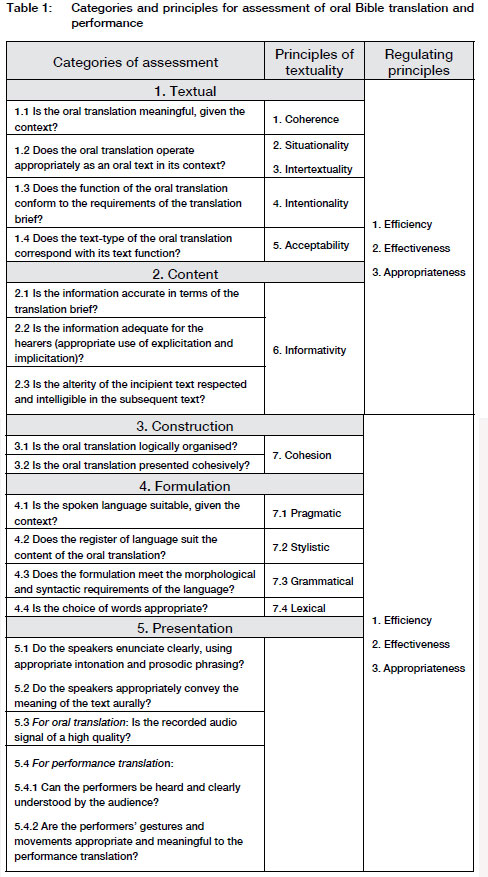
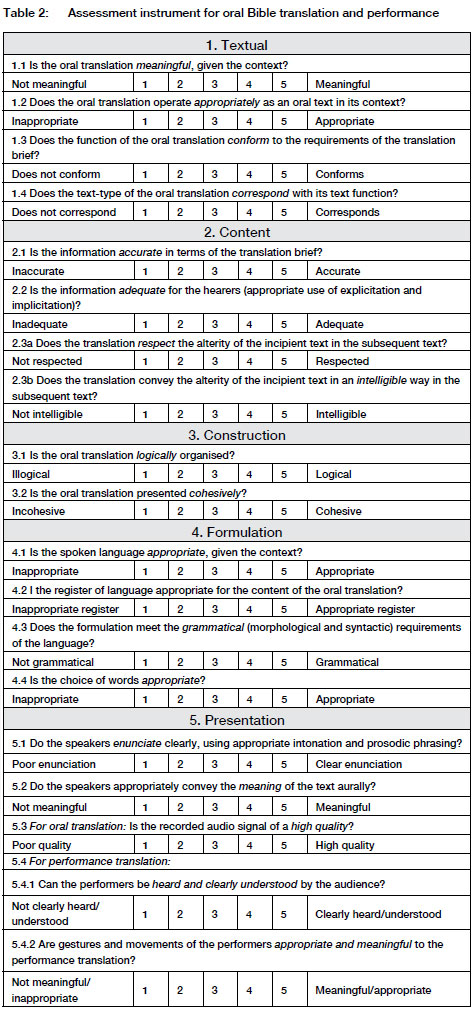
Traditionally, the quality of a Bible translation is measured by the criteria of accuracy, clarity, naturalness, and acceptability to determine whether it is equivalent, that is, faithful, to the incipient text. This article describes the development of an instrument to assess the quality of oral Bible translations and their performances that differ from their incipient texts in form, function, and purpose. This instrument not only makes the assessment of non-equivalent translations a reality, but also makes the criteria explicit and tangible. Based on a complexity approach to translation, this total quality management (TQM) instrument can assess all textual and translation principles incorporated at different levels of language, thus making the assessment comprehensive and complete.
Biblical performance; Complexity approach; Total quality management; Sesotho