Interview with Prof. Dr. Julius Gathogo
J. Mokhutso
Department of Religion Studies, University of Pretoria, Pretoria, South Africa. E-mail: https://orcid.org/0000-0002-1757-6829
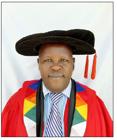
Title, full names: Prof. Dr. Julius Gathogo
Affiliation: The Research Institute of Religion and Theology of the University of South Africa (RITR-UNISA), Kenyatta University and All Nations Christian Church University (ANCCI University)
ORCID: https://orcid.org/0000-0002-1223-4571
Prof. Gathogo is an African theologian with a bias towards theo-mission histories. He began his teaching career in May 1989 after completing his A-levels (Form 6). He taught at Githure Secondary School, Kenya, until August 1992. Subsequently, he joined St Andrew's College, Kabare, Kenya, in September 1992, where he obtained a First-Class Diploma in Theology. In September 1996, he joined St Paul's University, Limuru, Kenya, and completed a Bachelor's degree in Divinity in May 1999. In 2002, he joined the then University of Natal, Pietermaritzburg, renamed the University of KwaZulu-Natal in 2004 after the merger with the University of Durban-Westville. He completed a Master of Theology (MTH) and graduated on 11 May 2004. On 20 April 2007, he graduated with a PhD in African theology. For his doctoral thesis, he wrote on "Liberation and reconstruction in the works of J.N.K Mugambi". In 2014, he joined Walden University where he completed a Master of Science in Education (Teacher Leadership) and a PhD in Educational Leadership in 2018. He has researched extensively with over 250 publications, and he examined over 50 PhDs and Master's candidates. He also supervised over 20 postgraduate students. He serves on various academic boards.
Prof. Gathogo's contribution
In Prof. Gathogo's opinion, his greatest contribution is twofold, namely historicising theological discourses and his decolonising theology via indigenising and contextualisation of Africa's theological articulation. Regarding historicising theological discourses, Gathogo has documented diverse theo-mission histories in Africa, as he has chronicled key works from some notable players such as, among others, Francis Akanu Ibiam of Nigeria, Mercy Amba Oduoyoye of Nigeria and Ghana, Isabel Phiri of Malawi, Jesse Mugambi and John Mbiti from Kenya, and Musa Dube's methodology in doing African women's theology. This has greatly enriched his theo-philosophical and historical perspective in his works. In his anniversary researches and subsequent book publications, available on the web, refer to Mutira Mission (1912-2012), Mbeere Mission (1919-2019), St. Andrew's Kabare College of Theology and Development (1977-2017), among others, oral and theo-mission histories stick out, as they provide a strong background to his decolonisation of theological education in Africa. In the case of Mutira Mission, he cites the Anglican ministry, where one European missionary priest (Rev. Hillard) used coercive methods, in 1927, as a measure of winning locals to the God of Christendom. He describes the "mighty" Rev. W.H. Hillard, nicknamed Gikubia, describing his big size, thus:
Hillard, who replaced [Revd Canon Herbert] Butcher in 1927, will be remembered for [the way in which he] forced [the local] Africans [at Mutira Mission of Kenya] to attend church services on Sundays [as opposed to educating about the truth of the Gospel and/or convince them to convert to the new faith]. During those days, it was [a] common practice for Africans to work on Sundays, as they viewed all days as equal working days. Hillard, however, declared that this was to be stopped. [Hillard] would walk around the [local] farms in the vicinity of the church and literally whipped men and women whom he found working on a Sunday. Few dared to resist, as he was always armed with a gun. Wails and screams were commonly heard on Sundays, as people were made to attend church services.1
Such initial "errors" in presenting the Gospel are critical in understanding the nature of African Christianity nowadays. As religio-cultic movements invade Africa, a relook at "coercive" theologies of the past, he argues, needs to be revisited. Further, as the vast majority of Christian African countries, in terms of percentage of adherents to the Christian faith, wallow in poverty, disease, illiteracy, corruption, internal strife, xenophobia, ethnic balkanisation, blind nationalism, and denominationalism that sees nothing good in others, gender disparities, and in perpetual leadership crisis, an appeal to Africa's oral histories becomes critical, as "hidden" realities emerge and ultimately aid our deeper comprehension of African theo-social realities.
Through historicising theo-mission histories, Prof. Dr Gathogo decolonises theological education primarily by centring African histories, perspectives, world views, and indigenous knowledge systems (IKS) within academic discourses. He challenges the Western assumption that African religious views and oral-mission histories have nothing to contribute towards building an authentic Christianity in the African context. In view of this, Gathogo contends that an authentic understanding of the Christian faith and practice will only materialise via retracing Africa's oral histories, however painful it may turn out to be. He notes that, even though the Gospels of Matthew and Luke provide two different and somewhat contradicting genealogies for Jesus Christ, as an illustration, it has huge lessons for the quest for an authentic theologia Africana. The latter has to wrestle with such contradictions and/ or controversies as the histories of faith have always encountered since the days when faith wrestled with Quartodecimanism2 (of the 190s CE), Ebionism and Docetism of the 4th century, and the Pelagian Controversy of the 4th-5th century. Further, recent controversies include debates over the Trinity, which have seen some evangelicals advocating for a hierarchy within God's personhood, and the intersection of modern cultural issues with religious doctrines. Specific examples include differing views on the nature of hell, the atonement of Christ, and interpretations of scripture regarding topics such as creationism vs evolution, complementarianism vs egalitarianism, and the role of charismatic gifts nowadays.
Moreover, much of Hebrew oral history and heritage is deduced through Jesus' genealogy, just as the appeal to Africa's oral histories leads to a deeper understanding of African epistemologies. Despite Matthean and Lukan differing genealogies for Jesus Christ, Hebraic epistemologies can still be deduced from it. Similarly, Africa's oral and theo-mission historians and chroniclers may equally provide some differing, controversial or contrasting perspectives on Africa's suppressed genealogies and general histories in mission and theology. They will nevertheless agree at some point and, ultimately, aid in understanding the African context fully. A theologia Africana can only emerge from this oral historical and theo-mission armpit. In the case of Christological genealogies and histories, Matthew and Luke retrace Jesus' lineage back through Joseph. In particular, Matthew emphasises Jesus' royal lineage, starting with Abraham and ending with Joseph, while Luke traces it all the way back to Adam to highlight Jesus' common humanity and universal salvation. The differing accounts are generally explained by Matthew tracing the royal line through Joseph's biological father, Jacob, while Luke follows Joseph's legal father, Heli. Such contrasting perspectives should not trouble the African scholars, as points of convergences will eventually outdo the points of divergences. In light of this, Gathogo considers it an error for the African scholars of religion, culture, philosophy, and theology to conduct their socio-academic discourses, while ignoring Africa's oral historical experiences. In this case, decolonising Africa's theo-academic discourses can only be achieved by appealing to the elusive and somewhat suppressed oral histories.
In Gathogo's projection of Theologia Africana, engaging the sources of Africa's oral histories such as griots, indigenous knowledge forms, as in folktales, proverbs, myths, and legends, passed down through generations, is a credible methodological consideration, and a huge step towards authenticity. Moreover, recent sources are oral history projects conducted by national archives, Synod minutes, well-kept diaries, memories of eye witnesses, unpublished materials, university libraries, and research institutions, which collect and preserve audio recordings and transcripts. While previous efforts in John Mbiti, Charles Nyamiti, Kwame Bediako, Laurenti Magesa, Mercy Amba Oduyoye, Kwesi Dickson, Jesse Mugambi, Bénézet Bujo, Gabriel Setiloane and Bolaji Idowu, among others, have insisted on dialogue with indigenous culture and/or inculturation as the guarantor of authenticity, Gathogo goes beyond this, urging that an appeal to oral histories and their sources is mandatory rather than an option. In this strategy, Africa's oral histories provide a strong background that ushers in multiple shots, as decolonisation, authenticating agenda, reconciliation, indigenisation, liberation, and reconstruction, as theological paradigms, find their authenticity from that background. Theo-social education will remain irrelevant as long as African scholarship remains a replica of the West, and a trajectory that "proudly" strives to reproduce the West in Africa and ignores Africa's rich oral and local historical resources.
The second prong in Gathogo's contribution in theo-academic discourses is specific theological case studies, where he strives to practically and academically affirm the efficacy of indigenous resources. This trajectory is nevertheless rooted in the above noted methodology of appealing to oral histories as critical cornerstones in understanding contemporary theo-social concerns. As a by-product of this, there is Gathogo's contribution towards a theology of African hospitality comes out as a case in point. As noted earlier, it is rooted in Africa's oral phenomenology and its dalliance with the Christian theology. In going beyond the mere aphorism of "a person is a person because of other persons", a theology of African hospitality, he contends, is holistic and has a broader cosmological appeal. He notes in one of his write-ups,
African hospitality goes beyond mere anthropomorphism, as ethnoveterinary medicine and animal husbandry, ecological concern, oceanographic issues, pulmonological (breathing and air systems) matters, material and non-material elements, palaeontological [zamani] needs, chronocentrism [sasa] and eschatological (future hope) focus, and other cosmological concerns are equally taken in. As a religio-cultural duty, African indigenous hospitality remains an all-rounded phenomenon that is cosmologically appealing. Although hospitality to a fellow human being comes out like the primary appeal, as 'I am because you are' (Mbiti 1969:108), the ideal thing is to embrace cosmological interdependence rather than the mere emphasis on human well-being. The temptation to focus on hospitality to the stranger or the neighbour has, however, remained its main critique across the centuries (Kenyatta 1938), as some strangers have abused it afterwards (refer to colonialism, slavery and terrorism). Further, some locals have constantly abused it by displaying unreasonable hospitality to their blood relatives and conversely denying it to others who are genuinely in need (refer to racism, tribalism and xenophobia).3
Another recurrent theme in Gathogo's works is the place of African indigenous knowledge and its engagements with Western science. Africa's oral and written histories place the continent in the paradox of remaining simultaneously African and Western, as the European missionaries and colonialism ushered in the state of affairs that obtains to date. Gathogo appreciates this reality and eventually vouches for hybridity as the way out in addressing holistic challenges, including the theo-social and medical concerns. He insists that the "western science and technology did not erase African indigenous knowledge and/or knowledge relationally based on African world view and culture," rather, it complemented it. He goes on to say,
This indigenous knowledge that is basically relational includes community, ethos of wholeness, harmony with the stranger (Ubuntu) and appreciation of knowledge and/or technology that promotes humanity for all. This drives us to build on the premise that postcolonial Africa has paradoxically embraced hybridity of western science and the indigenous heritage by design or by defaults Jomo Kenyatta4(1938:42ff.) analyses the various industries that were prevalent in African indigenous society as including 'ironwork, hut building, pottery, basket making, skin tanning, musical instruments, and agricultural activities'. Other activities that required technical knowledge included: 'the building and repair of houses, land cultivation and clearance of bushy areas, hunting, and fishing among others' (Gathogo5 2008:279). This further confirms our hypothesis on hybridity and continuity of African indigenous knowledge systems with the Western science, as was presented by the European missionary societies and the colonial authorities. Instead, African knowledge systems, with their resultant 'science' of survival, did not suffer from a radical discontinuity, even though the Western science stamped its 'superiority' elaborately, as missionaries and the colonial authorities were largely seen as viewing the matter from the same lenses.6
With reference to the liturgy of Africa, as opposed to foreign influenced liturgy for Africa, Gathogo views it from the same methodological consideration, a phenomenon where understanding its theological import is primarily historicised. He argues that there are concrete areas that need "liturgical inculturation", in line with Africa's oral histories and indigenous knowledge systems. He explains:
In addressing the concrete areas where the 21st century church is in dire need of inculturation, I suggest that it will need to have a positive attitude to African Religion so as to use the same or similar concepts in order to eliminate dualism. Such concepts include: a shrine for church and a medium for priest, among others. The beauty of the local language, the use of Proverbs and local expressions must clearly appear. The prayers as found in the Roman Missal must be adapted to the African reality. Composition of new prayers structured on African spirituality and concerns is long overdue. Africa can produce its Psalms to compliment the Biblical Psalms. I also suggest the family as the domestic church should be made the centre of inculturation. The role of the father and mother as the parents and priests of the family; their ability to bless, pray over the children, to initiate, to share roles with all members of the family, to involve everyone, to express worries and joys - such should be emphasized.
In historicising theological education in African Christianity, and in employing multidisciplinary approaches, Gathogo extols the value of greater dialogue among cultures and religions of Africa, which is in continuum with Mugambi, Mbiti, and in Idowu's works, noted earlier. He also urges caution:
As early as 1888, Mojola Agbedi (1860-1917), a Nigerian Yoruba Baptist minister, had already defected from his Baptist church and founded the Native Baptist Church. In demonstrating his Afro-optimist perspective, he defended the creation of African Churches with the words: 'To render Christianity indigenous to Africa, it must be watered by native hands, pruned with the native hatchet, and tendered with native earth ... It is a curse if we intend for ever to hold on to the apron strings of foreign teachers doing the baby for aye.' Although he may have taken an extreme position, his African instituted Baptist church fared well, for by 1914, it had more than twice as many adherents as the American Baptist Mission where he was previously serving. Like James Johnson (1832-1917), his senior, he had great faith in Africans and feared that the European missionary tutelage had the potential of hindering the full development of the Africans. In the same spirit, as with Agbedi, Johnson attributed the success of Islam in the then Nigeria of 1880s to its use of African customs and institutions. Around this time (1888), Agbedi had changed his westernised baptismal name (David Brown Vincent) as a measure of asserting his Afro-optimist dignity and identity, though remaining an evangelical Christian. Was this his way of decolonising the mind, in using Ngugi wa Thiong'o's words? In this book, Decolonising the Mind, Thiong'o expresses his Afro-optimist identity when he offers a distinctly anti-imperialist perspective on the destiny of Africa, as he demonstrates the role of names and languages in combating imperialism and neo-colonialism in our minds and in our general social practice. It is in this book where he bids farewell to the English language and its resultant names, hence his dropping of his 'Christian' name, 'James' is clearly justified along these Afro-optimist identity lines. Beyond this, wa Thiong'o dedicates his book to 'all those who write in African languages, and to all those who over the years have maintained the dignity of the literature, culture, philosophy, and other treasures carried by African languages.' Was wa Thiong'o an ideo-philosophical student of the Baptist, Mojola Agbedi, albeit unconsciously? Was he the originator of 'decolonising the mind' concept in African scholarship?7
With oral histories remaining a critical resource in African epistemologies, Gathogo cites indigenous resources in light of COVID-19. Gathogo sees logic in and further vouches for hybridity in addressing such ailments. In other words, he appreciates the critical role of both African medicine and Western knowledge in remedial services. In this logic, the African indigenous knowledge becomes a critical partner in the onslaught against such pandemics that may hit the global scene. Gathogo appreciates that the launching of the COVID-19 vaccination campaign, in March 2021, enhanced the role of indigenous medicines that were battling the pandemic since March 2020, when the pandemic entered the continent with gusto:
The use of ginger, a natural antioxidant, lemon and honey as Dawa (medicine) has gained a momentum in the [Kenyan context] and is seen as one which provides COVID-19 healing properties amongst other creative ways rooted in African indigenous society. Whilst ginger is found to be critical in boosting people's health as it protects against colorectal cancer, lemon is, on the other hand, seen as rich in vitamin C and critically important for detoxification. Other herbal methods of treating COVID-19 in [the Kenyan context] ... include steam therapy or steam inhalation to fight respiratory tract infections, use of hot steam mistily wafts from a pan, use of culinary herbs and Neem trees [Azadirachta indica], amongst other medicinal plants.8
Apart from ginger, culinary herbs, and Neem trees, among other medicinal plants, which came as a COVID-19 response, other indigenous medicinal plants were also crucial in reversing COVID-19. While appreciating that indigenous knowledge is rooted in Africa's holistic religiosity that embraces all departments of life, he notes:
Wanjiru-wa-rurii [Ajuga remota] a plant in central Kenya [recommended by 66% of Kenyan herbalists in the treatment of Malaria] that is best known for treating diseases such as Malaria and Typhoid, also came in as a cure for COVID-19 as well. From time immemorial, the plant has been known to treat the above ailments, as well as the sexually transmitted diseases. It also treats livestock and chicken alike. Unlike when it is used with animals and birds, this plant is never boiled. Rather, it is crushed and mixed with water, the juice is taken at intervals of several hours and the results are promising... Today the plant continues to be precious especially for people living in the rural setup. It is the plant used in Madagascar to prepare Malagasy organic [medicine] which came to limelight during this Corona virus pandemic season. A larger population relies on it for treatment and cure of different complications.9
In considering that over 80% of tropical Africa relies on indigenous knowledge and its practice in medicine, Gathogo strongly justifies hybridity (western and African), just as he insists on dialogue between Gospel and culture as the irreducible minimum in African Christianity. Is this not a defeat of the quest for "Africa for the Africans", a clarion call from Marcus Garvey (who lived between 1887 and 1940) and other pioneering pan-Africanists who had faith in African resources? Could this form Gathogo's weakest link? Similarly, Gathogo bemoans the tendency to reduce inculturation (dialogue between culture and the Gospel) to syncretism (unscientific mixture of religious traditions). This gets out of hand when African scholars promote Euro-American scholarships, by bashing local African initiatives and methodologies. Is it the case of conceptual misunderstanding or the scenario where he who pays the piper calls the tune? Such concerns come up as one interacts with him.
In trying to understand the mercurial characteristics of African-Pentecostalism, Gathogo begins by appreciating the same trajectory, noted above, of inability to escape or eschew African indigenous resources and/or indigenous knowledge:
Consciously or unconsciously, Afro-Pentecostals find themselves dialoguing with some elements of the African heritage. Ironically though, they sometimes find themselves 'condemning' it, as they put more emphasis on the word and the power of the Holy Spirit as the real modus operandi in their theological articulation and practice. Generally, African idioms, oral narratives, Christian dances that are rooted in African melodic context, and proverbs, among others, are some of the visible characteristics. Though they may not necessarily proclaim it, Afro-Pentecostals seem to agree with Nyamiti's10 (1997, 57) position that 'the Christian has something to learn from the traditional African [society]; not in the sense of new doctrines, but in the sense of new insights and new ways of understanding God'; and further, as Barron has noted, learning from the African heritage adds 'new insights and new ways of understanding Scripture' (Barron11 2021a, 1)..... It is no wonder, therefore, to find an Afro-Pentecostal leader who begins his Sunday sermon by narrating an oral story or quoting a local proverb, or even starting the service by appealing to dances whose tunes are in a continuum with the local African music.12
Other themes in Gathogo's theo-social discourses include African women theologians and indigenous methodology, biographical studies and Africa's resources, informal and formal Western education and character formation, and Africa's economy in light of globalisation and indigenous resources. In light of this, Gathogo insists that African theologies (referring to African women's theology, African theology, theology of reconstruction, theology and development, triumphalist-futurity theology, theology of African hospitality, Black theology of South Africa, and reconciliation theology, among others) cannot escape indigenous research methods (IRMs) irrespective of their being qualitative or quantitative. He argues that African theologies risk irrelevance if they insist on positivist research methods (PRMs) of the West, as Africa's unique positioning in the history and map of the world calls strengthens the case for contextual appeal. In light of this, Gathogo insists on the irrelevance of African theologies that fails to flow from the national-ethnic epistemologies, a phenomenon rooted in the indigenous research methods (IRMs). Certainly, the IRMs could have failed to earn universal acceptance, due to cultural heresies that have been displayed by the Western world across the decades. This does not, however, negate its value. In particular, Gathogo cites the case of African women's theology, which does not openly proclaim its dalliance with IRMs, but goes on to use some of the latter's research tools, as in the case of storytelling, sharing circles, Dadirri,13 and community-based participatory research. Other indigenous methods and frameworks found in African women's theology include decolonising approaches, indigenous story-work14as a methodology and method, and techniques rooted in community, culture, and land-based knowledge. The speciflc tools and techniques often involve relational processes and communication methods that are deeply embedded in the culture. In Gathogo's view thus, African women's theology, as one of the "youngest" theologies in Africa, demonstrates that "there is no Christian theology that can claim authenticity if it is insensitive to indigeneity".15
In bemoaning the poverty of western religious experiences, as a postcolonial agenda, Gathogo retraces the misconceptions and misrepresentations of the otherwise rich and holistic African spirituality. Gathogo retraces it to the post-industrial revolution's sociologists of religion and/or post 18th century scholars of religion in continental Europe (refer to Tylor, Frazer, Comte, Durkheim, Malinowski and others). They ended up impoverishing their global appeal of understanding religion. This happened when they overplayed their western perspectives, and universalised religio-cultural epistemology. Despite their great efforts that began the systematic study of religion in concrete terms, they eventually offered positivist theories of religion that attempted to explain the origins of religion on a rationalist and biased perspective. Through oral historical appeal, and in reviewing their respective indigenous knowledge systems, Africa will decolonise herself from the positivists who failed to learn from the wealth of its religio-cultural experiences.16 Equally, Gathogo's strategy of decolonising theo-social knowledge is to appreciate that self-discovery among indigenous peoples, particularly in Africa, will not just push us to blindly embrace hybridity, across all sectors of life, but to do it from an informed position. Such historicising will help us appreciate the indigenous trajectories that Africa can bequeath to the global community. At the same time it can help Africa to appreciate some areas that can take a back seat.
As a contemporary theologian, Gathogo displays daring confidence that the African woes will be addressed effectively when scholars appreciate that the starting point is to understand the African rather than starting with what "others" think of Africa. Understanding Africa's suppressed oral and indigenous histories is, in his view, a critical starting point towards authentic African Christianity and its subscribers. If the story of Christ starts with his genealogies, the African story, theology, economy, politics, kinship, aesthetics, and ethics, has to start by understanding the African person, the African religio-indigenous history - in its oral or written form. In his view, appealing to the past in order to understand the present and predict the future, a historical
treatise has to be factored in, as a methodological consideration. Besides, Gathogo's other key achievements in academia are contained in SHE's article on "Beyond expectations in the academic world" (see https://www.scielo.org.za/scielo.php?script=sci_arttext&pid=S1017-04992024000200007), among other websites. It is also contained in a book chapter authored in reference to his works: Stephen Burns and James Tengatenga (Eds.), Anglican theology: Postcolonial perspective. London: Student Christian Movement Press, 978-0-334-06623-1.
Some of Gathogo's projects so far include centennial researches such as:
• One hundred years of Mutira Mission, carried 2009-2012, on behalf of the community in central Kenya. It was sponsored by friends who identified with it. It culminated into a book, which was launched on 6 August 2012, and 6 journal articles on the same.
• Another project was on St Andrew's College of Theology and Development, Kabare, as they marked 40 years of their existence, 1977 to 2017. The then College Principal Dr. Robinson Kariuki Mwangi the Council Chair, the Bishop Prof. Moses Nthukah commissioned it. It culminated into a book, Beyond Mount Kenya region: 40 Years of theological and practical education at St Andrew's Kabare, which was launched on 10th November 2017.
• Another project was a research on 100 years of Mbeere Christianity, 1919 to 2019. It was sponsored and commissioned by the Anglican Diocese of Mbeere, in 2018. It culminated into a book, A fallow goldmine: One hundred years of Mbeere Mission in Kenya (1919-2019).
Gathogo is an active member of various academic societies, including: Church History Society of Southern Africa (CHSS); Oral History Association of South Africa (OHASA); Kenya Scholars & Studies Association (KESSA) and European Academy of Religion. With reference to academic journals, Gathogo has published in over 40 journals. He remains the Editor-in-Chief of the Jumuga Journal of Education, Oral Studies, and Human Sciences (JJEOSHS), a multidisciplinary East African journal that was officially launched in February 2018. Gathogo attended over 50 international academic conferences from 2007 to 2025.
On the whole, Gathogo views academic exercise (researches, publications, conference presentations and attendance, as well as active membership in academic societies) as a noble calling across gender divides. It is a calling that is higher than other callings, as it is a profound way of strategising for the future of the local and global societies in concrete terms. In corrupted societies, where illustriousness is equated with naivety, academically active individuals remain the consciences of society, and carries the heaviest burden for all. Such dedicated scholars transcend conventional power struggles within their respective societies, embodying a belief in public service rooted in universal values of freedom, justice, reconciliation, common humanity, human dignity, and cosmological stewardship. We have a duty to carry out academic activities without necessarily vouching for rewards such as promotions to the next grade or to move to the next administrative ladder, and so on. It is a call to remake the world for the better.
Date received: 3 December 2025
Date published: 12 December 2025
1 Julius Gathogo. 2012. Some challenges in founding an African faith: Sampling Mutira Mission, Kenya, 1907-2012. Studia Historiae Ecclesiasticae, 38(2):81-99.
2 The Quartodecimanism controversy was an early Christian dispute over the date of Easter, which pitted the Quartodecimans, who celebrated it on the 14 of Nisan (Passover) regardless of the day of the week, against other Christians (primarily near Rome) who observed it on the following Sunday. Its earliest dispute was witnessed in CE155 when Bishop Polycarp of Smyrna tried, though unsuccessfully, to persuade Pope Anicetus of Rome to adopt the Quartodeciman practice. The Western and the Eastern churches got immersed in this conflict in the earliest stages of the church.
3 Julius Gathogo. 2023. African indigenous knowledge versus Western science in the Mbeere Mission of Kenya, HTS Teologiese Studies/Theological Studies, 79(1), a8036. https://doi.org/10.4102/hts.v79i1.8036
4 Jomo Kenyatta. 1938. Facing Mount Kenya. London: Heinemann.
5 Julius Gathogo. 2008. African philosophy as expressed in the concepts of hospitality and Ubuntu, Journal of Theology for Southern Africa, 130(1):39-53.
6 Julius Gathogo. 2023. African indigenous knowledge versus Western science in the Mbeere Mission of Kenya, HTS Teologiese Studies/Theological Studies, 79(1), a8036. https://doi.org/10.4102/hts.v79i1.8036
7 Julius Gathogo 2022:2.
8 Julius Gathogo 2022. Were the African indigenous resources rendered impotent by the pandemic? A Review of COVID-19 Impact in Kenya, March 2020 to March 2022. Jumuga Journal of Education, Oral Studies, and Human Sciences 5(1): 1-13, p.4 quoted. https://doi.org/10.35544/jjeoshs.v5i1.56
9 Julius Gathogo 2020:4.
10 Charles Nyamiti. 1997. The doctrine of God. In: J. Pratt (ed.) A Reader in African Christian theology, 2 edition. (London: SPCK) pp. 57-64.
11 Joshua Barron. 2021. Enkiteng hermeneutics: Reading the Bible with Maasai Christians. VID Specialised University. Stavanger-Norway: Unpublished PhD Seminar Paper.
12 See further details, Julius Gathogo. 2022. The mercurial characteristics in Kenya's Afro-Pente-costalism: Exploring some critical pointers, Studia Historiae Ecclesiasticae, 49(1):1-17. https://doi.org/10.25159/2412-4265/10612
13 Dadirri is a term for inner, deep listening and quiet, still awareness, originating from the Ngan'gikurunggurr and Ngen'giwumirri languages of the aboriginal people of the Daly River region in Australia. It involves a deep, reflective way of listening, not only with your ears, but also with your whole being to connect with yourself and your surroundings. The practice emphasizes quiet contemplation, observation, and a mindful approach to life.
14 "Story-work" is a general term that refers to working with stories to interpret events, understand lived experiences, and find meaning and connection. It can be applied in various contexts, including education, therapy, coaching, and creative arts, and its precise meaning depends on the specific field or framework being used.
15 See further details, Julius Gathogo. 2025. Indigenous research methods and African women's theology: A theo-analytical engagement. Acta Theologica, 45(1):43-63. Direct quote from p. 45. https://doi.org/10.38140/at.v45i1.8453
16 See for instance Julius Gathogo. 2025. Misrepresentations of African religion: Exploring the poverty of Western religious experience. Verbum et Ecclesia 46(1):.1-9. https://doi.org/10.4102/ve.v46i1.3472