Foreword
J.-A. van den BergI; J. MeyerII
IDepartment of Practical and Missional Theology, Faculty of Theology and Religion, University of the Free State, South Africa. E-mail: https://orcid.org/0000-0002-7261-6942
IIDepartment of Practical and Missional Theology, University of the Free State, South Africa. E-mail: https://orcid.org/0000-0002-6363-5332

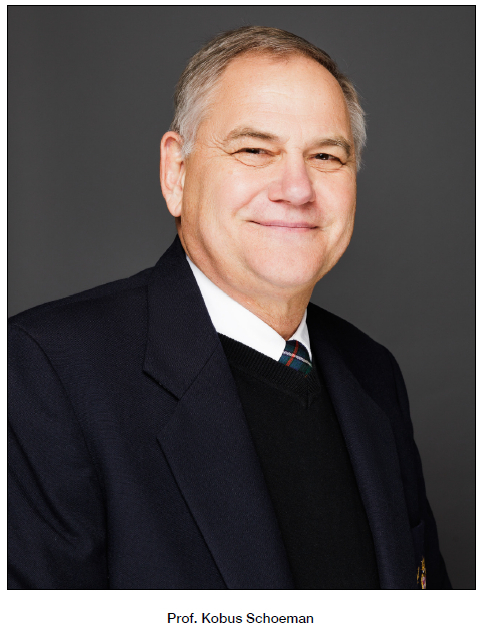
The eye is the window or light to the soul. A window lets light in. In many churches worldwide, the sunlight is bright and colourful as it brings to life awe-inspiring images through stained-glass windows. The front page of the Festchrift for colleague Kobus Schoeman depicts a stained-glass church window. As this work of art is rich in symbolism and begs to be unlocked for a deeper meaning, so are these contributions in the Festchrift, dedicated to colleague Kobus Schoeman on the occasion of his retirement. As the windows in a church convey the gospel, so do the different contributions.
As an expression of Kobus' life, the volume comprises the following four sections or "windows". The reader is invited to discover new insights as s/he walks from "window" to "window" and reads the message.
Window 1: Views on the Word and theology
In the first contribution entitled "It all starts with urgency. Engaging with the local ekklesia of Thessalonica as a window and mirror en route to sustained missionary impact", Stephan Joubert explains Acts 17:1-9 and 1 Thessalonians 1, two underestimated windows regarding our ecclesiological identity and our missional presence in the world.
In the second contribution entitled "Congregational vitality - A perspective from Galatians", Francois Tolmie presents illuminating perspectives on "an ecclesiology from below" for our time from the Letter to the Galatians. Further to Kobus' development of "an ecclesiology from below", the letter is studied for aspects that might be relevant for contemporary communities of faith.
Rian Venter further explores the topic of an "ecclesiology from below" in his contribution entitled "The Trinity and an ecclesiology from below". The article focuses on the interaction between an ecclesiology from below and contemporary trinitarian scholarship, and the potential mutually enriching discussion.
Malan Nel's contribution entitled "Preaching: Truth sharing as a prophetic voice" is the final contribution in this section. The author emphasises prophetic preaching that will challenge communities of faith towards missional faithfulness and transformation.
Window 2: Views on the church
In this "window", Lourens Bosman renders a first perspective in his article entitled "The use of empirical data in communal discernment and decisionmaking processes in the Dutch Reformed Church". This article endeavours to present an overview of communal discernment processes developed in the Dutch Reformed Church over the course of two decades. Discernment processes then provide frameworks wherein one can discover God's call and preferred future for the church and its identity.
In his contribution entitled "Towards an agency-oriented model of congregational vitality: How (not) to transform congregational vitality", Chris Hermans provides an important perspective from the European context. "Congregational vitality" is described as a disposition of members of the congregation who act in a role within the social system of the congregation. The author presents two evidence-informed programmes that can transform this loss of vitality related to the challenges facing congregations.
Cobus van Wyngaard brings the reader back to the South African context with his contribution entitled "The future of empirical research in and through the Dutch Reformed Church". This contribution focuses specifically on the receiver of the Festschrift's longstanding relationship with, and important contribution to the Dutch Reformed Church's empirical research work.
The second window that provides a view on the church is aptly concluded with a contextual relevant contribution by colleague Joseph Pali, entitled "Ecumenical ecclesiology in the context of township congregation ministry". This contribution further highlights the central concept of an "ecclesiology from below" with an empirical research reflecting on a South African context.
Window 3: Views on theological training
This third "window" explores theological training. In the first contribution entitled "Embodied and hybrid pedagogies: Ecumenical tours as a case in point", Ian Nell provides important perspectives for theological training. This article aims to explore ecumenical tours as one example of glocal learning and, as a case in point, emphasises a one-day pilgrimage among practices of lived faith.
This is followed by Nelius Niemandt's contribution on "The School for Social Innovation at Hugenote Kollege and congregational vitality through faithful innovation". This article presents a case study on the history of the School for Social Innovation (SSI) at Hugenote Kollege in Wellington, South Africa. These explorations engage with Kobus Schoeman's work and broaden an understanding of congregational vitality through faithful innovation.
Window 4: Views on the personal aspect
The Festschrift concludes with a "window" that provides views on the person, Kobus Schoeman, as well as his contribution and work. Daniël Andrew gives a first perspective on Kobus Schoeman as "A bridge-builder practical theologian, bridging divides in the publics of the church, the academy, and society". The article focuses on the academic contribution of Prof. Kobus Schoeman whose career can be described as revolving between society, his work as a spiritual leader and minister within the Dutch Reformed Church of South Africa (DRC), and as academic/researcher at the Universities of Pretoria and the Free State.
The last contribution by Jan-Albert van den Berg is entitled "A travel journal of a preacher during the annual Pentecost prayer meetings in the Dutch Reformed Church: An auto-ethnographic reflection". Kobus will always be remembered for the initial development and use of the well-known Church Mirror surveys in the Dutch Reformed Church. Mindful and in recognition of Kobus' valuable academic contribution, personal and intimate reflections contribute to the description of the rich practice of Pentecost prayer meetings in the Dutch Reformed Church, which also resonate with his wider academic interest.
What story do the stained-glass windows of a church whisper? The colourful stained-glass windows are indeed works of art that are rich in symbols and that unlock surprising interpretations. May the "window contributions" in this Festschrift for our valued friend and colleague unlock substantial meaning for every reader and thus confirm Kobus' extensive contribution to Word and theology, the church, theological training, and the personal aspect. Come and read the contributions from window to window and find a profound significance and inspiration in the bundled foresights.
Date received: 29 October 2024
Date published: 14 November 2024