Assessment of resuscitation strategies of abandoned projects: A case study of public tertiary education institutions' buildings in Osun State, Nigeria
Abstract
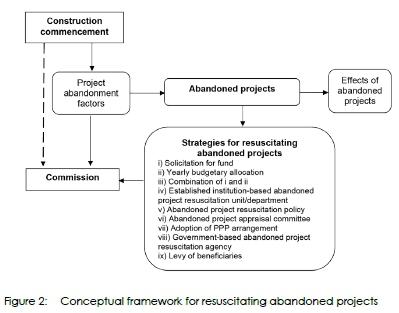
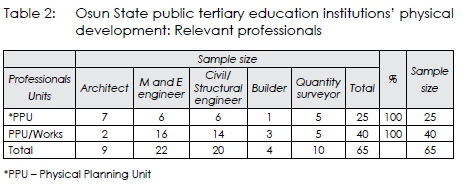
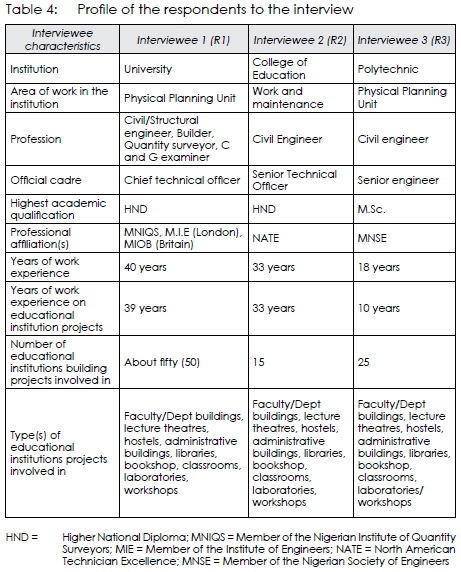
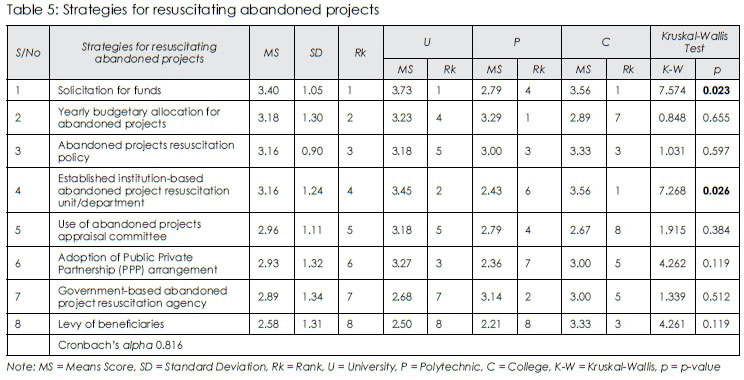
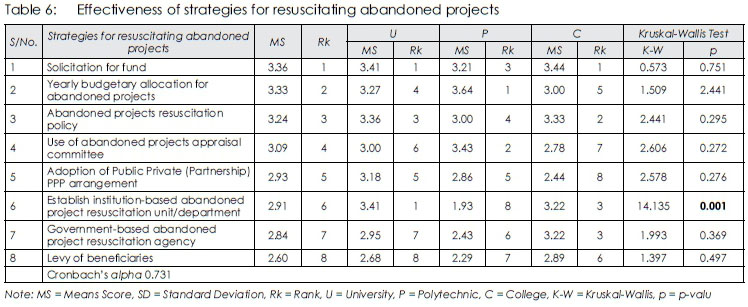
Abandoned projects have contributed significantly to the inadequacy of teaching and research facilities in the Nigerian tertiary education institutions. This article examines the strategies for resuscitating the projects based on the financing options that were employed. The aim of this article is to suggest sustainable cash-flow strategies that could be appropriated for financing abandoned projects, in general, and tertiary education institutions projects, in particular. The article adopts a triangulation of qualitative and quantitative methodology. The respondents consist of 47 top officials in the physical development departments in Osun State public tertiary institutions. The qualitative assessment is based on open-ended face-to-face interviews involving three key informants, namely one quantity surveyor and two engineers. Data collected are analysed using mean analysis, Kruskal-Wallis (K-W) test, and ATLAS.ti 7. Solicitation for funds and yearly budgetary allocation were both frequently used and were efficient strategies. On the other hand, public-private partnership (PPP) arrangement, and the establishment of institution-based, abandoned project-resuscitation unit/department, and levy of beneficiaries were strategies that were both least used and inefficient. The article provides implications for financing abandoned educational projects in the education sector.
Abandoned buildings; public tertiary education institutions; resuscitation strategies
 Thumbnail
 Thumbnail