Bridging academia and industry: a framework for enhancing graduate attributes in South Africa's Construction 4.0 landscape
Abstract
The Fourth Industrial Revolution (4IR) is transforming industries globally, including the construction sector, through Construction 4.0 (C4.0). The study investigates the critical role of graduate attributes (GAs) within the South African Construction Built Environment (CBE) to develop a framework that enhances collaboration between industry and academia, equipping graduates with the skills and adaptability needed for C4.0. Adopting an explanatory sequential, mixed-methods approach, the data were collected from 288 registered Quantity Surveyors (QSs), Construction Managers (CMs) and Construction Project Managers (CPMs), supplemented by qualitative insights from ten in-depth interviews. The findings reveal that GAs such as adaptability, critical thinking, and problem-solving are essential for navigating the technological and collaborative demands of C4.0. Despite the significant focus on knowledge and skills in current curricula, the study emphasises the critical importance of attributes in supporting lifelong learning, resilience, and innovation. Using the CHAT as an analytical lens, this research offers a framework to realign higher education curricula with industry needs, emphasising the interrelation of KSCA. The study contributes to global discussions on aligning educational outcomes with industry requirements in the context of 4IR. It provides insights to recalibrate South African higher education curricula, ensuring graduate preparedness, and enhancing the employability of future construction professionals.
Construction 4.0; curriculum alignment; graduate attributes; graduate employability and adaptability; South African Construction Built Environment; activity theory
1. INTRODUCTION
The Fourth Industrial Revolution (4IR) is reshaping industries worldwide, including the construction sector, by adopting Construction 4.0 (C4.0). The construction industry (CI) is challenged to align its workforce's competencies with rapidly evolving technological and professional demands. This necessitates critically examining how key constructs -technical knowledge, interpersonal skills, and adaptability - intersect within higher education curricula to prepare graduates for the realities of C4.0 and beyond (Ahmed et al., 2014; Aliu et al., 2023: 474; McCord et al., 2023: 13; Kivunja, 2015). Higher education institutions (HEIs) are pivotal in bridging this disparity, by embedding graduate attributes (GAs) that integrate technical expertise, emotional intelligence, and lifelong learning skills, which are increasingly valued by employers (Hill, Walkington & France, 2016; Vaz-Serra & Mitcheltree, 2021). This suggests a shift from traditional knowledge-, skills-, and competency-based pedagogies toward a more comprehensive GA-inclusive model such as de Bono's Six Thinking Hats, which may better support critical thinking and problem-solving in a rapidly evolving CBE context (Kivunja, 2015).
C4.0 introduces advanced technological systems, including cyber-physical systems (CPS), with Building Information Management (BIM) as a central component (Sawhney, Riley & Irizarry, 2020: 14; Begić & Galić, 2021: 17). However, BIM maturity and C4.0 adoption vary widely across South African construction Arms, reflecting disparities in exposure and implementation (Orstavik, Dainty & Abbott, 2015: 103; Venter, Ngobeni & Du Plessis, 2021: 149). These inconsistencies challenge HEIs to produce graduates who are both employable and adaptable to technology-driven environments (O'Neill, Hartigan & Spillane, 2023: 1; UFS, 2019: 2). In the process of innovation diffusion, Rogers (2003: 68) outlines how knowledge acquisition leads to skills development, with attributes such as openness to innovation determining the pace of application. It is assumed that competence represents the culmination of this process, reflecting sustained and effective use of innovation.
Subsequently, collaboration between HEIs and the CI is vital for equipping graduates with the skills needed for the rapidly evolving workplace (Aliu et al., 2023: 474; McCord et al., 2023: 13). In South Africa, this collaboration faces unique challenges, due to political and socio-economic complexities, and institutional structures within HEIs (Garraway, 2021). While global trends emphasise aligning pedagogic standards to enhance employability, implementation in South Africa remains intricate (Ramnund-Mansingh & Reddy, 2021: 206).
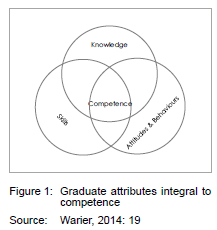
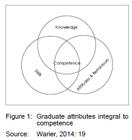
In construction higher education, the integration of knowledge, skills, competencies, and attributes (KSCA) is often explored, although their definitions frequently overlap (Aliu et al., 2023; 2024; Kaewsri & Tongthong, 2014; Vaz-Serra & Mitcheltree, 2021). QS and CM regulatory councils emphasise competencies as measurable outcomes achieved through prescribed knowledge and skills, often neglecting the attitudes and behaviours necessary for developing these competencies (CIOB, 2018; RICS, 2019; SACPCMP, 2020; SACQSP, 2014). GAs are defined as the integration of attitudes and behaviours that aim to prepare students to navigate the challenges of 4IR (Griesel & Parker, 2009; UFS, 2019: 8). This aligns with the CI's growing demand for soft skills such as adaptability, communication, and ethical reasoning (Van Heerden et al., 2023:2). In addition, Warier (2014: 19) supports the existing structures from regulating councils, by defining competence as a triad of knowledge, skills, and attributes, positioning attributes as critical to sustained competence.
Forming part of a larger study on C4.0 that includes the student and HEIs voices, this article examines the relationship between KSCA to determine its effect on the adoption of C4.0 technologies among registered persons (QS & CM) within the South African CBE. Through an explanatory sequential method, the research begins with quantitative data collection and analysis, followed by qualitative data to deepen the findings (Creswell & Creswell, 2018: 218). It is guided by Cultural Historical Activity Theory (CHAT), which looks at how different activity systems interact and learn from each other (Engeström, 2001: 136). This method focuses on resolving challenges and improving practices through innovative activities (Engeström & Sannino, 2010), identifying key areas for development. The article examines how GAs can help address the challenges of the 4IR developments within the CBE, specifically from the perspectives of Quantity Surveying (QS) and Construction Management (CM), culminating in a proposed framework for interaction between industry, HEIs, and students towards graduate employability and adaptability.
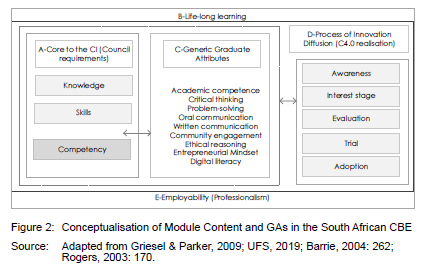
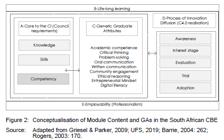
This literature review investigates the interrelationship between key theoretical frameworks and their application to the development of industry-ready graduates. It explores CI regulatory council requirements (CIOB, 2018; RICS, 2019; SACPCMP, 2020; SACQSP, 2014), Rogers' Law of Diffusion of Innovation (LoDI) theory (Rogers, 2003), and the role of GAs (Griesel & Parker, 2009; UFS, 2019) in shaping competencies for professional success in the CI. The review also examines the C4.0 framework and positions expansive learning (EL) within the activity theory framework (CHAT), using EL as a solution to facilitate interaction between the stakeholders (as outlined in Section 2.3). Ultimately, the literature review builds towards the theoretical framework guiding the empirical study, as depicted in Figure 2, and addresses how GAs within the KSCA relationship can support competency development while aligning with theoretical perspectives such as EL.
2.1 Built environment competency
Foundational to any construction curricula, knowledge within the CI spans technical areas such as materials, construction methods, scheduling, and site management, alongside regulatory and legal frameworks (McCord et al., 2023: 6). Competencies combine these technical and managerial skills with soft skills such as teamwork, critical thinking, and emotional intelligence, which are essential for managing stress and ensuring professional well-being (Sunindijo & Kamardeen, 2020). Employability in the built environment further depends on work-integrated learning and adapting to technological advancements (Aliu et al., 2023). Thus, GAs emerge as a key component in equipping students with these skills while supporting lifelong learning and adaptability (Anderson, 2017: 18; Bitzer & Withering, 2020: 4).
The role of GAs extends beyond discipline-specific skills to encompass attitudes and behaviours, aligning with the CI's increasing demand for qualities such as adaptability, communication, and ethical reasoning (Van Heerden et al., 2023: 2). Warier (2014: 119) positions GAs as integral to competency, emphasising the interaction between knowledge, skills, and attributes, as shown in Figure 1.
Within the South African context, regulatory councils such as the SACQSP and SACPCMP provide competency frameworks that prioritise knowledge and skills but often underemphasise behaviours and attitudes necessary for professional success (CIOB, 2018; RICS, 2019; SACPCMP, 2020; SACQSP, 2014). These guiding frameworks have become so foundational to the professional development of QSs, CMs and CPMs (Hauptfleisch, 2024: 24) that the transpiring changes of the 4IR/C4.0 (Lu, 2017: 10; Sawhney et al., 2020: 3) and the HEIs' emphasis on GAs consideration (Anderson, 2017; Kivunja, 2015: 383) common ground should be clarified.
2.2 Built-environment transformative shifts: Leveraging C4.0 and innovation diffusion for enhanced efficiency, sustainability, and adaptability
C4.0 integrates advanced technologies such as automation, digitisation, and CPS, enabling greater efficiency, sustainability, and adaptability in the built environment (Ślusarczyk, 2018: 236; Lu, 2017). These advancements influence job roles and skill requirements, emphasising the need for HEIs to align curricula with industry expectations.
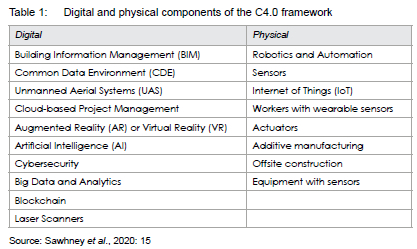
The concept of Physical-Digital-Physical Transformation (PDPT) aligns closely with traditional Project Life Cycles (PLCs) in construction, bridging existing assets and new developments through digital design and physical implementation (Hauptfleisch, 2024: 11; Sawhney et al., 2020: 5). Technologies such as BIM, robotics, and augmented reality (AR) exemplify the interaction between digital and physical tools within the C4.0 framework, as depicted by Sawhney et al. (2020: 15) in Table 1.
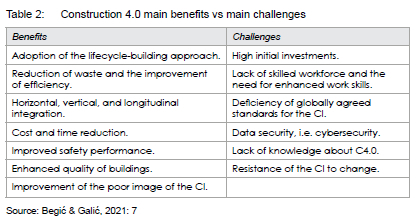
Adopting the technologies outlined in Table 1 presents several challenges such as high initial investments, skill shortages, and resistance to change (Osunsanmi et al., 2020; Begić & Galić, 2021: 7). The LoDI theory (Rogers, 2003: 170) offers a comprehensive framework to understand the adoption process, which unfolds through stages of knowledge, persuasion, decision, implementation, and confirmation. This framework is instrumental in aligning HEI curricula with the dynamic needs of industry, thereby ensuring that graduates are equipped to engage effectively with technological advancements. By comprehensively understanding the LoDI and the associated benefits and challenges of the C4.0 developments, a stronger sense of agency can be supported and maintained within the context of CBE, as emphasised by Koc et al. (2020: 472). Table 2 elaborates on these benefits and challenges, as outlined by Begić and Galić (2021: 7).
It is evident that the adoption of C4.0 is accompanied by inherent uncertainties regarding the speed and effectiveness of integrating these technologies into current practices. These uncertainties stem from factors such as the lack of a skilled workforce, the high initial investment required, and the need for globally agreed-upon standards (Osunsanmi, Aigbavboa & Oke, 2018: 154). However, despite these challenges, the industry's ability to adapt - through collaboration between academia, industry, and emerging technology developers - will be crucial for overcoming these obstacles. As depicted in Figure 2, it is essential for the curricula of HEIs to evolve to include the development and implementation of these new technologies as well as the practical skills and competencies necessary to address the specific challenges they present.
2.3 Conceptualising graduate attributes for the South African Construction Built Environment
Barrie (2004: 262) defines GAs as "the qualities, skills and understandings a university community agrees its students should develop during their time with the institution. These attributes include but go beyond the disciplinary expertise or technical knowledge traditionally formed the core of most university courses". Thus, GAs are central in equipping students with the competencies required to adapt to C4.0 (Staunton, Cowley-Cunningham & Hodgers, 2021). These attributes include adaptability, communication, ethical reasoning, and critical thinking - skills increasingly valued in the CI (Hill et al., 2016: 155; Van Heerden et al., 2023: 2).
Figure 2 illustrates the integration of GAs within the KSCA framework, emphasising the balance between traditional professional standards and the emerging demands of C4.0. This framework facilitates a learner-centred approach, as suggested by the UFS (2019: 4) and supported by Anderson (2017: 6) when considering that GAs are defined as the community agreed-upon outcomes. GAs extend beyond technical knowledge and include qualities that may differ among students, influenced by their diverse backgrounds and learning methods (Bitzer & Withering, 2020: 15). By introducing an additional layer to the vertical and horizontal alignment of the curriculum (Frake-Mistak, Friberg & Hamilton, 2023: 4, 7), it becomes increasingly possible to plan effectively and evaluate towards the intended outcome (Barrie, 2007: 457).
As illustrated in Figure 2, by aligning GAs with industry-prescribed knowledge, skills, and competencies and considering the LoDI, HEIs can improve students' preparedness for emerging technologies' practical and behavioural challenges. While the integration of digital literacy and C4.0 technologies is essential, the timing of such integration must be pedagogically appropriate. For example, the introduction of electronic measurement tools in QS education should be built upon a firm understanding of construction technology and measurement principles. This highlights the importance of thoughtfully sequencing the introduction of electronic measurement tools, ensuring that foundational knowledge is established first, rather than merely incorporating the tools at an early stage. However, this interaction requires collaboration between the stakeholders, for which a framework of interaction is required. The following section considers EL as a possible interaction framework.
2.4 Expansive learning within the activity theory framework
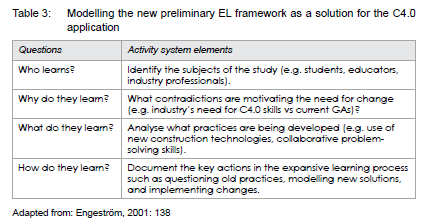
As mentioned, the research is part of a more extensive study that uses the CHAT framework to address the complexities involved when integrating GAs with C4.0 demands. CHAT provides a robust lens for analysing how individuals, tools, and communities interact within activity systems to address systemic contradictions and supports EL (Engeström, 2001: 137). This approach emphasises the transformation of activity systems through iterative cycles of questioning, modelling, and implementing new practices (Engeström & Sannino, 2010:8). CHAT's multi-voicedness (Engeström, 2001: 138) allows for the inclusion of diverse perspectives such as HEIs, CBE professionals, and technology developers, in curriculum design and professional development. EL subsequently considers multiple CHAT systems' interactions with each other, with Table 3 summarising EL's core questions and their application in the C4.0 context, according to Engeström (2001).
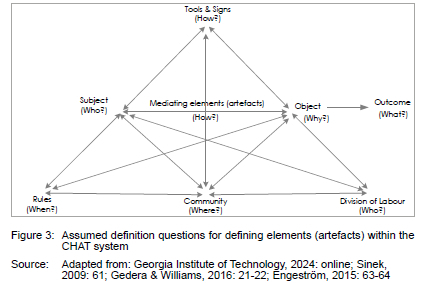
From a pragmatic view, however, when incorporating these definitions into the single chat system, as shown in Figure 3, the question of 'when' and 'where' was found lacking when multiple activity systems interact within the context of the study. In addition, the incorporation of the Ave W's of journalism - who, what, where, when and why (Georgia Institute of Technology, 2024: online) - proved to be valuable considerations when considering the elements (artefacts) within the interaction of multiple systems (Sinek, 2009: 61; Gedera & Williams, 2016: 21-22; Engeström, 2015: 63-64).
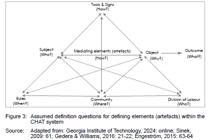
Figure 3 illustrates how the CHAT framework highlights the role of contradictions as catalysts for innovation, allowing HEIs to address gaps between traditional competency frameworks and the evolving needs of C4.0. The EL framework further emphasises the collaborative nature of learning, where students, educators, and industry stakeholders work together to co-create solutions to emerging challenges. Integrating C4.0 technologies into the CBE requires rethinking HEI curricula, with GAs serving as a potential bridge between traditional competencies and the adaptability needed for innovation. By leveraging frameworks such as CHAT and incorporating GAs into the KSCA relationship, HEIs can better align their curricula with industry needs while supporting lifelong learning and resilience for professional success. Figures 2 and 3 collectively illustrate the conceptual and practical foundations of this integration, providing a basis for empirical research and future studies.
3. RESEARCH DESIGN AND METHODOLOGY
3.1 Research design
Focusing on the research question - what is the relationship of GAs between knowledge, skills, and competencies towards the effective adoption of C4.0 technologies among professionals in the South African CBE - an explanatory sequential design was adopted for the study, involving a two-phase approach of collecting and analysing quantitative data first, followed by qualitative data to elaborate on the findings for an in-depth interpretation of the respondents' understanding and interpretation of the proposed concepts (Creswell & Creswell, 2018: 284; Johnson & Christensen, 2014: 497). Guided by Figure 2, the study employed a questionnaire to quantitatively measure the relationship between KSCA from the perspective of QSs and CMs, while an interview schedule was used to qualitatively explore participants' perception of the quantitative results and their relevance to practice. Using descriptive and inferential data analysis, the results showed the extent to which knowledge, skills, competencies and attributes (KSCA) were perceived as critical for day-to-day professional tasks and C4.0 readiness among QSs and CMs (Johnson & Christensen, 2014). The objective was to establish whether respondent groups seek the same qualities within candidates and those they use during their work, based on KSCA. The interviews were conducted to complement these findings, by providing nuanced perspectives on the importance of GAs, their alignment with industry needs, and the gaps between academic preparation and professional expectations. Together, these methods allowed for triangulation of data (Creswell & Plano Clark, 2018: 62), ensuring a comprehensive understanding of the constructs under investigation.
3.2 Population, sample, and response
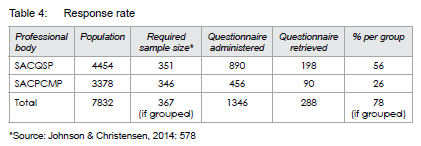
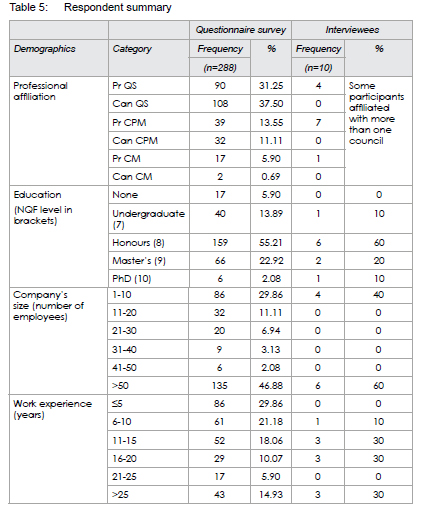
By focusing on professionals registered with the SACQSP and the SACPCMP, the study aligns with the exit levels prescribed by the SAQA for NQF Level 7 (Bachelor's degree) and Level 8 (Honours degree) (SAQA, 2023: online; SACPCMP, 2022; SACQSP, 2014). This targeted scope provides insights into the South African CBE's collaborative discourse for C4.0 and C5.0 development. With the explanatory sequential design, the quantitative enquiry used a simple random sampling method for the proposed population over one year (Daniels & Minot, 2020: 10; Du Plooy-Cilliers, Davis & Bezuidenhout, 2014: 138; Kumar, 2014: 303). The subsequent target population for this study was limited to include the voices of registered persons from the SACQSP and SACPCMP. The 2023 annual reports for the SACQSP and SACPCMP were considered for the quantitative data. The SACQSP had 4 454 registered professionals and candidates (SACQSP, 2023), while the SACPCMP had 1 699 professional and candidate CMs and 1 679 CPMs registered (SACPCMP, 2023), which were included in the target population. Of the 336 responses received, 288 were registered with the two Councils, equating to a total representation of 3.68% representation of the total estimated 7 832 registered professionals and candidates as QSs, CMs and CPMs (SACPCMP, 2023: 32; SACQSP, 2023: 78). This decreased to 3.3% when the lowest usable population size of the responses is considered. Table 4 shows the proposed sample size, according to Johnson and Christensen (2014: 578), and despite a lower response rate, representation was deemed sufficient for evaluation. Table 5 (section 4.1) confirms the eligibility of both groups, with the questionnaire respondents providing a broad industry perspective and the interviewees representing a highly experienced subset. Their professional registration, education levels, company sizes, and work experience validate their suitability, ensuring the credibility of both quantitative and qualitative findings.
Guided by the findings from the survey questionnaire, the qualitative data collection used purposeful sampling in alignment with the explanatory sequential mixed-methods design (Creswell & Creswell, 2018: 287). Considering the survey participants, the selected sampling of interviewees (n = 10) was based on accessibility, knowledge, experience with the topic, and representation of registration representation (Naoum, 2007: 53).
3.3 Data collection
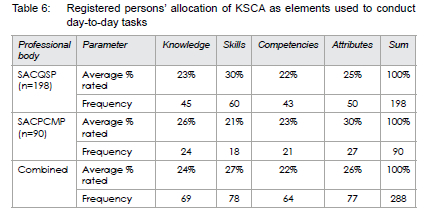
For the quantitative data collection, a semi-structured survey questionnaire was circulated among professional and candidate QSs, CMs, and CPMs registered with the SACQSP and/or SACPCMP. Administered between July 2023 and April 2024, the survey comprised three sections. The first section gathered respondents' professional profiles, including qualifications, experience, and organisational context. The second section focused on the evaluation of key capabilities (KSCA), asking respondents to allocate percentage weights to KSCA components (knowledge, skills, competencies, and attributes) to reflect their relative importance in daily professional tasks (see Table 6), forming the baseline for subsequent constructs. The second construct (see Table 7) required respondents to rank (Naoum, 2007: 65) the importance between KSCA when considering the appointment of new graduates, both in general and in the context of C4.0 advancements. The third construct (section 4.2.3 - Table 8) extended the first two constructs' 4-point ranking scales to a five-point rating scale (Naoum, 2007: 65), by asking respondents to rate the importance of these capabilities in different contexts, including core council requirements, lifelong learning, GAs, the LoDI, and employability, as depicted in Figure 2.
The subsequent qualitative enquiry included ten interviews conducted over two months for the qualitative data focusing on attitudes, behaviours, and preferences towards C4.0 and students' attributes (Du Plooy-Cilliers et al., 2014; Naoum, 2007). Research objectives were conveyed verbally and in writing, along with written consent forms. The semi-structured interviews explored key themes, including the perceived importance of GAs, graduates' preparedness for C4.0, and the alignment of academic curricula with industry needs. Participants were encouraged to share insights on gaps between higher education and practice and to suggest ways to enhance the employability of graduates. Data-collection findings were reported anonymously, using pseudonyms (Creswell & Creswell, 2018: 257; McKinney, 2013: 42), and verbatim transcripts were securely stored with the necessary password protection.
3.4 Data analysis
The quantitative data analysis was conducted using IBM's SPSS Statistics software (Pallant, 2020), applying descriptive and inferential statistical methods to interpret the data obtained from the semi-structured questionnaire (Pallant, 2020: 94; Du Plooy-Cilliers et al., 2014: 220). Descriptive statistics, including frequency and percentages, examined respondent's profiles and how they relied on KSCA in their daily tasks. This section (4.2) is divided into three sections that investigate the following three aspects.
• 4.2.1 Registered persons' allocation of KSCA as elements used to conduct day-to-day tasks (baseline). A percentage allocation was made to their reliance on KSCA for their day-to-day tasks, that was converted into a ranking score between the four options from most important (1) to least important (4) (Table 6). This formed the basis of section 4.2.2.
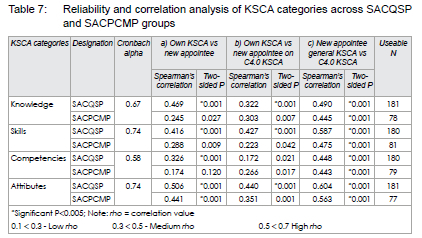
• 4.2.2 Appointment considerations based on KSCA. Respondents were asked to rank the most important considerations between KSCA (1 = Most Important, 2 = Important, 3 = Somewhat Important, 4 = Least Important) when the new appointment of a graduate is in general. A subsequent question asked if this would change when considering C4.0 needs. The baseline and these two subsequent questions are compared in Table 7.
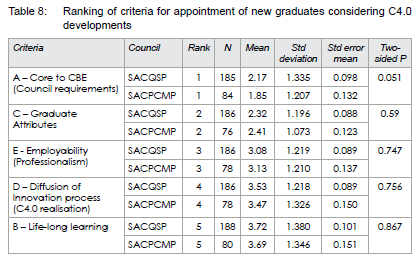
• 4.3.3 Appointment of new graduates considering C4.0 developments. This section asked respondents to rank A -Core to CBE (Council requirements - defined in section 2.1) ; B - Life-long learning (as defined in section 2.3); C - Graduate Attributes (defined in section 2.3); D - of the Innovation process (C4.0 realisation - as defined in section 2.2) and E-Employability (Professionalism - as defined in section 2.3) against each other as key consideration when appointing a new candidate in light of C4.0 (1 - most significant contributor to 5 - least significant contributor).
Spearman's Rank Order Correlation (Spearman's correlation - rho) and t-tests for regression coefficients were applied to analyse the respondent groups' considerations when appointing new personnel. This included examining the relevance of KSCA in general and within the context of C4.0. Given the non-linear nature of the data, Spearman's correlation was employed to assess the monotonic relationship between variables, with significance set at p < 0.005 (Johnson & Christensen, 2014: 578). The following correlation thresholds were used: 0.1 to 0.3, indicating a low correlation, 0.3 to 0.5, a medium correlation, and 0.5 to 0.7, a high correlation (Pallant, 2020: 204).
Additionally, descriptive statistics (MS, SD) and t-tests were used to assess respondents' perceptions of attributes in relation to core council requirements, innovation diffusion, and employability (see Figure 2 and Table 8). Mean scores (MS) were used to evaluate the ranking, where 1 = most relevant, 2 = relevant, 3 = somewhat relevant, 4 = less relevant, and 5 = least relevant. A lower mean score indicates a higher perceived importance of the criterion. The standard deviation (SD) provided further depth of analysis, with a lower SD reflecting greater consensus among respondents. A p-value significance threshold of 0.05 (p < 0.005) was maintained for these analyses. To ensure validity, the internal consistency of the data was evaluated using Cronbach's alpha, with a threshold of 0.7 or higher indicating acceptable reliability (Johnson & Christensen, 2014: 170).
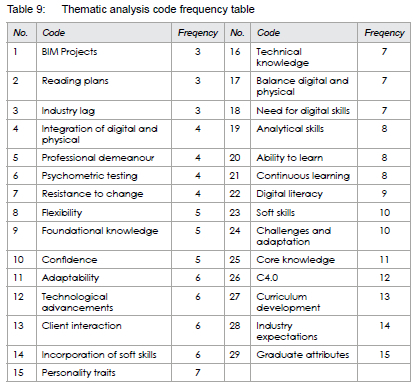
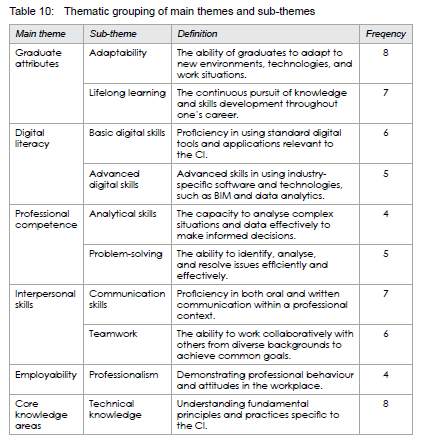
The qualitative data are presented and analysed through the process of transcription, coding (29 codes), and theme identification before identifying the applicable initial 10 and final 5 semantic themes (Saldaña, 2009: 92) and subsequent 3 latent themes (Du Plooy-Cilliers et al., 2014: 241) to be triangulated with the quantitative data (Creswell & Creswell, 2018:229). The data were analysed using a process of coding, categorising, identifying themes and interpreting themes (Saldaña, 2009: 12). This thematic code frequency round is shown in Table 9 before the grouping of the main and subthemes in Table 10. Pseudonyms for the respondents included the use of the letter "R" with a number denoted next to it (thus, Respondent 1 = R1).
4. RESULTS
4.1 Respondents profile
Table 5 summarises the respondents' background, indicating years of experience, company size, qualifications and professional affiliations. The ten respondents interviewed exhibited a broad range of experience from 6 to over 25 years in the field, with the majority having over 15 years' experience, indicating a well-experienced sample. Respondents' company sizes vary, with half of the respondents working in large organisations (above 50 employees) and the others in smaller firms (1-10 employees). The vast majority of the respondents hold a BSc Honours degree in QS, with some possessing additional qualifications, such as a PhD in CM and two MBAs. Designations among the respondents include senior roles such as Directors, Senior Managers, and Consultants, with several individuals owning or directing their consultancies. Professional affiliations are diverse, including Pr QSs, Pr CPMs, and Pr CMs, reflecting a desired representation.
4.2 Quantitative results
4.2.1 Baseline of KSCA use
Section 4.2.1 formed the baseline for the evaluation of the relationship between the registered persons' reliance on the KSCA to conduct their day-to-day tasks and the consideration of appointing new graduates. The respondents were asked to indicate the percentage they rely on to conduct their day-to-day work when considering KSCA, as illustrated in Table 6.
Table 6 illustrates the ranking of SACQSP- and SACPCMP-registered respondents on KSCA elements for their professional tasks. While SACPCMP respondents place slightly more emphasis on attributes (30%) and competencies (23%), SACQSP respondents prioritise skills (30%) and show a relatively balanced reliance across all categories. They highlighted not only differences in their professional focus, but also the importance of all four elements.
4.2.2 Appointment considerations based on KSCA
Using Spearman's test (Pallant, 2020: 129), this baseline was compared further against the a) general qualities respondents look for in potential candidates, b) against the C4.0 capabilities and, lastly, both the c) general and the C4.0 capabilities were compared, as shown in Table 7. The first observation on the Cronbach alpha indicated that the data for skills and attributes samples showed valid internal consistency, if a factor of 0.7 is used (Johnson & Christensen, 2014: 170). Thus, skills and attributes were further investigated, with the SACQSP group showing a significant (p = 0.001) medium (rho = 0.416; rho = 0.427) to strong (rho = 0.587) correlation towards skills and a significant (p = 0.001) medium (rho = 0.440) to strong (rho = 0.507; rho = 0.604) correlation towards attributes. In contrast, the SACPCMP group only showed a significant (p = 0.001) medium (rho = 0.351) to strong (rho = 0.441; rho = 0.563) correlation towards attributes (Pallant, 2020: 213).
The data suggests that SACQSP-registered persons value attributes and skills, as indicated by the medium to strong correlations observed in the SACQSP group. This trend demonstrates a preference for candidates who strongly align with their professional KSCA with day-to-day tasks. The SACPCMP group's focus on attributes suggests that, while technical competencies and knowledge are foundational, the ability to exhibit the right professional attributes remains critical when considering new appointees, especially within a C4.0 context. The data in Table 7 highlight the significance of attributes (p = 0001) during new candidates' appointments, particularly within a C4.0 context, which showed a strong correlation in both the SACQSP (rho = 0.604) and the SACPCMP (rho = 0.563) groups.
4.2.3 Appointment of new graduates considering C4.0 developments
Based on the proposed model of Figure 2, the C4.0 learning-centred approach framework is investigated by ranking the most important to the least important criteria when appointing a new employee, considering C4.0 developments to determine what employers are looking for in potential CBE candidates, according to the respondents. Simple descriptive statistics were used to interpret the ranking results, and p-values were observed to assess statistical significance at a threshold of 0.05. The rankings indicate that, while both council groups prioritised A - Core to CBE (Council requirements) as the most important criterion, followed by C - Graduate Attributes, the difference between SACQSP and SACPCMP rankings was not statistically significant (p > 0.05). Similarly, D - Diffusion of innovation (C4.0 realisation) and B - Life-long learning were ranked lower across both council groups, confirming that no significant difference was observed between the two groups regarding their ranking preferences.
Table 8 shows that A - Core to CBE (Council requirements) had the lowest mean ranking (SACQSP: 2.17; SACPCMP: 1.85), indicating that respondents considered it the most relevant factor when appointing graduates. Similarly, C - Graduate Attributes ranked as the second most important criterion (SACQSP: 2.32; SACPCMP: 2.41). Conversely, B -Life-long learning (SACQSP: 3.72; SACPCMP: 3.69) and D - Diffusion of innovation (C4.0 realisation) (SACQSP: 3.53; SACPCMP: 3.47) had higher mean rankings, signifying that respondents deemed them less critical in the appointment process. E - Employability (Professionalism) fell in the upper middle range (SACQSP: 3.08; SACPCMP: 3.13), suggesting that it was considered moderately important. The standard errors across all criteria remained low, reflecting consistency in the rankings and ensuring reliability in the observed mean values.
When analysed using CHAT (contradictions), the findings suggest that the criteria for employment remain fluid, with respondents showing a lower correlation between general requirements and C4.0-specific competencies. This indicates the uncertainty about which C4.0 attributes and skills are most relevant, reflecting the evolving nature of C4.0 adoption in South Africa of what C4.0 attributes and competencies include, corresponding to the emergent nature of C4.0 within South Africa (Venter et al., 2021: 149). It was further observed that, when the Core KSC were grouped, these criteria were consistently ranked more critical than GAs, suggesting that the respondents deem these criteria more important when evaluating a new candidate, hence the interviews with the key respondents to investigate this further.
4.3 Qualitative results
4.3.1 Semantic results
Guided by the quantitative data, the qualitative data collection utilised a semi-structured interview protocol in Figure 2, investigating respondents' perceptions of GAs and the relationship between KSCA. Table 9 shows the semantic codes' and results (explicit meaning) based on the occurrence frequency, from which the main thematic groups and sub-themes could be identified in Table 10.
Based on the frequency of occurrence of the thematic codes, Table 10 shows the thematic themes that emerged from the iterative thematic coding process (Du Plooy-Cilliers et al., 2014: 241).
The following summarised semantic themes could be identified from the thematic main themes and sub-themes (Saldaña, 2009: 92). These summarised themes are discussed below with reference to the interviewees' responses.
• Self-reliant candidates: Participants are seeking candidates who can quickly become self-reliant. HEIs should view the efficiency of mentoring time (once in the workplace) as a significant contribution. As respondent 3 (R3) noted: "Graduates should become 'grown-up' quicker". This sentiment was echoed by R7, who emphasised the need for candidates to "hit the ground running".
• Adaptability and flexibility: The importance of adaptability and the ability (similar to theme 1) to grow in new environments were recurrent themes. Participants highlighted qualities such as analytical skills and people skills. For instance, R4 mentioned: "The ability to adapt and learn in new environments is crucial. Analytical and people skills are paramount in our industry." Another participant added: "Graduates need to be flexible and capable of growing within diverse environments to meet industry demands" (R5).
• Soft skills: Critical thinking, problem-solving, and communication were frequently cited as essential soft skills. R5 emphasised: "Critical thinking, problem-solving, and effective communication are essential soft skills our graduates must possess." R7 noted: "In complex projects, the importance of soft skills such as teamwork and leadership cannot be overstated."
• Physical vs digital literacy: The need for a balance between the need for physical knowledge and digital literacy was highlighted. R9 pointed out: "While digital skills are important, the foundation lies in physical knowledge, which cannot be overlooked." Conversely, R10 commented on the growing importance of digital skills: "With the integration of BIM and AI, digital literacy is becoming increasingly important."
• Integration of technology: The need to integrate technology into the curriculum was emphasised. Participants stressed preparing students for the digital transformation in the CI. R1 remarked: "Students must be proficient in both the physical and digital aspects of construction to stay relevant."
4.3.2 Latent themes
The following latent themes emerged, with notable reference to the importance of soft skills as attributes:
• Competence results from practical experience, and if not obtained during their degree programme, candidates should have the necessary soft skills (e.g. attitude) to identify their shortcomings, in order to obtain these competencies: "Practical experience and the ability to learn on the job are crucial for our industry." (R10). "Confidence, personality, and the ability to grow and adapt are critical attributes we look for in candidates." (R6).
• Understanding the business is essential, with graduates well-grounded in the core knowledge and skills while understanding that they still have to learn and grow within the organisation, which relates to becoming lifelong learners (UFS, 2019). "Hands-on experience and continuous professional development are vital for career growth." (R1). "Technical knowledge, the ability to read plans, and understanding contracts are foundational for new hires" (R4).
• A nuanced differentiation between QSs and CMs respondents could be observed. CM participants emphasised a more physical or process understanding, while QS participants emphasised the increased movement towards digitisation.
The analysis highlights the importance of a balanced approach to education that combines core technical knowledge with essential soft skills and digital literacy. Integrating GAs into the curriculum is crucial for preparing students for the evolving demands of C4.0. The importance of adaptability and analytical skills emphasised the significance of critical thinking and teamwork. Integrating physical and digital literacy is crucial in C4.0. Employers seek solid foundational knowledge and adaptable, confident individuals who can thrive in dynamic environments. As one participant noted: "For instance, good communication and teamwork are vital in the construction industry ... it is not necessarily the academically strong candidates that thrive in the industry. They should be able to bring all the diverse requirements together within the company." (R8).
5. DISCUSSIONS AND TRIANGULATION
Within the quantitative data, respondents showed the strongest correlation towards GAs (Table 6), indicating that this criterion was the most universal of the KSCA criteria under consideration. However, respondents showed the groundedness of the KSC when grouped against GAs (Table 8). The qualitative data supported this through the discussion on 'self-reliant candidates', 'adaptability and flexibility', and 'soft skills', which can be classified within GAs (Griesel & Parker, 2009). This proves vital in understanding the EL considerations within the CHAT and forming a platform to explore the increased industry involvement in HEIs. With GAs and skills being the only criteria that showed a valid correlation between the CBE industry groups, it indicated a good platform of uniformity for starting HEI and CBE integration within the KSCA symbioses of identifying the common object. These findings are consistent with previous studies that emphasise balancing technical skills with interpersonal competencies to meet industry demands (Aliu et al., 2023; Vaz-Serra & Mitcheltree, 2021). However, the diverse need of the professions pulls in multiple directions when considering KSC, which is further exacerbated by the emergent nature of C4.0. This highlights that integrating emerging C4.0 technologies and associated competencies emphasised by relevant GAs into their curricula requires grounding in some commonality such as GAs. The importance of GAs in preparing students for the evolving demands of C4.0 is evident, aligning with literature advocating for the inclusion of digital literacy, continuous learning, and innovation in construction education (McCord et al., 2023; Sawhney et al., 2020).
The thematic analysis revealed several key themes that highlight employers' expectations regarding GAs in the CBE. First, participants emphasised the need for self-reliant candidates who can quickly adapt to the workplace, focusing on adaptability and flexibility to navigate diverse environments, corresponding with Bitzer and Withering (2020) and Staunton et al. (2021). Analytical and people skills were particularly valued, along with critical thinking, problem-solving, and communication, which were identified as essential soft skills. In addition, the balance between physical knowledge and digital literacy was highlighted, reflecting the growing importance of digital tools such as BIM and AI. While technology integration is critical for C4.0 preparedness, it cannot precede or replace foundational disciplinary knowledge. For example, digital tools such as BIM or automated measurement systems require an underlying foundation of construction principles and standards. Curriculum alignment must, therefore, be structured, embedding C4.0 technologies and soft skills (GAs) development in parallel with core competencies, and calibrated to the appropriate level of study. Early undergraduate levels may focus on foundational knowledge, while senior levels can introduce applied technologies, critical thinking, and communication-focused learning tasks.
Latent themes further emphasised the importance of practical experience and the need for graduates to be lifelong learners who can continuously develop their skills within an organisation, as shown by Warier (2014). A nuanced difference emerged between QSs and CMs, with QS participants focusing on digitisation (aligning with the baseline results of 4.3.1), and CM participants highlighting the importance of physical and process understanding. Overall, the analysis emphasises the need for a well-rounded education that integrates both technical knowledge and soft skills, preparing graduates for the dynamic and evolving demands of the CI. Employers seek adaptable, confident individuals with strong communication and teamwork skills, which are essential for success in the field.
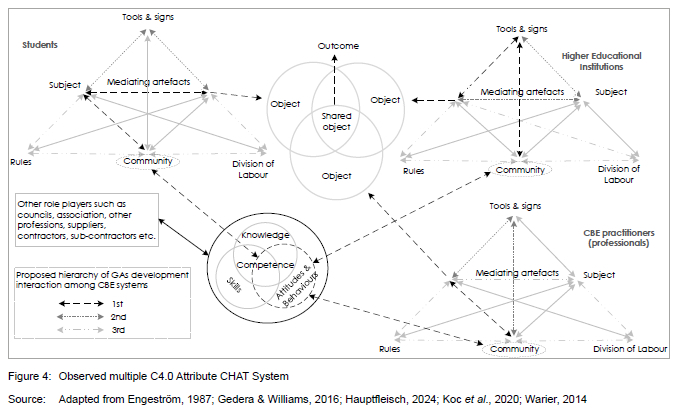
The data demonstrates that knowledge provides the theoretical foundation, skills enable practical application, competencies ensure effective task performance, and attributes foster continuous professional development, forming the cornerstone of the new framework presented in Figure 4. This framework, derived from the study's empirical findings and aligned with the Process of Innovation Diffusion and EL theory (see Figure 3), highlights how HEIs, industry, and regulating councils must collaboratively mediate GAs to meet the demands of C4.0.
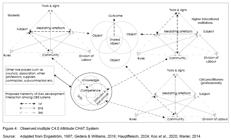
Suppose the "Process of Innovation Diffusion" of awareness up to adoption is considered against the EL matrix (see Figure 3). In that case, the main contradiction that emerged is that the QS and CM practitioners have limited influence on the GAs except through the Alter of HEIs, regulating councils and associations. With the emergent nature of C4.0 and the empirical data, it is concluded that all three parties are learning, and that attitudes and behaviours culminate towards a strong sense of 'why' from which the 'how' and 'what' can flow, as suggested by Sinek (2009). Curricular development involves collaboration among educators, students, and industry stakeholders to align the pedagogy with professional qualifications (Garraway, 2021; Hill et al., 2021). Through this process, the existing contradictions, as depicted in Figure 4, emphasise the importance of industry and HEIs to collaborate towards a shared object, as suggested by Aliu et al. (2023) and McCord et al. (2023), from which the CHAT framework within the multiple activity system could be built.
Figure 4 highlights the importance of attributes within the KSCA alignment, enabling a more agile pedagogical approach to accommodate the rapid technological changes influencing knowledge, skills, and competencies among CBE systems.
The study was limited to GAs and registered QSs, CMs, and CPMs' perspectives on their interaction with the stakeholders, as depicted in Figure 4. It is suggested that knowledge, skills, and competencies should be evaluated in separate studies and would be conjecture if included in the following conclusions. It was subsequently observed that the community ('where') is the best common ground of interaction, where mediation within the activity systems can adequately access the subjects ('who') towards a shared object ('why') and outcome ('what') to address the developments within C4.0. This will lead to a more optimum mediation that includes rules ('when') and the division of labour ('who') and, thus, improves the agency of the CBE on the path to C4.0 realisation.
6. CONCLUSION & RECOMMENDATIONS
Based on the theoretical framework (Figure 2), the EL framework provided a valuable lens (layer) for investigating C4.0 preparedness within the South African CBE. This study highlights the pivotal role of GAs in equipping professionals with the competencies needed to navigate the demands of C4.0. As suggested by de Bono's Six Thinking Hats, structured thinking models allow for greater flexibility and responsiveness in a fast-changing technological world.
Through the CHAT framework, it is evident that integrating GAs into educational curricula is essential for supporting skills such as adaptability and critical thinking - both crucial for success in a technologically evolving industry. The research emphasises a strong alignment between professionals' skills and those sought in potential candidates, reinforcing the importance of innovative pedagogical approaches in South African HEIs. GAs are a critical foundation for vertical alignment in education, facilitating student progression, employability, and readiness for professional registration or postgraduate studies. This study contributes to the global discourse on aligning educational outcomes with industry needs, offering empirical evidence from the South African context and influencing HEIs, mentorship programmes, and industry practices.
This study was limited to the QS, CM, and CPM professions within South Africa, focusing exclusively on individuals registered with the SACQSP and SACPCMP. It examined the role of GAs within C4.0 advancements as part of students' complex professional development. In addition, the study used CHAT as a lens to triangulate empirical data, progressing only to the modelling phase within the EL cycle for further investigation. Based on the findings, the following recommendations are proposed to which generic GAs present an exciting point of departure for collaboration in the development of specific C4.0 GAs:
• Curriculum enhancement. While HEIs should integrate digital literacy and C4.0 technologies into curricula, emphasising both technical skills and essential GAs such as adaptability and critical thinking, as the Law of Diffusion of Innovation suggests, timing is essential. The scaffolding between knowledge, skills, competency, and attributes should be thoughtfully sequenced.
• Industry collaboration: HEIs and industry stakeholders' collaboration could be more strategically aligned, by supporting streamlined, outcome-focused curricula that respond to evolving sector needs. This involves offering real-world learning opportunities that bridge academic knowledge and professional practice, while aligning with an evolving epistemology rather than merely adding new knowledge, skills, and competencies (KSC) to existing pedagogy.
• Continuous professional development (CPD). While industry bodies and professional councils already mandate CPD, greater emphasis could be placed on recognising structured involvement in HEI activities such as curriculum advisory roles, mentorship, or guest lecturing as valid CPD contributions. This may encourage more active and meaningful collaboration between academia and industry in preparing students for C4.0.
• Future research: Further studies should investigate the long-term impact of incorporating GAs into construction education and explore effective pedagogical strategies for supporting these attributes. Specific attention should be paid to the unique needs of the South African CBE and innovative approaches such as change laboratories (Garraway, 2021) that would enable further testing and implementation of the proposed framework.
The advocacy of technological advancements in the CI can be retained through the increase and deepening of innovative thinkers within the CI.
REFERENCES
2. LITERATURE REVIEW
-
Ahmed, S.M., Yaris, C., Farooqui, R.U. & Saqib, M. 2014. Key attributes and skills for curriculum improvement for undergraduate construction management programs. International Journal of Construction Education and Research, 10(4), pp. 240-254. https://doi.org/10.1080/15578771.2014.900833
» https://doi.org/10.1080/15578771.2014.900833 -
Aliu, J., Aghimien, D., Aigbavboa, C., Oke, A., Ebekozien, A. & Temidayo, O. 2023. Empirical investigation of discipline-specific skills required for the employability of built environment graduates. International Journal of Construction Education and Research, 19(4), pp. 460-479. https://doi.org/10.1080/15578771.2022.2159589
» https://doi.org/10.1080/15578771.2022.2159589 -
Anderson, L. 2017. The learning graduate. In: Normand, C. & Andersin, L. (Eds). Graduate attributes in higher education: Attitudes on attributes from across the disciplines. London, UK and New York: Routledge - Taylor & Francis Group, pp. 4-18. https://doi.org/10.4324/9781315559186-2
» https://doi.org/10.4324/9781315559186-2 -
Barrie, S.C. 2004. A research-based approach to generic graduate attributes policy. Higher Education Research and Development, 23(3), pp. 261-275. https://doi.org/10.1080/0729436042000235391
» https://doi.org/10.1080/0729436042000235391 -
Barrie, S.C. 2007. A conceptual framework for the teaching and learning of generic graduate attributes. Studies in Higher Education, 32(4), pp. 439-458. https://doi.org/10.1080/03075070701476100
» https://doi.org/10.1080/03075070701476100 -
Begić, H. & Galić, M. 2021. A systematic review of Construction 4.0 in the context of the BIM 4.0 premise. Buildings, 11(8), pp. 1-24. MDPI AG. https://doi.org/10.3390/buildings11080337
» https://doi.org/10.3390/buildings11080337 -
Bitzer, E. & Withering, M. 2020. Graduate attributes: How some university students experience and learn them. South African Journal of Higher Education, 34(3), pp. 13-31. https://doi.org/10.20853/34-3-3504
» https://doi.org/10.20853/34-3-3504 -
CIOB (Chartered Institute of Building). 2018. CIOB Undergraduate Education Framework. [Online]. Available at: http://www.ciob.org/ [Accessed: 23 March 2024].
» http://www.ciob.org/ - Creswell, J.W. & Creswell, D.J. 2018. Research design: Qualitative, quantitative, and mixed methods approaches. London, UK: Sage.
- Creswell, J.W. & Plano Clark, V.L. 2018. Designing and conducting mixed methods research. 3rd edition. London, UK: Sage.
- Daniels, L. & Minot, N. 2020. An introduction to statistics and data analysis using stata. In: Fargotstein, L. (Ed.). From research design to final report. Los Angeles, California: Sage.
- Du Plooy-Cilliers, F., Davis, C. & Bezuidenhout, R.-M. 2014. Research matters. Cape Town: Juta & Company Ltd.
-
Engeström, Y. 2001. Expansive learning at work: Toward an activity theoretical reconceptualisation. Journal of Education and Work, 14(1), pp. 133-156. https://doi.org/10.1080/13639080020028747
» https://doi.org/10.1080/13639080020028747 -
Engeström, Y. 2015. Learning by expanding: An activity-theoretical approach to developmental research. 2nd edition. Cambridge, UK: Cambridge University Press. https://doi.org/10.1017/CBO9781139814744
» https://doi.org/10.1017/CBO9781139814744 -
Engeström, Y. & Sannino, A. 2010. Studies of expansive learning: Foundations, findings and future challenges. Educational Research Review, 5(1), pp. 1-24. https://doi.org/10.1016/j.edurev.2009.12.002
» https://doi.org/10.1016/j.edurev.2009.12.002 -
Frake-Mistak, M., Friberg, J. & Hamilton, M. 2023. Reimagining the 4M framework in educational development for SoTL. Teaching and Learning Inquiry, 11, pp. 1-13. https://doi.org/10.20343/teachlearninqu.11.14
» https://doi.org/10.20343/teachlearninqu.11.14 -
Garraway, J. 2021. Academics' learning in times of change: A change laboratory approach. Studies in Continuing Education, 43(1), pp. 1-21. https://doi.org/10.1080/0158037X.2020.1792436
» https://doi.org/10.1080/0158037X.2020.1792436 -
Gedera, D.S. & Williams, J.P. 2016. Perspectives on activity theory: Research and practice. Rotterdam, The Netherlands: Sense Publishers. https://doi.org/10.1007/978-94-6300-387-2
» https://doi.org/10.1007/978-94-6300-387-2 -
Georgia Institute of Technology. 2024. The who, what, when, where, why of a story, Institute Communications. [Online]. Available at: https://comm.gatech.edu/resources/writers/5ws [Accessed 31 August 2024].
» https://comm.gatech.edu/resources/writers/5ws - Griesel, H. & Parker, B. 2009. Graduate attributes: A baseline study on South African graduates from the perspective of employers. Higher Education South Africa -Report. Pretoria: HESA and SAQA.
- Hauptfleisch, A. 2024. Structure of the built environment in South Africa, 10th edition. Pretoria: HH Management (Pty) Ltd.
-
Hill, A., Readman, K. & Strampel, K. 2021. Curriculum framework. In: Hunt, L. & Chalmers, D. (Eds). University in focus, a learning-centred approach. 2nd edition. New York: Routledge, pp. 53-80. https://doi.org/10.4324/9781003008330-4
» https://doi.org/10.4324/9781003008330-4 -
Hill, J., Walkington, H. & France, D. 2016. Graduate attributes: Implications for higher education practice and policy: Introduction. Journal of Geography in Higher Education, 40(2), pp. 155-163. https://doi.org/10.1080/03098265.2016.1154932
» https://doi.org/10.1080/03098265.2016.1154932 - Johnson, R.B. & Christensen, L. 2014. Educational research, quantitative, qualitative and mixed approaches. 5th edition. Los Angeles, California: Sage.
-
Kaewsri, N. & Tongthong, T. 2014. Favorable female attributes in relation to career challenges of women engineers in the Thai construction industry. International Journal of Construction Education and Research, 10(3), pp. 222-236. https://doi.org/10.1080/15578771.2013.856825
» https://doi.org/10.1080/15578771.2013.856825 -
Kivunja, C. 2015. Using de Bono's Six Thinking Hats Model to teach critical thinking and problem solving skills essential for success in the 21st century economy. Creative Education, 6(3), pp. 380-391. https://doi.org/10.4236/ce.2015.63037
» https://doi.org/10.4236/ce.2015.63037 -
Koc, E., Pantazis, E., Soibelman, L. & Gerber, D.J. 2020. Emerging trends and research directions. In: Sawhney, A., Riley, M. & Irizarry, J. (Eds). Construction 4.0: An innovation platform for the built environment. London, UK: Routledge, pp. 460-476. https://doi.org/10.1201/9780429398100-23
» https://doi.org/10.1201/9780429398100-23 - Kumar, R. 2014. Research methodology: A step-by-step guide for beginners. 4th edition. Los Angeles, California: Sage.
-
Lu, Y. 2017. Industry 4.0: A survey on technologies, applications and open research issues. Journal of Industrial Information Integration, 6, pp. 1-10. https://doi.org/10.1016/j.jii.2017.04.005
» https://doi.org/10.1016/j.jii.2017.04.005 -
McCord, K.H., Ayer, S.K., Lamanna, A.J., Eicher, M., London, J.S. & Wu, W. 2023. Construction education needs derived from industry evaluations of students and academic research publications. International Journal of Construction Education and Research, 19(1), pp. 77-98. https://doi.org/10.1080/15578771.2021.1974985
» https://doi.org/10.1080/15578771.2021.1974985 - McKinney, K. 2013. The scholarship of teaching and learning in and across the disciplines. Bloomington, Indiana: Indiana University Press.
- Naoum, S. 2007. Dissertation research and writing for construction students. 2nd edition. Oxford: Elsevier.
-
O'Neill, T., Hartigan, K. & Spillane, J.P. 2023. Factors inhibiting higher education institutions from addressing industry-driven change in Irish construction management programs. International Journal of Construction Education and Research, 19(1), pp. 12-20. https://doi.org/10.1080/15578771.2023.2181471
» https://doi.org/10.1080/15578771.2023.2181471 -
Orstavik, F., Dainty, A. & Abbott, C. 2015. Construction innovation. Oxford: Wiley Blackwell. https://doi.org/10.1002/9781118655689
» https://doi.org/10.1002/9781118655689 - Osunsanmi, T.O., Aigbavboa, C. & Oke, A. 2018. Construction 4.0: The future of the construction industry in South Africa. World Academy of Science, Engineering and Technology International Journal of Civil and Environmental Engineering, 12(3), pp. 150-156.
-
Osunsanmi, T.O., Aigbavboa, C.O., Emmanuel Oke, A. & Liphadzi, M. 2020. Appraisal of stakeholders' willingness to adopt Construction 4.0 technologies for construction projects. Built Environment Project and Asset Management, 10(4), pp. 547-565. https://doi.org/10.1108/BEPAM-12-2018-0159
» https://doi.org/10.1108/BEPAM-12-2018-0159 -
Pallant, J. 2020. SPSS Survival manual - A step-by-step guide to data analysis using IBM SPSS. 7th edition. New York: Taylor & Francis Group. https://doi.org/10.4324/9781003117452
» https://doi.org/10.4324/9781003117452 -
Ramnund-Mansingh, A. & Reddy, N. 2021. South African specific complexities in aligning graduate attributes to employability. Journal of Teaching and Learning for Graduate Employability, 12(2), pp. 206-221. https://doi.org/10.21153/jtlge2021vol12no2art1025
» https://doi.org/10.21153/jtlge2021vol12no2art1025 -
RICS (Royal Institute of Chartered Surveyors). 2019. RICS global accreditation -Policy and process. www.ricscourses.org
» www.ricscourses.org - Rogers, E.M. 2003. Diffusion of innovations. 5th edition. New York: Free Press.
-
SACPCMP (South African Council for the Project and Construction Management Professions). 2020. SACPCMP South Africa. [Online]. Available at: https://sacpcmp.org.za/education/ [Accessed 20 July 2024].
» https://sacpcmp.org.za/education/ -
SACPCMP (South African Council for the Project and Construction Management Professions). 2022. Shape-Shifter-Oct.Nov-2022_FINAL. Shape Shifter October/ November 2022, October, 10, pp. 4-9. [Online]. Available at: https://sacpcmp.org.za/shape-shifter-october-2022/ [Accessed: 22 October 2022].
» https://sacpcmp.org.za/shape-shifter-october-2022/ -
SACPCMP (The South African Council for the Project and Construction Management Professions). 2023. SACPCMP_Annual_Report-2023.2023. [Online]. Available at: https://sacpcmp.org.za/annual-report-2022-2023/ [Accessed: 6 July 2024].
» https://sacpcmp.org.za/annual-report-2022-2023/ -
SACQSP (South African Council for the Quantity Surveying Profession). 2014. Quantity Surveying Programme Accreditation Guideline (SACQSP Accreditation Policy). South Africa. [Online]. Available at: https://www.sacqsp.org.za/default.aspx [Accessed: 20 July 2024].
» https://www.sacqsp.org.za/default.aspx -
SACQSP (South African Council for the Quantity Surveying Profession). 2023. SACQSP Annual Report 2023. [Online]. Available at: https://www.sacqsp.org.za/page/FINANCIALS [Accessed: 6 July 2024].
» https://www.sacqsp.org.za/page/FINANCIALS - Saldaña, J. 2009. The coding manual for qualitative researchers. London, UK: Sage.
-
SAQA (South African Qualifications Authority). 2023. National qualifications framework. [Online]. Available at: https://www.saqa.org.za/national-qualifications-framework/ [Accessed: 17 August 2024].
» https://www.saqa.org.za/national-qualifications-framework/ -
Sawhney, A., Riley, M. & Irizarry, J. 2020. Construction 4.0: An innovation platform for the built environment. London, UK: Routledge. https://doi.org/10.1201/9780429398100
» https://doi.org/10.1201/9780429398100 - Sinek, S. 2009. Start with why: How great leaders inspire everyone to take action. New York: Penguin Group.
-
Ślusarczyk, B. 2018. Industry 4.0 - Are we ready? Polish Journal of Management Studies, 17(1), pp. 232-248. https://doi.org/10.17512/pjms.2018.17.1.19
» https://doi.org/10.17512/pjms.2018.17.1.19 -
Staunton, C., Cowley-Cunningham, M.B. & Hodgers, J. 2021. Developing a graduate attribute framework for higher education. SSRN Electronic Journal, 9 July. https://doi.org/10.2139/ssrn.3878312
» https://doi.org/10.2139/ssrn.3878312 -
Sunindijo, R.Y. & Kamardeen, I. 2020. Psychological challenges confronting graduate construction students in Australia. International Journal of Construction Education and Research, 16(3), pp.151-166. https://doi.org/10.1080/15578771.2018.1431741
» https://doi.org/10.1080/15578771.2018.1431741 -
UFS (University of the Free State). 2019. UFS learning and teaching strategy 2019-2024. Bloemfontein. [Online]. Available at: https://www.ufs.ac.za/ctl/home-page/general/teaching-and-learning-at-the-ufs [Accessed: 17 August 2024].
» https://www.ufs.ac.za/ctl/home-page/general/teaching-and-learning-at-the-ufs -
Van Heerden, A., Jelodar, M.B., Chawynski, G. & Ellison, S. 2023. A study of the soft skills possessed and required in the construction sector. Buildings, 13(2), pp 1-20. https://doi.org/10.3390/buildings13020522
» https://doi.org/10.3390/buildings13020522 -
Vaz-Serra, P. & Mitcheltree, H. 2021. Understanding the key master of construction project management graduate competencies required to meet industry needs in Australia. International Journal of Construction Education and Research, 17(3), pp. 222-241. https://doi.org/10.1080/15578771.2020.1739177
» https://doi.org/10.1080/15578771.2020.1739177 -
Venter, B., Ngobeni, S.P. & Du Plessis, H. 2021. Factors influencing the adoption of building information modelling (BIM) in the South African construction and built environment (CBE) from a quantity surveying perspective. Engineering Management in Production and Services, 13(3), pp. 142-150. https://doi.org/10.2478/emj-2021-0027
» https://doi.org/10.2478/emj-2021-0027 - Warier, S. 2014. Competence and competency management: The practitioner's handbook. Cognition Knowledge Services.
Peer reviewed and revised: April 2025
Published: June 2025